Showing posts with label Laura Rahme. Show all posts

31 March 2017

Herstory: Brittany and the Vendée – Secrets and Horrors of the French Revolution

By Laura Rahme


Drownings of Nantes in 1793, Joseph Aubert (1882)


“We must exterminate all men who have taken arms against the Republic 
and strike down their fathers, their wives, their sisters and their children. 
The Vendée must become a national cemetery.” 
      – General Turreau

The French Revolution is generally accepted as covering the period 1789 to 1799, ending with Napoleon’s coup d’état and the dissolution of the Directory. Prior to the formation of the Directory government, France was ruled by the National Convention, headed by Robespierre. This period, aptly known as the Terror, lasted from September 1793 to July 1794. 

For Western France, in the region of the Vendée, the Terror was accompanied by bloody and religious civil war, including a period of mass killings that some French historians have recently come to denounce as a genocide, and which led to the decimation of a third of the inhabitants in the Vendée. 

In the Western town of Nantes, the representative of the National Convention, Jean-Baptiste Carrier, was responsible for atrocities and massacres that defy imagination. 

In my latest novel, Julien’s Terror (July 2017), I was interested in portraying a female perspective for this turbulent period.


Origins of the Conflict


It is a misconception that aside from aristocrats and nobles, all French people were in favor of the beheading of their king and queen. 

The inhabitants of Brittany and of the newly named region of Vendée (comprising parts of Brittany, Poitou and Anjou regions) were never in favor of the guillotining of their king, Louis XVI, on 21 January 1793. They were staunch royalists and deeply Catholic. The execution of King Louis was not well received. 

To compound the people’s outrage, the new Republic had not only nationalized church property, but it also outlawed all priests who refused to forsake their oath on the Holy Bible.  According to these new laws, priests now had to swear upon the Constitution. Those who resisted were labelled ‘refractory’ and banished from preaching. There were persecutions involving both priests and nuns. In worst cases, such priests were hunted to death or murdered en masse, as happened in Nantes in December 1793, when hundreds of refractory priests were tied up, locked into a barge and drowned in the Loire River. 

Already unsettled, the Vendée peasants rose in arms against the Republic when in February 1793, the National Convention made a call for the conscription of 300000 unmarried men, from the age of 18 to 40 years. 

The people of the Vendée had already witnessed great injustices toward their beloved priests, whom they hid, but this new conscription law was the tipping point because it would have left thousands of peasants unable to fend for their families. Meanwhile they would be forced to enlist in support of a Republic they had come to see as tyrannical.

Determine to oppose the Republic, these men, often illiterate and attached to their land, elected nobles and landlords—local men whom they held in high esteem—to lead and train them in battle. The Great Vendéan Army was born. 

Initially this Great Army won many victories against the soldiers of the Republic but later from December 1793, its luck began to turn: from January to July 1794, Paris sent a giant army to sweep across the Vendée. Its orders were clear—annihilation with no quarters. 


The Infernal Columns


Children, women, the aged, even the sick and farm livestock were not spared from massacres. The Republican army practiced scorched-earth and sought to obey decrees from Paris aimed at starving or exterminating the population. 

The army possessed twenty columns, led by several Republican generals, some like those commanded by General Grignon, were crueller than others. These columns became known as the ‘infernal columns’ for the very hell they spawned. 


The living defend their dead. War of the Vendée. 
Georges Clairin, 19th century


The words pronounced by General François Joseph Westermann are powerful illustrations of the atrocities that followed: 

“There is no more Vendée. I have trampled the children to death with our horses, I have massacred the women, and they are no longer able to give birth to any brigands. I am not guilty of taking a single prisoner, I have exterminated them all… The roads are covered with corpses. There are so many of them at several places they form pyramids. The firing squads work incessantly… Brigands arrive who pretend that they will surrender as prisoners… but we are not taking any. One would be forced to feed them with the bread of liberty, but compassion is not a revolutionary virtue.” 


Her story


In Julien’s Terror, my desire was to convey what might have been the experience of a young girl in these violent times. The journey begins when she is a spoilt child, daughter a well-to-do merchant, living on the prestigious Île Feydeau in the middle of Nantes, and it ends just after the Terror, when she is a spirited but destitute orphan. What she sees and lives in-between, and the aftermath of her horrendous psychological journey provide both drama and mystery, but more importantly, it casts a light on the hardships faced by many French women in this period.

My female character is barely nine when she loses her parents to Carrier’s butchery. She is reunited with relatives in war-torn Vendée, staying with them first in Montaigu, La Guyonnière and then later in Les Epesses—all communes that were swept by the infernal columns.


The Underground and the Hidden Places of the Vendée


Less well-known about the conflict in Western France is how much the peasants’ knowledge of their natural surroundings supplied them with advantages for surviving the Republican army. Like the Viet Cong of Vietnam, the people of Brittany and Vendée crawled in secret undergrounds. They also waged a guerrilla war long before the word ‘guerilla’ officially surfaced, when Napoleonic French troops encountered fierce resistance in Spain.

As François Pagès describes in Secret History of the French revolution—the soldiers of the Catholic royalist army ceaselessly disappeared and then re-appeared to fight. The underground, the woods, the stones and the marshes in the West would conceal and then suddenly release hordes of former valets, brigands, priests, ex-nobles, and peasants. They were everywhere and yet they remained unseen. 

In his last novel, Quatre-Vingt Treize, Victor Hugo wrote of his father’s experience in the war against Breton royalists. He too mentions the forests that sheltered thousands of peasants in Brittany: 

“The peasant had two points on which he leaned: the field which nourished him, the wood which concealed him.”

“There were wells, round and narrow, masked by coverings of stones and branches, the interior at first vertical, then horizontal, spreading out underground like funnels, and ending in dark chambers. [ ] The caves of Egypt held dead men, the caves of Brittany were filled with the living.”


“The subsoil of every forest was a sort of mad repose, pierced and traversed in all directions by a secret highway of minds, cells, and galleries. Each one of these blind cells could shelter five or six men.”


In Les Epesses, my female character follows her great-uncle, a giant Breton man who walks everywhere with his large wooden staff, and seems to know all the secrets of the underground. He hides his family in an underground cavern where they remain for months. 

As the infernal columns advance in the Vendée countryside, my character witnesses horrors beyond her years. Later she will hide in the secret Gralas forest, south of Nantes, and meet one of the most courageous men to lead the Vendée rebellion – General François Athanase de Charette de la Contrie (Charette). In Gralas, she will also discover the strong, independent women who fought to death alongside Charette, and one of these women will change her life forever.


"Liberty, Equality, Fraternity or Death" 
- the original motto of the French Republic


Further Reading:

1. Histoire secrète de la Révolution française depuis la convocation des notables jusqu' a la 
prise de l'ile de Malthe..., François Pagès, 1798.
2. Quatrevingt-treize, Victor Hugo, 1874.
3. Souterrains de Vendée, Laurent et Jérôme Triolet, Editions Ouest-France, 2013.
4. Colonnes Infernales - Wikipedia 
5. A French Genocide: The Vendée, Reynald Secher, University of Notre Dame Press, 2003.


______________________________________


Laura Rahme is an Australian-French writer based in Sydney. She was born in Dakar, Senegal where she spent her early childhood. Her first novel, THE MING STORYTELLERS (2012), is a historical saga set in China's Early Ming Dynasty. THE MASCHERARI (2014), is a historical mystery with supernatural themes set in late medieval Venice. Her third novel, JULIEN'S TERROR (July 2017) is set during and after the French Revolution and pays homage to her Breton roots.


17 February 2017

New & Noteworthy: February 17

Lots of news from our contributors this month!


Laura Rahme interviewed Lisa J. Yarde this week at her blog Teranga and Sun, where they discussed writing, reading, the Historical Novel Society, and some of Lisa's novels, including the upcoming final volume in her Sultana series, SULTANA: THE WHITE MOUNTAINS. You can check out the full interview here: This week on the Writer's Couch: Lisa J. Yarde


Libbie Hawker is celebrating the recent release of her newest title, WHITE LOTUS, from Running Rabbit Press. Congratulations Libbie! You can learn more about Libbie and her books, including WHITE LOTUS, at her Amazon Author Page. Welcome to Unusual Historicals, Libbie!


J. K. Knauss is proud to announce that she has been granted a residency at the prestigious women writers' retreat Hypatia-in-the-Woods in September. Meanwhile, the Seven Noble Knights book launch continues with a great review by the Historical Novel Society, an interview with the Book Doctors via the Huffington Post, a fun interview with author Seymour Hamilton, and a full-page appearance in the Saint Helens Chronicle. A local book club is reading Seven Noble Knights in February, and J. K.'s blog will be sure to report back on the literary insights and Spanish cuisine. And finally, if you're in Massachusetts on May 3rd, don't miss J.K. reading from Seven Noble Knights at the Harvard Book Store with memoirist Nadine Kenney on a perfect theme for Mother's Day.


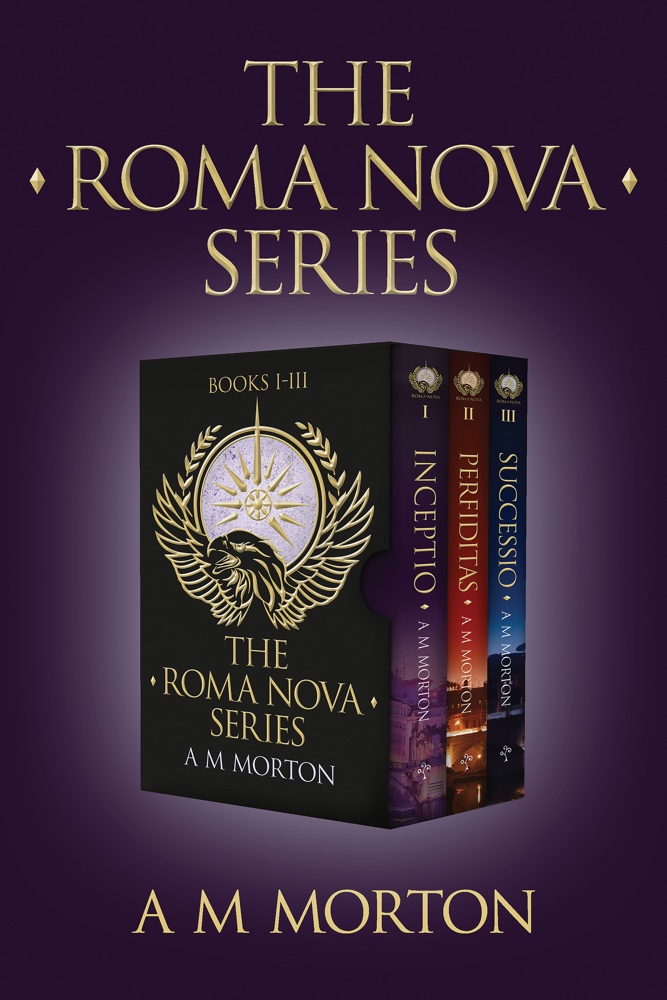
Alison Morton's Roma Nova Series I-III set (INCEPTIO, PERFIDITAS, and SUCCESSIO) was released on February 10 at a value price. If you haven't read the first three Roma Nova novels, this is great way to start. Links: Amazon | iTunes | Nook | Kobo  In other news, Alison was recently interviewed by Angela Wren about writing alternate history, and by Heather Campbell about receiving the BRAG Medallion. Last but not least, Alison also announces a new home for her ROMA NOVA books: Pulcheria Press, launched February 3. Congrats Alison!


10 August 2016

The Art of the Decadents and the Bourgeois

 
By Laura Rahme

Francois Boucher’s The Chinese Garden

The downfall of the French monarchy during the Revolution of 1789 brought with it a new social order where art modes that were considered decadent and aristocratic were shunned.

Through Revolution, power and wealth flowed increasingly into the hands of the emerging bourgeoisie, a socio-economic group that had long aspired to the manner and graces of aristocrats, but who now sought to forge themselves a new identity, along with their own artistic sensibilities.

New styles emerged in dress, hairstyles, furniture, theatre and art.

Prior to the French Revolution, and ever since the reign of Louis XV, Rococo artists were the masters of the French art scene. This was to change.

Marie-Antoinette’s Art World

At the time of Queen Marie-Antoinette, before the French Revolution, paintings were lavish depictions of luxury, pleasure and the insouciance of a privileged class which did not reflect the majority of the population. Ordinary working class people were rarely subjects of these paintings.

Instead, aristocratic subjects are seen idling about in elaborate clothing without a care in the world. This was the time of Rococo art.

The Swing
Jean Honoré Fragonard’s The Swing (1767) denotes the carelessness and childishness of a young girl at play. Here, the aristocrats seem oblivious to the reality that the ordinary French person lives daily. This brand of art would have been odious to French revolutionaries given that as early as the 1780s, the price of bread was starting to rise due to poor crop yields, and the country’s debt was climbing.

The Lock
In The Lock (1777), Fragonard depicts a debauched noble class with perhaps a male making ready to corrupt his female companion despite her protests. The disordered bedroom and sheets allude to furious abandon, or even struggle, giving the onlooker a sense of forbidden erotic pleasures. This artistic style is in line with the libertine literature of the times, evoking themes from Le Marquis de Sade texts and Choderlos de Laclos’ Les Liaisons Dangereuses, the latter being hugely popular despite it being banned.

Portrait of Madame de Pompadour
In Francois Boucher’s portrait of Madame de Pompadour (1756), Louis XV’s chief mistress reclines on a sofa, dressed in a rich silk gown embroidered with flowers. Elaborate pink bows cascade down her corset, mirroring the perfect bow around her white neck. The great patroness of Rococo art appears regal and her encumbering court attire hints to her idleness and ease.

In the Rococo period, we also see decadence and immorality illustrated through Francois Boucher’ portraits. For example in his Brown Odalisque (1745), Boucher’s model is nude and tempts the onlooker with her exposed bottom.

Brown Odalisque
Boucher’s Léda et le Cygne (c.1740) dives with abandon into erotic perversion.  According to Greek mythology, Zeus transformed himself into a Swan to rape Leda. Yet the painting’s soft pastels and the lack of aggression implies yielding. Instead, the mood is languorous and Leda’s pose - lifting her dress - alludes to permissiveness.  

Leda and the Swan
Prior to the Revolution, almost all was permitted to aristocrats and they held rights over lower classes. In retrospect, the painting hints at the swan’s aristocratic embodiment with the rape of Leda recalling the suppression and abuse of the working classes who have no other choice. No wonder Boucher was in poor taste by the time the revolution began. Alas, despite his enormous talent, he remained unpopular for almost a century.

With these Rococo samples, it comes as no surprise that aristocrats were often seen as debauched and immoral. On several occasions, even Marie-Antoinette’s supposed sexual life and sensual pleasures were the subject of pamphlets and public scorn.

At the dawn of the French Republic, morality and discipline would need to be the focus of the new age if one were to distance oneself from aristocratic mores.  If a bourgeois wished to acquire symbols of stature, and ornaments for their home, they could not be seen as coveting the same frivolous art and perpetuating the same ideologies as aristocrats.

What style could a bourgeois possibly turn to?

Republican Scorn

With Liberty, Equality and Fraternity, the French mentality impassioned itself with noble ideals and moral rectitude. People became ‘enlightened’ and suddenly the excesses of the old regime with its implied hierarchies and light-heartedness were frowned upon.

According to Gamboni1, what irked revolutionaries was not so much the content of Ancient Regime paintings and images, but rather their symbolic representation.  While portraits of monarchs, members of the nobility and the Church were more directly attacked, any other work that these parties may have commissioned, possessed or displayed, were seen as symbolic of old power hierarchies and came under the revolution’s scorn.  Also to be wiped out or strictly discouraged were symbols of feudalism, superstition, toys and the ‘spoils of prejudice and arrogance’.

The terms pronounced when the city of Lyon’s buildings and monuments were destroyed leave no doubt as to the revolutionaries’ attitude: “In the name of the Sovereignty of the people…we strike with death this abode of crime whose royal magnificence was an insult to the poverty of the people and to the simplicity of republican morals.”

Discovery of Pompeii Ruins

In this sweeping social change, what, then, were accepted artistic symbols? What art forms were to be revered for their espousal of revolutionary values?

The answer to these questions were to be found in recent archaeological discoveries which had gradually brought upon an international change in the art scene.
That is, if a revolution had taken place in France, another revolution was burgeoning in the art world.

Earlier in the 18th century, the ancient Roman towns of Herculaneum and Pompeii had been discovered - in 1738 and 1748. These archaeological finds revealed gorgeous villas and a range of classical art from Greek vases to exquisite Roman murals. These discoveries newly inspired artists who began to experiment using Ancient Rome and Ancient Greece as models.

Europa riding the bull –
Fresco from Pompeii, 1
st Century AD
Antique style drawings, with their clean lines contrasted with the softness and airy touch of Rococo. The antique style was seen as representative of virtue while Rococo was coded as decadent.

Neo Classicism was born.

Juliette de Récamier’s Art World

Where Marie Antoinette had reigned supreme as Rococo graced French monuments and salons, after the French Revolution, it was the wealthy bourgeois socialite, Juliette Récamier, who became her Neoclassicism equivalent. 

Bust of Juliette Récamier -
Joseph Chinard, c.1801-2
A celebrity in her time, this wealthy banker’s wife heralded advances in furniture and dress style. Marie Antoinette had once commissioned Jean-Baptiste Pillement to decorate her Petit Trianon with his famed Chinoiserie style. No more. During the Neoclassicism period, socially accepted symbols included Ancient Egyptian lions and sphynxes, like those adorning the chairs owned by Juliette Récamier. The gracious hostess also owned an antique style bed with bronze-like ornaments and an x-shaped stool evoking Ancient Rome.

Styles in sculpture also reflected classical taste. In her time, Juliette Récamier was famed for her beauty and this marble bust depicts her as no less than the most gracious antiquity goddess.

Aside from being the subject of sculpture, Juliette Récamier also featured in a couple of paintings. One of these is her portrait by Jacques-Louis David, with a similar one painted by David’s pupil, Baron Gérard. In the latter, Juliette Récamier, the very spirit of Neoclassicism, is lying barefooted on an Etruscan chaise-longue, channelling the Greco-Roman vestal virgin with her simple white dress and up-styled hair.

Portrait of Juliette Récamier
by Baron Gérard (1802)
At the time, a journalist wrote, “Truth could go no further than this, she is so seductive to the eye and the imagination, that she gives off an impression of the ideal.”2 [translated from French]

Years before, Jacques-Louis David had produced equally ‘classical’ portraits, including this one of Madame Henriette de Verninac (1799), daughter of a minister and wife of a diplomat.

Madame de Verninac
The pose is almost identical to the one adopted by Juliette Récamier. Individuality seemed less important with this art form which was synonymous with patriotism, self-sacrifice and nationalism.

Jacques-Louis David - Art Dictator

Ironically, before the French Revolution, Jacques-Louis David had once been taught by sensualist Francois Boucher, and upon leaving Paris to study in Rome, had once declared, "The art of antiquity will not seduce me, for it lacks liveliness.” But times being what they were, even artists did well to reinvent themselves, if only for survival. Or was it only survival?  

During the French Revolution, David had joined the extremist Jacobins.  He not only voted for the execution of Louis XVI and Marie-Antoinette but he lent his support to Robespierre during the Terror…as France’s art dictator. His subsequent abolition of France’s Royal Academy of Painting and Sculpture was often interpreted as a reprisal for slights suffered in his youth.

Years later, under Napoleon, he would continue to direct his Neoclassicism talent into much propaganda.

Neoclassicism under Napoleon

Neoclassicism swelled to propagandist proportions during the First Empire, with Jacques-Louis David producing this well-known portrait of Napoleon crossing the Alps. The painting is marked by austerity and discipline, both hallmarks of Neoclassicism, while still associating grandeur and fearlessness with Napoleon.

Napoleon Crossing the St. Bernard Pass (1800)
In a similar vein, David’s Napoleon in his Salon (1812) confers authority and power to Napoleon. The winged head of mercury is a Greek symbol of wealth, while the lion is an Egyptian symbol of a king’s power. Both further illustrate the furniture style of that period.  Meanwhile Napoleon’s poised stance, his uniform and sword combine to portray a man in control.

Napoleon in his Salon 1812
The Decadents and the Bourgeois

As seen, the French Revolution saw dramatic socio-political changes which precipitated drastic transformations in the art world and in the consumption of art. While the ‘decadent’ aristocrat favoured Rococo, at the end of the Ancient Regime, Neoclassicism had risen in importance. Neoclassicism was seen as aligning with the ideologies of the French Republic and for this reason was embraced and even championed by the bourgeoisie. Far from being a passive decorative art form, Neoclassicism served as a tool for advancing the interests of the French Republic and later of Napoleon.


Sources:
  1. The Destruction of Art: Iconoclasm and Vandalism since the French Revolution, Dario Gamboni, Reaktion Books, 1997.
  2. Portrait de Juliette Recamier, Carnavalet Museum, http://www.carnavalet.paris.fr/en/collections/portrait-de-juliette-recamier-1777-1849, Accessed on 28 Jul 2016.
  3. Neo-classicism & The French Revolution, Oxford Art Online, http://www.oxfordartonline.com/public/page/themes/neoclassicismandthefrenchrevolution, Accessed on 28 Jul 2016.
  4. 18th- and 19th-Century France - Neoclassicism, National Gallery of Art, http://www.nga.gov/content/ngaweb/features/slideshows/18th-and-19th-century-france-neoclassicism.html, Accessed on 28 Jul 2016.
  5. Rococo - Wikipedia
  6. Jacques Louis David - Wikipedia

All images from Wiki commons. 

29 July 2016

Beyond Our Stars: Hanno the Navigator & the Phoenician Reliance on Astronomy


Goddess Tanit, Carthage
Modern day Senegal is said to be inhabited by a sizable Lebanese community, the majority, like my father and myself, being born there. These “African Lebanese” or “Senegalese Lebanese”, as they like to call themselves, are primarily entrepreneurs. They are deeply entrenched in Senegalese commerce and constitute a strong monopoly. 

The Lebanese have been established in Senegal for decades. Their presence dates from even before the Lebanese civil war of the mid-70s with some, like my grandfather, having arrived in the early 1930s, while others erred there on migrant boats under the misguided belief that they would be brought to America.

Regardless of their arrival date and of the deep anchor into a country they call their own, it would come as a surprise to most “Senegalese Lebanese”, to learn that thousands of years ago, their Phoenician ancestors had, long before they did, endeavoured to establish trade in Senegal.

Between 500 and 480 BC, the naval commander and King of Carthage, Hanno, sailed through the Pillars of Hercules (the Strait of Gibraltar), contouring the African coast anti-clockwise, and is said to have reached the Senegal River. Hanno recorded his journey on a tablet which he placed in a temple. His record, later translated into Greek, depicted an expedition consisting of 30000 colonists and 60 ships.

Phoenician ship detail from 2nd-c.
sarcophagus - Sidon, Lebanon
Carthage-based Phoenicians like Hanno originated from the land of Canaan which today encompasses most of Lebanon, parts of Israel and Syria. What a remarkable coincidence that like their modern day Lebanese counterparts, the Phoenicians would have had an interest in exploring trade opportunities in Western Africa, with Hanno navigating past Cape Verde, round the Gulf of Guinea and potentially as far as Cameroon.

The Phoenicians were merchants and ship builders who dominated the Mediterranean Sea three thousand years ago. Their empire stretched from the city of Tyre in modern day Lebanon, to Carthage in modern day Tunisia, and their colonies included Cadiz in Spain, Cyprus, Sicily, Corsica and Sardinia.  In their times, they were the uncontested masters of the sea, trading as far as Cornwall in England. Their desire for trade provided an incentive for exploration and this went hand in hand with navigation.

Phoenician trade routes
It is acknowledged that the Phoenicians were the first Western civilization to have developed the art of navigation at sea. Their navigation skills were aided by a knowledge of astronomy - they are considered to be the first navigators to use the Pole star. The Phoenicians had learned to sail on a cloudless night, using the star, Polaris, as a reference for North. Polaris is a star in Ursa Minor, the constellation of the Little Bear. In those days, other cultures began to call this constellation “Phoenike” after the first mariners who employed it, the Phoenicians.

Use of Polaris allowed the Phoenicians to venture away from traditional routes that generally hugged the coastline, without fearing they might become lost.  They kept the North Star to their right (starboard), when they wanted to sail West and to their left (port side), when they wanted to sail East. Interestingly, the Phoenician word for East was Asu (sunrise) while for West, it was Ereb (sunset) - terms which have given us Asia and Europe, respectively.

Along with Polaris, the Phoenicians observed other stars, together with the sun and moon. To aid in their observation of the sky, most of their Mediterranean navigation took place between March and October, when weather conditions were more favorable.

The Phoenicians could calculate how far south they were by looking at the height of the midday sun or through the emergence of new stars and the disappearance of others in the sky. They knew that the sun was lowest in the sky at the winter solstice. They also knew that during equinoxes, the sun rose in the east and set in the west more precisely than at other times.

The Phoenicians of Carthage were highly dependent on sky observation for sea travel and ultimately for their monopoly over Mediterranean commerce. This reliance is best illustrated through their increasing worship of the Goddess Tanit.

Tanit stele, Carthage
Tanit was Carthaginian Sky Goddess who ruled over the Sun, Stars and Moon, while her consort Ba’al-Hammon was the God of the Sky. Her origin may have been either local, or harked from Ashtart (Astarte), the fertility Goddess of the Tyrian Phoenicians.  Starting in the 5th century however, Tanit became the chief deity of the city of Carthage - a patron goddess and oracle.  It is this oracle quality in particular, an allusion to consulting the sky for making decisions, which further underlines the Phoenicians’ reliance on astronomy for their successful endeavours.

Today the Lebanese merchants living in Senegal are no seafarers. In their daily business, they need not gaze upon the stars nor do they worship astral deities like their Phoenician ancestors once did. Still I can’t help but smile when I consider that their inherent love of commercial exchange and their presence in Africa remain strong.  

References
  1. The Amazing Astronomers of Antiquity, Houston Museum of Natural Science
  2. The Science of Navigation from Dead Reckoning to GPS, Mark Denny, Johns Hopkins University Press, 2012.

27 April 2016

The Intellectuals: Lalla Zaynab and Lalla N’Soumer - Indomitable Sufi Scholars

By Laura Rahme

“Raise your words, not voice. It is rain that grows flowers, not thunder.”
– Rumi, Persian Sufi mystic.

Sufism in Algeria rose in importance during the 16th century, under the Ottoman Empire.  One of the most powerful Sufism school of thought in Algeria is the Rahmanya. It emerged between the 12th and 18th centuries. It offered spiritual teaching and education, monetary assistance to its adherents, a refuge for the needy, and was instrumental in maintaining community cohesiveness and social integrity.

Lalla Zaynab was an erudite scholar from the Rahmanya order. It was believed that she possessed Baraka – a spiritual force flowing from God, giving her the ability to perform miracles. Born in 1850, this remarkable ascetic who had taken vows of celibacy, proved a veritable force against the schemes of the French colonists.

The Zawiya of El Hamel
Portrait: Lalla Fatma N'Soumer

Lalla Zaynab was the unique child of Shaykh Muhammad ibn Abi al-Qasim who ran the Zawiya (lodge or monastery) of El Hamel. The zawiya played a key role in teaching the Quran, spreading Rahmanya teachings, feeding the poor, providing relief to flood victims and enabling scholars to occupy positions of great importance. Like many zawiyas in the country, which numbered 160000 by 1887, it helped preserve Algerian identity and cultural heritage. By 1890, there were several hundred students and scholars studying at the El Hamel zawiya at any given moment. It was visited by 7000-8000 pilgrims annually.

In addition to Islamic jurisprudence, Quran and Sufi doctrines, students learned chemistry, mathematics, astrology, astronomy and rhetoric. Shaykh Muhammad reminded the community that the pursuit of science was a duty of all Muslims, a belief which harked back to the medieval Islamic era.

While the French authorities were not known to praise Algerian Muslim leaders, Shaykh Muhammad b. Abi al-Qasim was often described as having “great intelligence, vast knowledge, and [being] pure of morals."

Nevertheless, the French were paranoid about any politically active Sufi brotherhood and their threat to the French empire. They closely monitored all Algerian leaders.

the zawiya of el hamel
A Female Scholar at the Head of the El Hamel Zawiya

Lalla Zaynab had lived secluded in the zawiya for years and as her father’s confidant, had a thorough understanding of its day to day operations. Well versed in all manuscripts and books of the zawiya library, she was the natural successor to her powerful father. But the local French authorities would not see this as beneficial. Their low regard for her gender led them to believe that as a woman, she would be more likely influenced by anti-French forces.

The French were keen to have the shaykh’s nephew, Sidi Mohamed, lead the zawiya. He was not only ambitious and of average intelligence, but also most devoted to French interests. On top of that, he spoke French! However, they also noted that unlike the virtuous and pious Zaynab, Sidi did not have the esteem of his local community, who considered him avaricious and attached to the things of life.

This did not deter the French. A few months before the Shaykh’s death, on 10 Mars 1897, Captain Crochard certified that he had received a letter from the Shaykh, confirming that he designated his nephew, Sidi Mohamed, as his successor.

Following the Shaykh’s death on 2 June 1897, Sidi Mohamed was eager to install himself in the shaykh apartments and inherit the immense fortune. No sooner did he arrive than he was met by the defiant Lalla Zaynab who, brandishing an official will drafted in 1887 declared that she was her father’s sole heir and that she did not acknowledge Sidi Mohammed’s moral and spiritual authority.

Lalla Zaynab met opposition from her cousin, who attempted to have her shut in the harem, but the community who loved her rose against him and his supporters. For the locals, while there was initial reticence as to whether Zaynab was the most befitting leader, it was not due to her gender. Instead, the people were anxious to know whether she, too, possessed her father’s Baraka. A voice apparition from the Shaykh declaring that his daughter had inherited his healing and supernatural powers had soon quashed any doubts.

The French Threaten Lalla Zaynab

Lalla Zaynab
Upon Lalla Zaynab’s triumph, Captain Crochard was out of his mind. He wrote, “this woman has destroyed everything I have put in place.” At this juncture, Commandant Fournier alerted the headquarters in Algiers, enquiring whether a military intervention might be needed to topple Lalla Zaynab and ensure Sidi Mohamed was made head of the zawiya in her place.

Eager to adopt more conciliatory measures, especially with a woman, Crochard attempted to speak with Lalla Zaynab in the hope of pressuring her to defer to her cousin, but she insisted that the letter Crochard held was a fake and wanted to hear none of it.

Crochard had run out of ideas. It seemed that only military force could achieve French interests.  

Would Lalla Zaynab and her community be forced to face the French army? And at what cost?

Consider here that the Shaykh’s fortune amounted to 2 500 000 francs which at the time was an enormous sum when in colonial Algiers, a labourer was paid an average of a mere 1.5 franc per day.

It would not be the first time that the French military would take on a zawiya. One had but to reflect on what had happened when they had first invaded Algeria…

The Joan of Arc of Algeria

From the time of the French arrival in Algeria, the zawiyas usually taught its students to struggle against French dominion.

Back in 1830, when confronted with the French invasion, the Ottoman Dey Hussein called upon the Rahmanya Shaykhs around the Kabylia area and Algiers, to defend the land from French colonial rulers.

At the time, the Rahmanya was led by a young Kabyle woman called Lalla N’Soumer. Born in the Djurdjura area of the Atlas Mountains of Algeria, this highly charismatic spiritual leader and scholar was soon to be referred to by the French as the “Joan of Arc of Djurdjura”.

Her real name was Fatma Sid Ahmed and she was known for her great scholarly gifts, wisdom and intelligence. In 1854, at barely 24, she rallied indigenous Kabyle people, leading an insurrection against the French troops, often throwing herself into the fray and combatting alongside the renowned freedom fighter Abd-el-Kader.

Lalla Fatma N'Soumer in battle
In all, Lalla N'Soumer led a formidable Rahmanya resistance against the French, heading an army of men and women and being successful during several battles including on 18 July 1854 when the French suffered heavy casualties. The French, led by Marshall Randon, asked for a cease-fire. But three years later, in 1857, having replenished and fortified their armies, they broke the cease-fire and again launched into battle. This time round Lalla N’Soumer’s armies were not victorious. 

Just as Joan of Arc had suffered a turn of fortune, Lalla N’Soumer was arrested and incarcerated. She died years later in prison at the age of 33. The French soldiers squandered the wealth of her zawiya and completely destroyed her library.
In fact, from the time of their arrival in Algeria, the French colonists had closed many zawiyas, burning books and manuscripts. French historian Alexis de Tocqueville said in 1847, "We dominated the land, changed its function, established charity centers, neglected schools, dispersed the zawiya...ignored religious men and judges of the law. In doing so we made Islamic society more miserable, and more ignorant, than when we first met."

Lalla Zaynab Takes on the French

If Lalla Zaynab was going to take on the French she would have to be more astute than Lalla N’Soumer.

Under pressure from Captain Crochard, Lalla Zaynab quickly understood that she could not survive a military intervention. Instead, and this is where her scholarly genius shone, she was going to fight the French using their own colonial law against them! She announced that she would press charges against Crochard and his superiors.

In August 1897, Lalla Zaynab met Maurice l’Admiral, an Afro-descendant lawyer from Guadeloupe known for his anti-colonial position and she proceeded to raise a case against the French military administration. Lalla Zaynab who spoke no word of French, instinctively understood how to use colonial law by drawing attention to the military administration’s failure to “respect the indigenous populations”. On top of that, she also had the genius idea of going further - she accused the French authorities of misogyny. Touché! French self-righteousness over its ‘better’ treatment of women was instantly placed into question.

Maurice ''Admiral illustration
Once Maurice l’Admiral began his independent judiciary intervention, the state of affairs underwent a transformation. Of particular concern was the bad publicity caused by French poor treatment of Muslim dignitaries. At the time, the French had commenced an international public relations campaign designed to convince Muslims in Morocco, Tunisia and elsewhere of the benefits of French rule. This case was detrimental to the desired image of French tolerance and benevolence.

In October 1897, Jules Cambon, governor general of Algeria was alerted by the authorities and told of Zaynab’s judicial case. Luckily for Lalla Zaynab, Jules was a man of culture, who later was to be elected at the French Academy. He was the first colonist to engage in dialogue with the order leaders and to show interest in Sufism. In no uncertain terms, he told Algiers Commandant Collet-Meygret that they had to renounce all military intervention against the El Hamel Zawiya.

The zawiya was saved.

Lalla Zaynab had used the pen instead of the sword and won.

For the following years the mystical scholar, Lalla Zaynab, ran the zawiya with authority and wisdom. She gave generously to the poor and the needy, continuing her father’s legacy. She was a revered figure for years to come. It is said that in her approach to confronting the French, Lalla Zaynab saw 70 years ahead of her time, what would become crucial to Algerian nationalism.

The Legacy of the Rahmanya

Today the Rahmanya legacy lives on and its teachings are more important than ever.
Established in 1990, the Rahmanya Association for Zawiya Scholarship emphasises spiritual education, efforts to preserve religious unity and avoid extremism and preservation of the Algerian Islamic identity.

Since 2001, an ordinance has asked for collaboration to protect the young from media influence and from religious extremism.

Sources:


Tariqah Rahmania: Its Roots and Prospects, by Kacimi El Hassani and Mohammed Raouf, The Journal of Sophia Asian Studies No. 27 (2009), Sophia University Repository for Academic Resources.
Lalla Fatma N'Soumer, Amazigh World, 20 April 2007, http://www.amazighworld.org/history/index_show.php?id=1828, Accessed on 28 Feb 2016.
À La Tête D’une Grande Zaouïa En 1897 Lalla Zineb, L’insoumise, by Benchenouf Djamaledine, 20 April 2013, http://dzactiviste.info/a-la-tete-dune-grande-zaouia-en-1897-lalla-zineb-linsoumise/, Accessed on 28 Feb 2016.
Struggle and Survival in the Modern Middle East, by Edmund Burke and Nejde Yaghoubian, University of California Press, 2006.

Rebel and Saint - Muslim Notables, Populist Protest, Colonial Encounters (Algeria and Tunisia 1800 – 1904), by Julia A. Clancy-Smith, University of California Press, 1994.

All images from Commons