Showing posts with label Delia Deleest. Show all posts

06 April 2011

Cowards: Order of the White Feather

By Delia DeLeest

Today's post isn't necessarily about cowardice as much as people's perception of who is a coward.

There are many reasons, even during wartime, why a man would be denied access into the military--medical, mental, a pressing need to remain home for family, etc. Every person has their own story, and only they will know all the intimate details. It's not for an outsider to make decisions regarding another person's life, nor is it their duty to criticize the decisions made by others, especially when they don't even know that person. None of these facts seemed to bother the members of The Order of the White Feather.

The signification of a white feather to mean cowardice came from the world of cockfighting. A purebred gamecock will not have any visible white feathers, so if a fighting bird displayed any white plumage, especially in the tail feathers, it was believed to be inferior. In a sport where determination and aggressiveness in an animal is highly prized, to have an animal display any sort of cowardice was the worst sort of plight. By the turn of the twentieth century, a white feather became commonly known as an accusation of cowardice among men as well.

In 1914, at the dawn of World War I in Great Britain, Admiral Charles Fitzgerald, along with support from author Mrs. Humphrey Ward, initiated The Order of the White Feather. This organization's sole purpose was to coerce able-bodied men to enter the military. When they saw a man out in public in civilian clothes, women were asked to hand them a white feather in order to shame them into doing their civic duty and take up arms against the Kaiser.

Right or wrong, the campaign was affective. So many men were pressured to join up that the government was having a hard time keeping enough men on the home front. Soon, Home Secretary Reginald McKenna began issuing King and Country badges to government employees to indicate that they too, were serving the war effort, though at home. Before long, he realized that veterans also needed to be protected from the feathered onslaught and issued the Silver War Badge, indicating that its wearer had been honorably discharged from the military due to injury or illness.

Not everyone supported the Order. Writer Compton MacKenzie had no patience with these judgmental feather handlers and claimed that "idiotic young women were using white feathers to get rid of boyfriends of whom they were tired." One noted pacifist at the time claimed he received so many feathers he had enough to make a fan.

Whether you agree with their actions or not, it can’t be denied that The Order of the White Feather definitely did their part to swell the ranks of the British military during The Great War.

Delia DeLeest is fascinated by all things 1920s. She suspects she was once a flapper or, more probably, a bootlegger in a previous life. Her third 1920s era book, NOT LOOKING FOR TROUBLE, is available now from The Wild Rose Press.

01 February 2011

An Ordinary Day In: The Life of a Telephone Operator

By Delia DeLeest

No matter how frustrated I get with my cell phone sometimes, I give thanks that technology has come as far as it has. Though we had a direct dial system when I was a kid, I can still remember having to deal with a live operator to make a long distance call...and gosh, I'm not that old!

In the late nineteenth and early twentieth centuries, job opportunities were pretty limited for women. Cook, maid or school teacher were most women's only options. Then there came telephones.

The first telephone operators were young boys, but it was soon evident that this wasn't a good idea. Put a group of twelve year old boys together in a room and there's going to be more wrestling and goofing off than work. Young boys weren't long on either patience or manners. It was soon discovered that women made the best operators, mainly due to the upbringing of the times. Girls/women were expected to sit still, be polite, well-mannered and docile--the perfect recipe for a job requiring long hours, tedious work and, often, rude customers.

As I said earlier, telephone operators worked in twelve hour shifts. There were strict rules on what you could and could not do while working as an operator. Most of them were of the not do variety. There was no leg-crossing allowed. They sat straight and tall, both feet on the floor. If they wanted to blow your nose or wipe your brow, no problem, as long as they asked for permission first. No glancing around the room or inspecting fingernails. Keep eyes on work alone, or risk being written up unfavorably in a deportment report. There was no idle chit-chat with the customers. Operators were given a list of phrases they were allowed to say, consisting of the "number please, hold please, one moment please" variety, with a thank-you thrown in for every other situation, even if a customer was cussing you out.

It's easy to see why women replaced young boys, isn't it? Not only were the women better behaved and more polite, it was also discovered that they did the job quicker and more efficiently.

In 1880, only four years after phones were unveiled at the 1876 Centennial Celebration, there were phone connections in every city of over ten thousand people and more than sixty thousand phones connected across America. These numbers grew at an amazing rate, as did the need for operators to connect all those calls buzzing around the country.

Every operator worked in a central office. There were a couple different kinds of phone calls. First, and easiest, to connect were inter central office calls. These were local calls between lines connected at the same central office. Connecting them was simply a matter of plugging the line into the jack on the control board corresponding to the proper customer wishing to be contacted. These are today's local calls.

Other calls requiring a connection to a different central office required the work of two or more operators to connect. The local operator would connect to the 'trunk' of a different central office and request that the operator there make the connection to the desired party. Of course, an operator had a limited number of trunk lines to connect to, so the farther away you wished to reach, the more people would be involved in connecting the phone call.

Let's say you were living in New York City and wanted to call your cousin in Baltimore. You would pick up your phone and request a connection to your cousins number. Once the operator had the information, you hung up your phone and waited. Your local New York operator might have to contact the operator in Trenton, New Jersey, who, in turn, might have to connect to an operator in Philadelphia, who finally gets the Baltimore operator who can connect you to your cousin.

Once your cousin answered, your local operator would call you and tell you your call was connected and you were free to discuss grandma's gall bladder surgery or your plans for Thanksgiving Dinner. In 1918, the average time to connect a long distance call was fifteen minutes.

As the years went on, technology slowly phased out the need for operators. First you were able to make your own local calls. When automatic number identification was invented, phone companies were able to automatically connect and bill callers. Before that, long distance calls were put in an operator queue where the operator would request the calling party's number, where it was written on a party toll ticket (which is what I remember doing as a kid). Those calls were then added up and put on the customer's monthly bill. Once the operator had your number, she was able to automatically complete your long distance connection.

Very seldom do we now need an operator's assistance when making a phone call, but a hundred years ago, it was a very personalized procedure. Maybe if we still had to wait fifteen minutes to make a phone call, we'd have a more relaxed, calmer society. Then again, I get antsy if it takes an internet page too long to download, so maybe a fifteen minute phone connection wouldn't do my blood pressure any favors.

Delia DeLeest is fascinated by all things 1920s. She suspects she was once a flapper or, more probably, a bootlegger in a previous life. Her third 1920s era book, NOT LOOKING FOR TROUBLE, is being released from The Wild Rose Press at the end of October.

19 January 2011

Movie Adaptations: St. Valentine's Day Massacre

By Delia DeLeest

My original impulse to watch this movie had nothing to do with an interest in the 1920s. I didn't know a thing about the decade besides a passing acquaintance with Betty Boop (who, it turns out, didn't come onto the scene until 1930, but I didn't know that then either). The St. Valentine's Day Massacre of 1967 topped my wanna see list because the late 1960s version of David Canary is just about the sexiest thing to walk the earth. Yep, interest in the jazz age took far off second place to delicious man-candy.

After watching it (and rewinding the David Canary parts so often I almost wore the tape out), I got to thinking about gangsters, those men who openly flouted the law, and the women who loved them. I became interested in all things criminal that happened in Chicago during the 1920s.

I learned a lot of things, one of which is that the movie is incredibly inaccurate. Like Carrie mentioned in an earlier post, Hollywood tends to put older men in the roles that in reality were lived by much younger men. This phenomenon was particularly apparent in the (mis)casting of 47-year-old Jason Robards as Al Capone, who, at the time of the massacre had just turned thirty. Ironically, one of the oldest players of the real life massacre, Frank Gusenberg, was played by one of the youngest actors (Canary) in the movie. This gives the impression that Chicago's underworld was being run by a bunch of middle-aged men, when, in reality, most were in their twenties and early thirties when they took over the town. The life span of a Chicago gangster was really short in those days, so when one young man was gunned down, another one would quickly take his place.

But enough of what this movie wasn't. Let's get on to what it was and did. Though some of the people and events weren't very accurate, many other things were. Many quotes made by the movie characters were really said. Things like Frank Gusenberg's last words to the police as he was dying of multiple gunshot wounds: "Nobody shot me. Leave me alone," were Frank's true last words. It gives the viewer a taste of the bizarre code of honor held by these blood thirsty men. Moran's reaction to the massacre, "Only Al Capone kills like that," was also taken directly from reports of the day.

It gives you the feel of what it was like in Chicago during the Roaring Twenties, which brings us into speakeasies, dark streets, mansions and dingy rented rooms. I loved those scenes that took us into the characters homes. From the child-filled one room tenement of Johnny May to the gaudy apartment of Pete Gusenberg and the old-world elegance of the home of Patsy Lalardo, the movie gives you a peek at the lifestyles of the many different kinds of people living and trying to survive in Chicago at the time.

But, in my opinion, the best part of the movie (besides the shirtless David Canary scene) is the wonderful, sometimes dark humored, voice-overs that set up the key scenes and introduce the characters. The movie was shot as a docudrama, and the narrator tells us a little about each of the characters as they come into the movie. We get to hear about Pete Gusenberg's childhood, his brother Frank's two wives, Jack McGurn's father's murder and Jack's revenge on the killers.

This introduction to their background makes us feel closer to men we'd otherwise feel animosity toward. The movie continues to make them more human by showing them with their wives, mothers and lovers, as well as their interaction with each other. One part that never fails to make me laugh is when Moran's men are told that the Northsiders (Moran's gang) made a deal with one of the despised Italians. Despite being corrected numerous times, the Moran lackeys can't seem to pronounce his name correctly and continue to refer to Joe Aiello as Joe A Yellow. These were regular, blue collar men, whose job just happened to involve machine guns, killing and illegal booze.

Though shocking at the time, today's viewers are probably immune to the relatively mild (according to today's standards) violence found in the movie. The scene near the end, portraying the massacre itself is breathtaking though, not because of the blood and gore, but because of the sheer cinematic genius and odd beauty of showing the men dying and falling to the floor in slow motion. I've read that the director had the actors study the police photos of the actual murder scene and had the men land exactly the way their real life counterparts did. It's incredibly realistic.

The thing about the movie that especially endears it to me is its shout-out to Hollywood's most famous movie gangster and one of my favorite actors, James Cagney. The opening scene in St. Valentine's Day is a copy, almost word for word, of one of Cagney's best in The Public Enemy. Later on, a fight Pete Gusenberg has with his moll features him shoving food in her face, much like Cagney's famous scene, also in The Public Enemy, where he shoves half a grapefruit into Mae Murray's face. In fact, the whole film feels more like a 1930s gangster flick than something filmed in 1967.

You probably haven't seen this movie; most people haven't. In fact, it's listed at number seven on the list of the "Top Ten Best Gangster Movies You've (Probably) Never Seen." But, if you ever get the chance, give it a watch. Maybe it'll turn you into a Roaring Twenties addict like it did me.

Delia DeLeest is fascinated by all things 1920s. She suspects she was once a flapper or, more probably, a bootlegger in a previous life. Her third 1920s era book, NOT LOOKING FOR TROUBLE, is being released from The Wild Rose Press at the end of October.

14 November 2010

NOT LOOKING FOR TROUBLE Winner!

We (finally, after my screwy week!) have a winner for Delia DeLeest's NOT LOOKING FOR TROUBLE guest blog. A free copy goes to:

JEANIE C!

Contact Carrie to provide your mailing address. The book must be claimed by next Sunday or another winner will be drawn. Please stop back later to let us know what you thought! Congratulations!

06 November 2010

Weekly Announcements - 6 Nov 2010

Margaret Mallory has a new cover and information about her upcoming new series from Grand Central. THE GUARDIAN, set for an April 26th release, is book one in the "Return of the Highlanders" series set in 1513. In the series, four fearless warriors return to the Highlands to claim their lands and legacies. But all their trials on the battlefield can't prepare them for their greatest challenge yet: winning the hearts of four willful Scottish beauties. Here's the blurb for THE GUARDIAN:
After years of fighting abroad, Ian MacDonald comes home to find his clan in peril. To save his kin, he must right the wrongs from his past...and claim the bride he's long resisted.

As a young lass, Sìleas depended on Ian to play her knight in shining armor. But when his rescue attempt compromised her virtue, Ian was forced to marry against his wishes. Five years later, Sìleas has grown from an awkward girl into an independent beauty who knows she deserves better than the reluctant husband who preferred war to his wife. Now this devilishly handsome Highlander is finally falling in love. He wants a second chance with Sìleas--and he wont take no for an answer.
***

Both Margaret Mallory and Stephanie Dray were nominated for RT Reviewers' Choice Awards for 2010. Margaret's KNIGHT OF PASSION was nominated in the "British Isles" category, while Stephanie, writing as Stephanie Draven, received a nomination in the "First Series Romance" category for her mythic paranormal POISONED KISSES. RT Book Reviews reviewed more than 3000 titles this year, and this list of nominees was compiled by their editors and reviewers Winners will be announced in Los Angeles at the next RT Booklovers' Convention. Congratulations, ladies!

***

Lila DiPasqua's latest "Fiery Tales" collection of 17th century French-set novellas, THE PRINCESS IN HIS BED is out now! Here's the blurb:
The Marquis' New Clothes: To save her cousin, Aimee de Miran must retrieve a jeweled ring from the most sinfully seductive man at court, the Marquis de Nattes. But to search his considerable wardrobe she'll have to get very close to the notorious rake...and soon she finds herself very close to him indeed, with his clothes--and hers--utterly forgotten...

The Lovely Duckling: Reputed for his carnal skills, Joseph d'Alumbert prefers amorous encounters without emotional entanglement--until a quick-witted lady stirs tender feelings and hot desire. Emilie de Sarron suffered burns to her body as an infant, and keeps her scars--and her heart--well hidden. But Joseph is determined to peel away her inhibitions, one slow steamy kiss at a time, to reveal the beautiful swan inside...

The Princess and the Diamonds: Princess Gabrielle can't sleep at night. There is something hard in her bed. No, not just the stolen diamonds tucked under her mattress, but the handsome Marquis on it...whose carnal talents she can't resist. But he threatens her secret mission, and worse, she stands to lose far more than the diamonds--her heart is at stake!
***

Zoe Archer's latest is also available now. REBEL, the third of the "Blades of the Rose" series, is set in wilderness of British Columbia. Here's the blurb:
A LONE WOLF

Nathan Lesperance is used to being different. He's the first Native attorney in Vancouver, and welcome neither with white society nor his sometime tribe. Not to mention the powerful wildness he's always felt inside him, too dangerous to set free. Then he met Astrid Bramfield and saw his like within her piercing eyes. Now, unless she helps him through the harsh terrain and the harsher unknowns of his true abilities, it could very well get him killed...

AND THE WOMAN WHO LEFT THE PACK

Astrid has traveled this path before. Once she was a Blade of the Rose, protecting the world's magic from unscrupulous men, with her husband by her side. But she's loved and lost, and as a world-class frontierswoman, she knows all about survival. Nathan's searing gaze and long, lean muscles mean nothing but trouble. Yet something has ignited a forgotten flame inside her: a burning need for adventure, for life--and perhaps even for love...
***

Michelle Styles' December release, A QUESTION OF IMPROPRIETY has its cover and blurb, and is available for purchase on eHarlequin. Here ya go:
Diana Clare has had enough of London--the balls, the rakes you can never trust... Now, having returned home in disgrace, she is trying to forget what drove her from the ton.

Rake and gambler Brett Farnham, Earl of Coltonby, seems intent on making Diana remember exactly what it was like to be whirled around the ballroom and seduced by the glint in her partner's eye.

But Brett has "mistress" rather than "marriage" in mind, and Diana is not sure her reputation can stand up to another scandal....
***

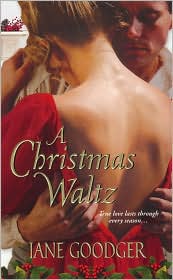
Join us Sunday when Jane Goodger will be here to chat about her latest "Christmas" romance, A CHRISTMAS WALTZ, set in 1894 Texas and England. She'll also be giving away a copy to one lucky commenter! Be sure to join us then.

***

We'll also draw the winner of Delia DeLeest's latest 1920s-set romance, NOT LOOKING FOR TROUBLE, from her guest appearance on Sunday. You still have time to leave a comment or question for your chance to win.

***

Stay with us through the coming weeks when we'll be featuring the best unusual historical authors! Kristi Astor, Kate Allan, Zoe Archer, and Michelle Styles will be our guests. Join us!

***

Have a good weekend! Remember, you don't have to be an Unusual Historicals contributor to submit good news to the weekend announcements. If it has to do with unusual historicals, we'd love to shout it out to the world! Send announcements to Carrie. See you next week...

31 October 2010

Guest Author: Delia DeLeest

This week on Excerpt Thursday we're featuring one of our regular contributors, Delia DeLeest as she celebrates the release of NOT LOOKING FOR TROUBLE, set during Roaring 20s. Join us Sunday when Delia will be here to answer questions and give away a digital copy of this sexy romance.

How could someone not looking for trouble stumble upon it so easily? Susan Kent wonders this exact thing when she finds the man of her dreams, only to discover that he lives in a nightmare of his own making.

Jake Kelley thought he found the peace and simplicity he'd been looking for all his life. But in bringing Susan into his world, is he only dragging her down instead of pulling himself up?

The dark underworld of gangland Chicago throbs with intrigue, thrills and danger--those who venture there seldom leave intact…if they leave at all.
***

Tell us about NOT LOOKING FOR TROUBLE.

Though NOT LOOKING FOR TROUBLE is my third published book, it's actually the second manuscript I ever wrote, my first being a western that will never see the light of day. After watching a few old gangster movies (I may be in love with Jimmy Cagney) I became interested in the Roaring Twenties and all the incredibly interesting characters that came from that era. Okay, interested is kind of mild, let's just say I got a mite bit obsessed right down to the point when I could identify all the victims in the St. Valentine's Day Massacre in a police crime photo. Then I got to wondering about the women in these men's lives. Who were they? What drew them to these men? And how did they deal with consequences of living a life on the edge of crime? It was these things that created a story in my head just begging to be told and NOT LOOKING FOR TROUBLE was born.

What was 1920s Chicago like?

Though bootlegging was prevalent throughout the country in the 1920s and there were gangs controlling every major city at that time, Chicago is the one that has captured my imagination. The mood of the people of that time was reflected in this wonderful city. There was an underlying franticness, people out searching for just one more good time, regardless of its safety or legality. Chicago could be a dark, dangerous city, full of evil men whose only goals were money and control and they'd stop at nothing to get them. Winters in the Midwest are cold and unforgiving and I couldn't help coupling the atmosphere of the city with the uncompromising weather to portray the mood of the characters in my book.

What do you enjoy the most about researching the 1920s?

I've got an unhealthy attraction to my reproduction 1923 Sears and Roebuck catalog. That, along with a 1927 yearbook from a Chicago high school, can keep me entertained for hours. Something as simple as a description of a gas stove or a picture of the Senior class play can give me ideas that can turn into an entire scene or plot point.

But, it's reading mini-biographies about real people who lived in the time that I just can't get enough of. By reading about people's lives, societal expectations, rules and morals come to light, things that may never come up during a surface study of the time. While I love reading fiction, it just can't beat the lives real people and their true life struggles and victories.

Though the music of the times takes a little for our modern ears to get used to, I've been enjoying listening to it. I even found a dance tutorial online and my kids and I had a great time learning to do the Blackbottom, the Foxtrot and the Charleston.

What do you have in the works?

I've got a few manuscripts sitting in the darkness of my hard drive patiently waiting for me to make them readable. I feel guilty about these neglected children, but not yet guilty enough to whip them into shape. At the moment I'm attempting to store up my creative energy so it can burst forth in it's wondrous beauty on November 1, when I participate in my fifth year of Nanowrimo (National Novel Writing Month). That's the plan anyway, I'm not sure if my creative energy got the memo.

***

If you'd like to win a digital copy of Delia's NOT LOOKING FOR TROUBLE, leave a comment or question here. Maybe let us know what elements of pop culture you like from the early 20th century. Music? Movies? Any favorites you'd like to share? I'll draw a winner at random next Sunday. Void there prohibited. Best of luck!

28 October 2010

Excerpt Thursday: Delia DeLeest

This week on Excerpt Thursday we're featuring one of our regular contributors, Delia DeLeest as she celebrates the release of NOT LOOKING FOR TROUBLE, set during Roaring 20s. Join us Sunday when Delia will be here to answer questions and give away a digital copy of this sexy romance.

How could someone not looking for trouble stumble upon it so easily? Susan Kent wonders this exact thing when she finds the man of her dreams, only to discover that he lives in a nightmare of his own making.

Jake Kelley thought he found the peace and simplicity he'd been looking for all his life. But in bringing Susan into his world, is he only dragging her down instead of pulling himself up?

The dark underworld of gangland Chicago throbs with intrigue, thrills and danger--those who venture there seldom leave intact…if they leave at all.
***

"Susan!" Katie exclaimed in awe. "Are those really for you?"

Robbie was dancing around the room chanting, "Susie's got a boyfriend! Susie's got a boyfriend!"

"Who are they from?" Rose asked.

I searched through the flowers for a card of some sort, and quickly found it. All it said was, "I'm sorry." That was it, nothing more. Of course, I knew who they were from.

I tucked the card in my pocket before anyone else got their hands on it. The last thing I wanted to do was explain why Jake was apologizing.

Everyone was looking at me expectantly, so I had to say something. "They're from the fella I went out with last night. I'm going to put them in a vase." Ignoring their curious stares, I rummaged through the cupboard until I found a vase big enough for the flowers. A dozen roses! I would say a fella's got to be pretty sorry to send a girl a dozen roses. I filled the vase with water, and put them in the middle of the kitchen table. The room was already starting to fill with the beautiful scent of the flowers.

Dad looked over his paper and scowled at the flowers, then flipped it back up and continued reading, muttering something about dirty Irish. It was obvious the flowers didn't impress him nearly as much as they impressed the rest of the family.

Rather than sit and get the third degree from my sisters and brother, I retreated to the bedroom I shared with my sisters. Since Mom wouldn't let Katie or Robbie leave the table until their homework was done, I was guaranteed a little bit of privacy in there. It wasn't long before Rose came in after me, though. I didn't mind talking to Rose. She was closest to my age, and we were as much friends as we were sisters.

She flopped down on the bed beside me. "So, what's the story? You might as well spill it, because I'll bug you until you do."

I knew that was no idle threat, she'd done it before. I told her all about meeting Jake at the store, going out to Groeb's and the ride home. "Well, after he kissed me, I slapped him across the face and went inside."

"You didn't!" she exclaimed in delighted disbelief.

"You better believe I did, and you should do the same if some piker tries to put the moves on you."

"But he's not a piker, that's pretty obvious, since he sent you those flowers. Think how much they must have cost. Imagine, roses in January! So, what are you going to do now?"

I shrugged my shoulders. "I don't know. I don't know how to get in touch with him or where he lives or anything. I suppose he'll stop by the store tomorrow or something."

"What are you going to say to him?"

I traced the floral pattern of the bedspread with my finger for a moment while I thought about her question. "Well...he did apologize and send me flowers, and I really do like him. But, I can't make things too easy for him either, can I? He might think I'd let him get away with it again."

"Would you?"

I smiled at Rose. "I might."

06 October 2010

Money Matters: Inflation in Pre-Hitler Germany

By Delia DeLeest

Hyperinflation is exactly what it sounds like: money becoming worth less and less in a very short period of time. Pre-World War II experienced this and the result affected the entire world and the course of history.

Though the Armistice in November of 1918 ended the actual fighting of World War I, it took over six months of negotiations to form an actual peace treaty. The Treaty of Versailles was signed June 28, 1919, five years to the day of the assassination of Archduke Ferdinand (and the Mrs. Archduke, who is always forgotten), which is the event that started the whole war ball rolling in the first place.

One of the provisions of the treaty was that Germany accept full responsibility for the war and that they pay reparations of $31.4 billion (equivalent to $400 billion in 2010 U.S. dollars). It was felt by many, both Germans and others, that this was excessive and the signing of the treaty caused distrust of the government and extreme unrest among the German people. Along with the monetary reparations, Germany was also stripped of its provinces and territories. There was no way Germany was going to be able to pay this bill and they didn't even bother trying. This, of course, did not go over well with their creditors.

The original war debt created within Germany itself also had to be figured into this equation. During the war, the mark was also taken off the gold standard, thus making it easier to simply print more money as it was needed, thus feeding the inflationary need for more money for purchasing. These are only a few of the factors that caused the horrendous decline of the mark; thousands of other things combined from before, during and after the war to decimate the country's monetary system.

In December of 1919, the exchange rate was 47 marks to one US dollar, by December of 1922 it was 7,000 to 1 and by December of 1923, (are you ready for this?) one US dollar was the equivalent of 4,200,000,000,000 marks. I double and triple checked and, yes, that is the right number of zeros. Children were given stacks of marks to play with like building blocks, because it was cheaper than buying actual blocks to play with.

The result of this inflation was awful. Those who thought they were well-off became paupers overnight. Exchanging your money for foreign currency was illegal, as was hoarding food and other necessities. If you wanted to survive, you were forced to break the law. Farmers who had food available in the country refused to ship it into the city. If the food made it to its destination without being stolen along the way, the money people wanted to use to pay for the produce was relatively worthless. There are heartbreaking stories of farmers dumping their milk while people starved in the cities. Policemen were pulled from their horses and the unfortunate animals were butchered right there in the street in a frantic quest for sustenance.

In response, the government tried various things, but printing more money only fed the inflationary fire and raising taxes only increased the cost of living, which again, fed inflation. Is it any wonder that during those times one such as Adolf Hitler, a charismatic nationalist who promised a bright future, came into power? The inflation didn't create Hitler, but it made Hitler possible. The people were looking for a savior, someone who was willing to do something different than their government in the past and he certainly fit the bill.

Delia DeLeest is fascinated by all things 1920s. She suspects she was once a flapper or, more probably, a bootlegger in a previous life. Her third 1920s era book, NOT LOOKING FOR TROUBLE, is being released from The Wild Rose Press at the end of October.

29 June 2010

What Surprised Me: Don't Know Much About History

By Delia DeLeest

I've always been a history buff. When I was little, my favorite TV show was "Little House on the Prairie." My favorite book was about four kids who were required to clean an old vacant house as community service and ended up researching the house's history in an attempt to save it from the wrecking ball. I wanted a time machine so I could go back to ancient Egypt.

It's always amazed me that there are so many people out there who just flat out aren't interested in history and therefore, know nothing about it. I didn't realize that historical ignorance was as bad as it was until a reader once questioned my character's use of a telephone in my 1920s era upcoming book, NOT LOOKING FOR TROUBLE. Telephones were old hat by that time, yet this person had no idea.

My love for history turned into a love for historical romances. Though those early novels weren't always totally historically accurate, it was through them that I gleaned nuggets of information about the Civil War, the Norman invasion of Saxony, and--thanks to the wonderful, dearly departed Kathleen Woodiwiss--sugar plantations in the Caribbean. Those books were simply starting off points, from there, I dug into actual history books and rounded out all those wonderful history bites the romance books provided.

But even when I didn't dig deeper into a subject, my mind is still teeming with wonderful little bits of historic trivia provided by all those books I've devoured over the years. What a wonderful community service we historical romance writers are providing to the public when a reader cracks open a book and not only gets a wonderful story, but can take something else away that can give them an appreciation for past people and places. I get the warm fuzzies just thinking about it.

I feel bad for people who don't know who fought in the French and Indian war, how a wagon train made its way to California, or how bootleggers smuggled illegal hooch in from Canada. Too often it's felt that history is in the past and since there's nothing we can do about it, so why bother learning? Of course George Santayana said it best with, "Those who cannot remember the past are condemned to repeat it." But I couldn't help but feel a little surge of pride when my sixteen-year-old daughter stated the other day, "You know, if people would just learn from history, there'd be a whole lot fewer problems, wouldn't there?"

Yep, there's hope for the future.

19 May 2010

Disasters: The Spanish Flu

By Delia DeLeest

In the fall of 1918, WWI was winding down and people thought it was all "over, over there," but a bigger, more deadly enemy, one that didn't use bombs or bullets was taking over the world. It was called The Spanish Flu and it knew no boundaries and didn't play by any rules.

The first wave of the outbreak happened in March of 1918 and a second, more deadly wave occurred in October of the same year. More American soldiers died of the influenza than were killed in action – one in fifteen of the American men stationed in Europe died of it, overall, ten times more Americans were killed by the flu than in the war. On a single day in October, the fifteenth, 1,500 Berliners died of the disease and in the month of October, London lost 2225 of its citizens to the same. This was more than all the deaths from four years of German bombing raids over Britain.

It wasn't just happening in Europe either. Nearly 2/3 of the Eskimos living on the coast of Labrador, 20% of the population of Kimberly, South Africa, and 90% of the population of Western Samoa all were lost to the plague. There's no exact number of the deaths caused by the flu, but it's estimated at somewhere between 20 and 50 million people worldwide.

Unlike many diseases, the Spanish flu preyed on the young and healthy; most of its victims were people aged 20-40. The virus affected a person's immune system, making it go into overdrive, thus, the healthier your immune system, the deadlier the virus. A person could be struck by the flu and within hours be dead.

You'd think from the name that this strain of the influenza originated in Spain, but in fact, it struck both the U.S and the rest of Europe before arriving in Spain. But because Spain's news wasn't censored, the papers were much more open and forthcoming about the effects and spreading of the disease, and when the Spanish king became gravely ill and was one of the world's first most prominent victims of the bug, thus receiving widespread news coverage, it was erroneously assumed that Spain was the birthplace of the pandemic. As a matter of fact, no one ever actually pinpointed the exact origin of the flu and there's been guesses as varied as China and Kansas.

Though the war didn't cause the flu, it certainly helped spread it. The back and forth travel of soldiers between countries and continents helped fling the germs worldwide in a much speedier fashion than it would have otherwise.

Then, just as quickly as it appeared, it stopped. After killing 3-6% of the world's population in a matter of months, October being the deadliest, by the end of November, it had almost entirely disappeared. Though no one is sure why, it's suspected that the virus eventually mutated to a less lethal strain, which is common among flu viruses.

A child's jump rope jingle from the time sums up the suddenness of an influenza attack:
"I had a little bird
Its name was Enza
I opened the window
And In-flu-Enza."

16 April 2010

Weekly Announcements - 16 Apr 2010

Congratulations to Delia DeLeest who has a new 1920s romance coming out in early fall from The Wild Rose Press. Here's the blurb for NOT LOOKING FOR TROUBLE.
How could someone not looking for trouble stumble upon it so easily? Susan Kent wonders this exact thing when she finds the man of her dreams, only to discover that he lives in a nightmare of his own making.

Jake Kelley thought he found the peace and simplicity he'd been looking for all his life. But in bringing Susan into his world, is he only dragging her down instead of pulling himself up?

The dark underworld of gangland Chicago throbs with intrigue, thrills and danger--those who venture there seldom leave intact...if they leave at all.
***

Congratulations to Margaret Mallory whose KNIGHT OF PASSION, the third of her "All the King's Men" trilogy, received a 4 1/2 star "Top Pick" review from Romantic Times. "Mallory raises the genre to a new level." Here's the blurb:
Renowned beauty Lady Linnet is torn between two desires: revenge on those who destroyed her family or marriage to her childhood sweetheart Sir James Rayburn. One fateful night, she makes a misguided choice: she sacrifices Jamie's love for a chance at vengeance.

Jamie Rayburn returns to England in search of a virtuous wife--only to find the lovely Linnet as bewitching as ever. Their reckless affair ignites anew, even hotter than before, although Jamie vows to never again trust her with his heart. Then just as Linnet begins to make amends, she's tempted by one last opportunity to settle old scores. But a final retribution could cost her Jamie's love--this time forever.
***

Debut author Lila DiPasqua's steamy fairy tale collection AWAKENED BY A KISS, set in 17th century France, won't be available until August, but she's holding a contest now! What's up for grabs? Well...she's giving away poison. Check out the details here.

***

Congratulations to Jennifer Linforth, whose MADRIGAL, the first of her novels that continue Gaston Leroux's The Phantom of the Opera, is featured in a contest from Night Owl Reviews. The contest runs through April 23, so check it out!

***

Lorelie Brown's 1920s romance, JAZZ BABY, her March debut from Samhain, received a B+ review from Dear Author. "If Prohibition/Jazz Age is the new Regency, I say bring it on. If readers are looking for something different, and I know I am, I hope they look this way."

***

Join us Sunday when Cat LINDLER will be here to chat about her Medallion debut, STARLIGHT & PROMISES, set 1891 Tasmania. She'll also be giving away a copy. Don't miss it!

***

We'll also draw the winner of AIMEE'S LOCKET from P.L. Parker's guest appearance last Sunday. You still have time to leave a comment or question for your chance to win.

***

Stay with us through the coming weeks when we'll be featuring the best unusual historical authors! Cheryl Pierson, Michelle Styles, Blythe Gifford, and Diane Whiteside will be our guests. Join us!

***

Have a good weekend! Remember, you don't have to be an Unusual Historicals contributor to submit good news to the weekend announcements. If it has to do with unusual historicals, we'd love to shout it out to the world! Send announcements to Carrie. See you next week...

12 April 2010

News and Media: Radio

By Delia DeLeest

Nowadays radio seems to be going the way of the dinosaur. It's used to maybe catch a few minutes of the news on your way to work. Otherwise, if you want entertainment, you'll take out your iPod or get on the internet. But less than a hundred years ago, radio brought the world to places that previously only got their news and information from the newspapers, sometimes days after it actually happened. Radio was the first modern mass media and it changed the world.

The year 1923 seems to be the turning point from radio being a specialized tool to becoming accessible to the masses. Sears & Roebuck offered radios for sale for the first time in their spring catalog and 556 stations dotted the country in such diverse places as Paducah, Kentucky and New Lebanon, Ohio. Over 400,000 homes had a radio by the end of that year, up from only 60,000 the year before. In the beginning people were so excited to hear voices coming from that big wooden box in their living room that they would listen to anything. Here's an example of a common broadcasting lineup in 1923:

5:15 Rinaldo Sidoli, violinist
5:30 Rea Stelle, contralto
6:00 Peter's Adventures, by Florence Vincent
7:30 Frederick Taggart, baritone
8:15 Lecture by W. F. Hickernell
8:30 Viola K. Miller, soprano
8:45 Salvation Army Band concert
9:15 Viola K. Miller, soprano

As the 1920s rolled on, politicians discovered that radio was a wonderful way to get their campaign promises out to the general public. A New York Times reporter summed it up this way: "brief pithy statements as to the positions of the parties and candidates which reach the emotions through the minds of millions of radio listeners, will play an important part in the race to the White House." That would be 1928's version of the political soundbite so commonly used today.

By the time the Depression rolled around, Americans were so enamored of their radios that they became a family's most prized possession. Social workers found that many people were more apt to sell their furniture and clothing to make rent payments rather than part with the wooden box that kept them connected to the outside world. Radio had gone from being mere entertainment to a lifeline. It not only brought local and national news into their home, but the new radio shows coming out brought laughter into their lives in the form of Amos 'n Andy and Jack Benny. Radio shows like these became staples in America's homes and the Golden Age of Radio had begun.

23 February 2010

Love Affairs: Doug & Mary

By Delia DeLeest

Before there was Brad and Angelina, or Brad and Jen, or Angelina and Billy Bob or any other Hollywood couple known only by their first names, there was Doug and Mary, the very first king and queen of Hollywood. American royalty.

Mary Pickford's star rose in 1913 and she soon became the most popular actress in the world, she stayed at that pinnacle until 1930. She wasn't just popular, she was the epitome of stardom for seventeen years. There has never been an actress able to duplicate her accomplishment and in today's world where actors are old news after five years, there probably never will be. She was known as America's Sweetheart and made millions playing "the girl with the golden curls".

Douglas Fairbanks was the action hero of his day. If there was a swashbuckling pirate or a mythical hero to be played, Fairbanks was there. He was the man all the ladies loved and all the men wanted to be. When Doug and Mary met in 1916, the sparks flew. Because they each had other spouses at the time, they didn't become free to marry each other until 1920, about two weeks after Mary's divorce became final.

They set up housekeeping in a Hollywood mansion they called Pickfair and it soon became the place to go when dignitaries visited America. An invitation to Pickfair was your ticket into the world of Hollywood's, and America's, elite.

Shortly before their marriage, Doug and Mary also went into business together. Along with fellow actor, Charlie Chaplin and prominent director, D.W. Griffith, they formed United Artists motion picture studio. This not only enabled these four luminaries to choose which pictures they wanted to make, but gave them the means to write, produce and direct in addition to acting.

United Artists became very successful and Doug and Mary became even richer and more powerful than they'd been before. What makes Doug and Mary so unusual in their world of money and success was that they had a deep love for each other, one that could not be faked for the benefit of their fans and the movie cameras. What Doug and Mary had was real.

Anyone who's seen Singing in the Rain knows of the upset talking pictures created in silent era Hollywood. Though they were both wonderful, competent actors, talkies threw Doug and Mary both off their game and neither ever recovered.

With a lot of energy and no way to expend it now that his movie making was greatly reduced, Douglas took to world travel, something Mary despised. She was content to spend her time quietly at Pickfair, ruling her kingdom from behind the high walls of her castle. In 1930, Doug met Lady Sylvia Ashley and began an affair that, three years later, resulted in his and Mary's divorce. Hollywood's golden couple was done.

Doug went on to marry Sylvia and a year later, Mary married band leader Buddy Rogers. In 1939, Doug died in his sleep of a heart attack. Though Mary died many years later (1979) after being married to Rogers for 40 years, it was believed that they both still loved each other till the end, always regretting their inability to reconcile.

Of course, this could also just be wishful thinking on behalf of their fans and of those who want to believe in Hollywood happily-ever-afters, I know that's where my sentiments lie.

06 January 2010

Humor: How come I'm the Only One Laughing?

By Delia DeLeest

"This potato masher sucks."

This statement is guaranteed to send my siblings and me into gales of laughter, but other people just don't get it. That's the problem is much of our humor: it's very situational.

Many things are funny because we can relate them to something that had happened previously in our lives. The trick to writing humor is to make sure that what you're writing is funny to someone besides yourself and/or others who’ve had a similar life experience. You want it to be funny to everyone--or at least to the majority of your readers.

I remember a writer friend lamenting on the fact that she wrote a scene she thought was hilarious, her sisters felt the same way, but nobody else thought it was funny. Finally, the writer realized that it was funny to her sisters and her because it related to an event that happened to them in their childhood. Nobody else thought it was funny because they hadn't lived through that experience. She had a sucky potato masher.

You Just Had To Be There

I could tell you the story about what makes the potato masher statement so funny, but it'll get lost in the translation. It was hilarious because of the time, place and person who said it, but if you weren't there, you're not going to get it. Frankly, when I tell someone the story, it doesn't even sound all that funny to me anymore, but I still giggle when someone in my family makes the infamous potato masher pronouncement. But I realize that if a character in one of my books would say it, no one but my family would think it was funny.

There's a scene I wrote where the heroine asks for directions. After a very detailed description of how to get there involving turning left where Anderson's barn used to be and right where that oak tree got struck by lightning ten years ago, she left just as confused as she arrived. This is funny because just about everyone has experienced getting bad directions at some time in their lives or, possibly, they recognize themselves in the direction giver. Either way, giving and receiving bad directions is something everyone can relate to.

I Get It. It Just Wasn't Funny

The worst scenario in writing humor is when what you write just isn't funny. Repeating the joke to force your audience to laugh isn't going to work either. If it wasn't funny the first time, it's not going to get any better the second--or third. Of course, the opposite of this can be true as well. One of the things I enjoy about reading the latest of Janet Evanovich's Stephanie Plum books is finding out which new way and hilarious way Stephanie's car is going to be blown up this time. It became an inside joke between the author and her readers--and who doesn't love to be on the inside of an inside joke?

Everyone doesn't find the same things funny, which is why there are so many different kinds of comedy out there. People become known for their comedic style--there's a difference between reading a Jennifer Crusie book and one by Katie MacAlister. They're both hilarious, but in different ways. The trick to writing comedy is to find out what you do best, make sure your reader can relate and have a good time.

04 November 2009

Dynasties: Gangland Leaders of Chicago

By Delia DeLeest

Not all dynasties are created by a family, not a genetic one anyway. Some are created by "The Family."

In order to be the head of the Mafia, you must be Sicilian, and contrary to popular belief, Al Capone was not and could never be the head because of his lack of foresight. He was born in New York, after all, to non-Sicilian parents. But Al didn't let something as simple as an accident of birth prevent him from becoming one of the most powerful men in America.

Before there was Al Capone, there was "Big Jim" Colosimo. Big Jim was the undisputed boss of Chicago in 1902. He owned a string of gambling dens and brothels. He was ruthless and powerful, but like anyone else, he had his Achilles heel--or, in Jim's case, two of them. His head was turned by a pretty young thing. Eventually he left his wife and, in 1920, married his latest crush. Like many men with a new trophy wife, Big Jim lost interest in the day to day running of his empire and started turning much of his power over to underlings.

The second thing, which, combined with his new wife, resulted in his downfall was Big Jim's refusal to see a golden opportunity to expand his kingdom and make a lot of money for a lot of people. When Prohibition began in 1920, any entrepreneur willing to ignore that nasty 18th Amendment was destined to make a whole lot of money with bootleg liquor. When Big Jim's second in command, Johnny Torrio, presented him with his new business plan, Big Jim didn't see the need to expand his financial horizons, satisfied with the profits being made by gambling and prostitution. Besides, starting up a new branch of business would take away precious time he'd rather spend with his new wife.

Not one to take no for an answer, the charming Mr. Torrio took matters into his own hands. Torrio informed Colosimo of a shipment being delivered to one of his cafes. While Big Jim was there awaiting delivery, he was shot and killed, presumably by Frankie Yale, an associate of Torrio's, though neither was ever convicted.

In order to promote peace in the city, Big Jim had attempted to divide Chicago up between its various gangs, each outfit taking a section of the city for their own business purposes and leaving the other sections alone. Johnny Torrio wasn't a big fan of this plan, and when he took over upon Big Jim's death, bitter squabbles between the different factions erupted, elevating into full out gang wars.

To help him strong arm control of the city, Torrio called on his good friend from New York, Alphonse Capone, to lend him a hand.

Al was an ambitious young man and soon made himself indispensable to Johnny Torrio. Soon Al had a grasp of Chicago gangland politics, which worked to his advantage when, just a few years after Al arrived in Chicago, Johnny Torrio suffered an assassination attempt by a rival gang. Though Torrio survived, he was shaken enough to turn over the reins of his empire to Capone. Johnny became one of those rarities, a gangster who died of old age. He lived quietly in Europe for five years before returning to the U.S. to become somewhat of an elder statesman for the U.S. Underworld. He died in 1957 at the age of 75 after suffering a heart attack.

Which brings us back to Al. He finally got what he so desperately worked for all those years--control. His control became absolute when he took power over the mafia. Though he could not be its head, as was stated earlier, he could and did, place a puppet leader at its helm. Al Capone was now at the top of the world and his empire complete.

In 1931, Al was convicted of tax evasion and sent to prison. Though a successor took his place as leader of Chicago, with the ending of Prohibition, along with the concerns of the Great Depression, the time of the celebrity mobster was over. Soon they were replaced by the likes of Bonnie and Clyde and John Dillinger, loners with no obvious gangland ties. Though the mob is still going strong today, it tends to lay low and doesn't flagrantly flaunt the law out in the open as their predecessors did. When Capone fell, his kingdom went with him.

07 October 2009

Research: Just Because I Know It...

By Delia DeLeest

The problem with writing a well-researched historical book is that our perspectives get a bit skewed. Because it's such common knowledge to us, we assume that others are familiar with it also.

This was brought home to me a couple weeks ago when I had mentioned to a writer friend that I had the desire to have one of my characters go to Rudolph Valentino's funeral. She asked me what Rudolph had done in the 1920s to make him famous. I'd just assumed that everyone knew of Rudolph Valentino, one of Hollywood's very first movie sex symbols. His death at the early age of 31 threw tens of thousands into mourning and caused at least one reported suicide. He was like Zac Efron or Brad Pitt, only more so. Valentino was HUGE.

Many people have heard of him, even now, but fewer know of his work--fewer still have even seen a Rudolph Valentino movie. (If you get the chance to, jump on it. The Sheik and Son of the Sheik are incredible). But because I have immersed myself into all things Twenties, I forget that most people have no recollection of pop culture beyond the Reagan years. (Reagan? Who's Reagan?)

What I discovered is that I have to give the reader a mini history lesson, hopefully without them realizing that they're learning something. Teachers throughout history have discovered that students learn when they're having fun, and I think of myself as a teacher whose responsibility is to help others discover the same fun and excitement of the 1920s that I have found.

In IT TAKES MOXIE, my 1920s romance from The Wild Rose Press, I had Moxie referring to Aimee Semple McPherson. If you're a regular reader at Unusual Historicals, you'll be familiar with the name because of what I've written about her in past posts. But I have to assume that most of my readers aren't UH readers and had to fill them in on information that anyone alive in 1927 would already know. This is how I did it:

"So you sell houses and don't have time to dance. Sounds like a pretty boring life to me. We’ll have to do something about that."

"I think you already have."

"No, I don't mean the gun stuff." She shook her head vigorously. "I mean I should teach you how to Charleston or something. Dancing is good for your body and good for your soul."

"Who are you now, Aimee Semple McPherson?"

"Hey, I'm not some loony missionary. The only thing Aimee and I have in common is that I kidnapped you and she kidnapped herself. Oh, and she got caught, I'm not planning on that happening to me."

"I'm pretty certain it wasn't in her plans either."

Moxie gave a dismissive wave of her hand and continued her lecture on the benefits of dance. "I'm serious, Ben. Dancing is a lot of fun and a great way to get rid of stress in your life."

"You are the stress in my life. If I could get rid of you, I'd be just fine."

"Bah. Don't be such a wet blanket. Now, the best way to learn how to dance is--" Moxie sniffed the air suspiciously. "Do you smell smoke?" She turned and looked in the back seat. "Ben, the car's on fire!"
What did we learn here? Besides the fact that Ben has some serious car troubles, we've learned that Aimee Semple McPherson was a missionary and that there was a mysterious kidnapping where she kidnapped herself. For the average reader, that's enough information to keep the story going.

The curious reader will have some questions. What kind of missionary was she? And how on earth can a person kidnap themselves? They'll pull up trusty Google and look Aimee up. They'll read her fascinating story on Wikipedia or some other online resource. Maybe they'll discover that Faye Dunaway played Sister Aimee in the 1976 movie The Disappearance of Aimee and decide they want to watch it. They get pulled into the whole crazy drama of the thing and the next thing you know, we've got another Roaring Twenties convert.

When that happens, I can go to sleep happy, knowing I've enlightened another person to the crazy fun that is the 1920s.