Showing posts with label Joan Fallon. Show all posts

20 December 2015

Author Interview & Book Giveaway: Joan Fallon on THE EYE OF THE FALCON

This week, we're pleased to again welcome author JOAN FALLON with her latest release,  THE EYE OF THE FALCON,(Book #2, Al-Andalus series). One lucky visitor will get a free copy of The Eye of the Falcon. Be sure to leave your email address in the comments of today's author interview for a chance to win. Winner(s) are contacted privately by email. Here's the blurb.

The Eye of the Falcon is the second novel in a series about Muslim Spain, set in the Andalusian city of Cordoba.  By the end of the 10th century al-Andalus was a rich and peaceful country, but when the Omayyad caliph died and left an eleven-year-old son as his heir, things began to change.  The eventual disintegration of that powerful dynasty had begun.
The young caliph was imprisoned in his beautiful palace, isolated and cut off from the Royal Court, while his ruthless regent and his ambitious mother battled over who should rule.  The Eye of the Falcon is a novel of intrigue and murder set at the end of Muslim Spain's Golden Age, rich with the historical details of an exotic way of life, long disappeared.
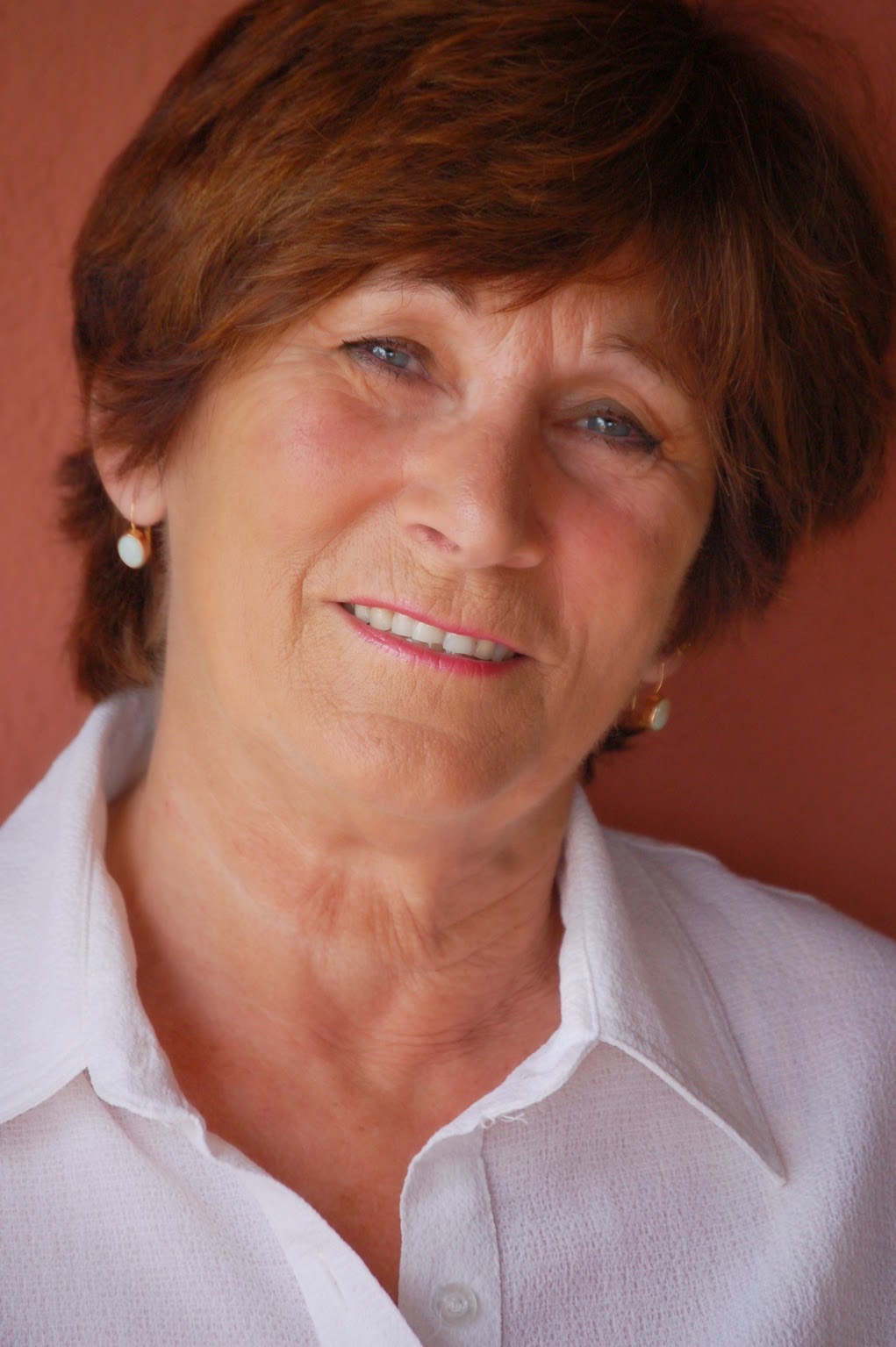
**Q&A with Joan Fallon**

The Eye of the Falcon is listed as the second novel in a series about Muslim Spain. Which of your books was the first book in the series?

The first of the al-Andalus series was The Shining City, a novel about the ruined city of Madinat al Zahra.

Did you always intend the book to be part of a series? If not, what changed your mind?

I never really intended to write a series of books; I thought that The Shining City could stand very well on its own as a novel about life in Spain at that time. However, when I began researching what little information there was about 10th century Spain, I realised that there was more than one story there. Al-Rahman III’s reign had been a time of peace and prosperity, which could have continued for a hundred years or more, except for the greed of one man, al-Mansur. His lust for power turned him from a humble civil servant into the ruler of al-Andalus and brought about the eventual disintegration of the Omayyad dynasty.
A number of events coincided to give al-Mansur his opportunity. The caliph Abd al-Rahman III, who had brought peace to a warring kingdom of princedoms and united them into a caliphate, died after ruling for forty years. His son, al-Hikam, did not survive him for very long and the throne passed to the hands of his grandson, al-Hisham II, a boy of eleven. And herein lay another story. How was a child going to rule such a wealthy country, especially as it was surrounded by enemies?

Who is the main character in your novel?

At first I was going to make the boy-caliph the main character, but the fact that he was so isolated made it difficult for him to interact with the other characters in the story. So I made his mother, Subh, the main character because she moves between her son and al-Mansur, who is not only the boy’s Regent but also her lover. So Subh is constantly torn between her passion for al-Mansur and her loyalty to her son.
Subh was originally a slave who was sold into the harem of al-Hikam II. The only problem was that al-Hikam was homosexual - not an unusual occurrence among the elite at that time - and it seemed that he was never going to produce an heir. With the encouragement of his mother, Subh set out to seduce him by dressing up as a boy. The ruse worked and eventually she gave him two sons. In doing so, she became rich and powerful.

Are all the characters in the novel real people?

Not all of them, but the main ones were real people. The caliphs existed, as did al-Mansur, General Ghálib and others in the government. Subh was a real woman but there was little information available about her life before she entered the harem, so that part is pure fiction. Al-Jundi and his family are fictitious characters that started life in the first book, The Shining City. As is frequently the case with history, what information there is about people living in the past relates to the rich and powerful. Servants, slaves and artisans are hardly ever mentioned by name. If Subh had not given birth to the Caliph’s sons, we would never have heard of her either. Consequently, all the supporting characters, soldiers, servants, slaves, falconers etc. are fictitious.

How much of the story is true and how much is fiction?

There is a saying that truth is often stranger than fiction and, in this case, I think it is very true. That the most powerful and richest ruler in the Western world could be isolated and deprived of his birthright because of his age seems unbelievable, yet it happened. That a concubine was able to dress as a boy in order to seduce the homosexual caliph, also seems very far-fetched, but it happened. Of course, the rest of the story is fiction - it is after all a novel. The episodes with the falcons could easily be true, because falcons were an important status symbol, but there is nothing recorded. Al-Mansur was a ruthless man and many deaths are attributed to his lust for power, but a lot of it is speculation. He is however, recorded as having burnt thousands of the city’s books - a loss that al-Andalus never recovered from.

Were there any particular difficulties in writing a historical novel where you know what really happened to one of the main characters?

Yes, I felt sorry for Hisham. I would have liked the young caliph’s life to have been happier and for him to have had the opportunity to rule when he came of age, but that would have taken the story too far away from actual events.

Are you planning to write another book in the series?

I would like to make the series a trilogy but so far have not decided whether to look at the very beginning of the 10th century, when the country was overrun with rebels or to move to the end of the 10th century and the beginning of the eleventh, when al-Hisham is killed and al-Mansur’s family take control. Either way there is plenty of material for another exciting novel.

Available now at
Amazon.com
Amazon UK

Learn more about author Joan Fallon


17 December 2015

Excerpt Thursday: THE EYE OF THE FALCON by Joan Fallon

This week, we're pleased to again welcome author JOAN FALLON with her latest release,  THE EYE OF THE FALCON,(Book #2, Al-Andalus series). Join us again on Sunday for an author interview, with more details about the story behind the story. One lucky visitor will get a free copy of The Eye of the Falcon. Be sure to leave your email address in the comments of today's post or Sunday's author interview for a chance to win. Winner(s) are contacted privately by email. Here's the blurb.

The Eye of the Falcon is the second novel in a series about Muslim Spain, set in the Andalusian city of Cordoba.  By the end of the 10th century al-Andalus was a rich and peaceful country, but when the Omayyad caliph died and left an eleven-year-old son as his heir, things began to change.  The eventual disintegration of that powerful dynasty had begun.
 

The young caliph was imprisoned in his beautiful palace, isolated and cut off from the Royal Court, while his ruthless regent and his ambitious mother battled over who should rule.  The Eye of the Falcon is a novel of intrigue and murder set at the end of Muslim Spain's Golden Age, rich with the historical details of an exotic way of life, long disappeared.

**An Excerpt from The Eye of the Falcon**

PART 1
976 AD

Chapter 1

It was barely light when she came to his room. The night sky was turning to milky white on the horizon but the songbirds were still asleep; even the cock had not yet begun to crow. She stood by his bed, looking down at him. Her nightdress shone and glittered in the flickering light of the night lamps; it reminded him of the kingfishers that stole in to the palace gardens to steal fish from the lakes. Gently her hand stroked his hair.
‘Hisham, my son, are you awake?’ she asked.
‘Yes mother. What’s happened? Is something the matter?’
He was well aware of the commotion in the women’s quarters; the wailing and crying, the sound of heavy footsteps as the guards marched through the palace, the slamming of doors and loud voices all spoke of some catastrophe. It had broken into his sleep and woken him before his mother arrived at his bedside. Now she knelt by his side and said, ‘You must get up, Hisham. The Khalifa is dead.’
Dead? Baba was dead? He felt a chill pass over him and hot tears sprang into his eyes. He looked at his mother; her face was impassive, not a tear marred her beautiful face. She pulled the covers off him and took his hand in hers.
‘Do not cry, Hisham; there is no need for tears. You are the Khalifa now, my son. You will be a great and glorious ruler,’ she continued, her eyes gleaming, ‘like the Omeyyads before you. Al-Andalus will thrive and prosper with you as Khalifa and with me by your side.’
She bowed low so that her face touched the carpet next to his bed, her long blonde hair cascading over the elaborately woven silks, and would have kissed his hand but he snatched it away. Baba was dead. Who was this woman who did not weep for her dead husband? He had seen her shed more tears when her pet peacock died.
He turned his face away from her. Was she telling him the truth? Was Baba really dead? His father had been unwell for some time, confined to his rooms, only able to walk a few steps at a time, but Hisham had never really expected him to die. He was sure he would get better. He believed the doctors who came each day and gave him potions made from habba souda and warm milk - said by the Prophet to cure everything but death - who made him infusions of anise and applied myrrh to his lips to sweeten his breath, who massaged his legs and prescribed salt water baths. He believed them when they said that with time he would recover, that he would return to his books and be as he was before. But they had been wrong. Baba had not recovered from the affliction that had twisted his face and stolen the strength from his limbs. He had lain in his room surrounded by his ministers, listening silently while they told him what was happening in his kingdom. Then, tired from his inability to do anything, he had sent for Hisham and asked him to read to him.
What would Hisham do now? He had loved his father. Al-Hakim had been more than a father; he had been Hisham’s friend and his teacher. Each day, when his father had finished with the business of the court, he went into the harem to look for his son and together they walked in the palace gardens while he recited the great Persian poetry of times past. He recounted the exploits of his father, Hisham’s grandfather, the mighty al-Rahman III, who had died before the boy was born, of how he had subdued all the rebellious tribes and united al-Andalus into the most powerful kingdom in Europe, of how he had defeated the Christian princes yet allowed Christians, Jews and Moslems to live in peace, side by side. Hisham had listened to his stories and was proud to be part of such a powerful family. On other occasions he accompanied his father to the great library, al-Hakim’s pride and joy, and there he learnt the secrets that were held within his countless books, sharing his father’s excitement when a new manuscript arrived from some distant land or a copyist presented him with something fresh to read and explore. Hisham loved to trace his finger over the beautiful illuminated characters and follow the words across the page or watch as books in Latin or Greek were carefully translated into Arabic. His father had taught him many things it was true, but Hisham was not sure that he had taught him how to be Khalifa of Muslim Spain.
‘Hisham, you must get up, the ministers are waiting to see their new Khalifa. Come child, I know you are upset at the news but you have responsibilities now,’ his mother whispered so that his attendants could not hear her.
He looked at her and wished he could just pull the covers over his head and stay there until she went away but he knew he could not. Al-Sayyida al Malika, the Queen Mother, was not someone to be easily ignored; she was as fearsome as she was beautiful.
His mother stood up and clapped her hands. She looked annoyed with him. At that signal Hisham’s personal slaves hurried across to him and, reluctantly, he rolled out of bed so that they could begin to prepare him for the day. Khalifa? How could he be Khalifa? It was only a few months since he had celebrated his eleventh birthday.

Available now at
Amazon.com
Amazon UK

Learn more about author Joan Fallon

05 April 2015

Author Interview & Book Giveaway: Joan Fallon on HOUSE ON THE BEACH

This week, we're welcoming author Joan Fallon again, whose latest title is HOUSE ON THE BEACHOne lucky visitor will get a free copy of House on the Beach in ebook format - this giveaway is open internationallyBe sure to leave your email address in the comments of today's author interview for a chance to win. Winner(s) are contacted privately by email. Here's the blurb.


This is the story of Rocio and Inma, two girls who first meet as children and despite coming from very different social backgrounds become close friends. Rocio is the daughter of an Andalusian peasant, who makes his living from the land, growing olives and keeping goats; Inma is the daughter of a rich businessman, who lives and works in Madrid.

We follow the lives of these two girls from childhood to maturity, as they share happiness, fears, disappointments, broken hearts and betrayals. Rocio is a shy and trusting girl, who becomes easily seduced by a handsome foreigner, while Inma, confident and manipulative, is the one who saves her from disgrace and the inevitable expulsion from the family home.  But when Inma too becomes pregnant, things take a more sinister turn and her subsequent actions have a devastating affect on Rocio and her husband. 

This social drama of two women trying to take control of their lives, despite living under a harsh dictatorship, offers a glimpse of what life was like in an authoritarian State, with an ever watchful Catholic Church and the close strictures of society.

**Q&A with Joan Fallon**

Why did you decide to write the novel The House on the Beach and where did the inspiration come from?
I have always been interested in social history and when I began to live in Spain I found my interest moving to what had happened to people in Spain, particularly women, during and after the Spanish Civil War. 

When I first arrived in Spain I was impressed by the way the Spanish women I met had embraced the freedom of modern life in the short period since the death of Spain's dictator General Franco in 1975.  The years went by and I began to realise that if I wanted to write about it I had better make a start soon, most of the women I wanted to interview would be dead.  So in 2007 I began to interview as many women as I could; I began with friends, then they introduced me to their mothers, aunts, neighbours and so it grew.  I also read all that I could lay my hands on about the Spanish Civil war and the Franco era and I started to write a non-fiction book called ‘Daughters of Spain’.

The women I interviewed were from all walks of life and spanned a wide range of ages.  The result is a mosaic of their lives, a vivid and unique picture of what life was really like for women in Spain over the past seventy years, of the hardships they endured and their aspirations for a more egalitarian future.

When the book was finished and published I realised that the things I had been told by these women was rich material that I could turn into a novel.  That was when I decided to write ‘The House on the Beach’ about two girls growing up in Franco’s Spain.   All the things that happened to my two main characters had happened to people that I knew.

There must be a lot of research involved in writing a novel like this.  Can you tell us what was involved.
Yes, there is a lot of research but much of it was first hand research that I got from talking to women about their lives: their marriages, their childhood, their education and most importantly of all, what life was like for women at that time.  I also read books about the period and found lots of useful information on the internet.  For example one of the girls gets caught up in the student riots in Madrid in the 1960s; I needed to know exactly when the riots took place and what was involved.

It seems to me that many authors of historical fiction write trilogies.  Have you considered making The House on the Beach part of a trilogy?
No.  I don’t think it would work.  The book is a saga where we follow the stories of two women who meet as children and maintain a troubled friendship throughout their lives.

Were you influenced by any other writers when you planned this novel?
Not really.  As I have said it was inspired by another of my own books, ‘Daughters of Spain’ - a factual account of the lives of Spanish women during the years 1950-1970.  I have since read a book by an Italian author which is very similar in style; it is called “My Brilliant Friend’ by Elena Ferrante.

What is it about writing historical fiction that you find so interesting?
I have always been interested in history, especially social history.  I am a History graduate and when I was a teacher, my favourite lessons were teaching history to primary-age children.  With young children the knack of making history interesting is to bring it to life and to let the children imagine they are living in a different time.  It is a very similar process when writing a historical novel; you want the reader to feel that they are there, experiencing the same things as your characters.

Have you written any other novels that could be classified as Unusual Historical Fiction?
Yes, ‘The Only Blue Door’.  This is a novel about three young English children who are sent as child evacuees to Australia during World War II; the story traces their experiences in a strange land and their search for their mother. 

Buy House on the Beach at:

Learn more about author Joan Fallon


Joan says of her latest novel, “I was inspired to write this novel after interviewing a number of Spanish women for my book Daughters of Spain. The things they told me about life after the Spanish Civil War was rich material for a novel.”  

02 April 2015

Excerpt Thursday: HOUSE ON THE BEACH by Joan Fallon

This week, we're welcoming author Joan Fallon again, whose latest title is HOUSE ON THE BEACHJoin us again on Sunday for an author interview, with more details about the story behind the story. One lucky visitor will get a free copy of House on the Beach in ebook format - this giveaway is open internationallyBe sure to leave your email address in the comments of today's post or Sunday's author interview for a chance to win. Winner(s) are contacted privately by email. Here's the blurb.


This is the story of Rocio and Inma, two girls who first meet as children and despite coming from very different social backgrounds become close friends. Rocio is the daughter of an Andalusian peasant, who makes his living from the land, growing olives and keeping goats; Inma is the daughter of a rich businessman, who lives and works in Madrid.

We follow the lives of these two girls from childhood to maturity, as they share happiness, fears, disappointments, broken hearts and betrayals. Rocio is a shy and trusting girl, who becomes easily seduced by a handsome foreigner, while Inma, confident and manipulative, is the one who saves her from disgrace and the inevitable expulsion from the family home.  But when Inma too becomes pregnant, things take a more sinister turn and her subsequent actions have a devastating affect on Rocio and her husband. 

This social drama of two women trying to take control of their lives, despite living under a harsh dictatorship, offers a glimpse of what life was like in an authoritarian State, with an ever watchful Catholic Church and the close strictures of society.

**An Excerpt from House on the Beach**

Inma’s knees hurt from the hard floor; she peeped through her fingers to see if anyone else felt as uncomfortable as she did but those she could see without turning her head were all deep in prayer. 
“.....Give us a diligent and obedient spirit, quickness of apprehension, capacity of retaining and the powerful assistance of Thy holy grace that what we hear or learn we may apply to Thy honour and the eternal salvation of our own souls,” the young voices chanted in unison then lifted their voices to heaven as they sang, rather than intoned, a heartfelt “Amen”. 
The Mother Superior stood, still facing the image of the Virgin Mary that dominated the classroom wall, and genuflected before turning to look at the kneeling girls.  She paused to allow the solemnity of the moment to sink in then said:
‘Very well girls, you may rise and take your seats.  Remember no talking.’
Inma rose with the others, brushed her plaid skirt back into place and pulled up her regulation navy socks.  Three of the other nuns came in and, like so many magpies, fluttered around their leader in her long black habit with its stiff white yoke.  The Mother Superior whispered their instructions to them and they passed between the rows handing out the test papers.
Inma felt restless, there was only one more week to the holidays but before that there were the exams.  The first was this morning, arithmetic.  She looked over her shoulder at her best friend, Susana, she seemed on the point of tears.  Inma smiled at her and gave a little wave of her hand.  They had spent all the previous evening together revising for the exam but still Susana could not grasp the concept of long division.  She had gone to bed in tears and nothing Inma could say would console her.  She whispered a short prayer for them both, touching the silver cross that hung beneath her uniform.
  Her father had given her the cross a few months before when she was confirmed.  She had gone home for the confirmation.  Papi had come to collect her in the car because Mama wanted her confirmed in the same church as all the rest of the family, the Iglesia de San Andres.  It had been her best day ever.  Mama had bought her a beautiful dress of white muslin, with a long, full skirt, that swayed when she walked and white satin shoes.  Afterwards they had gone to a restaurant for lunch and all her brothers and sisters were there, but not Adolfo, and all her cousins and aunts and uncles.  Susana had been confirmed in the school chapel with some of the other girls; her mother would not let her go home but she did come and visit her and bring her a present.
  Just five more days, this time next week she would be in her own home again; a wave of longing escaped from her chest like a silent sigh.  She missed her own house, her cat, her rows of now neglected dolls, her mirror with its furbelow of gold and pink wood, the dolls’ house that her eldest brother had sent her from Argentina and most of all her own bedroom with its flouncy, pink curtains and a bedspread that matched, with its white painted wardrobes where all her pretty dresses hung.  She had not been home since the beginning of May.
The Mother Superior rapped on her desk with a ruler.
‘Right girls, you have forty minutes to complete this arithmetic paper.  Remember there is to be no talking and no looking across at your neighbour.  Good luck.  Now turn over your papers and begin.’

Learn more about author Joan Fallon


Joan says of her latest novel, “I was inspired to write this novel after interviewing a number of Spanish women for my book Daughters of Spain. The things they told me about life after the Spanish Civil War was rich material for a novel.”  

21 December 2014

Author Interview & Book Giveaway: Joan Fallon on THE SHINING CITY

This week, we're pleased to again welcome author JOAN FALLON with her latest release, THE SHINING CITY. One lucky visitor will get a free ebook copy of The Shining City, gifted from the author through AmazonBe sure to leave your email address in the comments of today's author interview for a chance to win. Winner(s) are contacted privately by email. Here's the blurb.

Exotic, romantic, and rich with historical detail, The Shining City is a timeless story of love, family, and the unexpected consequences of our actions. Set in 10th century Spain, in the time of the Moorish occupation, it is, above all, a story of love and honour.
When he moved to Madinat al-Zahra, Qasim thought he had escaped his turbulent past but when his youngest son, Omar, falls in love with the Caliphs concubine, he sets off a train of unimaginable consequences and puts all his family, including Qasim, in danger. Qasims secret is about to be revealed and all he has worked for destroyed.

Praise for the novel - from HISTORICAL NOVELS SOCIETY August 2014

"The Shining City by Joan Fallon is a beautifully told story set in tenth-century Spain which focuses on a city in southern Spain that flourished for a brief time only: Madinat al Zahra.

Built by the caliph, it becomes a rival to the capital, Cordoba. The book covers many aspects of the times: history, culture, religion and day-to-day life. Giving great attention to detail, Fallon depicts court etiquette with the same confidence as minor details, such as bakery and food preparation. I knew comparatively little about Spain under Muslim rule and found myself easily and entertainingly educated.
The characters are well chosen and developed, likeable and driven by their dreams and ambitions...."

Q&A with Joan Fallon

What attracted you to writing a novel about Spain in the 10th century?

I have been fascinated with Andalusia’s Moorish inheritance since long before I moved to Spain and had considered writing a book set during the Moorish occupation but never quite knew how to go about it until recently.  Now I live in Andalusia and evidence of the Moorish occupation is all around us, so it’s hard not to become interested in the culture; it’s also easier to envisage what life was life then.

And where did the inspiration for this particular book come from?

I have to admit that the original inspiration for this particular story goes back 14 years.  In 2000 I picked up a leaflet about an exhibition of Umayyad art that was to be held in a place called Madinat al Zahra, just outside Cordoba.  It was just a couple of hours away so we decided to go although at that time I had no idea who the Umayyads were.  As I have subsequently discovered, the Umayyad’s were the rulers of the Arab Muslim world until the 8th century when a coup by a rival tribe wiped out almost the entire Umayadd family and a new dynasty was established.  But one man escaped and made his way to Spain where he was proclaimed Emir in the year 756 AD.   He was Abd al Rahman I and he brought the Umayyad dynasty and its culture to Spain.
The exhibition was excellent but I was more impressed by the site they had chosen for it: Madinat al Zahra.  For those of you who have not heard of it before, I will briefly explain.  Madinat al Zahra was a palace/city built by one of Abd al Rahman I’s descendents, Abd al Rahman III just after he proclaimed himself Caliph of Al Andalus (the name for Moorish Spain).  It is now in ruins but it was reputed to have been the most wonderful city in the western world.  There are a number of theories as to why Rahman III built Madinat al Zahra.  Why did he need another city when Cordoba was so close by?  Some said he built it for a concubine called al-Zahra, and named it after her.  Others said it was because he felt demoralised after being defeated by the Asturian king.  But recent research says it is much more likely that it was built to reinforce his position as Caliph and to promote his independence from the old caliph in Baghdad.  Rahman III had converted al-Andalus from a collection of individual tribes into a centralised Arab state, proclaimed himself the Caliph, the supreme ruler and now he wanted to make sure everyone knew who was the boss. 
But what was much more fascinating to me was the length of time that the city was in existence.  Work was started on it in the year 936 and only 70 years later it was already abandoned, and falling into decay.  There had to be a story there.

There must be a lot of research involved in writing a novel like this.  Can you tell us what was involved?

Yes, it did involve a lot of research because to begin with I knew very little about that period.  It is also a time in Spanish history for which there are very few contemporary written sources.  Although Cordoba in the 10th century had more than 70 libraries and 400,000 books, very few written documents remain.  All the libraries and universities were destroyed and the books burned.  What little historical evidence there is has to be taken from the later accounts of scholars and historians.  This made research difficult but at the same time, it meant there was less for me to go through.  I was writing a novel, after all, not a thesis.
Still attention to detail is crucial in writing any novel and particularly a historical one.  I spent the first six months reading all I could find, making notes, visiting Cordoba to see the mosque, making numerous visits to Madinat al Zahra and its museum and of course I was constantly Googling to find further information.  Then I started to look at the story itself and made a first draft.  But that wasn’t the end to the research because I would be writing a scene and suddenly realise that I didn’t know if some item I was about to mention was actually in existence at that time.  For example, the hero writes a note to the Caliph’s concubine and folds it.  Was I sure that they had paper in 10th century Spain?  It had been invented by the Chinese by then but had it arrived in Spain?  In fact when I checked, I discovered that it wasn’t recorded as being used in al-Andalus until the 12th century.  So I had to make my hero rewrite his note on parchment and roll it up instead of folding it.

It seems to me that many authors of historical fiction write trilogies.  Have you considered making The Shining City part of a trilogy?

Yes, this idea has occurred to me because it would sit very well as the second book in a trilogy.  The early part of Rahman III’s reign was also very interesting; it was a turbulent period, beset with rebellions and would have made a story on its own.  The end of the 10th century too was interesting because when Rahman III died, his son Hakim succeeded him but died pretty soon afterwards, leaving the throne to his son, an eleven-year-old child.  The regent, al-Manzor who took over ruling the country was a powerful and ruthless man and his actions led ultimately to the break up of al Andalus and the end of the Umayyad dynasty.  It was also the reason that the beautiful city of Madinat al Zahra dwindled in importance and was eventually destroyed.

Were you influenced by any other writers when you planned this novel?

Yes, two books contributed to the structure of my book.  I had read the Ken Follett novel, Pillars of the Earth, which is the story of a builder who helps to build a cathedral in medieval England; in The Shining City the hero is the son of a potter, working on the new city of Madinat al-Zahra.  The other book that inspired me was Capital by John Lanchester, a contemporary novel which tells the story of a street in London through the people who live in it.  That’s what I decided to do in my novel, tell the story of Madinat al-Zahra through the lives of the people who lived there.

What is it about writing historical fiction that you find so interesting?

I have always been interested in history, especially social history.  I am a History graduate and when I was a teacher, my favourite lessons were teaching history to primary-age children.  With young children the knack of making history interesting is to bring it to life and to let the children imagine they are living in a different time.  It is a very similar process when writing a historical novel; you want the reader to feel that they are there, experiencing the same things as your characters.

Have you written any other novels that could be classified as Unusual Historical Fiction?

Yes, two others: ‘The Only Blue Door’ and ‘The House on the Beach’.  One is a novel about three young English children who are sent as child evacuees to Australia during World War II; the story traces their experiences in a strange land and their search for their mother.  The second one, ‘The House on the Beach’ is once more set in Spain, in the period immediately after the Spanish Civil War; it is the story of the friendship between two young girls growing up in a country ruled by an uncompromising dictator.

Links to the books:


http://www.amazon.com/Only-Blue-Door-Joan-Fallon/dp/0957689136/ref=sr_1_1_title_0_main?s=books&ie=UTF8&qid=1382960163&sr=1-1&keywords=the+only+blue+door


Learn more about author Joan Fallon