Showing posts with label The Entertainers. Show all posts

28 June 2011

The Entertainers: Parlor Games

By Jennifer Linforth

In researching my new novel, I stumbled into the world of parlor games. I needed one for the opening of this book and found Poor Pussy. Strangely enough, a co-worker recalls playing a game called "Pat the Kitty" as a child.

Gathering together for parlor games was popular in the evenings in Victorian families. The central theme of many of them were games involving trying not to laugh. Poor Pussy was one of them. It involved one proper guest having to mill around on all fours amongst the seated company, meowing and stopping in front of someone who then had to say "poor pussy" without ever cracking a smile. Neither the cat or guest could smile. If one of them did the latter was the next cat.

I never recalled playing that as a child but I do remember this...

The Laughing Game where players sat in a circle and one says "ha." The next, "ha-ha" and so on until someone laughed in earnest.

Many games we know today stemmed from Victorian parlor games. Red-Light, Green Light, Simon Says, Charades and Musical Chairs. Hot Potato of today sounds very similar to the game of Change where an object was passed in a circle and directions shifted out of the blue.

Hunt the Thimble sounds like great fun. The mistress of the house would hide a tiny object in a room and guests would have to search for it. When they found it, they simply took their seat until one poor person was left still looking for the item.

Victorians seemed to enjoy embarrassing each other...

...or catching each other for that matter. There were many versions of Duck, Duck, Goose then called Wolf and the Lambs.

Memory games such as Grandmother's Trunk were wildly popular (hence the interview with my magician who is a master of Victorian memory games.) In this game a player would say "My grandmother has a trunk and in it is.... apples" or some such item beginning with the letter A. Around the room they would go, each guest having to build on this list with a new item with the following letter while remembering and reciting as well all the items before!

Way more fun than Wii? Oui?

Jennifer Linforth expands the classics by continuing The Phantom of the Opera. and are available now. Look for future books based on the classics, in addition to her unique historical romances. "Ms. Linforth's prose is phenomenally beautiful and hauntingly breathtaking." ~ Coffee Time RomanceMADRIGALABENDLIED

27 June 2011

The Entertainers: Mathematical Water Theater

By Lisa Marie Wilkinson


The Cyclone at Coney Island


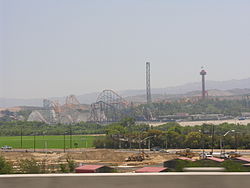
Six Flags Magic Mountain


Essex House of Wonders


Winstanley’s Water Works


If the last two amusements/entertainments on the list aren’t familiar to you, it’s because you’re living in the 21st century.


Those seeking entertainment in the Piccadilly area of 1690’s London could view attractions featuring fireworks, fountains and assorted clever gadgets at the Mathematical Water Theater known as “Winstanley’s Wonderful Water-Works.” Spectacular water and fireworks displays were staged by owner inventor/engineer Henry Winstanley and his wife Elizabeth, and the exhibit included such mechanisms as the “Wonderful Barrel,” a unique piece of equipment that dispensed both hot and cold drinks to visitors.


An English businessman and engineer who studied engraving, architecture, and clock-making, Winstanley (March 31, 1644-November 27, 1703) developed a perpetual motion mechanism that was still in popular use generations after his death. He filled his own home and garden at Littlebury in Essex with hidden passages, warped mirrors, and his own mechanical and hydraulic gadgets and inventions. The carnival-like atmosphere contained mechanical wonders that included a “flying chair” (an early incarnation of the roller coaster) and curious chairs with arms that would immediately imprison any hapless visitor who sat down in them, requiring the trapped unfortunate to wait to be extricated from the contraption by an attendant. The “Essex House of Wonders” became a local landmark, attracting members of the royal court as well as local denizens.

Winstanley invested his profits from the
Mathematical Water Theater in ships, and after incurring losses when two of his ships were wrecked upon the infamous Eddystone rocks off the southern coast of England, he decided to take action by designing and funding the construction of the famous Eddystone Lighthouse, the very same structure that was swept from the Eddystone rocks during the Great Storm of 1703.

Alas, Winstanley and a crew had journeyed to the lighthouse on the day of the storm to effect repairs to the structure, and Winstanley and his crew perished in the storm.

The Mathematical Water Theater continued to operate successfully for several years after the death of its owner/creator, and no doubt inspired many of the spectacles and attractions featured in modern amusement parks.

Lisa Marie Wilkinson is an IPPY Gold Medal winning author of historical adventure-romance. Her latest novel, STOLEN PROMISE, featuring vibrant Gypsy characters and breath-taking romance, is available now.

24 June 2011

The Entertainers: Jugglers and others in the Middle Ages

By Lindsay Townsend
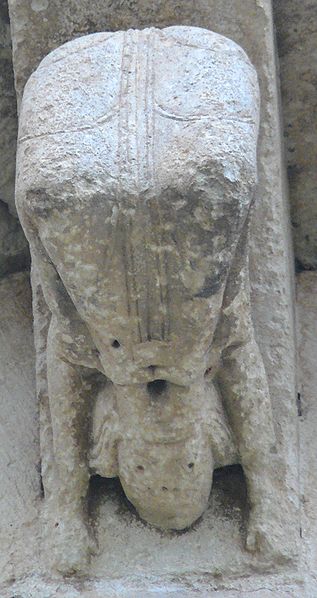
In the Middle Ages, professional musicians and minstrels were highly thought of and ranked in royal and noble households as the equals to huntsmen and falconers. Dancers, too, were well regarded - in 1306, the only woman paid as a musician in the royal household was an acrobatic dancer (saltatrix, 'tumbler') with the 'stage name’ of Matilda Makejoy. She possibly danced by bending backwards and touching her head with her feet, or on her hands, or on knives - in medieval stained glass Salome was shown dancing on knives.

Such dancers could be athletic and graceful or tumble in a jesting manner, playing for laughter. They could also be well paid and respected - Richard II paid John Katerine, a dancer from Venice, over £6 for playing and dancing before him, a sum not far short of £3,000 today.

Amongst the minstrels themselves there was a kind of ranking, with professional musicians at the top and jugglers and puppeteers at the bottom. Jugglers especially were considered at the time to be coarse, especially those who made a living wandering from fair to fair or village to village. Jugglers were felt to have few morals and to be able to do their tricks through magic - always a dangerous idea in the Middle Ages.

However jugglers were also held in affection, even by the church, and many illuminated manuscripts show jugglers. From the time of William the Conqueror, a 'King of the Jugglers' appeared at the court and would continue to appear through the Middle Ages. Whoever held this title had many rights to go with it. There is also a medieval legend of a juggler who, having nothing else to give, made an 'offering' of his juggling skills before a statue of the Virgin and Child in church. According to some variations of this story, the Madonna or Jesus caught one of the balls.

Juggling using different objects is more difficult than using the same objects. Bouncing objects off a floor is easier than tossing them in the air, and throwing all the objects in the air - called multiplexing in modern juggling - is easier than one after another.

Balls were commonly used for juggling but other things could also be used. In the Irish story of Cuchulainn, the hero juggles nine apples. The later Viking sagas also mention juggling and sometimes with weapons - Snorri Sturluson writes in one saga, "In the doorway of the hall, Gylfi saw a man juggling with knives, keeping seven in the air at a time," a trick also mastered by Sunniva in A Knight’s Captive.

[Illustrations from Wikimedia Commons.]

Lindsay Townsend writes historical romance set in medieval England and the ancient Mediterranean. Lindsay's latest book, To Touch the Knight, a story of jousting, deception and romance at the time of the Black Death, is published by Kensington Zebra in July.

22 June 2011

The Entertainers: Buffalo Bill Cody

By Carrie Lofty

As with most legends of the American West, the factual details of William Frederick "Buffalo Bill" Cody's life are subject to much dispute. His autobiography claims that he began his life as an "Indian fighter" at age eleven and rode for the Pony Express at age fourteen. Facts become a little more prevalent once he joined the Union Army in 1863 as a teamster, and later went on to serve as a scout.


But his true calling was always entertainment. He made his stage debut in Chicago in 1972 at the age of 26. Eventually the play "The Scouts of the Prairie" also featured another Old West legend, James Butler "Wild Bill" Hickok, but Cody was much better suited to stage life than ambling, gambling Wild Bill.

After years touring with a company, Cody decided to found his own entourage of Western spectacles. "Buffalo Bill's Wild West" expanded from its 1883 origins to become one of the best known traveling acts to have ever toured. Featured performers included Annie Oakley, and typical shows boasted trick shooting and roping, wild animals, cowboys, horse chases, re-enactments of famous battles, stagecoaches, parades of American Indians in full regalia, and lots of Cody's trademark flare.

Eventually he renamed his troupe "Buffalo Bill's Wild West and Congress of Rough Riders of the World," which probably suited his ever-growing showmanship and fame. The troupe performed for over a million spectators on Coney Island, then traveled to England for Victoria's Jubilee in 1887, officially taking Cody's version of the Wild West to Europe. (Pictured is the troupe's visit to Rome in 1890.) Depictions of massacres and firefights became the most lasting impressions the world would have of the American frontier until Hollywood's interpretations--although most early cinematic portrayals drew heavily from the show's high drama.

The autobiography mentioned above was first published in 1879, when Cody was only 33 and still growing in popularity. He certainly knew the value of managing his own image, and he often used his fame to promote civil rights for women and American Indians, as well as conservationism. Western historians claim that he was the most famous individual on the planet at the turn of the 20th century, and his death in 1917 of kidney failure solicited condolences from the leaders of the United States, Great Britain, and Germany. He remains one of the most gifted entertainers and promoters in American history, with his popular image of the Wild West still influencing imaginations today.

What other entertainers remind you of Buffalo Bill, in that they control huge empires--even to the point of rewriting their own histories? Is that even possible in today's information-saturated culture?

SONG OF SEDUCTION's sequel from Carina Press, PORTRAIT OF SEDUCTION, is now available! Later this year watch for Carrie's new Victorian series from Pocket, as well as her "Dark Age Dawning" romance trilogy from Berkley, co-written with Ann Aguirre under the name Ellen Connor. "Historical romance needs more risk-takers like Lofty." ~ Wendy the Super Librarian

21 June 2011

The Entertainers: Will Rogers

By Elizabeth Lane


Will Rogers died before I was born.  I never saw any of his movies or heard his voice on the radio.  But I feel as if I knew him because he was my dad’s favorite movie star.  Dad talked about him a lot, especially on long car trips. 

Most movie cowboys were city boys with pretty faces.  Born in 1879 on the Dog Iron Ranch in Oklahoma’s Indian Territory, Will was the real thing.  Both his parents were part Cherokee (Will once quipped that his ancestors didn’t come over on the Mayflower, but they met the boat).  The youngest of eight children, Will quit school after the 10th grade.  He was more interested in being a cowboy than in reading, writing and arithmetic. 

A freed slave taught him how to use a lasso to work Texas Longhorn cattle on the family ranch.  As he grew older, Will’s roping skills were so remarkable that he was listed in the Guiness Book of Records for throwing three lassos at the same time:  One rope caught the running horse’s neck, the other would hoop around the rider and the third swooped up under the horse to loop all four legs.  After some early adventures abroad, will returned to America and went into show business as “The Cherokee Kid.”  His skills won him jobs trick roping in wild west shows and on the vaudeville stages where, soon, he started telling small jokes. 

Quickly, his wisecracks and folksy observations became more prized by audiences than his expert roping.  He became known as an informed philosopher, telling the truth in simple words so that everyone could understand.  Here are some examples:  

“A fool and his money are soon elected.” 

“Advertising is the art of convincing people to spend money they don’t have for something they don’t need.” 

“Buy land.  They ain’t making any more of the stuff.” 

“Even if you’re on the right track you’ll get run over if you just sit there.” 

“If stupidity got us into this mess, then why can’t it get us out?” 

“Never let yesterday use up too much of today.” 

“We are all here for a spell.  Get all the good laughs you can.”  

Will starred on Broadway and in 71 movies and was also a radio broadcaster.  He wrote more than 4,000 newspaper colums and six books.  Presidents, senators and kings sought his opinions.  Inside himself, Will Rogers remained a simple Oklahoma cowboy. "I never met a man I didn't like," was his credo of genuine love and respect for humanity and all people everywhere. He gave his own money to disaster victims and raised thousands for the Red Cross and Salvation Army.  

Will was also a devoted husband and father of four.  He married Betty Blake in 1908 after an 8 year courtship.  He would say, “When I roped her, that was the star performance of my life.” 

In 1935, at the age of 55, Will took off on a flight around the world with a legendary pilot named Wiley Post.  The plane crashed in Alaska.  Both men lost their lives.  The outpouring of national grief over Will Rogers's passing is generally regarded to be the greatest such show of national mourning since the death of Lincoln some seventy years earlier.   Will has been honored with postage stamps and monuments, including a statue in the U.S. Capitol building.  And his wise, simple words are still with us.  
Elizabeth Lane has written more than thirty historical romances, several set in the early 20th century. Her latest is CHRISTMAS MOON, a time travel set in present day and 1870s Wyoming, available in print and Kindle from Amazon.com, and in other e-formats from E-Reads. Watch for her latest Harlequin Historical, THE WIDOWED BRIDE, in March 2011.

20 June 2011

The Entertainers: Hurdy Gurdy Girls


By: Jacquie Rogers

When a man puts in over sixty hours of backbreaking labor in the mines, or punches cattle from dawn to dark every day, by the end of the week he's ready for a little entertainment. In the American West, that entertainment was provided primarily by saloons and dance halls. With the man to woman ratio of 20:1 or even worse, sometimes much worse, seeing a pretty lady was the delight of a man's week. And he spent a lot of money for the privilege. Enter: the hurdy gurdy girls.

Hurdy gurdy girls were distributed all over Europe, Australia, and North America, but this article addresses only the girls who came to the American West--Canada and USA and territories. What's a hurdy gurdy? (Find out at Chris Eaton's website) Why were they called hurdy gurdy girls, and how did this all come about? The best site to answer this is The Universe of Bagpipes.
To supplement their incomes, in the 1820s farmers and farmworkers began to make wooden brooms and fly-whisks during the winter which they, as itinerant peddlers, sold in the summers in the surrounding areas... It was soon discovered that the wares sold better when accompanied by
dancing, hurdy-gurdy playing girls. Quickly the dancing and music became ever more important and the pretty girls became ever better known...there was a lot of easy money to be made.


Hurdy gurdy girls could be found all over the West. Generally, prostitution was not involved. The girls, from poverty-stricken families in the duchies of Germany, were of strong moral fiber. They danced with men, and cajoled them to spend money on drinks, but services beyond that were taken care of by other women.

In 1913 Idaho Governor William McConnell wrote in his book Early History of Idaho:

The girls were engaged by the proprietors of the 'social resorts,' in sets of four, with a chaperone who accompanied them at all times. They were almost invariably German girls, and although they were brought into contact with rough people and sometimes witnessed even the shedding of human blood, the rude, generous chivalry of the mountain men, some of whom were always found in these resorts, was a guarantee of protection from violence, and strange as it may sound to those of modern times, these girls were pure women, who simply did the work they had bargained to do, and when their contracts expired, most of them married men whose acquaintance they had made while pursuing their vocation, the men who knew them best, and with the money they had earned by dancing with 'Wild Bill,' 'Texas Pete,' and others, helped to buy a house for themselves and husbands. The poor girls, and they danced only because they were poor, had kind hearts and wonderful patience and forbearance.
Some hurdy gurdy girls came over in family groups. Arthur Hart, Director Emeritus for the Idaho Historical Society, cited some census data in his article for the Idaho Statesman, Idaho History: Hurdy-Gurdy girls on frontier danced with all comers. Notice that this troop is called a "Hurdie Gurdie Troop" but it appears they only play violins.

The 1870 census is enlightening. In Granite Creek, Boise Basin, with its post office in Placerville, a "Hurdie Gurdie Troop" is listed as made up of Conrad Schneider, 43, his wife, Catherine, 35, and children ages 15, 11 and 2. Conrad was a violinist, as was his brother, George, 37, whose wife, Mary, was 34. A third violinist in the troop was Conrad Deihl, 19. Four dancing girls ranged in age from 15 to 27. All were from the Rhineland area of Germany.

There were two kinds of women in the Old West: good (meaning strong moral fiber) and bad (meaning sexually promiscuous). Hurdy gurdy girls were considered "good women" by men, but usually not by "respectable" ladies, the schoolmarms, and bankers' wives of the town. Because the dance hall owners had to make sure the girls were safe, hall patrons were expected to follow rules such as these posted at the Alhambra, a dance hall in Silverton, Colorado:

Rule 1. No lady will leave the house during evening working hours without permission.
Rule 2. No lady will accompany a gentleman to his lodgings.
Rule 3. No kicking at the orchestra, especially from the stage.
Rule 4. Every lady will be required to dance on the floor after the show.
Rule 5. No fighting or quarrelling will be allowed

The ladies to the left are hurdy gurdy girls in Barksville (I think), British Columbia, Canada. They danced as many as fifty dances a night, at a dollar per dance.

Later in the 19th Century, hurdy gurdy girls didn't just dance, but then they weren't from the Rhineland, either. The name became synonymous with soiled dove, and the girls' origins were not limited to a small area of Germany. However many of the original hurdy gurdy girls in the American West found husbands and made good homes for themselves and their new families.


So they had a happy ending after all.


Sources:
The Universe of Bagpipes
Arthur Hart: IdahoStatesman.com
bcheritage.ca
Jacquie Rogers writes quirky, magical romances. Available now are her contemporary western, DOWN HOME EVER LOVIN' MULE BLUES, a multi-era faery story, FAERY SPECIAL ROMANCES, and a Christmas story, FAERY MERRY CHRISTMAS. She's co-founder of 1st Turning Point, a pay-it-forward website where authors teach, share and learn promotion and marketing.

15 June 2011

The Entertainers: Mary Pickford


by Lorelie Brown

Last time I was here, I talked about Clara Bow, so I figured with this month’s topic I pretty much had to do Mary Pickford. After all if Clara was the It Girl who dripped sex appeal, Mary Pickford was her exact opposite.

But then something nearly miraculous happened. She did a screen test for director DW Griffith, of the Biopic Company. She must have been some hot stuff because she was promptly signed at Biopic for $10 a day, which was double what most people got. And then she went on and proceeded to rip her way through first the New York studios--making 51 different films in 1909--and then heading out to fledgling Hollywood. She hopped around various production companies, including what would eventually become Universal Pictures.Born in Canada (an import!) in 1892 as Gladys Marie Smith, Pickford got her first taste of the stage at seven. Pretty much her entire family decided this acting gig was a fabulous thing and they all trooped down to New York to make their name on Broadway. It didn’t really work. After quite a few years, Pickford had only nailed a couple Broadway roles (one of which was the impetuous for changing her name.) and she was considering returning to Canada.
And everywhere she went, she made money. Big money. Pickford became one of the first box office draws on the basis of her name alone. She played all sorts of characters, but she was mostly known for her sweetness and scrappiness. If she were a romance heroine, she’d have probably been called “spunky.” Pickford kept up the ingénue image for a long time and was known as “The girl with the curls” and “America’s sweetheart.”
But the funny part was that Pickford wasn’t much of a squishy-faced roll over or anything. She became her own producer almost from the beginning. In 1919, along with DW Griffith, Charlie Chaplin (yeah, that Chaplin), and Douglas Fairbanks, Pickford founded United Artists. UA still exists to this day (Tom Cruise is involved. No comment.) and in the 1920s it was a powerhouse.
In fact, Pickford’s relationship with Douglas Fairbanks is another noteworthy topic. Though Mary Pickford was originally married to an Owen Moore in 1911. But the marriage quickly soured and they divorced on March 2, 1920. On March 28th Pickford married Fairbanks. (Yes. The 28th of the same year. Uh-huh. Who’s sweetheart do you really think she was?) Fairbanks was a powerful man in his own right, as a producer and actor known for swashbuckling-type roles. Fairbanks and Pickford bought a giant mansion in Beverley Hills. (Srsly. Giant. By the time it was finally deemed complete, we’re talking 25,000 square feet.) They named it Pickfair and it was where the Hollywood elite gathered and partied. Luminaries the world over all vied for an invitation.

I’m fairly sure Clara Bow wasn’t one of the chosen ones to be allowed in.

Unfortunately Pickford and Fairbanks didn’t last forever. As their individual stardom faded, their dramatic love affair seemed to as well. They divorced in 1936 and a year later she married Charles Rogers. Known as Buddy, he was twelve years younger than Pickford, but that seems appropriate for a woman who spent most of her career playing young girls. They were married 42 years, until her death in 1979.


Lorelie Brown's first book, JAZZ BABY, is currently available from Samhain Publishing in both e-book and paperback formats. CATCH ME, an 1880s-set western, will be published by Carina Press on 18 July.

14 June 2011

The Entertainers: Disciples of the Pear Garden

Jeannie Lin

The Tang Dynasty was a golden age for the arts in imperial China and the theater was no exception. In the 8th century, Emperor Xuanzong formed the first national opera troupe which primarily performed for the Emperor's pleasure. The troupe was dubbed the "Pear Garden" and opera performers to this day are referred to as "Disciples of the Pear Garden."

Throughout the Tang and Song dynasties, opera was performed in Classical Chinese, however the during the Yuan Dynasty, operas performed in the vernacular became popular. Today there are 368 forms of Chinese opera, the Beijing form being the most popular.

Chinese opera is a combination of song, instrumental music, dance, acrobatics and martial arts. The training is quite strenuous with performers usually starting at a very young age. In historical tradition, a schoolmaster would take on all the costs of training and raising the disciples. As a result, the performers would incur debt which they would repay later on as they started to perform. Jackie Chan received vocal, acrobatic, and martial arts training as a child in a Beijing Opera School. So we can credit his crowd-pleasing stunts to his operatic background. I hear he's not a bad singer either.

In traditional Beijing opera, there are specific roles: Sheng (male), Dan (female), Jing (painted-face male), Chou (comedic). Within those categories, there are further sub-categories which correspond to common archetypes, for example the elderly man, the virtuous woman, the young male, the general, the warrior. The elaborate costumes, headdress and makeup are specific to each archetype and serve to help identify the character to the audience.

One of the most famous roles in the Chinese opera is that of the Monkey King. This role requires someone with acrobatic and martial arts ability as well as great comic timing.

Much like in early Shakespearean theater, female or dan roles were played by male actors. Their costumes were modified to make the actors appear more feminine such as special shoes to make their feet appear smaller. This practice waned after women were started appearing on stage in the 1870s, though the female actors continue to play the traditional roles as they were originally written -- which was for a man impersonating a woman.

Research into the North Hamlet, the entertainment district of the Tang Dynasty, yielded some very colorful characters which will hopefully be unveiled in upcoming books.

Jeannie Lin writes sweeping historical romances set in Tang Dynasty China, featuring sword play, politics, and, above all, honor. Her Golden Heart award winning debut, BUTTERFLY SWORDS, and the linked short story "THE TAMING OF MEI LIN" are currently available from Harlequin Historical.

12 June 2011

The Entertainers: Women in Restoration Theater

Anna C. Bowling

Come with me on a trip to London, 1660. With the return of Charles II to the throne, England has undergone amazing changes, and one of the most notable is the reopening of theaters per the king’s edict in August of this year. The late Lord Protector, Oliver Cromwell, clamped down on frivolous forms of entertainment, so it’s been a while since actors could perform in the open. Certainly, some small companies of traveling entertainers risked the stiff penalties to perform secretly in private homes before small audiences, but a real stage with professional actors? That hasn’t been possible for quite some time.

Now it’s back. Charles II, dubbed the merry monarch, loves a good time and his fondness for theater has rejuvenated the art form in England. The air buzzes with excitement as we enter the theater. Pretty girls mill about with baskets of oranges, selling the exotic fruit and possibly other wares in some cases.
Some older patrons reminisce about the theaters of their youth. Oh, those were glorious days, when richly costumed players trod the boards and fantastical sets showed off the true genius of theatrical art. Another patron grumbles; they’ve been dragged here by others and aren’t at all sure that reopening the theaters isn’t flinging open wide the doors of depravity. Others express curiosity. Will this English audience be able to understand a play with all the European influences the king is reputed to have a taste for after his time abroad?

With the show about to begin, we take our seats on the long wooden benches. Two young men take the stage, in the rich dress of the cavaliers. Long, curling hair spills over the shoulders of both their coats, their heads topped with wide-brimmed hats decorated with brightly colored plumes. Arm in arm, the amble across the boards, looking furtively about as though searching for pursuers. A hush falls over the crowd as the magic of the story takes hold. The slighter of the two sweeps off his hat, expounds on the warmth of the noonday sun and then doffs his…what…no, her coat. She stretches and speaks in her natural voice and there is no doubt that this actor is in fact a woman.

A woman? On the stage? One of the older audience members complains that in his day, female parts were played by pretty boys and that’s the way decent theater should be. The grumbler points this out as certainty that this is a plot to crumble the moral fire of England; no decent woman would take to the stage. This is nothing more, they insist, than a platform for a strumpet to parade her wares. Others shush the objectors, more interested in the story than any damages to the country’s moral future. Some of the male audience members do seem especially fixated on the assets of the woman on stage, and it is possible one or more of them may seek her company after the show closes.

We watch the performance to its conclusion, and leave discussing when we might see such a spectacle again. What we’ve seen is nothing like we have experienced before, and we speculate over what may come next. We return for more performances as we can over the years, paying for the cheapest seats we can get. We see more women perform and laugh over the popularity of casting young women in breeches roles. It took this long to get women on the stage, and now they are expected to play men? Ah, but that does show their legs off to excellent advantage, and if it worked well enough for Nell Gwynne to catch the eye of the king himself, who are we to argue? Only ten years after the opening of the theaters, the first female playwright, Aphra Behn, stages her play, The Forced Marriage, ushering in yet another new day for the world of entertainment. On with the show.

Writing historical romances allows Anna C. Bowling to travel through time on a daily basis and make the voices in her head pay rent. Her current release, ORPHANS IN THE STORM, is available from Awe-Struck E-books.

08 June 2011

The Entertainers: Mae West

By Delia DeLeest

"Give a Man a Free Hand and He'll Run It All Over You." - Mae West

First there was theater, then vaudeville, then the silent pictures. Many stars of the stage, both in legitimate theater and from vaudeville made a successful transition to silent pictures, but there were those who looked upon the new medium with suspicion and chose not to make the transition. Still others were waiting for bigger and better things. Mae West was one of the later.
Born in or around 1893 (she kept mum on the exact year), Mae West started on the live stage at a young age and when the 1920’s rolled around, those wild and crazy years seemed made to order for this brash, sexual young woman. She soon branched out from simply acting on the stage to writing plays of her own, her first being the notoriously, yet aptly named, “Sex”. Arrest and conviction on morals charges not only didn’t slow her down, but she basked in the free publicity.

By 1928, her fourth full-length Broadway play “Diamond Lil” drew rave reviews, but didn’t send Hollywood rushing out to wave movie contracts in her face. The infamous Hays Code, Hollywood’s self imposed morals police, banned the play as unsuitable for the screen. Mae wasn’t interested anyway. She was all about what you heard and how you heard it and wouldn’t translate well on the
silent movie title cards. But, then came the talkies.

Through the promptings of her friend, matinee idol, George Raft, Paramount pictures signed Mae to a two week contract to play a bit part in George’s upcoming melodrama, Night After Night. Mae changed her lines and practically directed her scene herself, which led to her infamous big screen debut. Gliding into a nightclub in a skintight dress, she passes her wrap to a coat check girl who gasps, “goodness, what beautiful diamonds!” to which Mae replies in her signature nasal drawl, “goodness had nothing to do with it, dearie.” The screen itself almost burst into flames. Mae West had arrived in Hollywood.

After that movie stealing scene, Paramount was more than eager to sign Mae to a long term contract. Almost single handedly, Mae’s movies pulled the studio, struggling during the depression, from near-bankruptcy to solvency, and Mae into one of the most famous women in America. Of course, making a Mae West movie wasn’t an easy way to make money, the studio had to deal with the men enforcing the Hays Code. These enforcers would carefully examine every script Hollywood planned to produce. They would mark any scenes not conforming to their idea of morality and any word or phrase that didn’t pass the decency code. Since Mae wrote many of her own scripts and was a very smart woman, she could get her scripts passed with a minimum of corrections, but only because Mae could turn something that looked totally innocent written down on a piece of paper into a eye rolling, snickering innuendo with merely her delivery. Once the Hays men saw what they thought was a relatively innocent comedy turned into, for that time, a spicy, slightly raunchy laugh fest, they started cracking down on the edgy Miss West.

Once the production code and censorship people got a hold of her movies, they turned them into sanitary, whitewashed versions of Mae’s original visions. The more sanitized the movies became, the less the public was interested in them.

Frustrated with upper level meddling, Mae left Hollywood as soon as she was able, recaptured her image and put it back on the stage, this time in a city made in her image, Las Vegas.
Mae had a resurgence in popularity in the free-wheeling days of the 60’s and 70’s and made two more movies, both of them wincingly campy. Despite her new title as The Queen of Camp, Mae’s inimitable delivery of her wonderful double entendres have made her still famous and oft quoted even today, over thirty years after her death.

Delia DeLeest is fascinated by all things 1920s. She suspects she was once a flapper or, more probably, a bootlegger in a previous life. Her third 1920s era book, NOT LOOKING FOR TROUBLE, is available now from The Wild Rose Press.

07 June 2011

The Entertainers: George M. Cohan

By: Isabel Roman

George Michael Cohan became the stuff theatrical legends are made of, so it shouldn't be surprising that he instigated a few of those legends, including one surrounding his birth date.

That's from a biography page about him, the first line. Even in his version of Yankee Doodle Dandy (song not film), there's a line about born on the fourth of July. He's known as the father of the American musical comedy and 'the man who owned Broadway'.

George started in vaudeville, first traveling around the US then preforming on Broadway before making the jump from vaudeville to 'legitmate' stage. In 1899 he married Ethel Levey, a fellow vaudeville singer and comedienne and their first child, Georgette, was born in 1900. In 1907 he and Ethel divorced and George married Agnes Mary Nolan-they had 3 children: Mary, Helen, and George

Several of his first Broadway shows bombed on Broadway but toured successfully across America. However it wasn't until he met and partnered with Sam Harris that things really looked up for George and family.

Some of the most well-known hits from that partnership are I'm a Yankee Doodle Dandy, Give my Regards to Broadway, Over There, and You're a Grand Old Flag.

The bio-pic Yankee Doodle Dandy, was derived from Cohan's trademark The Yankee Doodle Boy.

Isabel Roman is the pseudonym used by writing team Christine Koehler and Marisa Velez. Their Victorian Druids series has been featured on The Home Shopping Network and is available in bookstores everywhere. Currently they're working on a Prohibition-era series and wondering why time flies so quickly. Visit the Isabel Roman blog!

01 June 2011

The Entertainers: Famed Poets and Musicians of Moorish Spain

By Lisa Yarde

When the Moors invaded Spain in the eighth century, they brought the classical traditions of a rich culture steeped in the arts of poetry and music for two centuries. Before Islam, Arabian culture celebrated music and poetry, but the Prophet Muhammad disapproved of the arts so linked to lingering pagan practices. In Andalusia, the Moorish descendants of Arabian, Berber and Spanish peoples developed varying styles of music, like the nubah, as well as the risqué muwashshah and zajal poetry, which they set to song. Later, the courtiers of Moorish Spain composed qasidas to commemorate important events and extoll the virtues of their patrons.

The nubah involved a group of people singing verses individually, accompanied by bow-stringed instruments and drums. The muwashshah typically has three line stanzas with a recurring rhyme, introduced at the beginning. The zajal was a spontaneous form of short poems, sung in stanzas and followed by a different rhyme each time. Many of the themes in both poetic forms expressed ideals of religious duty but more often, beauty, sensual pleasures or love, typically lost love. The qasidas were the longest form of all, at least 50 lines that rhymed.

Oud player
Ziryab is the father of the Hispano-Arab musical styles of the Moorish period and founded the nubah tradition.  He was born in Iraq in the early ninth century, and may have been Kurdish or of mixed Arab and African descent. He lived in the cultural capital of the eastern Muslim world at Baghdad and trained under another musician until he surpassed his master. A dangerous rivalry developed and Ziryab wisely left for Moorish Spain. A year later, he met his patron, the Ummayad prince Abd ar-Rahman II at the capital in Cordoba. The prince paid Ziryab a monthly salary of 200 gold dinars, which the musician spent on his richly decorated home and costly brocades.  He also founded a school in Cordoba, where he taught fellow musicians. Ziryad also improved the oud, more commonly known as the lute in medieval European society, by adding a fifth red string between the second and third ones. Click here for a sample of the oud played in composition with the guitar and drums, similar to music of the twelfth century in Moorish Spain.

Nearly two centuries after Ziryab, in 1001, the Caliph of Cordoda fathered a child, Wallada. Historians have described her as beautiful, with fair skin, light or blue eyes or blonde hair. In her mid-twenties, her father died and since he had no living sons, Wallada inherited all his property. She used this wealth to build a home where she entertained guests and dazzled them with her poetry. Wallada never married but she did take an equally famed lover, the poet Ibn Zaydun. As the pair were from rival clans, their love affair was a risk but neither cared for the consequences. Nine of Wallada’s letters to Ibn Zaydun have survived. They demonstrate a passionate, but tumultuous relationship that ended bitterly and with some regret for their lost love. A monument to their love exists in Cordoba.

Monument to Wallada and Ibn Zaydun
At the beginning, the lovers enjoyed the following poetic exchange:

Wallada
The nights now seem long to me, and I complain night after night
That only those were so short, which I once spent with you

Ibn Zaydun
Your passion has made me famous among high and low your face devours my feelings and thoughts.
When you are absent, I cannot be consoled, but when you appear, my all my cares and troubles fly away.

When Wallada later feared that Ibn Zaydun had fallen in love with one of her slaves, she recited:
If you had been truly sincere in the love, which joined us, you would not have preferred, to me, one of my own slaves.
 In so doing, you scorned the bough, which blossoms with beauty and chose a branch, which bears only hard and bitter fruit.
 You know that I am the clear, shining moon of the heavens but, to my sorrow, you chose, instead, a dark and shadowy planet.

Eventually, the pair reconciled, but the renewal of their lovers’ vows did not last. 

Alhambra Palace
In the final flowering of Moorish Spain’s power, a bitter rivalry between two court poets culminated in the violent deaths of both men. In the mid-fourteenth century, the Andalusian poet-vizier Ibn al-Khatib served several of the rulers of Granada, the last bastion of Spanish Islam. He had a protégé, Ibn Zamraq, who he trained for several years. Perhaps Ibn Zamraq grew tired of waiting in the wings for his master to die and pass on his important post of vizier. Ibn Zamraq bided his time, composing qasidas and poems in the muwashshah style, etched in marble that still adorn the Alhambra Palace today. In 1371, when Ibn al-Khatib retired in disgrace (Ibn Zamraq may have aided in his downfall), his former protégé sent assassins to Morocco to ensure he would never return. Ibn Zamraq eventually fell out of favor and met a brutal end in 1393.

Ibn Zamraq’s qasidas survive, including:  
Are there not in this garden wonders
Which God has refused to be rivaled in beauty?
Carved from a pearl of diaphanous light
Its basin is adorned with pearls on all sides.
In it, silver melts and flows amidst jewels
Then departs equal to it in beauty, white and pure

The traditions of the Moorish poets and musicians still survive in Morocco today, where those exiled from their home lived their final years, after the re-conquest of Spain.
Lisa J. Yarde is a historical fiction author. Her novels ON FALCON'S WINGS, an epic medieval novel chronicling the starstruck romance between Norman and Saxon lovers, and SULTANA, set during a turbulent period of thirteenth century Spain, are available now.