Showing posts with label series. Show all posts

20 December 2015

Author Interview & Book Giveaway: Joan Fallon on THE EYE OF THE FALCON

This week, we're pleased to again welcome author JOAN FALLON with her latest release,  THE EYE OF THE FALCON,(Book #2, Al-Andalus series). One lucky visitor will get a free copy of The Eye of the Falcon. Be sure to leave your email address in the comments of today's author interview for a chance to win. Winner(s) are contacted privately by email. Here's the blurb.

The Eye of the Falcon is the second novel in a series about Muslim Spain, set in the Andalusian city of Cordoba.  By the end of the 10th century al-Andalus was a rich and peaceful country, but when the Omayyad caliph died and left an eleven-year-old son as his heir, things began to change.  The eventual disintegration of that powerful dynasty had begun.
The young caliph was imprisoned in his beautiful palace, isolated and cut off from the Royal Court, while his ruthless regent and his ambitious mother battled over who should rule.  The Eye of the Falcon is a novel of intrigue and murder set at the end of Muslim Spain's Golden Age, rich with the historical details of an exotic way of life, long disappeared.
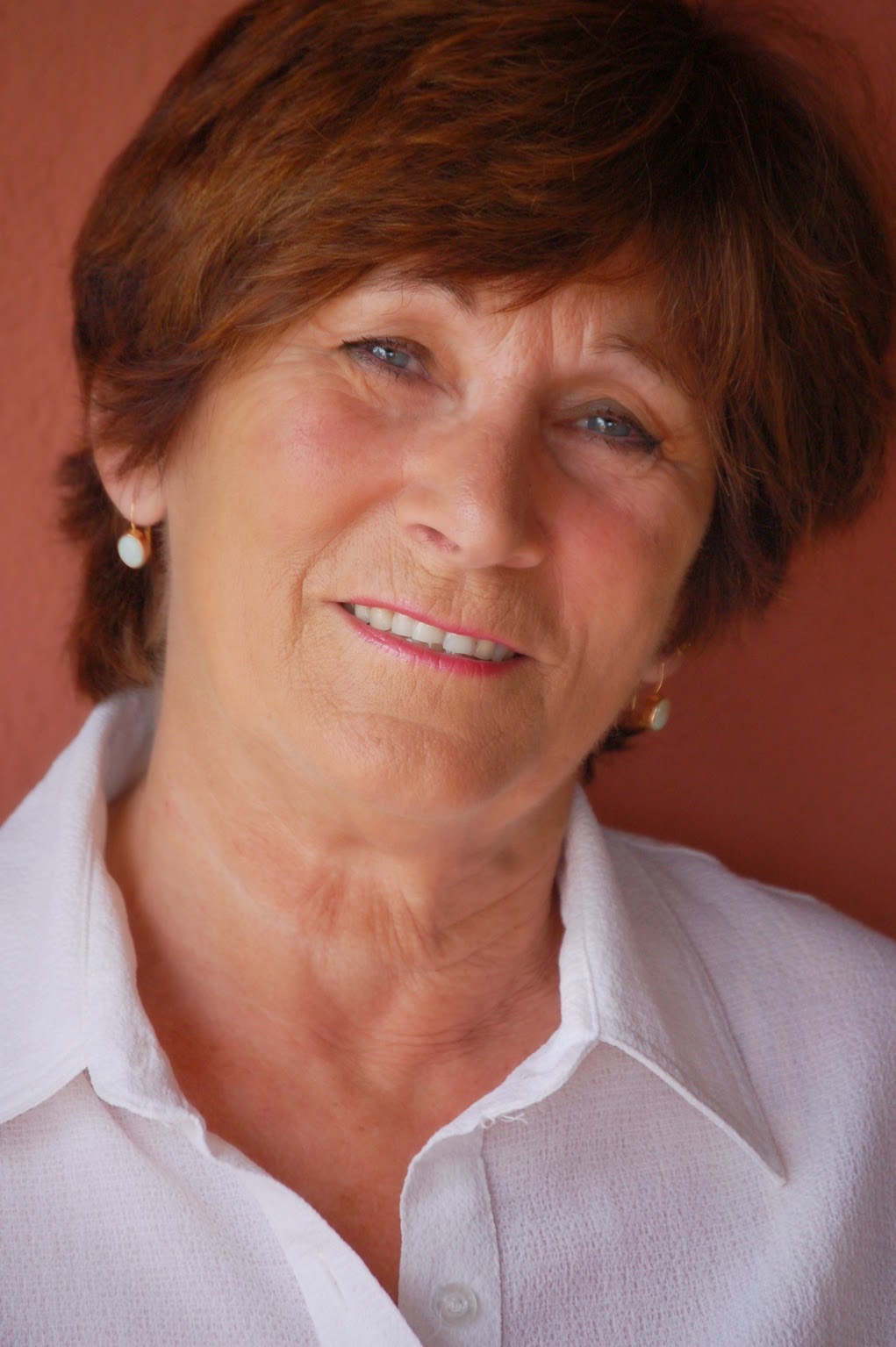
**Q&A with Joan Fallon**

The Eye of the Falcon is listed as the second novel in a series about Muslim Spain. Which of your books was the first book in the series?

The first of the al-Andalus series was The Shining City, a novel about the ruined city of Madinat al Zahra.

Did you always intend the book to be part of a series? If not, what changed your mind?

I never really intended to write a series of books; I thought that The Shining City could stand very well on its own as a novel about life in Spain at that time. However, when I began researching what little information there was about 10th century Spain, I realised that there was more than one story there. Al-Rahman III’s reign had been a time of peace and prosperity, which could have continued for a hundred years or more, except for the greed of one man, al-Mansur. His lust for power turned him from a humble civil servant into the ruler of al-Andalus and brought about the eventual disintegration of the Omayyad dynasty.
A number of events coincided to give al-Mansur his opportunity. The caliph Abd al-Rahman III, who had brought peace to a warring kingdom of princedoms and united them into a caliphate, died after ruling for forty years. His son, al-Hikam, did not survive him for very long and the throne passed to the hands of his grandson, al-Hisham II, a boy of eleven. And herein lay another story. How was a child going to rule such a wealthy country, especially as it was surrounded by enemies?

Who is the main character in your novel?

At first I was going to make the boy-caliph the main character, but the fact that he was so isolated made it difficult for him to interact with the other characters in the story. So I made his mother, Subh, the main character because she moves between her son and al-Mansur, who is not only the boy’s Regent but also her lover. So Subh is constantly torn between her passion for al-Mansur and her loyalty to her son.
Subh was originally a slave who was sold into the harem of al-Hikam II. The only problem was that al-Hikam was homosexual - not an unusual occurrence among the elite at that time - and it seemed that he was never going to produce an heir. With the encouragement of his mother, Subh set out to seduce him by dressing up as a boy. The ruse worked and eventually she gave him two sons. In doing so, she became rich and powerful.

Are all the characters in the novel real people?

Not all of them, but the main ones were real people. The caliphs existed, as did al-Mansur, General Ghálib and others in the government. Subh was a real woman but there was little information available about her life before she entered the harem, so that part is pure fiction. Al-Jundi and his family are fictitious characters that started life in the first book, The Shining City. As is frequently the case with history, what information there is about people living in the past relates to the rich and powerful. Servants, slaves and artisans are hardly ever mentioned by name. If Subh had not given birth to the Caliph’s sons, we would never have heard of her either. Consequently, all the supporting characters, soldiers, servants, slaves, falconers etc. are fictitious.

How much of the story is true and how much is fiction?

There is a saying that truth is often stranger than fiction and, in this case, I think it is very true. That the most powerful and richest ruler in the Western world could be isolated and deprived of his birthright because of his age seems unbelievable, yet it happened. That a concubine was able to dress as a boy in order to seduce the homosexual caliph, also seems very far-fetched, but it happened. Of course, the rest of the story is fiction - it is after all a novel. The episodes with the falcons could easily be true, because falcons were an important status symbol, but there is nothing recorded. Al-Mansur was a ruthless man and many deaths are attributed to his lust for power, but a lot of it is speculation. He is however, recorded as having burnt thousands of the city’s books - a loss that al-Andalus never recovered from.

Were there any particular difficulties in writing a historical novel where you know what really happened to one of the main characters?

Yes, I felt sorry for Hisham. I would have liked the young caliph’s life to have been happier and for him to have had the opportunity to rule when he came of age, but that would have taken the story too far away from actual events.

Are you planning to write another book in the series?

I would like to make the series a trilogy but so far have not decided whether to look at the very beginning of the 10th century, when the country was overrun with rebels or to move to the end of the 10th century and the beginning of the eleventh, when al-Hisham is killed and al-Mansur’s family take control. Either way there is plenty of material for another exciting novel.

Available now at
Amazon.com
Amazon UK

Learn more about author Joan Fallon


17 December 2015

Excerpt Thursday: THE EYE OF THE FALCON by Joan Fallon

This week, we're pleased to again welcome author JOAN FALLON with her latest release,  THE EYE OF THE FALCON,(Book #2, Al-Andalus series). Join us again on Sunday for an author interview, with more details about the story behind the story. One lucky visitor will get a free copy of The Eye of the Falcon. Be sure to leave your email address in the comments of today's post or Sunday's author interview for a chance to win. Winner(s) are contacted privately by email. Here's the blurb.

The Eye of the Falcon is the second novel in a series about Muslim Spain, set in the Andalusian city of Cordoba.  By the end of the 10th century al-Andalus was a rich and peaceful country, but when the Omayyad caliph died and left an eleven-year-old son as his heir, things began to change.  The eventual disintegration of that powerful dynasty had begun.
 

The young caliph was imprisoned in his beautiful palace, isolated and cut off from the Royal Court, while his ruthless regent and his ambitious mother battled over who should rule.  The Eye of the Falcon is a novel of intrigue and murder set at the end of Muslim Spain's Golden Age, rich with the historical details of an exotic way of life, long disappeared.

**An Excerpt from The Eye of the Falcon**

PART 1
976 AD

Chapter 1

It was barely light when she came to his room. The night sky was turning to milky white on the horizon but the songbirds were still asleep; even the cock had not yet begun to crow. She stood by his bed, looking down at him. Her nightdress shone and glittered in the flickering light of the night lamps; it reminded him of the kingfishers that stole in to the palace gardens to steal fish from the lakes. Gently her hand stroked his hair.
‘Hisham, my son, are you awake?’ she asked.
‘Yes mother. What’s happened? Is something the matter?’
He was well aware of the commotion in the women’s quarters; the wailing and crying, the sound of heavy footsteps as the guards marched through the palace, the slamming of doors and loud voices all spoke of some catastrophe. It had broken into his sleep and woken him before his mother arrived at his bedside. Now she knelt by his side and said, ‘You must get up, Hisham. The Khalifa is dead.’
Dead? Baba was dead? He felt a chill pass over him and hot tears sprang into his eyes. He looked at his mother; her face was impassive, not a tear marred her beautiful face. She pulled the covers off him and took his hand in hers.
‘Do not cry, Hisham; there is no need for tears. You are the Khalifa now, my son. You will be a great and glorious ruler,’ she continued, her eyes gleaming, ‘like the Omeyyads before you. Al-Andalus will thrive and prosper with you as Khalifa and with me by your side.’
She bowed low so that her face touched the carpet next to his bed, her long blonde hair cascading over the elaborately woven silks, and would have kissed his hand but he snatched it away. Baba was dead. Who was this woman who did not weep for her dead husband? He had seen her shed more tears when her pet peacock died.
He turned his face away from her. Was she telling him the truth? Was Baba really dead? His father had been unwell for some time, confined to his rooms, only able to walk a few steps at a time, but Hisham had never really expected him to die. He was sure he would get better. He believed the doctors who came each day and gave him potions made from habba souda and warm milk - said by the Prophet to cure everything but death - who made him infusions of anise and applied myrrh to his lips to sweeten his breath, who massaged his legs and prescribed salt water baths. He believed them when they said that with time he would recover, that he would return to his books and be as he was before. But they had been wrong. Baba had not recovered from the affliction that had twisted his face and stolen the strength from his limbs. He had lain in his room surrounded by his ministers, listening silently while they told him what was happening in his kingdom. Then, tired from his inability to do anything, he had sent for Hisham and asked him to read to him.
What would Hisham do now? He had loved his father. Al-Hakim had been more than a father; he had been Hisham’s friend and his teacher. Each day, when his father had finished with the business of the court, he went into the harem to look for his son and together they walked in the palace gardens while he recited the great Persian poetry of times past. He recounted the exploits of his father, Hisham’s grandfather, the mighty al-Rahman III, who had died before the boy was born, of how he had subdued all the rebellious tribes and united al-Andalus into the most powerful kingdom in Europe, of how he had defeated the Christian princes yet allowed Christians, Jews and Moslems to live in peace, side by side. Hisham had listened to his stories and was proud to be part of such a powerful family. On other occasions he accompanied his father to the great library, al-Hakim’s pride and joy, and there he learnt the secrets that were held within his countless books, sharing his father’s excitement when a new manuscript arrived from some distant land or a copyist presented him with something fresh to read and explore. Hisham loved to trace his finger over the beautiful illuminated characters and follow the words across the page or watch as books in Latin or Greek were carefully translated into Arabic. His father had taught him many things it was true, but Hisham was not sure that he had taught him how to be Khalifa of Muslim Spain.
‘Hisham, you must get up, the ministers are waiting to see their new Khalifa. Come child, I know you are upset at the news but you have responsibilities now,’ his mother whispered so that his attendants could not hear her.
He looked at her and wished he could just pull the covers over his head and stay there until she went away but he knew he could not. Al-Sayyida al Malika, the Queen Mother, was not someone to be easily ignored; she was as fearsome as she was beautiful.
His mother stood up and clapped her hands. She looked annoyed with him. At that signal Hisham’s personal slaves hurried across to him and, reluctantly, he rolled out of bed so that they could begin to prepare him for the day. Khalifa? How could he be Khalifa? It was only a few months since he had celebrated his eleventh birthday.

Available now at
Amazon.com
Amazon UK

Learn more about author Joan Fallon

01 October 2015

Excerpt Thursday: THE BUTCHER OF AVIGNON by Cassandra Clark

This week, we're pleased to welcome author CASSANDRA CLARK with her latest release, THE BUTCHER OF AVIGNON, book six of the Hildegard of Meaux medieval crime series. Join us again on Sunday for an author interview, with more details about the story behind the story. One lucky visitor will get a free  copy of The Butcher of Avignon. Be sure to leave your email address in the comments of today's post or Sunday's author interview for a chance to win. Winner(s) are contacted privately by email. Here's the blurb.


When Hildegard is sent on a mission to the fabulous papal palace in Avignon, she is well aware that Clement VII is known throughout Europe as the Butcher of Cesena and, with England at war, she will have to watch her step while inside the very stronghold of the enemy. Shortly after arriving, an English knight and his brutal bodyguards turn up. He is a vassal of one of young King Richard's deadliest rivals. What is his purpose in Avignon? Why has he abducted two innocent men from the streets of London and smuggled them into the palace? And, worse for Hildegard, two other Englishmen are here, one close to her heart but a traitor to the king and the other a violent and dangerous obsessive. When the body of a chorister is found stabbed on a sack of gold inside Clement's most secret and private treasury, Hildegard cannot walk away from the troop of young pages who seek her help in finding his killer. Can she solve the puzzle of the murder before the murderer finds her? Danger follows the intrepid nun every step of the way to a final and gruesome reckoning.


**An Excerpt from The Butcher of Avignon**

When news of the battle at Cesena comes through every man, woman and child in England is sickened by the violence inflicted on the innocent inhabitants of the town. Their own countryman, Sir John Hawkwood, an Essex foot soldier who has become the most infamous mercenary in all Europe, has committed an atrocious crime regarding a nun at Cesena.  It is rumoured to be so vile that even the most brutal fighting men had vomited on the battlefield in revulsion.  But that was not the worst of it.
            Hawkwood is outdone in brutality by Robert of Geneva.  A churchman.
            Robert, a papal legate, so the story goes, pays Hawkwood for the use of his troops.  His idea is he will use military force to make Cesena’s inhabitants accept papal rule.  They value their freedom and refuse his offer.  Not to be thwarted Robert commands his troops to surround the town.  He will starve the inhabitants until they welcome his rule.  The citizens resist.  Now news comes that Robert has ordered the massacre of everyone in Cesena, women, children, the old, the infirm.  The men have already been slaughtered.
They say there were over 3,000 unarmed citizens within the walls.  Three thousand?  Others claim it is more like eight thousand - whichever, the entire population of this little walled town in the region of Forli is massacred.
            A few months later the same Robert, victor at Cesena, son of the Count of Geneva, is chosen as Pope Clement VII by the French cardinals in opposition to the elected Pope Urban VI who sits in Rome.  So begins the Schism and the rule of two popes in Europe.
            That was ten years ago.  And still the Butcher of Cesena, as Clement is known, is Pope in Avignon. 
                                                                      **
 Hildegard.  Getting dressed in the dark.  Sickly smell of the other nun, sweating unwashed in her straw.  Found her winter shift and pulled it on over her linen. Fumbled for her boots.  One, but where was the other one?  Fingers closing over the stout leather when she scrabbled under the bed.  Thrusting in her foot, rapidly tightening the laces then pulling her cloak from the tangle of blankets, straightening as she dragged it over her shoulders. 
            A courier had ridden into the palace in Avignon as night fell.  Ahead of the pack.  With fresh news from England. 
            It is utterly unbelievable.
            Appalling. 
            If what he said were true it was truly the End Days.  At first Hildegard dismissed his words as nothing but malicious tittle-tattle.  Heard the gloating delight in his voice.  Then, just now, the clatter of hooves in the forecourt had drummed into a dream where she was riding out with Hubert on a hunting day, his hawk regarding her with sombre jealousy, and the tumult of hooves on the cobbles and the shouts of English voices jerked her fully awake.  Through the window slit she saw a tumult of horsemen in the yard.  Banners.  Flaring cressets.  Smoke.  Steel.  And she knew at once, last night’s rumour was true. 
            Something momentous had happened.
            The door creaked as she opened it and her cell sister muttered something about cats but Hildegard was already out in the freezing corridor, treading as swiftly as she could over the flag stones, guessing her way through the palace labyrinth, Clement VII, a black spider at its heart, crouching over his gold. 
            She was stopped at the outer doors by the sentry. 
            ‘More news from England?’ she asked in French.
            ‘More than that, a knight and his retinue. I trust we’re not at war, domina.’ 
            ‘Pray it’s a problem we can overcome.’
            He let her pass, his fear not, my lady echoing down the passage after her.
            As she hurried down the wide steps leading into the Great Courtyard her thoughts were running wildly over the facts.
            The first attack against King Richard was aimed at his chancellor Michael de la Pole, impeached at the behest of the King’s Council.  That was one thing. The King, however, had given his liegemen a good Christmas at Windsor, seating him on his right to show what he thought to his uncles’ arrogance in calling de la Pole into court and, against all the evidence, daring to accuse him of embezzlement.  But what had come next, according to last night’s courier, was a thousand times worse. 
            Sir Simon Burley, the renowned war hero and the kings’ personal tutor, now indicted on a charge of treason? 
            The Chief Justiciar, Tresillian, also accused of treason? 
            The Archbishop of York indicted on the same charge?
            Archbishop Neville?
            It was beyond belief. 
            But this was what the courier had announced.  Gleeful.  England on the brink of civil war!
            Only last year Hildegard had travelled down with the Archbishop from his diocese of York to attend the Westminster parliament King Richard had called to counter a threatened French invasion. The archbishop had been at the height of his powers then.  Even so, he told her of fears for the future, warned her to return to her nunnery and live a quiet and blameless life. The king’s enemies will not sleep until they have his crown. 
            And now he was under arrest? 
            It was known that King Richard’s uncle, the royal prince,Thomas of Woodstock,  wanted to isolate the young king so that he could force him to submit to his will. 
            But surely it could not be true that Woodstock, acting in the name of the King’s Council, had summarily arrested such loyal men as these? 
            Woodstock, desperate for the crown of England?
            She could not believe the king’s youngest uncle would go so far in his lust for power. 
            Last night, the courier had been jubilant.  Picking up his information at Calais.  Riding south to Avignon. Galloping his mud-stained horse under the Porte des Champeaux into the Great Courtyard of the palace.  Knowing he had valuable news for Pope Clement, that England was further weakened.  Clement must be hymning with joy.  Confidant he would soon drag the English into his power.  With Prince Thomas as an ally how could he fail?
            Hildegard glanced up at the forbidding towers of the Old Palace where high up the single window slit of Clement’s private chambers gleamed with light. Cressets burned in other windows in the private apartments.  Shadows crossed and recrossed.
            Down the last of the steps into the main courtyard.  Breathless with fear. The tumult echoed within the walls.  A crowd had gathered round the retinue still riding in even now under the portcullis.  Stable hands, attending the horses, night servants, monks and a cardinal or two with their pages, everyone dragged from sleep, night cloaks pulled round shoulders, wind swirling in eddies across the yard.  A miserable January night.  Monastics irritable at being dragged from their beds between the offices.  Little enough sleep.  Ill tempers later.  And here, now, at the centre of this turmoil, an Englishman and his retinue. 
            Hildegard stared at the blazon on the surcoats of his men-at-arms.  Unconsciously she pulled her hood lower to conceal her face. I know that badge.  It depicted the arms of a prince of the blood royal.  Red, blue, gold. The light glittered over the crowned leopards, the fleur de lys, the silver border.
            Her worst fears were confirmed.  It was the blazon of Prince Thomas of Woodstock.
            She melted in among the people milling round to hear what was being said.
            Torches stuttered light into the faces of the riders.  Mail glinted.  Weapons were visible as flashes of lethal steel. There was a smell of naptha.  Flames sizzled into the night.  Smoke hung in a pall over the yard.  The knight at the head of this raucous crowd gripped the reins of his caparisoned mount with one mailed hand as the glare from the torches sent his face into dark then light and back to dark.  He raised his other fist in a salute of triumph.  Hildegard stared.
            I know you.  You’re Sir John Fitzjohn. 
            Roaring with laughter at a quip by one of his men, with a sneer against the French to please his hosts - who were a fiefdom on their own and not subject to any French king but vassals only to the King of Heaven himself - he managed to express the physical superiority of a military man against unarmed monastics with every gesture.  He made it clear he was not here to beg.  Sir John, blond, big-boned, battle-scarred. Sure of his welcome.        
            Hildegard took in the value of his armour, the worth of his horse, the nobility of his  hounds.
            His mother had been one of John of Gaunt’s many mistresses.  Royal blood, therefore, ran in his veins. Duke John had allowed him the name Fitzjohn to give his bastard some status, siring several more children by the same woman before meeting Katharine Swynford who cajoled her way into the role of first concubine after his wife, the saintly Duchess Blanche, died of the plague.  The children he fathered on Katharine became known as the little Beauforts.  Now nearing adulthood they preceded the Fitzjohns in all matters of importance which naturally led to friction.  In fact, the younger brother of Sir John Fitzjohn had turned out badly.  Escrick Fitzjohn was a name that still aroused in Hildegard a feeling of fear and revulsion.
            Sir John was laughing out loud while his eyes searched the crowd in the glare from the swinging lanterns.  He was handsome in a bold, strong-boned manner, no doubt about that.  His mother had been a renowned beauty like all Gaunt’s mistresses, but haughty, despite her origins, a quality she had obviously passed on to her eldest son. The arduous journey from England had not daunted his spirits.  He was searching the crowd more closely now as if for a particular face.  Hildegard noticed one of the foreign cardinals being conducted through the milling onlookers, his pages carving a path for him, then Fitzjohn swung down from his horse and extended his arms in greeting.  They embraced.  The Englishman knelt to receive a blessing.  Straightened at once, by no means humbled. Towering over the elderly cardinal. All smiles.
            She tried to get closer but managed to hear only a few floating phrases, could hear the chuckles of the men standing near to Fitzjohn.  A name or two hovered on the air. She edged further into the crowd.
            Simon Burley, she heard, ears straining. That old war horse...in the knackers’ yard at last.  A rumble of complacent laughter from those nearest.  Hildegard burned with fury. 
            When she turned away as the crowd drifted towards the palace she had heard enough to be stunned by the rumours now confirmed:  Burley, Tresillian, Neville.  All three impeached.  Two other knights she knew to be as loyal to King Richard also on the list.  And the final outrage, the condemnation of the mayor of London, Nick Brembre.  A man more loyal to the king could not anywhere be found.
            She walked in appalled fury after the heedless mob.  The only crime of the accused was loyalty to the young king.  The so called King’s Council was controlled by Richard’s uncle, Thomas of Woodstock.  And now the Council had spoken.
            If they are accused of being traitors it will lead us to civil war - unless opposition is suppressed as it was during the Peasants’ Revolt.  She recalled the bloodbath that had followed the people’s demands for bread and liberty. 
            Horror stricken she paced the yard as the rest of the onlookers flocked into the gaping entrance to the palace.


Learn more about author Cassandra Clark

www.cassandraclark.co.uk
amazon.com/author/cassandraclark

16 October 2014

Excerpt Thursday: CONSOLAMENTUM by Rebecca Hazell

This week, we're pleased to welcome author REBECCA HAZELL with the third in her The Tiger and the Dove series, CONSOLAMENTUM. Join us again on Sunday for an author interview, with more details about the story behind the story. One lucky visitor will get a free copy of the novel in Kindle format. Be sure to leave your email address in the comments of today's post or Sunday's author interview for a chance to win. Winner(s) are contacted privately by email. Here's the blurb.

In the finale of Sofia's memoir, Consolamentum, both dramatic and poignant, her dreams of home are shattered when her own family betrays her. Raising her child on her own, mourning the loss of her beloved knight, and building a trading empire, she seeks safe haven for her child and herself. Her quest takes her from Antioch to Constantinople to Venice. A surprise reunion in Venice leads her to France where she runs afoul of the newly established Holy Inquisition, possibly the greatest challenge she has yet faced. Can a woman so marked by oppression, betrayal, and danger ever find her safe haven, much less genuine happiness?

**An Excerpt from Consolamentum**

Lady Heloise added, “It is said that Saint Denis rose up after his execution, picked up his head, and walked a thousand feet before falling again. That is where a pilgrimage shrine was later founded, but the abbey that bears his name lies farther to the north. You will soon see that it is quite beautiful and also very special, for it is where all the kings of Francia have been buried since it was built. The king, I hear, intends to commission effigies to lie over each tomb, even of the earliest kings of Francia, like Clovis and Pepin. I find it very moving, and you must as well; it is good politics.

“Oh, look, they are already setting up for the October fair; one farmer always sells the richest cream you ever tasted. Not that I use it for eating: it also works wonders on the skin.”

As we passed, I saw many men and a few women setting up booths and stalls and even a few solid buildings. The aroma of roasting meat drifted across our path.

The fair was not yet open, but she and several other ladies did fall back to buy trinkets and, yes, cream, which the vendors were glad to sell them. I made the mistake of following behind. They were already returning, and I should have gone with them then, but I was drawn by a tent surrounded by colorful banners depicting odd-looking symbols. I thought just to look at them quickly and then to return to ask Heloise what they meant, but a woman dressed in motley came out when I rode up and began urging me inside her tent to have my fortune told. When I refused, a gang of hard-looking men suddenly surrounded me.

They probably had never heard a lady scream, but scream I did, and several knights in our company were soon bearing down on the ruffians, laying about and quickly rescuing me. This was shaming enough, but the king and queen heard the noise and were staring at me as I rode back, red-faced, to join their train. Lord Joscelin rode back to see me, looking stern. At least he began with, “Are you all right?” I nodded, looking down, unable to meet his eye. But then he added, “Don’t do anything foolish like that again. King Louis marked it, and you especially offended him by seeking out a fortune teller!”

Praise for the trilogy

“How deftly and compellingly Hazell takes the reader with her into that mysterious and exotic world, and makes it all seem so very close to hand!” – Peter Conradi, Fellow of Britain's Royal Society of Literature and author of Iris Murdoch: A Life, and of A Very English Hero.

"I enjoyed watching her morph from a spoiled sheltered princess with slaves of her own, into a tough, savvy survivor, with a new awareness of social injustice. The book is action packed. I couldn't put it down." -- from a review on Amazon.com.

"I got completely caught up in the characters and story and always looked forward to getting back to them. What a fully fleshed and fascinating world you developed and it was wondrous to learn so much about that time and the Mongol culture. Your gifts come out in your lush descriptions of place and objects. All very vivid and colorful." --author Dede Crane Gaston

“Through all of Sofia's treks across miles of various lands and cultures, I am a reader who is ready to continue the journey with her. I highly recommend this series if you love medieval history of the Far East and Asia, and even European areas, or enjoy reading about ancient cultures and religions. Solomon's Bride was even more well-written than Rebecca's first book, stringently researched, artistically detailed, heartfelt, and exciting.” –Erin, Oh, for the Hook of a Book!

The novel is available both in paperback and Kindle versions and through your local bookstore by special order.


About the author
Rebecca Hazell is an award winning artist, author, and educator. She has written, illustrated and published four non-fiction children’s books, created best-selling educational filmstrips, designed educational craft kits for children and even created award winning needlepoint canvases. She is a senior teacher in the Shambhala Buddhist lineage, and she holds an honours BA from the University of California at Santa Cruz in Russian and Chinese history.

Rebecca lived for many years in the San Francisco Bay Area. In 1988 she and her family moved to Halifax, Nova Scotia, and in 2006 she and her husband moved to Vancouver Island. They live near their two adult children in the beautiful Cowichan Valley.

Visit Rebecca:

Visit other blogs on the tour for reviews, guest posts, excerpts and giveaways!

28 September 2014

Author Interview & Ebook Giveaway: Rebecca Hazell on SOLOMON'S BRIDE

This week, we're pleased to welcome author REBECCA HAZELL with the second in her The Tiger and the Dove series, SOLOMON'S BRIDE. Join us again on Sunday for an author interview, with more details about the story behind the story. One lucky visitor will get a free copy of The Grip of God, the first novel in the series, or Solomon's Bride in Kindle format. Be sure to leave your email address in the comments of today's post or Sunday's author interview for a chance to win. Winner(s) are contacted privately by email. Here's the blurb.

Solomon's Bride is the dramatic sequel to The Grip of God. Sofia, the heroine, a former princess from Kievan Rus' was enslaved by a Mongol nobleman and then taken as a concubine by the leader of the Mongol invasions, Batu Khan, grandson of Genghis Khan. Now, having fled the Mongols with a price on her head, Sofia escapes into Persia and what she believes will be safety, only to fall into the clutches of the Assassins, who seek to disrupt the Mongol empire. In a world at war, both outer and inner, the second phase of her adventures unfolds. Can she ever find safe haven, much less the lost love and family that was almost destroyed by the Mongols?


**Q&A with Rebecca Hazell**

For those who are unfamiliar with your trilogy, can you give us a brief overview of it?

Yes, it’s set in the turbulent 13th century, which saw the massive Mongol invasions, the last desperate Crusades, the final era of the Assassins, and the establishment of the dreaded Inquisition. The story unfolds in a memoir written by a former princess of Kievan Rus’. Her life parallels these epic developments since she was so affected by them, but the story isn’t just about historical events. It also explores a journey of the heart: what keeps her sane and loving in a world ruled by greed, aggression, and willful ignorance.

In lots of ways, my heroine Sofia’s journey speaks to questions we may ask ourselves today, especially since a lot of our current world politics stems from that violent time. On the other hand, there’s plenty of room for romance in the story!

The first novel was The Grip of God. Tell us a little about the second novel, Solomon’s Bride.

Solomon’s Bride begins where The Grip of God leaves off, with Sofia having fled the Mongols for Iran. There she expects to find safe haven and a way to get west to her uncle in Constantinople. What she discovers is that she has fallen out of the frying pan into the fire. The Mongols didn’t just invade Europe; they invaded all across Asia and the Middle East. Iran was one of the early victims, and it was a mess there just from that. Plus there was sectarian warfare within Islam, just as there is today, with the added chaos of the Assassins, who were expecting the Apocalypse and were happy to help it arrive.

And beyond Iran, the Crusader states were fighting for survival and still hoping to ‘liberate’ Jerusalem someday, adding more mayhem into the mix.

It sounds like a terrifying time to live. Was there anything good going on?

Yes indeed! Sofia herself finds many kind people of differing faiths who help her both in her travels and on her life journey. One thing I wanted to show was how much goodness there is in the world, even in the midst of terrible times. Much of the novel is about her relationships, and there’s not so much visible violence as what she witnessed in the Mongol camps. So it’s not an action book so much as it is an exploration of how people keep sane in crazy times.

And as I say, there’s also romance and falling in love, which is a really good way to get either very sane or very crazy. But I don’t want to give the plot away.

Tell us a bit more about Sofia.

She’s so young and unformed when the story starts, so her mind isn’t yet set when she encounters so many different cultures and outlooks. She’s bright, curious, and naturally kind, but she also is pretty arrogant at first. So the reader sees her growing up into a complex woman with simple goals: Sofia wants love, to give and to receive, and she wants a home again. Her entire journey can be seen as a quest for those two things, but what she means by love and home begin to change as she matures.

What was your favorite aspect of writing these books?

‘Meeting’ so many different, interesting people. They are mostly fictional, but to me they became so real. I didn’t just want caricatures of points of view; I wanted the readers to care about them the way I did, with all their quirks and ways of viewing their world. And I enjoyed how Sofia kept growing and changing; all I had to do, in one sense, was record it just as she was recording her adventures in her journal.

And last, where did you get the title for this novel?

It comes from an Islamic legend about an aged Solomon and his young bride: she had to choose to come into his tent or be frozen to death on a mountain. In much the same way, Sofia’s life was full of challenge and the choices she made to survive.

About the author

Rebecca Hazell is an award winning artist, author and educator. She has written, illustrated and published four non-fiction children’s books, created best-selling educational filmstrips, designed educational craft kits for children and even created award winning needlepoint canvases.

She is a senior teacher in the Shambhala Buddhist lineage, and she holds an honours BA from the University of California at Santa Cruz in Russian and Chinese history.

Rebecca lived for many years in the San Francisco Bay Area. In 1988 she and her family moved to Halifax, Nova Scotia, and in 2006 she and her husband moved to Vancouver Island. They live near their two adult children in the beautiful Cowichan Valley.

Visit Rebecca:
Website | Goodreads | Facebook Amazon

25 September 2014

Excerpt Thursday: SOLOMON'S BRIDE by Rebecca Hazell

This week, we're pleased to welcome author REBECCA HAZELL with the second in her The Tiger and the Dove series, SOLOMON'S BRIDE. Join us again on Sunday for an author interview, with more details about the story behind the story. One lucky visitor will get a free copy of The Grip of God, the first novel in the series, or Solomon's Bride in Kindle format. Be sure to leave your email address in the comments of today's post or Sunday's author interview for a chance to win. Winner(s) are contacted privately by email. Here's the blurb.


Solomon's Bride is the dramatic sequel to The Grip of God. Sofia, the heroine, a former princess from Kievan Rus' was enslaved by a Mongol nobleman and then taken as a concubine by the leader of the Mongol invasions, Batu Khan, grandson of Genghis Khan. Now, having fled the Mongols with a price on her head, Sofia escapes into Persia and what she believes will be safety, only to fall into the clutches of the Assassins, who seek to disrupt the Mongol empire. In a world at war, both outer and inner, the second phase of her adventures unfolds. Can she ever find safe haven, much less the lost love and family that was almost destroyed by the Mongols?

**An Excerpt from Solomon’s Bride**

As the steppes swelled into rolling, well-wooded hills, both my body and spirit slowly revived and I sometimes forgot to be afraid.  For an entire day I could pretend we were merely on some wondrous journey of discovery: we might be edging along narrow cliffs where waves boiled into creamy foam below us or come upon a wide river rushing into the sea.  If we were then forced to ride inland, sheltered under shady trees and serenaded by the river’s song, to find a decaying bridge or shallow ford where we could cross, that was only part of a delightful adventure, nothing more.  I ignored the grim watch Da’ud kept as we traveled, how he guarded my every move.

Perhaps I could do that because he also relented and allowed more speech among us.  Ali always found an apt verse for the wonders we passed, which lightened any sense of possible trouble.  He was also given to reciting parts of a wonderful epic poem, the Shanameh, which tells about great shahs and heroes of Persia’s past.  And Nasr often added some silly twist to Ali’s elegant words that added to my delight.

Although this land was fertile and well-watered, there were surprisingly few settlements to avoid, especially inland.  Sometimes I would glimpse a tiny walled village perched on a steep hill above us, but we never approached it. A necessary precaution, Da’ud said when I asked why we never stopped at any of them.  “Once we would have had to take far greater care.  Half the towns were bandit lairs—those and the caves hereabout.  But few people live here now.”

“Why is that?” I asked.

“The Mongols, years ago.  They wanted no one at their backs when they attacked the infidel Georgians, so scouts destroyed every village they found and killed all the people.”

I suddenly realized: this would have been part of the great sweep Noyan Subodai’s armies had made around the Caspian, which led to the terrible battle at River Kalka where my grandfather and uncles had all died.  From then on I saw that land in a new way—not just desolate but desolated.

One late afternoon soon after, we passed the remnants of a ravaged fishing village.  Da’ud considered sheltering overnight inside its ruined walls, as the weather was wicked, but even the rain clouting our faces could not drive him to camp in that haunted place: a spirit of evil still clung to the charred remains, littered with skulls and bits of bone.

Praise for the trilogy

“How deftly and compellingly Hazell takes the reader with her into that mysterious and exotic world, and makes it all seem so very close to hand!” – Peter Conradi, Fellow of Britain's Royal Society of Literature and author of Iris Murdoch: A Life, and of A Very English Hero.

"I enjoyed watching her morph from a spoiled sheltered princess with slaves of her own, into a tough, savvy survivor, with a new awareness of social injustice. The book is action packed. I couldn't put it down." -- from a review on Amazon.com.

"I got completely caught up in the characters and story and always looked forward to getting back to them. What a fully fleshed and fascinating world you developed and it was wondrous to learn so much about that time and the Mongol culture. Your gifts come out in your lush descriptions of place and objects. All very vivid and colorful." --author Dede Crane Gaston

“Through all of Sofia's treks across miles of various lands and cultures, I am a reader who is ready to continue the journey with her. I highly recommend this series if you love medieval history of the Far East and Asia, and even European areas, or enjoy reading about ancient cultures and religions. Solomon's Bride was even more well-written than Rebecca's first book, stringently researched, artistically detailed, heartfelt, and exciting.” –Erin, Oh, for the Hook of a Book!

The novel is available both in paperback and Kindle versions and through your local bookstore by special order. The third novel, Consolamentum, is also available now.

About the author

Rebecca Hazell is an award winning artist, author and educator. She has written, illustrated and published four non-fiction children’s books, created best-selling educational filmstrips, designed educational craft kits for children and even created award winning needlepoint canvases.

She is a senior teacher in the Shambhala Buddhist lineage, and she holds an honours BA from the University of California at Santa Cruz in Russian and Chinese history.

Rebecca lived for many years in the San Francisco Bay Area. In 1988 she and her family moved to Halifax, Nova Scotia, and in 2006 she and her husband moved to Vancouver Island. They live near their two adult children in the beautiful Cowichan Valley.

Visit Rebecca:
Website | Goodreads | Facebook | Amazon

30 September 2007

The Historical Series

A repost by Anna C. Bowling

There's no denying series are popular in publishing right now, and when done right, can make readers happily return for more and more, enjoying the ever-expanding cast with each new release. Other times, readers (and sometimes the authors themselves) look at one more Fluglehorn Family logo stamped on the newest release and run screaming into the night, only to be found hours later at the local coffeehouse, nursing a chai tea in the corner and muttering something about not being able to tell the Flugelhorn-Smythes from the Flugelhorn-Joneses. In some cases, whispering "but that makes him her step-cousin" to a dining companion crafted from an empty Styrofoam cup and a handful of stirrers.

There are readers who can be quite content jumping in at book sixteen, figuring they'll catch the rest later if they like this one, and enjoy whatever installment they can pick up when they can. There are readers who must start at book one and proceed in order (with debate over whether story chronology trumps release date if applicable) or mountains will fall, puppies will die and their matinee idol of choice will wake up ugly. Any way we look at it, it's an important aspect of publishing.

Saying "series" seems easy enough; in modern parlance, it can refer to any linked books, but to be more specific, let's consider breaking it down into sub-groups. Sequels, sagas, spin-offs, not to mention prequels.

At the moment, it's easy to find historical romance series that will follow groups of siblings, friends, soldiers or schoolmates, mostly staying within one time period; everyone's around the same age, and about in the same period of their lives.

Every once in a while, there is what I term a direct sequel--Hero and Heroine from Book One are also Hero and Heroine in Book Two, with new events to test their mettle and their union. We've seen this more in the earlier days of the genre, as in Rosemary Rogers' Steve and Ginny books or Valerie Sherwood's Lovesong trilogy, but Jennifer Roberson's Tiger and Del in her Sword Dancer books had to fight through six volumes for their well-earned HEA. Yes, I know the books were marketed as fantasy, but they're romance, I tell you. For some readers, another trip to the well for a beloved couple is a welcome revisit, but for others, once the original HEA is in place, that's the best way to leave it.

Sagas have long been a historical fan's delight. Bertrice Small's O'Malley clan has covered a few centuries, from matriarch Skye through mentions in the author's contemporary erotic works, crossing with the equally prolific Leslie clan. To bang the old school drum again, Aola Vandergriff's classic Daughters Of... series followed three sisters from the 1850s through 1920s, with lots of marrying and burying in between. While some readers (me, me, me) enjoy seeing a hero and heroine at different stages in their lives, passing on the torch to daughters and sons, and eventually grandchildren, others might prefer not to have to see age change the young lovers who first stole their hearts.

The spin-off may be more common in television, but there's no reason it can't work in historical romance. The hero's friend who didn't get the girl can strike off for a new land, or the new world, be lost at sea, presumed dead, or any other number of reasons he (or she!) might leave First Story Land and begin a new life elsewhere.

Then there's the standalone (a term which has always confused me, but I think that's just me)--the book with no sequels, prequels, spin offs, or connections left, right or diagonal. Sometimes a story that ends with one couple's HEA is exactly the right note.

For me, I prefer to write stories that are one to a customer, but if a truly outstanding secondary character had something to do on their own, I'd consider it. Not all supporting characters can support their own stories, command their own spotlight, while some do it quite well.

So, readers, what sorts of connected books do you like best? Least? What about the one-offs? Writers, what's the best thing about crafting connected stories? Hardest? When should a series end? When the original protagonists age? Die? The historical period changes? Something else? Never?