Showing posts with label health. Show all posts

03 November 2010

Real Life Heroes: Joseph Lister

By Anna Randol

Quick, when I say hospital, what images come to mind? Polished floors and florescent lights? Doctors in white jackets and surgical masks? The smell of disinfectant?

If we had asked this question to someone living in the London in the 1800s, their answers would have been far different. For instance, people often found their way to the surgical ward of a hospital by following the smell of rotting flesh. Doctors saw no need to wash their hands between patients. In fact, an apron covered in layers of gore was thought to show how important and busy a doctor was. Instruments weren't washed between patients and observers might even smoke as they crowed around an operation. If a wound became infected, it was the result of bad air, and as unfortunate as that was, there was nothing a doctor could do about it.

So how did we get from that nightmare to the safe, clean environment we expect from our hospitals today?

Enter medical hero, Joseph Lister.

Joseph Lister was a British doctor in the second half of the 1800s. He began to notice a correlation between cleanliness and infection. For instance, he noted that babies that had been delivered by midwives had a much higher survival rate than those delivered by surgeons. He correctly attributed this to the fact that the midwives washed their hands far more frequently. He also noticed something interesting--compound fractures where a bone pierced the skin had much higher infection rates than fractures that did not. Lister realized that something must be getting into the wounds to cause the infection.

After reading Louis Pasteur's work about the microorganisms that caused fermentation, Lister finally had his answer. With his beautiful and ever-dedicated wife at his side, he began to experiment. Pasteur claimed there were three ways to kill the microorganisms: heat, filtration, or chemicals. Since the first two options wouldn't work on a living person, Lister settled on the third. He'd heard that a nearby city was having great success deodorizing its sewage with carbolic acid, so he began treating wounds with it. When his infection rates dropped dramatically, he also began to recommend surgeons wash their hands and instruments with it as well.

Encouraged by his success, French and German surgeons began to follow his lead. Lister's antiseptic techniques were credited with saving hundreds of soldiers during the Franco-Prussian War

But surgeons in Britain didn't rush to follow his example. Using the carbolic acid took too much time and was too much of a hassle to bother with, they argued. It also burned the eyes and hands and was an added expense. Lister knew that to convince the world he needed to convince London, so he persisted in his cause.

Soon Lister was operating on injuries that other surgeons thought too risky due to the chance of infection. In 1877, he agreed to perform a surgery on a man's fractured kneecap. The announcement met with widespread opposition. Lister would be turning a simple fracture into a compound one, a procedure that usually resulted in infection and death. But Lister trusted his discovery and also recognized the opportunity this presented to prove his theory to his opponents. The surgery was successful, and finally the surgeons of Britain began to follow Lister's example.

Due to Lister's perseverance, hundreds of lives were saved during his time and countless more after that. So next time a doctor dons fresh gloves before an operation or opens a sterile syringe, sigh in relief and give thanks for Joseph Lister.

Anna Randol writes sultry, adventurous Regency romances. Her debut novel, set in the heart of the Ottoman Empire, will be released by Avon in the beginning of 2012.

10 March 2008

Maladies & Treatments:
Patent Medicines

By Jacquie Rogers

The labels carried wild promises but no list of ingredients. Patent medicines were ubiquitous in the 1800s, partly because medical science had made advances and partly because the search for health exceeded medical science's capabilities.

These elixirs, creams, and compresses were made from any number of ingredients, ranging from vegetable juice to narcotics. Remember, there were no drug laws in the USA until after the turn of the 20th Century. When a patient took a dose of patent medicine, he or she could be taking opium, alcohol, mandrake, belladonna, marijuana, or extracts from hellebore, henbane, datura, and hemlock.


The term "patent medicine" refers to a product with a proprietary list of ingredients and sold directly to the public, not that the medicine was patented. Some of these products originated as old family recipes, but some manufacturers were a bit more mercenary in the development of their tonics. The quest for the almighty dollar soon surpassed any anecdotal or scientific basis for these medicines, and the patent medicine business became a huge economic force.

Tired of Viagra ads? Believe me, these ads certainly aren't new. Here's one of my favorite patent medicine ads, taken from The Owyhee Avalanche in the 1880s:

*************************************
LOST MANHOOD RESTORED
*************************************

THE DR. LIEBIG Private Dispensary
400 Geary St. San Francisco, Cal
Conducted by qualified physicians and surgeons--regular graduates. The Oldest Specialists in the United States, whose LIFE-LONG EXPERIENCE, perfect method and pure medicine, insure SPEEDY and PERMANENT CURES of all Private Chronic and Nervous Diseases. Affections of the Blood, Skin, Kidneys, Bladder, Eruptions, Ulcers, Old Sores, Swelling of the Glands, Sore Mouth, Throat, permanently cured and eradicated from the system for life. NERVOUS Debility, Impotency, Seminal Losses, Sexual Decay, Mental and Physical Weakness, Failing Memory, Weak Eyes, Stunted Development, Impediments to Marriage, etc. from excesses or youthful follies, or any cause, speedily, safely and privately cured.

Young, Middle-Aged and Old men, and all who need medical skill and experience, consult the old European Physician at once. His opinion costs nothing and may save future misery and shame. When inconvenient to visit the city for treatment, medicines can be sent everywhere by express, free from observation. It is self-evident that a physician who gives his whole attention to a class of diseases attains great skill, and physicians throughout the country, knowing this, frequently recommend difficult cases to the Oldest Specialist, by whom every Known good remedy is used. The Doctor's Age and experience make his opinion of Supreme Importance.


...and it goes on and on!

The patent medicine industry was brought to its knees shortly after the turn of the 20th Century. From the Food and Drug Administration:
A few muckraking journalists helped expose the red clauses, the false testimonials, the nostrums laden with harmful ingredients, the unfounded cures for cancer, tuberculosis, syphilis, narcotic addiction, and a host of other serious as well as self-limited diseases. The most influential work in this genre was the series by Samuel Hopkins Adams that appeared in Collier's on October 7, 1905, entitled "The Great American Fraud." Adams published ten articles in the series, which concluded in February 1906; he followed it up with another series on doctors who advertised fake clinics. The shocking stories of the patent medicine menace were accompanied by startling images, such as "Death's Laboratory."
Good health to you!

Princess Keely, Star of Faery Special RomancesDown Home Ever Lovin' Mule Blues

Myspace *** Bebo *** Faery World

Faery Special Romances *** See the book video
Royalties go to Children's Tumor Foundation, ending Neurofibromatosis through Research

Coming soon: Down Home Ever Lovin' Mule Blues

06 March 2008

Maladies & Treatments:
Writing with Folk Cures

By Anna C. Bowling

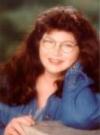
Growing up as the child of older (both were over forty when they adopted me; the photo is of me, at three, on the blacktop where I skinned pretty much everything) first generation American parents must have hardwired me for unusual historicals right from the start. Many of the treatments for the minor childhood illnesses or injuries I had in the 1960s/70s were as likely to come from the traditions my mothers and aunts, one of whom who worked as a nurse, learned from their mother, who learned them from her mother back in Italy in the early 20th century.

As a child, I'd often wondered what my mother grew that patch of mint for (aside from the delightful smell) but when puberty hit, I found out it was a natural remedy for menstrual cramps. By then we had moved away from the house with the fresh mint in the garden, so it had to come from a store, but it still worked, and the mint tea also worked to help with nausea.

Sore throats were as likely to be treated with licorice as commercial medications, which may be why I still like licorice today, and I will long remember the discussion my parents had when my father wanted to give me a hot toddy (mostly rum) to help ease the discomfort of a bad case of chicken pox when I was ten. They left it up to me, and I declined.

One of my strongest memories of my mother's Aunt Anna, who I only knew as an elderly woman who spoke a fast stream of Italian was the time when I'd talked a neighbor child into splitting a bar of Ex-Lax (to be fair, I was five and the grownups had described it to me as chocolate.) Being sorely lacking in my Italian, I can't vouch for anything said that day, but Aunt Anna refused to let my mother take me to the doctor, instead pounding an endless supply of ice with a hammer and pouring it down my throat before depositing me in the bathroom with even more tall glasses of ice. When I asked my mother to translate, she said this was Aunt Anna’s treatment for loose bowels, something she learned back in Italy.

Since I survived and turned out okay, my foremothers must have been on to something, so when characters in my historicals now have the need for doctoring, I turn to the state of the art medical care of their time. Often, such as in colonial settlements, the most advanced medical treatments meant calling in whoever had dealt with the illness or injury before. If the need was something the person hadn't encountered before, common sense was often the best guess.

In my colonial historical romance, MY OUTCAST HEART, the hero, Dalby, suffers third degree burns to one hand. Today, witnesses would call 911 and paramedics would rush him to the burn unit, where trained professionals would examine him and use a variety of treatments and procedures to find out how bad the damage was, how much mobility he might be able to retain and even address cosmetic repair. In 1720, Dalby was lucky this occurred in winter, so heroine Tabetha can drag him outside and stick his hand in a snowbank. The cold would help, but the "everybody knows" medicine of the time--likely coating the burn in butter or bear grease--we now know would have the exact opposite effect.

Looking at the folk medicine of the times I write about, and consulting with several friends who work in the medical field of today as well as visiting living history museums lets my characters have the best--or worst--of both worlds, depending on what the story needs. Good thing a great read is excellent medicine in any time.

04 March 2008

Maladies & Treatments:
Florence Nightingale

By Marianne LaCroix

Florence Nightingale. It is a name we all recognize, but what exactly is so important about her? She is the woman who established the importance of sanitary conditions in a medical environment as well as nursing standards used today such as good nutrition, proper rest and gentle human caring.

Florence was born in Italy and named after the city of her birth. Born to privileged parents, Florence was educated at home by her Cambridge educated father. She was vibrant and admired socially, and her family expected her to marry well. However, in 1837 she believed she was called upon God to go about her work, issuing her a calling that would drive her into history.

Her parents refused to let her become a nurse as it was deemed unsuitable profession for an educated woman in the mid 1800s. She was sent on a trip to Europe with some family friends. In Germany in 1850 she visited Pastor Theodor Fliedner's hospital and school for deaconesses at Kaiserswerth, near Dusseldorf. She returned to the hospital the next year to study nursing despite her family’s conflict.

Florence came to international recognition during the Crimean War (France and Turkey's war on Russia in 1854). She was appointed by Sidney Herbert, the Minister at War, to introduce female nurses into military hospitals in Turkey. Initially male doctors did not want the women’s assistance, but within days, the 38 nurses' services were indispensable.

The conditions in Scutari (modern-day Üsküdar in Istanbul) at the Selimiye Barracks were desperate. Patients were overcrowded and suffered from poor nutrition. Medicine was scarce. Hygiene neglected. Infection ran rampant, often times fatal. Sickness like typhus cholera, dysentery and typhoid took a grave toll more often than infection from battle wounds. Florence and her nurses took to cleaning the hospital conditions and organizing patient care. Sewers were flush and ventilation improved. After her arrival, the death rate dropped dramatically.

During the war, Florence earned the name "Lady with the Lamp," an image derived from an article reported in the British newspaper, The Times:
She is a 'ministering angel' without any exaggeration in these hospitals, and as her slender form glides quietly along each corridor, every poor fellow's face softens with gratitude at the sight of her. When all the medical officers have retired for the night and silence and darkness have settled down upon those miles of prostrate sick, she may be observed alone, with a little lamp in her hand, making her solitary rounds.
After the war, Florence continued her pioneering of nursing care and wrote several works including Notes on Nursing: What Nursing Is, What Nursing is Not (1860). She excelled in statistics and compiled reports on the conditions of medical care and public health.

Before her death in 1910 at age 90, she was awarded the Royal Red Cross by Queen Victoria and was the first woman to receive the Order of Merit. She has influenced worldwide practices in nursing and has several schools named in honor of her, including the Florence Nightingale School of Nursing and Midwifery where she established a nursing training school in 1860.

RESEARCH SOURCES:
Wikipedia
Florence Nightingale

All hail the tireless work of nurses!

Marianne LaCroix
Crossed Swords, Ellora's Cave - RT Top Pick!