Showing posts with label The Eye of the Falcon. Show all posts

20 December 2015

Author Interview & Book Giveaway: Joan Fallon on THE EYE OF THE FALCON

This week, we're pleased to again welcome author JOAN FALLON with her latest release,  THE EYE OF THE FALCON,(Book #2, Al-Andalus series). One lucky visitor will get a free copy of The Eye of the Falcon. Be sure to leave your email address in the comments of today's author interview for a chance to win. Winner(s) are contacted privately by email. Here's the blurb.

The Eye of the Falcon is the second novel in a series about Muslim Spain, set in the Andalusian city of Cordoba.  By the end of the 10th century al-Andalus was a rich and peaceful country, but when the Omayyad caliph died and left an eleven-year-old son as his heir, things began to change.  The eventual disintegration of that powerful dynasty had begun.
The young caliph was imprisoned in his beautiful palace, isolated and cut off from the Royal Court, while his ruthless regent and his ambitious mother battled over who should rule.  The Eye of the Falcon is a novel of intrigue and murder set at the end of Muslim Spain's Golden Age, rich with the historical details of an exotic way of life, long disappeared.
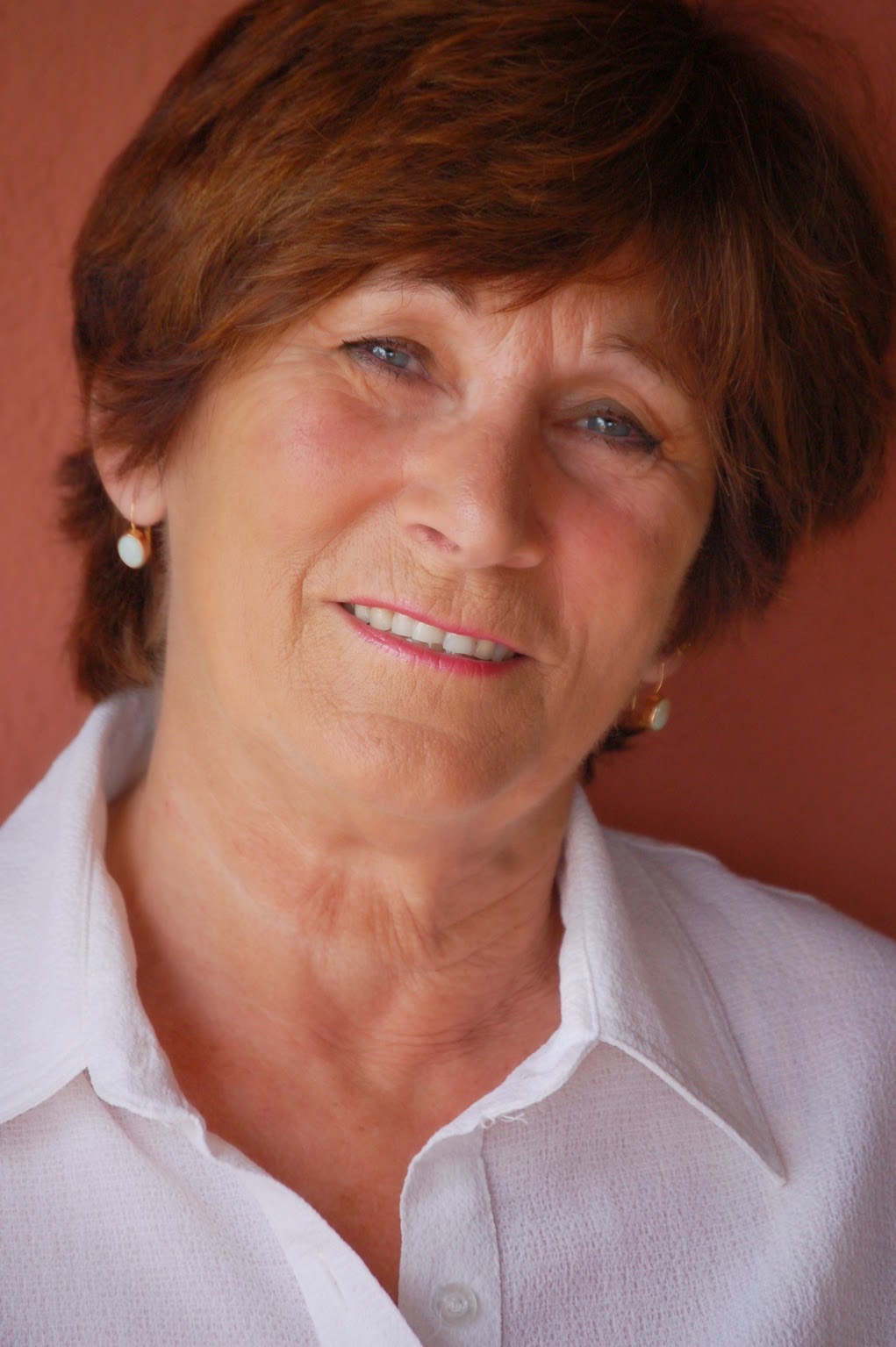
**Q&A with Joan Fallon**

The Eye of the Falcon is listed as the second novel in a series about Muslim Spain. Which of your books was the first book in the series?

The first of the al-Andalus series was The Shining City, a novel about the ruined city of Madinat al Zahra.

Did you always intend the book to be part of a series? If not, what changed your mind?

I never really intended to write a series of books; I thought that The Shining City could stand very well on its own as a novel about life in Spain at that time. However, when I began researching what little information there was about 10th century Spain, I realised that there was more than one story there. Al-Rahman III’s reign had been a time of peace and prosperity, which could have continued for a hundred years or more, except for the greed of one man, al-Mansur. His lust for power turned him from a humble civil servant into the ruler of al-Andalus and brought about the eventual disintegration of the Omayyad dynasty.
A number of events coincided to give al-Mansur his opportunity. The caliph Abd al-Rahman III, who had brought peace to a warring kingdom of princedoms and united them into a caliphate, died after ruling for forty years. His son, al-Hikam, did not survive him for very long and the throne passed to the hands of his grandson, al-Hisham II, a boy of eleven. And herein lay another story. How was a child going to rule such a wealthy country, especially as it was surrounded by enemies?

Who is the main character in your novel?

At first I was going to make the boy-caliph the main character, but the fact that he was so isolated made it difficult for him to interact with the other characters in the story. So I made his mother, Subh, the main character because she moves between her son and al-Mansur, who is not only the boy’s Regent but also her lover. So Subh is constantly torn between her passion for al-Mansur and her loyalty to her son.
Subh was originally a slave who was sold into the harem of al-Hikam II. The only problem was that al-Hikam was homosexual - not an unusual occurrence among the elite at that time - and it seemed that he was never going to produce an heir. With the encouragement of his mother, Subh set out to seduce him by dressing up as a boy. The ruse worked and eventually she gave him two sons. In doing so, she became rich and powerful.

Are all the characters in the novel real people?

Not all of them, but the main ones were real people. The caliphs existed, as did al-Mansur, General Ghálib and others in the government. Subh was a real woman but there was little information available about her life before she entered the harem, so that part is pure fiction. Al-Jundi and his family are fictitious characters that started life in the first book, The Shining City. As is frequently the case with history, what information there is about people living in the past relates to the rich and powerful. Servants, slaves and artisans are hardly ever mentioned by name. If Subh had not given birth to the Caliph’s sons, we would never have heard of her either. Consequently, all the supporting characters, soldiers, servants, slaves, falconers etc. are fictitious.

How much of the story is true and how much is fiction?

There is a saying that truth is often stranger than fiction and, in this case, I think it is very true. That the most powerful and richest ruler in the Western world could be isolated and deprived of his birthright because of his age seems unbelievable, yet it happened. That a concubine was able to dress as a boy in order to seduce the homosexual caliph, also seems very far-fetched, but it happened. Of course, the rest of the story is fiction - it is after all a novel. The episodes with the falcons could easily be true, because falcons were an important status symbol, but there is nothing recorded. Al-Mansur was a ruthless man and many deaths are attributed to his lust for power, but a lot of it is speculation. He is however, recorded as having burnt thousands of the city’s books - a loss that al-Andalus never recovered from.

Were there any particular difficulties in writing a historical novel where you know what really happened to one of the main characters?

Yes, I felt sorry for Hisham. I would have liked the young caliph’s life to have been happier and for him to have had the opportunity to rule when he came of age, but that would have taken the story too far away from actual events.

Are you planning to write another book in the series?

I would like to make the series a trilogy but so far have not decided whether to look at the very beginning of the 10th century, when the country was overrun with rebels or to move to the end of the 10th century and the beginning of the eleventh, when al-Hisham is killed and al-Mansur’s family take control. Either way there is plenty of material for another exciting novel.

Available now at
Amazon.com
Amazon UK

Learn more about author Joan Fallon


17 December 2015

Excerpt Thursday: THE EYE OF THE FALCON by Joan Fallon

This week, we're pleased to again welcome author JOAN FALLON with her latest release,  THE EYE OF THE FALCON,(Book #2, Al-Andalus series). Join us again on Sunday for an author interview, with more details about the story behind the story. One lucky visitor will get a free copy of The Eye of the Falcon. Be sure to leave your email address in the comments of today's post or Sunday's author interview for a chance to win. Winner(s) are contacted privately by email. Here's the blurb.

The Eye of the Falcon is the second novel in a series about Muslim Spain, set in the Andalusian city of Cordoba.  By the end of the 10th century al-Andalus was a rich and peaceful country, but when the Omayyad caliph died and left an eleven-year-old son as his heir, things began to change.  The eventual disintegration of that powerful dynasty had begun.
 

The young caliph was imprisoned in his beautiful palace, isolated and cut off from the Royal Court, while his ruthless regent and his ambitious mother battled over who should rule.  The Eye of the Falcon is a novel of intrigue and murder set at the end of Muslim Spain's Golden Age, rich with the historical details of an exotic way of life, long disappeared.

**An Excerpt from The Eye of the Falcon**

PART 1
976 AD

Chapter 1

It was barely light when she came to his room. The night sky was turning to milky white on the horizon but the songbirds were still asleep; even the cock had not yet begun to crow. She stood by his bed, looking down at him. Her nightdress shone and glittered in the flickering light of the night lamps; it reminded him of the kingfishers that stole in to the palace gardens to steal fish from the lakes. Gently her hand stroked his hair.
‘Hisham, my son, are you awake?’ she asked.
‘Yes mother. What’s happened? Is something the matter?’
He was well aware of the commotion in the women’s quarters; the wailing and crying, the sound of heavy footsteps as the guards marched through the palace, the slamming of doors and loud voices all spoke of some catastrophe. It had broken into his sleep and woken him before his mother arrived at his bedside. Now she knelt by his side and said, ‘You must get up, Hisham. The Khalifa is dead.’
Dead? Baba was dead? He felt a chill pass over him and hot tears sprang into his eyes. He looked at his mother; her face was impassive, not a tear marred her beautiful face. She pulled the covers off him and took his hand in hers.
‘Do not cry, Hisham; there is no need for tears. You are the Khalifa now, my son. You will be a great and glorious ruler,’ she continued, her eyes gleaming, ‘like the Omeyyads before you. Al-Andalus will thrive and prosper with you as Khalifa and with me by your side.’
She bowed low so that her face touched the carpet next to his bed, her long blonde hair cascading over the elaborately woven silks, and would have kissed his hand but he snatched it away. Baba was dead. Who was this woman who did not weep for her dead husband? He had seen her shed more tears when her pet peacock died.
He turned his face away from her. Was she telling him the truth? Was Baba really dead? His father had been unwell for some time, confined to his rooms, only able to walk a few steps at a time, but Hisham had never really expected him to die. He was sure he would get better. He believed the doctors who came each day and gave him potions made from habba souda and warm milk - said by the Prophet to cure everything but death - who made him infusions of anise and applied myrrh to his lips to sweeten his breath, who massaged his legs and prescribed salt water baths. He believed them when they said that with time he would recover, that he would return to his books and be as he was before. But they had been wrong. Baba had not recovered from the affliction that had twisted his face and stolen the strength from his limbs. He had lain in his room surrounded by his ministers, listening silently while they told him what was happening in his kingdom. Then, tired from his inability to do anything, he had sent for Hisham and asked him to read to him.
What would Hisham do now? He had loved his father. Al-Hakim had been more than a father; he had been Hisham’s friend and his teacher. Each day, when his father had finished with the business of the court, he went into the harem to look for his son and together they walked in the palace gardens while he recited the great Persian poetry of times past. He recounted the exploits of his father, Hisham’s grandfather, the mighty al-Rahman III, who had died before the boy was born, of how he had subdued all the rebellious tribes and united al-Andalus into the most powerful kingdom in Europe, of how he had defeated the Christian princes yet allowed Christians, Jews and Moslems to live in peace, side by side. Hisham had listened to his stories and was proud to be part of such a powerful family. On other occasions he accompanied his father to the great library, al-Hakim’s pride and joy, and there he learnt the secrets that were held within his countless books, sharing his father’s excitement when a new manuscript arrived from some distant land or a copyist presented him with something fresh to read and explore. Hisham loved to trace his finger over the beautiful illuminated characters and follow the words across the page or watch as books in Latin or Greek were carefully translated into Arabic. His father had taught him many things it was true, but Hisham was not sure that he had taught him how to be Khalifa of Muslim Spain.
‘Hisham, you must get up, the ministers are waiting to see their new Khalifa. Come child, I know you are upset at the news but you have responsibilities now,’ his mother whispered so that his attendants could not hear her.
He looked at her and wished he could just pull the covers over his head and stay there until she went away but he knew he could not. Al-Sayyida al Malika, the Queen Mother, was not someone to be easily ignored; she was as fearsome as she was beautiful.
His mother stood up and clapped her hands. She looked annoyed with him. At that signal Hisham’s personal slaves hurried across to him and, reluctantly, he rolled out of bed so that they could begin to prepare him for the day. Khalifa? How could he be Khalifa? It was only a few months since he had celebrated his eleventh birthday.

Available now at
Amazon.com
Amazon UK

Learn more about author Joan Fallon