Showing posts with label Wales. Show all posts

20 September 2015

Author Interview & Book Giveaway: Tony Riches on OWEN - BOOK ONE OF THE TUDOR TRILOGY

This week, we're pleased to again welcome author TONY RICHES with his latest release, OWEN - BOOK ONE OF THE TUDOR TRILOGY. One lucky visitor will get a free  copy of Owen. Be sure to leave your email address in the comments of today's author interview for a chance to win. Winner(s) are contacted privately by email. Here's the blurb.

England 1422: Owen, a Welsh servant, waits in Windsor Castle to meet his new mistress, the beautiful and lonely Queen Catherine of Valois, widow of the warrior king, Henry V. Her infant son is crowned King of England and France, and while the country simmers on the brink of civil war, Owen becomes her protector.

They fall in love, risking Owen’s life and Queen Catherine’s reputation—but how do they found the dynasty which changes British history – the Tudors?

This is the first historical novel to fully explore the amazing life of Owen Tudor, grandfather of King Henry VII and the great-grandfather of King Henry VIII. Set against a background of the conflict between the Houses of Lancaster and York, which develops into what have become known as the Wars of the Roses, Owen’s story deserves to be told.


**Q&A with Tony Riches**


Tell us about your most recent novel

My latest novel is OWEN – Book One of The Tudor Trilogy. Set in England 1422, Owen, a Welsh servant, waits in Windsor Castle to meet his new mistress, the beautiful and lonely Queen Catherine of Valois, widow of the warrior king, Henry V. Her infant son is crowned King of England and France, and while the country simmers on the brink of civil war, Owen becomes her protector.

They fall in love, risking Owen’s life and Queen Catherine’s reputation—but how do they found the dynasty which changes British history – the Tudors?

This is the first historical novel to fully explore the amazing life of Owen Tudor, grandfather of King Henry VII and the great-grandfather of King Henry VIII. Set against a background of the conflict between the Houses of Lancaster and York, which develops into what have become known as the Wars of the Roses, Owen’s story deserves to be told.

What has been your favourite part of the book publishing journey?

It’s great to have feedback from readers all over the world. I like to know all the hard work of researching, writing and editing has been worthwhile, particularly if I can help raise awareness of men like Owen and Jasper Tudor.

What inspires you?

I have always enjoyed reading historical fiction – a way to travel back in time and understand what it must have been like to live in the past. My first novel, Queen Sacrifice, was inspired by the idea of bringing a real chess game to life, with the whole of Wales as the ‘chessboard’ and thirty-two characters, kings and queens, bishops, knights and pawns, each with an interesting back-story. (I actually had to invent a few wives and female relatives, as there are of course only two female roles on a chess board.)  The Tudor Trilogy was inspired by living close to Pembroke Castle and learning about Jasper Tudor, who once lived there.

What is your favourite book?

I first read Alice in Wonderland as a child and still think it has a special magic that few books achieve - although I didn’t really understand it then and am not sure I do now!

Who is your favourite author?

I read widely so it is almost impossible to pick a single author, although I’m currently reading Lamentation from The Shardlake Series by C. J. Sansom. For anyone new to historical fiction, Sansom is a great place to start, as he weaves fascinating historical details into his stories and really brings the medieval world to life.  Another of my favourite authors is Anne O’Brien. I admire the way she evokes a real sense of time and place and it was Anne who sparked my interest in the fifteenth century, so I always look out for her new books.

What is your advice for other writers/authors?
I often hear writers complain that they don’t have the time to write a book. My advice is to remember that if you only write one page a day, that’s a book a year!


About the Author


Tony Riches is a UK historical fiction author living in Pembrokeshire, Wales. You can find out more on Tony’s blog ‘The Writing Desk’ at www.tonyriches.co.uk and find him on Twitter @tonyrichesOwen – Book One of the Tudor Trilogy is now available in eBook and paperback on Amazon and all formats on Smashwords. There is a short trailer for the book on YouTube http://youtu.be/ELH4IU5pxds

17 September 2015

Excerpt Thursday: OWEN – Book One of The Tudor Trilogy by Tony Riches

This week, we're pleased to again welcome author TONY RICHES with his latest release, OWEN - BOOK ONE OF THE TUDOR TRILOGY. Join us again on Sunday for an author interview, with more details about the story behind the story. One lucky visitor will get a free  copy of Owen. Be sure to leave your email address in the comments of today's post or Sunday's author interview for a chance to win. Winner(s) are contacted privately by email. Here's the blurb.

England 1422: Owen, a Welsh servant, waits in Windsor Castle to meet his new mistress, the beautiful and lonely Queen Catherine of Valois, widow of the warrior king, Henry V. Her infant son is crowned King of England and France, and while the country simmers on the brink of civil war, Owen becomes her protector.

They fall in love, risking Owen’s life and Queen Catherine’s reputation—but how do they found the dynasty which changes British history – the Tudors?

This is the first historical novel to fully explore the amazing life of Owen Tudor, grandfather of King Henry VII and the great-grandfather of King Henry VIII. Set against a background of the conflict between the Houses of Lancaster and York, which develops into what have become known as the Wars of the Roses, Owen’s story deserves to be told.

**An Excerpt from Owen – Book One of The Tudor Trilogy**

Winter of 1422 

I tense at the sound of approaching footsteps as I wait to meet my new mistress, the young widow of King Henry V, Queen Catherine of Valois. Colourful Flemish tapestries decorate the royal apartments of Windsor Castle, dazzling my senses and reminding me how life in the royal household presents new opportunities. My life will change forever, if she finds me acceptable, yet doubt nags at my mind.

The doors open and Queen Catherine’s usher appears. I have been told to approach the queen and bow, but must not look directly at her or speak, other than to say my name, until spoken to. Taking a deep breath I enter the queen’s private rooms where she sits surrounded by her sharp-eyed ladies-in-waiting. I have the briefest glimpse of azure silk, gold brocade, gleaming pearls and a breath of exotic perfume. I remove my hat and bow, my eyes cast down to her velvet-slippered feet.

‘Owen Tudor, Your Highness, Keeper of your Wardrobe.’ My voice echoes in the high-ceilinged room.

One of her ladies fails to suppress her giggle, a sweet enough sound, if you are not the reason for it. I forget my instruction and look up to see the queen regarding me with confident, ice-blue eyes.

‘You are a Welshman?’ Her words sound like an accusation.

‘My full name is Owain ap Maredydd ap Tudur, although the English call me Owen Tudor. I come from a long line of Welsh noblemen, Your Highness.’ I regret my boast as soon as I say the words.

‘Owen Tudor...’ This time her voice carries a hint of amusement.

I put on my hat and pull my shoulders back. She examines me, as one might study a horse before offering a price. After years of hard work I have secured a position worthy of my skills, yet it means nothing without the approval of the queen.

‘You look more like a soldier than a servant?’ The challenge in her words seems to tease me.

‘I have served in the king’s army as a soldier.’ I feel all their eyes upon me.

‘Yet... you have no sword?’ She sounds curious.

‘Welshmen are not permitted to carry a sword in England, Your Highness.’ I am still bitter at this injustice.

I remember the last time I saw her, at the king’s state funeral in Westminster. Her face veiled, she rode in a gilded carriage drawn by a team of black horses. I followed on foot as the funeral procession passed through sombre crowds, carrying the king’s standard and wearing the red, blue and gold livery of the royal household.

‘You fought in France?’

‘With the king’s bowmen, Your Highness, before I became a squire.’

The queen has none of the air of sadness I expected. Slim, almost too thin, her childlike wrists and delicate fingers are adorned with gold rings sparkling with diamonds and rubies. Her neck is long and slender, her skin pale with the whiteness of a woman who rarely sees the sun. Her golden-brown hair is gathered in tight plaits at the back of her head and her headdress fashionably emphasises her smooth, high forehead.

King Henry V chose as his bride the youngest daughter of the man they called the ‘mad king’, Charles VI. They said King Charles feared he was made of glass and would shatter if he didn’t take care. Charles promised Henry he would inherit the throne and become the next King of France and there were rumours of a secret wedding dowry, a fortune in gold.

Barely a year into his marriage, the king left his new wife pregnant and alone in Windsor. He returned to fight his war in France, capturing the castle of Dreux before marching on the fortress at Meaux, defended by Jean de Gast, the Bastard of Vaurus, a cruel, brave captain. The king never saw his son and heir, his namesake.

The siege of Meaux was hard won and he suffered the bloody flux, the dreaded curse of the battlefield. Men had been known to recover, if they were strong and lucky. Many did not, despite the bloodletting and leeches. The flux is an inglorious way to die, poisoned by your own body, especially for a victorious warrior king who would never now be King of France.

The queen has an appraising look in her eyes. She has buried her hopes for the future along with her husband. I remember I am looking at the mother of the new king, once he comes of age. One thing is certain; she will not be left to raise the prince alone. Ambitious men are already vying for their share of power and influence.

At last she speaks. ‘And now you are in my household?’

‘My appointment to your service was made by Sir Walter Hungerford, Steward of the King’s Household and constable here at Windsor.’

‘Sir Walter was one of my husband’s most trusted men—the executor of the king’s will.’

‘I worked as squire to Sir Walter for many years, in England and France.’

‘You speak French?’

‘A little, Your Highness.’ I answer in French.

‘Were you with King Henry at the siege of Rouen?’ Now she speaks in French.

‘I was, Your Highness. I will never forget it.’ I answer again in French. I learned the language on the battlefield and in the taverns of Paris and can swear as well as any Frenchman.

‘I heard the people of Rouen were starving... before they surrendered.’ Her voice is softer now and she speaks in English.

‘War is cruel, yet now there is less appetite for it.’

‘I pray to God that is true.’ She glances back at her ladies, who are watching and listening, as ladies-in-waiting do. Queen Catherine regards me, giving nothing away. ‘I welcome you to our household, Master Tudor.’


About the Author


Tony Riches is a UK historical fiction author living in Pembrokeshire, Wales. You can find out more on Tony’s blog ‘The Writing Desk’ at www.tonyriches.co.uk and find him on Twitter @tonyriches. Owen – Book One of the Tudor Trilogy is now available in eBook and paperback on Amazon and all formats on Smashwords. There is a short trailer for the book on YouTube http://youtu.be/ELH4IU5pxds

29 June 2015

Weddings in History: Creating the Wedding of a Fictional Priestess in 14th Century Wales

By Ginger Myrick


My current project is The Welsh Prophecy, a work of historical fiction with a fantasy twist. It is set in 14th century Wales and spans the reigns of Edward II and Edward III. The tale begins in the general area of Merthyr Tydfil in South Wales and ends up in a town called Ashford in Kent, England. This very real setting sounds like a decent enough basis for straight historical fiction, but I had to complicate things by adding a fantastical element, which can be challenging, especially when this author wants that particular element to ring true.


The story opens on the main character’s wedding day. Family history holds that Briallen is descended from a legendary cult of priestesses. Because many of the traditions of the British Isles are unofficial and oral in nature, research material is scarce. Fortunately, accounts from the widely varied cultures share many like elements. The legends of Avalon and the Mabinogion—a collection of Welsh mythological tales—feature heavily in the local folklore and have been preserved in written form for centuries. These were the main sources I used to make the story come to life. The priestesses of Sena were a common theme and were described as far back as the first century in this account by Roman geographer, Pomponius Mela:

“In the Brittanic Sea, opposite the coast of the Ossismi [of Brittany], the isle of Sena belongs to a Gaulish divinity and is famous for its oracle; whose priestesses, sanctified by their perpetual virginity, are reportedly nine in number. They called the priestesses the ‘Galligende’ and think that it is because they have been endowed with unique powers; that they can stir up the seas by their magical charms; that they turn into whatever animals they want; that cure what is incurable among other peoples; that they know and predict the future - but that it is not revealed except to sea-voyagers, and only those travelling to consult them.”

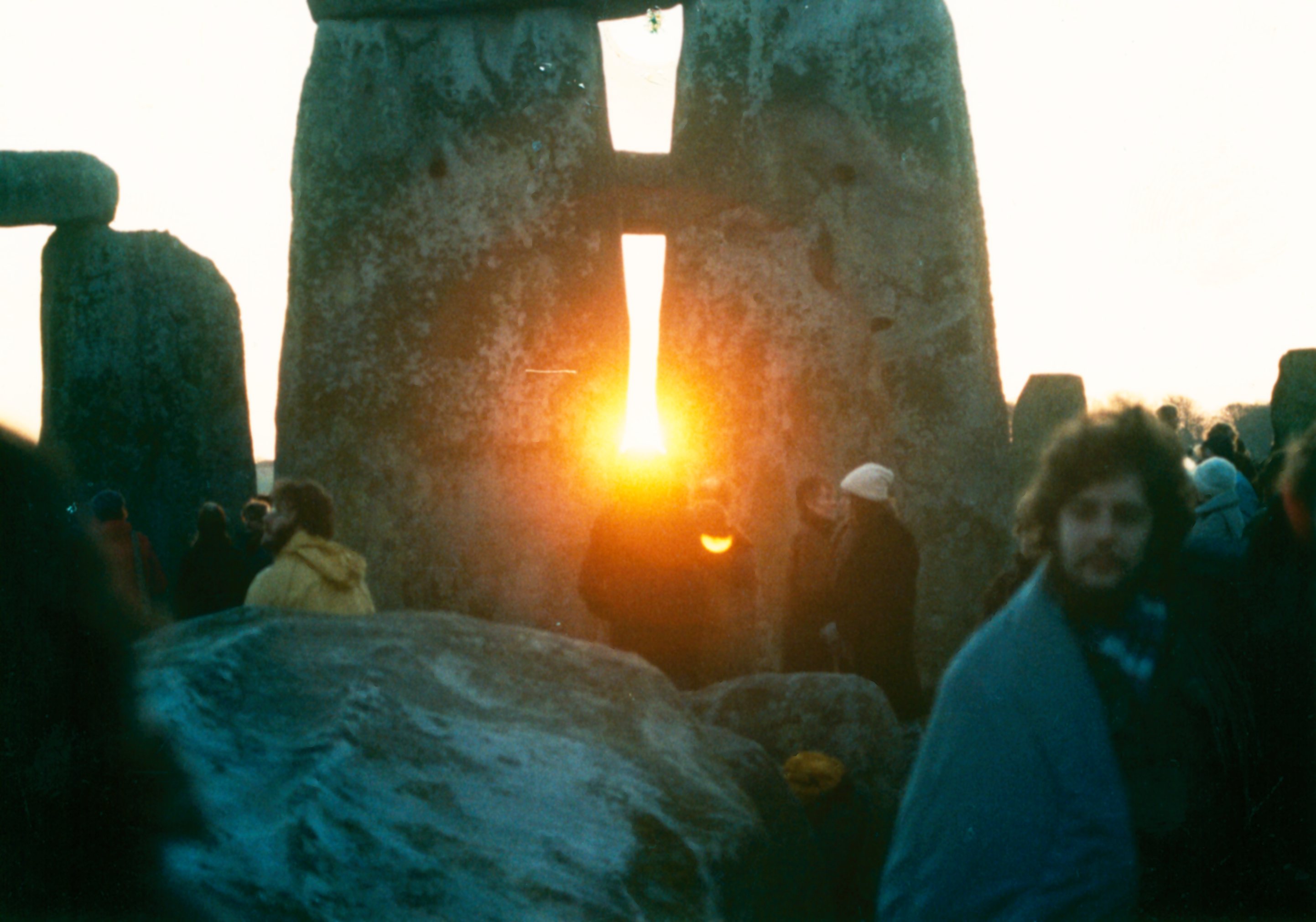
Considering the strong influence of fantasy, I could have simply made up the rites and rituals of Briallen’s mystical binding ceremony, but I wanted it to be believable and tie into the cultural superstitions of the native peoples. Both the winter and summer solstices held great importance for the indigenous tribes of Britain. The summer solstice would seem the obvious choice for a wedding—with the feting of the sun during its longest day on earth, festivals hailing the abundance of nature’s bounty, and the fine weather permitting long revels, even after the object of celebration slips below the horizon—but the winter solstice has equally compelling reasons for hosting a wedding.

Although the winter solstice is the shortest day of the year, thus the darkest, it also marks the turning of the sun and the beginning of the days getting longer. It presages the coming of spring and the promise of rebirth and potential growth, appropriate themes for the union of bride and groom. Also, in my eyes there is something exceedingly romantic about cold weather and a snow covered landscape. It begs for its own showcase with images of a ceremony attended by family and friends in plush furs and rich cloaks, their breath hanging in delicate clouds on the frigid air, candles producing mystical circles of haloed light in the haze, and all of this followed by a wedding night snuggled under an animal skin in front of a blazing fire. For dramatic effect, I chose the winter.

The vows themselves were a bit easier. The concepts behind them are timeless and enduring, so I just thought about what lovers have been saying to each other through the ages. The fantasy element, along with the fact that organized religious ceremonies would not have been readily available in the setting, gave me a bit of license. When the vows were written, though, I did have them professionally translated into Welsh to lend some realism.

“I love you with my entire being. I bind myself to you of my own free will that we may face our future—whatever it may bring—as one mind, one heart, one spirit. I will love you forever. As I say, so shall it be.”

“Rydw i’n dy garu gyda’m holl hanfod. Fe’th glymaf fy hun atat o’m hewyllus rhydd, fel y medrwn gwynebu’n dyfodol—beth bynnag a ddyfod—fel un meddwl, un calon, un ysbryd. Fe’th garaf am byth. Fel hyn y ddyweda i, fel hyn y bu hi.”

Details, like clothing, had to be realistically portrayed to give the scene authenticity. In the 14th century, few people in Britain had access to fine exotic fabrics like silks and satins. In Wales, which was a land largely considered untamed and its nobility less sophisticated than in England proper, even the landed gentry would not have possessed such garments, nor even have call to wear them in the unpredictable and extreme winters of the wild Welsh countryside. The main character of my story, Briallen, is from the rugged foothills below the Bannau Brycheiniog mountain range in Wales. Not a whole lot of international commerce going on there—mostly just sheep farmers—so her gown logically would have been made of wool dyed with plant material from the woodland surrounding their home. This was one concession to realism that I did make.

But I could not help topping it off with a more elaborate garment to signify her revered position within the community. I gave the bride a cloak of red and gold brocade lined with white feathers. Although materials like silks and satins may have been impractical and scarce, a thicker woven fabric like brocade would have been more suitable to the climate and more accessible. Again, not every working man of the era, indeed no common sheep farmer, would have the means to purchase a fine red and gold brocade, but a sought-after healer with rich patrons must have received many such trinkets in payment for her services.

In borrowing heavily from tradition, peppering in a few embellishments of my own, and dropping the whole of it into a documented historical setting, I hope I’ve been able to achieve my goal of creating a believable historical wedding and accompanying mythology with its own prophecy, fulfillment, and ensuing legacy, that should render a compelling trilogy when finished.


Ginger Myrick was born and raised in Southern California. She is a self-described wife, mother, animal lover, and avid reader. Along with the promotion for BUT FOR THE GRACE OF GOD, WORK OF ART, THE WELSH HEALEREL REY, and INSATIABLE: A MACABRE HISTORY OF FRANCEshe is currently working on novel #6. A Christian who writes meticulously researched historical fiction with a ‘clean’ love story at the core, she hopes to show the reading community that a romance need not include graphic details to convey deep love and passion. 

13 March 2013

Women in Warfare: Gwenllian of Gwynedd

By Lisa J. Yarde

In the mid-twelfth century, a Welsh princess named Gwenllian led an army that included her two teenage sons Morgan and Maelgwyn, in the defense of her country from Anglo-Norman invaders. An unlikely scenario that no one might have envisioned for Gwenllian when she came into the world forty years earlier. Born on the island of Anglesey, just off the northwest coast of Wales, she was the youngest daughter of the half-Irish, half-Welsh prince of Gwynedd, Gruffydd ap Cynan. She was also a younger sister to Owain Gwynedd, who would become one of the most successful Welsh rulers.

An artist's rendering of Gwenllian
Despite her status, Gwenllian did not live a fairy tale existence. The Welsh had undergone a long, bitter history of English invaders encroaching on the western territories, but with the rise of the Anglo-Normans, new motte-and-bailey castles began dotting the Welsh Marches. The so-called March lords exercised the authority granted by successive kings to seize large tracts of land and persecute the Welsh. Before Gwenllian was born, her father spent more than a decade as an English prisoner until his escape. Reunited with his family, they retreated to the family seat at Aberffraw on Angelsey. Although admired for her striking beauty and fair-haired like her father, Gwenllian spent her youth as a tomboy, learning how to fight as her three elder brothers did. Constant attacks from the Marcher lords must have required her family to be vigilant. They kept moving between bases in the northern kingdom of Gwynedd, including Anglesey, and to Ireland during Gwenllian's formative years. 

The nature of politics in Wales meant that the rulers of various principalities often found themselves divided; it would be several generations before the Welsh consented to leadership by one figurehead. In  a rare instance of comradeship Gruffydd once formed an alliance with Prince Rhys of Deheubarth. Years later when Gwenllian was a teenager, Rhys' son, Gruffydd (yes, another one) sought a union with the north against their common adversaries. Gwenllian and the young prince of Deheubarth fell in love, eloped and had several children together. Increased fighting with the invaders mired their happiness and threatened to undo the relationship between Gwenllian's husband and father. Constantly on the run, Gwenllian settled into a meager existence, in which she and her husband raided settlements near the Marcher lord's castles.

Kidwelly Castle

Early in 1136, Gwenllian's husband rode north to encourage his father in-law to join in the uprisings against their foes. Later, Gwenllian received word that one of the Marcher lords, Maurice of London, was pillaging the homes of her countrymen. She raised her forces and advanced to a position just north of Kidwelly Castle, part of Maurice of London's domain. Welsh scouts reported that the enemy was far away, but they were proved wrong when mounted knights charged across the field. Gwenllian fought them, only to see one of her sons killed and the other wounded. In her desperation to protect him, she was captured. Maurice of London ordered her beheaded shortly afterward.

Monument at Maes Gwenllian

Although Gwenllian's valiant stand ended in defeat, the Welsh did not forget her bravery. Within months, her husband and her brother Owain allied in brutal attacks against the invaders; Gwenllian's remaining sons soon joined them. For centuries afterward, the Welsh adopted the battle cry, "Revenge for Gwenllian" to honor her sacrifice. The field where the battle took place became known as Maes Gwenllian.  


Most recently, Gwenllian's life inspired my contribution to the HerStory anthology, the short story "The Legend Rises" which is available now from Pagan Writers' Press. 


Lisa J. Yarde writes fiction inspired by the medieval period. She is the author of historical novels set in medieval England and Normandy, The Burning Candle, based on the life of Isabel de Vermandois, and On Falcon's Wings, chronicling the star-crossed romance between Norman and Saxon lovers. Lisa has also written Sultana and Sultana’s Legacy, novels set during a turbulent period of thirteenth century Spain,where rivalries and ambitions threaten the fragile bonds between members of a powerful family.        


27 January 2013

Guest Blog: Ginger Myrick

This week, we're welcoming author Ginger Myrick, whose latest title is The Welsh Healer: A Novel of 15th Century England. Ginger will offer a free copy of the book to a lucky blog visitor. Here's the blurb:

The Welsh Healer: A Novel of 15th Century England tells the compelling story of a young woman growing up in the midst of the Hundred Years’ War. Spanning the reigns of Richard II, Henry IV, and Henry V, it touches upon historical events including the Welsh rebellion, the English army's invasion of France, and their triumph at Agincourt.

Arlais is the gentle and free-spirited daughter of a humble Welsh household. Though just managing to scrape out a living in the rugged hills of northern Wales, her loving environment and strong family ties make for a happy home. But there is more to her than meets the eye. She is endowed with a mystical gift passed down through an ancient line of healers. She has been told her entire life that she is the fulfillment of a prophecy and destined to preserve the bloodline of kings. Despite the wondrous expectations for her future, she is content to wait for her intended mate, a mysterious man seen in a dream on her tenth birthday.

But the Welsh rebellion strikes and turns her world upside down. Arlais is forced to journey across the whole of Britain to live with a distant relative. While the events foretold by the prophecy unfold around her, she settles into the unfamiliar country continuing her path toward fulfilling her destiny and experiencing companionship, heartache, and even love along the way.

**Q&A with Ginger Myrick**
  
How did you feel about adding a little magic into your latest historical novel? Did you have any misgivings about the reactions of your readers?

Actually, the thought never entered my mind! I can be extremely dense sometimes and rarely take my audience into consideration. I don’t mean to sound uncaring, but my inspirations come as they are, and I have no control over them. The storylines are pretty much fully formed, regardless of genre or what I would like them to be. And that’s probably a huge part of why I struggle with the marketing part of all this writing stuff! If I could choose, I would probably opt for a more commercial project! The only reason I included the warning about the supernatural element was because of a reader. She was someone who LOVED El Rey. I offered her a complimentary copy of The Welsh Healer, and she refused it, because she will not read anything pertaining to the supernatural. I completely respect her reasons. It really brought home to me how subjective people’s opinions are, even from one book to the next.

Do you believe that people like Arlais exist?

I do believe that some people possess a healing ability, even if not to the extent of Arlais in the book. I had to make the ‘magic’ fantastical enough to provide a bit of an escape and write it strongly enough for a reader to suspend her disbelief. Nobody wants to read about some woman giving massages in the woods! But the premise very much reflects my personal beliefs. I tried to portray the healer’s power as a gift from God, but I couldn’t flat out state that because people in that day and culture did not have the same organized ideas of religion that we do now. As with the medical folklore of the Welsh, I settled for a more practical mix of the ways. So far I haven’t had any complaints about the book not being believable, so I guess I did a pretty good job!

Both El Rey and The Welsh Healer cast a canine companion front and center—what draws you to this characterization, and can we expect an animal appearance in your future books?

I was a bit worried that readers might think, “Oh no. Here she goes with the dog again!” But from the very start, the canine in The Welsh Healer was integral to the story. The physical description of the dog was based on a giant black German Shepherd whom we loved for over 12 years (I still have trouble not crying when I think about him!) Palhaço was just a fun little thing I threw into El Rey, because I think he is so darned cute, although he did turn out to play an important role. There won’t be one in my next project (if it indeed turns out to be the same one I’m considering now!) But my Civil War novel does have a dog in it. The main character in that book is based on another of my dear friends, and she has a dog. I am an animal-lover through and through, and most of the people close to me also have animals.

What is the most exciting thing to come about in regard to The Welsh Healer?

Well, one good thing, I don’t know that I would call it exciting, is that I finally decided to make my books available in paperback. It is a lot of work, but I came to the realization that I am missing out on a huge potential readership. I cast aside my reservations and did the formatting over the holidays. Now I’m just making adjustments until I get to a point where I am satisfied enough to let the books go out in my name.

Another cool thing that happened is that the department head of Welsh Studies at the University of Rio Grande, where I had some translation done for the book, sent me a very complimentary email. She read The Welsh Healer over the winter break and really enjoyed it. She wrote that my depth of research into the Welsh culture and history of the period was surprising. She also stated that she could not put the book down and was sorry when she finished it! Those are the sort of comments that make the struggles fade into the background and keep a girl writing. I am going to send her a physical copy of the book, which she plans to put into the university library!

Do you think your characters will always be on the fringes of history, or do you plan to use a real historical figure as a main character some day?

I can’t say. As of now, I have four complete stories and seeds of ideas for a few more that need to get out of my head before I can think about something completely new. But I never know when—or by what or whom—I will be inspired next! I know it sounds crazy, but put I aside my Civil War book, of which I had already written 30K words, to pursue The Welsh Healer, which was actually the first book I began researching! Go figure! Regardless, my interests are rarely ever commercial, evidenced by the fact that I wrote a book about England set during a transitional period and gave Henry V, Katherine of Valois, and Owen Tudor only cameo appearances! I get tired of the rehashing of popular settings and characters. Any real historical figure I would care to write about would probably not be a popular one.

What is the most important lesson you have learned as a writer in the public eye?

Stay true to yourself and your readers will follow. Also, the only way to be convincing is to write what you know. I’m not saying that I’m an expert in medieval cultures or any of the things that go with them, but I am a keen observer of human nature. Most of the characters I create bear traits of someone I know very well. I had one reviewer say that the characters were somewhat predictable. I argue that those predictabilities stem from the commonalities of human nature and not from any lack of imagination. Another reviewer said that the same storyline was completely original. I have also learned not to put too much stock in reviews. There is a market for every book. As an author, it is my responsibility to find it!   

What do you have planned for 2013?

As soon as I finish all of my obligations for January, the most important of which is finalizing my paperbacks and getting them on the market, I will begin writing again. I have three projects planned for this year. The first is set in Manhattan during the Gilded Age, a Pygmalion/My Fair Lady type of story with a twist. Next in line is a contemporary love story, after which it’s back to finish up my Civil War project. Beyond that, I have ideas for a love story in Roman Britain surrounding the building of Hadrian’s Wall and sequels for any of my other books should they happen to take off! Fingers crossed!

Thanks to all of you readers for your time and interest, and a hearty dose of appreciation to Lisa J. Yarde and Unusual Historicals for the opportunity. Without an audience or a platform, there would be no point! Happy reading!

Ginger Myrick was born and raised in Southern California. She is a self-described wife, mother, animal lover, and avid reader and knitter. Along with the promotion for THE WELSH HEALER, and EL REY, she is currently crafting her third novel, which takes place during the U.S. Civil War. She is a Christian who writes meticulously researched historical fiction with a ‘clean’ love story at the core. She hopes to persevere with her newfound talent and show the reading community that a romance need not include graphic details to convey deep love and passion.      

Connect with Ginger on Twitter: @ginger_myrick    Facebook     Goodreads      Amazon 

24 January 2013

Excerpt Thursday: The Welsh Healer by Ginger Myrick

This week, we're welcoming author Ginger Myrick, whose latest title is The Welsh Healer: A Novel of 15th Century England. Join us on Sunday, when Ginger will offer a free copy of the book to a lucky blog visitor. Here's the blurb: 

The Welsh Healer: A Novel of 15th Century England tells the compelling story of a young woman growing up in the midst of the Hundred Years’ War. Spanning the reigns of Richard II, Henry IV, and Henry V, it touches upon historical events including the Welsh rebellion, the English army's invasion of France, and their triumph at Agincourt.

Arlais is the gentle and free-spirited daughter of a humble Welsh household. Though just managing to scrape out a living in the rugged hills of northern Wales, her loving environment and strong family ties make for a happy home. But there is more to her than meets the eye. She is endowed with a mystical gift passed down through an ancient line of healers. She has been told her entire life that she is the fulfillment of a prophecy and destined to preserve the bloodline of kings. Despite the wondrous expectations for her future, she is content to wait for her intended mate, a mysterious man seen in a dream on her tenth birthday.

But the Welsh rebellion strikes and turns her world upside down. Arlais is forced to journey across the whole of Britain to live with a distant relative. While the events foretold by the prophecy unfold around her, she settles into the unfamiliar country continuing her path toward fulfilling her destiny and experiencing companionship, heartache, and even love along the way.

**An Excerpt from The Welsh Healer**


The Prophecy


In the tenth year of a child king’s reign

Out of the Northwestern hills of the land

Sired by an adamant nonbeliever

A girlchild born with a healing hand

After the week of a midsummer’s revel

A time when the shadows are on shortest earth

Under the light of a new crescent moon

Is when the latent scion shall give birth


Only after her family’s demise

Will she pass into her mentor’s safe care

Price of her sacrifice for a dark prince

Wounded for life while transformed into hare

The maid shall continue, her only companion

Spirit protector, man turned into beast

Shall guard her until she meets her intended

Unbidden love of a stone from the east


In her long life she will see come to pass

Four kings named Harri ascend to the crown

One returned to his birthright at last

One on a faraway soil brought down

One of them roused from the depths of malaise

The other a young lad delivered from death
Spawn of this last a new dynasty born
Risen from Wales, preserved by her breath
  
It was a family legend that Briallen had saved the Black Prince from death, brought him back from it, it was said, at the risk of her own life. He had suffered a calamity when she happened to be near, and she had rushed to his side to aid him. Only after ensuring that he would survive had she transformed into a hare to effect her escape and was attacked by one of his hounds. The dog had bitten her hind foot and broken it, leaving her seriously maimed and crippling her for the remainder of her life. It was a selfless deed, especially astonishing for the fact that she was a native of Wales to whom Edward—bearing the title of prince of that land along with crown prince of England—would seem a usurper. But she had saved him nonetheless and nearly forfeited her life in the process.

Caron had sought to commemorate Briallen’s sacrifice by naming the child for the meadow where it had taken place. She put forth the name Arleigh, meaning ‘field of the hare’ in Old English, but her husband with his staunch Welsh nationalism would have none of it. It derived from the original usurpers, the Saxon invaders, who had pillaged and raped and stolen the land of his ancestors, claiming it for their own. They had swept the Welsh westward, finally leaving them with only this last mountain stronghold, a mere portion of their original homeland. How did she expect him to ever agree to that? And besides, it was a male name.

But this had not fazed Caron in the least. She was much more resourceful than that.

“You know, husband,” she began in a contemplative tone, “the signs are consistent with the events foretold in the prophecy. If this child should be the one to fulfill it, she should bear a name to denote her significance.”

“And what traditional Welsh name did you have in mind?” Dylan asked, emphasizing the importance of their heritage and raising his right eyebrow in question. He knew enough of her ways to be wary.

“Well,” she said thoughtfully, “Arlais means ‘from the temple’. We could honor her destiny and pay tribute to my aunt in the same gesture.”

“Hmm …” he mused, turning her suggestion over in his mind. Finally, nodding his head with a small, resigned smile, he looked up at her and chuckled. “I might have known you would find a means to finagle your wish. You know I could not refuse you even if I were so inclined. Very well, then, you shall have your Arlais.”


Arlais crouched in the soft, springy grass at the edge of the clearing, still as a statue and barely breathing, waiting for the doe to decide whether to linger or flee. The graceful creature took a tentative step forward, lifted the head atop her regal neck, and sniffed the air once … twice … her dewy nostrils flaring gently, trying to ascertain the slightest scent of human, which she had learned to equate with danger. Distinguishing nothing out of the ordinary, she took another step forward and lowered her head to nibble a few blades from the fragrant green carpet.

Arlais exhaled slowly and quietly so not to startle the doe, releasing the air in her lungs in a long, low hiss. Her aspiration was cut off abruptly as the breath caught in her throat a second time. From around the rear of the female fallow deer peeked a miniature version of its mother, an exact replica down to the spots dotting its back and the large white patch marking its hindquarters. Arlais bent lower in the grass, her blue eyes open wide, ignoring the tickling of her nose by a few loose strands of her thick blond hair. The fawn trotted a few jaunty paces, shook its chestnut hide, and playfully flicked its bushy, black-striped tail. It lowered its head to the grass in imitation of the doe and snorted a few times, not really interested in grazing. Then suddenly he kicked up his heels and gamboled around the lea in a gleeful, energetic romp.

Arlais grinned broadly and held a hand over her mouth to stifle any chance noise that might escape and cut short the display before her. The fawn was so cute, bouncing hither and thither, seemingly with a smile on his own face, exhilarated by the bracing mountain air and ecstatic just to be alive. He carried on in the same comical manner for a few minutes, and then, without warning, the doe raised her head, shot a nervous look at the path leading into the clearing, and leapt from the meadow, the fawn following closely after. Only then did Arlais hear the hurried footsteps quickly approaching through the woods.

She turned her head toward the noise and was not surprised to see her brother tumble into the place so recently occupied by the wildlife.


Ginger Myrick was born and raised in Southern California. She is a self-described wife, mother, animal lover, and avid reader and knitter. Along with the promotion for THE WELSH HEALER, and EL REY, she is currently crafting her third novel, which takes place during the U.S. Civil War. She is a Christian who writes meticulously researched historical fiction with a ‘clean’ love story at the core. She hopes to persevere with her newfound talent and show the reading community that a romance need not include graphic details to convey deep love and passion.      


Connect with Ginger on Twitter: @ginger_myrick    Facebook     Goodreads      Amazon