30 June 2009

Places You've Never Heard Of: The Catacombs of Paris

By Jennifer Linforth

There is nothing quite like shoving your heroine in a catacomb. I love my heroine, my editor loves my heroine, readers tell me they love my heroine...

But sometimes you have to wonder what is in a writer's head. There is a method to my madness just as there are certain places on this earth that simply cannot be described. One is the Catacombs of Paris--the tunnels beneath the city that house endless twists, turns--and souls.

Created at the end of the 18th century when the Cemetery of the Innocent was discovered to be the source of disease, and multiple complaints were filed against it, the Council of State ordered the removal of the deceased. But where the blazes do you put the bones? The removal and creation of the catacombs began on April 7, 1786 and was continued until 1788. It happened at night with great ceremony. Priests sang, while carts bogged down with bones draped in black cloth made their way to the highways underground.

Creepy dark places are magnets for the bizarre. In 1787, Lord of d' Artois, (Charles X), would bring his court ladies down there for a rip-roaring good time (there is fiction fodder for you). According to the museum in Paris such figures as Madame de Polignac and Madame de Guiche visited and in 1814, Francis 1st, emperor of Austria, had to see the creepy stuff for himself. In 1860, Napoleon III went down there with his son—male bonding you know.

Visitors to Paris can tour the Catacombs and the intricate bone walls. The remains of around six million souls reside down there. They are laid out in macabre patterns and piles...a network of graffiti on the walls helps to guide folks on their 'walks.' So why the bloody hell would I want to shove my heroine in a place like this? I reference these catacombs in MADRIGAL--they play a rather significant role--and then use them in book two. (Different city...seems creepy places are all over Europe.) I just can't get past the allure of them. If you were to hide from the authorities, wouldn't that be a perfect spot? Miles of pitch-black, water-filled tunnels, mapped only to a degree...the perfect place to wait out a winter if you ask me. Cold--but at least you would have company.

Eyeless company but company nonetheless

29 June 2009

Places You’ve Never Heard Of: Salé

By Lisa Yarde

The city of Salé, located on the left bank of the Bou Regreg River, has had a rich and varied history. Southwest of Tangiers and northeast of Casablanca, Salé is the sister city of Rabat, which early on eclipsed it in importance as the capital of Morocco.

The Carthaginians, a Phoenician people, founded the colony of Salé in the seventh century BC, at a site where the Bou Regreg emptied into the Atlantic Ocean. When the Romans subdued the Carthaginians six centuries later, the area on the right bank of the river became known as the Sala Colonia. The Romans neglected the site of Salé for two centuries, while they developed a thriving Roman trade post and a defensive settlement. Excavations of the Roman period have revealed triumphal arches, bath complexes and a forum. After the Romans abandoned Sala Colonia in 250 AD, the Berbers took over. The Roman name Sala Colonia was transliterated as Sla in Amazigh, a Berber language, which means 'rock,' and this name eventually became Salé.

The Roman Ruins of Sala Colonia

With the Islamic expansion into North Africa, the Berbers intermixed with their conquerors and the Salé area came under the control of Muslim rulers, beginning with Idris I. Successive dynasties preferred to live in Rabat which began to overshadow its sister city. In the twelfth century, the Almohad sultan 'Abd al-Mu'min made Salé his capital, from where he planned the conquest of Morocco and his incursion into Muslim Spain.

A century later, the Marinid Dynasty controlled Morocco and soon had to defend Salé from an incursion by the Spanish under Alfonso X of Castile, who enslaved of killed many of its inhabitants. After fourteen days, the Marinids drove the Spanish out and built new defenses to protect the city. The city developed into a crafts center, perfecting the Moroccan tile making technique, known in Arabic as zellige. It was also the site of the Abu-l-Hassan Medersa, a medieval medical college, and mausoleums, and mosques, including the Great Mosque constructed in the twelfth century.

Abu'l-Hassan Medersa

With the collapse of the Marinid Dynasty in the 16th century, Salé grew infamous for its pirates known as the "Salée Rovers," who were a band of Barbary pirates. When the Inquisition began in Spain, many of its Muslims and Morisco converts crossed over into Morocco to avoid religious persecution; an influx of European converts to Islam also increased the number of pirates. By 1627, the pirates on both banks of the Bou Regreg formed the Republic of Bou Regreg. The twin cities of Salé and Rabat became formidable bases from which the pirates launched attacks on ships passing through the Straits of Gibraltar and throughout the Mediterranean. Murad Reis, a famous pirate who made his home in Salé, was a Dutchman who converted to Islam. He sailed as far as Iceland and Ireland, stealing away coastal villagers for the slave markets of Morocco. In response to the threat of piracy, the French and Dutch routinely blockaded Salé.

In 1911, Morocco became a French protectorate. Salé played an important role in helping to form Morocco into the independent nation that it is today. In the 1950s, the first demonstrations against the French rule of the country were launched in the city.

28 June 2009

SPIRIT AWAKENED Winner!

We have a winner for Miriam Newman's SPIRIT AWAKENED guest blog. A free copy goes to:

CHRIS!

Contact Miriam to give her your address. The book must be claimed by next Sunday or another winner will be drawn. Please stop back later to let us know what you thought! Congratulations!

Guest Author: Stacey Kayne

This week we welcome western historical author Stacey Kayne as she celebrates the release of MOUNTAIN WILD, the final book in her Wild Trilogy. Check out the video trailer:


***

Stacey, your heroines are always gutsy, independent women. How would you compare the women who settled the west, like your heroines, with the modern woman of today?

Thanks for having me! My women of the west tend to be hard, driven and focused on their goal--an attitude inherited by women today. The west was hard on men, and even harder on women. They had to be strong to survive. But they also have a tender, feminine side yearning to be set free, and to find a man they can lean on. It takes the right man to gain their trust and uncover the gentle, giving women hidden beneath. As my slogan say, "Stories of heroic women and the men strong enough to love them."

Nearly all of my heroines are inspired by my grandmothers--my true heroines who endured and overcame so much hardship. I've never known harder-working women, full of strength, courage, devotion, love and flat-out determination to do the best they can by their family and their community. They are stronger women than I, and I'm always awe-inspired when I think of how they started out, taking chances, raising their families and working hard to build a home from the dust up, providing the rest of us with a solid foundation. They are my women of the west, the ones who stood beside their men, working just as hard, if not harder, to carve out their place in the world. I believe women of today emulate of that kind of strength and courage, able to stand alone if they have to, but who can find love, appreciation and strength in the arms of their counterpart. Those are the women I feel empowered by, and the women I strive to portray in my books.

You have two books out this summer: an anthology called STETSONS, SPRING & WEDDING RINGS, which includes your story "Courted by a Cowboy," and MOUNTAIN WILD, the third in your Wild Trilogy. Let's talk first about "Courted by a Cowboy." Can you share with us the genesis for your plucky heroine, Constance Pauley, who was scarred in a fire?

The story concept for this novella is actually the only one I've done inspired by a true story of someone local. I had just begun to dabble in writing when I heard about a local woman who'd ended up in California as the result of a house fire in Montana in the early 1900s. Eighteen years old and working as a housekeeper in a boardinghouse, she'd accidentally knocked a kerosene lamp into a basket of linens. No fire-retardant fabrics back then, so the room was quickly ablaze and she suffered burns to her legs and hands. The rural Montana community didn't have a physician capable of treating such burns--not without the loss of her legs.

The town sent out a wire asking for help. The nearest hospital willing to treat her was in San Francisco, and arrangements were made to send her to California by train. Back then, a caboose was coupled at the back of each train and the only doors on the standard cars were on the ends. The passage was too narrow for a stretcher to get through. Bound to the stretcher with blankets, she was hoisted up by a number of men and slid in through a window. Her treatment was a success, and after her release from the hospital, she found a teaching job outside of San Francisco. She met and married a farmer and eventually found her way to our small agricultural town where she taught school until she retired.

I was fascinated by the imagery of this young woman being bound to a stretcher and the fear she must have felt as that window swallowed her up into the belly of the train, transporting her hundred of miles from her home. Those images started the manuscript originally titled "Morning Star," and became my "Courted by the Cowboy" novella in STETSONS, SPRING & WEDDING RINGS.

As for Constance Pauley herself, I think she gets a lot of her pluck from my husband's Grandma Kuehl--five feet of Irish charm, laughter, and sass. She began teaching in a one-room schoolhouse when she was around nineteen (her to-be suitor and hubby worked the farm across the road), and told stories of how she'd been terrified those first few days because some of the boys were a foot taller than their spunky teacher. But she stood her ground and was stern as they tested her authority, while silently shaking in her shoes because she knew she couldn't physically make them stay in school. And yet they did.

And now, tell us a bit about your latest release out this month, MOUNTAIN WILD.

MOUNTAIN WILD is the third and final book in my Wild Trilogy. Garret Daines first appeared in MUSTANG WILD at the tender age of thirteen and did his best to defend his older sister. By MAVERICK WILD, Garret had packed on some muscle and developed a serious crush on Chance's heroine, which ultimately caused him some heartache and prompted his decision to buy his own cattle ranch at the age of sixteen.

Garret's heroine, Maggie Strafford, made her first appearance in MAVERICK WILD, as the infamous Mad Mag who drops in to save Chance Morgan's hide a time or two. It wasn't until I'd reached the end of MAVERICK WILD that I knew Maggie would be coming back for her own book. She captivated me with her harsh exterior and subtle kindness, and I wanted her to find love and healing. I knew tender Garret, whom I'd watched grow up, could become just the man to reach beneath that hard exterior to the gentle women beneath.

My editors were actually against the idea of having this raving mountain woman as a heroine, especially one as harsh and reclusive as Mad Mag. But I'm stubborn (a shocker, I know) and sent them the opening chapters I'd already written...and was then asked to write the book ASAP.

As for the historical backdrop of their book, it follows the cattle wars of 1889, prompted by a natural disaster during the winter of 1886-87 when a freak winter blizzard nearly wiped out the cattle trade in Montana, freezing cowboys and cattle alike. In the years that followed, ranchers struggled to rebuild and hold onto their land as new money came into the area looking to capitalize on their tragedy, and as often happens, desperation and greed turned to violence. Garret and Maggie find themselves caught up the turmoil, as well as trouble from their own violent pasts. I do hope readers will enjoy Garret and Maggie's journey and transformation.

Reviews and more excerpts can be found on my website.

***

A mad, reclusive heroine and a studly man to love her? Now that's my kind of story. Literally! Now leave a comment or question for Stacey for your chance to win a copy of MOUNTAIN WILD. I'll draw a winner next Sunday. Good luck! And thanks to Stacey for joining us today!

27 June 2009

Weekly Announcements - 27 June 09

Lindsay Townsend received a B review from Dear Author for her Egyptian-set historical, BLUE GOLD. Jayne wrote: "It's not often that ancient Egypt is the setting for novels so I don't want to miss any of them."

In addition, Lindsay's FLAVIA'S SECRET was given four star by the Historical Romance Club. Good job, Lindsay!

***

Jennifer Mueller's A RUINED SEASON was also reviewed on Dear Author. "...For readers searching out something other than the standard 'yet another Duke hero,' A Ruined Season is a nice change." The site then hosted a contest to give away a copy of Jennifer's Regency-set story, which garnered over 130 comments in 24 hours. Congratulations, Jennifer!

***

Join us Sunday when Harlequin Historical author Stacey Kayne will be here to talk about her latest westerns, STETSONS, SPRING & WEDDING RINGS and MOUNTAIN WILD!

***

We'll also draw the winner of Miriam Newman's SPIRIT AWAKENED. Join us then!

***

If you have an announcement to make for next week, email Carrie. See you next week...

26 June 2009

Excerpt Thursday: Stacey Kayne

On Unusual Historicals, Thursdays (and sometimes Fridays, when I'm particularly behind) mean excerpts! This week we're featuring Stacey Kayne's latest release, MOUNTAIN WILD.

In the midst of a range war, Garret Daines is dead-set on keeping his ranch from greedy local cattle barons. An attempt on his life during a winter storm lands him in the healing hands of a mountain recluse. He can hardly believe the youthful beauty he discovers hidden beneath her mountain woman attire or the passion unleashed by her tender touch.

When "Mad Mag" pulls the handsome rancher from the snow she has no idea he'll be the man to thaw her wounded heart. But Maggie is hiding a mess of secrets in her mountain sanctuary, none of which she’s willing to share. Murderous cattlemen threaten their fragile bond and Maggie has to face the fears of her past or risk losing her hope for the future. Garret will defend his wild woman at any cost, but can he convince her their love is worth the risk?
***

Garret woke to the aroma of stewed meat and the telltale bubbling of something simmering on the stove. He blinked several times, and still he stared up at a high stone ceiling. His gaze swept over rock walls, a black stove to his right...none of it the slightest bit familiar.

His stomach growled, the tantalizing scent drawing his gaze back to the bubbling kettle. Licking his dry lips he glanced at the wood front of what appeared to be someone's home. A lamp to his right and another beyond the foot of the bed created soft circles of light, brightening the dank surroundings.

Where the hell am I?

He pushed up onto his elbows and had to stifle a groan. His body ached as though he hadn't moved in ages. Pain pulsed through his skull, radiating from the left side. He reached up and touched a tender spot above his forehead and discovered a small lump and what felt like a gash beneath his hair. The movement wafted him with a clean, sweet scent. He paused and sniffed his arm.

"Wildflowers?"

Sapphire eyes and black hair against delicate ivory skin surfaced in his mind.

The woman. She'd stayed nearby, stroking his skin, encouraging him to drink.

Rest, Garret. You have a fever.

The soft husky voice tantalized his memory with the alluring scent of her skin, her silky softness beneath his lips.

"A dream," he muttered. The only safe place to love a woman.

He pushed the wool blanket aside and froze, surprise prickling through him. He wasn't wearing a stitch of clothing. His gaze skated around the room, searching every shadowed corner. He was alone. In the corner beside the stove was a rumpled blanket and tooth-scrapped bone. Wherever his caretaker had gone, she'd taken his dog. Why was he here? If he was sick, why wasn't he in his own bed? And yet...he didn't recall getting sick. For all he knew some woman had knocked him from his saddle and dragged him to her bed.

Her delicate feminine features surfaced in his mind.

A man could suffer a worse fate.

Another glance around the rough rock walls snuffed that thought. He doubted the delicate creature of his dreams would live in such desolate surroundings. He'd known a couple miners who'd carved out similar dwellings--but none so close to his ranch. Had he dreamed up her pretty face to match the soothing voice and gentle hands that had been caring for him?

He shifted his feet to the floor with silent caution. His bare toes touched down on a cold smooth surface.

Polished wood? He glanced again at the tidy space, noting the canisters, boxes and stacked dishes lined up all nice-like on the wide-set shelves, the stack of blankets folded at the foot of the bed.

He'd never known any miner to be quite so tidy. Every breath drew in a clean floral scent and the mouthwatering aroma of beef stew. He had no memory of entering someone's home, cave or otherwise. How the hell had he gotten here? He closed his eyes, trying to remember. Last he could recall he'd been riding range...he'd ridden home at noon and--Duce. He'd been looking for Duce. His business partner hadn't made it in for the noontime meal. The way the countryside had been strewn with violence and mishaps lately, too many ranchers turning up dead and a storm rolling in...

Chills prickled his skin as he recalled the cold, whipping rain washing out horse tracks he'd followed into the hills--old panic clenched his chest.

He hadn't found Duce.

Garret shot to his feet, pulling the blanket around his waist as he stood. The quick movement made him light-headed and wafted him with the scent of spring flowers, reminding him that whoever lived here had done more than simply tend his fever. He'd been bathed.

He moved toward the door, each step a slow stretch of tense muscles. The way his head and body ached, he could have been struck by lightening. Maybe Duce had found him and brought him to this place.

Spotting his boots tucked beneath the small table beside the rickety door, he pulled them out and stepped into the tall leather shafts. His clothes were nowhere in sight. Surely he'd been fully dressed when he arrived. He scanned three large barrels stacked on top of the other in the far corner and a large chest at the foot of the bed. He was tempted to search their contents for his britches. A pinch in his bladder urged him to search out a privy first. After he relieved himself, he'd find whoever had taken his clothes and his dog and demand some answers.

He pulled open the door and had to shield his face from a flurry of snowflakes. Cold wind buffeted against his bare chest, sending an instant chill shivering across his skin. He stared gap-jawed at the snow piled some three-feet high on either side of the door, a path having been recently shoveled.

"What the hell?"

Through the haze of swirling flakes tall timbers reached toward a gray sky. White topped mountain peeks rose up from all sides.

He was in the high country. He wouldn't have ridden into these snow-packed mountains.

A familiar bark echoed over the rush of wind and Garret stepped into the brisk cold. "Boots!"

Snow burst from the embankment up ahead as his dog bounded onto the shoveled path. Garret grinned, relieved to see his shaggy friend.

"Hey boy," he said, reaching down to pat his furry head while keeping his gaze on movement near the end of the path. He narrowed his eyes, trying to peer through the falling snow as the stranger drew near. The small form slowly immerged through the flurry of flakes, a white hooded coat blending with the winter landscape. He couldn't make out make more than a faint outline and a shotgun clutched in the left hand.

Caution tensed his muscles as the stranger drew close.

Mad Mag was the first thought to his mind, until she looked up. The deep-blue eyes and delicate feminine features lurking beneath that hood stole his breath.

She's real. The passionate woman from his dream.

"You should be inside."

Her voice was low, husky, and flooded his mind with the sounds of breathy moans, the image of her rose-tipped breast straining toward his mouth.

"Move."

Her harsh tone and stern gaze jarred him from the tantalizing vision. He stepped back, allowing her to rush him through the doorway. She quickly shut out the wind and wisps of snow.

"Go lay down." She pointed toward the far wall, her stern tone commanding as she stared him right in the eyes.

Goddamn--maybe this bitty thing had clubbed him over the head and dragged him to her bed. Shock rippled through him...along with an undeniable stir of attraction.

Boots brushed his leg on his way to the corner, and Garret realized she was talking to his dog, not him. He scrubbed a hand over his stubble-coated jaw. He obviously wasn't working with a full deck. His brain struggled to take hold of the notion that his dream lover stood before him. He stared at her, his mind lost somewhere between reality and a really good dream.

24 June 2009

RENEGADE Winner!

I'm a little late this week because I just arrived back from my vacation. Here we go!

We have a winner for Sarah Parr's RENEGADE guest blog. A free copy goes to:

JESSICA!

Contact Sarah to give her your address. The book must be claimed by next Sunday or another winner will be drawn. Please stop back later to let us know what you thought! Congratulations!

Places You've Never Heard Of: Vinegar Hill

By Eliza Tucker

New York played an important role in the Revolutionary War, and dozens of sites around the city bear testament to this. St. Paul's Church. Fraunces Tavern. The Dutch Cottage. Federal Hall. But across the East River and into Brooklyn, an important memorial was made in the early 1800s.

Vinegar Hill is about eight blocks square, a tiny enclave near the Brooklyn side of the Manhattan Bridge, next to the closed-off Brooklyn Navy Yard. In 1800, well before bridges and the city's consolidation, Vinegar Hill was so named because its developer specifically planned to attract Irish immigrants, as it had been the "site of a fierce battle in the Irish rebellion of 1798." - Forgotten-NY.com

But fewer than 25 years before, a similar American war blazed nearby. Even before voting for independence, Congress called up 28,500 men, but by the time General Washington arrived in New York, only 19,000 American soldiers had gathered there--this, against the British and Hessian troops that totaled 32,000 only a month later. The British invasion began on August 22, after a month of attempting to come to a truce satisfactory to both sides. The battle didn't last long: the British easily overtook the untrained Continental Army, and with only 64 reported fatalities.

By the end of the Revolutionary War, more than 8,000 Continental soldiers (some reports say up to 11,000) died aboard British prison ships--damaged or decommissioned ships in Wallabout Bay that served as prisons once the British jails were at maximum occupancy. Over the course of the century, bones washed up on the shores of Manhattan and Brooklyn. Many of these remains were gathered in 1808 for the underground crypt portion of the Tomb of the Martyrs, erected in Vinegar Hill by the Tammany Society of New York.

Vinegar Hill became the first real resting place for so many patriots. In the 1870s, the Tomb was in heavy disrepair and the crypt was moved to a special monument Ft. Greene Park.

Pictured: early 1900s postcard of Ft. Green Park's Prison Ship Martyr Memorial

23 June 2009

Places You've Never Heard Of: Silver City

By Jacquie Rogers

It was 1863 in the Owyhee Mountains located in the southwest corner of Idaho Territory. The War Between the States raged in the east, but out west, men had dollar signs in their eyes, looking for that next bonanza. They could get rich raising cattle, or logging, but fastest of all, gold. And silver.

The mining boom town of Ruby City was formed--a hotel, several business and residents, and the county seat. A few years later, Silver City sprang up as well. Ruby City hung on for a while but after a series of floods and a few other things that went haywire, the Idaho Hotel and the county seat were moved to Silver City.

Silver City was born on mining. Silver mine tunnels numbered in the hundreds, and dotted the countryside as well as the city. Here's a pan view of Silver City I found on YouTube. There's even a mine under the church! 60 million dollars worth of silver was taken in the 1900s, and if converted to today's currency, that would be a whole lot more for this little area. The silver lodes were the richest in Idaho Territory.

Historic Silver City writes:
During its "heydays", Silver City had about a dozen streets, seventy-five businesses, three hundred homes, a population of around 2,500, twelve ore-processing mills, and was the Owyhee County seat from 1866 to 1934. Some of the largest stage lines in the West operated in the area, and Silver City had the first telegraph and the first daily newspaper in the territory in 1874. Telephones were in use here at least by 1880, and the town was "electrified" in the 1890's.

Picture to the left: the bar at the Idaho Hotel

Never heard of it? Most people haven't, but it was truly the wild west in all manner of ways. It's located in Owhyee County, which is a large county in southwest Idaho. The newspaper they refer to is The Owyhee Avalanche, the longest operating newspaper in Idaho and one of the oldest in the West. I subscribe to it--it's a very high quality publication. There was never a shortage of news from the tough men who risked their lives in the mines every day for the promise of a life of luxury.

From The Owyhee Avalanche, October 17, 1868:
SHOOTING SCRAPE
Between seven and eight o'clock last Monday evening a shameful shooting affar occurred at Sommercamp's saloon, between two of our citizens. On account of the hitherto respectability of the parties and for the sake of their friends we suppress names. On the evening in question, we, together with the twenty-five or thirty others were in the saloon, when the two valiant shootists commenced banging away at each other with revolvers...
Silver City and the surrounding ore-rich area drew men from all over the world to mine the silver lodes. Many Chinese came to make their fortunes, and several did. Of course, as with the Anglo immigrants, most didn't. Still, the Chinese established a strong presence and the economy couldn't have survived without them. Not that there weren't a few problems along the way:

From The Owyhee Avalanche, October 17, 1868:
MORE SHOOTING
Last Tuesday night a Chinaman was shot and severely wounded in a Chinese gambling house on Jordan Street. It appears a Chinaman who was bucking at a game wanted to bet five dollars on jaw-bone, the dealer objected, the other fell back on his dignity and shot the almond-eyed gamboiler through the right shoulder. The next day we noticed Deputy Sheriff John Springer and a posse of mounted Chinamen hunting for the shootist. We learn from Dr. White, who is attending the wounded Chinaman, that he will get well.
And yes, there were Cyprians--the ladies of the evening. Men out-numbered women at one point by 200 to 1 so every woman, no matter what her status, was highly regarded. The women, however were not so impressed with one another.

From The Owyhee Avalanche, February 26, 1870:
FEMALE PUGLISTS
One evening this week be observed two frail females in the vicinity of Catalow's stable, engaged in commintting assault and battery upon each other. For some time the fur flew in all directions. They finally sank down in the snow through sheer exhaustion. Jealousy was the cause of the muss.
And, yes, confrontations with the Indians were frequent. Be warned, this next quote is even worse than the one about the Chinese and the women. "Politically Correct" was not yet invented. But we must also avoid revisionist history--Anglos were, for the most part, of the opinion that Native Americans were sub-human. This is why I avoid the entire issue in my westerns. I write humor and there isn't anything the least bit humorous about the treatment of the Indians.

From The Owyhee Avalanche, September 12, 1868:
LO THEY COME!
Tho's H. Smith Esq. just in from Camp Three Forks, informs us that last week the military of that place gobbled up and brought into Camp six-teen Indians as prisoners. Under promise of bringing in four-teen more, three bucks, whose squaws were retained as hostages, were allowed to go out into the mountains. The miserable wretches profess a desire to give themselves up and stop robbing and scalping the whites--at least till they recruit and obtain a fresh supply of arms and ammunition.
Silver City was difficult to get to and from (travel can get a bit dicey even today), so the subject of roads was always prominent in the news. Keep in mind "highways" is a subjective term here. The road into Silver City from the east isn't two-lane all the way even now. It's a dirt road and depending on the season, you drive on the high side of the ruts in order not to high center your vehicle. In those days, horses, stagecoaches, and wagons traveled the very same road.

From The Owyhee Avalanche, May 16, 1868:
THE ROADS
We are pleased to know that Mr. Abbott, Supervisor for the Road District No. 2, has commenced repairing the roads. As a consequence of the ground's thawing out and the melting of the snow, our highways in many places were in bad condition, but now the ground is becoming dry and the money now on hand in the road fund, with the taxes yet to be collected for that purpose will serve to put the roads in good order.
But most of all, people need entertainment, and the residents of Silver City weren't any different. There was a theater, several saloons, and lots of parties and receptions at the I.O.O.F Hall. In the dark of winter, entertainment was even more sought after.

From The Owyhee Avalanche, January 4, 1868:
ON WITH THE DANCE!
seems to be the motto just now--just what we expected, as soon as it became known on the outside that times were lively and money plenty in Owyhee, in comes a batch of hurdies to gobble up their share. It is an easy matter to find out where they hold forth --watch the crowds of suffering manhood as they emerge from cabins along the creek in the dusky twilight, or silently wend their way, in Indian file, down the mountainside; their steps are directed to Gabriel's large building, corner of Jordan and Second Sts., where, seated on a bench at one side of the spacious hall, are four coy and blushing damsels...
Sources
The Owyhee Avalanche
Historic Silver City Idaho
GhostTowns.com: Silver City
Wikipedia
Edna Purviance
Associated Content
IdahoHistory.net: Chinese Pioneers

Silver City is one of my favorite places to go, although it wouldn't be half so fun if Ed Jagels hadn't worked so hard for the last 30 years of his life to keep the Idaho Hotel from crumbling into ruin. He passed on several years ago, but his friends continue his good work, restoring and operating the hotel, and I'm grateful.

Jacquie

Princess Keely, Star of Faery Special RomancesDown Home Ever Lovin' Mule Blues

Myspace *** Bebo *** Faery World

Faery Special Romances *** See the book video
Royalties go to Children's Tumor Foundation, ending Neurofibromatosis through Research

Available Now: Down Home Ever Lovin' Mule Blues

22 June 2009

Places You've Never Heard Of: Schuylkill

By Isabel Roman

I'd started plotting a new American Colonial-era romance. I'd visited Williamsburg, VA and spent two unbelievable days there, with people who were so knowledgeable that no matter where they worked and what questions I asked, they knew the answer. I can't tell you how much fun I had. It was just great.

So when this topic came up, I though "Oh, I'll do something on the Revolutionary War battles." People in the know about American history can probably name several Civil War Battles--Gettysburg, Shiloh, Bull Run, and Sherman's march through Georgia, which wasn't technically a battle. But the Revolution?

Interest in it kind of dies off after Washington's crossing of the Delaware and the winter of 1777-1778 spent in Valley Forge, PA. The beginning of that war is ever so exciting: you've got Lexington & Concord and the shot heard round the world. You've got the siege of New York, the barricade of Boston, the threat to the then-capital, Philadelphia. Treason, sedition, Tories and Patriots, and all sorts of political maneuverings.

After all that? It's just a war. Eh, we won. I challenge you to name five commanders who were not Washington or Benedict Arnold. Go ahead...I'll wait. And no cheating with the internet!

There were tons of battles. I mean tons! And they were everywhere. From Quebec to Ogeechee River, Georgia. My Revolutionary War has everything you'd ever want to know about these battles and more. Much more...my eyes crossed.

But let's talk Valley Forge, Pennsylvania. Granted, you probably have heard of it, especially if you live within driving distance of the National Park. It's not the most esoteric of places, and is one of the more widely known locales of the Revolution.

But does anyone really care about The Battle of Ogeechee River, Georgia on July 12, 1781? Let's see.
On July 12, during the night, Capt. Anthony and 20 men from his privateer proceeded up the Ogeechee River. They wanted to capture a schooner loaded with rice. Anthony captured the ship, but before he get it out to sea, a British galley, commanded by Capt. ?? Scallan, intercepted him. Anthony's force escaped to the shore.
Hmmm. Not very exciting.

But Valley Forge National Park is gorgeous. And the winter spent there truly was the turning point of the Revolution. The official blurb on their site says:
Valley Forge National Historical Park commemorates more than the sacrifices and perseverance of the Revolutionary War generation; it honors the ability of citizens and their leaders to pull together and overcome adversity during extraordinary times.
So after all this research, my blog entry morphed into: What you might not know about Valley Forge.

Back then, war was not fought in the winter, hence the term Winter Quarters. So Washington, searching for winter quarters for his men, and having just fought the Battle of White Marsh (now Fort Washington State Park), decided on Valley Forge, Pennsylvania. Named for an iron forge on Valley Creek, the area was ideal: Close enough to the General Sir William Howe and his redcoats to keep them out of the Pennsylvanian interior and, more importantly, only 18 miles from the Philadelphia capitol, and far enough away so the British could not spring any surprise attacks. The high ground of Mount Joy and the adjoining elevated ground of Mount Misery combined with the Schuylkill River (pronounced SKOO-kull), to the north, made the encampment defensible.

On December 19, 1777 the army limped into Valley Forge. They were cold, tired, hungry, poorly equipped, and poorly trained. It was frigid out, and the 12,000 soldiers of the Continental Army pretty much collapsed. But they'd collapsed on cold ground, so they built cabins and huts, and began foraging. But this was winter during the Little Ice Age when the Delaware River actually froze--that painting of Washington Crossing the Delaware wasn't imagined. This was one of those winters on the east coast where it's freakin' cold!

It snowed--then melted...and snowed again. They weren't dry. They were sick and disease festered. So what made it the turning point of the Revolution?

Time. They had nothing else to do but complain and train. While not the deserter army many picture, they weren't the British either...no one was. But Americans had something the British Army did not: determination. And they had Baron Freiherr Friedrich Wilhelm von Steuben>. Formerly on Frederick the Great of Prussia's elite General Staff, and now unemployed, Friedrich was hired by the American Army to train the troops.

He worked directly with the men, drilling them every day all day. Before that winter was over, American soldiers moved smartly from line to column, column to line. They loaded muskets with precision and drove imaginary redcoats from the field by skillful charges with the bayonet. When the Army paraded on May 6, 1778, to celebrate the French alliance with America, Friedrich received the honor of organizing the day's activities.

Still at the site today is Washington's military headquarters, recently restored. Also on the south side of the Schuylkill River are the Grand Parade, the Welcome Center, and the paved Joseph Plumb Martin Trail. They have original cannon lining the park, and you can take pictures on it. Or you could last time I was there which was...ah, a very long time ago.

Other than the history, there's the nature aspect of it. The 3,500 acre park boasts a river, numerous streams and forested wetlands, eastern deciduous forest, and tall-grass meadows. In addition to wetlands and archaeological sites, you can bike, hike, or picnic along permitted paths. It's a wonderful way to spend the day, or better, a long weekend so you can really see everything. There's also a restoration project going on, whose goal is to improve trout habitat and angler access.

So maybe you've heard of Valley Forge after all, but now you know more about it!

21 June 2009

Guest Author: Miriam Newman

Please help me welcome Dark Castle Lords author Miriam Newman as she celebrates the release of her novella, SPIRIT AWAKENED!

In a pre-medieval land recently torn by war, a woman with no speech and no memories struggles to survive. Drawn to a small farm, she encounters a man equally in need, though for different reasons. They are each other's only hope, and the future for their land. In a time of spiritual awakening, can they and their country survive? Or will the twin enemies of fear and persecution triumph?
***

What led you to write this book?

The book originated with a mental image of a girl who is pregnant, unable to speak or remember, but who knows that she is in a dangerous, war-torn place. Thrown back upon basic instinct, she barely manages to survive until the birth of her child and then, despite her fears, has to find a way to ensure both of them will live.

What makes this book so unusual?

One of the things that made it such a challenge is that it's 46,000+ words about someone who never regains her memory or much speech. Personal influences shaped my ability to even write a book, which has no dialogue for the first three chapters! After a serious head injury in my late teens, I suffered from amnesia. Subsequently, when I worked in various aspects of psychiatric social work and was employed by a home health care agency, I had occasion to work with clients who suffered from receptive and/or expressive aphasia--that is, they were unable to understand speech and/or to process speech in order to reply. It is an extremely challenging condition. Next I had to imagine a man who would be able to deal with this in a pre-medieval society. And then I had to get him down on paper!

Sounds like a challenge! How long did it take you to write this?

The draft was finished in approximately 90 days, and then a brave lady from my writers' group critiqued the whole thing. She did that in the course of about six weeks. I started to have members of another critique group go over it, too, but by then I had spilled the beans to my publisher and she wanted to read it.

How long did it take her to accept it?

One day.

Wow--a lady who knows her own mind!

She certainly does.

Did it require much research? Ninety days isn't a lot of time!

No, it isn't, but another unusual thing about the book is that it's a fantasy historical. Even though aspects of pre-medieval Europe are recognizable, they are mixed with elements of world-building that characterize fantasy. I have created my own world, containing the European influences I have mentioned, but laced with lore from the Golden Horde of Genghis Khan, Tibetan and Native American myth and custom. And those are areas in which I was already well-read.

Have you done this before?

Yes. My "Chronicles of Alcinia"--The King's Daughter and Heart of the Earth--are also fantasy historicals. For those, I drew heavily on of Romano-British, Celtic and Viking history, myth and legend. And I wrote them while I was in Ireland, which was a vast and incredible influence on the books.

Any such plans for your future books?

I honestly don't know. When I sit down with the idea for a book, I never know if that's what is actually going to come out on the keyboard. It's like some inner force starts typing and sometimes I don't even get the book I had in mind. Talk about a pantser!

Do you have forthcoming releases?

Two. Sometime later in the summer I should be announcing a release date for Scion: House of Bardin. It's a futuristic in which you will not have to look far for the influences of Ancient Rome, even though it is set on another planet.

And then in November, Dark Castle Lords will release a Christmas anthology titled Season of Love. I have joined three other DCL authors in a sampler of contemporary, paranormal and science fiction romance. My story there is titled "Peace on New Earth," and I didn't actually realize until I had finished it that American Colonial history was at work in that one. It's a light romance, sort of Pilgrims meeting natives on a far distant planet. Unfortunately, the pilgrims have infected their hosts with a nasty, deadly virus. So peace for anyone may be very short-lived, because these natives aren't going without a fight.

Any plans beyond that?

I don't know, but the year 1066 keeps rolling around in my mind...

***


***

Thanks for stopping by today, Miriam. Best of luck with your work!

Readers, are you curious about SPIRIT AWAKENED? If so, leave a question or comment for Miriam. I'll draw a winner at random next Sunday. Best of luck!

19 June 2009

Weekly Announcements - 19 June 09

Not too many announcements this week, as Carrie is on vacation. Check back soon! But here's what's coming up on the weekend...

***

Join us Sunday when Dark Castle Lords author Miriam Newman will be here to talk about her latest release, SPIRIT AWAKENED, a fantasy historical novella set in pre-medieval Europe!

***

We'll also draw the winner of Sarah Parr's RENEGADE. There's still time to leave a comment for your shot at winning!

***

Have a good weekend! If you have an announcement to make for next week, email Carrie. See you next week...

18 June 2009

Excerpt Thursday: Miriam Newman

Thursdays on Unusual Historicals mean excerpts! This week we're featuring a sample of Dark Castle Lords author Miriam Newman's latest release, SPIRIT AWAKENED, a fantasy historical novella! Miriam will be joining us on Sunday for a Q&A, where we'll be offering the chance to win a free copy. Be sure to stop back!

In a pre-medieval land recently torn by war, a woman with no speech and no memories struggles to survive. Drawn to a small farm, she encounters a man equally in need, though for different reasons. They are each other's only hope, and the future for their land. In a time of spiritual awakening, can they and their country survive? Or will the twin enemies of fear and persecution triumph?
***

In the twilight, Caln hunkered on his thighs perhaps ten feet from the girl, feeding her pieces of beefsteak that she picked off his knife. Usually he had venison, but a brainless young heifer had broken a leg and he had been forced to cut her throat. For the moment, he had rare and precious beef which he cut into pieces from a platter on the ground beside him. He would not give the platter to the girl, but made her stay, dependent on him for each bite. It was a subtle lesson. He would feed her, but only on his terms.

She had pretty eyes, not the usual blue or gray of Westenian girls. There was barely enough to light to see that hers were hazel-green, the color of growing things, and watched him warily.

"You shouldn't try to go up the cliff in the dark," he said, feeding her. Although she gave no indication that she could understand him, he was convinced that she did. Why she didn't answer was another matter. But he was satisfied just to have someone to talk to and he laughed gently at her look of discomfort.

"Yes, I know you live in the cave," he confirmed. "We all know you're there, but unless you steal from the other farms, they won't trouble you. I don't care if you steal from me. I have enough. But the others are very poor. If they catch you, they'll abuse you and take you downriver to the town where your people are living. It's not a nice place. You should stay close to here. Tonight, you may sleep in the barn. I will give you a blanket. You can go when you want to."

"Or you can sleep in the cabin if you like," he added, oh, so off-handedly. She gave him such a wry look that he knew then she understood his speech. She understood everything.

"I know men have hurt you," he admitted. "I wouldn't hurt you."

The girl sat with her back against the tree, regarding him steadily. Chica, beefsteak, the offer of a blanket...and a bed. She had finished the steak and she stood up, in a defensive posture.

Caln smiled. "I will bring you a blanket."

17 June 2009

Places You've Never Heard Of: Big Rock Candy Mountain

By Elizabeth Lane

Oh the buzzin' of the bees
In the cigarette trees
Near the soda water fountain
At the lemonade springs
Where the bluebird sings
On the Big Rock Candy mountain
If you're anywhere near as old as I am, you may recognize this chorus from the folk song, attributed to Harry "Haywire Mac" McClintock and made famous in a 1950s recording by Burl Ives. Not long after the release of the song in 1928, some local wags placed a sign at the base if a colorful mountain in southern Utah, naming it "Big Rock Candy Mountain." They also placed a sign next to a nearby spring proclaiming it "Lemonade Springs." The names stuck, and the mythical Big Rock Candy Mountain of the song became one of the most recognized spots in the state.

Located a few miles north of Marysvale in Piute County, Big Rock Candy Mountain consists of altered volcanic rock in various shades of yellow, orange, red, and white. It really does look like something you could eat.

So why am I telling you all this? Because the Big Rock Candy Mountain was a wonderful part of my childhood. I grew up an hour north of the mountain, and as a kid, it was one of my favorite places to go. Not only was the hiking fun, but they had a campground, and a restaurant connected to a store that sold little bags of honest-to-goodness rock candy--the "rocks" were jelly beans, but they were made to look like real pebbles. Outside there were some animal pens with a cougar named Whiffy, a pair of lynxes named Sniffy and Spiffy, and some coyotes that would howl when the lady who ran the place came out and howled with them. Once when we were there, they had a mother porcupine with babies. I got to hold one of the babies--their quills don't harden until they get older. Looking back I realize it wasn't a good situation for the animals, but as a little girl I was fascinated by them.


On Easter weekend my parents and their friends would reserve a picnic area for all their families. It was so much fun, chasing around the mountain with a big gang of kids, rolling eggs down the slope and feasting on hot dogs and watermelon while the grownups visited. The Sevier River ran along the road, and in the winter a wide section called Horseshoe Bend froze over--great for sledding and ice skating.

Until I did the research for this blog, I thought the song was written about our Utah mountain. What a surprise to learn that the song came first! Just for the fun of it, here are more of the verses.
One evening as the sun went down and the jungle fire was burning
Down the track came a hobo hiking and he said boys I'm not turning
I'm headin' for a land that's far away beside the crystal fountains
So come with me we'll go and see the Big Rock Candy Mountains

In the Big Rock Candy Mountains there's a land that's fair and bright
Where the handouts grow on bushes and you sleep out every night
Where the boxcars are all empty and the sun shines every day
On the birds and the bees and the cigarette trees
Where the lemonade springs where the bluebird sings
In the Big Rock Candy Mountains

In the Big Rock Candy Mountains all the cops have wooden legs
And the bulldogs all have rubber teeth and the hens lay soft boiled eggs
The farmer's trees are full of fruit and the barns are full of hay
Oh, I'm bound to go where there ain't no snow
Where the rain don't fall and the wind don't blow
In the Big Rock Candy Mountains

In the Big Rock Candy Mountains you never change your socks
And the little streams of alcohol come a-trickling down the rocks
The brakemen have to tip their hats and the railroad bulls are blind
There's a lake of stew and of whiskey too
You can paddle all around 'em in a big canoe
In the Big Rock Candy Mountains

In the Big Rock Candy Mountains the jails are made of tin
And you can walk right out again as soon as you are in
There ain't no short handled shovels, no axes saws or picks
I'm a goin' to stay where you sleep all day
Where they hung the jerk that invented work
In the Big Rock Candy Mountains

I'll see you all this coming fall in the Big Rock Candy Mountains

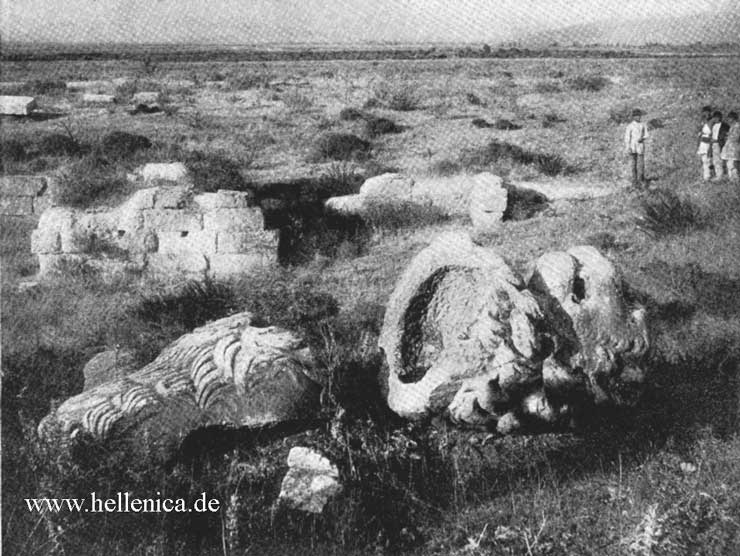
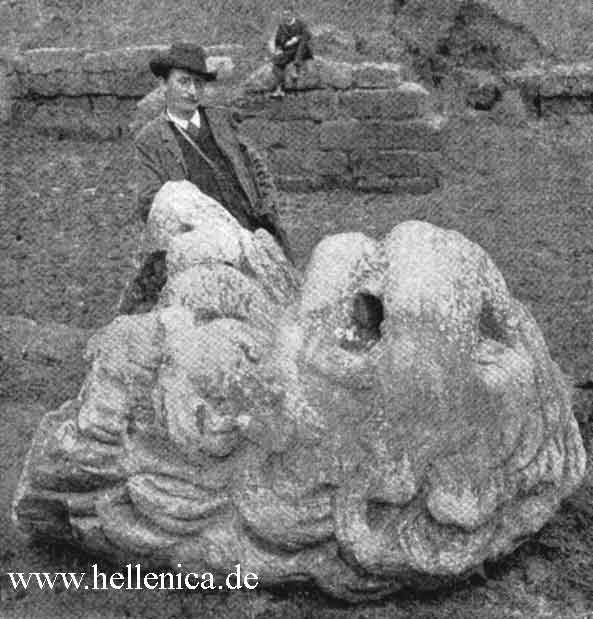
Places you've never heard of: Chaeronea


Chaeronea is a municipality in the Boeotia Prefecture, Greece and north west of Thebes. It is here that an elite force of soldiers, reknowned and famous for being 300 men comprised entirely of 150 pairs of lovers were wiped out. The Sacred Band of Thebes was the undefeated band of the Theban army, formed in 378 BC by the Theban commander Gorgidas who rationalised that men fighting side by side with thier lovers would fight more fiercly than ordinary men.
And if there were only some way of contriving that a state or an army should be made up of lovers and their loves, they would be the very best governors of their own city, abstaining from all dishonour, and emulating one another in honour; and when fighting at each other's side, although a mere handful, they would overcome the world. For what lover would not choose rather to be seen by all mankind than by his beloved, either when abandoning his post or throwing away his arms? He would be ready to die a thousand deaths rather than endure this. Or who would desert his beloved or fail him in the hour of danger? -- Plato - Symposium
In 338 BC Philip of Macedonia (Alexander the Great's father) failed to achieve an alliance of the Boeotians, and decided to fight the Athenians and Boeotians together. Philip marched into Boeotia, with more than 30,000 infantry and no less than 2,000 cavalry.

Alexander himself led the charge against the Sacred Band, which broke, for the first time ever, being unable to withstand the new long spears of the Macedonians. Broken, but refusing to surrender, they fought on, and were annihilated, and it was thought, to the very last man.

Philip himself, so impressed by the loyalty and bravery of the Band of lovers, acknowledged their valour:

"Perish any man who suspects that these men either did or suffered anything unseemly"
A few years later, around 300 BC the town of Thebes erected a monument at the battlesite, and early in the 20th century the monument was rediscovered and re-erected -- and it still stands today. A lasting reminder through history for men who loved so much to die for each other and their country.

It seems the Band was not entirely wiped out, however--excavation was done in 1890, and the Band was found buried - 254 bodies, side by side in seven neat rows.


16 June 2009

Places You've Never Heard Of: Fishkill

Carol A. Spradling

As an historical fiction author, doing research is as important as finding readers. And hopefully, if done well, one will follow the other. My favorite haunt is the 1700s. Sadly, this is not a time period where minute details are in abundance. Yes. It is easy to trip over bulky facts which we learned in school, but to find detailed information, that's when a researcher hears the Hallelujah Chorus.

Naturally, as society progresses, information is lost. Tales being retold from one generation to the next, monuments, signifying places of importance, and a desire to honor past events help us remember what led to the life we live today. The battle to retain these memories must sometimes be fought with as much fervor as the initial conflict.

During the Revolutionary War, Fishkill, NY, a seventy-acre small town, served as a supply depot, barracks, prison, hospital, and cemetery for the Continental Army. George Washington and the Marquis de Lafayette, among others, used Fishkill as a troop gathering point.
Although listed on the National Register of Historic Places, historic preservationist and local developers recently squared off. Each troop gathered their information and prepared for victory. You see, although Fishkill was vitally important throughout the war, it was not as celebrated as Valley Forge. There were no archaic buildings marking the field, and although there was the mention of a cemetery, where were the graves? As far as developers were concerned, these seventy-acres were nothing more than a vacant field.

Ground-penetrating radar sided with history, and old bones rattled, revealing hundreds of Revolutionary War soldiers' graves. This archeological find provided physical proof of Fishkill's historic importance and ended the shopping mall project.

I can almost hear the whoops and cheers of all who benefited from this unknown community’s service. Cue the Hallelujah Chorus, this author has found a treasure trove of historic details that have been omitted from our history books.

15 June 2009

Places You've Never Heard Of: Gozo

By Vicki Gaia

Gozo is the 'middle sister' of the trio of Maltese islands in the Mediterranean Sea, south of Italy. It is situated between Malta and the smaller island of Comino. Eight miles long and four miles wide, this magical island is steeped in history older than written time.

My sister and I journeyed to the Maltese islands in search of Neolithic temples. We boarded a 25 minute ferry ride from Malta for a few days of exploration and relaxation on Gozo, and to visit the prehistoric Ggantija temples. At nearly 6.000 years old, the Ggantija temples are the world's oldest free-standing structures, and the world's oldest religious structures, pre-dating the Pyramids of Egypt and Stonehenge. What a joy when we discovered we could walk around the ruins free of restrictions. This is slowly changing, but at the time of our visit, there had yet been barriers set up to restrict access. I was in awe of the majestic stones that encircled the temple. The land itself seem to radiate an aura of mystery. Most amazing was we had the place to ourselves!

Gozo means "joy" in Castilian, and its distinctive flavor emits the very feeling of its name. The rural and pastoral landscape gives off a fragrance of relaxation.

But life on the island wasn't always pristine. The natural harbors were exposed to passing raiders, and throughout the Middle Ages, Barbary corsairs and Saracens raided the island. In 1551, it almost didn't survive the devastating raid of the Saracens, the raiders taking almost the entire population away and into slavery. Not until the knights arrived and refortified their citadel in Victoria (Rabat) did the island start to recover.

We stayed in the fishing village of Xlendi, a popular resort for divers and swimmers. Enjoying the beach and natural coves, after a long day of sightseeing, it was wonderful to relax by the water, walk the cove, and watch the sunset over the stunning seascape. I could visualize the knights of old, holding their flaming torches as they patrolled the shores for unsavory raiders.

14 June 2009

NOT QUITE A HUSBAND Winner!

We have a winner for Sherry Thomas's NOT QUITE A HUSBAND guest blog. A free copy goes to:

VIOLET!

Contact Sherry to give her your address. The book must be claimed by next Sunday or another winner will be drawn. Please stop back later to let us know what you thought! Congratulations!

Guest Author: Sarah Parr

Welcome to our Sunday guest post featuring Kensington Debut author Sarah Parr. She's here to celebrate the release of her first novel, an adventure romance called RENEGADE, set in 1762 Constantinople. Here's the blurb:

Far from England, alone for too long, Captain Jonathon Barry is captivated the instant he saw Jaline--she is too magnificent not to notice. There is a grace to her movements, an elegance to her bearing, that sets her apart even before she lifts her exotic black eyes or speaks. Her voice is intoxicating, soft as velvet with a sweet, lilting quality, as she recounts an evil bargain made against her will. She is to be his mistress, and he may do with her as he pleases...

Jonathon is deeply torn, for Jaline is indeed his by right. She is only a slave, the prize he has won in a Constantinople gambling den. Trembling, bared to him, body and soul--he can see how cruelly she has been treated. It is clear that Jaline is in danger still and he may well be her only hope. Yet even a renegade like Jonathon would risk anything to save so beautiful a woman...and to love her, if she will let him.
***

Thanks for stopping by today, Sarah! So tell us about what sort of romance you write.

I write historical romance adventures. They are page turners--think Romancing the Stone and Indiana Jones with a heavier dose of romance. The pace is fast, the action is quick and the romance is hot.

Why did you choose Istanbul for your opening location?

I fell in the love with it, studied it and had the chance to visit it a few years ago. In 1762, it was known as Constantinople. The Seven Year War in Europe was coming to a close and power--power was shifting and the Ottomans were close to falling. Exciting and exotic, it was the perfect place where Jonathon and Jaline could meet.

What was your journey to publication?

RENEGADE and the untitled sequel that comes out in July 2010 are the first two manuscripts I have written. I sold them at my first RWA conference after my first editor meeting with Hilary Sares. It has been a whirlwind! Before writing, I worked for Carnival Cruise Lines in marketing and sales.

***


***

Reviews:

"Lyrical, sensual, passionate." -- Shannon McKenna

"With non-stop action, humorous situations and plenty of emotion evoking scenes RENEGADE is one book that demands the reader’s attention right from the beginning." -- Romance Junkies

"Parr's debut is a wild ride of an adventure." -- Romantic Times

"Sarah Parr pens a wonderful tale that is both sparkling and fresh." -- Coffee Time Romance

***

Again, thanks to Sarah Parr for joining us today! If you'd like a chance to win a copy of RENEGADE, leave a comment or question. I'll select a winner on Monday evening, after I get back from vacation! So you have plenty of time to enter and no excuse not to throw your name into the hat. Good luck!

12 June 2009

Weekly Announcements - 12 June 09

Michelle Styles has learned about another foreign sale, this time for VIKING WARRIOR, UNWILLING WIFE to Italy. It's due to be released as Il Sole di Mezzanotte in July. Here's a purchase link--check it out if only for the snazzy, evocative cover.

***

Join us Sunday when Zebra Debut author Sarah Parr will be here to talk about her first romance, RENEGADE, set 1762 Constantinople!

***

We'll also draw the winner of Sherry Thomas's NOT QUITE A HUSBAND. There's still time to leave a comment for your shot at winning!

***

Have a good weekend! If you have an announcement to make for next week, email Carrie. See you next week...

11 June 2009

Excerpt Thursday: Sarah Parr

Thursdays on Unusual Historicals mean excerpts! This week we're featuring Kensington Debut author Sarah Parr and adventure romance, RENEGADE, set in 1762 Constantinople. Check back on Sunday when Sarah will be here for a Q&A and you'll have the chance to win a copy.

Far from England, alone for too long, Captain Jonathon Barry is captivated the instant he saw Jaline--she is too magnificent not to notice. There is a grace to her movements, an elegance to her bearing, that sets her apart even before she lifts her exotic black eyes or speaks. Her voice is intoxicating, soft as velvet with a sweet, lilting quality, as she recounts an evil bargain made against her will. She is to be his mistress, and he may do with her as he pleases...

Jonathon is deeply torn, for Jaline is indeed his by right. She is only a slave, the prize he has won in a Constantinople gambling den. Trembling, bared to him, body and soul--he can see how cruelly she has been treated. It is clear that Jaline is in danger still and he may well be her only hope. Yet even a renegade like Jonathon would risk anything to save so beautiful a woman...and to love her, if she will let him.
***

A shadow could not hold water and she could never truly love him. That made her the worst choice for a mistress, as if Jonathon Barry needed one at all. He saw a tiny shudder shake her frame and he leaned forward. "Do I frighten you?"

She neither moved nor flinched, nestled behind an eerie façade of composure. The words hung in the air between them and fractured the tentative calm.

Slowly, she lifted her brilliant onyx eyes to meet his, wayward curls masking one side of her face, dirt the other, her expression watchful. "You do, a little," she said, an odd lilt in her voice.

"I trust that will fade with time and experience," he offered. She gave a slight nod and turned to study the alleys of Constantinople as the carriage rattled on through the early morning light. He must be a fool. His life was too complicated as it was, even though the war was almost over. He felt her eyes on him, met her gaze and logic dimmed. Lust made his throat dry. He wanted her and now she was his, a slave, won in a gambling den. It didn't matter. Vivid erotic thoughts clouded his mind. "You'll become accustomed to me."

The corners of her mouth lifted in a wickedly uncertain smile. "I learn quickly."

"Indeed?"

Jaline clasped her hands in her lap. "This morning I watered horses." She drew a long breath. "Now I'm to share your bed. I understand." She paused and cocked her head. "Are we going to your ship, Mister Barry?"

"The name is Jonathon." With a small frown, she looked away. Jonathon glanced down at her delicate fingers. He wanted to take them in his, feel their warmth, their touch. More importantly, he had questions starting with what happened after she left him. Her friend, Faresh had appeared only a few hours later to plead for his help. He studied her as they passed an inn, its lights flickering over her features. "The Lornea is moored in the Golden Horn."

"What happened to the Amadine?"

"Thanks to the information you provided, she sailed for Odessa."

Her eyes brightened. "Then it was helpful."

"I expect it will be profitable too. Collectors want artifacts of any kind, even if there are half the number of Greek relics."

She gave a nod and brought her fingertips together, studying them. "So you are taking the Lornea back to London?"

He raised a brow. "I don't recall telling you that."

Her full lips pursed into a straight line. "I am good at gathering pieces of information, as you well know."

He inclined his head. This was no hapless kitten, but a careful, clever, exotic creature. He needed to watch what he said. "Once I talk to this Asam you mentioned." Her smile vanished and the mask returned. He narrowed his eyes and searched for the reason. "You will come with me." She nodded, lifted her hands and began to braid her hair, then dropped it from sight. She might have been fiddling, but it was one of the most erotic gestures he had witnessed, possibly because she was completely unaware of the effect. "Why don't you explain why you are limping?" He inclined his head to catch her gaze. "That was not the situation when I left you."

Jaline clasped her hands and set them in her lap. "Yesterday was a long time ago."

"You're different." Before, her eyes had been lit with a hidden fire. Whereas tonight, she was far away, as if he was watching her somewhere in the distance.

"Faresh said you were in trouble." He could almost see her pale.

When he spoke the name, she met his gaze and held it. "He shouldn't have made you feel responsible." Jaline swallowed. "Faresh has been like an uncle to me since I was sold to Toran."

Faresh had been twice her age and several inches taller, his eyes black but the resemblance ended there. His skin had been olive whereas Jaline was fair, the shape of his face narrow while Jaline's was a classic heart, her features near perfect. "He's not an actual relation?"

She exhaled and smiled wistfully. "We looked after each other in the slave quarters. I cooked his evening porridge, he taught me to - survive." She lifted her chin. "That's near to family."

He returned her look and narrowed his, distinctly aware of what she had said, and what she had left out. "Tell me what happened."

She blinked and lowered her eyes. "When I got back to the stables, Toran was waiting. Someone told him we had been talking. He found the coins you paid me and wanted to know where they came from. When I didn't tell him, he assumed you were my lover. That you had paid me for..." she gave a quick jerky shake of her head. "He ordered ten lashes, one for each coin."

Rage bubbled deep. He had known the man was cruel, sensed it as they sat across the table from each other. There had been a lifeless boredom in Toran's speech that held his sneer firmly in place. Greasy with perfumed oils, he had waved his jeweled finger at the money Jonathon had offered, as if it were a dish that offended his nose. "Toran didn't want to do business, you did."

"I'm not his servant. I'm his slave. Toran can do whatever he wants."

"You sold me information about ancient valuables. That doesn't warrant a beating," he said tightly.

She gave a feminine snort and shook her head. If anything, she appeared more vulnerable than moments before, her breath uneven. Time passed before she lifted her gaze to his. "A slave owner's rights are absolute. That is the way it is."

She didn't have to cry for him to hear the unshed tears in her voice, or feel the brush of accusation. He was the master now.