Showing posts with label Christian. Show all posts

07 October 2014

The Battlefield: Heavenfield, Northumberland 634

By Michelle Styles

It is amazing how battles can be forgotten. The seventh century boasts some of the most significant battles in terms of British history and yet most are forgotten. If you love Game of Thrones and its complexities, you will adore the 7th century. The only it is missing is dragons… and sometimes you have to wonder…

I first discovered Heavenfield when my mother insisted we stop beside a sign. There was a lonely church in the middle of a field. Churches are generally easy access so this in itself was strange. Reading the sign, I learnt about one of the more significant battles on English soil – literally the battle which decided if England would be Christian or if it would continue to be pagan.
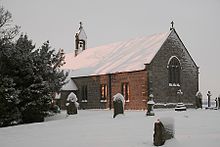
St Oswald's Church Heavenfield

Conventional wisdom seems to hold that St Augustine came over to Kent and started Canterbury and everyone became Christian. It wasn't that simple. Christianity had been a part of British religious life for centuries before then. In Vindolanda, there are the remains of a 4th century church. Constantine was proclaimed emperor of Rome in York on 25 July 312. Constantine was famously the emperor who made Rome Christian. However in the years after the Roman legions left and the Angles  and Saxons settled, things changed and Christianity was not necessary the religion of choice of the ruling elite.

St Augustine’s mission became poised on a knife-edge because he was, according to British Christians arrogant. He expected obedience. The British church differed from the Roman church in the way they figured Easter, the way the monks wore their tonsure, the unique way of penance and how many bishops it took to consecrate another bishop. The last was surprising as  Britain sent three bishops to the council of Arles and signed up to that.  There were other differences but apparently the way monks wore their hair was a huge sticking point.
Another view of Heavenfield

In 632,the Northumbrian Bretwalda,  King Edwin who was nominally Christian in the Roman tradition (his wife had Kentish connections) lost a battle and his life to Penda of Mercia. Pagans then overran Northumbria.

In 634, the son of the previous Bretwalda Athelfirth and nephew to Edwin, Oswald made his bid for the Northumbrian throne. Oswald had converted to Christianity when he was exiled amongst the Dalriata in south western Scotland. He followed the Celtic tradition of Christianity.  He landed in the west and his war band which included warrior monks made their way to just outside the Roman town of Corbridge. There, in a field, Oswald raised his standard and a cross. This field became known as Heavenfield. He defeated the pagan Penda and drove his followers from the lands. Northumbria was restored to its previous prosperity.

St Oswald's Way

Unlike his late uncle who merely paid lip service to Christianity, Oswald decided his new kingdom would be Christian. He sent for monks from Iona. They started a monastery at Melrose and rapidly expanded to Lindisfarne (or Holy Island).  Oswald became the Bretwalda or High King of all Britain. Tolkien is supposed to have based Aragon on him.  After Oswald fell in battle, his brother Oswui became Bretwalda and was the only 7th century British king to die in his own bed after 40 years of rule. It was Oswui who convened the Synod of Whitby which decided to follow the Roman rather than the Celtic traditions of worship.

These days, Heavenfield is part of the St Oswald’s Way – a long distance walk which takes in some of the most beautiful parts of Northumberland and stretches from Chollerford (near to Heavenfield) up to Lindisfarne (Holy Island). It takes about a week to walk it.

Michelle Styles writes warm, witty and intimate historical romance for Harlequin Historical. This month Harlequin historical are releasing 3 of her Victorian novels To Marry a Matchmaker, Compromising Miss Milton and Breaking the Governess’s Rules. You can learn more about Michelle and her books on www.michellestyles.co.uk

18 February 2011

Movie Adaptations: The Crusades

By Lisa Yarde

There have been few movies done on the Crusades since the 1930s, beginning with Cecil B. Demille's The Crusades. Varying depictions of the Crusades onscreen show simplified views of the conflicts. They are either spiritual quests to reclaim the Holy Land or brutal invasions that expanded European interests in the region, with Christian knights and Saracen defenders in interchanging roles as villains or victims of aggression. The historical truth about "holy war" during the Crusades is not as clear-cut.

There were nine crusades in total, including what's known as the Children's Crusade. They began in 1095 when Pope Urban II proclaimed at the Council of Clermont that Christians should liberate the Holy Land from the infidel Saracens, in places like Antioch, Acre, Tyre and Jerusalem. He inspired men with promises that God would forgive all their sins if they "undertook the cross" and gave their lives in the effort. Within months, the poorest soldier to the kings and dukes of Europe had affixed a red cross, sewn on his tunic or mantle at the right shoulder. For the next two hundred and seventy years, countless numbers died in the capture or defense of the Holy Land. These events gave rise to several military brotherhoods among knights including the Order of the Hospitallers of St. John and the Templars.


Marton Csokas dressed as a Templar in Kingdom of Heaven (2005)

Most screen versions of the Crusades barely skim the surface of the conflicts or contain inaccuracies, altering the history for dramatic purposes. The most recent depiction of the Crusades has been in films about Robin Rood. The first is Kevin Costner's Robin Hood: Prince of Thieves (1991), in which the lead is a prodigal son held for ransom by the Saracens, and Robin Hood (2010), where Russell Crowe's Robin Longstride and his friends are archers in King Richard the Lionhearted's army, returning from the Crusades. While each briefly touched on the brutal experiences of Crusader soldiers, in the first there is a little more shown as Robin languishes in jail with other knights. When they break free, one of them extracts a deathbed promise from Robin to take care of his sister, setting up the premise of a relationship between Maid Marian and Robin.


Orlando Bloom's Balian of Ibelin defending Jerusalem in Kingdom of Heaven (2005)

The last film in which the Crusades received the full treatment was 2005's Kingdom of Heaven, starring Orlando Bloom and Eva Green. The movie does correctly show the differences between the various military orders, including the Hospitallers and Templars, and the ravages of Baldwin IV's leprosy, but the history of the protagonist and his love interest is not accurate. Balian of Ibelin was not a blacksmith in France and was born in the Holy Land as a legitimate heir, not a bastard.

Queen Sybilla of Jerusalem was devoted to her husband Guy de Lusignan and willingly gave the kingship to him when her brother Baldwin IV died. She and Balian did not have a romantic relationship. The Crusaders also did not capture or kill the sister of the Saracen leader, Saladin. Kingdom of Heaven also portrays the Christian cause in an unfavorable light, with the antagonists pressuring for outright warfare against the Saracens.

What portrayals of the Crusades have stuck with you? Any recommendations?

Lisa J. Yarde is a historical fiction author. Her ON FALCON'S WINGS, an epic medieval novel chronicling the starstruck romance between Norman and Saxon lovers, is available now.

17 October 2010

Guest Author: Renee Ryan

This week on Unusual Historicals we're welcoming Steeple Hill Love Inspired author Renee Ryan as she celebrates the release of DANGEROUS ALLIES, set in 1939 Berlin.

In Nazi Germany, British agent Jack Anderson risks his life working undercover as an SS officer. And his latest mission--to uncover intelligence about a Nazi secret weapon--is his most perilous yet. Especially since he'll have to work with Katarina Kerensky. The famous actress is too dangerous to trust--and too beautiful to ignore.

Desperate to save her mother from the Gestapo, Katia reluctantly agrees to work with the coolly handsome Jack. But can she trust a man whose sense of honor is tangled in a web of lies? In a race against time, Jack and Katia forge an alliance to take down the enemy...and learn whether love can survive in a world gone wrong.
***

DANGEROUS ALLIES received 4½ stars from RT Book Reviews. Patsy Glans wrote: "Ryan outdoes herself with this latest offering--a mix of romance, intrigue and spies. She writes her characters with strong feelings and heart."

At Renee's website, you can take a look at deleted scenes from DANGEROUS ALLIES, as well why she chose to delete them. Those storytelling choices are always fascinating!

***

Hi, Renee! Tell us a little about DANGEROUS ALLIES.

DANGEROUS ALLIES is a romantic spy thriller set in 1939 Nazi Germany. The hero is an American naval officer on loan to the British government. MI6 (the equivalent of today's CIA) sends him into Germany to photograph the blueprints of a Nazi secret weapon. The heroine is an exiled Russian princess and the hero's contact inside Germany.

Isn't WWII considered a taboo time period for romance novels? What made you decide to write a story that would be a guaranteed hard sell?

I didn't sit down and think, "Hey, why not transcend the genre." Rather I wrote DANGEROUS ALLIES during a long dry spell between my first and second book sale. I was so frustrated after my first publisher released me that I quit writing altogether and cancelled my membership in all of my writers' groups. I knew I was heading down a dark road. I couldn't keep chasing the sale anymore. I was a bit too obsessed. In fact, the pursuit of publication became my sole mission in life.

Something had to change. So I purposely took a step back and started working on my faith walk, something I had let lag to dangerous indifference. I also started reading books that were not romances, namely thrillers written by men for men. I very quickly realized these books, though well-written and fascinating, lacked the depth of character, emotion and romance I preferred.

I figured if I was going to collect rejections I might as well swing for the fences and stop playing it safe. Enter the WWII time period, a time of true heroism that hasn't been overdone. I was, for want of a better word, inspired. I took what I knew about romance writing and what I'd learned from all those male-targeted thrillers and melded the two inside the taboo time period. The inspirational thread was just for me, an experiment to see if I had what it took to add my faith into a story without it being overwhelming. I'm truly blessed my editor took a chance on this one.

What do you think makes DANGEROUS ALLIES an Inspirational romance?

Well, I should point out that DANGEROUS ALLIES is not a traditional Inspirational romance. The hero and heroine lie, cheat, steal, and (in the case of the hero) kill to get the job done. They operate under the assumption: sacrifice one to save a multitude. But the larger sacrifice could be their very salvation. This is not a story about "perfect" people, but rather people struggling with the question: Has God abandoned mankind?

Are you finished with the WWII time period?

Not at all! I'm working on my next WWII Inspirational romance right now. It will also be a romantic spy thriller, but is set on American shores. The hero is an OSS agent sent to investigate a Nazi sabotage plot. If successful, the saboteurs will bring the war to the U.S. High stakes indeed. It's also based on a real plot that failed. The traitors were tried in by a military tribunal and found guilty of treason.

Anything else in the works?

In April, my fourth "Charity House" book will be released. The "Charity House" series is set in 1880s Denver, Colorado around a unique orphanage that caters to prostitutes' "mistakes." I've really enjoyed exploring the world where these very brave men, women and children live. They might be outcasts in society, but they have a safe place where love abounds. Very different from my WWII novels!

***

Thanks so much for stopping by, Renee! I'm so excited to see more headway toward making WWII an acceptable setting for romance of all kinds.

Readers, if you'd like to enter for a chance to win a signed copy of DANGEROUS ALLIES, leave a comment or question for Renee. I'll select a winner at random next Sunday. Void where prohibited. Best of luck!

14 October 2010

Excerpt Thursday: Renee Ryan

This week on Excerpt Thursday we're welcoming Steeple Hill Love Inspired author Renee Ryan as she celebrates the release of DANGEROUS ALLIES, set in 1939 Berlin. Join us Sunday when Renee will be here to answer questions and give away a signed copy!

In Nazi Germany, British agent Jack Anderson risks his life working undercover as an SS officer. And his latest mission--to uncover intelligence about a Nazi secret weapon--is his most perilous yet. Especially since he'll have to work with Katarina Kerensky. The famous actress is too dangerous to trust--and too beautiful to ignore.

Desperate to save her mother from the Gestapo, Katia reluctantly agrees to work with the coolly handsome Jack. But can she trust a man whose sense of honor is tangled in a web of lies? In a race against time, Jack and Katia forge an alliance to take down the enemy...and learn whether love can survive in a world gone wrong.
***

20 November 1939
Schnebel Theater, Hamburg, Germany, 2200 Hours


They came to watch her die.

Every night, they came. To gawk. To gasp. To shake their heads in awe. And Katarina Kerensky made sure they never left disappointed.

Tonight, she performed one of her favorites, Shakespeare's Romeo and Juliet. In typical Nazi arrogance, Germanizing the arts hadn't stopped at simply eliminating "dangerous" persons from cultural life. The Chamber of Culture had continued its purification function by also ruling that Shakespeare--in German translation, of course--was to be viewed as a German classic, and thus acceptable for performance throughout the Fatherland.

Leave it to the Nazis to claim the English playwright as their own.

In spite of her personal reasons for hating the Third Reich, Katia loved the challenge of taking a role already performed by the best and making Juliet her own.

For a few hours on stage her world made sense.

Now, poised in her moment of mock death, her hair spilled past her shoulders and down along the sides of the raised platform on which she lay. She held perfectly still as her Romeo drank the pretend poison and collapsed beside her.

She could smell the brandy and sweat on Hans as the foul scents mingled with the mold growing on the costume he hadn't washed in weeks, but Katia thought nothing of it. She was a professional and approached the role of Juliet as she would any role, on or off the stage. With daring conviction.

Hitting his cue, George, the bald actor playing Friar Laurence, made his entrance. As the scene continued to unfold around her Katia remained frozen, her thoughts turned to the actors who should also be sharing the stage. She was one of the lucky ones. Instead of playing a star-crossed lover doomed for eternity, she could have been among many of her peers thrown out of the theater due to whispers--often untrue--of their Jewish heritage or socially deviant behavior.

For now, at least, she was safe. As she was the daughter of a Russian prince, Vladimir Kerensky, fame had been her companion long before she'd stepped onto a stage.

Would notoriety be enough to keep her safe?

The Nazi Germany racial policy grew increasingly violent and aggressive with each new law. If anyone checked Katia's heritage too closely they might discover her well-kept secret.

To the Germans, she was merely a real-life princess playing at make-believe. A natural, as her mentor Madame Levine had always said. Good skin. Innate talent. Beautiful face and hair. All added to the final package. But the brains? Katia kept those hidden behind the facade of ambition and a seemingly ruthless pursuit of fame.

If the Germans only knew how she really used her talents. And why.

Opening her eyes to tiny slits, she tilted her face just enough to cast a covert glance over the audience. Her latest British contact was out there waiting. Watching. Bringing with him another chance for her to fight the monster regime and protect her mother with means she'd been unable to use to defend her father.

She drew in a short breath and focused on becoming Juliet once more. The scent of stage dust and greasepaint was nearly overpowering. Dizzying. The spotlight blinding, even with her eyelids half-closed. Nevertheless, Katia remained motionless until her cue.

"The lady stirs...."

25 July 2010

Guest Author: Carla Capshaw

This week on Excerpt Thursday we're welcoming back Steeple Hill Love Inspired author Carla Capshaw as she celebrates the release of her latest historical romance, THE PROTECTOR, set in ancient Rome. THE PROTECTOR is the sequel to her double-RITA nominated debut, THE GLADIATOR, which we featured last year. RT Book Reviews gave THE PROTECTOR four stars and writes, "The Protector is a heartfelt love story. Fans of this era and of Rome will not be disappointed."

Former merchant turned slave and gladiator trainee, Quintus Ambustus will do almost anything to earn his freedom. Enslaved for his faith in Christ, he hopes someday to find a Christian woman to marry and share his life. A friend of Quintus's master, Adiona Leonia is one of wealthiest, most beautiful women in Rome. She has good reason to despise men and has vowed never to wed.

Although each of them is attracted to the other, they're determined to fight their feelings. But when an attacker threatens Adiona's life and Quintus is made her protector, neither can resist their fascination. As Adiona learns to trust, first Quintus, and then his God, Quintus learns the Lord's gifts sometimes come in the most unexpected packages and in ways he never dreamed possible.
***

Your new book, THE PROTECTOR, is set in Rome, 81 AD. How much research did it take to be able to get a feel for that era in time?

I've always loved learning about ancient Rome. The people and art fascinate me. When I wrote THE GLADIATOR, the prequel to THE PROTECTOR, ancient Rome seemed a natural fit for me to use as a setting because I already knew something about it from previous studies. I went to Italy for three weeks, read up on specifics like the workings of the Coliseum and watched hours of History channel specials on the period.

Can you tell us little about THE PROTECTOR.

THE PROTECTOR is a sequel to my first published novel, THE GLADIATOR. The hero and heroine are Quintus and Adiona. Quintus is a Christian who was sentenced to death for his beliefs. While waiting for execution, he was sold to a slave trader, then to a gladiator school. He's trying to earn his freedom and return to his hometown to make sure his son, who died just before Quintus's trial, received a proper burial, since funeral rites were paramount to first century people. Adiona is a socialite, who hides a lifetime of pain behind a mask of indifference and a lot of attitude. She has good reasons to hate men and has sworn them off for good. Unfortunately for her, she can't shake her attraction to Quintus. Quintus is hugely attracted to Adiona, but doesn't want anything to do with her for reasons of his own.

When someone tries to assassinate Adiona, Quintus is made her bodyguard. Adiona has to leave Rome and Quintus accompanies her for protection. Away from the intrigues of Rome and the differences in their social status, they're finally able to learn the truth about one another and what's really important to each of them.

Your stories bring together people from vastly diverse worlds who seemingly will never find spiritual or emotional accord, much less romance. What is the impetus behind this approach? What do you hope to accomplish with your themes?

As a reader, I need big conflicts to keep me interested. The same with my writing. I figure if a story isn't interesting no one will get anything out of it, so I do my best to make it compelling from beginning to end.

You write about eras other than ancient Rome, specifically the Revolutionary War period. Will you be writing about other eras, as well?

I hope so! The best part of writing for me is getting to learn about other eras through research and travel to those locations. I'm always thinking up new plots to go along with whatever time I'm interested in at the moment. Right now, I'm working on the third and final story in my Roman series. Once I'm done, I plan to work on a new Victorian series I've been dreaming up.

What else would you like to say to your readers?

Just that I appreciate them and that I love to hear from them. They can reach me at Carla@carlacapshaw.com or visit my website to find my links to most of the social networks like Facebook and Goodreads.

***

Would you like to win a signed copy of THE PROTECTOR? Just let us know! Leave a comment or question for Carla, and I'll draw a winner at random in one week. Void where prohibited. Best of luck, and good luck to Carla next week when the RITA awards are announced!

22 July 2010

Excerpt Thursday: Carla Capshaw

This week on Excerpt Thursday we're welcoming back Steeple Hill Love Inspired author Carla Capshaw as she celebrates the release of her latest historical romance, THE PROTECTOR, set in ancient Rome. THE PROTECTOR is the sequel to her double-RITA nominated debut, THE GLADIATOR, which we featured last year. RT Book Reviews gave THE PROTECTOR four stars and writes, "The Protector is a heartfelt love story. Fans of this era and of Rome will not be disappointed."

Carla will be here on Sunday to talk about her latest Roman-set romance and give away a signed copy. Hope you'll join us!

Former merchant turned slave and gladiator trainee, Quintus Ambustus will do almost anything to earn his freedom. Enslaved for his faith in Christ, he hopes someday to find a Christian woman to marry and share his life. A friend of Quintus's master, Adiona Leonia is one of wealthiest, most beautiful women in Rome. She has good reason to despise men and has vowed never to wed.

Although each of them is attracted to the other, they're determined to fight their feelings. But when an attacker threatens Adiona's life and Quintus is made her protector, neither can resist their fascination. As Adiona learns to trust, first Quintus, and then his God, Quintus learns the Lord's gifts sometimes come in the most unexpected packages and in ways he never dreamed possible.
***

Rome, 81 AD

"Have you lost your mind, Caros?" Incredulous, Adiona stared at her friend as though he'd grown two heads. The very idea of Quintus Ambustus acting as her bodyguard made her tremble.

"No, I'm sane enough." Caros crossed his arms over his broad chest and leaned against the marble desktop. Morning sunlight streamed through the office's east-facing windows and glinted off the jewel-toned tiles in the mosaic floor. "You need a strong, trustworthy leader for your guard if you mean to leave for Neopolis anytime soon."

"Quintus is capable for certain, but he despises me. What makes you think he'll agree to your plan?"

"He doesn't despise you." He ignored her snort of disbelief. "He's already agreed."

Her heart skipped a hopeful beat. "He has?"

"He wants to earn funds to buy his freedom. Your situation provides a perfect solution to that end."

"Yes, perfect," she said tightly, wounded by the knowledge that Quintus had to be bought in order to spend time with her. She tugged the leaf off of a potted plant, grateful Caros hadn't noticed the root of melancholy growing inside her. "Why force him to buy his freedom? You've released your other slaves and kept only volunteers since you became one of those Christians. Why not simply release him? You have no need of money."

"I've tried. He calls it charity and won't accept my offer. The two of you need each other." She cringed at the idea of needing anyone. Unlike most men, Caros wasn't stupid. He possessed hawk-like powers of observation. He was aware of how attracted she was to Quintus and just how much Quintus chafed at being within a mile of her. If she didn't know him better, she'd think her long time friend was making a cruel joke at her expense. "I thought when you wed Pelonia you'd grow tired of meddling in my affairs."

His smirk slid into a full grin. She gritted her teeth, vexed she seemed incapable of sparking the tiniest flame of irritation in him when his plans had left her capsized and floundering.

She moved to the window in need of air and something to focus on beside the conflicting mix of excitement, longing and fear that threatened to drive her mad.

Gladiators trained in the field below. She winced when she caught herself searching greedily for the tall Christian who tormented her thoughts by day and her dreams by night.

She twisted the end of her long braid with her fingers. The clack of wooden practice swords and the glint of sunlight on shields reminded her of the attack the previous evening. She closed her eyes, absorbing the loss of her men, men she barely knew and shared no bond with beyond that of master and slave. What if Quintus were her protector and she was attacked again? What if Quintus suffered the same deadly fate as Titus and her other guards?

She clutched her chest as a sudden rush of anguish robbed her of breath. She must keep him safe. How would she ever be able to live with herself if any harm came to him because of her?

"Adiona?" Caros asked.

"What?" Embarrassed by her overwrought reaction, she wrenched her eyes open and pretended interest in the gladiator practice.

"Are you well?"

"Of course," she whispered just as she spotted Quintus training with another gladiator in the center of the field.

Her traitorous heart leapt at the sight of him and his powerful movements mesmerized her. A voice of reason clamored in the back of her mind to leave the window before he saw her, but her feet seemed buried in the concrete floor.

Without warning, Quintus broke from the fight and glanced her way as though he her presence called to him from across the sand. He turned slowly toward the house. The sharp, angular cut of his jaw was locked tight, his full lips unsmiling. Sweat poured down his temples and the bronze column of his throat, soaking the front of his dark tunic. His muscled arms and legs seemed relaxed in their stillness, but the intensity in his gaze exposed the turbulent inner man that both frightened and fascinated her.

31 January 2010

Guest Author: Carla Capshaw

This week on Unusual Historicals, we're welcoming back Carla Capshaw as she celebrates the release of her January Love Inspired Historical romance, THE DUKE'S REDEMPTION. Here's the blurb:

He came to the colonies for one reason: revenge. Drake Amberly, Duke of Hawk Haven, won't leave South Carolina until he's unmasked the colonial spy who killed his brother. Yet the more he sees of spirited Elise Cooper, the more he's moved by the happiness she brings him...never suspecting the dangerous secret she hides.

Her faith drives Elise to spy for the rebels, dreaming only of freedom for her homeland. Then she meets Drake, and learns that love could be hers, as well. When his pursuit of "The Fox" brings him dangerously close to the truth, she'll risk everything to prove that love and forgiveness are all they need.
***

Hi Carla, it's great to have you back with us at Unusual Historicals. THE DUKE'S REDEMPTION is set in Charleston, SC during the American Revolution. Tell us more about it.

THE DUKE'S REDEMPTION is about Drake Amberly, an upstanding English duke who dearly loves his family. Tragedy has shattered his faith in God and he wants revenge on the rebel spy accused of killing his brother. He disguises himself as a merchant and heads to war-torn Charleston to find the killer. Instead, he meets Elise Cooper a beautiful woman he's instantly drawn to. The trouble is, he falls in love with and marries Elise only to learn she's the spy he's looking for. Torn between his heart and doing what he thinks is right, Drake has to uncover Elise's secrets to learn the whole truth and what true love really is.

THE DUKE'S REDEMPTION includes lots of action, intrigue, love, betrayal, and spiritual conflict--a winning combination for a passionate inspirational historical. How'd you come up with your story line?

I love to read stories with major conflicts. My favorites usually revolve around characters on opposites sides of something, whether it's a war, social situation, political or religious ideal, etc. In THE DUKE'S REDEMPTION, I took all of those elements and thought up characters and a situation that fit one of my favorite time periods, the American Revolution. I came up with a Duke and an American spy who have to overcome all sorts of issues and situations to earn their happy ending!

This book is set in a very different time period from your debut title, THE GLADIATOR. Do you have a favorite historical period, or will you continue to explore a variety of eras in your work?

I love history in general, but I have to say Roman & American Colonial times are my favorites. In both of these settings there is so much going on. They're periods of upheaval and change. They're colorful, dramatic and dangerous. That being said, there are a lot of time periods I find fascinating and I hope I do get to explore other eras in my work.

Can you tell us more about your upcoming titles and current projects?

I just finished THE PROTECTOR, the sequel to my debut novel, THE GLADIATOR. It's the story of Quintus, a Christian man who's been enslaved for his faith and Adiona, a wealthy Roman woman with a questionable reputation. When someone tries to kill Adiona, she needs a bodyguard and Quintus is the perfect man for the job. The Protector will be out in July 2010.

Currently, I'm working on another colonial, this one set in Virgina after the Revolution and a Victorian Christmas novel that is loosely based on Charles Dickens's A Christmas Carol.

One last question. THE DUKE'S REDEMPTION is a January release. Since it's almost February, can we still find it in the local bookstore?

Thanks for asking! THE DUKE'S REDEMPTION is only out for a few more weeks depending on when your local store brings in the new books. If you can't find it in your local store or discount outlet, you can still order it on any of the online shops like Amazon, Barnes and Noble, etc.

Thanks for visiting, Carla!

***

Carla is giving away a print copy to one random person who posts a comment. Since it's difficult sometimes to think of something to comment on, Carla suggests answering the question: What is your favorite name for a romance hero? Check back with us next Sunday when we'll select a winner. Void where prohibited. Best of luck!

23 December 2009

The Seasons: Christmas Trees

By Elizabeth Lane

Why do we have decorated Christmas trees? Where did they come from? In the 7th century a monk from Devonshire went to Germany to spread the Word of God. Legend has it he used the triangular shape of the fir tree to describe the Holy Trinity. Converts began to revere the Fir tree as God's Tree. By the 12th century it was being hung upside down from ceilings at Christmastime, as a symbol of Christianity.

The first known decorated tree was in Latvia in 1510. Martin Luther, in the early 16th Century, is said to have decorated a small tree with candles to show his children how stars twinkled on Christmas eve. By the mid 16th Century, special Christmas markets in Germany were selling shaped gingerbread and wax ornaments for people to hang on their trees. Some early trees were made to symbolize the Paradise Tree in the Garden of Eden. Trees were often decorated with candy and paper flowers, symbols of plenty.

The Christmas tree was brought to England by the Georgian kings, who came from Germany. The British people, not being fond of their German rulers, rarely followed the custom at the time. However, when the popular Queen Victoria married Prince Albert, a German, and they put up a tree for their family, Christmas trees became the instant fashion, not only in Britain but on the East Coast of America. The Christmas Tree had arrived!

Although the Christmas tree had been introduced in America by Hessian soldiers during the American Revolution, the custom didn't catch on widely until the mid 1800s. Advances in communication--magazines, newspapers, etc., spread the custom.

Most decorations at the time were homemade. Young women crocheted snowflakes and stars and sewed little pouches for gifts. Small bead decorations and silver tinsel came from Germany, along with angels for the top of the tree. Candles were often placed in wooden hoops for safety. About 1880 the first glass ornaments came to America, quickly followed by American patents for electric lights (1882) and metal hooks for hanging decorations (1892).

Small artificial trees were fashioned from goose feathers for years. But the artificial tree as we know it came along in the early 1900s. In America, the Addis Brush Company created the first brush trees, using the same machinery that made their toilet brushes. They were more durable than feather trees and would hold heavier decorations.

Whatever kind of Christmas tree you have at your house, if any, I wish you a warm and happy holiday season.

13 December 2009

Guest Author: Carla Capshaw

We love debut authors on Unusual Historicals, so we're especially pleased to welcome Carla Capshaw as she celebrates the release of THE GLADIATOR!

A bloody past...and a dangerous future...

He won his fame--and his freedom--in the gory pits of the arena. Yet the greatest challenge for legendary gladiator Caros Viriathos come to him through a slave. His slave, the beautiful and mysterious Pelonia Valeria. Her secret brings danger to his houseshold but offers Caros a love like he's never known...

Should anyone learn she's a Christian, Pleonia will be executed. Her faith threatens not only herself, but her master. Can she convince a man who found fame through unforgiving brutality to show mercy? And when she's ultimately given the choice, will Pelonia choose freedom or the love of a gladiator?
***

THE GLADIATOR is your debut novel. How long have you been writing and why did you choose the Roman time period?

I've been writing historical romances for about seven years. I sold THE GLADIATOR to Steeple Hill's Love Inspired Historical line two years ago. I chose ancient Rome because the people and place fascinate me. As much research as I do, I always find out more about the Romans that amazes me.

What other unusual settings have you written about?

My next novel, THE DUKE'S REDEMPTION, is out next month. It's set during the last days of the American Revolution in Charleston, South Carolina. My heroine is a Patriot spy and the hero is a dark and mysterious English duke.

What do you enjoy most about being a writer?

I love learning about unusual settings and history. I strive to create characters who seem like real people. That's my main goal anyway since they seem so real to me while I'm writing them. I also really enjoy traveling to the places I write about. I went to Italy for three weeks while researching THE GLADIATOR and I've visited Charleston several times to make THE DUKE'S REDEMPTION as authentic as possible.

Do you find certain themes making recurring appearances in your stories?

Yes, my stories always have the theme of forgiveness in them. Mostly because forgiveness is what makes the world go round, in my opinion. Without it, we'd all be lost and no one could love each other fully. At the same time, forgiving someone is often the hardest thing to do.

Please tell us about your current project.

It's a sequel to THE GLADIATOR called THE PROTECTOR, scheduled for release in July 2010. It's about a rich young widow named Adiona whose life of privilege hides a secret and pain-filled past, and Quintus, a Christian who's lost everything of value and been sentenced to die for his faith. When a threat is made on Adiona's life, Quintus becomes Adiona's protector in order to earn his freedom. Hoping to have a Christian wife someday, Quintus thinks Adiona is the exact opposite of the kind of woman God would want him to have, but he soon learns she's the greatest gift God will ever give him.

***

Thank you, Carla, for visiting with us! Remember to leave a comment to be put in the draw for a signed copy of THE GLADIATOR. Carla would like to know: What is your favorite historical time period for a romance? When was the last time you read a new book set in this era? We'll be curious to hear your feedback!

I'll draw a winner at random next Sunday. Void where prohibited. Good luck!

03 November 2008

Social Taboos: Interfaith Relations in Medieval Spain

By Carrie Lofty

In medieval Spain before the reign of Ferdinand III (1217-1252), relations between Christians, Muslims and Jews were strained but navigable. They even had a word for this unsteady commingling of society: convivencia. Rules existed to further the cause of Reconquista--the Christian reclamation of the Iberian Peninsula from the Islamic tribes--and those rules changed depending not on any set moral principle, but on the success of re-conquest.

For example, when Christian kings began to make substantial territorial advancements in the 11th century, they employed Jews as spies and advisers. Christians did not become spies because it was thought to be immoral, and also, because Jews had been in the Moorish-occupied territory throughout the Christian expulsion, they knew a great deal more about the Islamic tribes.

Jews had performed the same function in the 8th century when they advised the invading Moors about the habits and weaknesses of the conquered Visigoths. This pattern of adaptation--finding usefulness within an incoming regime--helped the Jews survive multiple invasions and re-conquests, but it added to the suspicions about their people and way of life.

More than 2,000 Jews (7% of the population) lived in Toledo under Alfonso VIII of Castile, and Jews were awarded juderias, or Jewish-controlled estates in the north of the Peninsula. Some were even awarded daughters as political alliances. Interfaith sexual relations were in no way forbidden at this time.

Although Jews enjoyed these advantages in the heyday of Reconquista, the need for their expertise waned as Christians began to re-occupy more and more land and become acquainted first-hand with their Moorish enemies. Eventually, in the early 13th century, Jews were expelled from their juderias, replaced in royal courts, and forced to wear identifying clothing. The taboo of marrying a Jew reappeared in good society, although their integration into Christian bloodlines in Spain was greater than in any other medieval kingdom.

Because the ultimate goal of Reconquista was to take back Iberian lands from the Moors, the most heinous crime a Christian could commit was sexual relations with a Muslim. Islamic women could be put to death for having sex with a Christian, and Christian women with a Muslim. Even prostitutes had to stay with men of their own religion. Men were generally given a warning--the removal of a hand, for example--but they were put to death as well after repeated transgressions.

However, because the need for heirs to secure new, tenuous Christian bloodlines was of paramount interest to the kings, and with Christian women so scarce on the frontier, certain provisions were made for mixed-race children. If a Christian man fathered a baby on a Muslim slave, and then that baby was baptized, the man could name the child as his heir--anything to continue at least nominal control over acquired lands.

This aspect of their society played a key role in the background of Gavriel, the hero of my 2009 release SCOUNDREL'S KISS:

Customary anger shot through Gavriel's limbs. "I learned, for example, that I was kept a slave illegally. For my entire youth I was told that my mother's fate was my own. Servitude. But I was baptized, Ada. I was not instructed in the ways of the Church, but I am Christian."

Ada gasped. "But slaves are freed if they convert. Isn't that true? You should have been raised a free man!"

"Yes, but I was not," he said with grim resolve. "Now I fear being free of this place. I would rejoin their ranks as a warrior, or I would kill the father who bound me."
And while maintaining a mistress was not a taboo--in fact, because frontier women were so sought after, mistresses could then go on to proper marriages without any lasting damage to their reputations--a married woman's adultery was an offense publishable by death. The last thing these Christian communities wanted were marriages made unstable by adultery. Unstable marriage meant divorce. Divorce meant bachelor knights--known for their unpredictability, violence, and lack of a "homestead" lifestyle. Itinerancy was not good for reconquest. Maintaining a mistress, although not ideal according to the Church, at least meant bachelors behaved as more stable guardians of frontier society.

I find it amusing that iron-clad rules about who can sleep with whom moved with the times, according to the kings in charge, their aims, and the status of their campaigns against an enemy. Some social taboos are not absolute.

03 June 2008

Religious Beliefs: Nice Guys, Jerks, and the Romance Writer

By Anna C. Bowling

The topic of religious beliefs comes to Unusual Historicals at a very appropriate time. Right now, I am moderating an online workshop on writing the inspirational romance, and preparing to give the message (others might use the term "sermon" or "teaching") at house church this week. Faith is an important part of my life, and that carries over into my writing. Though I haven't written for the inspirational market before, who knows what the future will bring? For the moment, I'm having fun with general market historicals and dabbling in time travel.

A little personal information before we get into the topic proper. I consider myself nondenominational Christian. I prefer a more intuitive sort of worship, but the DH likes more structured prayers. Among our friends, we have those of the Jewish persuasion; secular, Reformed and Messianic sorts; others who would class themselves as some combination of Buddhist, Wiccan or different pagan paths; the not-really-spiritual; plus Catholic and various protestant and non-denoms. When I wore my Blackbeard t-shirt with the infamous pirate's flag on it into a local store this past autumn, the clerk commented that it was the "time for the scaries" celebrations back in his home in India, around the same time as we have Halloween here in the USA. I've learned a lot from all of them, even though we don't agree on everything. Some things, yes. Some things, maybe. And some, well, we have to agree to disagree, and carry on carrying on.

Today, we might call such a mix of friends normal and have, as I did, an interesting discussion with the clerk over different celebrations. Some of the best conversations can be among friends of differing outlooks, sharing why they walk the path they do. In that, I think I can safely say we're blessed (or lucky, if you prefer), but in previous times (and some parts of the world even today, sadly) where different faiths might make friendships difficult, not to mention love affairs and even--gasp--marriage. Families on either side might have something to say against such a relationship, and even take drastic measures to keep it from happening, while others might prefer to find common ground and respect differences.

Henry VIII broke from the Catholic church so he might divorce his barren first wife and seek a more fertile bride...and kept on seeking. Houses in England constructed during that time might have had priest holes--secret rooms, sometimes no more than a closet or the size of a coffin, where Catholics hid from those seeking to do them harm. Catholics and Puritans didn't mix well during the Protectorate of Oliver Cromwell, and yet both found themselves faced with losses during the English Civil War.

Merely being Jewish during the time between world wars in Europe meant incredibly high stakes, never knowing when the knock on the door would end life as they knew it. Even so, bonds of friendship, love and marriage have formed across faiths for centuries, with no signs of stopping. Similarly, ask any member of a congregation, meeting, synagogue, coven, etc, about the group dynamics, and you'll hear about annoyances, betrayals, pet peeves, and bad habits, as well as heartwarming stories of support, generosity and going the extra mile. At a given moment, that depends largely on the individuals involved. This is what I've found most important in exploring a character's spirituality: the individual.

Plainly put, there are nice guys and jerks in all belief systems. While it's easy to rely on stock figures--the wise, mystic Easterner who sounds like he moonlights as a fortune cookie writer; the dour Puritan who never smiles, hates everything, and probably has never read his Bible because he's too busy smacking people with it; and so on--a writer can get far more mileage by showing the individual rather than the stereotype. For example, what images come to mind when I say "the Pope"? For some, the leader of their faith. For others, someone they wouldn't invite to dinner unless something lethal were on the menu.


For me, the first thing that I think of is Pope John Paul II wearing Bono's sunglasses, with both men looking appropriately impressed. That picture touches on a side of the man many may not think of at first, but doesn't it make him all the more human?

Which, of course, is a great tool for writers, especially those of romance. One of my favorite uses of spirituality in romance is Laura Kinsale's SHADOWHEART, where Allegretto, the hero, believing himself to be damned already, finally gives in to the heroine's pleas to go to confession. She won't until he will, and he believes there's still hope for her. He won't put her soul in jeopardy, and so he changes. Annette Blair's Amish historical, THEE I LOVE, shows an Amish community making a difficult decision to place what is right above a circumstance that might force them to do otherwise. Francine Rivers' "Mark of the Lion" trilogy shows a wide spectrum of first-century spirituality and good, bad and ugly behavior among not only the early Christian Church, but Jewish, Roman and German communities of the period.

It's the variety of the individual that makes every relationship unique, and as romance writers, that's one of our biggest goals: to make our couples stand out as lovers, so that readers will long remember them and want to visit again and again. Religion may play a small, large or somewhere-in-between part in a particular character's life, and those around them may have a wide range of faiths, but all have the same needs: to love and be loved. Individuals read our stories, and that's a special relationship, one to nurture. No matter what a character's religious persuasion (or lack thereof), if we as writers can make a reader connect with their deepest feelings, cry with their losses and rejoice in their triumphs, then we've done our job.

24 December 2007

Holidays & Celebrations:
Bethlehem

By Penny Ash

She knew it would be soon, the whisper soft sound of voices offered encouragement. In her heart she knew that everything would be alright, still she couldn't help feeling just a little fearful. After all this was something she had never done before. She watched the throngs of people crowding the streets and filling up the small square around her while she waited for her husband.

When he came out she knew right away he'd had no success. He lifted his eyes to hers and there was an apology in his smile. A cold breeze ruffled the hem of her dress and she pulled the blanket closer. The stars blazed brighter for a brief moment and she grimaced at the discomfort. She would be glad to get off the donkey and feel solid ground beneath her feet.

Her husband tugged on the rope and the donkey obediently plodded forward. They entered the small stable. "I'm sorry, it was all they had," he said.

"It is shelter. It will be alright," she said as he lifted her down.

The donkey promptly shuffled over to the hay filled manger and snatched a mouthful.

"Wake up," Simon gave his brother a sharp nudge. "Something strange is happening."

"Wolves? What?" Benjamin struggled up and looked around himself for any danger to their sheep.

"No, look at the sky," Simon shivered and clutched his staff tighter.

The two shepherds watched the stars slowly growing brighter and then dimming. A sound began to grow with the pulsing of the heavens. It was a multitude of voices, a joyful sound like the rushing of the wind.

Suddenly an angel stood before them and a brilliant light surrounded them. They held onto each other in their fear.

And the angel said, "Fear not: for behold I bring you good tidings of great joy, which shall be to all people. For unto you is born today in the city of David a Saviour, which is Christ the Lord." He was joined by a great number of angels singing, "Glory to God in the highest, and on earth peace, good will towards men," and as quickly as they had appeared they were gone.

The shepherds looked at each other for a moment. "Let's go into Bethlehem and see this miracle that the Lord has made known to us," they said and hurried into the town.

When they had found the child and seen him they told all they encountered of the words the angel had told them concerning the child. They returned to their flock at last, glorifying God for all they had seen.

"For God so loved the world that he gave his only begotten son, that whosoever believeth on him should not perish, but have everlasting life." John 3:16 (King James Version)

Lest we forget that the real meaning of the Christmas season is not the tinsel and tree.

10 December 2007

Holidays & Celebrations:
Winter Festivities in the Old West

By Jacquie Rogers

Yule Brings Celebration For All

The snow blows nearly sideways as it blankets the range. Ranch hands hunker down in their saddles, scarves over their ears and their Stetsons protecting them from the fierce wind. They dream of a warm fire and hot buttered rum. But they have livestock to save from freezing and starvation, so they ride on.

It's Christmas on the open range. Miserable for man and beast. But it isn't just another day at the office, so to speak. They whittle gifts for one another, sing a few carols as they sit around the campfire warming their hands and feet. Cook gives them a hot meal--the finest beans with maybe some meat thrown in. And with a little luck, Cook would bake an apple pie. Life couldn't be better and they thank their lucky stars for a sound horse and solid tack.

(Yes, I know these cattle are a modern breed and very fat, but it's the only picture I could find.)

Chanukkah in the mines

It's the 1860's in Silver City, Idaho. The Festival of Lights has been celebrated in the West since the beginning of frontier settlement, but not like their counterparts back East who have a warm and dry place to worship with their families. A menorah can be lit anywhere, and the Jewish silver miners do just that. They pray, play a little dreidel, and think a lot of home.

The picture to the left is the oldest continuously used synagogue west of the Mississippi. It's located in Boise, Idaho, and was built in 1896 by the Beth Israel congregation, now called the Ahavath Beth Israel congregation. Very beautiful.

Christmas on the farm

Everyone has chores to do every day. Cows needs milked, livestock needs watered and fed, eggs need gathered, and the barnyard needs to be tidied (to use a gentile term). So after the chores are done, the family can gather together and celebrate Christmas with what meager resources they have. If they don't have evergreen trees to spare, they might decorate a sagebrush with popcorn and berries. They make ornaments with precious bits of paper and scraps of cloth. Peach tins make nice ornaments, too, and they shine in the firelight.

1876 Christmas, Harper's Weekly

Their celebration might be more humble than those in the eastern cities, but they have a grand time, nevertheless. The women cook for days. They're resourceful and whatever they have available will do for a fine pie or stew. The Christmas feast could consist of chicken, venison, or maybe a ham, along with homemade rolls, freshly churned butter, potatoes and gravy, and pies--maybe one made with dried apples and a vinegar pie. Each family member has made modest gifts for the others and even the smallest child has labored over precious gifts--maybe a drawing or a doll made of sticks. They sing carols, maybe read the Bible, and if they're close enough to town, maybe even go to church.

For most Christian families, Christmas is a day for family togetherness and to show their love and appreciation for one another, as well as celebrating the religious aspect of the holy day.

Christmas for Outlaws, Gunslingers, and Cyprians

The saloon owner brings small gifts for the working ladies, the bartender, the resident gambler, and a few of the regulars. A few cowpunchers bring gifts for their favorite girl. They might have a nice meal together before they open for business, and even then, the customers are few. It's one night they can relax.

Happy Holidays to Everyone!

***
Enter the Name that Christmas Carol contest. It's fun!

Princess Keely, Star of Faery Special Romances

Jacquie Rogers *** Myspace *** Bebo *** Faery World
Faery Special Romances (Available now)
Take a look at the book video
Royalties go to Children's Tumor Foundation,
ending Neurofibromatosis through Research