Showing posts with label M.J. Neary. Show all posts

16 June 2017

New & Noteworthy: June 16

Happy summer to our northern-hemisphere readers!

Blythe Gifford will be at the Romance Writers of America "Readers for Life" Literacy Autographing on Saturday, July 29, 3:00 – 5:00 p.m. ET, signing copies of her novel RUMORS AT COURT. More than 300 authors will participate. The event will be held at the Walt Disney World Dolphin Resort in the Pacifica Hall. All proceeds go to literacy organizations. For more information, visit: https://www.rwa.org/p/cm/ld/fid=564


M.J. Neary announces the release of her newest title, SIRENS OVER THE HUDSON! Though the novel is set 10 years ago and may not technically be historical fiction, it deals with the 2008 financial crisis and taps into various historical issues surrounding Wall Street and the culture of New York society. Learn more at the book's Amazon page here.


June brings Michelle Styles a bumper crop of publishing news from around the globe:
  • SOLD TO THE VIKING WARRIOR is now available in large print in the UK and Australia 
  • RETURN OF THE VIKING WARRIOR is now available in Portugal 
  • SAVED BY THE VIKING is out in France as Un Guerrier aux Yeux Clairs (The Warrior with the Clear Eyes)
  • TAMING HIS VIKING WOMAN is out in Germany as Die Wilde Braut de Wikingers (The Viking's Wild Bride)
  • SUMMER OF THE VIKING is out in Italy as L'uomo Venuto Dal Mare (The Man Who Came from the Sea)

19 May 2017

New & Noteworthy: May 19

M.J. Neary announces the publication of her newest novel SIRENS OVER THE HUDSON, set in Recession-era Tarrytown. The book will be released by Crossroad Press in Summer 2017. Congrats M.J.!

And if you'll be at the HNS Conference in Portland, stop by and see our contributors:

Kim Rendfeld will moderate a panel entitled "How Am I Supposed to Write about This When They’ve Destroyed All the Evidence?”, in which the panelists will discuss navigating around research dead-ends.

Judith Starkston will serve on a panel entitled “Mythic Tradition and Legend vs. the Historical Record”, which will discuss shifting the stereotyped expectations of readers to make room for more diverse mythic fiction.

J.K. Knauss will be at the book signing on Saturday, June 24, signing copies of her work.

10 February 2017

Mistresses: Mrs. Dorothea Jordan & King William IV

They nicknamed him "Silly Billy". A more flattering nickname was "The Sailor King". Sandwiched between such iconic monarchs as George IV, whose extravagant lifestyle defined the aesthetics of the Regency Era, and his Queen Victoria, King William IV, former Duke of Clarence (1765-1837) easily gets lost. There is no label attached to his reign. One could call it either "post-Regency" or "pre-Victorian". That period is not covered in literature extensively. And yet, the time between 1830 and 1837 was a time of transition and transformation. The reforms put in place by William IV paved the road for Queen Victoria. He was the last king of the Hanoverian Dynasty and the oldest king to ascend the throne. It was a case of somewhat surprising late-in-life rise power.

William IV; source -
Wikimedia Commons
William IV spent his early years in the Royal Navy, stationed in North America and the Caribbean. Apart from having a personal tutor present on board, William did not enjoy any privileges that would set him apart from the rest of the sailors. He did his share of heavy physical work. During the American War of Independence, he was stationed in New York. Allegedly, George Washington had attempted to kidnap him, knowing that the young man had a habit of walking out unescorted. Fortunately for William, the plot did not come to fruition. Decades later, William endeavored to repair the Anglo-American relations. His subsequent commanding officer, Horatio Nelson, praised him, "In his professional line, he is superior to two-thirds, I am sure, of the Naval list; and in attention to orders, and respect to his superior officer, I hardly know his equal." In 1789 William’s father, George III, made him Duke of Clarence and St. Andrews. Following an arm injury a year later, William was removed from active naval service. The Admiralty did not honor his requests for reinstatement. It must have been agonizing for William to stand on the sidelines during the Napoleonic Wars.

Actress Dorothea Jordan: source -
Wikimedia Commons
Being the third son, William assuming that his chances of becoming a king were very slim, so he did not feel the pressure to get married and produce legitimate children. So he cohabited with an Irish-born actress whose stage name was Mrs. Dorothea Jordan (1761-1816) known for her long and gorgeous legs. She was a few years older than William and had a track record of love affairs with some pretty high-profile individuals that had resulted in three out-of-wedlock births, so she did not exactly fit the image of a seduced and discarded ingenue. Their affair lasted for twenty years and produced ten children, all of whom took the surname of FitzClarence - a homage to Dorothea's Irish roots combined with William's title as the Duke of Clarence.

Adelaide of Saxe-Meiningen:
source: Wikimedia Commons
His favorite daughter Sophia went on to marry Philip Sidney, a relative of the famous poet Percy Shelly. The rest of his daughters went on to marry lords and politicians. William and Dorothea enjoyed a surprisingly normal domestic life, but they ended up separating over financial disputes. Dorothea was given custody of her female children and a stipend on the condition that she would not return on stage. When she violated the stipulation and resumed acting in order to pay off some debt, William seized custody of the girls and withdrew his allowance. Dorothea ended up moving to France and dying in poverty - a distressing end for what had started as an illicit fairy-tale.

After parting with his long-time mistress, William embarked on a wife-hunt. After several years of looking for a suitable candidate, he married a 25-year old Adelaide of Saxe-Meiningen, who welcomed his illegitimate children but could not produce an heir - her own children all died in infancy. One positive thing that came out of William's marriage to Adelaide was that he became frugal and disciplined, which worked in his favor when he became monarch.


*This article is excerpted in part from the original post by M.J. Neary at: http://englishhistoryauthors.blogspot.com/2016/06/king-william-iv-gap-monarch.html 

11 January 2017

Meet My Protagonist: Thaddeus Dombrowski in The Gate of Dawn


By M.J. Neary

I am very thankful for this opportunity to share some obscure insights into the gender dynamic in the Polish-Lithuanian community as explored in my novel The Gate of Dawn. In light of the recent political developments, "patriarchy" and "male privilege" have been frequent buzz words. Any time we talk about any sort of privilege or -archy, it's implied that there is a flip side, an alternative. One particular group is presumed to be in a position of advantage, but there is a possibility that the roles will flip. My readers will find it refreshing that in today's post I will talk about an essentially matriarchal society and the awkward place men held in it. 

As an insider - my biological father being a Pole - I can ponder how Poland's history and geographic location affected the distribution of power and responsibilities between the genders. Sandwiched between two strong and menacing neighbors, Germany and Russia, Poland had been run over, occupied and partitioned. It went on and off the map, though the sense of Polish ethnic identity remained. Over the course of the centuries, certain gender-specific expectations developed. Boys grew up with the idea of being "little soldiers". They were either trying to stage a liberating rebellion, or they were being drafted to serve in the army of one of the occupiers. Either way, they were not expected to have long lives. And the women who loved and married them were assumed to keep it in the back of their collective mind. The odds of them becoming widows with small children were rather high, so they had to be equipped to carry on. Women who were not ready to embrace those risks were better off becoming nuns. Because there was such pressure on boys to be "brave little soldiers", they were to some extent excused from the burden of making decisions in times of relative peace. Men were not expected to become level-headed, practical, disciplined or good with money. Those responsibilities usually fell on women. Boys fight - girls do everything else. It is my personal belief, shared by many other people, that Poland as a nation owes its survival to the tenacity, resilience, and adaptability of its women. 

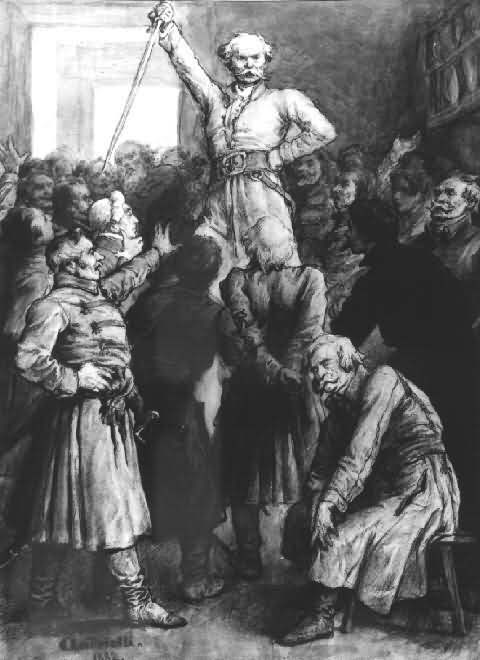
Here are some images depicting Polish manhood:

http://image.toutlecine.com/photos/p/a/n/pan-tadeusz-1999-05-g.jpg

http://upload.wikimedia.org/wikipedia/commons/a/ae/Andriolli_Pan_Tadeusz_1.jpg
Thaddeus Dombrowski is one of the main characters in The Gate of Dawn. He is the demure, impractical, guilt-ridden husband of the female protagonist, a German heiress named Renate Lichtner. Their marriage is arranged by Renate's dying father and at first appears to benefit both sides, but as with many hasty arrangements, things go horribly awry. Aged thirty in the beginning of the novel, Thaddeus is exactly twice as old as his child bride. Those thirty years had been filled with sorrow and bereavement - he had buried his wife and four children. Despite the sorrow, he retains some juvenile naivete. Having spent his whole life on a remote rural estate called Raven's Bog, he is not a very worldly man. The novel takes place in the 1880s, twenty some years after the abolition of serfdom in Eastern Europe. Thaddeus, born into landed gentry, feels guilty about all the atrocities his peasants had suffered in the hands of his tyrannical father and believes it is his mission is to atone for the sins of his ancestors. He rejects social hierarchy and treats his servants as family members. His fifteen-year-old bride, on another hand, is very cosmopolitan and erudite. She is a German who was born and raised in the dynamic and diverse Vilnius. She is keenly aware of the socioeconomic and ethnic pyramid. The sight of her aristocratic Polish fiance eating and drinking with his Lithuanian servants appalls her. Renate certainly does not believe that all people are equal and deserve to sit at the same table and eat the same food. She endorses the notion of Russian and German supremacy over Poles and Lithuanians. All the more appalling she finds his impracticality and lack of business skills. After a string of crop failures, Raven's Bog is in danger of being confiscated by the Russians for failure to pay taxes. Russian imperialist agents kept a close eye on struggling properties. If the original owner proved to be incompetent, they would confiscate the land. And that's just the kind of mess young Renate walks into. The inheritance she brings into the marriage provides temporary relief but does not solve the underlying issue of her husband having no clue on how to cultivate the land and negotiate profitable prices. 

Thaddeus Dombrowski is a quintessential Polish man. The archetype is still relevant. He is deeply religious and exuberantly sexual, though his sexuality, as one can imagine, is confined to marriage and directed at procreation. He does not shy away from hard physical work or pain. He is quick to embraces self-sacrifice and martyrdom. In addition to impracticality, his flaws include a propensity for self-destruction and alcoholism. Polish men are known for being accident prone. It's an unflattering and darkly humorous stereotype, but it's rooted in reality. Because Polish men are taught that being able to withstand physical pain and grin through injuries is an attribute of masculinity, they often neglect safety measures. Throughout the novel, Thaddeus suffers several freak accidents that could have been easily prevented. His male servants are guilty of the same.  

This is how I envisioned my protagonist. This is a still from a film based on Adam Bernard Mickiewicz's novel that also has a protagonist named Thaddeus. 

http://media-cache-ak0.pinimg.com/736x/30/d6/12/30d6126394f2bd2aa8c16d24ca257a3e.jpg

In social situations, women clearly take the lead. When a woman speaks, her man must remain silent. Unless a man is talking about war or religion, he should sit quietly with his eyes downcast. Arguing with a woman is both disrespectful and demeaning. A real man must not engage in conversations of philistine nature. He must preserve his strength for a potential military engagement. He must be seen but not heard. 

http://mafab.hu/static/2014t/285/01/13410_38.jpg


16 September 2016

New & Noteworthy: September 16

MJ Neary's novel WYNFIELD's KINGDOM has been republished by Crossroad Press and is available now at Amazon.com. Congrats MJ!

15 July 2016

New & Noteworthy: July 15

Kim Rendfeld will re-release THE CROSS AND THE DRAGON on Wednesday, Aug. 3, 2016. The heroine, Alda, must contend with a jilted suitor bent on revenge and the anxiety her beloved husband will die in battle. Ebooks are available for preorder on AmazoniTunes, Kobo, and Barnes and Noble. Print copies will be available on the launch date, and if you'd like a friendly reminder, email Kim at kim [at] kimrendfeld [dot] com.

M.J. Neary will re-release three of her novels with Crossroad Press in 2016. Founded by a bestselling author, Crossroad specializes in publishing new works of established authors and backlist for megasellers like Clive Barker. Congratulations M.J.!

Harlequin Historical has acquired Michelle Styles' latest Viking novel, SOLD TO THE VIKING. It will be out in February/March of 2017. Congrats Michelle!

17 June 2016

New & Noteworthy: June 17


• To celebrate the release of her contemporary paranormal novel, AWASH IN TALENT, Jessica Knauss discussed its historical underpinnings with fellow U.H. contributor Kim RendfieldYou can read the blog post here. 


Michelle Styles' novel SUMMER OF THE VIKING has been released in Norway, Sweden, and France. Also, her novel TAKEN BY THE VIKING has been re-released in the UK as part of the "Forbidden Nights" anthology. For more information, visit michellestyles.co.uk.  


M.J. Neary's new novel THE GATE OF DAWN is now available for purchase at Amazon, and is receiving great reviews. Congratulations M.J.! You can get your copy at Amazon here.


Heather Domin is preparing a blog tour hosted by Historical Fiction Virtual Book Tours for her novel THE HEIRS OF FORTUNE, scheduled to begin July 11. More information to come.

20 May 2016

New & Noteworthy: May 20

M.J. Neary's new novel THE GATE OF DAWN will soon be released by Penmore Press. Stay tuned to Penmore Press for the cover art and purchasing links. Congrats M.J.!

Blythe Gifford has two book signings this month. On Saturday, May 21, at 3 p.m., she will be signing at the Hyatt Regency in Schaumburg, IL with many other authors as part of the Spring Fling Book Signing.  Then, on Sunday, May 22, at 2 p.m., she will be part of an historical romance panel and signing at Anderson’s Books in Naperville, IL.  For details, see www.blythegifford.com.


Heather Domin is running a Memorial Day double giveaway for her VALERIAN'S LEGION series. Goodreads users can enter to win paperbacks here, and Tumblr users can enter to win e-books here. Winners will be chosen May 27.


19 February 2016

New & Noteworthy: February 19

M.J. Neary's novel THE GATE OF DAWN has been accepted for publication by Penmore Press. Congratulations M.J.! You can learn more about THE GATES OF DAWN at M.J.'s guest post from 2015

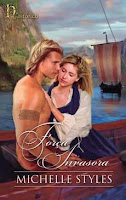
Michelle Styles' novel VIKING WARRIOR, UNWILLING WIFE has been released in Portuguese under the title FORCA INVARSORA, available now in both print and ebook formats.

Lindsay Townsend's medieval historical romance novella AMICE AND THE MERCENARY will be published by Prairie Rose Publications on Feb 25th. The novella is a stand-alone sequel to MISTRESS ANGEL and features some of the same characters.

Heather Domin's recent novel THE HEIRS OF FORTUNE is now available in paperback and ebook through most major book retailers. French and German translations should be available later in 2016.


29 March 2015

Author Interview & Book Giveaway: M.J. Neary on NEVER BE AT PEACE

This week, we're welcoming author and Unusual Historicals contributor, M.J. Neary, whose latest title is NEVER BE AT PEACEOne lucky visitor will get a free copy of Never Be At PeaceBe sure to leave your email address in the comments of today's author interview for a chance to win. Winner(s) are contacted privately by email. Here's the blurb. 


A pugnacious orphan from a bleak Dublin suburb, Helena Molony dreams of liberating Ireland. Her fantasies take shape when the indomitable Maud Gonne informally adopts her and sets her on a path to theatrical stardom - and political martyrdom. Swept up in the Gaelic Revival, Helena succumbs to the romantic advances of Bulmer Hobson, an egotistical Fenian leader with a talent for turning friends into enemies. After their affair ends in a bitter ideological rift, she turns to Sean Connolly, a married fellow-actor from the Abbey Theatre, a man idolised in the nationalist circles. As Ireland prepares to strike against the British rule on Easter Monday, Helena and her comrades find themselves caught in a whirlwind of deceit, violence, broken alliances and questionable sacrifices. In the words of Patrick Pearse, "Ireland unfree shall never be at peace". For the survivors of the Rising, the battle will continue for decades after the last shot had been fired.
 

**Q&A with M.J. Neary**
 

How did you come up with the title?
The title was actually pitched to me by my husband, an avid Celtophile and Irish history enthusiast.  It's actually from a graveside speech delivered by Patrick H. Pearse in 1915 on the day of Jeremiah O'Donovan Rossa's funeral.  "Ireland unfree shall never be at peace." Both Pearse and O'Donovan Rossa were members of the semi-secret Fenian Brotherhood. Pearse was a charismatic speaker, in spite of an eye defect and a speech impediment which he had overcome.  His goal was to galvanize his fellow freedom-seekers. It's worth mentioning that at the turn of the century was a time of apathy in Ireland.  Most people had no sense of national pride, in spite of the Gaelic Revival.  The revival was more of a cultural movement restricted to the intellectual circles. In the first decade of the 20th century significant shifts happen in the arena of political and military nationalism. By 1914-15 England is weakened by WWI.

Even though the title is inspired by a quote by Pearse, the main character in the novel is not Pearse but Helena Molony, an actress, feminist and labor reform activist. In one of your interviews you refer to her as "Irish Cinderella."

I say it half-jokingly, but there are indeed undeniable parallels. Like Cinderella, Helena was an orphan with a wicked stepmother.  She also had a fairy godmother figure, Maud Gonne, W.B. Yeats' immoral muse, who took the young girl under her wing and turned her into a theatrical start and a political martyr.  She also had a Prince Charming in her life - an upper middle class Protestant lad from Belfast, Bulmer Hobson.  They came from different worlds and did not always see eye to eye on many things.  He was from a stable, prosperous family of Anglo-Scottish stock. Still, he was on the side of Irish nationalists who often regarded him with suspicion due to his privileged background.  He was against the rising of 1916 and even tried to stop it, nearly paying for his treason with his life.

Helena Molony is a somewhat obscure figure.  Unless you take an active interest in the history of Irish nationalism, her name is not one that jumps out at you.

There are some delicate nuances around Helena's personal life that the media of the day found disturbing. Helena spent the rest of her days in solitude, living with her "companion" Dr. Evelyn O'Brien, a psychiatrist seventeen years her junior.  The nature of the relationship was subject of many speculations. Some historians insist that it was romantic. Ireland was not ready for a bisexual heroine. Helena was prone to alcoholism and angry outbursts.  In spite of her contributions to the war for independence, she was allowed to fade into obscurity.  Interestingly enough, women fought side by side with men during the War of Independence and the subsequent Irish Civil War, but as soon as freedom was won, the culture shifted in the patriarchal direction, forcing women into domesticity. A new constitution was drafted pointing out that Catholicism had a "special place" in the lives of Irish people. Divorce and contraception were outlawed. Women were literally expelled from the workplace the moment they got married. As a feminist, Helena clearly did not cherish the new laws. On top of that, her orientation was in question. In short, she did not fit the picture of a perfect Irish housewife.

There is a companion novel to "Never Be at Peace"?

Indeed, there is a companion piece "Martyrs & Traitors: a Tale of 1916".  It was written in 2011 and published by another publisher.  The novel chronicles the political and intimate misfortunes of Bulmer Hobson, Helena's former lover and comrade who ended up on the wrong side of the barricades.

Who designed the cover for "Never Be at Peace"?

Interestingly enough, it was a Ukrainian artist. I singled him out after reviewing portfolios of dozens of other artists. It takes a Slavic artist to capture an Irish tragedy. The cover painting was done from scratch using Ulster murals as inspiration. The scene represents the death of Sean Connolly, Helena's fellow actor from the Abbey Theatre and alleged lover.

Never Be at Peace: a Novel of Irish Rebels available now from Fireship Press.


About the author

Marina Julia Neary is an acclaimed historical novelist, award-winning essayist, multilingual journalist, dramatist and poet. Her areas of expertise include Neo-Victorianism, French Romanticism and Irish nationalism. Her literary career to depicting military and social disasters, from the Charge of the Light Brigade, to the Easter Rising in Dublin, to the Chernobyl catastrophe. Neary declares that her mission is to tell untold stories, find hidden gems and illuminate the prematurely extinguished stars in history. She explores human suffering through the prism of dark humor, believing that tragedy and comedy go hand in hand. Her debut novel Wynfield's Kingdom: a Tale of London Slums (Fireship Press) appeared on the cover of the First Edition Magazine in the UK and earned the praise of the Neo-Victorian Studies Journal. Her subsequent novels include Wynfield's War (2010), Brendan Malone: the Last Fenian (2011), Martyrs & Traitors: a Tale of 1916 (2011), Never Be at Peace: a Novel of Irish Rebels (2014) and Saved by the Bang (2015).

26 March 2015

Excerpt Thursday: NEVER BE AT PEACE by M.J. Neary

This week, we're welcoming author and Unusual Historicals contributor, M.J. Neary, whose latest title is NEVER BE AT PEACEJoin us again on Sunday for an author interview, with more details about the story behind the story. One lucky visitor will get a free copy of Never Be At PeaceBe sure to leave your email address in the comments of today's post or Sunday's author interview for a chance to win. Winner(s) are contacted privately by email. Here's the blurb. 


A pugnacious orphan from a bleak Dublin suburb, Helena Molony dreams of liberating Ireland. Her fantasies take shape when the indomitable Maud Gonne informally adopts her and sets her on a path to theatrical stardom - and political martyrdom. Swept up in the Gaelic Revival, Helena succumbs to the romantic advances of Bulmer Hobson, an egotistical Fenian leader with a talent for turning friends into enemies. After their affair ends in a bitter ideological rift, she turns to Sean Connolly, a married fellow-actor from the Abbey Theatre, a man idolised in the nationalist circles. As Ireland prepares to strike against the British rule on Easter Monday, Helena and her comrades find themselves caught in a whirlwind of deceit, violence, broken alliances and questionable sacrifices. In the words of Patrick Pearse, "Ireland unfree shall never be at peace". For the survivors of the Rising, the battle will continue for decades after the last shot had been fired.
 

**An Excerpt from Never Be At Peace**
 

Walking down the corridor of Belcamp Park, Bulmer spotted a trail of dark spots on the scratched wooden floor. The glistening substance looked like spilled paint. The countess had been working on one of her landscapes, and she was not known for her neatness. As Bulmer walked farther down, the spots became wider and more numerous, their trail leading to Helena’s bedroom.

            The wax from the shapeless candle stump was dripping over his hand, hardening around his knuckles. The door opened with a sinister creak. Bulmer did not make it far past the threshold. Five feet away from him Helena was lying curled up on the mattress where they had spent so many nights, a pillow clutched to her stomach and a bloodied towel between her legs. A washcloth drenched in vinegar was spread over her forehead. Shivering and delirious, she seemed unaware of his presence.

            A second later Bulmer felt fingernails digging into his arm and heard a menacing feline hiss. “Don’t dare coming near that girl.”

He turned around with a shudder and beheld the Lioness of Lissadell. “Wake her up and I’ll strangle you,” she said, dragging him out into the hall.

“What in the name of God …”

Constance tilted her artfully disheveled head. Her grey-streaked mane heaved as if it possessed a soul of its own. “Use your imagination, Hobson, or your knowledge of biology, if you possess any. Does this look like a case of migraine?”

“How long has she been like this? Has she been seen by a doctor?”

            “No worries, the doctor’s already done his part – as you’ve done yours.”

            “What’s that supposed to mean?”

            “You’re asking too many questions, Hobson. Just fetch your things and go to home to your Mama. Ask her why women resort to such measures. She has all the time in the world to educate you – I don’t. Helena needs me. If you’ve any decency left, you’ll let this poor girl be, after everything you’ve done to her.”

            The candle slipped out of Bulmer’s hand, setting the woven doormat on fire. Constance stamped out the flames swiftly with her slipper, shoved the speechless Quaker aside and she locked herself in Helena’s bedroom.

            Bulmer slid down to the floor and froze in an excruciatingly uncomfortable position across from the closed door, his gaze following the blood trail. The overwhelming sensory experiences of the past five minutes shocked his body into sleep, surprisingly deep and peaceful, devoid of nightmares, like a miniature death.   

***

            The smell of tobacco drove Bulmer out of his tepid oblivion. Wincing from the soreness in his limbs and neck, he stood. Helena’s door was left ajar, and the bedroom was empty. Leaning against the wall, he began limping his way down the hall towards the light coming from the kitchen.

The two women were smoking and gossiping. Helena looked alarmingly pale, though her mouth was tinted with cherry-red gloss. Her hair had been brushed back and adorned with rhinestone pins. She was wearing the same narrow tartan skirt she had on for the arrival of the scouts in early September.

            “It was horrid,” Bulmer heard her say. “Oh, Con, I know I should feel relief, but … What happens next? Is it a sort of thing a girl takes to a priest?”

            “You know it’s for the best,” the countess replied. “The Hobson boy is unreliable. You have your acting glory before you, and all the men in the world.”

“I don’t think I’ll ever look at another man for as long as I live.”

            “I felt the same way after Maeve’s birth. How I loathed that child and Casi! Women who tell you that being a mother is the greatest blessing are either liars or primitive breeding cows. No thinking woman can take pleasure in such things.”

            Bulmer started coughing – not to attract attention but because the cigarette smoke was irritating his lungs. The women turned their heads to look at him without changing their poses.  

            “Miss Molony,” he said with affected courtesy, “do you have any final words for me before I clear out? Though, your recent actions speak eloquently enough.” In his heart he had always known this affair would end. He just did not suspect it would end so soon and on such an ugly note.

            Helena blew a cloud of smoke in his face. “You have no say in matters concerning my body.”

            “Of course, I don’t. Your body is the property of the Abbey directors and the Fianna boys.”
 

Never Be at Peace: a Novel of Irish Rebels available now from Fireship Press.


About the author

Marina Julia Neary is an acclaimed historical novelist, award-winning essayist, multilingual journalist, dramatist and poet. Her areas of expertise include Neo-Victorianism, French Romanticism and Irish nationalism. Her literary career to depicting military and social disasters, from the Charge of the Light Brigade, to the Easter Rising in Dublin, to the Chernobyl catastrophe. Neary declares that her mission is to tell untold stories, find hidden gems and illuminate the prematurely extinguished stars in history. She explores human suffering through the prism of dark humor, believing that tragedy and comedy go hand in hand. Her debut novel Wynfield's Kingdom: a Tale of London Slums (Fireship Press) appeared on the cover of the First Edition Magazine in the UK and earned the praise of the Neo-Victorian Studies Journal. Her subsequent novels include Wynfield's War (2010), Brendan Malone: the Last Fenian (2011), Martyrs & Traitors: a Tale of 1916 (2011), Never Be at Peace: a Novel of Irish Rebels (2014) and Saved by the Bang (2015).

02 March 2015

The Gate of Dawn

By M.J. Neary

The Gate of Dawn is the title of the novel I am currently working on and hope to have finished in the next few months. Last year I did a guest post regarding some of the pagan practices of Balts, so elements of that research have been included into the novel.  The title refers to one of the most religiously, culturally and historically significant manuments in Vilnius, the capital of Lithuania. It was constructed in early 1500s as a component of defensive fortifications. Of the nine city gates, only the Gate of Dawn remains, while the others were destroyed by the order of the government at the end of the 18th century when Lithuania was annexed to the Russian empire.  Destroying indigenous culture of the former Polish-Lithuanian commonwealth was a huge part of the Czarist agenda. In spite of the encroaching Imperial forces, Vilnius was still a diverse city, in which various ethnic groups lives in relative peace. The Gate of Dawn was left intact, having miraculously survived several attempted insurrections, the last symbol of old Baltic pride.
 

There is a chapel above the Gate of Dawn, containing the icon of the Blessed Virgin Mary Mother of Mercy, claimed to possess miraculous healing powers.  What sets the icon apart is that Mary is portrayed without Jesus, which is not common.  Since the 16th century the painting has been an object of venerations for both Catholic and Orthodox inhabitants, attracting pilgrims from neighboring countries to pray before it. Masses were held in both Lithuanian and Polish.
 
The idea of having a religious monument as the center of the novel came to me after re-reading Victor Hugo's Notre-Dame de Paris (for the umpteenth time).  Given that it's my mission to highlight lesser known landmarks, I decided to make The Gate of Dawn in Vilnius the focal point of my next novel.
 
I am pleased to share the synopsis:


Welcome to 1880s Vilnius, a volatile Northeastern metropolis where Balts, Germans, Poles, Russians and Jews compete for a place in the sun. After sustaining fatal burns in a fire instigated by his rivals, Hermann Lichter, a German-born textile magnate, spends his final days in a shabby infirmary. In a hasty and bizarre deathbed transaction he gives his fifteen-year old daughter Renate in marriage to Thaddeus, a Polish widower twice her age who lives on a bucolic farm and toils side by side with his peasants. Renate's arrival quickly disrupts the harmonious flow of life. Outraged by her loss of freedom and familiar comforts, the arrogant city girl antagonizes every member of the household, driving Thaddeus to despair. During an excursion to Vilnius, Renate reunites with her secret lover, a young Jewish painter who sells his watercolors outside the Gate of Dawn chapel. Absorbed in her rekindled affair, Renate does not suspect that her life is in danger. Her resigned husband might be willing to look the other way, but his servants will not stand by and watch their beloved master humiliated. From the cobblestone streets of Old City swarming with imperial officials, to the misty bogs of rural Lithuania where pagan deities still rule, The Gate of Dawn is a folkloric tale of rivalry, conspiracy and revenge.


About the author

Marina Julia Neary is an acclaimed historical novelist, award-winning essayist, multilingual journalist, dramatist and poet. Her areas of expertise include Neo-Victorianism, French Romanticism and Irish nationalism. Her literary career to depicting military and social disasters, from the Charge of the Light Brigade, to the Easter Rising in Dublin, to the Chernobyl catastrophe. Neary declares that her mission is to tell untold stories, find hidden gems and illuminate the prematurely extinguished stars in history. She explores human suffering through the prism of dark humor, believing that tragedy and comedy go hand in hand. Her debut novel Wynfield's Kingdom: a Tale of London Slums (Fireship Press) appeared on the cover of the First Edition Magazine in the UK and earned the praise of the Neo-Victorian Studies Journal. Her subsequent novels include Wynfield's War (2010), Brendan Malone: the Last Fenian (2011), Martyrs & Traitors: a Tale of 1916 (2011), Never Be at Peace: a Novel of Irish Rebels (2014) and Saved by the Bang (2015).