Showing posts with label 10th Century. Show all posts

08 December 2016

Excerpt Thursday: SEVEN NOBLE KNIGHTS by J. K. Knauss

This week, we're pleased to welcome author and Unusual Historicals contributor J. K. Knauss with her first historical novel, SEVEN NOBLE KNIGHTS, a saga of family, betrayal, and revenge in medieval Spain.

Join us again on Sunday for an author interview with more details about the story behind the story. We're giving away two signed print copies and three ebooks of Seven Noble Knights free. Just enter the Rafflecopter giveaway at the bottom of this or Sunday's post.


Spain, 974. Gonzalo, a brave but hotheaded knight, unwittingly provokes tragedy at his uncle’s wedding to beautiful young noblewoman Lambra: the adored cousin of the bride dead, his teeth scattered across the riverbank. Coveting his family’s wealth and power, Lambra sends Gonzalo’s father into enemy territory to be beheaded, unleashing a revenge that devastates Castile for a generation.
A new hero, Mudarra, rises out of the ashes of Gonzalo’s once great family. Raised as a warrior in the opulence of Muslim Córdoba, Mudarra must make a grueling journey and change his religion, then chooses to take his jeweled sword to the throats of his family’s betrayers. But only when he strays from the path set for him does he find his true purpose in life.
Inspired by a lost medieval epic poem, Seven Noble Knights draws from history and legend to bring a brutal yet beautiful world to life in a gripping story of family, betrayal, and love.

Early praise for Seven Noble Knights
“Let Seven Noble Knights welcome you to historical fiction! …it’s a rich saga populated with characters you will grow to love (and a few you will love to hate). The ancient empires of Spain are a beautiful backdrop to the struggles of humankind across all generations of all lands: romance, revenge, war, and adventure.”    
—Pushcart Prize nominee Reneé Bibby, The Writers Studio

Excerpt from Seven Noble Knights, Part One, Chapter III: The Wedding
Young Gonzalo’s uncle, Ruy Blásquez, is receiving Doña Lambra as a bride in exchange for his service to Castile. Gonzalo isn’t at all sure Lambra should be marrying his uncle.

Doña Sancha shooed her sons away from the cathedral door and drew dried herbs and flowers from pockets Gonzalo hadn’t known were inside her tunic and cloak. With a stick, she carved a large circle on the hard earth. Doña Sancha set the herbs and flowers inside the circle in a pattern with meanings she might have shared with a daughter, but were a mystery to Gonzalo.

“You’ll stand here,” she told her brother, Ruy Blásquez. “When your bride comes from that side, you’ll step inside the circle together.” She arranged her husband and sons on Ruy Blásquez’s side of the circle. Gonzalo ended up next to his uncle, so close he could hear each shallow breath he took.

Count García arrived with a full complement of knights and squires and four banners in white with red castles, as well as a fiddler and a flutist who made ready to play. So many people in the plaza must have been making the loudest ruckus since the city had been won from the Moors, but Gonzalo heard nothing.

From between the buildings at the far end of the plaza emerged forty women who walked with their hair covered to emphasize their married status. Their laughter and singing couldn’t distract Gonzalo from Doña Lambra, who tottered on their shoulders.

An heirloom beaded necklace competed with her yellow hair, shining in tight plaits on her shoulders with ornamental brass tips that looked as if they had come out of a treasure chest long ago. A mail girdle, inlaid with brass and pieces of jet at the edges, cinched her bright blue tunic from under her breastbone to down over her hips. Gonzalo shivered at the thought of the bitter touch of the matching mail sleeves, from the decorated wristlets up to her shoulders. A burgundy-colored cloak edged with three rows of golden braid was fastened over her shoulder with a gilded brooch in the shape of a lion rampant. A square cap, decorated all around with braid and gold carbuncles, looked like a royal crown. Gonzalo imagined he wasn’t at his uncle’s wedding, but that this bride had come from the farthest reaches of Christendom to marry the King of Navarra or León.

The married women set Lambra down in the middle of their ranks. She let the cloak fan out behind her unsteady stride. Her face was frozen into a grimace like the one the Virgin Mary wore as she cradled the Savior’s dead body inside the cathedral.

Gonzalo remembered Lambra’s grin at the banquet days before, when her mouth had dripped red with juices from the roasted bull’s testicles and the sauce-engorged bread trencher. Each time she received the goblet, she had made sure to turn it so that her lips didn’t touch the same spot as Ruy Blásquez’s. She didn’t take the same precaution against Álvar Sánchez, seated on her other side. Gonzalo could hardly taste his food through a choking desire to throw his eating knife across the table into the gloating knight’s hand so it could never touch Lambra so familiarly again.

There he was now, that upstart Álvar Sánchez, wearing just as juicy a grin, so close to Doña Lambra that the obnoxious curl on the toe of his boot intruded on the magic circle.

“What is that blasphemous behemoth doing there? Shouldn’t a member of the groom’s family stand next to the bride?” Gonzalo whispered to Gustio.

Gustio knocked his elbow into Gonzalo’s ribs. “Why? Were you hoping it would be you, little brother?” He chortled until their mother hissed at them to be silent.

Count García was addressing the crowd. “…with these deeds, Ruy Blásquez has earned as a bride my loveliest cousin, probably the most beautiful woman Castile has seen since my mother joined the Kingdom of Heaven. May they live many more years and have many loyal Castilian children.” He raised his arms, which the crowd took as a sign to cheer and shout.

Gonzalo noticed that his uncle had already moved into the circle and reached for Lambra’s hands. She was looking at Ruy Blásquez, but not with love or even curiosity. It was a look of judgment. Gonzalo tried to imagine how his uncle’s soft eyes, long nose, and weak chin fared on Lambra’s scale.

“I receive you as mine, so that you become my wife and I your husband,” Ruy Blásquez said. Gonzalo was relieved to glimpse him smiling widely, displaying his straight, white teeth to his judge in the form of a bride.

Ruy Blásquez smiled and waited, waited and smiled. Gonzalo witnessed a thousand expressions cross Lambra’s face like clouds in a stormy sky. At last, Lambra’s maid emerged from the crowd and leaned over the circle. “I receive you as mine…” she prompted so quietly that Gonzalo had to read her lips.

“I receive you as mine so that you become my… husband… and I your… wife,” said Doña Lambra, her eyes narrow. She pulled her hand away from Ruy Blásquez to wipe at her plump lips, as if the words had sullied them.

She craned her neck to look at Álvar Sánchez and Gonzalo knew she wished she had said the words to him. His heart beat faster. Then she shifted her gaze to Gonzalo. He felt as if he were smothered with the parsley, fennel, red carrot, and beet sauce from the banquet. Such was the hunger he saw in her eyes, a hunger he couldn’t help but feel, too, and which raged all the more, the more he tried to contain it. He remembered the way the bull’s testicles had flopped onto Doña Lambra’s trencher under their own weight and the way they deflated when she plunged her knife into the center of the sacs.

He stopped a startled cry in his throat.

“Long live the newlyweds!” The crowd shouted until they were the only words Gonzalo remembered ever hearing.

Seven Noble Knights will debut December 11 from Encircle Publications.

Find out some of the research involved in this wedding scene here.

See the book trailer with specially commissioned art by Ayal Pinkus.

And remember to enter below for a chance to win one of 2 signed softcover copies or one of three ebooks of Seven Noble Knights!
a Rafflecopter giveaway

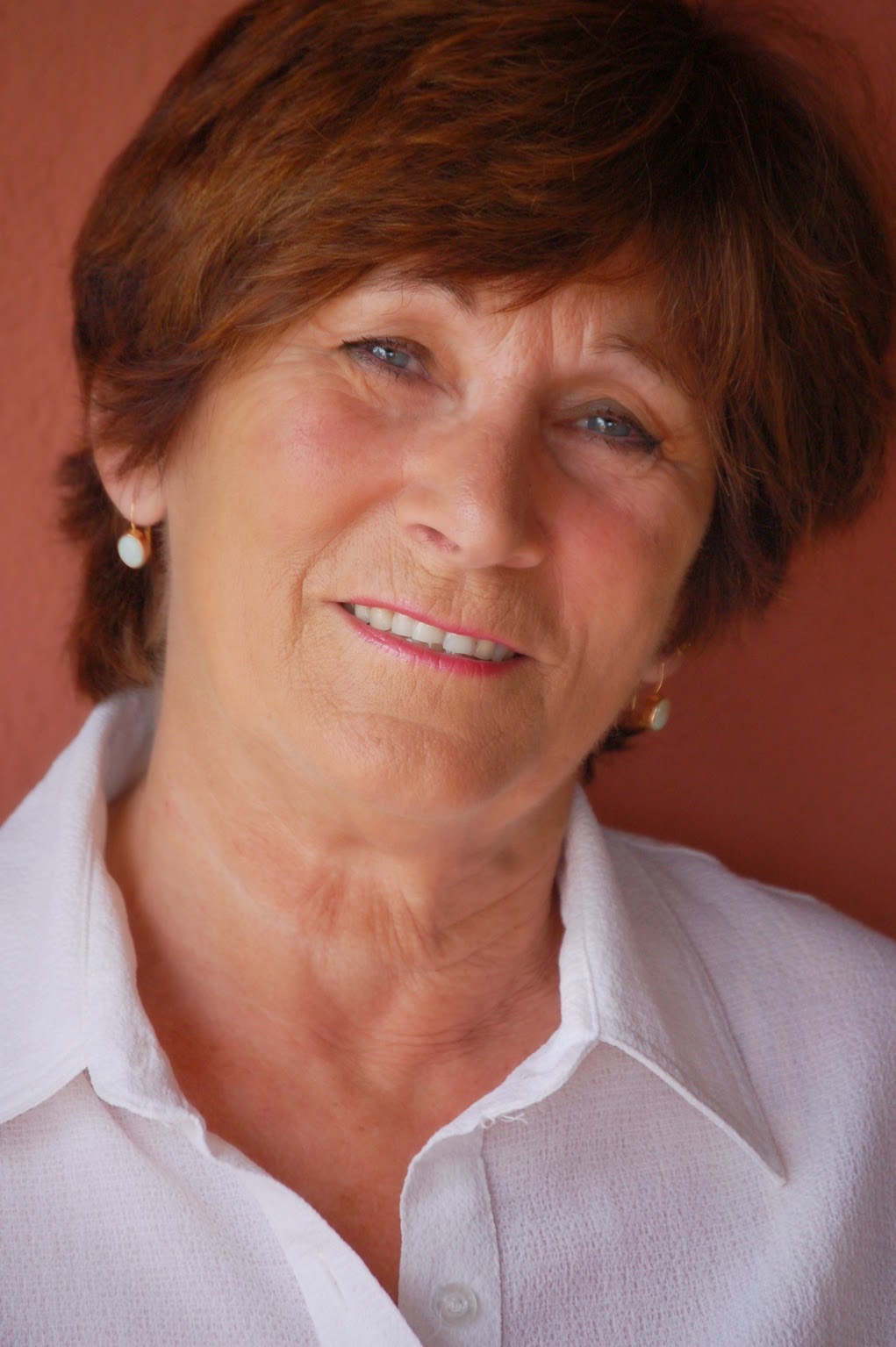
J. K. Knauss earned her PhD in medieval Spanish with a dissertation on the portrayal of Alfonso X’s laws in the Cantigas de Santa Maria, which has been published as the five-star-rated Law and Order in Medieval Spain. Look for her book of stories based on the Cantigas, coming 2021. A driven fiction writer, J. K. Knauss has edited many fine historical novels and is a bilingual freelance editor. Her historical epic, Seven Noble Knights, will debut on December 11, 2020, from Encircle Publications. Her contemporary paranormal Awash in Talent is now available from Kindle Press. Find out more about her writing and bookish activities here. Follow her on  Facebook and Twitter, too!

17 August 2016

The Arts: Mozarabic Manuscript Illumination

Musicians from a Beatus of Liébana ms. from the first half of the tenth
century. Wikimedia Commons 

The complexity of the Iberian Peninsula in the Middle Ages has led to many different terms to refer to the distinct sectors of its multireligious, multicultural society. “Mozarabic” originally referred to the Christians who were allowed to continue practicing their faith under Muslim government, and later expanded to include the Iberian Christians who lived outside those territories as well. The time frame remains strict: it describes Moorish political dominance, from the seventh through the eleventh centuries.

Christ in Majesty from a Moralia in Job completed in
Valeranica, 945.  Wikimedia Commons 
This time frame sets the characters from my Seven Noble Knights, which takes place in 974 and 990, squarely within the Mozarabic culture. I’m fascinated with the distinctive art of this culture because it’s the aesthetic my characters would have been surrounded by.

From a Beatus of Liébana completed in Osma.
Wikimedia Commons 
In the most abundant type of art, manuscript illumination, bright colors, almond-shaped eyes, elongated hands, and disregard for realism are the characteristics that most stand out for me. Perhaps the colors, bright enough to burn modern eyes, are the result of dim lighting in buildings with small windows. The lack of realism may have come about in part because the most popular work of literature at the time was a commentary on the Apocalypse, with all its fantastic creatures and events, by a monk called Beatus of Liébana.

The Monastery "de Suso" at San Millán de la Cogolla is a
rare example of Mozarabic architecture. Jessica Knauss 
It’s assumed that the driving force of Mozarabic art is a blending of older, revered Visigothic styles with adaptations from Arabic sources. However, it’s hard to trace the continuance of Visigothic style due to a general lack of surviving Visigothic sources. Much important architecture constructed during the Visigothic and Mozarabic periods no longer exists because in later generations it was demolished to make way for new styles. Although the Arabic inspirations in Mozarabic art are more obvious, they’re not easy to interpret. Some see a criticism of these borrowings embedded in the borrowings themselves because of the frontier nature of this art and the antagonism between the religions. Others prefer to think Mozarabic artists admired Arabic styles for their elegance as much as they admired Visigothic styles for their heritage.

The Ark of the Covenant in the San Isidoro Bible, 960.
Wikimedia Commons 
In The Art of Medieval Spain, O. K. Werkmeister illustrates that the Mozarabic attitude toward Arabic art sources seems to reflect the current state of the prolonged conflict. These monks were often working on the front lines and witnessed skirmishes and battles firsthand. The San Isidoro Bible of 960 illustrates Philistines riding in a style probably copied from Islamic art. In this way, the Bible story of intense fighting against frightening enemies became an allegory for the conflict the monks and lay people saw all around them.

From the Beatus of Liébana of Girona, 975.
Wikimedia Commons 
Fifty years later, the attitude seems to have flipped. A decorative casket Caliph Hisham II gave to his Sword of the Realm as part of a reward for conquering León was looted in a raid and brought back to a Christian church to serve as a reliquary for the bones of two Mozarabic martyrs. This reappropriation is the ultimate form of adaptation from Arabic sources. The casket could only be accepted as Christian at this exact moment in history, when the Caliphate of Córdoba was in decay and the enemy forces didn’t seem as threatening as before.

The Whore of Babylon in the Girona Beatus.
Wikimedia Commons 
Unique among European manuscript illumination of this period, the frontier monks nearly always left detailed colophons signing their work and stating the reasons and patrons for which it was made. Such signatures likely imitated the way artists claimed their work in the Muslim-governed territories, where artists had considerable social standing. It seems reasonable that the Mozarabic monks had similar artistic and cultural aspirations. Historians thank them for leaving such accurately self-conscious records.

From "Facundus" ms. of Fernando I and Sancha of Castile,
mid-eleventh century. Wikimedia Commons 
The Mozarabic monastic tradition wouldn’t last long after the rise of the Romanesque artistic style. The only example of work attempting to bridge the styles or to absorb Mozarabic sensibilities into international Romanesque are the manuscripts patronized by Fernando I and Sancha of Castile in the mid-eleventh century. For me, these manuscripts happily combine the old surrealism with a new, more complex control of contours. But there were no monastic centers that could juggle the two styles for long.

Noah's ark, painted in Urgell. Wikimedia Commons 
Nevertheless, Mozarabic art was no flash in the pan. Something essential about it, perhaps its severity or its emotional impact, has remained in Spanish art. Many commentators draw a straight line between the San Isidoro Bible of 960 and Picasso’s Guernica.


Jessica Knauss earned her PhD in medieval Spanish with a dissertation on the portrayal of Alfonso X’s laws in the Cantigas de Santa Maria, which has been published as the five-star-rated Law and Order in Medieval Spain. Look for her book of stories based on the Cantigas, coming 2021. A driven fiction writer, Jessica Knauss has edited many fine historical novels and is a bilingual freelance editor. Her historical epic, Seven NobleKnights, will be published in December 2020 by Encircle Publications. Her contemporary paranormal Awash in Talent is now available from Kindle Press. Find out more about her writing and bookish activities here. Follow her on Facebook and Twitter, too! 

16 March 2016

First Ladies: Ava de Ribagorza, a Traitor Countess?

By Jessica Knauss 


Mid-eleventh-century illumination from the
St. Sever Beatus

In the tenth century, so much definitive action took place in northern Spain that every historical person played a fascinating role. One of these historical persons was Ava de Ribagorza, Countess of Castile and wife of Count García Fernández. Although an epic poem about García’s wife circulated all over Iberia—The Traitor Countess—its storyline bears little relation to fact. I’m writing a novel with Count García and Countess Ava as central characters, and to write about her convincingly, I need to make crucial decisions based on little evidence. How to separate legend from history?

García Fernández was the second Count of Castile from his father’s death in 970 until his own passing in 995. At the time Castile was a territory on the fringes of the Kingdom of León and politically dependent on it. The Castilians’ location on the frontier with the Caliphate of Córdoba meant that by necessity, the political leaders were principally warlords. They had to be ready at any moment to defend their hard-won territory from brutal raids that terrified everyone from the haughtiest king to the lowliest laborer.

This is the era of Almanzor, a political opportunist and great military strategist whom everyone in the north of the peninsula assumed was the caliph because of his seemingly limitless power. The map shows Almanzor’s principal forays into León, Castile, Navarra, Ribagorza, and Barcelona (the “Christian kingdoms”) and the generous swath of territory he took back for his prosperous empire. The constant ebb and flow of conflict was only aggravated because the Christian kingdoms often had bloody spats amongst themselves.

The militarization of Castilian society was so extreme that it’s said that the men didn’t have time to take care of their own horses. That job, and other important ones, belonged to their tough-as-nails wives.

Count García in the Plaza Mayor
of Salamanca
Ava was born circa 945, the daughter of Count Ramón II of Ribagorza. The family name refers to the county between the France-dependent County of Barcelona and the independent Kingdom of Navarra. The Queen of Navarra may have helped arrange Ava’s marriage to Count García in 960 or 965. Ava’s prime age and noble birth made it a good match that became a fruitful union. Somehow, between battles and governance, the count and countess raised six children to adulthood. Four of the five daughters made advantageous marriages, one became a nun, and the son, Sancho, inherited the title and responsibilities of Count of Castile.

Not many other facts have survived about this woman, whom circumstance must have made extraordinary. It’s my job as a historical novelist to breathe life into Ava on the page, but I don’t have a lot to go on. Her death may even be more mysterious than her life.

I haven’t been able to find a record of when Ava died. There is no mention of her in the histories after García Fernández’s passing. This doesn’t necessarily mean she died around the same time. Because her husband’s death meant the end of her time as Countess of Castile, she might have taken on a lesser role at court, perhaps supporting the new count, her son, in ways no one valued enough to write down.

As I’ve written at Unusual Historicals before, the minstrels and then the historians who wrote down The Traitor Countess took Ava’s absence from the historical record and ran with it. They claimed that she wanted to elope to Córdoba with her Moorish lover, and they set Count García’s death squarely on her shoulders. She takes advantage of her role as horse husband by giving García’s steed food that makes it look bulky, but actually weakens it. As Ava has planned, the horse fails the count in battle, leading to his death on the frontier. She then attempts to poison her son so she can leave Castile, but Sancho turns the poison back on his mother in a scene reminiscent of Hamlet.

Presentation miniature from thirteenth-century Estoria de Espanna
It’s hard to imagine why Ava became the target of so much scorn. Perhaps something similar to this happened and became lost to history. Or, more likely, confronted with a vacuum in the record and well removed from the time period, the thirteenth-century historians preferred to write down scandalous material instead of nothing at all. A traitorous countess could explain two things that might have puzzled them: the death of the great warrior, Count García; and the curious fact that his youngest daughter, Oneca, was married to Almanzor soon after García’s death.

Yes, that Almanzor. In the tenth century, political strategy could easily have led to such a match. In the thirteenth century, however, historians were more concerned with presenting a coherent story of Castilian power and religious righteousness than with the complexity of history. If they read about Oneca’s marriage to Almanzor, terror of the north, they would have thought something had gone terribly wrong. What better way to explain a now unsavory alliance than by blaming a woman? The poor girl must have had a terrible mother, since her father was a proven example of knightly virtue.


Of course, this is impossible to prove, but I imagine a lot of drama in the scriptorium while the historians were coming up with their narratives. It looks as if I’ll have to use some of that imagination in the service of redeeming Ava—or further condemning her. I haven’t decided yet.


Jessica Knauss earned her PhD in Medieval Spanish with a dissertation on the portrayal of Alfonso X’s laws in the Cantigas de Santa Maria, which has been published as the five-star-rated Law and Order in Medieval Spain. A driven fiction writer, Jessica Knauss has edited many fine historical novels and is a bilingual freelance editor. Her historical novel, Seven Noble Knights, will be published December 11, 2020, by Encircle Publications. Find out more about her writing and bookish activities here or here. Follow her on Facebook and Twitter, too!

20 December 2015

Author Interview & Book Giveaway: Joan Fallon on THE EYE OF THE FALCON

This week, we're pleased to again welcome author JOAN FALLON with her latest release,  THE EYE OF THE FALCON,(Book #2, Al-Andalus series). One lucky visitor will get a free copy of The Eye of the Falcon. Be sure to leave your email address in the comments of today's author interview for a chance to win. Winner(s) are contacted privately by email. Here's the blurb.

The Eye of the Falcon is the second novel in a series about Muslim Spain, set in the Andalusian city of Cordoba.  By the end of the 10th century al-Andalus was a rich and peaceful country, but when the Omayyad caliph died and left an eleven-year-old son as his heir, things began to change.  The eventual disintegration of that powerful dynasty had begun.
The young caliph was imprisoned in his beautiful palace, isolated and cut off from the Royal Court, while his ruthless regent and his ambitious mother battled over who should rule.  The Eye of the Falcon is a novel of intrigue and murder set at the end of Muslim Spain's Golden Age, rich with the historical details of an exotic way of life, long disappeared.

**Q&A with Joan Fallon**

The Eye of the Falcon is listed as the second novel in a series about Muslim Spain. Which of your books was the first book in the series?

The first of the al-Andalus series was The Shining City, a novel about the ruined city of Madinat al Zahra.

Did you always intend the book to be part of a series? If not, what changed your mind?

I never really intended to write a series of books; I thought that The Shining City could stand very well on its own as a novel about life in Spain at that time. However, when I began researching what little information there was about 10th century Spain, I realised that there was more than one story there. Al-Rahman III’s reign had been a time of peace and prosperity, which could have continued for a hundred years or more, except for the greed of one man, al-Mansur. His lust for power turned him from a humble civil servant into the ruler of al-Andalus and brought about the eventual disintegration of the Omayyad dynasty.
A number of events coincided to give al-Mansur his opportunity. The caliph Abd al-Rahman III, who had brought peace to a warring kingdom of princedoms and united them into a caliphate, died after ruling for forty years. His son, al-Hikam, did not survive him for very long and the throne passed to the hands of his grandson, al-Hisham II, a boy of eleven. And herein lay another story. How was a child going to rule such a wealthy country, especially as it was surrounded by enemies?

Who is the main character in your novel?

At first I was going to make the boy-caliph the main character, but the fact that he was so isolated made it difficult for him to interact with the other characters in the story. So I made his mother, Subh, the main character because she moves between her son and al-Mansur, who is not only the boy’s Regent but also her lover. So Subh is constantly torn between her passion for al-Mansur and her loyalty to her son.
Subh was originally a slave who was sold into the harem of al-Hikam II. The only problem was that al-Hikam was homosexual - not an unusual occurrence among the elite at that time - and it seemed that he was never going to produce an heir. With the encouragement of his mother, Subh set out to seduce him by dressing up as a boy. The ruse worked and eventually she gave him two sons. In doing so, she became rich and powerful.

Are all the characters in the novel real people?

Not all of them, but the main ones were real people. The caliphs existed, as did al-Mansur, General Ghálib and others in the government. Subh was a real woman but there was little information available about her life before she entered the harem, so that part is pure fiction. Al-Jundi and his family are fictitious characters that started life in the first book, The Shining City. As is frequently the case with history, what information there is about people living in the past relates to the rich and powerful. Servants, slaves and artisans are hardly ever mentioned by name. If Subh had not given birth to the Caliph’s sons, we would never have heard of her either. Consequently, all the supporting characters, soldiers, servants, slaves, falconers etc. are fictitious.

How much of the story is true and how much is fiction?

There is a saying that truth is often stranger than fiction and, in this case, I think it is very true. That the most powerful and richest ruler in the Western world could be isolated and deprived of his birthright because of his age seems unbelievable, yet it happened. That a concubine was able to dress as a boy in order to seduce the homosexual caliph, also seems very far-fetched, but it happened. Of course, the rest of the story is fiction - it is after all a novel. The episodes with the falcons could easily be true, because falcons were an important status symbol, but there is nothing recorded. Al-Mansur was a ruthless man and many deaths are attributed to his lust for power, but a lot of it is speculation. He is however, recorded as having burnt thousands of the city’s books - a loss that al-Andalus never recovered from.

Were there any particular difficulties in writing a historical novel where you know what really happened to one of the main characters?

Yes, I felt sorry for Hisham. I would have liked the young caliph’s life to have been happier and for him to have had the opportunity to rule when he came of age, but that would have taken the story too far away from actual events.

Are you planning to write another book in the series?

I would like to make the series a trilogy but so far have not decided whether to look at the very beginning of the 10th century, when the country was overrun with rebels or to move to the end of the 10th century and the beginning of the eleventh, when al-Hisham is killed and al-Mansur’s family take control. Either way there is plenty of material for another exciting novel.

Available now at
Amazon.com
Amazon UK

Learn more about author Joan Fallon


17 December 2015

Excerpt Thursday: THE EYE OF THE FALCON by Joan Fallon

This week, we're pleased to again welcome author JOAN FALLON with her latest release,  THE EYE OF THE FALCON,(Book #2, Al-Andalus series). Join us again on Sunday for an author interview, with more details about the story behind the story. One lucky visitor will get a free copy of The Eye of the Falcon. Be sure to leave your email address in the comments of today's post or Sunday's author interview for a chance to win. Winner(s) are contacted privately by email. Here's the blurb.

The Eye of the Falcon is the second novel in a series about Muslim Spain, set in the Andalusian city of Cordoba.  By the end of the 10th century al-Andalus was a rich and peaceful country, but when the Omayyad caliph died and left an eleven-year-old son as his heir, things began to change.  The eventual disintegration of that powerful dynasty had begun.
 

The young caliph was imprisoned in his beautiful palace, isolated and cut off from the Royal Court, while his ruthless regent and his ambitious mother battled over who should rule.  The Eye of the Falcon is a novel of intrigue and murder set at the end of Muslim Spain's Golden Age, rich with the historical details of an exotic way of life, long disappeared.

**An Excerpt from The Eye of the Falcon**

PART 1
976 AD

Chapter 1

It was barely light when she came to his room. The night sky was turning to milky white on the horizon but the songbirds were still asleep; even the cock had not yet begun to crow. She stood by his bed, looking down at him. Her nightdress shone and glittered in the flickering light of the night lamps; it reminded him of the kingfishers that stole in to the palace gardens to steal fish from the lakes. Gently her hand stroked his hair.
‘Hisham, my son, are you awake?’ she asked.
‘Yes mother. What’s happened? Is something the matter?’
He was well aware of the commotion in the women’s quarters; the wailing and crying, the sound of heavy footsteps as the guards marched through the palace, the slamming of doors and loud voices all spoke of some catastrophe. It had broken into his sleep and woken him before his mother arrived at his bedside. Now she knelt by his side and said, ‘You must get up, Hisham. The Khalifa is dead.’
Dead? Baba was dead? He felt a chill pass over him and hot tears sprang into his eyes. He looked at his mother; her face was impassive, not a tear marred her beautiful face. She pulled the covers off him and took his hand in hers.
‘Do not cry, Hisham; there is no need for tears. You are the Khalifa now, my son. You will be a great and glorious ruler,’ she continued, her eyes gleaming, ‘like the Omeyyads before you. Al-Andalus will thrive and prosper with you as Khalifa and with me by your side.’
She bowed low so that her face touched the carpet next to his bed, her long blonde hair cascading over the elaborately woven silks, and would have kissed his hand but he snatched it away. Baba was dead. Who was this woman who did not weep for her dead husband? He had seen her shed more tears when her pet peacock died.
He turned his face away from her. Was she telling him the truth? Was Baba really dead? His father had been unwell for some time, confined to his rooms, only able to walk a few steps at a time, but Hisham had never really expected him to die. He was sure he would get better. He believed the doctors who came each day and gave him potions made from habba souda and warm milk - said by the Prophet to cure everything but death - who made him infusions of anise and applied myrrh to his lips to sweeten his breath, who massaged his legs and prescribed salt water baths. He believed them when they said that with time he would recover, that he would return to his books and be as he was before. But they had been wrong. Baba had not recovered from the affliction that had twisted his face and stolen the strength from his limbs. He had lain in his room surrounded by his ministers, listening silently while they told him what was happening in his kingdom. Then, tired from his inability to do anything, he had sent for Hisham and asked him to read to him.
What would Hisham do now? He had loved his father. Al-Hakim had been more than a father; he had been Hisham’s friend and his teacher. Each day, when his father had finished with the business of the court, he went into the harem to look for his son and together they walked in the palace gardens while he recited the great Persian poetry of times past. He recounted the exploits of his father, Hisham’s grandfather, the mighty al-Rahman III, who had died before the boy was born, of how he had subdued all the rebellious tribes and united al-Andalus into the most powerful kingdom in Europe, of how he had defeated the Christian princes yet allowed Christians, Jews and Moslems to live in peace, side by side. Hisham had listened to his stories and was proud to be part of such a powerful family. On other occasions he accompanied his father to the great library, al-Hakim’s pride and joy, and there he learnt the secrets that were held within his countless books, sharing his father’s excitement when a new manuscript arrived from some distant land or a copyist presented him with something fresh to read and explore. Hisham loved to trace his finger over the beautiful illuminated characters and follow the words across the page or watch as books in Latin or Greek were carefully translated into Arabic. His father had taught him many things it was true, but Hisham was not sure that he had taught him how to be Khalifa of Muslim Spain.
‘Hisham, you must get up, the ministers are waiting to see their new Khalifa. Come child, I know you are upset at the news but you have responsibilities now,’ his mother whispered so that his attendants could not hear her.
He looked at her and wished he could just pull the covers over his head and stay there until she went away but he knew he could not. Al-Sayyida al Malika, the Queen Mother, was not someone to be easily ignored; she was as fearsome as she was beautiful.
His mother stood up and clapped her hands. She looked annoyed with him. At that signal Hisham’s personal slaves hurried across to him and, reluctantly, he rolled out of bed so that they could begin to prepare him for the day. Khalifa? How could he be Khalifa? It was only a few months since he had celebrated his eleventh birthday.

Available now at
Amazon.com
Amazon UK

Learn more about author Joan Fallon

17 June 2015

Weddings in History: Ritual and Financial Exchange in Tenth-Century Christian Spain

By Jessica Knauss 


Image by Gerard Belfast (Flickr)
Chaucer's Wife of Bath speaks of having husbands "at church door." She couldn't have even considered the interior of a church as a venue for her five weddings, not because the husbands' families weren't religious, but because marriage was not yet a formal sacrament of the Catholic Church.

Because I'd read the Canterbury Tales long before, when it came time for me to write about the tenth-century wedding where things start to go wrong in Seven Noble Knights, I knew what the ceremony wouldn't look like... but, like Judith Starkston, I knew I couldn't just skim over what could be some dramatic, tension-filled, character-building moments. The Fourth Lateran Council of 1215 required a priest to bless the union and the publication of banns, but my novel takes place more than 200 years before that.

In Seven Noble Knights, the wedding (and especially the bride) is observed by the bride's new nephew-in-law, a fifteen-year-old who may not understand everything he sees, but is a keen observer. So I delved into what little we know about early marriage ceremonies.


Statue of Isidore of Seville outside the Biblioteca Nacional, Madrid
No wedding could take place without a betrothal. Isidore of Seville (560–636), the most influential and prolific Latin writer after Augustine (and more or less a "local boy" for Seven Noble Knights) described many features of a betrothal: The woman is escorted by married women to the wedding site; the couple joins hands, which are bound with a cord; an officiant spreads a veil over the couple, untying the woman's hair; the couple receives crowns or garlands; the bride and groom exchange rings in an Iberian display of equality; and the bride is escorted to her new home. Isidore also recommended that the engagement ring be worn on the fourth finger because a vein led directly from it to the heart. Isidore doesn't mention it, but most other sources report a kiss or some other physical sign of commitment.

The betrothal in Seven Noble Knights is off-the-cuff because the bride and groom are just meeting for the first time. Although the groom's sister is prepared with a cord for the handfasting, the groom is too astounded with the bride's beauty to seal the promise with a kiss. I reserved the other rituals for the wedding itself because there is so little written about these ceremonies, which seem to have held less legal importance than the first promises of the betrothal.


A magic circle preserved in stone outside the cathedral door in Arcos de la Frontera.
The presence of the clergy at a wedding in 974 might have seemed unusual. A priest might bless the couple and spread incense smoke over the bridal bed, because the emphasis is still on the consummation of the union. I included these elements in my tenth-century wedding, but the lack of Church presence also left space for rituals of pre-Christian origin.

Because the Visigoths, who took over the peninsula at the fall of Rome, were so Romanized, Spain lacks a lot of the pagan/Catholic syncretism that defines other European versions of Christianity. That must be why I was so impressed with a magic circle I saw outside the cathedral door in Arcos de la Frontera. It was said to be used for the ritual cleansing of infants before baptism. In Seven Noble Knights, the married women escort the bride into a magic circle the groom's sister has just drawn and decorated with pungent herbs.

I knew my readers wouldn't believe a wedding without some kind of set vow, but it shouldn't include any mention of God or eternity for this secular ceremony. The earliest vow I found came from the twelfth-century jurist, Gratian. His preoccupation with weddings is restricted to the explicit willingness of both bride and groom, and his words work well: "I receive you as mine, so that you become my wife and I your husband." It emphasizes the equality of the participants, but also that this is an economic exchange above all.

Continuing with the economic theme, in my version of a tenth-century wedding, the bride and groom discuss dowry and bride price and the Count of Castile orally confirms which lands the couple will govern together after they've said the vows. They also pass coins back and forth to each other in a reflection of a ritual still seen in Spanish weddings today.

The lack of knowledge about weddings in the early Middle Ages, at first frustrating, ended up giving me an exceptional opportunity to link the present and past creatively with new meanings appropriate to the story.

Jessica Knauss earned her PhD in Medieval Spanish with a dissertation on the portrayal of Alfonso X’s laws in the Cantigas de Santa Maria, which has been published as the five-star-rated Law and Order in Medieval Spain. Look for her book of short stories based on the Cantigas, coming 2021. A driven fiction writer, Jessica Knauss has edited many fine historical novels and is a bilingual freelance editor. Her historical novel, Seven Noble Knights, will be published in December 2020 by Encircle Publishing. Find out more about it here, and her other writing and bookish activities here. Follow her on Facebook and Twitter, too!