Showing posts with label social change. Show all posts

12 October 2010

Money Matters: If You Don't Want Our Money, New York...

By Anna Randol

In the 1870s in New York, the Knickerbockers and Old Money families that made up the city's elite were in trouble. Rich newcomers were swarming New York, demanding acceptance and recognition. They were families that had made their money through industry--railroads, armaments, and machinery. And these upstarts knew nothing of the Knickerbocker ideals of thrift, modesty, and conservatism. For instance, rather than leaving a dress from Paris in a trunk for a year to avoid being too showy and ostentatious as a proper women should, these gauche women would wear a new gown the very season they bought it.

The ruling women of New York society fought back against the interlopers by closing ranks and inventing increasingly intricate rules for how things should be done properly. Seeing the futility of trying to break into New York society, the mothers of some the upstart families whisked their young, beautiful, wealthy daughters to Europe.

One of these women was Clara Jerome. Knowing her husband's scandals had made it impossible for her three daughters to be accepted into New York society, she packed them up and moved to Paris. When a Prussian army invaded Paris a short time later to end the Franco-Prussian war, however, the family moved to London. To her delight, English society proved far more accepting than what she'd left behind in New York. Leading this acceptance was Albert, Prince of Wales. The prince was especially fond of these new, charming American women and English society followed his lead. After all, by this time, many of England's aristocratic families were deeply in debt. They took one look at the gloriously wealthy American girls and saw a way to mend roofs on manor houses and modernize drafty old castles.

All three of Clara's daughters married into well-respected English families. But perhaps the most famous was Clara's middle daughter, Jennie. She was considered one of the most beautiful women of her time. In 1874, she met and fell in love with Lord Randolph Churchill, the second son of the Duke of Marlborough. In exchange for marriage to the duke's son, the Jeromes provided a dowry of ₤50,000, an exorbitant amount for the time. Eventually the couple had two sons Winston (yes, that Winston Churchill) and John.

Following Clara's lead, wave after wave of American mothers found that money bought their daughters not only the acceptance they craved but spouses among the aristocracy of England and Europe.

Anna Randol writes sultry, adventurous Regency romances. Her debut novel, set in the heart of the Ottoman Empire, will be released by Avon in the beginning of 2012.

09 June 2010

What Surprised Me: High Society Campaigners

By Michelle Styles

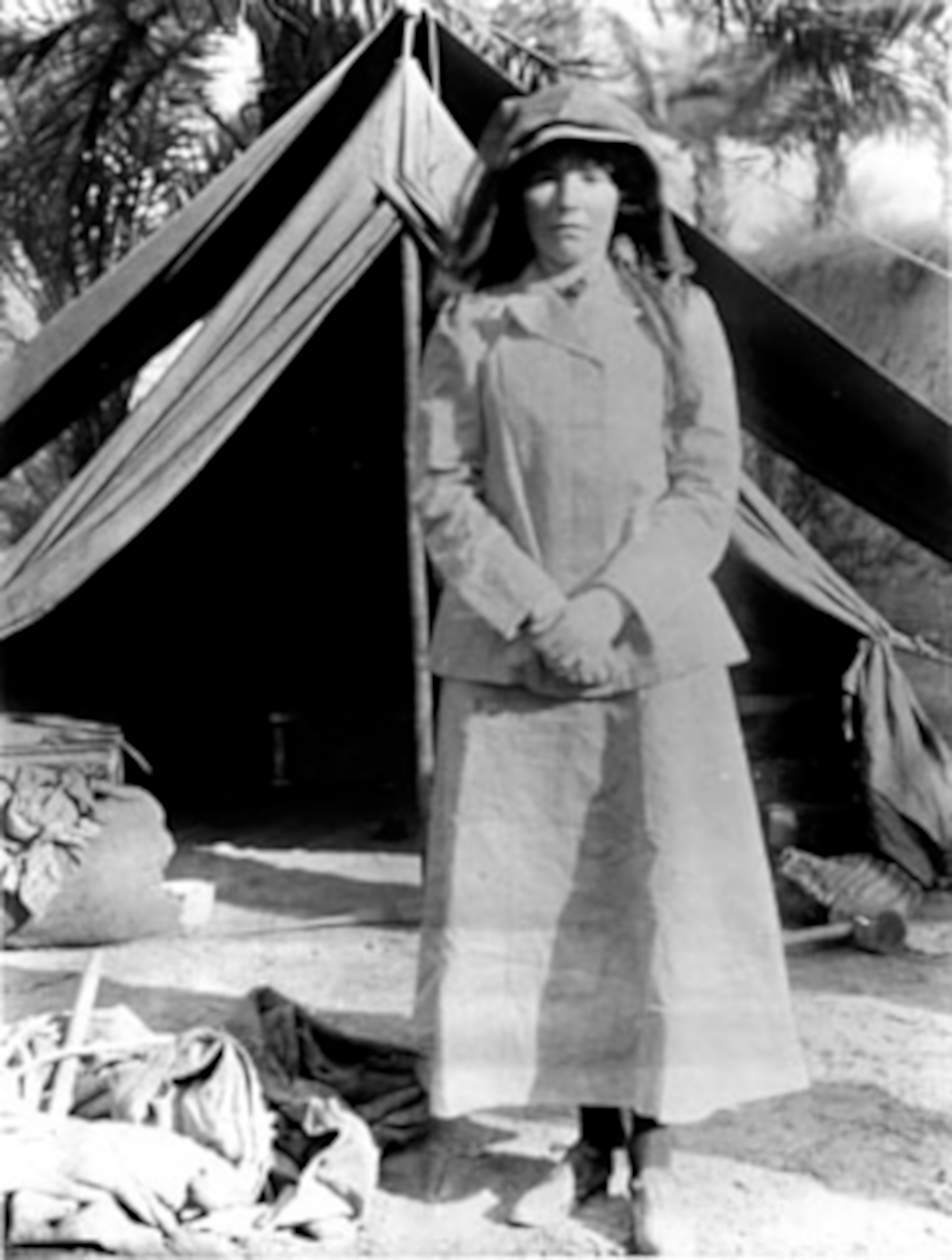
When doing research for upcoming books, I happened to read a biography of Gertrude Bell. The biography managed to turn several preconceived notions on their heads.

First up was the notion that factory owners were actively opposed to the trade union movement. Sir Isaac Lowthian Bell, Gertrude's grandfather, was pretty close to the 19th century equivalent of Bill Gates. Her father likewise was transportation royalty. They made their money by making everything steel from needles to train tracks. At a time when aluminium was more expensive than gold, the Bells set up the first aluminium processing plant in Great Britain.

However, they believed they were dependent on their work force, rather than the land to achieve their wealth. And therefore they were active in the early trade union movement because workers were important. Sir Hugh was also very annoyed that his father did not consult him before accepting the baronetcy. Sir Hugh felt that people should be judge by the things they accomplish rather than by which clubs they belonged to, or how much land they owned. And all this was unusual but I could accept it.

Rather it was Sir Hugh's wife Florence and Gertrude who shocked me to the core. Dame Florence Bell was a novelist, a playwright and a social campaigner in her right. It is thanks to her tireless work interviewing the wives of the foundry workers that a great deal was learnt about the social conditions of the poor and attitudes towards the working class began to change. In fact her work on the social conditions of Middlesborough was ground breaking in its time. She was also a strenuous supporter of education for the masses and providing places where people could relax.

Her step-daughter, Gertrude was the first woman to receive a first in Modern History from Oxford, a renown mountaineer, an acknowledged expert on Byzantine churches and one of main architects along with TE Lawrence of modern Iraq. In fact, she foresaw the whole Palestinian/Israeli problem long before anyone else and voiced her concerns during the conferences on the Treaty of Versailles.

Modern women, except they were both anti-suffragette.

Not just against the Suffragettes who advocated direct action, but anti-votes for women. Florence was so much so that no one could talk to her about it. My jaw dropped. I had always considered that educated women would be in favour of basic human rights such as the right to vote...

There were several reasons the Bells gave. First, there was the question of married women's property and the feeling that this should be properly addressed before any universal voting was allowed. Second, Florence Bell felt that working class women had too many other problems to be able to spend the necessary time to make an informed decision. There was also this whole debate: if people who did not pay taxes voted, wouldn't the system become much more skewed towards those people, and mightn't it lead to far higher taxes?

Third, given all the other social problems, wasn't it more important to concentrate on getting better wages and living conditions rather than expending energy on getting the vote, something that fairly meaningless for the vast majority? Gertrude felt that until women decided to have more than the domestic sphere as their domain that they didn't need the vote and would be inclined to vote like their husbands and why should men be getting two votes.

Florence, who wrote various articles on how to bring up children, did not even believe that women as a general rule should have access to higher education. Women should be great conversationalists rather than possess fearsome intellects. Given her step-daughter's thirst for knowledge, she bent her rule and allowed her to go eventually go to Lady Margaret Hall, Oxford. But she insisted that Gertrude be domesticated so Gertrude learnt to run a house and had a Season. The result was that Gertrude was able to operate within the early 20th century English establishment, which allowed her to achieve far more than if she had been an out-and-out radical.

Thankfully Gertrude did later feel that women's suffrage was important. But the knowledge that women who were educated, intellectuals, and social campaigners but who did not support women's right to vote totally floored me. I could understand stuffy old men, but women who were on the cutting edge, blazing a trail? The question is of course on whether one could actually use this or whether one files it under the intriguing...

03 November 2008

Social Taboos: Interfaith Relations in Medieval Spain

By Carrie Lofty

In medieval Spain before the reign of Ferdinand III (1217-1252), relations between Christians, Muslims and Jews were strained but navigable. They even had a word for this unsteady commingling of society: convivencia. Rules existed to further the cause of Reconquista--the Christian reclamation of the Iberian Peninsula from the Islamic tribes--and those rules changed depending not on any set moral principle, but on the success of re-conquest.

For example, when Christian kings began to make substantial territorial advancements in the 11th century, they employed Jews as spies and advisers. Christians did not become spies because it was thought to be immoral, and also, because Jews had been in the Moorish-occupied territory throughout the Christian expulsion, they knew a great deal more about the Islamic tribes.

Jews had performed the same function in the 8th century when they advised the invading Moors about the habits and weaknesses of the conquered Visigoths. This pattern of adaptation--finding usefulness within an incoming regime--helped the Jews survive multiple invasions and re-conquests, but it added to the suspicions about their people and way of life.

More than 2,000 Jews (7% of the population) lived in Toledo under Alfonso VIII of Castile, and Jews were awarded juderias, or Jewish-controlled estates in the north of the Peninsula. Some were even awarded daughters as political alliances. Interfaith sexual relations were in no way forbidden at this time.

Although Jews enjoyed these advantages in the heyday of Reconquista, the need for their expertise waned as Christians began to re-occupy more and more land and become acquainted first-hand with their Moorish enemies. Eventually, in the early 13th century, Jews were expelled from their juderias, replaced in royal courts, and forced to wear identifying clothing. The taboo of marrying a Jew reappeared in good society, although their integration into Christian bloodlines in Spain was greater than in any other medieval kingdom.

Because the ultimate goal of Reconquista was to take back Iberian lands from the Moors, the most heinous crime a Christian could commit was sexual relations with a Muslim. Islamic women could be put to death for having sex with a Christian, and Christian women with a Muslim. Even prostitutes had to stay with men of their own religion. Men were generally given a warning--the removal of a hand, for example--but they were put to death as well after repeated transgressions.

However, because the need for heirs to secure new, tenuous Christian bloodlines was of paramount interest to the kings, and with Christian women so scarce on the frontier, certain provisions were made for mixed-race children. If a Christian man fathered a baby on a Muslim slave, and then that baby was baptized, the man could name the child as his heir--anything to continue at least nominal control over acquired lands.

This aspect of their society played a key role in the background of Gavriel, the hero of my 2009 release SCOUNDREL'S KISS:

Customary anger shot through Gavriel's limbs. "I learned, for example, that I was kept a slave illegally. For my entire youth I was told that my mother's fate was my own. Servitude. But I was baptized, Ada. I was not instructed in the ways of the Church, but I am Christian."

Ada gasped. "But slaves are freed if they convert. Isn't that true? You should have been raised a free man!"

"Yes, but I was not," he said with grim resolve. "Now I fear being free of this place. I would rejoin their ranks as a warrior, or I would kill the father who bound me."
And while maintaining a mistress was not a taboo--in fact, because frontier women were so sought after, mistresses could then go on to proper marriages without any lasting damage to their reputations--a married woman's adultery was an offense publishable by death. The last thing these Christian communities wanted were marriages made unstable by adultery. Unstable marriage meant divorce. Divorce meant bachelor knights--known for their unpredictability, violence, and lack of a "homestead" lifestyle. Itinerancy was not good for reconquest. Maintaining a mistress, although not ideal according to the Church, at least meant bachelors behaved as more stable guardians of frontier society.

I find it amusing that iron-clad rules about who can sleep with whom moved with the times, according to the kings in charge, their aims, and the status of their campaigns against an enemy. Some social taboos are not absolute.

16 April 2008

Social Movements: Surrealism

By Vicki Gaia

Artists tend to explore the shifts of social moods. They express their opinions through their imagery. And if it's good art, then it makes a person question their own perceptions. One of my favorite art movements is Surrealism. Founded in the early 1920's in Paris, this movement explored the imagery of the subconscious mind. Based on Freudianism, the surrealists tapped into the rudimentary beginnings of psychology before the subconscious became a household word.

I had the chance to see the "Surrealism USA" art exhibit. It wasn't until the thirties that surrealism caught on in the United States. "The America of the twenties, capitalist and materialist, did not fit the Surrealists' revolutionary aspirations, which was reaffirmed in isme au service de la Revolution. Yet within ten years, Surrealism would become a major artistic trend in the United States, influencing American fashion and design." (Isabelle Dervaux - exhibition book - Surrealism USA)

Major art movements develop from societies open to new ideas and thoughts. It's not surprising that Europe led the art world until World War II. During the war, European artists fled to America, especially New York. These artists had a major influence on American artists. I wrote about this in Fragments of Light. Claire O'Neill is an artist living in New York. She's enamored by the European artists, many of them well-known. Her style changes as she meets her mentors and explores new ways of painting. Here's an excerpt:

The French surrealists and the American artists gathered in their familiar circle of friends, language an obstacle to the two groups co-mingling. Richard spoke impeccable French and conversed with Marc Chagall in the corner. Claire's French was not as polished, but passable, and she spent time with many of the French artists, enjoying their viewpoint of the modern. She'd hoped to pick up useful techniques to incorporate into her work. Richard appeared comfortable with Chagall, comfortable with foreigners in general. Without their cafes, bars and meeting places for spontaneous gatherings, these exile artists felt alienated, and many suffered financial hardships. Claire understood Richard's empathy for these expatriates, experiencing his own alienation.

Turning away, she concentrated on the painting in front of her, an otherworldly landscape of oddly shaped images, juxtaposed at odd angles, but strangely balanced. The solitary landscape evoked a spiritual response to the horrors of war. Yves Tanguy's painting held mastery. Reality and imagination merged. Flirting with surrealism, Tanguy retained his unique vision and garnered Claire's respect.
After the war, New York became the new art mecca. "...exiled artists began returning to Europe after the war, the major galleries that had promoted the movement closed, and Abstract Expressionism emerge as the dominant tendency, all of which signaled the end of Surrealism's heyday in America." (Isabelle Dervaux - exhibition book - Surrealism USA)

I'll leave you with images of paintings by Salvador Dali. Many of the American surrealists dream-like and fantasy imagery was influenced by Dali.

http://images.google.com/images?q=Salvador+Dali&sourceid=ie7&rls=com.microsoft:en-US&ie=UTF-8&oe=utf8&um=1

Happy Reading!
Vicki Gaia