Showing posts with label Cowards. Show all posts

27 April 2011

Cowards: Robert Ford

By Carrie Lofty

Jesse James is a legend in the history of the American West, and his killer, Robert Ford, who shot James in the back, is nearly as notorious. His name became synonymous with cowardice, even to the point on inspiring the title of a Brad Pitt film, The Assassination of Jesse James by the Coward Robert Ford.

Born in the warzone of Civil War-era Missouri in 1862, Ford grew up a poor admirer of Jesse James's Confederate vigilantism and outlaw pursuits. By the early 1880s, while the nation was still healing, James was the most wanted criminal in Missouri, if not the entire United States. But he had already fostered a post-war following among Confederates who resented Reconstruction changes to their antebellum lives. This sense of Robin Hood-type chivalry was quickly amplified by dime novels who put James on the side of poor Confederates who battled money-hungry Northern carpetbaggers and bankers.

Ford joined the gang in early 1882. By this time most of James's trusted cohorts had fled, assumed new identities, or been jailed or killed. Even Jesse's brother, Frank, had retired to Virginia. Jess James settled his family in St. Joseph County, Missouri, and went by the name Thomas Howard. The Ford brothers, including Robert's brother Charles, posed as his cousins.

While Charles Ford had participated in James Gang raids, Robert was still new and untested. Jesse James planned one last raid on a bank in Blue Cut, Missouri, even as the Ford brothers met with newly-elected Governor Crittenden. Crittenden had made the capture or death of Jesse James a prominent part of his inaugural promises. He also made promises to the Fords: $5,000 each and exemption from prosecution if they killed Jesse James.

Keep in mind that no matter how Robert Ford went about killing the notorious outlaw, Jesse James had, by the end of his life, participated in anti-Union massacres, robbed dozens of banks, and terrorized citizens throughout the Midwest. James was not a great guy.

But the fact he was shot in the back in his own home became the stuff of legend. Storytellers used Ford's supposed act of cowardice to magnify James's Robin Hood-style legend. Countless depictions of unaware, "innocent" James straightening a picture on his wall, with Robert Ford looming at his back, graced newspapers and magazines across the country. Especially because James's pro-Confederate image hearkened back to the mythologized Old South--where gentlemen dueled face to face--his murder seemed especially tragic to those who mourned an extinct way of life.

Rather than the hero's status Ford assumed he would receive, he was ostracized. Political forces in Missouri were split along many post-war factions, and few agreed that Crittenden's scheme had merit. The Ford brothers were convicted of first degree murder and sentenced to hang, only to be pardoned within hours by the governor. They were paid but a portion of the bounty promised; the railroads that had posted the reward had no incentive to pay up once their villain was dead.

Following the killing, Ford lived a tumultuous life. His brother, a tubercular morphine addict, died in 1884. Robert Ford drifted from job to job, opened a salon, survived would-be knife assassin, and wound up at a mine in Colorado. There, a petty outlaw named Edward O'Kelley, convinced he would be revered as a hero for killing the ultimate coward, shot Ford point-blank in the chest with a shotgun. Ford was only thirty years old, his place of cowardice in the violent history of the American West secured.

What do you think about Robert Ford and Jesse James? Was Ford a coward for taking down an outlaw by any means necessary? Or has history made James out to be a more sympathetic "victim" than he merited?

Carrie Lofty's next historical romance, PORTRAIT OF SEDUCTION, is available May 2. Later this year watch for Carrie's new Victorian series from Pocket, as well as her "Dark Age Dawning" romance trilogy from Berkley, co-written with Ann Aguirre under the name Ellen Connor. "Historical romance needs more risk-takers like Lofty." ~ Wendy the Super Librarian

25 April 2011

Cowards: Benedict Arnold

By Jennifer Linforth

Without fail he is the most famous traitor in US History. Benedict Arnold was a passionate, but discontented man during the US Revolution and constantly under the impression that he was ill treated by Congress. Expecting more from Congress than it was willing to provide, his treason was inevitable.

He was a man with a long history serving his country having been a militia member during the French and India war (1754-1763) and later joined the Continental Army during the Revolutionary war. During it, he helped capture Fort Ticonderoga in 1775, successfully attacked British Quebec and earned the rank of brigadier general as a result. But success was not without enemies, and in 1777 five lesser ranking men were promoted over him resulting in animosity and the start of his downfall. He fell into personal debt during the years that followed and his resentment over not being promoted flared his thoughts of becoming a rebel.

By 1780, Arnold in command of West Point. What would happen next would seal the fate of US history. He met with Sir Henry Clinton, head of the British forces, to proposed handing over West Point. On September 21, 1780, Arnold acted on his thoughts and made his traitorous pact with the British. However, the conspiracy was uncovered. Arnold fled, turned his back on his country and served the British troops in Virginia and Connecticut. He eventually fled the country and died in England.

Jennifer Linforth expands the classics by continuing The Phantom of the Opera. and are available now. Look for future books based on the classics, in addition to her unique historical romances. "Ms. Linforth's prose is phenomenally beautiful and hauntingly breathtaking." ~ Coffee Time RomanceMADRIGALABENDLIED

20 April 2011

Cowards: The Execution of Private Slovik

COMMENTS ON THIS POST ARE PERMANENTLY CLOSED

By Karen Mercury

Poor Eddie Slovik never stood a chance. Before enlisting in the Army he’d done a few stints in the big house in Michigan for stealing. He finally obtained a paying job plumbing and even managed to find a wife but they still lived with her parents. Maybe that was why he seemed so eager to join the army in ’44 after initially being rejected for his prison record. The Army decided that some criminals were actually pretty adept at killing people, so they finally let him in. In France, Slovik and his friend Tankey hid during an artillery attack and became separated from their detachment. This was when Slovik realized he “wasn’t cut out for combat.”
I always imagine that the men who voluntarily enlisted knew what to expect, but apparently the reality was too much for poor ol’ Eddie. So they found a Canadian military police unit and hid with them for six weeks. Tankey wrote to their regiment to explain the situation, and since many replacement soldiers had been separated from their units, no charges were filed. But hiding from combat was a much more serene lifestyle for Eddie, so on October 8 he just up and told his commander he was too scared to serve in a rifle company, asking to be assigned to a rear area unit. He told the commander he’d run away if assigned to a rifle unit and asked if that would constitute desertion. The commander confirmed that it would, and went ahead and sent him to a rifle unit.

The next day, Slovik deserted. Tankey tried to get him to stay but Slovik’s mind was made up. He walked to the rear until he found a cook at another detachment, showing the cook a note he’d written that stated his intention to run away if sent into combat. Isn’t that a little like writing someone a note informing them you’re having sex with their spouse? See, Eddie thought the worst thing that could happen would be the stockade, and he was already quite familiar and comfortable with that idea. He wanted to be court martialed and kicked out of the army. He didn’t reckon that, this being a fairly hairy war with tons of casualties as well as desertions, they needed every last available body to fight, or possibly even make an example out of him to deter other would-be deserters.

So the cook got the company commander and an MP who read Slovik’s not terribly bright note, and everyone urged him to destroy it. Slovik refused to destroy the note, so he was brought before LtC Henbest, who again offered him the chance to toss the note, return to his unit, and face no charges. Once more Slovik refused, so Henbest ordered him to write another note on the back stating he fully understood the legal consequences of incriminating himself by writing a note stating he intended on deserting—which Eddie gladly did. He was given a chance to join a regiment who had no clue of his cowardly past, but Eddie preferred to take what he thought would be a simple court martial.

He was instantly court martialed and sentenced to death, which isn’t terribly surprising in light of how he waved his intentions in everyone’s face and rejected several opportunities to change his mind. Back in those days, it took less time to carry out a death sentence than to get a parking ticket eradicated.
Shocked, he even wrote Eisenhower pleading for clemency, but the Supreme Commander responded with apathy. There was little sympathy for ol’ Eddie. One of his firing squad executioners said “I got no sympathy for that sonofabitch! He deserted us, didn’t he? He didn’t give a damn how many of us got the hell shot out of us, why should we care for him?”

The execution was carried out in France on January 31, 1945. Slovik said, "They're not shooting me for deserting the United States Army, thousands of guys have done that. They just need to make an example out of somebody and I'm it because I'm an ex-con. I used to steal things when I was a kid, and that's what they are shooting me for. They're shooting me for the bread and chewing gum I stole when I was 12 years old." Soldiers strapped him to a post with belts and the chaplain said to him, “Eddie, when you get up there, say a little prayer for me. Slovik said, “Okay, Father. I’ll pray that you don’t follow me too soon.” And Slovik was slammed with eleven bullets.

There were many other deserters during WWII but Slovik was the only one ever executed. Were they making an example of Slovik, to deter other would-be deserters? Or were they just fed up with his blatant in-your-face refusal to join his comrades in battle? His wife and others have petitioned seven Presidents for a pardon, but no one has granted it yet. Sad old Eddie goes down in history as the first enlisted man to be executed since the Civil War for being stupid.

Karen Mercury's first three historicals, including STRANGELY WONDERFUL were set in precolonial Africa. Her latest, WORKING THE LODE, is an erotic romance set during the California gold rush. Available now!

19 April 2011

Cowards: Deserters

Anna C. Bowling

A few years back, Ancestry.com offered free access to US Civil War records. Since my parents’ ancestors lived in different countries during the nineteenth century, I searched with my husband’s last name, keying in the states where his ancestors lived at the time. This search yielded an interesting surprise…someone with the right last name from the right state joined the army, only to desert three days later. Was there a deserter in the family tree? While we haven’t pursued the genealogy far enough to know if this deserter has any direct blood ties to my husband, no writer can resist playing the 'what if' game with this one. What is a deserter, why would someone leave their fellow soldiers in a time of war and how would that affect the rest of their lives? Rich fodder for any writer, and for a historical writer, the well is bottomless. Let’s take a look.

Article 85 of the Uniform Code of Military Justice defines a deserter as:

(a) Any member of the armed forces who--
(1) without authority goes or remains absent from his unit, organization, or place of duty with intent to remain away therefrom permanently;
(2) quits his unit, organization, or place of duty with intent to avoid hazardous duty or to shirk important service; or
(3) without being regularly separated from one of the armed forces enlists or accepts an appointment in the same or another on of the armed forces without fully disclosing the fact that he has not been regularly separated, or enters any foreign armed service except when authorized by the United States;

This is more severe than merely going absent without leave, which implies a return or intention to return, and far different from the conscientious objector, who refuses military service on the grounds of deeply held personal beliefs.

The Roman historian, Vegitius, stated that desertion took more of a toll on an army’s morale than deaths in battle. Deserters not only take themselves out of the battle, but also may leave doubts in the minds of those who remain as to the wisdom of remaining, not to mention feelings of anger, abandonment or myriad other concerns. Not, most would agree, a distraction active duty personnel need. As Vegitius’ treatise, De Re Militari, dates back to approximately 450 CE, we can see deserters have been a serious issue for military units for a very long time.

The reasons an individual might desert can vary- panic, inability to adjust to the rigors of military life, shock from the horrific conditions of battle, or even homesickness, a common cause for soldiers on both sides of the American Civil War, especially when battle sites were close to those very homes they missed. Both sides of the conflict were known to induce enemy combatants to desert, as one means to deplete the other’s army, a tactic Vegitius would probably recognize far too well.

Recovered deserters in the United States in the nineteenth century could expect to be flogged, branded or tattooed as well as imprisoned or sent back to the front, and the ultimate penalty for desertion in wartime remains as death by firing squad, though this was last carried out in 1945.

In 1904, British author A. E. W. Mason published his adventure novel, The Four Feathers, a story that examines the consequences of one man’s desertion from his unit prior to their deployment to the Sudan. This act of costs the protagonist not only his closest friends and the woman he loves, but also causes him to face his deepest fears as he seeks to make things right and remove the stain of cowardice from his name. The Four Feathers has been through several cinematic adaptations, as early as 1915 and as recently as 2002. The original text is available via Project Gutenberg here.

As shown in The Four Feathers, there is a hope that the deserter will have a second chance to uphold the oath they took when they first donned their uniform. In the hands of a talented writer, such a character could be hero or villain, find triumph or tragedy. How would such a character fare in one of your stories, writers? Readers, have you ever read a story with a character who deserted their organization?

Writing historical romances allows Anna C. Bowling to travel through time on a daily basis and make the voices in her head pay rent. Her current release, ORPHANS IN THE STORM, is available from Awe-Struck E-books.

18 April 2011

Cowards: Prince Juan of Castile

By Lisa Yarde

Near the end of the thirteenth century in medieval Spain, jealousy and bitterness made for a strange alliance between a rebel Spanish Christian and his Moorish or Muslim counterparts. On the shores of Tarifa, the Castilian army defended itself against a confederation of Moorish troops from Morocco and Granada, the last bastion of Spanish Islam, and the insurgent prince of Castile, the Infante Doñ Juan (1262-1319).

Juan was the son of the illustrious King Alfonso X, called the Wise by his people, born in 1262. Unfortunately, Juan inherited none of the wisdom or chivalrous behavior of his father. After the accession of the Infante's brother Sancho IV in 1284, Juan sought refuge in Portugal to continue his vicious struggle against the king. When he defected to Portugal, part of his retinue included a young page, Fernan Alonso de Guzman, who would play a tragic role in the actions of cowardice that followed.

King Sancho appealed to his counterpart, Dinis of Portugal, to expel the Infante. The Portuguese acquiesced, a move that only embittered Juan further. He fled across the Mediterranean Sea to Morocco, where he offered his services to the Marinid ruler, Abu Ya’qub Yusuf. The Marinids had long played a role in the politics of Spain, alternating between the roles of ally and foe with Christian Spain, as well as the rulers of Moorish Granada. Lately, Abu Ya’qub Yusuf had been on the losing side of several conflicts. Juan promised to fight for the Moroccans, launching an attack at Tarifa with five thousand warriors. King Sancho had captured the coastal city in 1292 from the Marinids, who once held it as part of a treaty with Granada. Juan thought he could easily force the capitulation of Tarifa, because he held something very dear to the defender of the city.

The castle at Tarifa, site of Juan's shameful invasion
Tarifa's protector was Doñ Alonso Pérez de Guzmán, a Leonese knight descended from Moors, whose family had converted to the Christian faith in generations past. He had given his eldest son into service to the kings of Castile. In 1294, the Infante Juan appeared on the shores of Tarifa at the head of his five thousand troops. He led the young son of Doñ Alonso, his own page Fernan Alonso, before the gates and threatened to put him to death unless his father surrendered Tarifa. Juan had no reason to suspect his cowardly actions would not bring about the desired result. Years before, he had besieged a fortress at Zamora on his father’s behalf. Zamora submitted because Juan promised to kill the young son of the woman who held command in her husband’s stead.

Spanish chroniclers recorded the answer Doñ Alonso gave Juan: “I did not beget a son to be made use of against my country, but that he should serve her against her foes. Should Doñ Juan put him to death, he will but confer honor on me, true life on my son, and on himself eternal shame in this world and everlasting wrath after death. So far am I from yielding this place or betraying my trust, that in case he should want a weapon for his cruel purpose, there goes my knife!”

When Doñ Alonso threw his knife over the wall, Juan cut the young page’s throat. His allies were horrified by his actions and abandoned the siege. The Infante withdrew in disgrace to Granada.

My next novel, Sultana's Legacy, opens with the Infante Juan's cruelty at Tarifa.

Lisa J. Yarde is a historical fiction author. Her novels ON FALCON'S WINGS, an epic medieval novel chronicling the starstruck romance between Norman and Saxon lovers, and SULTANA, set during a turbulent period of thirteenth century Spain, are available now.

13 April 2011

Cowards: The Douglases at the Battle of Poitiers

Blythe Gifford

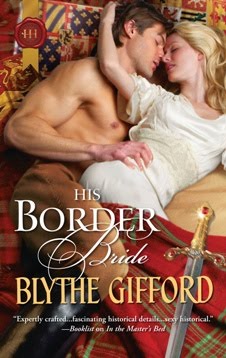
The words "Scotsman" and "coward" are rarely used in the same sentence, but if you look deeply enough, you'll find one or two Scotsmen who chose to "live to fight another day." Among them were Lord William Douglas, who was a minor character in my book, HIS BORDER BRIDE, and his cousin, Archibald the Grim.

William, later the first Earl of Douglas, and Archibald, later the third earl of Douglas, traveled to France in 1356 with forty knights, ostensibly on pilgrimage. Scotland may have been the Douglas home, but according to Michael Brown in The Black Douglas, William grew to manhood in France and "was as much a French as a Scottish noblemen." As a result, he and Archibald found themselves fighting on the French side of the Battle of Poitiers, one of the decisive conflicts of the Hundred Years War.

Thinking himself the expert in fighting the English, Lord William Douglas advised King John to have his knights fight on foot, instead of on horseback, since English archery was devastating to mounted troops.

The result was disaster.

The English won a decisive victory, even capturing the French King John.

And the Douglases? Well, they were luckier.

According to the chronicler Froissart, William "for some time fought very valiantly; but, when he perceived that the discomfiture was complete on the side of the French, he saved himself as fast as he could; for he dreaded so much being taken by the English..."

Other, perhaps more sympathetic accounts, say his own men forced him off the field.

And Archibald? He was captured by the English, presumably wounded. Scottish historian Fordun relates that his armor was an immediate tip off to his captors that here was a man worth a handsome ransom.

Fortunately for Archie, Sir William Ramsay a fellow knight, happened along. Seeing Douglas, Ramsay started cursing, accusing him of being a "base knave" who had murdered his master and stolen his armor. Archibald apparently held his tongue and played along. Ramsay held out his foot, forcing Douglas to remove his boot, and then he hit Douglas with it.

The English were taken in and Douglas was ransomed for forty shillings, a relative pittance, appropriate to the rascal Ramsay made him out to be.

And so both Douglases lived to fight another day. And to die of natural causes.

Blythe Gifford has written five, 14th century medieval romances for Harlequin Historicals featuring characters born on the wrong side of the royal blanket, most recently HIS BORDER BRIDE. The Chicago Tribune called her work "the perfect balance between history and romance." She is working on her next book, which will again be set on the Scottish Borders.

11 April 2011

Cowards: The Assassins of Julius Caesar

Michelle Styles

Friends, Romans, Countrymen lend me your ears, I come to bury Caesar, not to praise him.

The assassination of Julius Caesar on the Ides of March has echoed down through history. His last gasp of Et tu Brute, as the man reputed to be son and who became his chief assassin put the knife in has come to mean the ultimate act of betrayal. He died in the assembly hall near Pompey’s theatre (rather than in the forum) where the senate had gathered for the day's proceedings. 60 senators drew knifes from their togas and attacked him.

It remains remarkable given the sheer number of men involved that Caesar continued to laugh off the concerns of a soothsayer and his wife. Did he know about the plot and consider that the men were too cowardly pull it off? He certainly heard rumours of it beyond the mutters of a soothsayer. His supporters actively encouraged him to hunt the men down. Caesar’s response was to dismiss his bodyguard and basically dare them to do it. He appears to have thought that if they were going to act, it would on the streets of Rome rather than in the senate. After all the Senate had rubber stamped his grab of power. He supposedly felt that a man who lived in fear died a thousand cowardly deaths. I suspect that he thought they would not have the stomach for it.

Yet the 60 conspirators did not think of themselves as cowards or dishonourable men. They were acting of out the highest ideals. They wanted to remove a man whom they considered a danger to the republic. Caesar had just declared himself dictator for life and was about to embark on a programme that would have radically reshaped the Roman Republic. He bet the Roman people would rather have an illegal tyrant who brought peace than suffer more unrest. The Republic had just gone through a series of civil wars and unrest and Caesar looked poised to be another Sulla. The assassination on the senate floor was supposed to demonstrate that the Senate would not tolerate such behaviour. It was out in the open, rather than happening on the back streets of Rome. The members of the Senate who did it stood up for what they believed were the scared principles of Rome. This was an execution, rather than a squalid death in a political fight. Marcus Brutus who was the proud descendant of the man who killed the last Roman king expected the Roman public to greet his blood stained dagger with cheers, there were riots. People panicked. Rome as they had known it had ended.

So were they cowards or liberators?

Unfortunately the conspirators did not go far enough in many respects. They were willing to remove an increasingly isolated and dictatorial figurehead but not the people directly beneath him. They lacked the stomach to do the job completely. They did not go after his supporters, maintaining a myth that it was just Julius Caesar until they realised far too late that public opinion had turned against them and the noble act had become an infamous one. Thus in many ways, they made it easy for Gaius Octavius to step into his great-uncle’s sandals and gain control. They had hastened the emergence of the Roman Empire, rather saving the Republic. And the writing of history belongs to the victors, rather than the losers. Thus the assassins of Julius Caesar were cowards and committed the ultimate act of betrayal.

Michelle Styles has written a number of Roman  Republic set historical romances. The most recent The Perfect Concubine was released as Harlequin Historical Undone in February. Her latest full length novel Breaking the Governess's Rules which is set in the North East of England was published in March. You can learn more about Michelle's books by visiting her website http://www.michellestyles.co.uk/

06 April 2011

Cowards: Order of the White Feather

By Delia DeLeest

Today's post isn't necessarily about cowardice as much as people's perception of who is a coward.

There are many reasons, even during wartime, why a man would be denied access into the military--medical, mental, a pressing need to remain home for family, etc. Every person has their own story, and only they will know all the intimate details. It's not for an outsider to make decisions regarding another person's life, nor is it their duty to criticize the decisions made by others, especially when they don't even know that person. None of these facts seemed to bother the members of The Order of the White Feather.

The signification of a white feather to mean cowardice came from the world of cockfighting. A purebred gamecock will not have any visible white feathers, so if a fighting bird displayed any white plumage, especially in the tail feathers, it was believed to be inferior. In a sport where determination and aggressiveness in an animal is highly prized, to have an animal display any sort of cowardice was the worst sort of plight. By the turn of the twentieth century, a white feather became commonly known as an accusation of cowardice among men as well.

In 1914, at the dawn of World War I in Great Britain, Admiral Charles Fitzgerald, along with support from author Mrs. Humphrey Ward, initiated The Order of the White Feather. This organization's sole purpose was to coerce able-bodied men to enter the military. When they saw a man out in public in civilian clothes, women were asked to hand them a white feather in order to shame them into doing their civic duty and take up arms against the Kaiser.

Right or wrong, the campaign was affective. So many men were pressured to join up that the government was having a hard time keeping enough men on the home front. Soon, Home Secretary Reginald McKenna began issuing King and Country badges to government employees to indicate that they too, were serving the war effort, though at home. Before long, he realized that veterans also needed to be protected from the feathered onslaught and issued the Silver War Badge, indicating that its wearer had been honorably discharged from the military due to injury or illness.

Not everyone supported the Order. Writer Compton MacKenzie had no patience with these judgmental feather handlers and claimed that "idiotic young women were using white feathers to get rid of boyfriends of whom they were tired." One noted pacifist at the time claimed he received so many feathers he had enough to make a fan.

Whether you agree with their actions or not, it can’t be denied that The Order of the White Feather definitely did their part to swell the ranks of the British military during The Great War.

Delia DeLeest is fascinated by all things 1920s. She suspects she was once a flapper or, more probably, a bootlegger in a previous life. Her third 1920s era book, NOT LOOKING FOR TROUBLE, is available now from The Wild Rose Press.

04 April 2011

Cowards: Jack McCall

By Lorelie Brown


Howdy cats & kittens! It’s a new month here at Unusual Historicals and that means a new topic. And I get to be the very first. That makes me all wiggly inside. There’s been exciting stuff going on here at UH too, behind the scenes. The very wonderful Lisa Yarde is stepping up to fulfill a larger role. The effects on y’all the readers should be little, but Lisa deserves a round of applause for her help!

Ok, back to today’s story on cowards.

Once upon a time, there was a man named Wild Bill Hickok. No, he’s not exactly my topic for today. He was a showman, a lawman and a gambler, but never a coward. In July of 1876, he arrived in Deadwood, South Dakota, intending to seek his fortune in the gold fields. There was plenty of it to go around after all. Deadwood was the largest gold lode found since the California Gold Rush in 1849. He had a new wife named Agnes and he meant to stake their fortunes.

Instead, he wound up gambling at Nuttal and Mann’s No. 10 saloon on 2 August, 1876. What can I say, Hickok loved a game of poker.

Hickok was known for never taking a seat with his back to the door, but on this occasion he had. Twice he’d asked a man named Charles Rich to switch seats with him so he could sit with his back to the wall. Rich said no. But Hickok didn’t give up the game. By

Jack McCall walked up behind Hickok, shouted, “Take that!” and shot Hickok in the head. He died instantly. The hand of cards Hickok held--aces and eights--eventually became known as “the dead man’s hand.” (Curiously, it wasn’t the first hand of cards known for that. Gamblers had a habit of dying while clutching cards.)

A jury worth of miners and business men were gathered and McCall was put to trial. He claimed that he killed Hickok to avenge his brothers death--and it was possibly true. McCall’s brother was a thief killed by an unknown lawman in Abilene, Texas. McCall was acquitted. If a body wanted to kill a man, Deadwood was apparently the place to do it.

But McCall just couldn’t keep his mouth shut. Over the next nine months, he bragged about killing Hickok.

And he was arrested and put to trial again, this time in the territorial capital of Yankton.

Because his trial in Deadwood was informal and because Deadwood wasn’t territorial incorporated yet, this wasn’t considered double justice. It was, however, considered handy justice when McCall was found guilty.

Jack McCall was hanged for his sins on 1 March, 1877.


Lorelie Brown's first book, JAZZ BABY, is currently available from Samhain Publishing in both e-book and paperback formats. Her second romance, an 1880s-set western, will be published by Carina Press on 18 July.