Showing posts with label Weddings in History. Show all posts

29 June 2015

Weddings in History: Creating the Wedding of a Fictional Priestess in 14th Century Wales

By Ginger Myrick


My current project is The Welsh Prophecy, a work of historical fiction with a fantasy twist. It is set in 14th century Wales and spans the reigns of Edward II and Edward III. The tale begins in the general area of Merthyr Tydfil in South Wales and ends up in a town called Ashford in Kent, England. This very real setting sounds like a decent enough basis for straight historical fiction, but I had to complicate things by adding a fantastical element, which can be challenging, especially when this author wants that particular element to ring true.


The story opens on the main character’s wedding day. Family history holds that Briallen is descended from a legendary cult of priestesses. Because many of the traditions of the British Isles are unofficial and oral in nature, research material is scarce. Fortunately, accounts from the widely varied cultures share many like elements. The legends of Avalon and the Mabinogion—a collection of Welsh mythological tales—feature heavily in the local folklore and have been preserved in written form for centuries. These were the main sources I used to make the story come to life. The priestesses of Sena were a common theme and were described as far back as the first century in this account by Roman geographer, Pomponius Mela:

“In the Brittanic Sea, opposite the coast of the Ossismi [of Brittany], the isle of Sena belongs to a Gaulish divinity and is famous for its oracle; whose priestesses, sanctified by their perpetual virginity, are reportedly nine in number. They called the priestesses the ‘Galligende’ and think that it is because they have been endowed with unique powers; that they can stir up the seas by their magical charms; that they turn into whatever animals they want; that cure what is incurable among other peoples; that they know and predict the future - but that it is not revealed except to sea-voyagers, and only those travelling to consult them.”

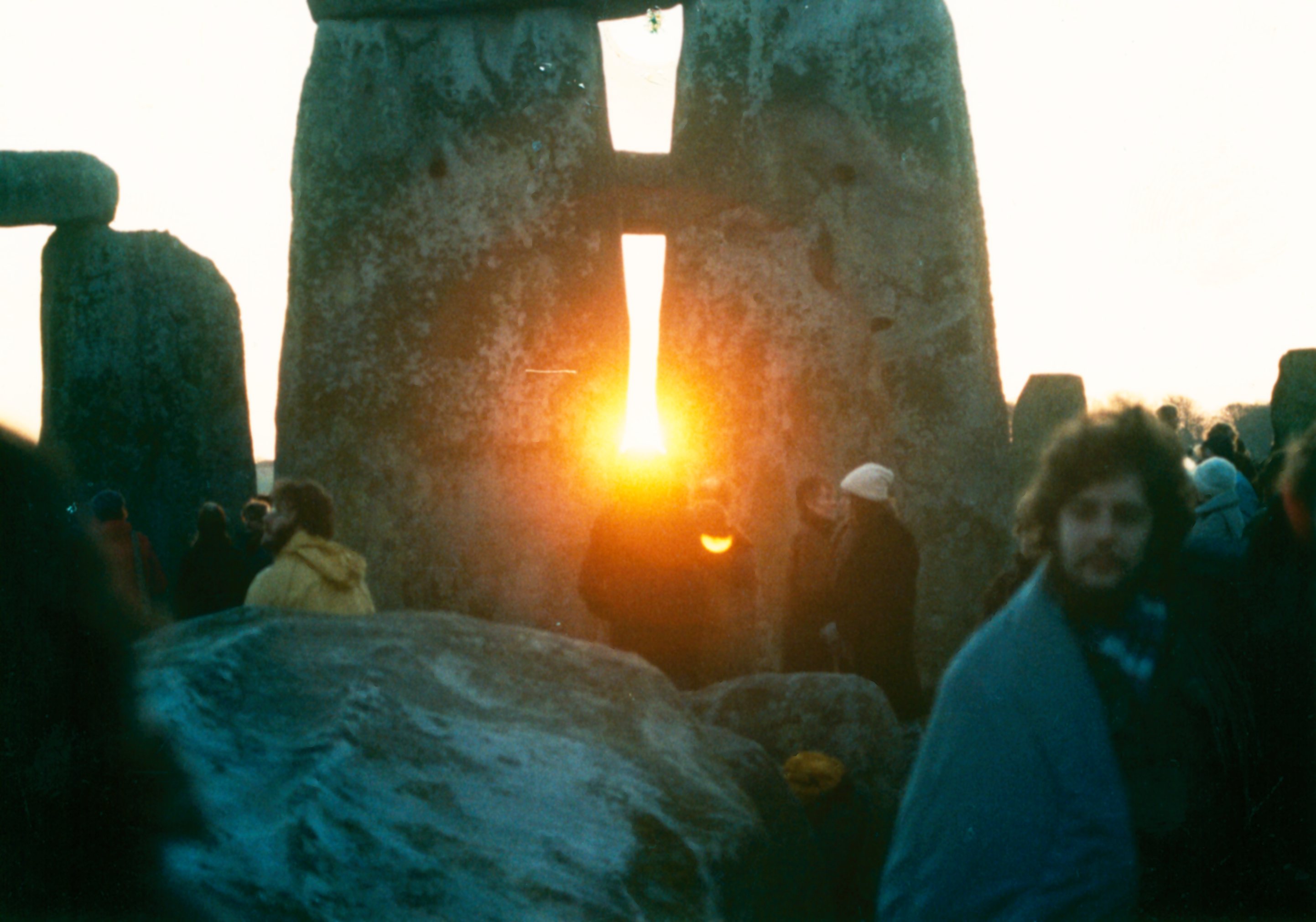
Considering the strong influence of fantasy, I could have simply made up the rites and rituals of Briallen’s mystical binding ceremony, but I wanted it to be believable and tie into the cultural superstitions of the native peoples. Both the winter and summer solstices held great importance for the indigenous tribes of Britain. The summer solstice would seem the obvious choice for a wedding—with the feting of the sun during its longest day on earth, festivals hailing the abundance of nature’s bounty, and the fine weather permitting long revels, even after the object of celebration slips below the horizon—but the winter solstice has equally compelling reasons for hosting a wedding.

Although the winter solstice is the shortest day of the year, thus the darkest, it also marks the turning of the sun and the beginning of the days getting longer. It presages the coming of spring and the promise of rebirth and potential growth, appropriate themes for the union of bride and groom. Also, in my eyes there is something exceedingly romantic about cold weather and a snow covered landscape. It begs for its own showcase with images of a ceremony attended by family and friends in plush furs and rich cloaks, their breath hanging in delicate clouds on the frigid air, candles producing mystical circles of haloed light in the haze, and all of this followed by a wedding night snuggled under an animal skin in front of a blazing fire. For dramatic effect, I chose the winter.

The vows themselves were a bit easier. The concepts behind them are timeless and enduring, so I just thought about what lovers have been saying to each other through the ages. The fantasy element, along with the fact that organized religious ceremonies would not have been readily available in the setting, gave me a bit of license. When the vows were written, though, I did have them professionally translated into Welsh to lend some realism.

“I love you with my entire being. I bind myself to you of my own free will that we may face our future—whatever it may bring—as one mind, one heart, one spirit. I will love you forever. As I say, so shall it be.”

“Rydw i’n dy garu gyda’m holl hanfod. Fe’th glymaf fy hun atat o’m hewyllus rhydd, fel y medrwn gwynebu’n dyfodol—beth bynnag a ddyfod—fel un meddwl, un calon, un ysbryd. Fe’th garaf am byth. Fel hyn y ddyweda i, fel hyn y bu hi.”

Details, like clothing, had to be realistically portrayed to give the scene authenticity. In the 14th century, few people in Britain had access to fine exotic fabrics like silks and satins. In Wales, which was a land largely considered untamed and its nobility less sophisticated than in England proper, even the landed gentry would not have possessed such garments, nor even have call to wear them in the unpredictable and extreme winters of the wild Welsh countryside. The main character of my story, Briallen, is from the rugged foothills below the Bannau Brycheiniog mountain range in Wales. Not a whole lot of international commerce going on there—mostly just sheep farmers—so her gown logically would have been made of wool dyed with plant material from the woodland surrounding their home. This was one concession to realism that I did make.

But I could not help topping it off with a more elaborate garment to signify her revered position within the community. I gave the bride a cloak of red and gold brocade lined with white feathers. Although materials like silks and satins may have been impractical and scarce, a thicker woven fabric like brocade would have been more suitable to the climate and more accessible. Again, not every working man of the era, indeed no common sheep farmer, would have the means to purchase a fine red and gold brocade, but a sought-after healer with rich patrons must have received many such trinkets in payment for her services.

In borrowing heavily from tradition, peppering in a few embellishments of my own, and dropping the whole of it into a documented historical setting, I hope I’ve been able to achieve my goal of creating a believable historical wedding and accompanying mythology with its own prophecy, fulfillment, and ensuing legacy, that should render a compelling trilogy when finished.


Ginger Myrick was born and raised in Southern California. She is a self-described wife, mother, animal lover, and avid reader. Along with the promotion for BUT FOR THE GRACE OF GOD, WORK OF ART, THE WELSH HEALEREL REY, and INSATIABLE: A MACABRE HISTORY OF FRANCEshe is currently working on novel #6. A Christian who writes meticulously researched historical fiction with a ‘clean’ love story at the core, she hopes to show the reading community that a romance need not include graphic details to convey deep love and passion. 

17 June 2015

Weddings in History: Ritual and Financial Exchange in Tenth-Century Christian Spain

By Jessica Knauss 


Image by Gerard Belfast (Flickr)
Chaucer's Wife of Bath speaks of having husbands "at church door." She couldn't have even considered the interior of a church as a venue for her five weddings, not because the husbands' families weren't religious, but because marriage was not yet a formal sacrament of the Catholic Church.

Because I'd read the Canterbury Tales long before, when it came time for me to write about the tenth-century wedding where things start to go wrong in Seven Noble Knights, I knew what the ceremony wouldn't look like... but, like Judith Starkston, I knew I couldn't just skim over what could be some dramatic, tension-filled, character-building moments. The Fourth Lateran Council of 1215 required a priest to bless the union and the publication of banns, but my novel takes place more than 200 years before that.

In Seven Noble Knights, the wedding (and especially the bride) is observed by the bride's new nephew-in-law, a fifteen-year-old who may not understand everything he sees, but is a keen observer. So I delved into what little we know about early marriage ceremonies.


Statue of Isidore of Seville outside the Biblioteca Nacional, Madrid
No wedding could take place without a betrothal. Isidore of Seville (560–636), the most influential and prolific Latin writer after Augustine (and more or less a "local boy" for Seven Noble Knights) described many features of a betrothal: The woman is escorted by married women to the wedding site; the couple joins hands, which are bound with a cord; an officiant spreads a veil over the couple, untying the woman's hair; the couple receives crowns or garlands; the bride and groom exchange rings in an Iberian display of equality; and the bride is escorted to her new home. Isidore also recommended that the engagement ring be worn on the fourth finger because a vein led directly from it to the heart. Isidore doesn't mention it, but most other sources report a kiss or some other physical sign of commitment.

The betrothal in Seven Noble Knights is off-the-cuff because the bride and groom are just meeting for the first time. Although the groom's sister is prepared with a cord for the handfasting, the groom is too astounded with the bride's beauty to seal the promise with a kiss. I reserved the other rituals for the wedding itself because there is so little written about these ceremonies, which seem to have held less legal importance than the first promises of the betrothal.


A magic circle preserved in stone outside the cathedral door in Arcos de la Frontera.
The presence of the clergy at a wedding in 974 might have seemed unusual. A priest might bless the couple and spread incense smoke over the bridal bed, because the emphasis is still on the consummation of the union. I included these elements in my tenth-century wedding, but the lack of Church presence also left space for rituals of pre-Christian origin.

Because the Visigoths, who took over the peninsula at the fall of Rome, were so Romanized, Spain lacks a lot of the pagan/Catholic syncretism that defines other European versions of Christianity. That must be why I was so impressed with a magic circle I saw outside the cathedral door in Arcos de la Frontera. It was said to be used for the ritual cleansing of infants before baptism. In Seven Noble Knights, the married women escort the bride into a magic circle the groom's sister has just drawn and decorated with pungent herbs.

I knew my readers wouldn't believe a wedding without some kind of set vow, but it shouldn't include any mention of God or eternity for this secular ceremony. The earliest vow I found came from the twelfth-century jurist, Gratian. His preoccupation with weddings is restricted to the explicit willingness of both bride and groom, and his words work well: "I receive you as mine, so that you become my wife and I your husband." It emphasizes the equality of the participants, but also that this is an economic exchange above all.

Continuing with the economic theme, in my version of a tenth-century wedding, the bride and groom discuss dowry and bride price and the Count of Castile orally confirms which lands the couple will govern together after they've said the vows. They also pass coins back and forth to each other in a reflection of a ritual still seen in Spanish weddings today.

The lack of knowledge about weddings in the early Middle Ages, at first frustrating, ended up giving me an exceptional opportunity to link the present and past creatively with new meanings appropriate to the story.

Jessica Knauss earned her PhD in Medieval Spanish with a dissertation on the portrayal of Alfonso X’s laws in the Cantigas de Santa Maria, which has been published as the five-star-rated Law and Order in Medieval Spain. Look for her book of short stories based on the Cantigas, coming 2021. A driven fiction writer, Jessica Knauss has edited many fine historical novels and is a bilingual freelance editor. Her historical novel, Seven Noble Knights, will be published in December 2020 by Encircle Publishing. Find out more about it here, and her other writing and bookish activities here. Follow her on Facebook and Twitter, too!

08 June 2015

Weddings in History: Briseis Weds Mynes - Reconstructing Trojan Wedding Rituals


My novel, Hand of Fire, set within the Trojan War has a key wedding early on. It isn’t going to be a happy wedding—the reader has plenty of foreboding about it. But for me as a writer, it had to be a correct wedding. That is, it needed to follow accurately the rites that would have occurred in such a Late Bronze Age (1250 BCE) wedding in Troy or any of the satellite, semi-independent kingdoms of the Hittite Empire.

For all things Hittite we have thousands of clay tablets describing religious and political procedures. But do you think that those piles of clay happened to record a wedding? Nope. Not that I could find. The closest Hittite information is on a vase in the Çorum Museum, Turkey depicting several religious celebrations including a wedding.
Hittite Vase in Çorum, Turkey
I've used photos of this vase to illustrate this post. But the vase isn't terribly informative.

So what is a historical novelist who cares about historical accuracy supposed to do? Go comparative. I scoured the surrounding cultures (also literate, helpfully enough) and I picked up the constants, the things that repeat across these cultures. You may find it interesting to note any similarities to the weddings you’ve witnessed. Some things don’t change much.

I designed as legitimate a ceremony as I could and wrote it down. And then I cut almost all of it. Much later, of course, but still, all that research and thought on the chopping block. The wedding stayed but most of the details needed to go. The story must leap along, not get overloaded with unnecessary stuff, and I had weighed mine down. The historian gave way to the novelist. All that knowledge still echoes behind the details I did include and makes for a much stronger scene. But when Lisa Yarde, the trusty leader of the Unusual Historicals blog group, asked for a post about “Weddings in History,” I opened up an ancient version of my novel and thought. Hmm. Here’s a post where I can include what my informed guess about what a Hittite/Trojan (or most Near Eastern cultures of the Late Bronze Age) wedding looked like. That’s fun to read for the historically enthusiastic.

So here is my reconstruction as I wrote it originally (well, this time I cut a lot of the emotional stuff because I was going for the wedding details in this post—reverse novelist, maybe). If you’ve read Hand of Fire, you’ll notice characters who are no longer in the book and other wisely edited-out strands. But you’ll also find all the rich details of the ceremony itself. In my novel, I kept the elaborate bathing and dressing ritual, so if you want to know about how the lovely, sexy bride was attired and prepared, you can find that part in the printed pages. For the ceremony itself, here it is, the wedding of Briseis to Mynes:

Ana and Eurome lead Briseis into the courtyard. Ana made a few minute adjustments to her drapery, and then on either side, Eurome and Ana pulled open the double doors so that Briseis was revealed in one dramatic moment. There was an appreciative intake of breath as the large assembly caught sight of her. She stepped into the megaron hall, and her father came forward to walk her to her groom.
She caught sight of Mynes: his eyes were locked on her. She felt her father’s hand on her lower back as he guided her toward the family shrine. 
When they were a few steps from Mynes, Glaukos stopped and said, “I give my daughter, Briseis, to be led into marriage by Mynes, son of Euenos. I grant her the goods and lands as agreed for her dowry. This tablet, a catalogue of all that I send with her and marked with my seal, will go with her as proof of her dowry.” Bienor placed the tablet onto the offering table that had been set up next to the wooden shrine. 
Glaukos stepped back. Mynes moved forward so that he and Briseis faced each other. He gazed up and down her veiled form. 
Priests making offerings on wicker offering table
There were many prayers to the gods—two priests and one priestess laid breads and grains on the offering table and poured libations while asking for the blessings of the gods and goddesses—but Briseis was only partially aware of this long process. For the first time she could look closely at the man marrying her and study him without shame. 
The offerings and prayers were done. They had reached the final part of the ceremony. One of the priests nodded to them. They came closer together. The priest drew a circle around them on the floor with barley meal. Mynes reached for her right hand and breathed in sharply as his hand touched hers. His hold tightened. Her long fingers suddenly seemed small inside his powerful hand. He spoke the traditional words that sealed their marriage. “You will be my wife.  I shall be your husband.”
Hatepa handed Mynes a small silver bowl filled with cedar oil, and he let go of Briseis’ hand to receive it. Briseis turned towards Ana so that she could fold the veil back into a frame around Briseis’ face and then pin it into place with two golden pins, their tops shaped like bees. When Ana stepped back, Mynes looked directly at Briseis’ face. For a moment he seemed to waver as though wind had struck him full in the face. Then, as required by the ceremony, he dipped three fingers into the oil and anointed her forehead. The fragrance of freshly cut cedar filled the air. His fingers lingered on her skin and his eyes met hers—consuming her as a starving man devours food.
Briseis did not hear the final blessings spoken by the head priest. She did not know for how long she was locked into Mynes’ gaze, but when he dropped his eyes, the musicians were accompanying the singers in a hymn to Kamrusepa, praising her for bringing fertility to women. She was grateful when her father led the two families to the seats of honor near the hearth, and she was able to conceal her discomposure by attending to her dress as they moved through the crowded room. 
Mynes sat in the chair next to her.  In a state of confusion, Briseis watched Ana and the servants settle the guests into seats around the megaron hall and flowing out into the courtyard. The big double doors had been thrown open to make the guests outside feel part of the celebration. Immediately trays of food came out and wine was poured for everyone. This was her home—or had been until today—but she felt as if she were observing a completely strange place and people. 
The feast went on. Mynes occasionally put his hand over hers when she rested it on the arm of her chair. She dared to look at him and smile when he did.  Gradually she overcame the blushing that followed each glance. She tried to imagine being in a room alone with him, but that made her too nervous, so she let her mind go still.  Many people came to greet them and wish them well. She smiled and bowed her head modestly in thanks. 
When the food was cleared away, the musicians started to play again and the dancers beat out rhythms with their feet and hands, their swaying bodies drawing lines through the air as they moved together in sacred circles. The movements were prayers of thanksgiving for this new union; the dancers raised their hands to the heavens and pulled the gods’ blessings down towards the couple so that they would have many children. Then they began to spin ever faster, drawing down the gods’ goodwill.
Acrobats in religious procession
Next the acrobats performed, drawing cries of delight from the crowd with their antics. Their movements were occasionally suggestive of the coming nuptial night, and the guests responded with laughter and jokes. They directed much of their ribbing at Mynes, and, as was expected of him, he laughed and turned aside the jesting by pretending to be completely unaware of its intended meaning. Briseis was grateful when her father announced that it was time to accompany the bride to her new home.
Ana arranged her veil back over her face for the procession to the palace. Her father and brothers guided the bride and groom out of the house behind the musicians and dancers. Guests formed a loose tail behind them, often singing joking songs and throwing figs and almonds towards the newly joined couple to bring them sweetness and fertility.

_________________________________________________________

Judith Starkston writes historical fiction and mysteries set in Troy and the Hittite Empire. She is a classicist (B.A. University of California, Santa Cruz, M.A. Cornell University) who taught high school English, Latin and humanities. She and her husband have two grown children and live in Arizona with their golden retriever Socrates. Her debut novel is Hand of Fire.
Find an excerpt, book reviews, historical background, as well as on-going information about the historical fiction community on www.JudithStarkston.com
Follow Judith Starkston on FB and Twitter   


Visit on Goodreads Hand of Fire or Amazon 

03 June 2015

Weddings in History: The bride price in medieval Muslim weddings

By Lisa J. Yarde


When medieval Muslim brides married, by custom they were supposed to receive a bride price or in the Arabic term, their sadaq. When I was first studying marital customs in order to write the Sultana series, the terms bride price and dowry occurred interchangeably, with the Koran saying, "Give to women their dowers willingly." In Sultana and Sultana's Legacy, the heroine Fatima and later, her eldest daughter Leila, received generous dowries from their fathers, respectively the second Sultan of Granada and the governor of Malaga. At the time of their weddings, both characters also gained their bride prices, although Fatima was quite young.

Was there a difference between a dowry and bride price? In the Islamic world, a difference existed; by contrast, consider ancient Rome, medieval and Christian Europe, and India, a dowry was property the bride brought to the marriage, which the groom took into his possession or could use. For the medieval brides of Muslim Spain and northern Africa, their parents typically provided a dowry, which remained with the bride. Newly married women also had the benefit of the bride price; a sum of money, specified by marital contract, received from the groom, and held by the bride as her personal property throughout the marriage. A wife received it in installments, the first at the date of the marriage and the second, later in the union, often triggered by the husband's death. The bride price also took different forms, material goods or lands, but also cash.    

How did the bride price ensure a woman's future and why was it so important? The bride price practice existed before Islam dominated Arabia. Later when the religion's adherents conquered North Africa and Spain, they brought their customs into new lands. The bride price was such an integral part of society in the period that legal scholars provided instructions for its inclusion in marital contracts and its acquisition. Ultimately, the gift of the bride price ensured that if the wife lost her spouse in widowhood or through divorce, the marital gift offered some means of support. Islamic law stated that the groom could not forgo the bride price; it was a "necessary condition for marriage and forgiving it voluntarily" was against the law. Moorish parents and guardians did not have to provide a dowry for a daughter or female ward. When future brides received dowries, the notaries who recorded the marital contracts did not always indicate the contribution. However, the officials always specified the value of the required bride price received from the groom according to the marital contract when they registered the marriage. In Sultana: The Bride Price, the heroine Jazirah didn't have a dowry, based on the unique circumstances of her father who had spent time in the family prison for treason. After the wedding, she took control of the first portion of her bride price, given by her husband the Sultan in the form of a bridal trousseau, textiles and jewelry, which were family heirlooms.

Who collected and could rightfully use the husband's present? The groom's future wife was the only person who could legally benefit from the gift of the bride price, although there were cases adjudicated in Islamic courts of brides filing suit against their fathers because the new wife never received her bride price at her home with her husband. The possibility of abuse of assets by parents and guardians always existed since brides were often young. They could marry at the age of ten, even if a girl had not reached puberty, as in the case of my heroine Fatima. Also, courts in patriarchal Moorish society gave fathers the benefit of the doubt if they believed their daughters lacked the maturity to successfully manage the bride price. Assuming she took possession, the bride price offered a wife a measure of economic stability. Lastly, the prospective wife's religion affected the offer. A Muslim man who married a non-Muslim woman, as in the case of some of the wives of Granada's Sultans, had no compulsion to provide a bride price for his new wife. However, the romantic in me did include a scene in Sultana: Two Sisters, where the heroine Butayna received a marital gift from her future husband the Sultan, although she remained a Christian after their union.    

How much wealth might a Moorish bride price encompass? In 1352, when Anuk, son of the Egyptian Sultan Al-Nasir married, he promised his bride 12,000 gold coins of which his new wife received 10,000 at the time of the marriage. A century later in 1452, the grand-daughter of the Granadan Sultan's vizier, Fatima, married her much older spouse Abu Yazid Khalid, whose families were jurists. She received 110 gold coins, a prized silk and linen garment, and a slave from her husband; the latter sum may seem paltry by modern standards, but in her day, Fatima was a wealthy woman. Clearly, the bride price varied according to the groom's socioeconomic status, but even the poorest groom had to provide it for the benefit of his future bride. 

Images are mine or authorized from Fotalia.com.

Sources include Maya Shatzmiller's Her Day in Court: Women's Property Rights in Fifteenth-Century Granada, Yossef Rapoport's Marriage, Money and Divorce in Medieval Islamic Society and Shirley Guthrie's Arab Women in The Middle Ages

Lisa J. Yarde writes fiction inspired by the Middle Ages in Europe. She is the author of two historical novels set in medieval England and Normandy, The Burning Candle, based on the life of one of the first countesses of Leicester and Surrey, Isabel de Vermandois, and On Falcon's Wings, chronicling the star-crossed romance between Norman and Saxon lovers before the Battle of Hastings. Lisa has also written five novels in a six-part series set in Moorish Spain, Sultana, Sultana’s Legacy, Sultana: Two Sisters, Sultana: The Bride Price and Sultana: The Pomegranate Tree, where rivalries and ambitions threaten the fragile bonds between members of a powerful family. Her short story, The Legend Rises, which chronicles the Welsh princess Gwenllian of Gwynedd’s valiant fight against English invaders, is also available.