Showing posts with label Anglo-Saxons. Show all posts

10 February 2014

Tales of Love: King Edgar the Peaceable and Queen Elfrida


By Michelle Styles

One tends to assume the politics of Royal marriage is not very interesting during the Anglo Saxon period. After all the queens are slightly shadowy figures. However, if you start digging, Anglo Saxon royal marriage is a lot more scandalous and a lot more like Game of Thrones.

King Edgar the Peaceable and Queen Elfrida (or Aelfthyrth) is a great love story which deserves to be more widely known. Or rather it is interesting and full of scandal and gossip. But it goes to show that people behaving badly and strong women who mould events to suit them have existed for a long time.
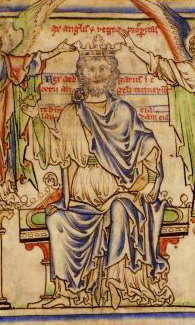
King Edgar (source Wikipedia)

King Edgar was married at least twice before Elfrida (it depends on the source). When he tired of his wife, he tended to have her retire to a nunnery, leaving him to free to marry again. His first wife Ethelflaed the Fair was a Anglo Saxon noblewoman who was put aside so that he could marry the very political Wulfthryth who was royally descended and very devout. They had two children  -- both of whom became saints –Edward the Martyr and St Edith of Wilton.

Elfrida was a beautiful  and clever daughter of a minor nobleman. Edgar sent his best friend Aethelwald to see if she was as truly beautiful as they said. Aethelwald struck by her beauty reported back – no she wasn’t -- and then duly married her. She was supposedly playing chess with her father and beating him handily when they first met. She apparently learnt to play chess from the Vikings.

Once Edgar learnt of the trick, he decided to visit to see the woman for himself. Aethelwald implored his wife to make herself ugly but she did just the opposite. For the king, it was love at first sight. They may have begun an affair there and then but the sources grow hazy.

Aethelwald is supposed to have died in a hunting accident. Post conquest sources claim the accident was arranged by Edgar (or perhaps Elfrida who was ambitious after all?) The spot is supposedly commemorated by the Dead Man’s Plack in Harewood Forest, Hampshire.  After Aethelwald’sdeath, Wulfthryth is forcibly retired to a nunnery and becomes an abbess, leaving Elfrida and Edgar free to marry. However, all was not smooth sailing as the archbishop of Canterbury, Dunstan burst in their bedroom and accused the pair of adultery. The king and his queen weathered the storm.

Edgar was so besotted with his wife that he had crowned queen of England. Neither of his other two wives enjoyed the status of queen. In his second coronation in 973, Edgar had Elfrida jointly crowned. It is this coronation, presided over by Dunstan that forms the basis of the present day coronation.  Shortly afterward, at Chester, the other six kings of Britain, including the king of Scots and the king of Strathclyde paid homage to Edgar and his queen.

There was a huge emphasis on Elfrida’s role as protector of religion. She also served an important function in the legal system, serving as  forespeca or advocate in at least seven cases.

When Edgar died in 973, he left two sons. Edward by Wulfthryth and Aethelred by Elfrida. It is said that Elfrida arranged for Edward’s murder.  When visiting Elfrida at Corfe Castle, her servants set upon him and killed him.  This cleared her path to act as regent for Aethelred the Unready. She did so until he came of age in 984 at which point she retired (was retired?) and concentrated on bringing up the next generation. Her grandson Aethelstan Aetheling mentions her in his will as the woman who brought him up. Atheling is the Anglo Saxon term for someone who might be heir to the throne as the succession was never straight forward and there might be multiple claimants.

If you are interested in reading more about Elfrida, Elizabeth Norton recently published a biography entitled Elfrida and it is well worth a read. The first crowned queen of England deserves to be better known, particularly as she was such a strong and interesting woman!

Michelle Styles writes warm, witty and intimate historical romance in a wide range of time periods including Viking. Her next book The Return of the Viking Warrior will be published in May 2014 by Harlequin. You can learn more about Michelle’s  books on www.michellestyles.co.uk

20 October 2013

Guest Blog: Octavia Randolph

This week, we're pleased to welcome author Octavia Randolph whose novel, THE CIRCLE OF CERIDWEN, is set in 9th century England during the Viking incursions of the Anglo-Saxon countryside. The author will offer a free copy of The Circle of Ceridwen to a lucky blog visitor; please leave your email address in the comments as winners are contacted privately. Here's the blurb:

Saxon against Viking.  Christian against heathen. The clash of sword and spear in war-torn 9th century England.  A courageous young women risking all to live - and love.  Enter the Circle of Ceridwen...

The year 871.  Of seven Anglo-Saxon kingdoms, five have fallen to the invading Vikings.  Across this war-torn landscape travels fifteen-year-old Ceridwen, now thrust into the lives of the conquerors. Her divided loyalties spur her to summon all her courage - a courage that will be sorely tested as she defies both Saxon and Dane and undertakes an extraordinary adventure to save a man she has never met.

Book One in The Circle of Ceridwen Trilogy


**Q&A with Octavia Randolph**

Why did you choose 9th century England as a setting?

It was absolutely one of the most exciting and perilous times in all of English history, the very making of what England would become.  Danish raiders – who later became known as Vikings – had been landing sporadically for years, taking weapons, silver, and of course, slaves.  But then they’d sail home again.  But by the late 9th century, Denmark was becoming seriously overcrowded, and the raiders had a new focus – emigration.  This led to large, well-organized armies landing, and intending to stay. England was composed of seven Anglo-Saxon kingdoms at the time, and one by one these fell to the Danes. The year The Circle of Ceridwen is set, 871, five of the seven kingdoms had already succumbed, with Mercia dangerously weak.  Soon only Wessex remained, saved by the brilliance of its young king Ælfred.

But the novel is told in 1st person by a 15 year old girl –

Exactly.  I wanted to tell the story of invasion and survival through the eyes of a young woman. It is a tale about warriors, but most of the people affected by their actions were not warriors.  As is always the way with war.

So tell us about this girl, and why you chose her as your narrator.

Ceridwen is really representative of her times on many levels. She is in the middle of tremendous conflicts. Firstly, she’s half Saxon and half Welsh, two groups traditionally at odds with each other. Early in the book she travels from her priory home to a distant fortress now controlled by the Danes, who are very much the enemy.  Then to add to her conflicts, as she settles into her new home she feels the tug of her earliest beliefs. Even though she had been baptized, she was raised heathen by her uncle, in the Old Religion of Wodin/Odin, Thor, Freyja, and all the other Gods common to both the early Saxons and the Vikings. So she finds some uneasy common ground there, as well.

Sounds like she needs to grow up quickly…

And she does. The Circle of Ceridwen covers six months in Ceridwen’s life, but with, of course, tremendous changes to her experience and world view.  The entire Trilogy spans ten years in her life, but now that I’m working on Book Four that is expanding as well. It’s been a wonderful adventure for me and I’m grateful to my readers for bringing me this far!

The Circle of Ceridwen Book Trailer


Learn more about Octavia Randolph


Buy the book at amazon.com and amazon.co.uk:


17 October 2013

Excerpt Thursday: The Circle of Ceridwen by Octavia Randolph

This week, we're pleased to welcome author Octavia Randolph whose novel, THE CIRCLE OF CERIDWEN, is set in 9th century England during the Viking incursions of the Anglo-Saxon countryside. Join us on Sunday, when the author will offer a free copy of The Circle of Ceridwen to a lucky blog visitor. Here's the blurb:

Saxon against Viking.  Christian against heathen. The clash of sword and spear in war-torn 9th century England.  A courageous young women risking all to live - and love.  Enter the Circle of Ceridwen...

The year 871.  Of seven Anglo-Saxon kingdoms, five have fallen to the invading Vikings.  Across this war-torn landscape travels fifteen-year-old Ceridwen, now thrust into the lives of the conquerors. Her divided loyalties spur her to summon all her courage - a courage that will be sorely tested as she defies both Saxon and Dane and undertakes an extraordinary adventure to save a man she has never met.

Book One in The Circle of Ceridwen Trilogy


**An Excerpt from The Circle of Ceridwen**

In this excerpt from Chapter Nine, Ceridwen is travelling with her new friend Ælfwyn, her maid Burginde , and some thegns (warriors of Ælfwyn’s father’s)to the fortress of Four Stones, where Ælfwyn  will wed the Danish jarl, Yrling. Here they are met on the road by the band of Danes who will escort them to their new home.

At midday we stopped by the first of many small lakes, and after we had rested, the thegns went to the second waggon and opened it.  They brought out three helmets, of iron covered over with bright brass so that they glinted; and these they put on, and mounted their horses, and we went off.  This was the first time I had seen them wear their helmets, and as I watched the lead thegn with his spear across his saddle and his sword sheath uncovered by his cloak, I knew that they thought at any time to be met by the Danes we sought.

In the waggon we three began to prepare ourselves as well.  Burginde straightened up the baskets, and put away into chests stray things we had been using.  I unfolded my leathern satchel, and placed into it those things of mine which I had out, as if I was going away.  

Ælfwyn shifted from bench to bench; looked out the flap, back at the contents of the waggon, and then outside again.  Then she spoke.  "They may not come for days."

To which Burginde answered, never stopping her work, "And they may come in an hour."

Ælfwyn spoke again.  "What if they come by dark, when we are asleep?"

"They will not spring upon us," replied Burginde.  "They value their lives."

There was little else we could do to prepare, but speaking of the coming meeting and doing the slight tasks we could was enough.  We sat together in the waggon, looking out at the thegn before us, watching his watchfulness.

That afternoon the land began to rise again, and the Cæsar's Road began to show more ruts.  Then the land went down, and there was marsh of rushes and willow and hazel.  And the wind now came from the North, and tho' the Sun was still bright, it grew cold, and we closed the flap up against the damp wind.

At one point we heard the splash of water as the oxen plodded through it, and Burginde pulled open the flap and we saw the road was nearly fallen away into the marsh.  She closed the flap and grumbled, and wondered aloud where we would find dry land to make our camp, for it was drawing on to dusk.  We piled more charcoals into the brazier, and Ælfwyn and I put on our mantles against the cold.

We sat together in silence on one of the benches, warming our hands at the brazier's glow.  Then the waggon stopped again, but instead of hearing Osred coaxing the oxen, we heard no voices.  Burginde moved to open the flap, but Ælfwyn stopped her with an upraised hand.  We sat, listening with intent, and heard at first nothing but the dripping of marsh water off the bottom of the waggon, and the flapping of the oxen's ears as they shook their heads.

Then we heard the voice of the chief thegn, loud and calm.  "Come forward, and show yourselves."

Burginde moved once more to the flap, but again Ælfwyn stopped her, and held a finger to her lips, bidding her be quiet.  I feared the pounding in my heart must surely be heard by all outside, and felt my eyes starting in my head.

We heard then some movement of horses and jingling of bridles that told us more horsemen stood before us in the road.

The thegn spoke again.  "Toki, you have found what you search for.  This is the tribute of Ælfsige to Yrling."

Again we heard the movement of horses, as if they turned before us on the sodden road, but heard no other man.

The thegn spoke again, impatience growing in his words.  "I know it is you, Toki, by your helmet; for I regarded it well when I saw you with Yrling."  The thegn paused, and then went on.  "Perchance I am wrong.  Perchance the great Toki has after all fallen in some squabble amongst his brethren and his better now wears his helmet."

At last we heard an answer, in a broad, flat voice with a strange flute-like tone, but in the tongue of our people: "Toki's better does not live."  And these words were full of contempt.

Toki spoke again.  "You will yield up your swords and spears until you reach Four Stones and are ready to leave again."

Now the thegn's voice was full of wrath.  "We will yield our weapons to no one.  Will you, Toki, break so soon the Peace that your jarl has made?"

There was more speech amongst the Danes, and movement of horses, and jingling of bridle bits.

Finally Toki spoke again to the thegn.  "We will proceed then to Four Stones," he began, and his voice was free of anger and almost light.  "First we will look in these waggons to be sure that the tribute you bear is not that of more Saxon thegns."

Then we in the waggon knew we would have to show ourselves to these men, and the thought made my throat dry, tho' the thegns of Ælfsige be around us.

We heard a horse move nearer, and Toki's voice call out, "Let us see first what is in this waggon."

And at these words - I think for fear that he would open the tarpaulin flap himself and look in - Burginde grasped the flap ends and thrust out her face to the horseman.

"Ah!" came Toki's voice.  "The bride of Yrling."  Then he spoke to the Danes, and there was much laughter amongst them.

Burginde was sputtering in anger, but she still held the flap closed tight about her face so we could not see out, or they, in.

Toki spoke again.  "Perhaps not.  Perhaps this waggon carries another Lady."

As one gesture Ælfwyn and I pulled our hoods up over our heads, as if they could in some slight way shelter us from the gaze of this man that was waiting outside.

We heard the thegn's voice.  "Lady, show yourself so we may cut short this sport and be on our way."

Ælfwyn drew a breath and clasped my hand, but said in a firm voice, "Burginde, open the flap."

Burginde drew back her face, then stood and pulled open the flap as far as it would allow.  The day was fading fast, and the horsemen before us were silhouetted against the failing light.  There were four Danes, the one closest mounted on a large grey horse of great worth.  He wore a ring tunic such as the thegns wore, but across his chest was a baldric and sheath of magnificence, for the belt itself was worked all over in bronze bosses, and the sword hilt gleamed with gold.  On his head he wore a helmet of iron, covered over with thin copper or gold foil, polished very bright, so that in the setting Sun it fairly flamed.

He looked down at us, and then pulled off his helmet and held it under his arm, and his long yellow hair fell down in two braids upon his shoulders.  We saw that he was young, and had a face that bore no scar; and I thought him very handsome, but very cold; for his eyes were bright with greed, and his lip twisted in a smile that was filled with scorn.

His gaze moved from Ælfwyn to me, and back again, and though she cast down her eyes at his glare, I felt anger, and would be as brazen as he, and kept my eyes fixed upon him, look tho' he might.

He spoke at last.  "You Saxons are generous.  You bring two brides to Yrling, of equal beauty." 

The Circle of Ceridwen Book Trailer


Learn more about Octavia Randolph


Buy the book at amazon.com and amazon.co.uk:


10 September 2012

Feasts: The Mead-Hall of Anglo-Saxon Tradition

By Lisa J. Yarde

In the Anglo-Saxon epic poem, Beowulf, King Hrothgar's warriors enjoyed feasts and drowned their sorrows and fears in the finest mead served at Heorot, the king's mead-hall. The mead-hall originated in Europe as a gathering place for the community, where the rulers lived and administered daily functions, and their warriors served as faithful retainers. With the fifth century invasions of Angles from the Jutland peninsula and the Saxons from Germany, tribes brought the traditions of the mead-hall to England.In the early Anglo-Saxon period before Christianity gained influence, a  ruler summoned his household for a ritual gathering, where the men drank, made boasts or binding oaths in the service of their lord and received gifts of land from him. As in subsequent centuries, alcohol flowed freely at these gatherings. Guests consumed mead, fermented from a mix of honey and water flavored with herbs, and beer, cider and malted ale all day or over a period of three days. A general understanding assumed that alcohol could cause guests to become boastful, but even drunken oaths were upheld and the safety of those in attendance at feasts safeguarded by the lord. 

Drinking scene on an image stone;
Source: Wiki Commons
The Anglo-Saxons constructed long mead-halls of timber with thatched roofs to accommodate hundreds of guests. Typically, there were no windows and one or two access doors at most. Wall hangings and a central hearth kept guests warm, but the hall would have likely been very smoky as a result. Meat such as pork, beef or venison could be roasted over the fire pit on a spit, fish like herring or eel on a griddle, or a stew or pottage could be boiled in a cauldron. Bread made from rye or wheat baked in a clay oven, fruits such as crab apples and plums, and vegetables like peas, beans, parsnips and cabbage might have accompanied the meal.  Guests sat according to their social on benches arranged along rows of tables that went around the hall. Bards were always on hand to entertain the guests with tales of heroism, accompanied by musicians who played the flute and harp. Remnants of the Anglo-Saxon halls have been found and attempts at reconstructing them have been made at West Stow in Suffolk and Yeavering in Northumberland. 

There were everyday gatherings but feasts to celebrate battle victories, special events, seasonal festivals and religious observances must have offered food and drink in copious quantities.Feasts were the means for rulers to forge strong ties between people in a communal setting. They demonstrated the lord's wealth, support and protection of his community, meant to bind them together in his service.
  
Lisa J. Yarde writes fiction inspired by real-life events. She is the author of historical novels set in medieval England and Normandy, The Burning Candle,based on the life of Isabel de Vermandois, and On Falcon's Wings, chronicling the star-crossed romance between Norman and Saxon lovers. Lisa has also written Sultana and Sultana’s Legacy, novels set during a turbulent period of thirteenth century Spain,where rivalries and ambitions threaten the fragile bonds between members of a powerful family. 

19 March 2012

Women Who Ruled: Æthelflæd, Lady of the Mercians


By Heather Domin

Ask someone to name some notable early British queens, and you’ll get a lot of Boudiccas, Matildas, and Eleanors. One name you probably won’t hear is Æthelflæd, who ruled the kingdom of Mercia for over a decade in the tenth century. Maybe a lot of people still don’t know about Æthelflæd; maybe they just have a hard time typing her name. (Æthelflæd? Ælfled? Ethelfleda? Oh, you madcap Anglo-Saxons.) But from what we do know of her, it’s clear that she deserves a spot on any list of great English queens.

Æthelflæd was the eldest daughter of Alfred the Great, and she proved to be a chip off the old block and then some. In her teens she was wed to Æthelred, Lord of the Mercians, to seal the alliance between Mercia and Alfred’s kingdom of Wessex. Her brother Edward inherited Alfred’s crown, but Æthelflæd claimed the Mercian throne – first as Æthelred’s queen, then in her own right as his health declined. When Æthelred died in 911, Æthelflæd succeeded him as Lady of the Mercians.

Æthelflæd was no regent or temporary throne-filler – she was the crowned ruler, a queen regnant in practice if not in title. It’s unclear exactly how many years she ruled while her husband still lived (some estimate a full decade), but after his death she reigned alone for 8 years. The Anglo-Saxon Chronicle describes her as having “rule and right lordship over the Mercians the fact that she gets a mention at all says a lot about Æthelflæd’s credibility and capability as leader in her own right.

Æthelflæd was a capable administrator – founding abbeys, building towns, and renovating Roman infrastructure – but her true claim to fame was as a fearsome military tactician. Working in partnership with her brother Edward, Æthelflæd drove back the encroaching Danes in battle after battle, victory after victory, often leading her armies onto the field herself. (One legend has her single-handedly killing a raiding party of Vikings on her way to her wedding!) When she took York in 918, its leaders swore fealty to her as their liege overlord, as did all the other cities she conquered on her own, spanning from Northumbria to Wales.

When she died sometime around 918, Æthelflæd left her crown to her daughter Ælfwynn. But Uncle Edward didn’t share the same partnership with Ælfwynn that he had with her mother – after a year or so he bumped Ælfwynn off her throne and absorbed Mercia into Wessex once and for all (incidentally creating England while he was at it, but hey). Some believe it had been Æthelflæd’s intention to unite her kingdom with her father’s after she was gone, but the fact that the merger did not occur during her lifetime speaks volumes about the strength, independence, and all around bad-assery of this formidable woman. Æthelflæd might have signed her name as Lady, but she was a great queen all the same.

(Images: painting of Æthelflæd, map of Mercia, statue of Æthelflæd outside Tamworth Castle)


Heather Domin is the author of The Soldier of Raetia, a novel of Augustan Rome and Allegiance: a Dublin Novella.

Heather's Blog

Follow Heather on Twitter


13 October 2010

Money Matters: Anglo-Saxon Wergild

By Lisa Yarde

In the sixth century, King Ethelbert of Kent established the wergild, or "man-payment", which fixed the amount of compensation a victim's family could demand for a murder. The Anglo-Saxons hoped to prevent the more common solution for punishing perpetrators of violent crimes: blood feuds between families, a vicious cycle of retribution that lasted generations. By the eighth century, wergild extended to all kinds of crimes, such as theft of property, excommunication, breach of the king's peace, rape or marrying a widow within a year of her husband's death.

The wergild helped define varying classes of society. A higher social status meant the victim's family could demand a larger payment. Everyone, except slaves, had an assigned worth that determined the value of clergymen and kings to the lowliest freemen. The varying Anglo-Saxon kingdoms established amounts of wergild. In eighth century Kent, a nobleman was worth 300 shillings, while the wergild of a freeman was 100 shillings. Kentish law defined a shilling as the worth of a cow.

In other parts of England, where the cost of one sheep set the value of a shilling, the value of a nobleman was 1200 shillings, with 200 shillings for the value a freeman. Under King Alfred the Great, acts of mutilation required specific compensation: 30 shillings for cutting off an ear, 60 for a nose, 9 for a finger and 20 for a toe. Women held the same wergild as male members of their class, and pregnant women had their own value, plus half of that for an unborn child.

If the perpetrator of a crime had been determined, a precise set of rules determined how he or she should pay the wergild. His or her family often disassociated themselves; those who provided shelter to a murderer might forfeit their lands to the king. Hostages in varying number from both sides of the perpetrator's family stayed with the victim's family as a surety.

During this time, the king's peace proscribed blood feuds. After twenty-one days, the victim's family received an initial payment (healsfang) of the wergild. Another twenty-one days later, the overlord of the victim, be it the king, a member of the clergy, or a nobleman, received some compensation (manbot), for being deprived of the victim's service through death or of rents owed, through theft. The king also received a payment (fihtwite) for the initial "breaking of his peace" during which the crime was perpetrated. The victim's family received the rest of their compensation in installments. Often, the payments went only to male members of a family.

What happened when a victim's family did not receive the wergild? In the late tenth century, the nobleman Wulfbald fought with his stepmother over property from her late husband. The widow demanded the wergild, but Wulfbald refused even when King Ethelred ordered it. His property was forfeit to the king, but he held it until his death. Wulfbald's wife and son inherited his claim. They arranged the death of a cousin, Eadmer, who supported Wulfbald's stepmother along with fifteen of Eadmer's men. Only the intervention of the archbishop of Canterbury and the threat of excommunication ended the rebellion of Wulfbald's son.

Failing wergild payments, it did not always devolve into blood feuds. In 1049, Earl Sweyn Godwinson of Hereford, the son of the powerful Earl of Wessex, had a disagreement with his cousin Earl Bjorn Estrithson of Huntingdon over some land. He arranged a meeting with Bjorn and killed him. King Edward the Confessor exiled Sweyn for the murder of his cousin. When the king declared him nithing, "a man without honor," Sweyn fled the country. His father Godwin interceded and the king allowed Sweyn's return, provided he agreed to undertake a pilgrimage to the Holy Land. He completed it, but died on the journey home. He never paid the wergild to Bjorn's family.

Lisa J. Yarde is a historical fiction author. Her ON FALCON'S WINGS, an epic medieval novel chronicling the starstruck romance between Norman and Saxon lovers, is available now.

14 December 2009

The Seasons: Celebrating with a Drink

By Lindsay Townsend

In my historical romances, I write about every season and sometimes include scenes from seasonal celebrations, such as the winter Saturnalia in ancient Rome. Then, as now, drink was an important part of such festivals, but what kinds of drink?

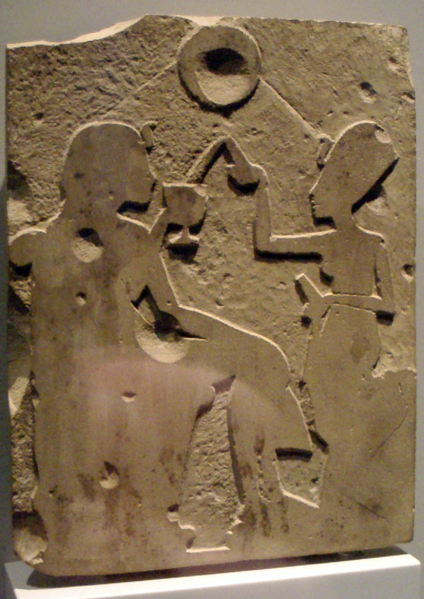
Nefertiti pours wine for AkhenatenIn ancient Egypt, people drank beer or wine. The aristocracy enjoyed sweet wine spiced with honey and the juice of pomegranates. There was red or white wine, with the wine of Buto in the Delta being considered some of the best, but wine was also imported from Syria, Palestine and Greece. The ordinary Egyptian drank beer, made from fermented barley bread and sieved first to remove the bits, and the results are familiar enough: 'Thou art like a broken steering-oar in a ship,' says a school text from the New Kingdom, '...Men run away from before thee, for thou inflictest wounds on them... Thou dost reel, and fallest on thy belly and art besmirched with dirt.'

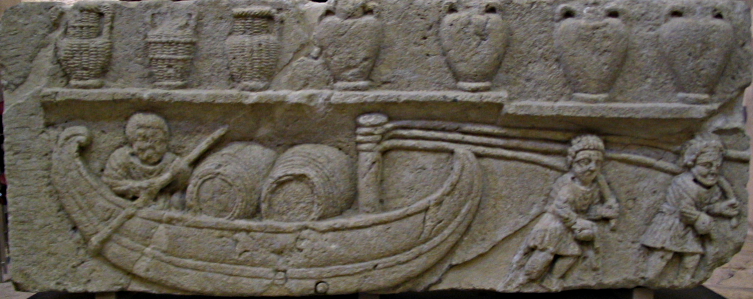
Roman wine on board ship through GaulAncient Romans had a range of beverages to choose from during their mid-winter celebration of the Saturnalia (December 17th to 23rd). Romans like L. Lucullus, rich beyond belief after military campaigns in the East, had wine tables at their feasts, huge amphorae containing the wine, long spoons to scoop it out and sieves to strain the lees. Herbs could be added to Roman wine, for colour and flavour, and it was usually diluted with water==boiling water in winter, so the wine could be served warm.

There were libations to the gods poured with wine and games played with wine. The Romans enjoyed sweet and dry wines, white, yellow, red and black wines. The black was mature Falernian, which began as a sweet white from grapes picked late, after frost, and darkened as it matured, deepening in flavour over the years (and increasing in price--showy gourmets like Lucullus certainly made a point of serving it).

Willam the Conqueror feasts in England ahead of the Battle of Hastings (from the Bayeux Tapestry)A drink common to ancient Roman and northern European lands was mead, made of honey and water. Mead was the drink of choice at Anglo-Saxon feasts. Because drinking water was so often impure in the ancient world, ale was the 'everyday' drink, but mead was for feasting. There were mead halls and, in the halls, mead benches, where men sat drinking side by side. Drinking horns and glasses were richly ornamented and highly prized. Anglo-Saxon wine, some grown from grapes that could flourish in the south of England, was light, quickly consumed and not very strong.

Ale, drunk by all ages, was a sweetish, thick drink, again not very alcoholic. Mead was the intoxicating draft, subject of riddles and poetry and drunk prodigiously in seasonal feasts. A later recipe from the fourteenth century describes 'fine mead,' with the honey pressed from the combs and added to water left after boiling the empty combs (as for ordinary mead), then flavoured with pepper, cloves and apples and left to stand.

Happy Holidays!

(All pictures from Wikimedia Commons).

07 January 2009

Professions: The Anglo-Saxon Warrior

By Sandra Schwab

When the Anglo-Saxons first came to England, they settled in small groups. The cynn ("the kin" or "the tribe") consisted of the cyning (the lord and guardian of the cynn--I think you can guess what eventually became of this Old English word!) and his followers, and it was held together by mutual loyalty. The Anglo-Saxon warrior fought for his lord and got his reward in treasure, land, slaves or cattle. Because of this, the cyning is often referred to as "treasure-giver" or "ring-giver" in Old English literature.


The Sutton Hoo helmet, a parading helmet which had been included among the treasure of the ship burial at Sutton Hoo

For an Anglo-Saxon warrior it was a matter of life and death to belong to a war band led by a strong leader. The worst thing that could happen to him was to lose his lord and his comrades. In that case, he would have no place in society and no identity in a hostile world. This is exactly what has happened to the warrior in the Old English poem "The Wanderer":

Oft the solitary man waits for prosperity,
the mercy of God, even though he with troubled heart
has long had to stir the ice-cold sea with his hands,
to travel exile-paths. Destiny is completely inexorable!
So spoke the earth-walker, mindful of hardships,
of fierce killings, of the deaths of kinsmen:
Oft did I have to bewail my sorrow alone,
every dawn. There is no one alive now
to whom I would dare to reveal my thoughts openly.
In the early decades of Anglo-Saxon Britain, the hall formed the centre of life. It was here that the lord would give his warriors their rewards; it was here that the cynn would gather to eat and drink and listen to the stories of their bards; and it was here that the common warriors would sleep. The Beowulf poet describes the building of such a mead-hall: the splendid Heorot, the hall of King Hrothgar, which is visited nightly by the horrible monster Grendel (until Beowulf puts a stop to that!) and is eventually destroyed by a fire. The hall was also used for displaying battle trophies: after Beowulf has defeated Grendel, he hangs the monster's arm and shoulder (which he has wrenched off during the fight) up under the roof.

Oh yes, those Anglo-Saxons were a blood-thirsty lot!