Showing posts with label Vikings. Show all posts

27 May 2016

My Characters Lived in Viking controlled Scotland


My characters (or rather my current set of characters) live in the Viking controlled Hebrides during the mid-9th century. This is when the expansion of the Vikings really took hold. It is when Norway, in particular, became unified, pushing many warriors out of their homelands. It is when the Vikings went and settled in Britain, and France as well as colonising Iceland. Because they did not use the Latin alphabet and were not as literate as the monks they were terrorising, we tend to a skewed view of the Vikings.
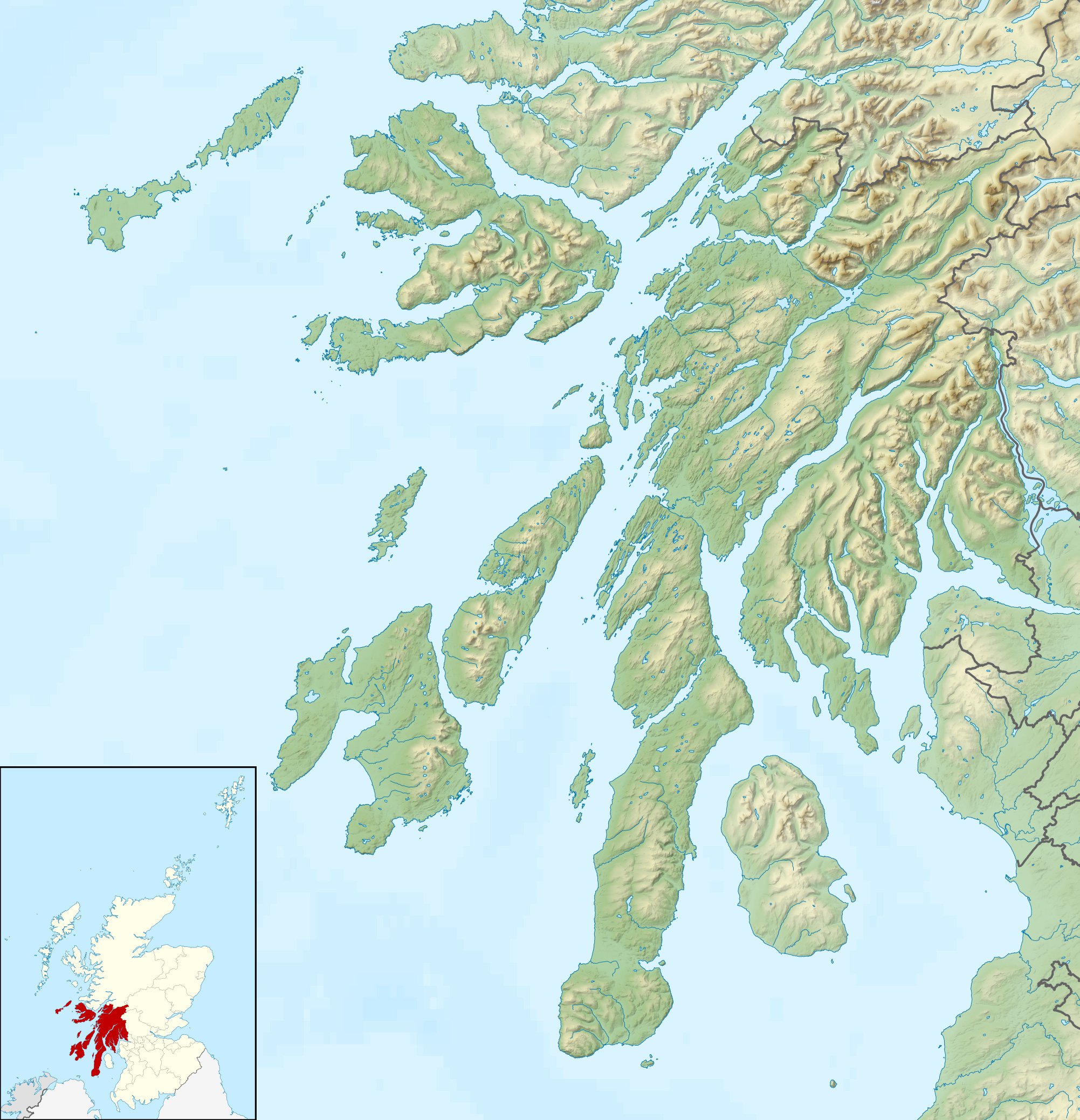
The Hebrides from wikicommons
The Western Isles which includes Islay were part of the Dal Riata confederation and closely allied to Ireland at this point.  To make things really confusing – the word Scot in this time period means someone from the Western Isles and Northern Ireland.  Until Kenneth McAlpine kills most of the Pict hierarchy at supper, and founds Alba, there isn’t really a Scotland. It isn’t until his grandsons become king that the word Scotland is used in the modern context.

Islay
While Kenneth McAlpin was causing turmoil on the mainland, the Vikings as they so often did in this period took full advantage and captured territory – namely Shetland, Orkney, and the Western Isles or Hebrides as well as the Isle of Man and parts of the west which are now referred to Galloway. Galloway means the foreign Gaels.  The area around Man and the Hebrides is often referred to as the Kingdom of the Isles. The kingdom of the Isles dates roughly from the mid-ninth century until it is broken up in the 13th century. It is sometimes referred to as the Southern Isles as the Northern Isles of Shetland Orkney were often under different rulers.

We know under the Vikings the Hebrides were ruled from the Isle of Man. The overlord of the King of Mann varied quite a bit. Sometimes it was Norway, others it was England, the Orkneys, Ireland or Scotland.  But go to Islay or Jura today and little besides place-names remain from that time. The Islay museum has only a few relics.

The references are often very shadowy as with much of Viking history. Because most of their structures were wood, little remains. Some archaeology has been done but because sites often had multiple uses over the period sometimes it can be very inconclusive. It is assumed that the buildings were similar in style to those found in Norway and Iceland. They were built around the idea of a great hall with other smaller buildings and workshops supporting the great hall.
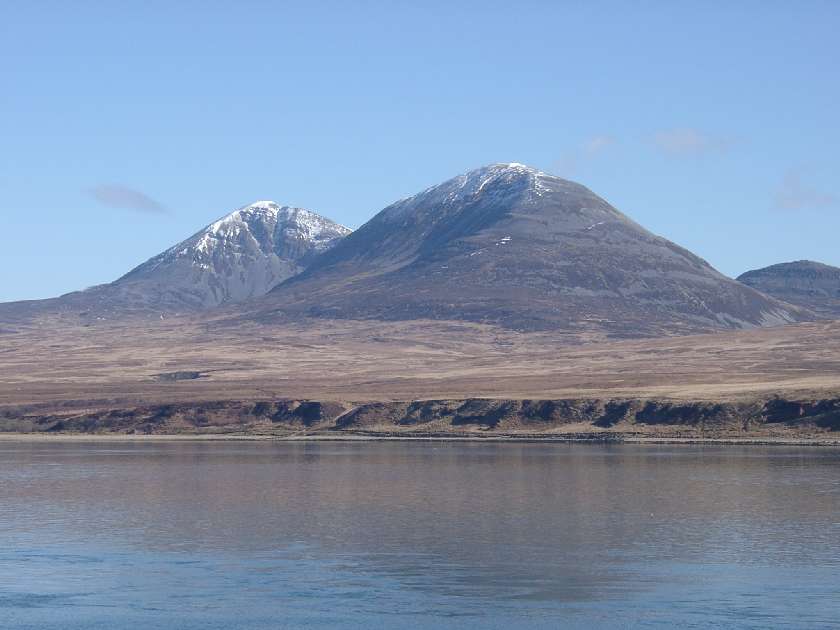
The paps of Jura
It was a clash of two cultures in many ways. The Gaels had been Christian since St Columba in the fifth century. They had their own traditions such as the Celtic stone crosses and artwork. The Vikings were raiders and merchants. They were pagans and their traditions were markedly different.  However the Vikings were mainly men and they did tend to intermarry with the Gaels. These foreign Gaels or Gall-Ghaeil  tended to be Christian and follow the traditions of their mothers. But they also followed the profession of their fathers and became great seafarers and warriors.

A Celtic cross
To understand this time, you need to think in terms of sea roads and trade, rather than land travel. It wasn’t horses on roads so much as ships. Summer was the season for warfare. A farm planted his crop in the spring, and left his wife and slaves to tend it while he went to war during the summer. He would then return in time for the harvest and would over-winter on his land. In fact the 12th century warrior Somerlad, who is credited with driving the Vkings out of the Western Isles and founding the Clan Donald is a corruption of a Norse name meaning summer warrior or Viking. He was not some Gaellic hero but the product of the Norse-Gael ruling culture. He simply was able to wrest control of the Isles from the King of Man and became the self-styled Lord of the Isles. In short the Vikings did not leave the Western Isles but became part of the fabric of the society. They settled and adapted to their new homeland.


So my characters lived in a time of flux. When a man could carve a kingdom with the point of his sword and his sons could lose it just as quickly. They would have recognised the mountains and hills of Islay and Jura but little else.

Michelle Styles writes warm, witty and intimate historical romances. SHe is currently revising her next Viking set romance which is set in Islay.  Her most recent Viking Summer of the Viking was published in the US and England in June 2015. It will also be published in Norway and Sweden in June 2016 and France. You can learn more about Michelle and her books on www.michellestyles.co.uk

30 September 2015

Open Topics: The other great Viking Northumbrian raid --St Cuthbert's Storm

By Michelle Styles

There are certain headline events which echo through the ages, such as the raid on Lindisfarne which started the Viking Age and other events which were once known and have now been largely forgotten. In the second category are the events of 794 where the Northumbrians fought back.

The precise reason for the Viking raid has long been consigned to annals of forgotten history, but one thing is certain. Once one Viking felag (or fellowship of warriors) had successfully raided, others undoubtedly tried their hand.
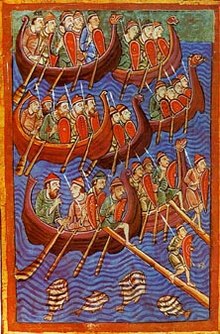
12-century depiction of a Viking invasion source: Wikipedia

Sure enough, Symeon of Durham records that 794 brought yet another raid. Rather than returning to Lindisfarne, the raiders struck lower down at Jarrow. This time, however, the raiders did not have it all their own way.  First the raider’s chief was killed in a violent clash with English warriors. Then a great storm which became known as St Cuthbert’s storm struck, swamping the Viking long boats and making it impossible for them to escape. Symeon states the survivors were put to death.

The next time the Vikings are mentioned in connection with Northumbria is 800 when they lay waste to the monasteries at Tynemouth and Hartness. The six year interval is significant in my opinion. Other areas in Britain were attacked but not Northumbria. There is no recorded alliance or payment of gold to make them go away.  The Vikings tended to strike a weak target. In 794, Northumbria had shown that it wasn’t weak, but in the intervening years, Northumbria was riven with civil war. This jeopardised its alliance with Charlemagne (which may have been one of the reasons for the original raid as shortly before this, Charlemagne  had moved against the heathens to the North).  Apparently in 796 Charlemagne was so angry when he heard King Athelred had been slain near Corbridge that he took back his generous gifts. He considered Northumbria nobles to be worse than pagans, but Alcuin (a bishop from Northumbria) interceded on Northumbria’s behalf and he was pacified.  By 800, Northumbria had been through three more kings and had fought several wars, including at least one with Mercia.  The court was also riven with gossip and intrigue.
reconstructed Viking long ship source Wikipedia

It is interesting that the raid that gets remembered is the one which succeeded, and not the one which didn’t. One of the reasons might be that Alcuin did not feel the need to write emotive letters about St Cuthbert’s storm.  He seemed to be using his considerable writing skills as a call to action. Obviously because Northumbria had succeeded in defeating the Viking threat, his skills were not required. However, I suspect that Northumbria itself was not shy in making its success known.

When I wrote Summer of the Viking, I wanted to look at what the situation on the ground after the Lindisfarne raid. It was then I discovered about St Cuthbert’s storm and its aftermath.  Certainly the Viking raiders do seem to be aware of the Northumbrian strength as they stop raiding until after the third civil war. Symeon mentions with glee about how vengeance was taken on those who threatened innocent people. And of course Northumbria could not know if the Vikings would continue to raid or not.

Anyway, I thought it time that this success was better known.

Michelle Styles writes warm, witty and intimate historical romance in a wide range of time periods. Her most recent Summer of the Viking was published by Harlequin in June 2015. You can learn more about Michelle and her books on www.michellestyles.co.uk
10 February 2014

Tales of Love: King Edgar the Peaceable and Queen Elfrida


By Michelle Styles

One tends to assume the politics of Royal marriage is not very interesting during the Anglo Saxon period. After all the queens are slightly shadowy figures. However, if you start digging, Anglo Saxon royal marriage is a lot more scandalous and a lot more like Game of Thrones.

King Edgar the Peaceable and Queen Elfrida (or Aelfthyrth) is a great love story which deserves to be more widely known. Or rather it is interesting and full of scandal and gossip. But it goes to show that people behaving badly and strong women who mould events to suit them have existed for a long time.
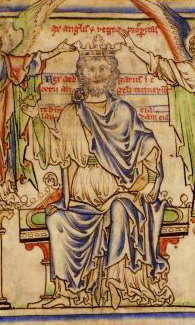
King Edgar (source Wikipedia)

King Edgar was married at least twice before Elfrida (it depends on the source). When he tired of his wife, he tended to have her retire to a nunnery, leaving him to free to marry again. His first wife Ethelflaed the Fair was a Anglo Saxon noblewoman who was put aside so that he could marry the very political Wulfthryth who was royally descended and very devout. They had two children  -- both of whom became saints –Edward the Martyr and St Edith of Wilton.

Elfrida was a beautiful  and clever daughter of a minor nobleman. Edgar sent his best friend Aethelwald to see if she was as truly beautiful as they said. Aethelwald struck by her beauty reported back – no she wasn’t -- and then duly married her. She was supposedly playing chess with her father and beating him handily when they first met. She apparently learnt to play chess from the Vikings.

Once Edgar learnt of the trick, he decided to visit to see the woman for himself. Aethelwald implored his wife to make herself ugly but she did just the opposite. For the king, it was love at first sight. They may have begun an affair there and then but the sources grow hazy.

Aethelwald is supposed to have died in a hunting accident. Post conquest sources claim the accident was arranged by Edgar (or perhaps Elfrida who was ambitious after all?) The spot is supposedly commemorated by the Dead Man’s Plack in Harewood Forest, Hampshire.  After Aethelwald’sdeath, Wulfthryth is forcibly retired to a nunnery and becomes an abbess, leaving Elfrida and Edgar free to marry. However, all was not smooth sailing as the archbishop of Canterbury, Dunstan burst in their bedroom and accused the pair of adultery. The king and his queen weathered the storm.

Edgar was so besotted with his wife that he had crowned queen of England. Neither of his other two wives enjoyed the status of queen. In his second coronation in 973, Edgar had Elfrida jointly crowned. It is this coronation, presided over by Dunstan that forms the basis of the present day coronation.  Shortly afterward, at Chester, the other six kings of Britain, including the king of Scots and the king of Strathclyde paid homage to Edgar and his queen.

There was a huge emphasis on Elfrida’s role as protector of religion. She also served an important function in the legal system, serving as  forespeca or advocate in at least seven cases.

When Edgar died in 973, he left two sons. Edward by Wulfthryth and Aethelred by Elfrida. It is said that Elfrida arranged for Edward’s murder.  When visiting Elfrida at Corfe Castle, her servants set upon him and killed him.  This cleared her path to act as regent for Aethelred the Unready. She did so until he came of age in 984 at which point she retired (was retired?) and concentrated on bringing up the next generation. Her grandson Aethelstan Aetheling mentions her in his will as the woman who brought him up. Atheling is the Anglo Saxon term for someone who might be heir to the throne as the succession was never straight forward and there might be multiple claimants.

If you are interested in reading more about Elfrida, Elizabeth Norton recently published a biography entitled Elfrida and it is well worth a read. The first crowned queen of England deserves to be better known, particularly as she was such a strong and interesting woman!

Michelle Styles writes warm, witty and intimate historical romance in a wide range of time periods including Viking. Her next book The Return of the Viking Warrior will be published in May 2014 by Harlequin. You can learn more about Michelle’s  books on www.michellestyles.co.uk
14 November 2013

Excerpt Thursday: God's Daughter by Heather Gilbert

This week, we're pleased to welcome author Heather Gilbert, whose latest novel, GOD'S DAUGHTER, is set during the Viking Age of exploration and conquest. Join us on Sunday, when the author will offer a free copy of God's Daughter to a lucky blog visitor. Here's the blurb.


One Viking woman. One God. One legendary journey to North America. 

In the tenth century, when pagan holy women rule the Viking lands, Gudrid turns her back on her training as a seeress to embrace Christianity. Clinging to her faith, she joins her husband, Finn, on a journey to North America. 

But even as Gudrid faces down murderous crewmen, raging sickness, and hostile natives, she realizes her greatest enemy is herself--and the secrets she hides might just tear her marriage apart.


Almost five centuries before Columbus, Viking women sailed to North America with their husbands. God's Daughter, Book One in the Vikings of the New World Saga, offers an expansive yet intimate look into the world of Gudrid Thorbjarnardottir--daughter-in-law of Eirik the Red, and the first documented European woman to have a child in North America..

**An Excerpt from God's Daughter**

Prologue
Hellisvellir, Iceland

The gods only accept what is valuable.
Gudrid repeated this to herself as they hoisted her mother into the tree. Her beautiful mother with the long shining hair, like her own.
Her cousin, Yngvild, touched her hand. Not a word was spoken, from anyone. No one could believe a young mother would die for the required nine-year sacrifice, along with the expected slaves and animals. But the chieftain had ordered it. And the chieftain was her father.
Gudrid's aunt hunched over, sobbing into her sleeves. Uncle Thorgeir did not even look at the tree. He seemed happy to gain more control of her mother’s family farm.
Gudrid clenched her fists on her shift, bunching it so tightly she felt she could rip it apart. She longed to fight the men who would drop the ladder, breaking her mother’s neck. But interrupting a sacrifice to Thor was punishable by death—the immediate death of hanging.
The sprawling, twisted tree loomed like a giant against the gray Icelandic sky, its limbs clutching at the dangling dead animals and people. Gudrid imagined the tree held them back from dropping straight into Helheim. Truly, Mother should go straight to Valhalla for being a willing sacrifice. But only the men who died bravely in battle got to go there, to drink endless mead for eternity.
Her father blew the ram’s horn, and a slave kicked the ladder out. For one second, Father’s eyes glazed over, as if he was far away. Even though he was devoted to Mother, he believed the only way to restore the bounty of the farm, failing since he had charge of it, was to give up the one thing he really cared about.
Mother’s face went slack and lost color. Gudrid was strangely thankful that she did not turn blue, with her eyes bulging, as some of the slaves had. It meant she died quickly, as a perfect sacrifice should.
Gudrid looked around, aware she needed a protector. Even at eleven years old, she understood this. Father had never wanted a girl. Her aunt was too grief-stricken—she would barely be able to care for her own children now, after watching her sister die.
Orm’s sad gaze met her own. He was a neighbor from a nearby farm, on a cliff overlooking the shoreline. His wife, Halldis, was a volva, a seeress who knew magic. Gudrid refused to look at her. She did not want to see the eyes of the woman who had told Father he needed such a significant sacrifice this year.
The last body was hanged, and another volva led a chant with the drum. Since many slaves had been killed, their families began to sing quietly in their own languages. As the words clashed, each group sang louder and louder. It was the only time they sang publicly.
Gudrid felt her insides burning, down to the core, like the volcanoes on this island. Anger and loneliness forced her from her seat. She hated Thor and anything to do with him. She groped for her knife before raising it to her throat. Then she charged straight for her father.
  
PART ONE
Straumsfjord
(upper North America)
Circa AD 1000
  
Chapter One

 Some bulls are just better off dead.
The beast huffs on the other side of the wooden fence. The fence has no permanence, like the rest of the makeshift houses in this camp at Straumsfjord. A stopping place, Finn said, just a place to live until we can search for Vinland. And now we have been here over two years. I hate this empty land as much as I hate this bull.
I grip my seax, its long blade tight against my thigh, and walk toward the bull. Deadly as my knife is, I would be lucky to sink it into the bull's side without being gored or trampled first.
“Get on with you.” Usually my low-toned warning works, at least with the smaller bulls my father gave me. But this bull, his reddish hair dropping out in patches, his horns far too long, paws the ground and bellows.
I hold his gaze, stepping backward on the soft grass. We have two pastures here, and one is far too small. The four cows who survived the winter are crowded into the larger pasture, giving this bull his fill of summer grass in his own pen. Even so, he causes no end of trouble when he can’t be with the cows to breed them.
“Don’t move, Gudrid!” Freydis shouts from a tree on the other side of the fence, her red hair gleaming in the afternoon light.
Freydis acts more like a brother than a sister—always prying into my love life, practicing with knives, and climbing up trees. She knows no better, since her father, Eirik the Red, trained her with swords and bows from the time she could carry them. She’s the only family I have here. Her brother, Thorstein the Red, was my second husband for such a short time. Yet even after his death, I remain part of Eirik's family.
What does Freydis have in mind? If I stand still, the bull might charge me. But I won’t let her risk her own life for mine. She is with child, even though she forgets that fact most of the time.
Surely someone in the longhouse at the foot of the hill can hear this bellowing. Surely someone other than my overly confident sister-in-law will protect me.
The bull plods to the fence and rubs his head on it. Maybe he just needs to scratch. But the top board breaks as he pushes heavily against it.
Freydis inches down the tree, her pale legs sticking out beneath her skirts.
The bull charges. Turf rips and boards splinter close behind me. He’s out of the fence. Freydis gives a distracting warrior shout as I race toward the closest maple and scramble up.

About the Author:
Heather Day Gilbert enjoys writing stories about authentic, believable marriages. Sixteen years of marriage to her sweet Yankee husband have given her some perspective, as well as ten years spent homeschooling her three children. Heather is the ACFW West Virginia Area Coordinator.

You can find Heather at her website, Heather Day Gilbert--Author, and at her Facebook Author Page, as well as Twitter, Pinterest, YouTube, and Goodreads. You can find God's Daughter here on Amazon.

20 October 2013

Guest Blog: Octavia Randolph

This week, we're pleased to welcome author Octavia Randolph whose novel, THE CIRCLE OF CERIDWEN, is set in 9th century England during the Viking incursions of the Anglo-Saxon countryside. The author will offer a free copy of The Circle of Ceridwen to a lucky blog visitor; please leave your email address in the comments as winners are contacted privately. Here's the blurb:

Saxon against Viking.  Christian against heathen. The clash of sword and spear in war-torn 9th century England.  A courageous young women risking all to live - and love.  Enter the Circle of Ceridwen...

The year 871.  Of seven Anglo-Saxon kingdoms, five have fallen to the invading Vikings.  Across this war-torn landscape travels fifteen-year-old Ceridwen, now thrust into the lives of the conquerors. Her divided loyalties spur her to summon all her courage - a courage that will be sorely tested as she defies both Saxon and Dane and undertakes an extraordinary adventure to save a man she has never met.

Book One in The Circle of Ceridwen Trilogy


**Q&A with Octavia Randolph**

Why did you choose 9th century England as a setting?

It was absolutely one of the most exciting and perilous times in all of English history, the very making of what England would become.  Danish raiders – who later became known as Vikings – had been landing sporadically for years, taking weapons, silver, and of course, slaves.  But then they’d sail home again.  But by the late 9th century, Denmark was becoming seriously overcrowded, and the raiders had a new focus – emigration.  This led to large, well-organized armies landing, and intending to stay. England was composed of seven Anglo-Saxon kingdoms at the time, and one by one these fell to the Danes. The year The Circle of Ceridwen is set, 871, five of the seven kingdoms had already succumbed, with Mercia dangerously weak.  Soon only Wessex remained, saved by the brilliance of its young king Ælfred.

But the novel is told in 1st person by a 15 year old girl –

Exactly.  I wanted to tell the story of invasion and survival through the eyes of a young woman. It is a tale about warriors, but most of the people affected by their actions were not warriors.  As is always the way with war.

So tell us about this girl, and why you chose her as your narrator.

Ceridwen is really representative of her times on many levels. She is in the middle of tremendous conflicts. Firstly, she’s half Saxon and half Welsh, two groups traditionally at odds with each other. Early in the book she travels from her priory home to a distant fortress now controlled by the Danes, who are very much the enemy.  Then to add to her conflicts, as she settles into her new home she feels the tug of her earliest beliefs. Even though she had been baptized, she was raised heathen by her uncle, in the Old Religion of Wodin/Odin, Thor, Freyja, and all the other Gods common to both the early Saxons and the Vikings. So she finds some uneasy common ground there, as well.

Sounds like she needs to grow up quickly…

And she does. The Circle of Ceridwen covers six months in Ceridwen’s life, but with, of course, tremendous changes to her experience and world view.  The entire Trilogy spans ten years in her life, but now that I’m working on Book Four that is expanding as well. It’s been a wonderful adventure for me and I’m grateful to my readers for bringing me this far!

The Circle of Ceridwen Book Trailer


Learn more about Octavia Randolph


Buy the book at amazon.com and amazon.co.uk:


17 October 2013

Excerpt Thursday: The Circle of Ceridwen by Octavia Randolph

This week, we're pleased to welcome author Octavia Randolph whose novel, THE CIRCLE OF CERIDWEN, is set in 9th century England during the Viking incursions of the Anglo-Saxon countryside. Join us on Sunday, when the author will offer a free copy of The Circle of Ceridwen to a lucky blog visitor. Here's the blurb:

Saxon against Viking.  Christian against heathen. The clash of sword and spear in war-torn 9th century England.  A courageous young women risking all to live - and love.  Enter the Circle of Ceridwen...

The year 871.  Of seven Anglo-Saxon kingdoms, five have fallen to the invading Vikings.  Across this war-torn landscape travels fifteen-year-old Ceridwen, now thrust into the lives of the conquerors. Her divided loyalties spur her to summon all her courage - a courage that will be sorely tested as she defies both Saxon and Dane and undertakes an extraordinary adventure to save a man she has never met.

Book One in The Circle of Ceridwen Trilogy


**An Excerpt from The Circle of Ceridwen**

In this excerpt from Chapter Nine, Ceridwen is travelling with her new friend Ælfwyn, her maid Burginde , and some thegns (warriors of Ælfwyn’s father’s)to the fortress of Four Stones, where Ælfwyn  will wed the Danish jarl, Yrling. Here they are met on the road by the band of Danes who will escort them to their new home.

At midday we stopped by the first of many small lakes, and after we had rested, the thegns went to the second waggon and opened it.  They brought out three helmets, of iron covered over with bright brass so that they glinted; and these they put on, and mounted their horses, and we went off.  This was the first time I had seen them wear their helmets, and as I watched the lead thegn with his spear across his saddle and his sword sheath uncovered by his cloak, I knew that they thought at any time to be met by the Danes we sought.

In the waggon we three began to prepare ourselves as well.  Burginde straightened up the baskets, and put away into chests stray things we had been using.  I unfolded my leathern satchel, and placed into it those things of mine which I had out, as if I was going away.  

Ælfwyn shifted from bench to bench; looked out the flap, back at the contents of the waggon, and then outside again.  Then she spoke.  "They may not come for days."

To which Burginde answered, never stopping her work, "And they may come in an hour."

Ælfwyn spoke again.  "What if they come by dark, when we are asleep?"

"They will not spring upon us," replied Burginde.  "They value their lives."

There was little else we could do to prepare, but speaking of the coming meeting and doing the slight tasks we could was enough.  We sat together in the waggon, looking out at the thegn before us, watching his watchfulness.

That afternoon the land began to rise again, and the Cæsar's Road began to show more ruts.  Then the land went down, and there was marsh of rushes and willow and hazel.  And the wind now came from the North, and tho' the Sun was still bright, it grew cold, and we closed the flap up against the damp wind.

At one point we heard the splash of water as the oxen plodded through it, and Burginde pulled open the flap and we saw the road was nearly fallen away into the marsh.  She closed the flap and grumbled, and wondered aloud where we would find dry land to make our camp, for it was drawing on to dusk.  We piled more charcoals into the brazier, and Ælfwyn and I put on our mantles against the cold.

We sat together in silence on one of the benches, warming our hands at the brazier's glow.  Then the waggon stopped again, but instead of hearing Osred coaxing the oxen, we heard no voices.  Burginde moved to open the flap, but Ælfwyn stopped her with an upraised hand.  We sat, listening with intent, and heard at first nothing but the dripping of marsh water off the bottom of the waggon, and the flapping of the oxen's ears as they shook their heads.

Then we heard the voice of the chief thegn, loud and calm.  "Come forward, and show yourselves."

Burginde moved once more to the flap, but again Ælfwyn stopped her, and held a finger to her lips, bidding her be quiet.  I feared the pounding in my heart must surely be heard by all outside, and felt my eyes starting in my head.

We heard then some movement of horses and jingling of bridles that told us more horsemen stood before us in the road.

The thegn spoke again.  "Toki, you have found what you search for.  This is the tribute of Ælfsige to Yrling."

Again we heard the movement of horses, as if they turned before us on the sodden road, but heard no other man.

The thegn spoke again, impatience growing in his words.  "I know it is you, Toki, by your helmet; for I regarded it well when I saw you with Yrling."  The thegn paused, and then went on.  "Perchance I am wrong.  Perchance the great Toki has after all fallen in some squabble amongst his brethren and his better now wears his helmet."

At last we heard an answer, in a broad, flat voice with a strange flute-like tone, but in the tongue of our people: "Toki's better does not live."  And these words were full of contempt.

Toki spoke again.  "You will yield up your swords and spears until you reach Four Stones and are ready to leave again."

Now the thegn's voice was full of wrath.  "We will yield our weapons to no one.  Will you, Toki, break so soon the Peace that your jarl has made?"

There was more speech amongst the Danes, and movement of horses, and jingling of bridle bits.

Finally Toki spoke again to the thegn.  "We will proceed then to Four Stones," he began, and his voice was free of anger and almost light.  "First we will look in these waggons to be sure that the tribute you bear is not that of more Saxon thegns."

Then we in the waggon knew we would have to show ourselves to these men, and the thought made my throat dry, tho' the thegns of Ælfsige be around us.

We heard a horse move nearer, and Toki's voice call out, "Let us see first what is in this waggon."

And at these words - I think for fear that he would open the tarpaulin flap himself and look in - Burginde grasped the flap ends and thrust out her face to the horseman.

"Ah!" came Toki's voice.  "The bride of Yrling."  Then he spoke to the Danes, and there was much laughter amongst them.

Burginde was sputtering in anger, but she still held the flap closed tight about her face so we could not see out, or they, in.

Toki spoke again.  "Perhaps not.  Perhaps this waggon carries another Lady."

As one gesture Ælfwyn and I pulled our hoods up over our heads, as if they could in some slight way shelter us from the gaze of this man that was waiting outside.

We heard the thegn's voice.  "Lady, show yourself so we may cut short this sport and be on our way."

Ælfwyn drew a breath and clasped my hand, but said in a firm voice, "Burginde, open the flap."

Burginde drew back her face, then stood and pulled open the flap as far as it would allow.  The day was fading fast, and the horsemen before us were silhouetted against the failing light.  There were four Danes, the one closest mounted on a large grey horse of great worth.  He wore a ring tunic such as the thegns wore, but across his chest was a baldric and sheath of magnificence, for the belt itself was worked all over in bronze bosses, and the sword hilt gleamed with gold.  On his head he wore a helmet of iron, covered over with thin copper or gold foil, polished very bright, so that in the setting Sun it fairly flamed.

He looked down at us, and then pulled off his helmet and held it under his arm, and his long yellow hair fell down in two braids upon his shoulders.  We saw that he was young, and had a face that bore no scar; and I thought him very handsome, but very cold; for his eyes were bright with greed, and his lip twisted in a smile that was filled with scorn.

His gaze moved from Ælfwyn to me, and back again, and though she cast down her eyes at his glare, I felt anger, and would be as brazen as he, and kept my eyes fixed upon him, look tho' he might.

He spoke at last.  "You Saxons are generous.  You bring two brides to Yrling, of equal beauty." 

The Circle of Ceridwen Book Trailer


Learn more about Octavia Randolph


Buy the book at amazon.com and amazon.co.uk:


17 September 2013

End of an Era: The Vikings become Christians


By Michelle Styles

Part of the reason the Vikings hold such a fascination is that they are the last great pagan civilisation. But by the end of the era, they are no longer pagan but Christian  Indeed the Eddas were transcribed by Snorri Snorrison in an attempt to preserve the dying culture. But how and why did this happen?
Although Christianity had gained influence in Scandanavia through out the period, mainly due to contact with the Byzantium civilisation and Varangian guard, the Vikings really did not become Christian until St Olaf or Olaf the Crowbone , more formally called Olaf Tryggvason in about the year 1000 AD.

Olaf, if the sagas are to be believed, had a true rags to riches story. After his father was killed, his pregnant mother escaped Erik Bloodaxe’s  wrath.  In the escape, they were captured by Baltic pirates and Olaf sold into slavery for the price of a single goat. He worked as a farmhand in Estonia. The adult Olaf is first heard of in Russia where he slays a man in the Novgorod marketplace, apparently the man who had sold him into slavery. After a brief marriage to a Polish princess, he goes raiding in England and an old soothsayer tells him if he becomes Christian, he will become king. He duly becomes Christian and becomes an ally of Ethelred the Unready.


Olaf arrives in Norway. Source: Wikipedia
Shortly after receiving Ethelred's backing, Olaf departed for Norway and decided that the only way to evangelise was by the point of the sword. The Orkneys and Hebrides were forced to give up the pagan gods or else. Given his expertise at raiding, they did. He then turned his attention to Norway and the true Viking prize -- control of the Norwegian trading empire. Taking advantage of the revulsion at the Earl of Trondheim's passion for another man’s wife, Olaf engineers a bloody coup.

He then sets about Christianising Norway, in his own unique fashion — convert or die. For good measure, he took hostages of various noble families and threatened to kill them, if anyone reverted. Having subdued a good part of Norway, he sent a missionary to Iceland who had mixed success. However, when Olaf decided to close all Norwegian ports to pagans, the Icelanders had to convert. Iceland could not survive without the trade and so they did.
Olaf accomplished this all before the age of 32. At 32, he was involved in the battle of Svold and lost. He died a Christian martyr. Some whispered that he escaped to Byzantium and set about trying to regain his lost fortune.
Whatever happened, by the time of his death, large parts of Scandinavia had been Christianised and remained so. You can see this in the manner of the graves and the prevalence of crosses.  Suddenly pagans are wearing Thor’s hammers, a bit like a cross, to compete. Earlier Viking settlements do not have this piece of jewellery. And through the sheer force of will by one man, the last great Pagan civilisation fell and become Christian.
Michelle Styles writes warm witty and intimate historical romance in a wide variety of time periods for Harlequin Historical.
Her next VIking is published in November 2013 Paying the VIking's Price.

18 December 2012

Winter: Viking Jul

By Michelle Styles

One of the great things about Christianity is that with festival and feasts, the early Christians did attempt to provide alternatives.  Although very early sources for Christians (including Hippolytus of Rome in the second century) indicated that Jesus was 8 days before the calends of January in the forty second year of Augustus’s reign, 25 December was not universally accepted as Christ’s nativity until 376 AD. For pagan who embraced Christianity, the idea that Christ brought light into the world meant they could continue with their feasts and festivals with a slightly different emphasis. For the Vikings, winter solstice was the time of Jul. Depending on the source, Jul was either a the darkest two months of the year or a three day feast centring around the winter solstice. Haakon I of Norway who brought Christianity to Norway had the feast of Jul moved to coincide with Christmas. He also caused many of the Jul celebrations to be absorbed into the Christmas feast. Norway became officially Christianised in 1000 AD.

Because Viking sources were written during  the 12th century in Iceland, it is difficult to say the precise nature of the Viking Jul.  There are just snippets in various sagas. We know that it was a time of peace and good will. In various sagas, fights put off until after Jul. We know that drinking was involved (mostly ale), feasting and that there were probably fertility rites — possibly dancing as in long sword dancing or Morris dancing as well as singing.

Fire certainly played a part. The Yule log is a remnant of the celebration. Traditionally it burned for all 3 days of the Jul in order for the next harvest to be lucky. A bit of the old log was used to light the new log.

The Jul boar which remains in our Christmas ham was used to solemnise great oaths. Queen’s College Oxford still brings in a boar’s head for its Christmas feast. The bristles of a boar were supposed to give power to oaths and great misfortune would be fall anyone who broke the oath. In Scandinavia today, marzipan pigs are popular Christmas time treats. The boar was associated with Freyr who was the Norse god of fertility so it is possible the swearing of oaths had something to do with ensuring a good harvest for the next year.

A popular Scandinavian Christmas ornament is the Yule goat (I always think it looks like a reindeer). These are generally made of straw and go back to Thor whose chariot was pulled by two goats. Thor used to sacrifice his goats for feasting and then bring them back to life with his hammer.   The Christmas goat was thought to bring good luck and presents (until Father Christmas/Santa Claus became popular in the 19th century). Originally though the Jul goat might have demanded presents. It is also associated with mischief and pranks, if the Yule celebrations are not done correctly.

Wassail or drinking from a communal bowl is thought to date from either the Anglo Saxons or the Vikings. Often times, it was associated with pouring libations on various trees (such as apples) to ensure a good harvest. Songs were sung and special dances performed. Some of these rituals still exist in various English villages. They do tend to happen after the traditional dates of Jul (more around mid January). It is where the tradition of singing carols comes from.

So while we may not know much about the precise nature of Viking Jul, various remnants remain and are enjoyed today.


Michelle Styles writes warm, witty and intimate historical romance in a wide variety of time periods. Her next book An Ideal Husband? will be published in April 2013. She is currently writing stories set in the early Viking period. You can learn more about Michelle at www.michellestyles.co.uk.

Check out Michelle's Amazon Author, Facebook and Goodreads pages. Follow Michelle on Twitter.  

15 October 2012

Executed: The Blood Eagle of the Vikings


By Michelle Styles

Viking ferocity and the terrible ways in which they killed people has fascinated people throughout the ages, no more so than the so-called  ‘blood eagle’ or carving of an eagle on a victim’s back. If some writers are to be believed carving a blood eagle was the primary way of Viking execution. Some say that it had to do with a ritual associated with Odin where the back is cut open, the rib cage spread apart and the lungs pulled out all while the victim remains alive. It is supposed to be the  classic example of Viking and therefore pagan barbarity. There is just one problem — other than in the fertile imagination of 12th century and beyond writers, there is actually very little concrete evidence that it happened.
Scene supposidly showing a Viking execution of a defeated enemy
Carving a blood eagle is now considered to be a 12th century misinterpretation of skaldic verse. In short a 12 century Christian invention to show how dreadful and  terrible the pagan Vikings were.

The verse in question dealt with the murder of the Christian Northumbrian king Aella by the pagan Ivar during the capture of York.  It basically says that Aella was killed by Ivar the Boneless. To be fair, Aella had killed Ivar’s father, Ragnar the Hairy Breeches (Ragnar Lodbrok -- the subject of the Historiy channel Viking series)  by putting him in a snake pit without his famous trousers.  Aella had also usurped the throne and Northumbria was engaged in a civil war. Ragnar’s three sons vowed revenge and took it.  Getting rid of Aella provided the pretext for the invasion of Britain and the conquering of Northumbria.  

Some excitable scribe decided that he was killed by carving an eagle in Aella’s back. Aella looks a bit like the Latin word for eagle. The story grew and grew until it became very complicated. It fit the image that Christian scribes wanted for the Vikings. Basically even though many Christian warriors behaved with great ferocity during that time, it made for better reading if the Vikings were worse.

So did the Vikings ever do this sort thing? Who knows. It may be that they simply never thought about it. They certainly did not hesitate to kill their enemies and their respect for the law was more in how much they could manipulate it to their advantage.  Some scholars point to the word blothorn (blood eagle) as evidence for the pratice. It could be that the Vikings turned the defeated on thier stomachs, exposing thier backs which allowed eagles (or more likely vultures and other carrion birds) to attack their backs.

Michelle Styles writes warm, witty and intimate historical romance from a wide variety of time periods including Viking. Her next novel Hattie Wilkinson Meets Her Match is set in the relatively more civilised ear of the Regency England but she is currently working on a Viking novel . To leanr more about Michelle and her books visit www.michellestyles.co.uk