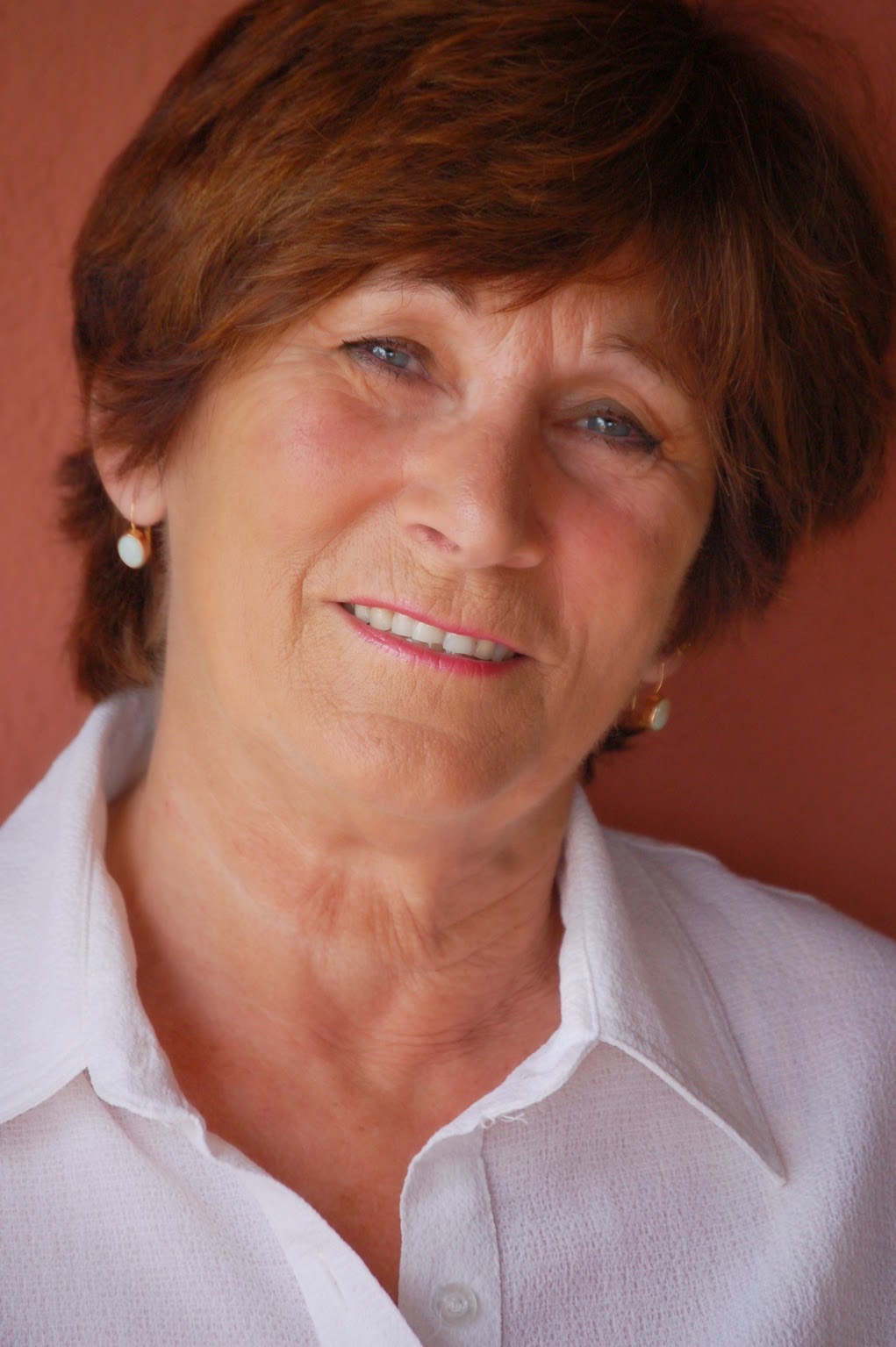
This week, we're pleased to again welcome author JOAN FALLON with her latest release, THE SHINING CITY. One lucky visitor will get a free ebook copy of The Shining City, gifted from the author through Amazon. Be sure to leave your email address in the comments of today's author interview for a chance to win. Winner(s) are contacted privately by email. Here's the blurb.

Exotic, romantic, and rich with historical detail, The Shining City is a timeless story of love, family, and the unexpected consequences of our actions. Set in 10th century Spain, in the time of the Moorish occupation, it is, above all, a story of love and honour.
When he moved to Madinat al-Zahra, Qasim thought he had escaped his turbulent past but when his youngest son, Omar, falls in love with the Caliph’s concubine, he sets off a train of unimaginable consequences and puts all his family, including Qasim, in danger. Qasim’s secret is about to be revealed and all he has worked for destroyed.
Praise for the novel - from HISTORICAL NOVELS SOCIETY August 2014
"The Shining City by Joan Fallon is a beautifully told story set in tenth-century Spain which focuses on a city in southern Spain that flourished for a brief time only: Madinat al Zahra.
Built by the caliph, it becomes a rival to the capital, Cordoba. The book covers many aspects of the times: history, culture, religion and day-to-day life. Giving great attention to detail, Fallon depicts court etiquette with the same confidence as minor details, such as bakery and food preparation. I knew comparatively little about Spain under Muslim rule and found myself easily and entertainingly educated.
The characters are well chosen and developed, likeable and driven by their dreams and ambitions...."
Q&A with Joan Fallon
What attracted you to writing a novel about Spain in the 10th century?
I have been fascinated with Andalusia’s Moorish inheritance since long before I moved to Spain and had considered writing a book set during the Moorish occupation but never quite knew how to go about it until recently. Now I live in Andalusia and evidence of the Moorish occupation is all around us, so it’s hard not to become interested in the culture; it’s also easier to envisage what life was life then.
And where did the inspiration for this particular book come from?
I have to admit that the original inspiration for this particular story goes back 14 years. In 2000 I picked up a leaflet about an exhibition of Umayyad art that was to be held in a place called Madinat al Zahra, just outside Cordoba. It was just a couple of hours away so we decided to go although at that time I had no idea who the Umayyads were. As I have subsequently discovered, the Umayyad’s were the rulers of the Arab Muslim world until the 8th century when a coup by a rival tribe wiped out almost the entire Umayadd family and a new dynasty was established. But one man escaped and made his way to Spain where he was proclaimed Emir in the year 756 AD. He was Abd al Rahman I and he brought the Umayyad dynasty and its culture to Spain.
The exhibition was excellent but I was more impressed by the site they had chosen for it: Madinat al Zahra. For those of you who have not heard of it before, I will briefly explain. Madinat al Zahra was a palace/city built by one of Abd al Rahman I’s descendents, Abd al Rahman III just after he proclaimed himself Caliph of Al Andalus (the name for Moorish Spain). It is now in ruins but it was reputed to have been the most wonderful city in the western world. There are a number of theories as to why Rahman III built Madinat al Zahra. Why did he need another city when Cordoba was so close by? Some said he built it for a concubine called al-Zahra, and named it after her. Others said it was because he felt demoralised after being defeated by the Asturian king. But recent research says it is much more likely that it was built to reinforce his position as Caliph and to promote his independence from the old caliph in Baghdad. Rahman III had converted al-Andalus from a collection of individual tribes into a centralised Arab state, proclaimed himself the Caliph, the supreme ruler and now he wanted to make sure everyone knew who was the boss.
But what was much more fascinating to me was the length of time that the city was in existence. Work was started on it in the year 936 and only 70 years later it was already abandoned, and falling into decay. There had to be a story there.
There must be a lot of research involved in writing a novel like this. Can you tell us what was involved?
Yes, it did involve a lot of research because to begin with I knew very little about that period. It is also a time in Spanish history for which there are very few contemporary written sources. Although Cordoba in the 10th century had more than 70 libraries and 400,000 books, very few written documents remain. All the libraries and universities were destroyed and the books burned. What little historical evidence there is has to be taken from the later accounts of scholars and historians. This made research difficult but at the same time, it meant there was less for me to go through. I was writing a novel, after all, not a thesis.
Still attention to detail is crucial in writing any novel and particularly a historical one. I spent the first six months reading all I could find, making notes, visiting Cordoba to see the mosque, making numerous visits to Madinat al Zahra and its museum and of course I was constantly Googling to find further information. Then I started to look at the story itself and made a first draft. But that wasn’t the end to the research because I would be writing a scene and suddenly realise that I didn’t know if some item I was about to mention was actually in existence at that time. For example, the hero writes a note to the Caliph’s concubine and folds it. Was I sure that they had paper in 10th century Spain? It had been invented by the Chinese by then but had it arrived in Spain? In fact when I checked, I discovered that it wasn’t recorded as being used in al-Andalus until the 12th century. So I had to make my hero rewrite his note on parchment and roll it up instead of folding it.
It seems to me that many authors of historical fiction write trilogies. Have you considered making The Shining City part of a trilogy?
Yes, this idea has occurred to me because it would sit very well as the second book in a trilogy. The early part of Rahman III’s reign was also very interesting; it was a turbulent period, beset with rebellions and would have made a story on its own. The end of the 10th century too was interesting because when Rahman III died, his son Hakim succeeded him but died pretty soon afterwards, leaving the throne to his son, an eleven-year-old child. The regent, al-Manzor who took over ruling the country was a powerful and ruthless man and his actions led ultimately to the break up of al Andalus and the end of the Umayyad dynasty. It was also the reason that the beautiful city of Madinat al Zahra dwindled in importance and was eventually destroyed.
Were you influenced by any other writers when you planned this novel?
Yes, two books contributed to the structure of my book. I had read the Ken Follett novel, Pillars of the Earth, which is the story of a builder who helps to build a cathedral in medieval England; in The Shining City the hero is the son of a potter, working on the new city of Madinat al-Zahra. The other book that inspired me was Capital by John Lanchester, a contemporary novel which tells the story of a street in London through the people who live in it. That’s what I decided to do in my novel, tell the story of Madinat al-Zahra through the lives of the people who lived there.
What is it about writing historical fiction that you find so interesting?
I have always been interested in history, especially social history. I am a History graduate and when I was a teacher, my favourite lessons were teaching history to primary-age children. With young children the knack of making history interesting is to bring it to life and to let the children imagine they are living in a different time. It is a very similar process when writing a historical novel; you want the reader to feel that they are there, experiencing the same things as your characters.
Have you written any other novels that could be classified as Unusual Historical Fiction?
Yes, two others: ‘The Only Blue Door’ and ‘The House on the Beach’. One is a novel about three young English children who are sent as child evacuees to Australia during World War II; the story traces their experiences in a strange land and their search for their mother. The second one, ‘The House on the Beach’ is once more set in Spain, in the period immediately after the Spanish Civil War; it is the story of the friendship between two young girls growing up in a country ruled by an uncompromising dictator.
Links to the books: