Showing posts with label pagan. Show all posts

18 November 2014

Curses and Cures: Where Christian and Pagan Beliefs Intersect


An eighth-century pilgrim on his way to pray before the relics of a saint might recite a charm to protect his horse from injury. A midwife might whisper spells in an expectant mother's ear to hasten the birth, and if she feared the newborn was near death, she baptized the child. Such was the blend of Christian and pagan practices in the Dark Ages.


My Christian characters would insist the charms and spells were white magic, nothing to do with paganism, which they equated with devil worship. They weren’t cursing their neighbors with illness or inducing storms to destroy crops. Their intentions were good. They wanted a sick child to be cured or their fields to yield an abundant harvest.


A 13th century amuletic broach, shaped like an A and inscribed with the abbreviated prayer of AGLA: Atha Gebri Leilan Adonai ("Thou art mighty forever, O Lord"). Walters Art Museum, licensed under the Creative Commons Attribution-Share Alike 3.0 Unported license, via Wikimedia Commons
Officially, the Church preached against magic and the people who practiced it such as enchanters, dream interpreters, and fortune tellers. But to the populace, magic was a tool that could be used for good or evil.


The penalty for magical bad deeds was high. In the Carolingian era, witches and sorcerers were sealed in barrels and thrown into the river, or they were stoned to death.


However, the most popular uses of magic were beneficial and sometimes profitable. Amulets and their religious cousins, phylacteries, were sold to anyone who wanted to buy them. In Rome, the heart of Christianity, women tied phylacteries to their arms or legs.


A 13th century phylactery worn for protection. Walters Art Museum, licensed under the Creative Commons Attribution-Share Alike 3.0 Unported license, via Wikimedia Commons
Despite Church teachings, even clerics might ask an expert to interpret their dreams, or a manuscript copied by monks might contain a square to predict the course of an illness with the letters of the patient’s name and the number of the day they got sick.


Magic was so much a part of daily life that the Church realized it needed to take a different tack. If you can't beat them, co-opt them. Want rain? Don't use an incantation. Say a prayer instead. If you need to recite something while gathering medicinal herbs, try the Pater and the Credo.


Still, I can imagine desperate parents of a sick child praying to a saint and giving alms, then taking the child to the peak of the roof, where herbs were cooked while a spell was recited. Perhaps, they were appealing to any supernatural power who would listen.


Sources:


Daily Life in the World of Charlemagne by Pierre Riché, translated by Jo Ann McNamara


Daily Life in Medieval Times by Frances and Joseph Gies


“Capturing the Wandering Womb” by Kate Phillips, The Haverford Journal, April 2007


Magic and prayer play an important role in Kim Rendfeld's novels, The Cross and the Dragon (2012, Fireship Press) and The Ashes of Heaven's Pillar (2014, Fireship Press), both set in the days of Charlemagne. To read the first chapter of either of Kim’s novels or learn more about her, visit kimrendfeld.com. You’re also welcome to visit her blog Outtakes of a Historical Novelist at kimrendfeld.wordpress.com, like her on Facebook at facebook.com/authorkimrendfeld, or follow her on Twitter at @kimrendfeld, or contact her at kim [at] kimrendfeld [dot] com.

07 October 2014

The Battlefield: Heavenfield, Northumberland 634

By Michelle Styles

It is amazing how battles can be forgotten. The seventh century boasts some of the most significant battles in terms of British history and yet most are forgotten. If you love Game of Thrones and its complexities, you will adore the 7th century. The only it is missing is dragons… and sometimes you have to wonder…

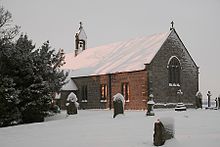
I first discovered Heavenfield when my mother insisted we stop beside a sign. There was a lonely church in the middle of a field. Churches are generally easy access so this in itself was strange. Reading the sign, I learnt about one of the more significant battles on English soil – literally the battle which decided if England would be Christian or if it would continue to be pagan.
St Oswald's Church Heavenfield

Conventional wisdom seems to hold that St Augustine came over to Kent and started Canterbury and everyone became Christian. It wasn't that simple. Christianity had been a part of British religious life for centuries before then. In Vindolanda, there are the remains of a 4th century church. Constantine was proclaimed emperor of Rome in York on 25 July 312. Constantine was famously the emperor who made Rome Christian. However in the years after the Roman legions left and the Angles  and Saxons settled, things changed and Christianity was not necessary the religion of choice of the ruling elite.

St Augustine’s mission became poised on a knife-edge because he was, according to British Christians arrogant. He expected obedience. The British church differed from the Roman church in the way they figured Easter, the way the monks wore their tonsure, the unique way of penance and how many bishops it took to consecrate another bishop. The last was surprising as  Britain sent three bishops to the council of Arles and signed up to that.  There were other differences but apparently the way monks wore their hair was a huge sticking point.
Another view of Heavenfield

In 632,the Northumbrian Bretwalda,  King Edwin who was nominally Christian in the Roman tradition (his wife had Kentish connections) lost a battle and his life to Penda of Mercia. Pagans then overran Northumbria.

In 634, the son of the previous Bretwalda Athelfirth and nephew to Edwin, Oswald made his bid for the Northumbrian throne. Oswald had converted to Christianity when he was exiled amongst the Dalriata in south western Scotland. He followed the Celtic tradition of Christianity.  He landed in the west and his war band which included warrior monks made their way to just outside the Roman town of Corbridge. There, in a field, Oswald raised his standard and a cross. This field became known as Heavenfield. He defeated the pagan Penda and drove his followers from the lands. Northumbria was restored to its previous prosperity.
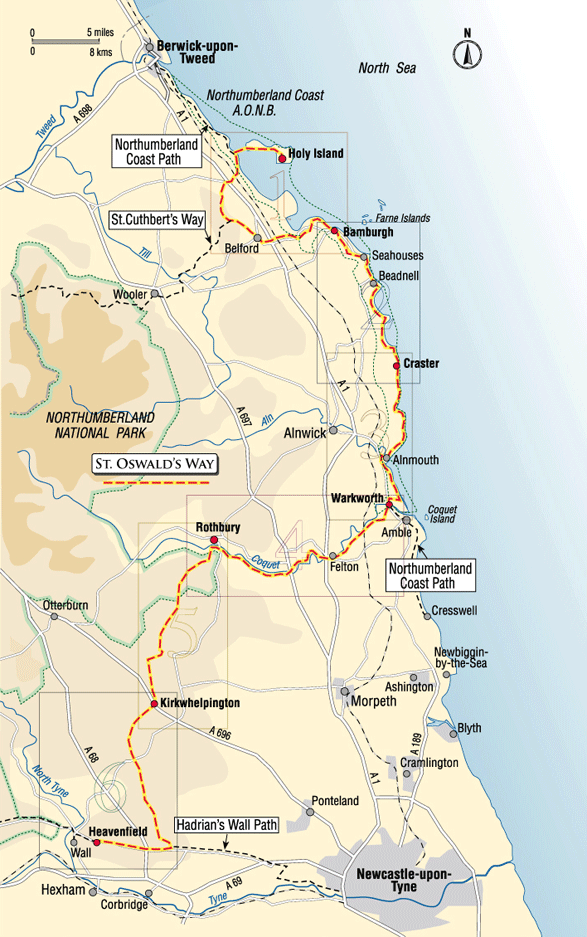
St Oswald's Way

Unlike his late uncle who merely paid lip service to Christianity, Oswald decided his new kingdom would be Christian. He sent for monks from Iona. They started a monastery at Melrose and rapidly expanded to Lindisfarne (or Holy Island).  Oswald became the Bretwalda or High King of all Britain. Tolkien is supposed to have based Aragon on him.  After Oswald fell in battle, his brother Oswui became Bretwalda and was the only 7th century British king to die in his own bed after 40 years of rule. It was Oswui who convened the Synod of Whitby which decided to follow the Roman rather than the Celtic traditions of worship.

These days, Heavenfield is part of the St Oswald’s Way – a long distance walk which takes in some of the most beautiful parts of Northumberland and stretches from Chollerford (near to Heavenfield) up to Lindisfarne (Holy Island). It takes about a week to walk it.

Michelle Styles writes warm, witty and intimate historical romance for Harlequin Historical. This month Harlequin historical are releasing 3 of her Victorian novels To Marry a Matchmaker, Compromising Miss Milton and Breaking the Governess’s Rules. You can learn more about Michelle and her books on www.michellestyles.co.uk

22 December 2009

The Seasons: Christmas Carols

By Lisa Marie Wilkinson

"Deck the halls with boughs of holly, fa la la la la, la la la la..."

Caroling is a rich oral tradition going back countless generations and suspected to have its roots in feudal societies where the poorest citizens would travel from door to door, often pausing to sing for their supper.

The term "caroling" is thought to be a derivative of the old French carole, a kind of dance, or from the Latin, carula, meaning a circular dance. Carols were originally secular pieces of music associated with traditional folk dances. A celebration of song and dance designed to honor the Winter Solstice; the "Festival of Yule" is believed to have played a part in the evolution of caroling as a Christian tradition.

Early Christians substituted hymns for the pagan songs sung around stone circles. Songs to commemorate the birth of Christ date back to the 4th century, but it took several centuries for traditional somber Christmas music to gradually give way to a new version of carols that incorporated upbeat Latin rhythms and joyous lyrics. St. Francis of Assisi is credited with beginning the popular tradition of the Christmas song with the advent of his nativity plays in the 13th Century.

There are several theories speculating how the practice of caroling--alternately known by the old Norse term, "wassailing"--originated. One theory holds that carolers went door to door because carols were viewed as a pagan custom and they were refused permission to perform the songs in churches. Another hypothesis claims that the practice is actually a pagan custom adopted by Anglo-Saxon peasants, who stopped at the doors of their superiors and proceeded to sing in exchange for a meal or a hot beverage. A hot, spiced beverage known as "wassail" was often served to these impromptu guests.

In 17th century England, the joyous spirit in which carolers serenaded their hosts offended Puritan Oliver Cromwell, resulting in a ban on caroling that lasted for an entire decade. The carols survived because people still sang them in secret; however their popularity had dimmed by the 16th century. The practice of caroling was revived again during the 18th century and experienced a dramatic resurgence in popularity during the 19th century Victorian Era.

Interesting Carol Facts:

"I Saw Three Ships"
First written in the middle ages, this carol married a traditional English folk melody to lyrics written by wandering minstrels. Several versions of the lyrics have existed, with the original believed to describe the skulls of the three wise men being carried by vessel to Cologne cathedral in Germany. The version sung today features a tale of Mary and Joseph as they travel to Bethlehem.

"Silent Night"
An Austrian priest wrote the lyric in 1816, and the words were fitted to a melody by his friend Franz Gruber in 1818. The carol made its debut when performed by its writers in a midnight mass Christmas service that same year. The original German lyric was translated into English in 1863 and in 1914 "Silent Night" became the first carol sung to mark the Christmas Truce during World War I because it was the only carol known by soldiers on both sides.

"Jingle Bells"
This perennial Christmas favorite was actually composed by James Pierpont in 1857 as a song to commemorate Thanksgiving, and was originally titled, "The One Horse Open Sleigh."

"The First Noel"
Although words and melody were not published together until they appeared in a collection of hymns in the early nineteenth century, this carol dates back to the dramatizations of Biblical stories known as Mystery Plays in the thirteenth and fourteenth centuries.

"Ave Maria"
With a melody rooted in liturgical chants dating back to the tenth century and words derived from an old Roman Catholic prayer based upon biblical scripture Luke 1:28, "Ave Maria" is felt by many to be the most sacred of hymns. The version of the hymn we celebrate today was orchestrated by composer Franz Schubert in 1825.

"Joy to the World"
Although the lyric was eventually traced and validated as having originated from the Old Testament, the American composer, Lowell Mason, credited the lyric to George Handel when setting the words to music in 1839, in an effort to ensure the popularity of the song. For over a century Handel was erroneously credited with having written the lyric until music historians were able to prove the true author of the lyric: King David.

With the invention of radio and recorded media, we can now enjoy our favorite carols sung by our favorite artists at any time of the year. These days, carols invoke the season as much as the scents of holiday baking, decorated Christmas trees, special church celebrations, and the sighting of Santas in every mall.