Showing posts with label Mark Twain. Show all posts

29 August 2011

The Children of Mark Twain

by Jacquie Rogers

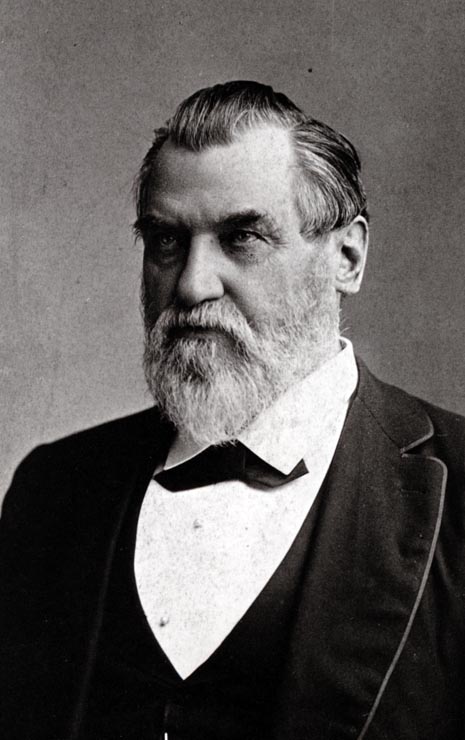
Mark Twain (Samuel Langhorne Clemens) is probably the best-known American author of all time. He was curious (a close friend of Nikola Tesla) and he had a case of the wonderlust that served his writing well. He was a popular speaker, novelist, and he promoted his works relentlessly. Twain made a lot of money from his writing, but he wasn't so hot at investing, so spent a good share of his time scraping by.

In 1870, he married Olivia Langdon, the sister of Twain's friend, Charles Langdon. They first lived in Buffalo, New York, and then moved to Hartford, Conneticut, where they built a house and settled. Their first child, a son named Langdon, was born prematurely in 1870 and died in 1872 of diptheria.

Next came Olivia Susan Clemens, called Suzy. She suffered from poor health all her life but was a very intelligent child, penning a biography of her father when she was only thirteen. This biography was included in Twain's Chapters from my Autobiography. Suzy attended Bryn Mawr University and was active in theater, writing plays, acting, and singing. She left after a year, but continued writing.

Most sources say she was the apple of her daddy's eye, but she had difficulty living under the umbrella of Mark Twain's daughter. In August of 1896, she contracted spinal meningitis and died three days later at the age of 24. Her parents were devastated, and Mark Twain never did get over his losss.

In 1874, a third child was born to Samuel and Olivia Clemons: contralto Clara Langhorne Clemens Samossoud. Clara had the distinction of being the only one of her siblings to live a long life. She was a talented singer and studied voice and piano in Vienna and elsewhere in Europe. Her debut European performance was in Florence, Italy. She performed frequently in the United States as well.

Clara married Ossip Gabrilowitsch, a pianist, conductor, and composer. They had a daughter, Nina, and Gabrilowitsch died in 1936 of stomach cancer. In 1944, she married symphony conductor Jacques Samossoud, a man twenty years younger than she.

Because she was the only child who survived, Clara managed the Mark Twain estate until her death. Her daughter died four years later of a possible drug overdose.

The last child born was Jane Lampton Clemens, called "Jean." She contracted scarlet fever at age two and was never healthy after that. From the time she was ten years old until her death, she suffered seizure, later diagnosed as epilepsy. She spent many years in and out of sanitariums, and died of a heart attack caused by a seizure when she was bathing. She was only 29.

There are no surviving direct descendants of Samual and Olivia Clemens.

Sources:
Steamboat Times
Twaintimes
Wikipedia: Clara
Virginia.edu


Jacquie Rogers writes quirky, magical romances. Available now are: Western historical romance, MUCH ADO ABOUT MARSHALS 
Contemporary western, DOWN HOME EVER LOVIN' MULE BLUES
Multi-era faery story, FAERY SPECIAL ROMANCES
Christmas story, FAERY MERRY CHRISTMAS.

She's co-founder of 1st Turning Point, a pay-it-forward website where authors teach, share and learn promotion and marketing.

14 March 2011

Crime & Law Enforcement: Fingerprinting


By: Jacquie Rogers

Fingerprinting has only been utilized for criminal identification for about the last hundred years, but the study of fingerprints has gone on for centuries. The practice was well known, and I used it in my western historical romance that will be released in July, Much Ado About Marshals.

I was teetering on the edge of anachronism and I knew it. My story takes place in 1885 and the conflict revolves around the likelihood of the criminal being identified by fingerprinting. This wasn’t a stretch because the heroine is rabid dime novel mystery reader, and in 1883, Life on the Mississippi by Mark Twain featured a murderer who as identified by this method. I figured if Mark Twain could use it in 1883, I could use it in 2011.

Let’s take a brief walk through the history of fingerprint identification.

In 2011, we consider fingerprinting the most failsafe identification system for the money. Fingerprint evidence is accepted in every court worldwide, but it was not always so. Other methods of identification were used for that purpose, and fingerprinting was used for signatures and that sort of thing long before it was every considered for use in law enforcement.

People have used fingerprints for a long time—the Ancient Babylonians used them for contract signatures. There’s evidence that the builders of the Egyptian pyramids used them, and the Chinese have used fingerprints as identification on official documents since at least 300 BC.

Europeans lagged a bit, and first started looking into fingerprinting in the 1600s. In 1684, Dr. Nehemiah Grew and Professor Marcello Malpighi both wrote papers describing in detail the fingerprint ridges. The Malpighi layer of skin is named after the latter. To take fingerprint studies a step further:
“In 1823, Professor Johannes Evangelist Purkinje published the most detailed description of fingerprints to have appeared anywhere up to that time. Professor Purkinje's thesis entitled A Commentary on the Physiological Examination of the Organs of Vision and the Cutaneous System describes, with illustrations, nine fingerprint patterns classified in Latin. From his illustrations, it can be seen that the Latin classifications refer to what Henry would later name arches, tented arches, loops, wholes and twinned loops. Purkinje's research was purely anatomical, and he made no mention of individuals being identified by the patterns that he described. However, he recommended further research, and others soon took up his challenge.”

(The quote is from The Thin Blue Line)

Off we go to India where Sir William Herschel kept a record of all the handprints used to "sign" contracts after the Indian Rebellion of 1857. He was also in charge of the jails and kept fingerprint records of each prisoner. Herschel was the first European to observe that all fingerprints were unique. But . . .
A Scottish doctor by the name of Henry Faulds was a contemporary of Hershel, albeit a sworn enemy, as both men tried to solidify their place in history by claiming they each were the "Father of Fingerprinting." Faulds' body of work was impressive and valuable. While working in a hospital in Tokyo, Japan, in 1874, Faulds kept records of fingerprints and concluded that fingerprint patterns were unchangeable and immutable and that the technique of rendering a set of fingerprints could best be done with printer's ink on a smooth board. Faulds was also able to lift a fingerprint from a bottle of whiskey, and thus received credit for the first identification of a fingerprint.

That's from fingerprinting.com.

Faulds sent his findings to Charles Darwin (yes, that one), who sent them on to his cousin, Sir Francis Galton. He identified and classified the minutia of fingerprints in his book appropriately titled "Fingerprints," and concluded that fingerprints were unique to an individual, and stayed the same throughout a person's lifetime.

Juan Vucetich used Galton's findings for his own police work: the first to use fingerprints to solve a crime, and his method is still used by Latin American countries to this day. From wikipedia:
In 1892 Vucetich made the first positive identification of a criminal in a case where Francisca Rojas had killed her two sons and then cut her throat, trying to put the blame on the outside attacker. A bloody print identified her as the killer.
Then in 1897, British India adopted fingerprinting as the official means of criminal identification based on the work and research of Sir Edward Richard Henry. Scotland Yard adopted the Henry Classification System in 1901 and this system is still in use in English speaking countries.

Various police departments in North America began adopting this method, and by 1905, the US Army did, too. The first central repository for fingerprint records was formed in 1911 by the Dominion Police Force in Ottawa, now maintained by the Royal Canadian Mounted Police. The US Congress established the identification division of the Federal Bureau of Investigation in 1924.

Today, the Department of Homeland Security stores over 100 million prints in their AFIS (Automated Fingerprint Identification Systems). The FBI has IAFIS (Integrated AFIS) where 60 million prints are stored. Fingerprints are used for identification of missing persons, murder victims, criminals, and unknown deceased persons.

While DNA testing has also been shown to be very valuable, fingerprint identification is still the most widely used tool for identification.


Sources:

Fingerprinting.com
Fingerprint America
History of Fingerprinting
The Thin Blue Line
Sir Francis Galton
Online Digital Education Connection
Wikipedia


Jacquie Rogers writes quirky, magical romances. Available now are her contemporary western, DOWN HOME EVER LOVIN' MULE BLUES, a multi-era faery story, FAERY SPECIAL ROMANCES, and a Christmas story, FAERY MERRY CHRISTMAS. She's co-founder of 1st Turning Point, a pay-it-forward website where authors teach, share and learn promotion and marketing.

20 October 2010

Money Matters: The Comstock Lode

By Jacquie Rogers

What one event influenced the outcome of the Civil War, built the Bank of California, financed San Francisco, created a new state, built a prestigious university, and pushed the completion of the trans-continental railroad? Yep, the discovery of the Comstock Lode.

Virginia City, Nevada, is on top of this momentous find--it's a great place to visit and you can go on several excellent tours. The Comstock Lode was the world's richest mining discovery at the time. People think about silver when you mention the Comstock Lode, but actually miners extracted 57% silver and 42% gold--more gold than most gold mines.

Since the 1849 California Gold Rush, prospectors scoured the western half of North America obsessed with gold fever. In 1859, Pat McLaughlin and Peter O'Reilly found gold at the head of Six-Mile Canyon. Henry Comstock, good fellow that he was, told McLaughline and O'Reilly that the discovery was on his pasture land and, well, they believed him. Same old story--the discoverers weren't the ones who made the money. But then neither did Henry Comstock.

Old Virginnie Town's population increased from about three to 17,000 in the first year. One major frustration the gold miners had was the annoying sticky blue-gray mud that clung to their shovels. When they assayed the mud, it turned out to be silver ore worth $2,000 per ton! That's a lot of money in 1859. Things really heated up around then! From Calliope:
Frame shanties pitched together as if by accident--tents of canvas, of blankets of brush, of potato-sacks, and old shirts, with empty whiskey barrels for chimneys--coyote holes in the mountain-side forcibly seized and held by men--pits and shafts with smoke issuing from every crevice--piles of goods and rubbish in the hollows, on the rocks, in the mud, in the snow everywhere, scattered broadcast in pell-mell confusion.
Lots of men who are household names today made their fortunes from the Comstock Lode, among them are: George Hearst, father of William Randolf Hearst; Leland Stanford (right), founder of Stanford University; William Ralston, founder of the Bank of California; and of course the most famous was an unsuccessful prospector who took up the pen, Samuel Clemens, better known as Mark Twain.

Within a few years, the political climate back East heated to boiling. President Abraham Lincoln had a war to finance, and the Comstock Lode was entirely too enticing. The boundaries were defined and Nevada became a state even though the population was too small to qualify it.

All didn't go smoothly at first. There was much dispute and hooplah over boundaries, and in the first six years, of the $50 million of ore mined, $10 million went to litigation! And of course one of the preeminent lawyers, William Stewart, ended up in the U.S. Senate.

The Comstock Lode brought a lot of innovations: the first miners' union, advances in drilling and tunneling technology, square-set timbering (which changed mining all over the world), and lots of other inventions that were the catalyst for modern mining practices. It also made a few men rich and broke thousands.

Sources:
Online Nevada
Calliope
Stanford University
Wikipedia

Jacquie Rogers writes quirky, magical romances. Available now are her contemporary western, DOWN HOME EVER LOVIN' MULE BLUES, a multi-era faery story, FAERY SPECIAL ROMANCES, and a Christmas story, FAERY MERRY CHRISTMAS. She's co-founder of 1st Turning Point, a pay-it-forward website where authors teach, share and learn promotion and marketing.

12 June 2008

Thursday 13: 13 Historical Religious Opinions

By Jacquie Rogers

Famous people have had an interesting variety of opinions on religion and its role in society. Today's Thursday Thirteen (and then some) addresses vastly different points of view on this subject.

1. "The true meaning of religion is thus not simply morality, but morality touched by emotion." Matthew Arnold (1822 - 1888)

2. "The principle of liberty and equality, if coupled with mere selfishness, will make men only devils, each trying to be independent that he may fight only for his own interest. And here is the need of religion and its power, to bring in the principle of benevolence and love to men." John Randolph (1773 - 1833)

3. "We do not destroy religion by destroying superstition." Cicero (106 BC - 43 BC)

4. "Say nothing of my religion. It is known to God and myself alone. Its evidence before the world is to be sought in my life: if it has been honest and dutiful to society the religion which has regulated it cannot be a bad one." Thomas Jefferson (1743 - 1826)

5. "Religion is the sigh of the oppressed creature, the heart of a heartless world, just as it is the spirit of a spiritless situation. It is the opium of the people." Karl Marx (1818 - 1883), "Critique of Hegel's Philosophy of Right"

6. "In Christianity neither morality nor religion come into contact with reality at any point." Friedrich Nietzsche (1844 - 1900), The Antichrist

7. "God can be realized through all paths. All religions are true. The important thing is to reach the roof. You can reach it by stone stairs or by wooden stairs or by bamboo steps or by a rope. You can also climb up by a bamboo pole." Ramakrishna (1836 - 1886), pictured

8. "Conventionality is not morality. Self-righteousness is not religion. To attack the first is not to assail the last." Charlotte Bronte (1816 - 1855)

9. "We have just enough religion to make us hate, but not enough to make us love, one another." Jonathan Swift (1667 - 1745)

10. "A little philosophy inclineth man's mind to atheism, But depth in philosophy bringeth men's minds about to religion." Sir Francis Bacon (1561 - 1626)

11. "Religion consists in a set of things which the average man thinks he believes and wishes he was certain of." Mark Twain (1835 - 1910)

12. "All humanity is passion; without passion, religion, history, novels, art would be ineffectual." Honore De Balzac (1799 - 1850)

13. "England has forty-two religions and only two sauces." Voltaire (1694 - 1778), pictured

And today's bonus:

"If I had to choose a religion, the sun as the universal giver of life would be my god." Napoleon Bonaparte (1769-1821)

Princess Keely, Star of Faery Special RomancesDown Home Ever Lovin' Mule Blues

Myspace *** Bebo *** Faery World

Faery Special Romances *** See the book video
Royalties go to Children's Tumor Foundation, ending Neurofibromatosis through Research

Coming soon: Down Home Ever Lovin' Mule Blues