Showing posts with label Ginger Myrick. Show all posts

11 August 2015

Great Explorations: Portuguese Discovery of the Azores


Vasco da Gama in India
My debut novel, El Rey: A Novel of Renaissance Iberia, is set during the height of the Age of Exploration. The title character is a sea captain working under aegis of the Portuguese Crown. He is associated with Vasco da Gama, who was the first European to circumnavigate the continent of Africa and arrive in India. This expedition established trade relations and opened the door for expansion into the orient, but it would not have been possible without earlier ventures into the unknown.

The Portuguese have a longstanding tradition of exploration. As early as the 14th century, King Dinis of Portugal was keenly interested in the idea of foreign trade. He elevated Manuel Pessanha, a merchant sailor from Genoa, to the first Admiralty of the Portuguese Navy. A few years later, Afonso IV ordered Portugal’s first official explorations, but the most enthusiastic campaigns came under the advocacy of the first Duke of Viseu, Infante Enrique of Portugal, better known as Henry the Navigator. He was the third son of João I and Philippa of Lancaster, daughter of John of Gaunt.

At twenty-one years of age, Henry accompanied his father and brothers on a mission to capture the Moroccan port of Ceuta. The main objective of the Portuguese invasion was to curtail piracy. The port’s strategic location on the tip of the African continent—just a short distance across the Strait of Gibraltar from Southern Iberia—made it a favorite spot for pirates to ambush victims and launch frequent raids. After securing the port, claiming it as a Portuguese territory, and opening up this avenue into Africa, Henry was inspired to go deeper, even developing the caravel–a smaller, faster, and lighter ship–for the purpose. He pushed south down the African coast leaving Portuguese fortifications along the way and finding abundant stores of gold and silver to fill the royal coffers. He and his adherents laid the groundwork for future journeys into India then later into China, Macau, and eventually Japan.

Henry the Navigator
Henry also expanded westward into previously uncharted territory of the Atlantic Ocean. One of his most important discoveries was a small chain of nine islands 930 miles west of Lisbon: the Azores. After the archipelago was officially discovered by Gonçalo Velho Cabral, a captain in Henry’s service, the Navigator passed a decree in 1450 naming Jacome de Bruges as administrator of Terceira, the most promising of the islands. De Bruges, a Flemish nobleman, returned to Flanders and recruited fishermen, farmers, and merchants to follow him to the newly founded province of Portugal. He also brought with him animals and provisions necessary to their task. The original settlers landed in the north and erected the first church, but few of them remained there because of the difficult access.

Eventually the island was divided into two administrative seats, and Angra became the capital in the south. The site was chosen as a port because of its advantageous geographical location and many topographical attributes. The word ‘angra’ means cove, and this particular cove was deep enough to provide anchorage for larger vessels. It had the further benefit of being sheltered from strong winds by the ridgeline of Monte Brasil, an extinct volcano directly to the west.

The favorable conditions of its physical location and the changing circumstances of the time contributed to Angra’s rapid growth and development of the surrounding areas. New commercial ventures, such as the exportation of wheat and woad to the mainland, added to the importance of the island and thus increased the worth of the port. With the advent of trade relations with India and the major role played by the Portuguese during the Age of Exploration, Angra quickly became indispensable as an official port of call with worldwide significance.

The port of Angra
Because of the thriving trade industry the Portuguese had built up in the East Indies, the bay at Angra was constantly filled with traders coming and going, officially checking their wares, picking up loads for transport to the mainland, or resupplying their vessels for subsequent runs to the East. The trade was so vigorous that it necessitated the formation of a special office: “Purveyor to the Armada of the Islands and the merchant vessels of the East India trade in all of the islands of the Azores“. The creation of the position was necessary to protect the large emporiums at Angra, which housed a bounty of precious metals, gems, and exotic spices, presenting a major temptation to pirates. The holders of this esteemed title were charged with the safety of the residents and the visiting merchant fleet once the ships entered Portuguese territory in the North Atlantic. They were also in charge of overseeing customs, resolving disputes, and maintaining military preparedness.

By 1534, Angra was as important to Portugal as any town on the mainland and was the first settlement in the Azores to be granted the official title of city. By that time, comparable numbers of private dwellings, military bases, convents, and churches had been formed, and later that year, it was named by Pope Paul III as the ecclesiastical seat with authority over all nine of the Azorean islands. It also provided the jumping off point for further Portuguese exploration into the west and their colonization of the New World.

Ginger Myrick was born and raised in Southern California. She is a self-described wife, mother, animal lover, and avid reader. Along with the promotion for BUT FOR THE GRACE OF GOD, WORK OF ART, THE WELSH HEALEREL REY, and INSATIABLE: A MACABRE HISTORY OF FRANCEshe is currently working on novel #6. A Christian who writes historical fiction with a ‘clean’ love story at the core, she hopes to show the reading community that a romance need not include graphic details to convey deep love and passion. 

29 June 2015

Weddings in History: Creating the Wedding of a Fictional Priestess in 14th Century Wales

By Ginger Myrick


My current project is The Welsh Prophecy, a work of historical fiction with a fantasy twist. It is set in 14th century Wales and spans the reigns of Edward II and Edward III. The tale begins in the general area of Merthyr Tydfil in South Wales and ends up in a town called Ashford in Kent, England. This very real setting sounds like a decent enough basis for straight historical fiction, but I had to complicate things by adding a fantastical element, which can be challenging, especially when this author wants that particular element to ring true.


The story opens on the main character’s wedding day. Family history holds that Briallen is descended from a legendary cult of priestesses. Because many of the traditions of the British Isles are unofficial and oral in nature, research material is scarce. Fortunately, accounts from the widely varied cultures share many like elements. The legends of Avalon and the Mabinogion—a collection of Welsh mythological tales—feature heavily in the local folklore and have been preserved in written form for centuries. These were the main sources I used to make the story come to life. The priestesses of Sena were a common theme and were described as far back as the first century in this account by Roman geographer, Pomponius Mela:

“In the Brittanic Sea, opposite the coast of the Ossismi [of Brittany], the isle of Sena belongs to a Gaulish divinity and is famous for its oracle; whose priestesses, sanctified by their perpetual virginity, are reportedly nine in number. They called the priestesses the ‘Galligende’ and think that it is because they have been endowed with unique powers; that they can stir up the seas by their magical charms; that they turn into whatever animals they want; that cure what is incurable among other peoples; that they know and predict the future - but that it is not revealed except to sea-voyagers, and only those travelling to consult them.”

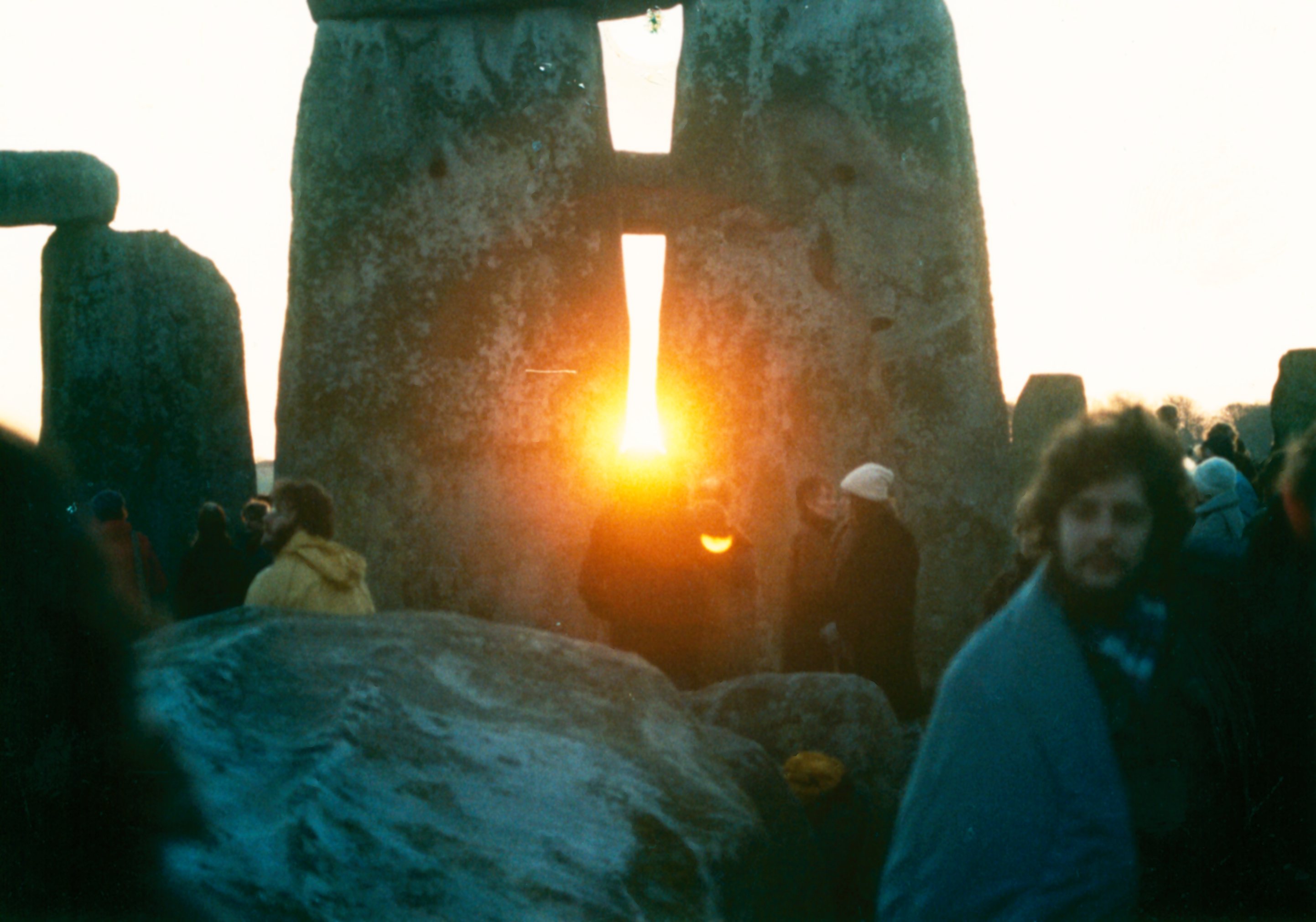
Considering the strong influence of fantasy, I could have simply made up the rites and rituals of Briallen’s mystical binding ceremony, but I wanted it to be believable and tie into the cultural superstitions of the native peoples. Both the winter and summer solstices held great importance for the indigenous tribes of Britain. The summer solstice would seem the obvious choice for a wedding—with the feting of the sun during its longest day on earth, festivals hailing the abundance of nature’s bounty, and the fine weather permitting long revels, even after the object of celebration slips below the horizon—but the winter solstice has equally compelling reasons for hosting a wedding.

Although the winter solstice is the shortest day of the year, thus the darkest, it also marks the turning of the sun and the beginning of the days getting longer. It presages the coming of spring and the promise of rebirth and potential growth, appropriate themes for the union of bride and groom. Also, in my eyes there is something exceedingly romantic about cold weather and a snow covered landscape. It begs for its own showcase with images of a ceremony attended by family and friends in plush furs and rich cloaks, their breath hanging in delicate clouds on the frigid air, candles producing mystical circles of haloed light in the haze, and all of this followed by a wedding night snuggled under an animal skin in front of a blazing fire. For dramatic effect, I chose the winter.

The vows themselves were a bit easier. The concepts behind them are timeless and enduring, so I just thought about what lovers have been saying to each other through the ages. The fantasy element, along with the fact that organized religious ceremonies would not have been readily available in the setting, gave me a bit of license. When the vows were written, though, I did have them professionally translated into Welsh to lend some realism.

“I love you with my entire being. I bind myself to you of my own free will that we may face our future—whatever it may bring—as one mind, one heart, one spirit. I will love you forever. As I say, so shall it be.”

“Rydw i’n dy garu gyda’m holl hanfod. Fe’th glymaf fy hun atat o’m hewyllus rhydd, fel y medrwn gwynebu’n dyfodol—beth bynnag a ddyfod—fel un meddwl, un calon, un ysbryd. Fe’th garaf am byth. Fel hyn y ddyweda i, fel hyn y bu hi.”

Details, like clothing, had to be realistically portrayed to give the scene authenticity. In the 14th century, few people in Britain had access to fine exotic fabrics like silks and satins. In Wales, which was a land largely considered untamed and its nobility less sophisticated than in England proper, even the landed gentry would not have possessed such garments, nor even have call to wear them in the unpredictable and extreme winters of the wild Welsh countryside. The main character of my story, Briallen, is from the rugged foothills below the Bannau Brycheiniog mountain range in Wales. Not a whole lot of international commerce going on there—mostly just sheep farmers—so her gown logically would have been made of wool dyed with plant material from the woodland surrounding their home. This was one concession to realism that I did make.

But I could not help topping it off with a more elaborate garment to signify her revered position within the community. I gave the bride a cloak of red and gold brocade lined with white feathers. Although materials like silks and satins may have been impractical and scarce, a thicker woven fabric like brocade would have been more suitable to the climate and more accessible. Again, not every working man of the era, indeed no common sheep farmer, would have the means to purchase a fine red and gold brocade, but a sought-after healer with rich patrons must have received many such trinkets in payment for her services.

In borrowing heavily from tradition, peppering in a few embellishments of my own, and dropping the whole of it into a documented historical setting, I hope I’ve been able to achieve my goal of creating a believable historical wedding and accompanying mythology with its own prophecy, fulfillment, and ensuing legacy, that should render a compelling trilogy when finished.


Ginger Myrick was born and raised in Southern California. She is a self-described wife, mother, animal lover, and avid reader. Along with the promotion for BUT FOR THE GRACE OF GOD, WORK OF ART, THE WELSH HEALEREL REY, and INSATIABLE: A MACABRE HISTORY OF FRANCEshe is currently working on novel #6. A Christian who writes meticulously researched historical fiction with a ‘clean’ love story at the core, she hopes to show the reading community that a romance need not include graphic details to convey deep love and passion. 

06 February 2015

Lovers: Beethoven and his Immortal Beloved

By Ginger Myrick

Ludwig van Beethoven was one of the most prolific composers of his time, and his music remains relevant today. Most of us are familiar with those moving musical works from Für Elise and Moonlight Sonata to his symphonies, which are nine in number and the basis for many a religious hymn. As with any form of creative expression there are detractors from his genius, but whoever listens to the music, whether he likes it or not, would agree that it was written with an abounding passion. And it would seem that Beethoven’s zeal was not confined to musical composition. He is also known in a lesser capacity as a writer of love letters.
Beethoven as a young man by Carl Traugott Riedel
Although destined for greatness, Beethoven was plagued by hardship his entire life, and it seemed this ill-fortune also extended to affairs of the heart. As a young man he was reported to have been officially in love twice, and though his affections were reciprocated on both occasions, his proposals were subsequently rejected due to class issues. But an ardent nature will not be tamed, and where the ladies were concerned, the fiery musician continued to follow his heart, unheeding of those early repudiations.
Along with numerous theories about the identity of his ‘Immortal Beloved’, there is also speculation about the actual date of the correspondence. The letters are dated July 6 and 7, but for some reason the year was omitted. This has bearing on the issue because, not only would Beethoven have been at different stages of his life during the possible years, he would also have been in different locations, exposed to different sets of associates, etc. For the sake of brevity, I have chosen the most commonly cited scenario: the summer of 1812 when, at 42 years of age, Beethoven was ordered by his doctor to the Czech spa town of Teplitz in an attempt to restore his declining health. This was where he is believed to have set forth his praise of one lucky female and made his mark in the annals of romance.
As the composer had never married and was not known to be openly courting an inamorata at the time, the intended recipient of these flowery declarations of love is a mystery that has not been solved even after 200+ years of investigation by Beethoven scholars. Despite his reputation as an irascible bachelor with a difficult personality—or perhaps because of it—he was something of a ladies’ man. As women made up the bulk of his piano students and general admirers of his genius, he was deep in female company for the entirety of his life. In fact, his Moonlight Sonata is dedicated to one of these early students, a young Italian countess named Giulietta Guicciardi. With such a passionate temperament, Beethoven suffered many such infatuations—too many, in fact, to list here—and no one can say with any certainty who was the subject of his famous missive.
The writings themselves really offer no further clues, either. Much of the letters are filled with mundane events and boring news of his travel, and aside from fretting over the postman’s schedule, Beethoven never mentions any place names that might pinpoint a location and help identify the woman. And although he is very clearly smitten—referring to his lady friend as “my angel”, “my only treasure”, “my most precious one”—he never calls her by name. But this intrigue only adds to the fascination surrounding the affair.
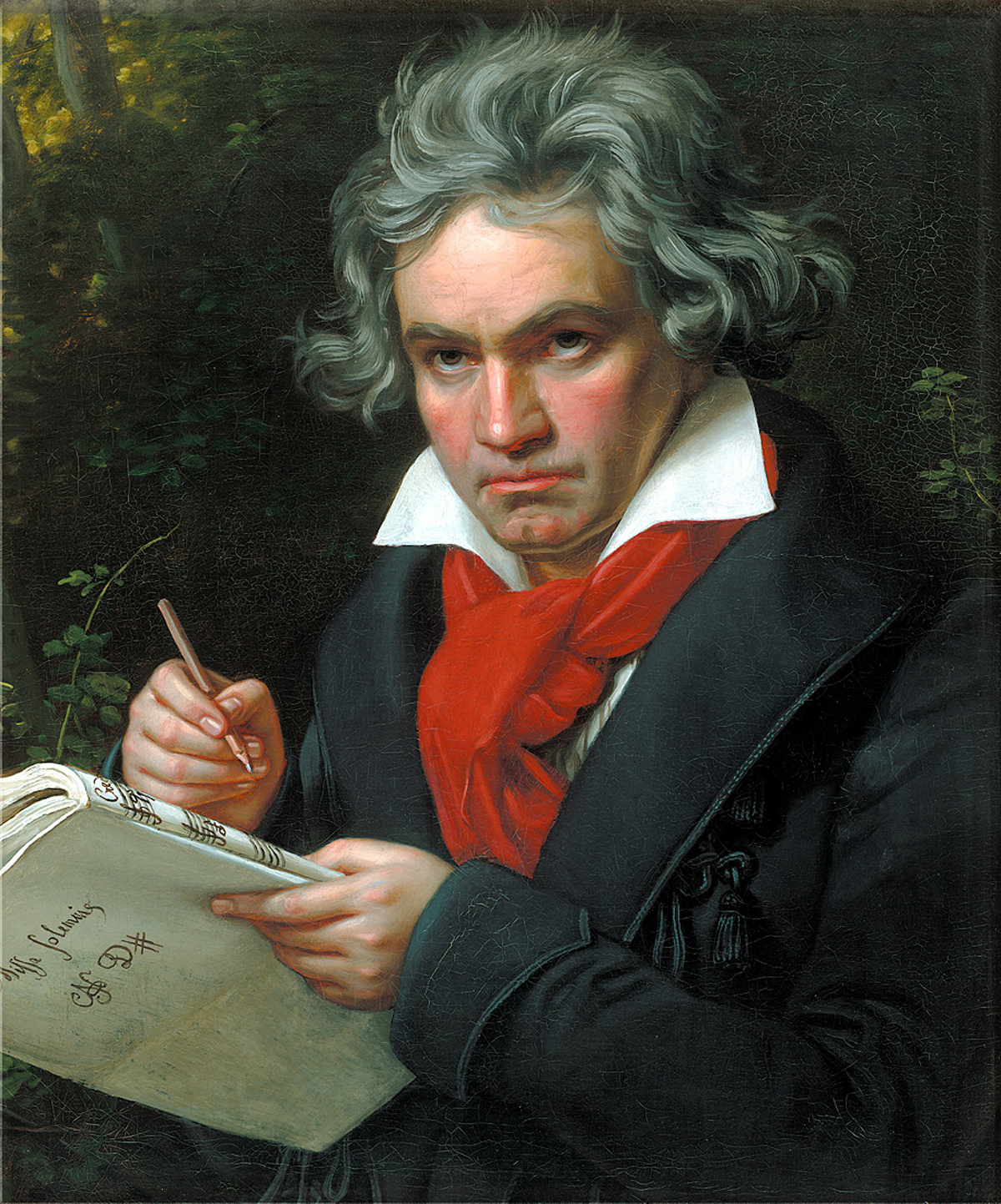
Beethoven at age 50 by Joseph Karl Stieler
Obscure tangents aside, some of the lines are exceedingly romantic with the capacity to send a woman’s heart soaring in flights of fancy as effectively as his soul-stirring sonatas. I have taken the liberty of sharing my favorite passages. Keep in mind that the following was not all set forth in one brilliant flash of transcription. That said, it is still quite dazzling!

My angel, my all, my very self: Only a few words today and at that with pencil (with yours) …”
“Though still in bed, my thoughts go out to you, my Immortal Beloved, now and then joyfully, then sadly, waiting to learn whether Fate will hear us – I can live only wholly with you or wholly apart from you.  I have decided to wander far away until I can fly to your arms and say that with you I have found my true home, can send my soul enwrapped in you into the realm of spirits.”
“My heart is full of so many things to say to you – ah – there are moments when I feel that speech amounts to nothing at all …”
“No other can ever possess my heart -- never -- never.  O God! why must one be separated from one so beloved?” 
“Farewell!  Continue to love me; never misjudge the most faithful heart of
Your beloved

Ever yours
Ever mine

Ever ours”
Adding to the mystery is the fact that the letters were ultimately found in Beethoven’s possession. They were only discovered upon his death fifteen years later in 1827 when his intimates were sorting through his personal effects. Despite his professions of eternal devotion and obvious desire to spend his life with his “Immortal Beloved”, he never achieved their union and died a confirmed bachelor.
Had he never sent the letters? Or had he dared to proclaim his love only to be spurned, yet again, and the evidence returned to him? We may never know. The mystery surrounding Beethoven’s Immortal Beloved persists today and perhaps will never be solved.


Ginger Myrick was born and raised in Southern California. She is a self-described wife, mother, animal lover, and avid reader. Along with the promotion for BUT FOR THE GRACE OF GOD, WORK OF ART, THE WELSH HEALEREL REY, and INSATIABLE, she is currently working on novel #6. A Christian who writes meticulously researched historical fiction with a ‘clean’ love story at the core, she hopes to show the reading community that a romance need not include graphic details to convey deep love and passion. Look for Insatiable: A Macabre History of France ~ L’Amour: Marie Antoinette live now at Amazon!

08 August 2014

Everyday Fashions: Marie Antoinette - Queen of French Fashion

By Ginger Myrick

Marie Antoinette was perhaps most iconically known for her sense of style. Although many of the ideas of French fashion we associate with her—the elaborate gowns, towering wigs, and fanciful headpieces—were already in place at Versailles by the time she arrived on the scene, she did take some of the concepts to new heights and bent the rules to make her own way. But she wasn’t always as chic as we have come to regard her.

When fourteen-year-old Archduchess Maria Antonia first crossed the River Rhine and arrived at the border of France, she was dressed in the Austrian fashion. The fabrics and cut of her gown were luxurious and very expensive, but Austrians had the reputation for being much more staid and businesslike than their French counterparts. Although the young archduchess was the offspring of the Holy Roman Empress and considered a Daughter of the Caesars—the most high-born of European royalty—she was still looked upon as provincial by the sophisticated French. The first thing they did, before even allowing her to cross into their land, was to strip her of all things Austrian—undergarments, jewelry, hairpins, etc.—and dress her à la française. This meant that nothing from her homeland was to cross into France with her, even her little pug Mops. All of her former belongings were left on the Austrian side of the border, and Maria Antonia, clothed, made-up, and with her hair dressed according to the customs of Versailles, emerged on the French side of the line of demarcation as Dauphine Marie Antoinette. Although this process was meant as more symbolism than fashion statement, she now looked the part of first lady of the most stylish court in Europe.

Anyone who has dealt with a finicky daughter knows what it’s like to go through several changes of clothing in one day. For the new Dauphine, though, it was not persnicketiness but a necessary evil of her position. There was a huge difference between the stylish new gowns she desired to wear and being dressed appropriately for her state duties. When Marie Antoinette woke in the mornings, she went through the steps of her lever--the everyday toilette routine of her rising--during which she was dressed somewhat informally for the pre-noon activities she could not accomplish in her dressing gown. At noon, she went through the process of Chambre--her formal toilette--during which she applied her make up and donned her official court gown in front of whomever had been admitted to Versailles for the day.

These court dresses were very different than the regular gowns in fashion at the time. They were made with heavy traditional fabrics—brocades, satins, and laces—and trimmed with excessively ornate accessories—tulle, bows, tassels, and trains. You name it, it was thrown on there. The panniers required to hold these confections out to their best advantage were nearly twice the size of the ones worn under everyday dresses. There are accounts of women having to enter rooms sideways to accommodate their gowns. The necklines were low-cut and revealing, and the tightly fitted bodices—which lent even more contrast to the bell-shaped skirts—required a corset to be worn underneath.

This seemed to be one of the things that Marie Antoinette objected to the most. There are letters still in existence today in which her mother chastised her over and over again for refusing to wear her corset. When Marie Antoinette became Queen of France, along with her subservience to her elders, her corset was one of the things she cast aside in the name of her newfound independence.

This was also when her relationship with Rose Bertin began in earnest. As Dauphine, Marie Antoinette frequented the dressmaker's fashionable boutique and occasionally sent for her to come to Versailles. Now they began a more regular association. The couteurière packed up her tools of the trade twice a week and trundled them to the new Queen’s apartments to plan their creations for whatever the upcoming schedule of events had in store. Marie Antoinette also designed many of her own fabrics, usually a light background embroidered with light and airy floral patterns. This custom needlework found its way into Rose Bertin's designs and many accessories of the Queen's personal habitations. There were chairs, draperies, even silk wall panels and tables made to her specifications.

Working with the Queen’s hairdresser, Léonard, Mademoiselle Bertin also designed custom poufs—the inner pads and cushions—that supported the towering hairstyles of the time, some of which measured over three feet tall. Although wigs had been a required part of the costume of Versailles since its inception they literally reached new heights during the reign of Louis XVI and were cunningly sculpted to celebrate current events, one of the most famous commemorating the King’s inoculation against smallpox.

Shortly after Louis XVI’s coronation, he gifted his Queen with le Petit Trianon, which became her personal escape from the rigors of her position. Along with discarding the strictures of etiquette, she also put away the detestable corset and opted for simpler gowns that did not require one. Of course there were still state occasions when she had to revert to the overdone court dresses, but left to her own devices, she resorted to the comfort and easiness of poplin, muslin, tulle, or cotton lawn topped with a straw hat to complete the look. She even had a portrait painted dressed in this same simple manner. It sparked an unforeseen controversy, drawing nasty remarks ranging from outrage from courtiers at the Queen being depicted in her nightgown and diminishing the standing of the royals, to the common folk clamoring against her 'playing at' being a peasant. Although innocently done, many such unwitting blunders contributed to the disparaging of her character and the vilification of her public image, in part, leading to the downfall of the monarchy and the rise of the French Revolution.

*This post was originally run at Philippa Jane Keyworth ~ Writing, Wit & Wonderings

Ginger Myrick was born and raised in Southern California. She is a self-described wife, mother, animal lover, and avid reader. Along with the promotion for BUT FOR THE GRACE OF GOD, WORK OF ART, THE WELSH HEALER, and EL REY, she is currently doing a blog tour for INSATIABLE. She is a Christian who writes meticulously researched historical fiction with a ‘clean’ love story at the core. She hopes to persevere and show the reading community that a romance need not include graphic details to convey deep love and passion. Look for Insatiable: AMacabre History of France ~ L’Amour: Marie Antoinette live now at Amazon!

20 June 2014

New & Noteworthy: June 20

Lots of exciting announcements from our contributors this month!

• SULTANA: THE BRIDE PRICE, new from Lisa J. Yarde, the fourth book in the Sultana series, will be available Monday, June 30, 2014.
In fourteenth-century Moorish Spain, a marriage of convenience for the sake of peace leads to disaster in the medieval kingdom of Granada. The young queen Jazirah, caught up in a dynastic struggle between warring brothers, fights for her survival. Wed to a husband who looks at her with more suspicion than lust in his eyes, she must escape reminders of a brutal past in a quest to find forgiveness, hope, and love. Her husband Muhammad faces greater peril than union with a wife he cannot trust. Surrounded by enemies within his family who seek the throne and undermined by ministers who would alter the course of his country’s future, he intends to rule the land of his ancestors alone. How can he endure against his most bitter opponents, not least among them, the woman whom he has chosen for a bride?
You can get all the details at Lisa’s website.


Ginger Myrick has extended the sale on her latest release INSATIABLE: A MACABRE HISTORY OF FRANCE until the end of June to accommodate new readers from her recent blog tour. Ebook editions for the Kindle and Nook will remain on sale for $2.99 until June 30th. See Ginger's website for more information.


• Blythe Gifford’s THE WITCH FINDER has been named a finalist in the Short Historical category for the Bookseller’s Best Award, sponsored by the Greater Detroit Romance Writers of America chapter.  Self-published in 2013, the book is available on Amazon (e-and print versions), Barnes & Noble, Kobo, and iTunes.  The story is set on the Scottish Borders in the seventeenth century and centers on a hero who is a “finder of witches” and an accused witch.  See the full list of finalists here. For more information on THE WITCH FINDER, see blythegifford.com.

Michelle Styles has just signed another two-book contract with Harlequin Historical for two more Viking romances! The first will be entitled TAMING HIS VIKING WOMAN. Michelle's newest novel SAVED BY THE VIKING WARRIOR will be released in September.

 J.S. Dunn is looking to assemble an anthology of historical fiction parody stories to be published in a single Kindle volume. Stories would be in the 3000-6000 word range featuring good-natured spoofs of commercial trends, subgenres, or styles and types in current historical fiction. Those interested can contact J.S. via her GoodReads page or by PM on Facebook for more information on the project, which is still in the planning stage.

20 May 2014

Great Buildings: Le Petit Trianon and le Hameau de la Reine

By Ginger Myrick

Le Petit Trianon is a small classical Greek chateau on the grounds of Versailles most commonly known as Marie Antoinette’s retreat from the demands of court life. Often referred to as her “playhouse”, it was actually built in honor of another lady, slightly less royal but perhaps more influential in her time. The chateau was originally contracted for the Marquise de Pompadour, the most influential mistress of Louis XV.

Sadly, Madame de Pompadour died four years before the construction could be completed. By the time it was finished and ready for occupation, Louis XV had moved on to a new favorite, Madame du Barry, and the little getaway was consigned for her use. She employed it to host informal supper parties and hunting trips for her royal patron, and it was here during one such outing that Louis XV realized the severity of his final illness. He was rushed back to his apartments and died two weeks later.

When the old king’s grandson was crowned Louis XVI of France, he gifted his young wife, Marie Antoinette, with le Petit Trianon as her own personal refuge. As its mistress, she was free to renovate it however she saw fit. She had always felt a certain fondness for Laxenburg, her family’s summer retreat in Austria, which was more rural and carefree than the other royal residences. Intending to recapture a part of her happy childhood, the new Queen tore out all of the old ostentatious décor and substituted a light and airy theme in its place. She restructured the grounds surrounding le Petit Trianon with a more natural feel, plotting the design after the English gardens en vogue at the time, until it resembled the quaint country manor of her dreams. She also had many innovative new devices installed, mechanical screens and tables that could be raised and lowered through a system of cranks and pulleys.


It was here in her refuge of le Petit Trianon that she began to become her own person, surrounding herself with music and beauty, two things essential to her happiness. She threw all-night revels away from the prying eyes of the public. Even her husband could not join in unless she invited him. She cast aside all pretense of formality, shunning the stilted court etiquette in favor of a more down to earth atmosphere where her circle of friends could cut loose and make merry in any way they wished. For the most part, they simply enjoyed each other’s company, playing cards, listening to music, and engaging in silliness, although outsiders imagined far worse.

There is a formal opera house located within Versailles, but to indulge her passion for performing, Marie Antoinette had her own personal theater constructed at le Petit Trianon. She invited professional theatrical companies to perform there, and she and her cohorts also put on many polished pieces for royal friends and relatives and even the King in attendance. Some of the original backdrops for the sets—works of art in themselves—were preserved and restored and are still on display today.

But it seemed that even this private retreat would not be enough for Marie Antoinette. Although she had redecorated it and made it comfortable, the fact remained that it had been constructed for someone else and passed to her only after belonging to another. She wanted something entirely her own—designed, built, and furnished to her exacting standards. She had always entertained the idea of being a well-loved chatelaine, so she commissioned an entire rustic village complete with villagers to tend it. 

The Queen’s Hamlet, or le Hameau de la Reine as it was known, was Marie Antoinette’s attempt to return to simpler way of life. She began with a seed of an idea in 1783, and the massive project took four years to complete. The fairytale village is set in a rolling green meadowland and consists of eleven
main structures and their annexes centered around a large natural looking lake that was used for boating and fishing excursions. There are five buildings that were reserved for the Queen’s own personal use and cottages for the ‘peasant’ villeins and caretakers, each house with its own private vegetable garden. There is a dairy, dovecote, guard’s residence, a tower, and even a mill that was functional in its time. There were ducks and swans on the ponds, sheep, goats, and cattle in the pastures, and chickens in the brooding shed, everything a real farm would have to supply wool, fresh milk, and eggs. Intent upon getting her royal offspring away from the suffocating atmosphere of Versailles and teaching them about the importance of the outdoors, the Queen spent much of her time at le Hameau with her children and her loyal friends.

Ironically, the illusion of this simple country tableau was extremely expensive to achieve. It was unfortunate that the Queen embarked on such a whimsical endeavor at a time when the common people of France were suffering under a heavy burden of taxes and food shortages. Her personal expenditures added to weight to the title of ‘Madame Deficit’ attributed to Marie Antoinette during the latter part of her tenure as Queen of France and eventually contributed to the downfall of the monarchy and the rise of the French Revolution.

Ginger Myrick was born and raised in Southern California. She is a self-described wife, mother, animal lover, and avid reader. Along with the promotion for BUT FOR THE GRACE OF GOD, WORK OF ART, THE WELSH HEALER, and EL REY, she is currently doing a blog tour for INSATIABLE. She is a Christian who writes meticulously researched historical fiction with a ‘clean’ love story at the core. She hopes to persevere and show the reading community that a romance need not include graphic details to convey deep love and passion. Look for Insatiable: AMacabre History of France ~ L’Amour: Marie Antoinette live now at Amazon!

16 May 2014

New & Noteworthy: May 16

• SULTANA: THE BRIDE PRICE, the fourth book in Lisa J. Yarde’s series set in Moorish Spain, will soon make its debut. Catch up on the previous title, SULTANA: TWO SISTERS, for just 99 cents at Amazon.com and 99 pence at Amazon UK – a 76% discount! Thursday, May 15 – Saturday, May 17 only.

Ginger Myrick's newest title INSATIABLE: A MACABRE HISTORY OF FRANCE (L'Amour: Marie Antoinette) is on sale for the introductory price of $2.99 through the end of May. If you're interested in a fresh take on this controversial Queen of France, pick up a copy now before the price goes up to $4.99 on June 1st.


27 April 2014

Author Interview & Book Giveaway: Ginger Myrick on INSATIABLE: A MACABRE HISTORY OF FRANCE ~ L’AMOUR: MARIE ANTOINETTE

This week, we're pleased to welcome author and Unusual Historicals' contributor Ginger Myrick with her latest novel,  INSATIABLE: A MACABRE HISTORY OF FRANCE ~ L’AMOUR: MARIE ANTOINETTE. The novel is available NOW. The author will offer a free copy of Insatiable to a lucky blog visitor.  Be sure to leave your email address in the comments of today's post or Sunday's author interview for a chance to win. Winner(s) are contacted privately by email. Here's the blurb.

In 1770, fourteen-year-old Austrian archduchess, Maria Antonia, left her homeland to marry the most sought after prince in Europe. Upon stepping into France she became Dauphine Marie Antoinette and assumed a fairytale life would follow.

But being the Queen of France is not all masked balls, beautiful dresses, and extravagant living. There are horrifying and unnatural forces at work behind the scenes, a mysterious plague causing a sinister transformation in the residents of Paris. When Marie Antoinette learns the details, she is stunned to find out that France has kept the secret for over two hundred years, and now she will be burdened with one of her own.

Determined to be the obedient daughter of the iron-willed Holy Roman Empress, she agrees to fulfill her commitment to the French Crown, until she unexpectedly falls for the handsome Swedish count, Axel von Fersen. Torn between her husband and her true love, her duty and her desire, Marie Antoinette longs for the day when she can be free to choose her path and follow her heart.


**Q&A with Ginger Myrick**


What do you want people to know about this book?

Although for the most part Insatiable is historically accurate, it’s not straight historical fiction. I don’t want a potential reader to think this book is wholly one thing or the other. I don’t want them to be put off by the horror aspect, because that is only a part of it. Some of the scenes get graphic, but hey! It was a revolution! There is a sweet and touching family depiction and a passionate love story at the core. I also try to give a well-rounded look at the political picture if not a detailed account.

How is Insatiable different from any other work of historical fiction about Marie Antoinette?

This book is a work of alternate history and borderline horror. Although for the most part it is historically accurate in respect to the documentation and timeline, I attribute some of the causes of historical events to the mysterious plague and its victims. I also put a spin on the propaganda against Marie Antoinette, taking the line that some of the assertions were true, even thought there was never any solid proof to back them up

In the past, your books have featured fictional characters. What made you decide on Marie Antoinette?

In my work, the inspiration dictates all. The period was perfect for the premise. There was a lot of upheaval during that time, and the violence and chaos suited my needs. I was actually more drawn to Catherine de’ Medici, but more people are interested in Marie Antoinette. I figured I’d try to hook readers with the big draw—fancy clothes, salacious love story, and the birth of the guillotine—and they’d stay with me through the series.

What liberties did you take with the history?

I stick with the assumption of Louis XVI’s impotence, although I attribute it to a fictional cause. There were also stories by the libelles—basically the National Enquirer of the time—that Marie Antoinette and her brother-in-law, the Comte d”Artois, had an affair. This also plays a major part in the book. I adopt the assertion that she and Axel von Fersen were lovers, which although widely accepted has never been conclusively proven. I also make her enmity with Madame du Barry into something more than a simple clash between personalities.

Who was your favorite character to write?

I really loved Louis XVI. The more I learned about him, the more I liked him. Most historians agree that he was a decent, upstanding man who was dealt an impossible hand. He was handed a country in a dire financial state and just couldn’t figure out how to make it work. He was being pulled in so many different directions, and his biggest downfall was his indecisiveness. He got a raw deal. 

I also loved writing Louis-Joseph, the first Dauphin who died when he was seven. By all accounts he was a sweet little thing, and I can’t even read those scenes without crying. It was heartbreaking. He died at the outset of the revolution, and no one really cared. The revolutionaries didn’t even give Louis the chance to mourn him properly, because they were so intent upon their cause.

Any interesting Google searches this time around?

Definitely! I wanted the pathology of my plague to be realistic, so there are a lot of diseases in my history! This may be giving things away, but I researched anemia, rabies, Creutzfeldt–Jakob disease (human mad cow), Kuru, the guillotine, and the list goes on in the same macabre theme. I don’t think I’ll go to jail for this one, though. I couldn’t replicate the diseases to inflict them upon someone, and I won’t be building a guillotine in my backyard any time soon!

What’s next?

This book is part of a series. I originally thought to do only a trilogy but have since revised my opinion. I think I have enough interesting ideas to do at least four books without the premise becoming hackneyed. The next will be about Napoleon and the subsequent one about Catherine de’ Medici. I’m still debating the others. 

Ginger Myrick was born and raised in Southern California. She is a self-described wife, mother, animal lover, and avid reader. Along with the promotion for BUT FOR THE GRACE OF GOD, WORK OF ART, THE WELSH HEALER, and EL REY, she is currently putting the finishing touches on novel #5. She is a Christian who writes meticulously researched historical fiction with a ‘clean’ love story at the core. She hopes to persevere and show the reading community that a romance need not include graphic details to convey deep love and passion. Look for Insatiable: AMacabre History of France ~ L’Amour: Marie Antoinette live now at Amazon!

24 April 2014

Excerpt Thursday: INSATIABLE: A MACABRE HISTORY OF FRANCE ~ L’AMOUR: MARIE ANTOINETTE by Ginger Myrick

This week, we're pleased to welcome author and Unusual Historicals' contributor Ginger Myrick with her latest novel,  Insatiable: A Macabre History of France ~ L’Amour: Marie Antoinette. The novel is available NOW. Join us again on Sunday for an author interview, with more details about the story behind the story. The author will offer a free copy of Insatiable to a lucky blog visitor.  Be sure to leave your email address in the comments of today's post or Sunday's author interview for a chance to win. Winner(s) are contacted privately by email. Here's the blurb.

In 1770, fourteen-year-old Austrian archduchess, Maria Antonia, left her homeland to marry the most sought after prince in Europe. Upon stepping into France she became Dauphine Marie Antoinette and assumed a fairytale life would follow.

But being the Queen of France is not all masked balls, beautiful dresses, and extravagant living. There are horrifying and unnatural forces at work behind the scenes, a mysterious plague causing a sinister transformation in the residents of Paris. When Marie Antoinette learns the details, she is stunned to find out that France has kept the secret for over two hundred years, and now she will be burdened with one of her own.

Determined to be the obedient daughter of the iron-willed Holy Roman Empress, she agrees to fulfill her commitment to the French Crown, until she unexpectedly falls for the handsome Swedish count, Axel von Fersen. Torn between her husband and her true love, her duty and her desire, Marie Antoinette longs for the day when she can be free to choose her path and follow her heart.

**An Excerpt from Insatiable: A Macabre History of France 
~ L’Amour: Marie Antoinette**


Prologue
November 1755
Vienna, Austria

The cries of a newborn rang through the wide marbled halls of the Hofburg Palace. It was the second day of November, the somber commemoration of Feast of All Souls—the Catholic Day of the Dead—an inauspicious time for the birth of a royal personage.
Francis Stephen stood gazing adoringly at the mother of his children and the beautiful little archduchess she had just produced. Although he bore the title of Holy Roman Emperor, and this was his fifteenth venture into the realm of fatherhood, he could not have been prouder had he been a simple farmer beholding his first child.
“She is small but lovely and utterly charming,” he smiled down at the baby.
“And destined for greatness,” the child’s mother agreed.
“But not yet. She is only just come into the world with seven other sisters ahead of her. For now, at least, can she not be allowed to be a simple little girl?”
Though she had just been through the ordeal of childbirth, Maria Theresa still managed to muster a look of hauteur. “A daughter of mine should never be allowed to forget her place.”
“It was worth a try,” Francis sighed then went on in a more serious tone. “But there is something I do not like about this day for her birth. It is too somber, too ominous for such a bright and dainty girl. I wish you had waited another few hours and produced her on the third instead.”
“And I would have preferred you to carry her then produce her at your own discretion, but alas, such things are beyond our control.”
“Touché, Madame,” he conceded. “Regardless, we should do what we can to give her a happy childhood. I feel the mark of destiny upon her and it weighs heavily, a dark looming presence that will taint any happiness she might hope to achieve.”
“Come, Dearest,” said the new mother. “I am the one who has just given birth, yet it is you who are experiencing the grim fantasies of postpartum. You are being far too sentimental. What is a daughter for if not to cement political alliances? Besides, it is my duty to do what best suits the Austrian people.”
Six months later, the validity of Maria Theresa’s statement was confirmed when the opportunity arose to ally Austria with its longtime adversary, France, the land of her husband’s birth. It was an unprecedented occasion and should have been cause for celebration, but Francis was not as delighted as his wife had anticipated. In fact, he looked quite distraught, so much so that she saw fit to comment.
“I would have thought you’d be pleased by this alliance,” she prodded carefully, “yet you look as if I’ve signed an order for the execution of your favorite hunter.” When he still had not responded, she reached out and placed her plump white hand gently on his sleeve. “What is it, my love? What has you so upset?”
Staring straight ahead without sparing his wife a glance, Francis answered in a strangely detached and oddly prophetic voice. “Since her birth, I have felt the shadow of death stalking my dear sweet Antoine. This alliance with France just feels like another step toward fulfilling her dark destiny.”
It was so haplessly stated that Maria Theresa did not even think to refute it. Instead, she tried to reason with him.
“You are overreacting, Francis. Nothing of the sort has occurred. This treaty is a simple agreement between nations against a common enemy. Besides, should France one day wish to solidify the union with a marriage, it would not happen for many, many years, and who is to say that it will fall to Antoine? Certainly France cannot be so very bad. After all, it produced you,” she added with an amused grunt filled with affection.
But Francis would not be cheered. “If you love me,” he began, knowing full well that she treasured him above anything in the world, “you will promise never to send her there. There are strange and macabre goings-on in France that should be kept from the eyes of the outside world, never to be exposed to the light of day. Promise me that she will not go.”
“I will do what I can,” she offered, mostly to pacify him and get him out of this morose train of thought, which was so unlike him.
She tried to put the incident aside and move the conversation to a different subject, but it had so unsettled her husband that the creeping sensation came over her that there must be some basis for his assertion. A cold finger of trepidation tiptoed down her spine, her scalp prickled, and the flesh on the nape of her neck crinkled into goose pimples. There arose within her the gnawing compulsion to learn the source of his disquiet, although an inner counsel screamed out for her to let it die.
Against her better judgement, in a voice barely above a whisper, she asked, “Francis, what are these things of which you speak? Why have you not mentioned them before?”
He turned to face her, and Maria Theresa was surprised to see the sheen of tears in his bright blue eyes. They typically held a contented expression with a touch of whimsy but were now utterly serious with no trace of their usual gaiety.
“Many years ago in my youth, I was sworn to silence as were the rest of my kin. But even if I were to betray my oath, the truth is so unthinkable that you would not believe me.” He turned his gaze from her, his tears brimming his eyes and streaming silently down his cheeks. He made no move to wipe them away, only prayed, “Perhaps she will be safe at Versailles.”

Ginger Myrick was born and raised in Southern California. She is a self-described wife, mother, animal lover, and avid reader. Along with the promotion for BUT FOR THE GRACE OF GOD, WORK OF ART, THE WELSH HEALER, and EL REY, she is currently putting the finishing touches on novel #5. She is a Christian who writes meticulously researched historical fiction with a ‘clean’ love story at the core. She hopes to persevere and show the reading community that a romance need not include graphic details to convey deep love and passion. Look for Insatiable: AMacabre History of France ~ L’Amour: Marie Antoinette live now at Amazon!