Showing posts with label The Battlefield. Show all posts

31 October 2014

The Battlefield: Culloden 16 February 1746

By Donald Lawie and Ian Lipke

The last pitched battle to be fought on British soil was a sorry affair. The Jacobite army of Prince Charles Edward Stuart had fought a successful campaign but now they were tired, unfed and unpaid. On the other hand the Hanoverian army commanded by Prince William, Duke of Cumberland and second son of German King George of Great Britain, was rested, well-supplied and their morale was high.
            The Jacobites had scattered in search of food – not in plentiful supply in northwest Scotland after a hard winter but William’s men were abundantly supplied by the British Navy. Charles had a sharp argument with Lord George Murray, the Jacobites’ general, and was determined to make a stand against the Hanoverians on a ground of his choosing. Murray pointed out that the chosen site – Drummossie Moor at Culloden – was unsuitable for the traditional Highland Charge, but Charles would not be swayed. The chosen ground sloped slightly upwards so that the Highlanders had to run uphill; melting snow had turned much of it into a bog. The ground was covered by heather with a few trees. Such a field was suitable for a cavalry charge but Charles’s cavalry were pitifully few.
            Culloden is about ten kilometres north-west of Inverness, the Capital of the Highlands, situated at the northern end of Loch Ness. The area was still in winter in February and the Jacobite/Highlanders had no suitable accommodation.
 They could only muster about 5,000 men against William’s 9,400 – a third of them veteran dragoons. William’s artillery were experienced regulars, Charles’s a scratch team of inexperienced volunteers.
            The standard Highland battle tactic was the Charge : each kilted man was armed with a musket (which he fired and dropped as the charge began), a pistol, a dirk (long dagger) in the left hand which supported a hide-covered oak shield (a targe) and in the raised right hand the razor-sharp, metre long broadsword made from German steel. The men ran, screaming, in packed ranks at the opposing lines; the descending broadsword could sever the shoulder or arm of the unfortunate opposing soldier.
            The two armies faced off in the classical manner – lines of infantry, with guns interspersed in the front line and cavalry as a backup. The Jacobite artillery opened the battle with some wild shooting but soon ran out of ammunition. Their opposition replied coolly with repeated discharges of deadly round shot into the closed ranks of Jacobites. The one-sided duel persisted for twenty minutes until the clansmen, led by the Atholls and Camerons, surged forward in the charge. This normally unstoppable tactic was blunted by the length of their run, boggy ground, the opposition artillery changing to grapeshot, and finally a new bayonet drill devised to counter the Highland raised sword and protecting targe. Cumberland had trained his infantry, armed with musket and triangle- shaped bayonet, to not face the Highlander charging at him but to turn half right and present his bayonet to the unprotected right armpit of the one beside him. This entailed absolute confidence in the soldier to his left, who had to bayonet the Highlander to his front. The newly-devised drill worked well, to the discomfiture of the Highlanders.
            Casualties were light in the Hanoverian army but over 1,000 Jacobites fell on the field. Many more were killed in the days and months to follow as William relentlessly pursued a policy of extermination, determined to eliminate all followers of the Jacobite cause.
            Two hundred and fifty plus years later, feelings in Highland Scotland still run hot at the mention of the Butcher of Cumberland and there is a lingering, romantic dream that one day history may be reversed.  I visited Culloden Moor in 1997, walked the clearly delineated lines, and played a Lament on my bagpipes while standing on the spot from where Charles misdirected the battle.  The site has changed little; a modern highway runs along one side, there is an interpretive centre with a video (which I did not watch) and the usual gimcrack souvenirs. A small forest covers part of the battlefield, there are markers showing where the different clans fought and fell, and flags fly to mark the front line of each army. It is easy to reconstruct the battle in one’s mind.
Culloden put an end to the aspirations of the House of Stuart to regain the British throne, which they had lost through overweening pride and stubbornness – just as Charles lost the last battle for similar reasons. Charles lived out his life in Rome, devising ineffectual schemes and steadily drank himself to death.

Donald Lawie is a freelance military historian who writes on his favourite theme, warfare.  His work has been published in such publications as the Australian War Memorial’s “Wartime” and the Australian Military History Society’s “Sabretache”.

He says, "There is a family tradition that our ancestors fought for Charles and the name “Charles” was my father’s; it is my and my son’s second name. I trust that this small tribute to the House of Stuart will endure for generations to come."

Ian Lipke became a teacher of primary children in 1958, transferring to secondary schools in 1964. He has taught in schools in remote and metropolitan areas of Queensland, Australia. He left school teaching in 1977 to lecture at the University of Queensland and at Queensland University of Technology. Throughout the late 1980s and 1990s, he was a deputy principal at several high schools, before retiring to manage his own tutoring business. In 2006, he returned to postgraduate studies through research at the University of Queensland. His whole life has been devoted to academic studies, which he very much enjoys. He is the author of NARGUN.                          

29 October 2014

The Battlefield and Beyond: The Destruction of the Irminsul


The Franks and Continental Saxons had been battling each other for a long, long time, but the war of 772 was different. It was a fight both for territory and for souls.

It was also Charlemagne’s first war in Saxony. He was merely King Charles then and relatively new to the throne. He and his brother, Carloman, each inherited half the kingdom four years earlier, when his dying father split the realm. After Carloman’s death in December 771, Charles seized his late brother’s lands, assuming sole rule of Francia.

When he decided to invade Saxony, Charles was no stranger to war. He was age 24 and had ruled some Frankish territory for less than a year.

The reason for the attack on Eresburg is open to speculation. Perhaps, the Saxons had stopped paying yearly tribute won from the previous war 14 years ago, while Pepin and then Charles were distracted with the wars in Aquitaine. Charles might have thought to let such insolence go unanswered would weaken him. Perhaps, Charles was trying to protect Church interests in pagan lands, or he saw the Saxons as a threat with the fortress of Eresburg so close to the Frankish border.

The Frankish annals don’t give us a play by play of the battles, and the Continental Saxons didn’t have a written language as we know it. However, Charles’s army marched to Eresburg after an assembly at Worms and captured a hilltop fortress in a strategic location. Then the Frankish king ordered the destruction of the Irminsul, a pillar sacred to the Saxon peoples.

We don’t know the Irminsul’s location, what it was made of, and even if there was only one. But one thing is certain: Charles was trying to prove something, just as Saints Boniface and Willibrord did decades ago when they violated pagan sites. The message to the pagans: Our God is stronger than those devils you worship.

The Royal Frankish Annals report that the Christians got divine assistance in demolishing the pillar. Because of a drought, the army did not have enough water to stay an extra day or two and complete their work. Suddenly around noon, a stream appeared and the men could finish the destruction and take the shrine’s gold and silver.

With that part of the mission accomplished, Charles’s army advanced to the Weser River, where they parleyed with the Saxons and got 12 hostages, sons from important families and a medieval form of insurance. If the vanquished behaved themselves, the hostages were guests. If they reneged on their promises, the hostages could be killed or sold into slavery.

But maybe Charles wanted another type of insurance, one with higher stakes than the hostages’ lives. When two parties made an agreement, they swore oaths and invoked the divine, but to Charles, only one deity was valid. So it’s not too much of a stretch to imagine that a Saxon leader was baptized and then made his vow, putting his soul on the line.

Threats to body and soul did not keep the peace. The 772 war was only the beginning of what would be a decades-long, bitter struggle with burned churches, forced conversions, mass murder, mass executions, deportation, and other brutality on both sides.

Sources

Carolingian Chronicles, which includes the Royal Frankish Annals and Nithard’s Histories, translated by
Bernard Walter Scholz with Barbara Rogers

Charlemagne: Translated Sources, P.D. King

Charlemagne, Roger Collins

Kim Rendfeld learned about the destruction of the Irminsul while researching her first novel, The Cross and the Dragon (2012, Fireship Press). That historic event so intrigued her, she had to write a second book from the Saxon perspective, The Ashes of Heaven’s Pillar (2014, Fireship Press), in which a mother will go to great lengths to protect her children. To read the first chapters of either novel or learn more about Kim, visit kimrendfeld.com. You’re also welcome to visit her blog Outtakes of a Historical Novelist at kimrendfeld.wordpress.com, like her on Facebook at facebook.com/authorkimrendfeld, or follow her on Twitter at @kimrendfeld, or contact her at kim [at] kimrendfeld [dot] com.

24 October 2014

The Battlefield: The Monmouth Rebellion 1685

The rebellion grew out of the Exclusion Crisis of the late 1670s, when Anthony Ashley Cooper, Earl of Shaftesbury instigated a Protestant movement to remove the Roman Catholic James, Duke of York, from succeeding his brother Charles II to the throne. Shaftesbury, along with Lord William Russell, Lord Essex and Sir Algernon Sydney, spent three years trying to push the bill through Parliament, but King Charles, sticking to the 'Divine Right of Kings' principle, refused to allow his brother to be disinherited.

James Scott, 1st Duke of Monmouth, the eldest of Charles II’s illegitimate sons, was the figurehead for this movement. Born in Rotterdam on 9th April 1649 to Lucy Walter, James arrived among controversy, in that his mother was believed to have been the mistress of Colonel Robert Sidney when she met Charles, so his parenthood was in question from the start. These rumours were believed to have been started by the Prince’s brother, James Duke of York, who feared Charles II might make James his heir as he had no legitimate children.

James Crofts
The young James' mother took him to London where she was arrested and imprisoned in the Tower of London. After questioning, allegedly by Cromwell himself, she was released and went to Flanders. This adventure apparently appalled Charles, who when James was eight, employed an agent to kidnap him. He was taken to Paris by Lord William Crofts, given his surname and lived at the Dowager Queen Henrietta Maria’s court, finally being brought to England when his father was restored to the throne at the age of fourteen. He never saw his mother again.

Charles II created him Duke of Monmouth, Earl of Doncaster, Baron Scott of Tynedale and appointed him a Knight of the Garter. Still only fourteen, James was married to the heiress Anne Scott, 4th Countess of Buccleuch. He took her name, and the couple were made Duke and Duchess of Buccleuch, Earl and Countess of Dalkeith, and Lord and Lady Scott of Whitchester and Eskdale.

At sixteen, Monmouth served under his uncle the Duke of York in the Second Anglo-Dutch War, and over the next fifteen years he distinguished himself as a brave and compassionate soldier – something which must have stuck in the craw of Uncle James of York.

Lord Shaftesbury urged King Charles II to recognise his son by the legitimisation of his marriage to Lucy Walters. The king refused, declaring before his council that had never been married to anyone except his queen, Catherine of Braganza. Monmouth always claimed his parents were married, a claim made by his mother, but which was never proved. A legend circulated of a ‘black box’ in which the marriage papers of Charles and Lucy Walters were hidden but these were never produced as evidence. Monmouth later confessed that his father had told him in private that he would have no legal right to the throne.

Monmouth was a popular Protestant figure, especially in the south west, and his army days had stood him in good stead for mixing with common people, a quality the aristocracy disapproved of.  He was implicated in the Popish Plot in 1679 and the Rye House Plot in 1683 to kill both the King and his brother. Although Monmouth was not involved, and was pardoned, he was banished from court and took refuge in the Netherlands early in 1684.

Despite their differences, James loved his father and apparently fell into an hysterical rage when he was told of Charles II's death in February 1685, even blaming his Uncle James of having poisoned him.

Shaftesbury was dead, but others, like Lord Ford Grey of Warke, and Archibald Campbell Earl of Argyll encouraged Monmouth to invade England and demand James II protect the English religion.

Argyll went to Scotland to raise a force there, while Monmouth, with eighty-two supporters, and men including Nathaniel Wade and Fletcher of Saltoun, sailed from Holland with three small ships, Anna, Sophia and David, four light field guns and 1500 muskets. They landed near  Lyme Regis on 11th June and quickly gathered another three hundred men.

However, Uncle James was on high alert for his errant nephew and all the ports were being watched. King James sent the Huguenot Louis Duras, earl Feversham and John Churchill, (later 1st Duke of Marlborough) to the west with his army.

Meanwhile in Lyme, recruits arrived in hundreds until Monmouth's army numbered a thousand foot and a hundred and fifty horse, mostly nonconformist, artisans and farm workers including, a young Daniel Foe, who later changed his name to Defoe.

Their Cavalry, composed of animals normally pulling ploughs, and poorly equipped men with outdated guns and farmyard tools; hence this was known as the pitchfork rebellion. Monmouth managed to gather 1500 troops, and although they were given limited training, they were hardly battle ready.

Ford Lord Grey
Monmouth declared himself the rightful king in Taunton Marketplace, as well as at Axminster, Chard and Ilminster, also accusing James II of poisoning his father. However his early triumphs were short-lived when most of the local landed gentry and the Anglican clergy proved unwilling to support Monmouth, though around a thousand cloth workers and peasants joined his growing army.

The warm summer weather had turned to heavy, relentless rain, and in need of men, money and horses, Monmouth created regiments armed with scythe blades mounted onto eight foot poles, while hatchets, pitchforks and clubs were pressed into service. He retreated to Bridgwater while the King's forces under Louis Duras, 2nd Earl of Feversham, and Colonel Kirke, had reached Somerset and were closing in.

Argyll, who had reached Campbeltown, failed to raise an army and was captured at Inchinnan on his way to Glasgow. By the 1st July he had already been executed in Edinburgh. Expected rebellions in Cheshire and East Anglia also failed to materialise, after which the morale of Monmouth's forces started to collapse and at least half his troops deserted and returned to their homes, while a reinforced Royal army cut off his route into both Exeter and Cornwall.

Monmouth climbed the tiny spiral staircase of the tower of St Mary’s Church, Bridgwater, where he surveyed the landscape of Sedgemoor where Feversham’s troops were encamped. The telescope he used is reputedly kept in the Blake Museum, Bridgwater. At midnight, Monmouth and his army set off through dark streets and onto the moor, with each man sworn to silence at the risk of being stabbed by the man beside him.

The two armies met on Sedgemoor in the early hours, but after getting lost between the ditches, Monmouth's makeshift force could not compete with the regular army, and was driven back, where the royal troops hunted them through the streets of Bridgwater.

Monmouth fled the battlefield in the company of Lord Grey and headed for Poole, and a ship to the continent. On reaching an Inn at Woodyates they split up, leaving their horses they proceeded across country singly and in disguise. Monmouth was discovered dressed as a shepherd and shivering in a ditch, under a hedge at Horton, Hampshire. He might have got away with it except that in his pocket he was carrying his ‘George’ the badge of the Order of the Garter.
Monmouth in Taunton from Micah Clarke

He was taken to London where he begged his uncle for mercy, and offered to convert to Catholicism, but James had always been jealous of his handsome nephew’s popularity and wanted his revenge.

Monmouth’s estranged wife, Anna was allowed to visit him, after having assured King James II she had had nothing to do with the rising, was allowed to continue her life. Bishops Turner of Ely and Ken of Bath and Wells withheld the eucharist as Monmouth refused to acknowledge that the rebellion or his relationship with Lady Wentworth had been sinful.

Monmouth mounted the scaffold on Tower Hill on 15th July 1685, where he tipped the headsman with the words, “Here are six guineas for you and do not hack me as you did my Lord Russell. I have heard you struck him four or five times; If you strike me twice, I cannot promise you not to stir.” This plea apparently destroyed Jack Ketch’s composure. The official Tower of London fact sheet says it took five blows to sever Monmouth’s head, though Charles Spencer, in his book Blenheim, claims it was seven. The mob were enraged and threatened to lynch Jack Ketch, who had to be removed under guard.

The Autumn Assizes of 1685 began at Winchester, led by Lord Chief Justice Jeffreys, a man suffering from painful kidney stones, which is often blamed for his viscous temper and the way he publicly harangued those on trial. The octogenarian Dame Alice Lyle was condemned to death for helping two rebels hide in her barn, though this could have been further retribution for the fact her husband, John Lisle signed Charles I’s death warrant.

At Dorchester between 300 and 350 rebels were accused. A few were acquitted, others fined or flogged, but the majority were publicly hanged, disemboweled and then quartered, their body parts dipped in pitch and salt, then sent to villages to be displayed on poles. Some had their sentences commuted to transportation, each man being worth about £12 to the crown, all of whom spent at least ten years in slavery in the West Indies.

Many rebels were whipped through all the towns in Dorset and the relatives of the schoolgirls, the Maids of Taunton who had presented Monmouth with a banner, were ransomed to their parents, the youngest being only ten.
Monmouth Grovels Before King James II
Around 200 people were sentenced to death and about 800 transported on The Happy Return, and the Betty, which sailed out of Poole to the West Indies. Jefferys also extorted money from many of the accused for their freedom. Lord Grey of Warke paid thirty thousand pounds for his pardon, and was seen dancing at a court ball by the autumn.

Most of those who survived their slavery received a free pardon in 1691.

Footnote: In 2012, a DNA test conducted on Monmouth's descendant Richard Montagu Douglas Scott, the 10th Duke of Buccleuch, showed that he shared the same Y-chromosome (inherited from father-to-son) as a distant Stewart cousin, providing strong evidence that Charles II was Monmouth's biological father.

More Information about James Scott and Sedgemoor 

http://www.zoylandheritage.co.uk
http://www.unofficialroyalty.com/april-9-1649-birth-of-james-scott-1st-duke-of-monmouth-illegitimate-son-of-king-charles-ii-of-england/
http://www.english-heritage.org.uk/content/imported-docs/p-t/sedgemoor.pdf
http://www.hampshire-history.com/dame-alice-lisle/
http://www.rupertwilloughby.co.uk/daniels-knowle/ 
http://www.thesealedknot.org.uk/

20 October 2014

The Battlefield and Beyond: Noble hostages in the medieval English Court

By Blythe Gifford

Today, the word hostage is terrifying, implying the threat of imminent death if money is not paid or other demands met.  In the Fourteenth Century, however, being a hostage could be a much more pleasurable experience.
Battle of Poiters.  French knights left, English right.
In fact, if you were a knight or a noble in war at this time, the threat of death in battle was less than the threat of being taken captive.  After all, if you were dead, your enemy got nothing.  If you were alive, however, he might collect quite a tidy sum for your return.  In fact, the potential for such lucrative “spoils of war,” was a great incentive for a knight to join the call to battle.

Of course, there were chivalric rules about all this, but the result, particularly during the Hundred Years’ War, was that war became an elaborate economic game as well as a military one.  This reached its zenith in the Treaty of Bretigny between England and France.  When it was signed, in 1360, it seemed as if England had, indeed, won the war, which had not then gone on for a hundred years.  King Jean II of France was taken prisoner at the battle of Poitiers and the English were in a position to demand nearly any price for his return.  The final amount agreed on, three million gold ecrus, more than France’s total annual income, a ruinous figure which, eventually, contributed to the treaty’s failure.


King Jean II of France
But when he was held in England, King Jean did not languish in a drafty prison cell.  He was housed in the Savoy Palace, along with many other members of his entourage.  Certainly, not all prisoners were so well treated, but part of the code of chivalry was that knights should behave honorably to each other.  The captor should honor a man’s station and the captive should, on his honor, not try to escape.

The result, for a time, was that England was full of French nobles, feasting and partying as if they were guests at an elaborate house party.  (To be fully accurate, a hostage was to pay for his own room and board, but it’s hard to find detailed evidence of how this was accomplished.) 

Late in 1360, King Jean returned to France to personally work to raise the full amount of the ransom, which had been slow in coming.  In his absence, 40 nobles were sent in his place as surety for his return, but after a while, even the substitutes became restless.  In a great example of how this all played out, King Jean’s son, the Duke of Anjou, was allowed to cross the Channel to go to Calais, which was, technically, still English territory.  Even though he had cross the English Channel, he was bound by honor to remain an English prisoner.  However, the temptation of being so close to home, and his wife, proved too much, and the Duke went riding one day in 1363 and never returned.

This horrible breach of honor did not go unnoticed.  King Edward III of England wrote King Jean, shaming him with his son's blot on the royal name, and as a result, King Jean returned to England in January of 1364 and once again put himself in Edward’s hands as a hostage.
Savoy Palace on the Thames, the hostage king's home in London.
There are other, less flattering reasons given by history of why the French king might have returned to captivity, but suffice it to say he was given a royal welcome, once again housed in the Savoy Palace, and though he was ostensibly still working to moderate the ruinous terms of the Treaty, he apparently had a glorious time while doing it. 

Right up until he became ill and died less than three months later.


King Jean's funeral.
The cause of death was natural and the king of England mourned his royal brother with all due ceremony, giving him a funeral truly fit for a king before returning the body to France for another funeral and burial.

Well might Edward have mourned, for when he lost possession of the French king, he lost the leverage he needed to collect the remaining ransom.  Faced with the requirements of honor versus handing over good French coin to the English, the new French king let payments slide and eventually declared the treaty void in 1369.

By 1367, the last hostage in England had been released and by that time, as the French historian Edouard Perroy writes in his book, THE HUNDRED YEARS WAR, “There remained in London as hostages only the small fry of petty barons and burgesses.  Individual measures of clemency set some free, and others married and settled permanently in England…”

Married?  Mas oui!  Including a French count, Enguerrand, Lord de Coucy, who married King Edward’s daughter Isabella.  And that was what sparked the idea for WHISPERS AT COURT, my next Royal Wedding story, scheduled for release in 2015.

After many years in public relations, advertising and marketing, BLYTHE GIFFORD started writing seriously after a corporate layoff. Ten years and one layoff later, she became an overnight success when she sold her first book to the Harlequin Historical line.  Since then, she has published ten romances set in England and on the Scottish Borders, most using real historical events as inspiration.  SECRETS AT COURT, a Royal Wedding story, was a March 2014 release from the Harlequin Historical line.  For more information, visit www.blythegifford.com 

Photo credits:  Author photo Jennifer Girard

"JeanIIdFrance" by Anonymous (Paris) Formerly attributed to Girard d'Orléans. Licensed under Public domain via Wikimedia Commons - http://commons.wikimedia.org/wiki/File:JeanIIdFrance.jpg#mediaviewer/File:JeanIIdFrance.jpg


"The funeral procession of Jean II" by Virgil Master (illuminator) - Jean Froissart, Chroniques (Vol. I). Licensed under Public domain via Wikimedia Commons - http://commons.wikimedia.org/wiki/File:The_funeral_procession_of_Jean_II.jpg#mediaviewer/File:The_funeral_procession_of_Jean_II.jpg

14 October 2014

The Battlefield: Hastings 1066

By Lisa J. Yarde


On a morning nine hundred and forty-eight years ago, a pivotal battle took place to decide the future of England, whether it would remain in the Anglo-Danish sphere of medieval politics or become aligned with the doctrines of the Catholic Church embraced by its continental neighbors. Two opposing armies met during the Battle of Hastings as those who survived the victor’s lifetime called it, one set of forces under the direction of the Anglo-Danish ruler Harold Godwinson and the other led by the invader, Duke William of Normandy. Each man believed so strongly in his right to rule England that he knew nothing short of the annihilation of his enemy would determine the country’s fate.

Resolve would not have been the only commonality between the proud commanders. Both men had Scandinavian origins, Harold being the great-nephew of King Sweyn Forkbeard of Denmark through his mother Gytha and William descended from Scandinavian raiders who had carved out the Norman duchy from northernmost France two centuries before the conflict at Hastings. Harold succeeded to the throne in January 1066 upon the death of his predecessor King Edward called the Confessor. He had commended his queen, Edith who was sister to Harold, and the country to his brother in-law. The rudimentary parliament of England, the witan confirmed Harold as king. William was a bastard, born of the Norman duke Robert and his mistress Herleva. William had survived against all odds, including assassination attempts, to rule Normandy from 1035. He believed in a spurious claim over England based on the promise of Edward the Confessor, with whom he shared blood ties through Edward’s mother Emma of Normandy.

Before I started writing On Falcon’s Wings years ago, the tale of Saxon and Norman lovers torn apart by the ambitions of Harold and William, I knew the significance the Battle of Hastings would have held in the development of the characters. Until I delved into research of the period, I never imagined how dramatic the events of that morning of October 14, 1066 would have been. Some scholars still debate the exact location of the battle, a good distance from the town of Hastings. The Anglo-Saxon chronicle referred to it as the battle at the ‘hoary (gray) apple tree’, the site where Harold’s army convened. A century later, the victors called the place Senlac, a form of the Old English Sandlacu, which referred to ‘sandy water’. In Norman French, Senlac meant ‘lake of blood’, an appropriate term for the aftermath of William and Harold’s warfare. How did it begin?

The root of the conflict between the English defenders and their Norman invaders arose from a claim William made, calling Harold an oath breaker. During Edward the Confessor’s rule, Normans held influence at his court; even the Archbishop of Canterbury Robert de Jumieges hailed from Normandy. As a result, there had been bad blood between Harold’s father Godwin and Edward the Confessor up to 15 years before the battle. Later, Godwin and his family went into exile. When they returned to court, reconciliation with the monarch meant the swift departure of Robert de Jumieges. He took with him Harold’s brother Wulfnoth, never fated to live as a free man in the place of his birth again, along with Harold’s nephew Haakon. Two years before the battle, Harold left England and ended up in Normandy. His motives remain unknown; I theorized in On Falcon’s Wings that he sought the freedom of Wulfnoth. Once handed over to William’s custody, Harold remained a guest of the Norman ducal court.

Was he a willing guest? No one will ever know, but William’s chroniclers claimed Edward had sent Harold to confirm William’s right to rule England. According to them, Harold swore an oath on holy relics and having later broken his oath by accepting kingship of England, William had no choice but to fight Harold for the crown. It is a lie in my opinion that also demonstrated sincere ignorance of the role of the witan in confirming England’s kings and dismissed other likely claimants. If Harold swore an oath, he made it under duress while trapped in Normandy. He would have effectively been giving claim to a foreigner in preference over another relevant claimant, Edgar the Aetheling, who although a six-year old child at the time, remained Edward’s closest living male relative. It seems an unlikely choice for Harold, who had proved himself in wars against the Welsh as a devoted patriot of his birth country.  

For a battle-hardened commander like William, the insult to his pride was enough to spur him into battle, but he also sought the blessing of Pope Alexander II, who provided the papal banner that William’s men carried. Warriors such as Roger de Beaumont, Robert de Mortain, Hugh de Montfort, and William de Warenne, even the duke’s half-brother Bishop Odo de Bayeux, received promises of great wealth and planned the invasion of England with William. The Normans sailed from St. Valery on the coast on September 27, 1066 across the English Channel and landed in Sussex at the market town of Pevensey a day later. They proceeded to steal and kill, ravaging the people of villages that would later be referred to in the annals as ‘laid waste’.

Harold was not idle during these events; he had just emerged three days earlier as the victor in a hard-fought battle at Stamford Bridge where his own brother Tostig supported the ambitions of King Harald Hardrada of Norway to rule England. The exhausted English swiftly went south to deal with the newest threat to their way of life, arriving at nightfall on October 13. Loyal members of Harold’s family remained at his side, including his nephew Haakon, whom he had succeeded in repatriating upon his departure from William’s court. Harold’s brothers Gyrth and Leofwine accompanied him, too. His brothers by marriage, the northern earls Edwin and Morcar were absent, claiming great losses against the Norwegians prior to Stamford Bridge at the Battle of Fulford on September 20.    

On the morning of October 14, 1066, the English and Norman forces met. Marshland and ditches, and sloping natural moors covered in thickets of gorse and trees would have surrounded the site. Harold pitched his banner, the dragon of Wessex at the ridge on Caldbec Hill. The English army gathered, largely composed of the fyrd, who gave yearly service to defend their country. The leaders of the fyrd would have been the earls and thegns, local lords who held lands and supported Harold. The elite fighting force would have been the huscarls assigned to Harold, Gyrth, and Leofwine, professional soldiers of Danish origins who had served in England for decades. Thegns and huscarls rode into battle, but like the fyrd, fought on foot. The armaments would have varied; spears, swords, arrows, and round shields for the thegns, but the huscarls like Harold’s man Skalpi, hefted the long Danish axe, known to scythe enemies. Clergy were present to bless the English army, including Abbott Aelfwig of Winchester, Harold’s uncle. The Normans had taken position in the south at Telham Hill in the hours after dawn and formed ranks in three divisions. They defended their bodies with coats of mail, and carried kite-shaped shields, swords, lances, and maces. Lower ranks included archers and even slingers. A conical helmet protected the heads of Norman warriors, with the strength of their forces remaining in the cavalry. Norman knights rode deep-chested, aggressive stallions called destriers into battle. Bishop Odo alongside Bishop Geoffrey of Coutances would have exhorted William’s men to have courage against Harold’s forces, claiming that God had abandoned the English because of Harold’s supposed treachery.

A mile separated William and Harold’s forces. From their natural defensive position, the English streamed out on the battlefield. Huscarls would have occupied the front lines, but also defended their king and his brothers, forming a shield wall. The Norman cavalry attacked, in part led by Roger de Beaumont’s sixteen year-old son Robert, who later received a knighthood for his exploits at Hastings. In a purposeful feint, the Normans tricked the English into pursuit before the Normans counter-attacked with their heavy cavalry. Just before midday, the two armies regrouped and the fighting began to overwhelm the English, who do not recognize the tactics of another feigned flight by cavalry. At some point Harold learned of the deaths of Leofwine and Gyrth. By midafternoon, arrows rained down upon England’s defenders who had lost ground and withdrawn up to Caldbec Hill. There Harold made his last stand with a company of huscarls, where he supposedly suffered an arrow wound to the eye in the shadow of his standard. The Normans gained the ridge and four of them hacked Harold to death alongside the last of his men. After sundown, the battle was over.

My summary can’t really do justice to the tragedy at Hastings or its aftermath. Not only did the last Anglo-Danish king of England die. His brothers, his uncle Aelfwig and many thegns and huscarls including Skalpi joined Harold in death. The Normans continued their devastating path to William’s claim of a conqueror’s crown. He spent the next several years destroying the country he had determined to rule, particularly in the area of York. He ordered the construction of Battle Abbey to commemorate his fight against Harold. Allegedly, William also held some regret upon his death in 1087 for his brutal actions against the English and their king. Cold comfort to those who suffered and died at Hastings.

After the battle, legends persisted of Harold’s survival or escape, as some of his huscarls had done when they left for the shores of Constantinople and service among its Varangian guard. In 2014, the search for Harold’s body at Waltham Abbey has resumed. His birthplace at a Bosham estate also fostered the idea of his burial there, within sight of the English Channel, particularly supported by the discovery in 2003 of a body lacking a head and portions of the limbs. Wherever Harold’s resting place may have been, the catastrophe of his brief reign and his people’s suffering under the Normans remains undeniable.          

Sources
1066: The Year of the Conquest by David Howarth
1066: The Battle of York, Stamford Bridge, and Hastings by Peter Marren
Anglo-Saxon Thegn AD 449-1066 by Mark Harrison
The Godwins by Frank Barlow
Norman Knight AD 950-1204 by Christopher Gravett

Images are licensed from Fotalia.com; include the re-enactment of the Battle of Hastings which takes place every year, Battle Abbey, and elements of the Bayeux Tapestry.

Lisa J. Yarde writes fiction inspired by the Middle Ages in Europe. She is the author of two historical novels set in medieval England and Normandy, The Burning Candle, based on the life of one of the first countesses of Leicester and Surrey, Isabel de Vermandois, and On Falcon's Wings, chronicling the star-crossed romance between Norman and Saxon lovers before the Battle of Hastings. Lisa has also written four novels in a six-part series set in Moorish Spain, Sultana, Sultana’s Legacy, Sultana: Two Sisters, and Sultana: The Bride Price where rivalries and ambitions threaten the fragile bonds between members of a powerful family. Her short story, The Legend Rises, which chronicles the Welsh princess Gwenllian of Gwynedd’s valiant fight against English invaders, is also available.

07 October 2014

The Battlefield: Heavenfield, Northumberland 634

By Michelle Styles

It is amazing how battles can be forgotten. The seventh century boasts some of the most significant battles in terms of British history and yet most are forgotten. If you love Game of Thrones and its complexities, you will adore the 7th century. The only it is missing is dragons… and sometimes you have to wonder…

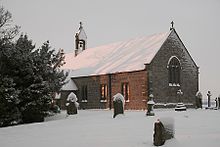
I first discovered Heavenfield when my mother insisted we stop beside a sign. There was a lonely church in the middle of a field. Churches are generally easy access so this in itself was strange. Reading the sign, I learnt about one of the more significant battles on English soil – literally the battle which decided if England would be Christian or if it would continue to be pagan.
St Oswald's Church Heavenfield

Conventional wisdom seems to hold that St Augustine came over to Kent and started Canterbury and everyone became Christian. It wasn't that simple. Christianity had been a part of British religious life for centuries before then. In Vindolanda, there are the remains of a 4th century church. Constantine was proclaimed emperor of Rome in York on 25 July 312. Constantine was famously the emperor who made Rome Christian. However in the years after the Roman legions left and the Angles  and Saxons settled, things changed and Christianity was not necessary the religion of choice of the ruling elite.

St Augustine’s mission became poised on a knife-edge because he was, according to British Christians arrogant. He expected obedience. The British church differed from the Roman church in the way they figured Easter, the way the monks wore their tonsure, the unique way of penance and how many bishops it took to consecrate another bishop. The last was surprising as  Britain sent three bishops to the council of Arles and signed up to that.  There were other differences but apparently the way monks wore their hair was a huge sticking point.
Another view of Heavenfield

In 632,the Northumbrian Bretwalda,  King Edwin who was nominally Christian in the Roman tradition (his wife had Kentish connections) lost a battle and his life to Penda of Mercia. Pagans then overran Northumbria.

In 634, the son of the previous Bretwalda Athelfirth and nephew to Edwin, Oswald made his bid for the Northumbrian throne. Oswald had converted to Christianity when he was exiled amongst the Dalriata in south western Scotland. He followed the Celtic tradition of Christianity.  He landed in the west and his war band which included warrior monks made their way to just outside the Roman town of Corbridge. There, in a field, Oswald raised his standard and a cross. This field became known as Heavenfield. He defeated the pagan Penda and drove his followers from the lands. Northumbria was restored to its previous prosperity.
St Oswald's Way

Unlike his late uncle who merely paid lip service to Christianity, Oswald decided his new kingdom would be Christian. He sent for monks from Iona. They started a monastery at Melrose and rapidly expanded to Lindisfarne (or Holy Island).  Oswald became the Bretwalda or High King of all Britain. Tolkien is supposed to have based Aragon on him.  After Oswald fell in battle, his brother Oswui became Bretwalda and was the only 7th century British king to die in his own bed after 40 years of rule. It was Oswui who convened the Synod of Whitby which decided to follow the Roman rather than the Celtic traditions of worship.

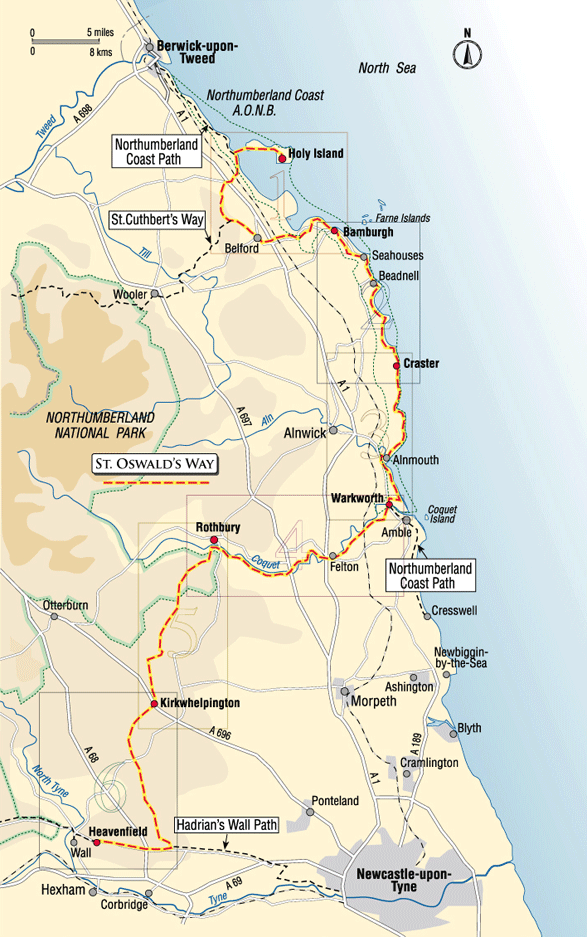
These days, Heavenfield is part of the St Oswald’s Way – a long distance walk which takes in some of the most beautiful parts of Northumberland and stretches from Chollerford (near to Heavenfield) up to Lindisfarne (Holy Island). It takes about a week to walk it.

Michelle Styles writes warm, witty and intimate historical romance for Harlequin Historical. This month Harlequin historical are releasing 3 of her Victorian novels To Marry a Matchmaker, Compromising Miss Milton and Breaking the Governess’s Rules. You can learn more about Michelle and her books on www.michellestyles.co.uk

03 October 2014

The Paper Battlefield: The Glorious Revolution of 1688/1689

  
The Glorious Revolution was the first war to be fought on paper, not on the battlefield. It’s a story of secret treaties, heartfelt letters of betrayal, religious policies and propaganda, and not a single shot was fired when the crown changed hands (though hundreds of thousands of Scots and Irish suffered in its aftermath). Here are the print and paper battles that shaped modern England:
  
The Secret Treaty of Dover
At the age of 21, William of Orange – at that time barred the rulership of Holland – came to realise that his uncle Charles II had signed a secret treaty with France aimed against the Dutch. In the subsequent war, his country suffered several defeats and was forced to make concessions to both England and France – although he benefited by being made stadtholder (ruler), now with Charles’ backing.


The Secret Treaty of Dover, © BBC

The Fifth Columnists and their Pamphlets
William of Orange’s 1688 invasion was a long time coming. Between 1671 and 1688, William became the first modern monarch to use propaganda to sway public opinion, first against the England-France alliance, and then against James II. During the Second Anglo-Dutch War that followed the Treaty of Dover, William employed Peter Du Moulin, a member of England’s Council of Trade, to spread propaganda against the Anglo-French alliance. Their pamphlets played on anti-Catholicism as well as general suspicion of the French. By 1674, England withdrew from the war – a victory for William’s “fifth columnists.”

Secret letters and invisible ink
After the accession of James II in 1685, William again resorted to back channels to secure his position as next in line to the throne (expecting to reign jointly with his wife Mary, James’ daughter). He made contacts with leaders of the opposition as well as James’ allies, and became concerned about the potential for a second republican revolution in England. It is also arguable that he became even more concerned about losing the succession when James had a baby son by his second wife: William’s plan was to use the English military and naval power to deter France from attacking Holland again. William’s agents became more adept at espionage, sending letters with invisible ink or by bypassing customs searches by putting letters on board at Gravesend. Officers of the Crown failed to prevent the secret correspondence that gave William confidence in his plans.

The London Gazette and the Declaration of Indulgence
James II made two crucial mistakes, which antagonized England’s large non-conformist population. First, he tried to suppress news of Louis XIV’s brutality in France by censoring the London Gazette, making Protestant leaders even more suspicious of his Catholicism. Then he issued the Declaration of Indulgence, which allowed freedom of worship. Paradoxically, this encouraged thousands of Huguenots to flee to England, bearing more tales of Catholic cruelty.

A treasonous letter, a pleading letter
Ultimately, the opposition leaders called the “Immortal Seven” wrote “The Invitation to William” to become king, and so the invasion began. More touchingly, James II wrote to his daughter Mary (William’s wife) just before the Dutch fleet set sail, appealing to her filial instincts:

“Though I know you are a good wife, and ought to be so, yet for the same reason I must believe you will be still as good a daughter to a father that has always loved you so tenderly… You shall still find me kind to you, if you desire it.”

It was not enough. Too much had been written: leaders and public alike had turned their back on the king, and a revolution accomplished at the stroke of a pen.

***************************************************************************************************************
If you’re interested in the Glorious Revolution, check out Yolande van der Deijl’s site: www.orangeway.net

Yolande has followed in the tracks of William’s invasion. For those interested in the book or in the Orange Way as a next holiday destination, please write to yolandevdd@gmail.com
  
Piers Alexander is the author of The Bitter Trade, a historical novel set during the Glorious Revolution.

The Bitter Trade won the Pen Factor and a Global Ebook Award for modern historical fiction, and is a top 5 European historical fiction bestseller on Amazon.com.


To find The Bitter Trade on Amazon / Kindle: www.smarturl.it/UHamazon