Showing posts with label Edwardian era. Show all posts

31 July 2012

Fashionable People: La Belle Époque and Edwardian Fashion

By Lisa Marie Wilkinson

The 1890-1914 period referred to as La Belle Époque (French for “Beautiful Era”) was a time of peace and national pride buoyed by scientific and technological discovery. This fashion era overlapped the Edwardian fashion era in Britain and is nostalgically viewed as a golden age in contrast to the stark world introduced by World War I.


In France, those of wealth and privilege enjoyed the perks only the rich could afford, frequenting new entertainments such as the Folies Bergere, the Moulin Rouge and flocking to view the new Eiffel Tower, which was constructed as a grand entrance to the 1889 World’s Fair.


While men’s fashion did not undergo significant change during this period, women’s fashion saw the gradual disappearance of the bustle, replaced by a new, slimmer silhouette featuring enormous leg of mutton sleeves and tapered waists framed by sashes or belts flowing into trumpet-bell shaped skirts. This slender profile was offset by huge, ostentatious hats named “Merry Widows” after the popular operetta of the time. These accessories featured feathers and lavish trims (including stuffed hummingbirds for those who could afford them).


The descriptive term that easily captures this fashion era is the “pouter pigeon,” a corseted look with the bust suppressed into a “monobosom.” Fashion accents included gloves made of silk, suede or kid leather that were worn outdoors in summer and winter and featured frilly parasols dripping lace.

In Britain, the renowned tailoring houses of Redfern and Creed applied their skills to tailored fashions for women, creating ready to wear wool or serge suits paired with shirtwaist blouses and simple gored skirts and matching jackets promoted as ideal for traveling. This tailored look was embraced by middle class women entering the workforce, and was often criticized as masculine in appearance as women began to sport neckware rivaling that of their male counterparts.


The severity of the tailored suit was relieved by feminine touches such as ornate blouses embellished by embroidery, ruffled jabots decorated by stick pins, and collars reaching under the chin that were held in place by silk-wrapped wires to create the impression of an elongated neck.

The high-necked collar mandated for day wear was replaced by low sweetheart, round, or square necklines for evening fashions designed to showcase the owner’s jewelry. A lady dressed for an evening’s entertainment outside the home was not encumbered by what do to with her handbag. Little or no money was carried because purchases were charged to accounts and so little makeup was worn that only a dainty bag attached by a wrist strap was needed to complete her ensemble.


Gibson Girl by Charles Dana Gibson
In America, the pen and ink drawings of an artist named Charles Dana Gibson intended to spoof the modern woman (now known as the “Gibson Girl,”) eventually came to represent the first national American standard of beauty.


Lisa Marie Wilkinson is an IPPY Gold Medal winning author of historical adventure-romance. Her latest novel, STOLEN PROMISE, featuring vibrant Gypsy characters and breath-taking romance, is available now.

14 November 2010

Guest Author: Kristi Astor

This week on Unusual Historicals we're welcoming Zebra author Kristi Astor as she takes us to the Edwardian era with her latest release, A MIDNIGHT CLEAR, set in England in 1909. Here's the blurb:

He Was Her Forbidden Fantasy...

Miranda Granger arrives at the spectacular seaside resort The Grandview Hotel to spend the Christmas holidays, hoping it will be just the tonic she needs to forget her scandalous past. But when she crosses paths with Troy Davenport, the alluring stranger she met aboard an ocean liner, Miranda fears she will repeat the mistake that almost ruined her reputation many years ago.

She Was His Greatest Muse...

Troy Davenport has been struggling to paint the stunning woman he encountered by moonlight on the ship's deck. If only he could meet his muse again. When he learns she's staying at The Grandview, it takes a great deal of convincing to let him paint her. But once he begins he realizes he wants more than to capture her unique beauty on canvas. When they surrender to an all-consuming passion, Troy's past threatens to tear them apart--unless a Christmas miracle can save their love...
***

"Kristi Astor transports you to a sensual past filled with intense and passionate characters. Put her on your 'must read' list today!" ~ USA Today bestselling author, Sally MacKenzie

"...An elegantly written, richly sensual historical romance with a fascinating, refreshingly different Edwardian setting." ~ ALA Booklist

***

Your first four books, written as Kristina Cook, were all set in the Regency period, whereas A MIDNIGHT CLEAR, written as Kristi Astor, is set in the Edwardian era--why the change?

Honestly, I got tired of the Regency period and wanted to do something different. I've always been particularly fascinated with the Edwardian era--I'm a huge fan of E.M. Forster's novels (especially A Room with a View and Howard's End), and the movie Somewhere in Time with Jane Seymour and Christopher Reeve is one of my guilty pleasures. The period is marked by such elegance and glamour, and it seemed like a perfect fit for romance. I was almost afraid to broach the change with my editor, but she was very enthusiastic, right from the get-go!

How does the Edwardian era differ from the Regency era?

Well, first and foremost are the obvious things like clothing--suits that resemble more modern three-piece ensembles were in vogue for men, along with bowler hats and Norfolk tweed coats, and women's fashions changed rather dramatically from the bustle skirts and mutton-chop sleeves that were popular during the Victorian age. For the well-dressed Edwardian woman, think less structured gowns instead, in softer fabrics and colors, paired with enormous hats and strings of pearls. Fashionable women also had a full range of clothing designed especially for cycling, golfing, motoring, and playing tennis.

There were also drastic changes in technology, with things like motorcars, electric lights, and telephones becoming part of everyday life, as well as other modern conveniences.

And yet despite all this change, a lot stayed the same, particularly for women of the upper classes who were still often educated at home, and then perhaps sent off to finishing school. Their primary goal remained to marry well, bear children, and serve as hostesses--and not much more.

Have you encountered any particular challenges writing about the Edwardian era?

The biggest challenge for me as a writer is that, in my mind, World War I is looming off on the horizon, just past my characters' happy endings. I’m always very aware of this fact, particularly as I'm writing my heroes. Maybe this is one reason that not a lot of romance fiction is set during the era? I don't know. But in my head, I'm always trying to come to terms with it. In my first Edwardian-set novella, "Swept Away" in LORDS OF DESIRE, I actually went so far as to give my hero a limp, thinking that maybe it would keep him out the army during his post-book life. Yes, I know he's a fictional character...but still!

Troy Davenport, the hero of A MIDNIGHT CLEAR, is American rather than British. Since something like 885,000 British soldiers died in WWI compared to approximately 115,000 American soldiers, I figured that gave him better odds.

***

Thanks for stopping by today, Kristi! Readers, what do you think about the Edwardian Era? Are you a huge fan, like I am, of A Room with a View and that nearly-modern glamor? Or does the looming shadow of WWI and the vast changes of the 20th century put you off. We're curious! Leave a comment or question for Kristi for your chance to win a copy of A MIDNIGHT CLEAR. I'll draw the winner at random next Sunday. Void where prohibited. Best of luck!

11 November 2010

Excerpt Thursday: Kristi Astor

This week on Excerpt Thursday we're featuring Zebra author Kristi Astor as she takes us to the Edwardian era with her latest release, A MIDNIGHT CLEAR, set in England in 1909. Join us Sunday when Kristi will be here to talk about this unusual era and to give away a copy! Here's the blurb:

He Was Her Forbidden Fantasy...

Miranda Granger arrives at the spectacular seaside resort The Grandview Hotel to spend the Christmas holidays, hoping it will be just the tonic she needs to forget her scandalous past. But when she crosses paths with Troy Davenport, the alluring stranger she met aboard an ocean liner, Miranda fears she will repeat the mistake that almost ruined her reputation many years ago.

She Was His Greatest Muse...

Troy Davenport has been struggling to paint the stunning woman he encountered by moonlight on the ship's deck. If only he could meet his muse again. When he learns she's staying at The Grandview, it takes a great deal of convincing to let him paint her. But once he begins he realizes he wants more than to capture her unique beauty on canvas. When they surrender to an all-consuming passion, Troy's past threatens to tear them apart--unless a Christmas miracle can save their love...
***

"Kristi Astor transports you to a sensual past filled with intense and passionate characters. Put her on your 'must read' list today!" ~ USA Today bestselling author, Sally MacKenzie

"...An elegantly written, richly sensual historical romance with a fascinating, refreshingly different Edwardian setting." ~ ALA Booklist

***

Troy glanced up at the full moon, then back down at his pocket watch. It was just after midnight. Would she come? She'd said she wouldn't, of course, but he'd convinced himself that she wanted to, that she'd somehow find a way. Wishful thinking, perhaps. But damn, he would give anything to hold her in his arms beneath the light of the moon.

The one dance they'd shared tonight wasn't enough, would never be enough. He wanted more, needed more. He began to pace a circuit at the edge of the woods, his gaze trained on the silvery house in the distance, entirely dark now. He willed her to come, as if wishing alone could bring her there.

Surely she could feel his presence out there, waiting. Hoping. A quarter hour later, he paused his pacing and checked his pocket watch again. Damn. He'd been so sure she'd come, despite her protests. He'd said he'd wait all night, however, and he would. He would stand there till the sun rose.

The breeze stirred, carrying with it the scent of grass, of earth. It felt cool against his skin, bringing with it a hint of autumn. And then he heard a noise--faint yet distinct. A rustling. Just the wind in the leaves, perhaps? He looked toward the house, squinting his eyes, scanning the shadows for movement.

Like a mirage in the desert, a vision shimmered and took shape. Miranda, moving toward him stealthily and silently. She looked almost like a specter, wearing what seemed to be a pale-colored dressing gown, her dark hair loose about her shoulders.

"Miranda?" he called out, his voice a hoarse whisper.

"Shhh," she replied, though she kept moving toward him, her feet seeming to float just above the ground.

For the briefest of moments, he wondered if he was dreaming, if he'd somehow fallen asleep there at the edge of the woods and was now enjoying a lovely dream where Miranda heeded his call and came to him.

Only, it wasn't a dream--she was really there, in flesh and blood. He could feel her warmth as she drew closer, her dark eyes reflecting the moon as she gazed up at him expectantly.

"One dance," she said. "Just like you said. And then I must hurry back to bed."

Reeling with surprise, he opened his arms, gathering her in his embrace. Her skin felt flushed, hot to the touch as he wrapped his arms around her waist, drawing her closer.

She reached up to wrap her arms about his neck, laying her cheek against his shoulder. For several minutes, they stood just like that, not moving a muscle. And then he couldn't stand it any longer--he had to feel his fingers in her hair. He combed it back from her face, marveling at the texture, at the heady scent of lavender that wafted up from the deep chestnut strands that slipped through his fingers like silk.

The breeze stirred, ruffling the hem of her dressing gown, exposing one pale ankle for the briefest of seconds. She was barefoot, he realized with a start.

"You look like some sort of goddess," he murmured. "I'll never get this image out of my head. I'll have to paint it, as soon as I return to the cottage."

His fingers skimmed over her sides, up to her shoulders, and he felt her shudder in response. "What about that dance you promised?" she asked, reaching for his hand, placing the other at her back.

His eyes never leaving her face, he nodded, burning the image into his brain. He'd never seen her more beautiful, never wanted to forget the way she looked at that very moment. And then he started to hum, low and quiet beside her ear. Clair de lune, the piece they'd agreed was the most beautiful one ever written. Slowly, he began to move--a leisurely waltz, turning her beneath the stars, the moon, the heavens. His heart kept time, thumping against his ribs as he gazed down at her in wonder, wanting this moment to last forever.

07 November 2010

Guest Author: Jane Goodger

This week on Unusual Historicals we're welcoming Zebra author Jane Goodger as she celebrates the release of her latest "Christmas" romance, A CHRISTMAS WALTZ, which is set in England and Texas in 1894. Here's the blurb:

To Lady Amelia Wellesley, it seems utterly romantic to surprise her dashing fiancé at his home in Texas so the two can marry by Christmas. But Amelia's surprise goes awry when Carson Kitteridge calls off their wedding as soon as she arrives, leaving Amelia in disgrace...

With nowhere to turn, Amelia finds an unlikely savior in Carson's brother, Dr. Boone Kitteridge. Boone offers to marry Amelia, sparing her the shame of returning to England unwed. But Boone isn't just protecting Amelia's honor; secretly, he finds her irresistible, and the thought of indulging his desire for her is too tempting to ignore. As Boone and Amelia forge a fragile bond, something goes terribly wrong--and it will take nothing less than a Christmas miracle for Amelia to discover who she is destined to love...
***

"The next in Goodger's Christmas series is a touching, compassionate, passion-filled romance peopled with complex characters. The deeply emotional story is sure to win readers' hearts." ~ RT Book Reviews

***

All three of your Christmas historicals are set partially in the United States, but also in England. Why is that?

The first book in the trilogy, MARRY CHRISTMAS, started off in Newport, RI, and is based on the life of Consuela Vanderbilt, who was forced to marry the Duke of Marlborough. It was an unhappy marriage that ended in divorce. I love writing about Newport. For one thing, it's about fifteen minutes away! For another, I absolutely love the idea that the moguls of the day built huge mansions, then called them summer "cottages." In the last book of the trilogy, A CHRISTMAS WALTZ, I had so much fun putting an English heroine in Texas in the middle of nowhere! Poor Amelia is definitely a fish out of water there.

Which is your favorite book in the trilogy?

Whenever I read historicals (I read a lot) I always judge a book on how much I love the hero. Sure, I have to like the heroine and relate to her, but for me it's all about the hero. That's why, as much as I liked the first two books (I wrote them, after all), my favorite of the three has to be A CHRISTMAS WALTZ. I absolutely adore Boone. To me, he's the perfect man: strong, quiet, loving, devoted, and courageous in an endearing way. I still think about him!

It must be easy to research when your locations are in your own backyard.

It is. I can tour the homes where my hero and heroine live, read the same newspapers they read, see what products they were using and when. I love doing research. Lately, I've been setting more books in England and find that a bit more challenging because I've never been there. Thankfully, the Internet and libraries have plenty of good information for me to use.

Nearly all of your books are set during the Victorian and Edwardian timeframe, rather than Regency. Why is that?

For some reason, I completely connect to those time periods. Women were questioning the way the world ran. New inventions made for an exciting world. This was the beginning of gaslight and electricity, indoor plumbing, of phonographs and automobiles. Women were riding astride and riding bicycles, showing an independence not seen before--politically and personally. To me, it is one of the most exciting times in history. I particularly love writing about the 1880s and 1890s. From the music to the clothes, I love nearly every aspect of this time period.

***

Thanks for stopping by today, Jane!

Readers, would you like to experience the best of England and Texas? What do you enjoy about books set in multiple locales? Let us know! I'll draw a winner at random next Sunday from all the comments we receive. Void where prohibited. Best of luck!

05 October 2009

Research: 19th & 20th Century Web Resources

By Eliza Tucker

Being a stay-at-home mom who lives in present-day Ohio but writes fiction primarily set in New York Century at the turn of the 20th century, I rely heavily on Web-based history resources. Here's a list of my most-used sites, and insight on how I employ them.

Google Books: While the Google Books project has been the source of contention for many in the publishing industry lately, their publications which fall in the realm of public domain can be a big help for researchers. Using the 'Advanced Search' feature, you can look up search terms within specific dates. You can search full texts of public domain books and even download most in PDF or EPUB formats.

New York Times Archive: Using the 'Advanced Search' function, you can search any day's release of The New York Times from 1851-1980, with specific dates and search terms. When I first started doing historical research, I lost eyesight on microfilm archives of this paper at our local library! Each article is viewable as a PDF download.

Library of Congress American Memory Project: This is a massive resource with collections ranging from Advertising to Women's History, African-American History to War and Military History. It takes a bit of time to navigate, but chances are if you're looking for very specific information, it's in here. The most fascinating of these fully viewable online collections is the Thomas Edison films of New York City.

Cornell University Making of America Archive: A digital library of primary sources in American social history from the antebellum period through reconstruction. The collection is particularly strong in the subject areas of education, psychology, American history, sociology, religion, and science and technology. This site provides access to 267 monograph volumes and over 100,000 journal articles with 19th century imprints.

Museums' Virtual Exhibitions, such as The Museum of the City of New York: The great thing about singular museums' exhibitions is that they change on a somewhat regular basis.

The Dictionary of Victorian London: Historical thriller author Lee Jackson has collected and organized articles and info regarding life in Queen Victoria's Britain. Includes unique maps! Even if you don't write in this period or time, it's definitely worth a look.

The Inflation Calculator: Need to know how much $5 meant to a person in 1816? A simple "form adjusts any given amount of money for inflation, according to the Consumer Price Index, from 1800-2007."

Small sites: One of my most-referenced sites right now is No. 9 Duane Street, which is chock full of info about the newsboys' lodging houses of the 1800-1900s.

20 July 2009

Greatest Hits: Life in Victorian Prisons

By Jennifer Linforth

That last pint was not a good idea.

He stared at his unraveled cravat and the ruby stains marring his vest. Flexing his hand made the wounds on his swollen knuckles split and pour fresh blood.

Yes...he definitely regretted that last drink.

The doors of 'her majesty's carriage' slammed shut in his face. Within minutes it rumbled down the cobbled road, jostling its newest prisoner. There was nothing he could do now but reflect on his foolish temper. His life was pulled down the road toward inevitable change. And changed roared around him like a hungry lion the instant he set foot on the grounds of his new home.

Bathed in water not unlike mutton broth, the newest prisoner of Kirkwood Goal began his new life with humiliation. Where was his valet now, he wondered, as his privacy was raped by men scrutinizing his naked body for distinguishing marks. His anger flared when his hair, once tangled by a woman's fair fingers, was cut to the scalp. His bloody vest and cravat were removed and bundled up, his breeches and waistcoat replaced by ill-fitting uniforms. The boots he once took such pride in were sold to a dealer and replaced by ones heavier than lead. (He tried to guess the weight. 14 pounds seemed accurate.)

He caught his reflection in a dusty window. Who he had been before was of little importance. The markings on his uniform designated his standing in the hierarchy now. He was a convict. Gone were the days of climbing social ladders in salons and country balls. Here social isolation was his dance partner. All too often he would see the dark interior of separate confinement or be forced to adhere to the strict silence rule. All because he tried to garner a bit of humanity and speak to a fellow convict.

He would find ways to break the unearthly silence imposed upon him. He tapped messages on the walls or water pipes. The chapel he found was ripe with opportunity. He was a quick student, learning to use hymns (meaningless to him before) to his advantage. Emphasizing the first word of each line then quickly dropping to a lower tone, he could carry on a conversation with his neighbor. The longer the hymn, the longer the conversation he could murmur between lines. Sign language useful as well. The isolation was a forlorn hope. Man was not designed to live alone...

Morning noon and night his belly rumbled for the succulent soups, roasts and puddings his crime denied him. Three-quarters of a pint of cocoa was his breakfast, a sludge of flaked cocoa mixed with molasses. Dinner was four ounces of meat, a half-pint of soup and one pound of potatoes. Supper: a pint of gruel sweetened with molasses with one and a quarter pounds of bread and salt.

Tired and hungry, he retreats to sleep. But the silks of his pillow are gone and the down that warmed him is a distant memory. Nothing is so aptly designed to depress than his prison cell. Thirteen by seven feet (4 by 2 meters) and nine feet high, only a tiny window offers a glimpse of freedom. But standing on a stool to look out was a punishable offence.

He was cold in the winter, hot in the summer and his eyes constantly fighting the poorly lit conditions. Why not just go blind? Maybe he would not be reminded of this hell. His isolated room seemed private, but the spy hole in the door made him uncertain as to if whether he was being watched or not.

Perhaps he could sleep? Wake up and this nightmare would be over? The year was 1865, a few months previous a new Prison Act was initiated bringing with it the hard plank bed. Part of a severe regime introduced where punishment and deterrence took precedence over reform. Not that he thought he needed reform.

When morning dawned and he choked down the cocoa, a question was poised. Was this labor he faced meant to encourage fulfillment in honest work, or break him body and spirit?

The tread wheel was an ominous beast. He would climb the wheel as if trying to summit an endless mountain. As the wheel fell way beneath his feet, he was forced to lift his body into the next step.

All this for grinding corn? He thought not.

If not at the wheel he would be at the crank, turning a handle until his shoulders ached. There was no harder or more degrading work. He would do his work, eat his meals, live in silence and fight for a small scrap of interaction with the other convicts. Prison officers were products of their own draconian regulations. They lived in a powder keg, where one spark could set off a symbiotic relationship between guards and convict. Each could make the other's life difficult.

And life would be difficult.

Staring down at calloused hands in a sweat soaked uniform, isolated, angry and questioning his "reform"...he definitely regretted that last pint.

27 May 2009

Literature & Education: Maurice by EM Forster

By Erastes

Maurice, in my mind, was one of the first "Unusual Historicals."

Forster, well-known and successful author of many other books such as and Howard's End and A Room with a View started Maurice in 1913, but the book wasn't published until 1971, after he had died the previous year.
The themes in his books up to this point had explored class differences and the incompatibility of such: upper class Helen Schlegel supports and eventually sleeps with the lower class Leonard Bast to tragic results, while upper class Henry Wilcox's mistress was the present and lower class Mrs Bast. In Maurice he plays with the same themes, but in an entirely unprecedented move, he not only makes the unhappy and inconclusive love-affair the upper-class one Maurice has with Clive, but he crosses the class divide, making Maurice ultimately happy with Alex, an ignorant brash gamekeeper.

He says, in his "terminal note" in the book:

A happy ending was imperative. I shouldn't have bothered to write otherwise. I was determined that in fiction anyway, two men should fall in love and remain it for the ever and ever that fiction allows, and in this sense Maurice and Alec still roam the greenwood. I dedicated it "To a Happier Year" and not altogether vainly. Happiness is keynote--which by the way has had an unexpected result: it has made the book more difficult to publish. Unless the Wolfenden Report becomes law, it will probably have to remain in manuscript. It if ended unhappily, with a lad dangling from a noose or with a suicide pact, all would be well, for there is no pornogrpahy or seduction of minors. But the lovers get away unpunished and consequently recommend crime.
On a further, more depressing note, written in September 1960, he bemoans the fact that:

If [homosexuality] could be slipped into our midst unnoticed, or legalized overnight by a decree in small print, there would be few protest. Unfortunately it can only be legalized by Parliament, and Members of Parliament are obliged to think, or appear to think. Consequently the Wolfenden recommendations will be indefinitely rejected, police prosecutions will continue and Clive on the bench will continue to sentence Alec in the dock. Maurice may get off.
It is tragic that he didn't see his book published, nor lauded and celebrated for the masterpiece it is. It was so very much ahead of its time, and only now, in the last ten years has "gay romance" finally claimed the "happy ever after" for which he paved the way.

It is interesting that, in this era (FIFTY YEARS after these words were written), homosexuals are, right now, still struggling for acceptance, and even legality in the most powerful nation in the world. Perhaps if he were to rewrite the end of Maurice now, he would not send them off to America for their happy ending.

21 July 2008

Famous People: Infamous Women of the Edwardian Era

By Evangeline Holland

Lady Randolph Churchill: Though known primarily as the American mother
of Sir Winston Churchill, the former Jennie Jerome is too dynamic a personality to be shunted to the footnotes of history as a mere mother. Despite the controversy that rages over her today (Did she neglect Winston? Was she promiscuous? A selfish spendthrift?), Jennie Jerome Spencer-Churchill Cornwallis-West Porch (though she preferred Lady Randolph Churchill) carved a place not only in a foreign society, but in a time where women had little rights if not little place in the public sphere.

Admired by all who met her, many people stated that had Jennie been a man, she could have ruled the world. So keen was she, it was rumored that she drafted many of Lord Randolph's rousing speeches--certainly Randolph did appreciate his wife's intelligence, and when he and other Conservative politicians formed the Primrose League in 1883, Jennie was there beside him, with her own exalted status within the organization. When Randolph died in 1895, her sons had reached their majority and they became closer. It was Jennie who was Winston's right hand as he fought his way to the top of the British Government, her political expertise and background handy for her scrappy, ambitious son. She however, passed away before she could see the fruition of the career Randolph threw away in an impulsive, foolish moment, in the form of Winston's leadership in during WWII and after.

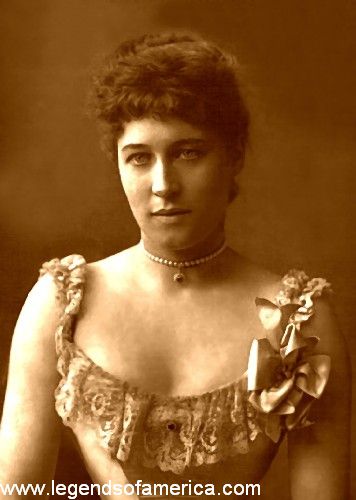
Lillie Langtry: Born Emilie Charlotte Le Breton on the isle of Jersey, Lillie Langtry was both calculating and warm-hearted. Aware of her beauty and what she desired in life, her first step to achieving success in society was to marry the first man who ferried his way into her life on his yacht. Unfortunately Edward Langtry was an alcoholic who'd mortgaged his property to the hilt to fund his yachting. Lillie however, made lemonade out of lemons and if marriage couldn't achieve her wants, her beauty would, and it did, for her first foray into society created a furor, the artists dining with her nearly expiring over her beauty and a chance to paint it.

From there, Lillie went from strength to strength, culminating in a four year affair with the Prince of Wales. After their passion cooled, Lillie used her fame and beauty to launch a successful acting career which took her throughout Britain and America. With Edward's death in 1897 and a newly discovered talent for horse-racing, Lady de Bathe (for she had married a much younger baronet), Lillie became a leading owner in the horse-racing world before retiring with her husband, quite wealthy, to Monaco.

Daisy, Countess of Warwick: She was rich, she was scandalous and she was indiscreet. She also had the notoriety of being the Prince of Wales' mistress throughout most of the 1890s. Having inherited an estate worth 30,000 pounds a year, the beautiful Daisy Maynard was so eligible a parti, Queen Victoria had hopes for a match made between she and her son Prince Leopold.

Daisy settled for something a little less stressful, marrying her darling "Brookie," in 1881. Within a few years, Daisy's predilection for acquiring what she called "admirers" in her memoirs had taken its toll on their marriage and she and Lord Brooke went their own way, as most couples did in this period. Fortunately for her, her next admirer happened to be the Prince of Wales. With a hearty dislike of boredom, Daisy's wealth and high spirits were a perfect match. So great a match that in 1914, Daisy's ruined financial status lead her to attempt to blackmail the Crown with love letters written to her by King Edward. More so than her liaison with Bertie, it was her conversion to Socialism that earned her infamy. With her heart in the right place, Daisy founded schools for girls to learn needlework or other handy crafts, and a store where the items were sold. This earned her much scorn from her own social class, sneered behind her back as "Red Countess." She plowed on, however recklessly, tirelessly fighting for socialism and the Labour Party til her death.

Mrs. Patrick Campbell: She was difficult, mercurial and vain. But she was one of the finest actresses of the period, if not the history of British theatre. Born Beatrice Stella Tanner to an English father and an Italian mother, Stella was born for theatrics. Her father a natural schemer, moved to America early in her life hoping to strike it rich. He never did, and it was this memory of poverty, and the absence of her husband, he himself in South Africa trying to strike it rich, that enticed her to enter the stage.

By the 1890s, the theatre had become respectable, as did actors and actresses. It was this time when the domination of sappy plays and Shakespeare was shaken by the "problem play." Writers like Pinero, Galsworthy, Shaw, Ibsen, Wilde, etc put on plays that probed the mores of society and highlighted hypocrisies. It was in one of these plays that Stella, known professionally as Mrs. Patrick Campbell (for it was more respectable than plain "Stella Campbell"), became a star. Pinero's The Second Mrs. Tanqueray was shown in 1893 and it was an instant hit with the crowd, the lead actress with her ghostly pallor, deep-set black eyes and lustrous hair, and most of all, marvelous voice, moved the crowd so, it became one of the most successful dramatic works of its day.

Margot Asquith: She shocked society with her indiscreet memoirs and an apocryphal but typical story has her meeting the American film actress Jean Harlow and correcting Harlow's mispronunciation of her first name — "No, no; the 't' is silent, as in 'Harlow'." When Margot Tennant made her debut into 1880s society, she was no ordinary debutante. Due to her mother's vagueness and her father's social-climbing, she and her siblings were allowed great freedom to mingle with gentlemen and form opinions (and even speak on them) long before the age of 18.

Spurred by her intellectual pursuits, Margot wasn't content with the endless round of parties, balls, and house parties and formed a group of like-minded aristocrats known as the "Souls." But it was her marriage to Liberal politician Henry Herbert Asquith that changed her life. She was his "spur to ambition," using her wit and drive to pull him into the Premiership--a goal realized in 1908. Unlike her predecessors, Margot didn't intend her new position to slow her down. Margot's independence and ready tongue got her into a bit of trouble, as the time when she hosted a show of Paul Poiret's modish gowns at No. 10 Downing Street!

Nancy Astor: That an American woman would be the first female MP to take a seat in the Commons is slightly ironic. Though, those who knew Nancy personally wouldn't have found it unbelievable. A Langhorne of Virginia, she and her sisters were renowned for their beauty and this, combined with the recently-restored family wealth boded well for a meteoric rise. Divorcing her first miserable husband, Nancy went overseas, as did all wealthy Americans, and quickly conquered society with her saucy wit and restrained behavior. Soon after her entrenchment in British society, she married Waldorf Astor, the son of expatriate William Waldorf Astor (yes, those Astors) and began life as an elite hostess.

When her husband succeeded to his father's title in 1919 and moved to the House of Lords, Nancy took up the cudgel for the constituency and campaigned for her own election. This was a bold move as at no time had a woman taken public part in politics--and with her own platform. Though women had greater freedom, they were seen as too ignorant and led by emotion to exact justice. Nancy proved them wrong. In her day, she was either loathed or loved, and personal accounts written by those close show her to be a demanding, prejudiced and arrogant woman. In spite of these defects, or rather because of them perhaps, Nancy Astor did what she wanted to do without any thought to her sex.

Mrs. Pankhurst: Widowed at 40, Emmeline continued the work she and her husband accomplished by continuing her involvement in politics. Disillusioned by the existing women's political organizations,in 1903 she founded the Women's Social and Political Union (WSPU). This changed the face of women's suffrage, for the traditional background of a suffragist was upper-middle class, professional ladies from comfortable backgrounds. From the first Emmeline the main aim of the organization was to recruit working class women into the struggle for the vote.

But it was in 1905 the break between the old guard (NUWSS) and the new guard (WSPU) ruptured: this was the rise of militancy. Pankhurst's tactics for drawing attention to the movement led to her being imprisoned 13 times between 1908 and 1914. Her daughters Sylvia and Christabel became prominent leaders in the movement, Christabel seeking temporary refuge in Paris to escape imprisonment under the terms of the Cat and Mouse Act. Hated by outsiders, Mrs. Pankhurst's ideals and actions created controversy within the WSPU, creating splits that included one from Sylvia. Her militancy did pay off, as women over 21 received the vote in 1918, and all women were enfranchised in 1928.

25 June 2008

The Edwardian Church

By Evangeline Holland

Religion played its part in the conventional role in the ceremonies for passage rites in all groups, for birth, confirmation, marriage, and death. Though the upper classes felt it their duty to lead the masses in an outward show of piety, by the Edwardian era, religion played a smaller role in the life of society. However, in London, the Sunday morning church parade in Hyde Park was a social event not to be missed, and the upper classes would expect their servants to attend morning prayers, neatly-attired and somber as they marched to chapel--albeit early enough to return and attend to the toilettes and meals of the just-awakening family. But newer habits began to pervade all stratus of society, and week-ends began to eat into church-going habits, and the Anglican churches especially found it difficult to recruit clergymen.

For the Edwardian, there were three religious paths open to her or him: Roman Catholicism, Anglicanism, and Chapel (or the conglomerate of Non-conformist sects). Roman Catholicism did cause a little flutter of horror in the breasts of die-hard Anglicans, but the Catholic sect in English aristocracy did create its own niche, particularly as the highest position in the land (Earl Marshal) had been held by the Catholic Dukes of Norfolk since the 14th century.

Chapel found favor with middle- and lower-middle class society, whilst the Church of England could be divided between High Church and Low Church. Those belonging to High Church were conservative, more aristocratic and had a great fondness for ritual, while those inclined towards Low Church, preferred worship be simpler and to touch the heart.

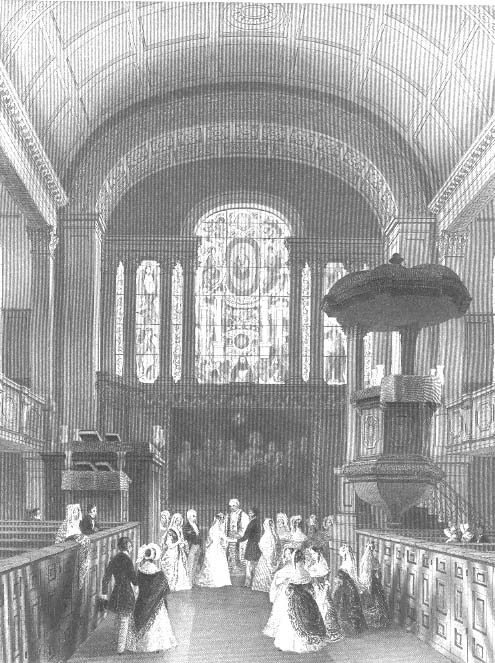
As church was another social event where one would see and be seen, aristocratic society had its places marked for fashion. In London, favored churches were St George's in Hanover Square, St Paul's in the upper-middle-class neighborhood of Knightsbridge, Holy Trinity in Sloane Street, and St Peter's in Eaton Street. Woe betide anyone who wasn't sitting in their family pew on Sunday in an ultra-fashionable church!