This week, we're welcoming author Joan Fallon again, whose latest title is HOUSE ON THE BEACH. One lucky visitor will get a free copy of House on the Beach in ebook format - this giveaway is open internationally. Be sure to leave your email address in the comments of today's author interview for a chance to win. Winner(s) are contacted privately by email. Here's the blurb.
 This is the story of Rocio and Inma, two girls who first meet as children and despite coming from very different social backgrounds become close friends. Rocio is the daughter of an Andalusian peasant, who makes his living from the land, growing olives and keeping goats; Inma is the daughter of a rich businessman, who lives and works in Madrid.
We follow the lives of these two girls from childhood to maturity, as they share happiness, fears, disappointments, broken hearts and betrayals. Rocio is a shy and trusting girl, who becomes easily seduced by a handsome foreigner, while Inma, confident and manipulative, is the one who saves her from disgrace and the inevitable expulsion from the family home. But when Inma too becomes pregnant, things take a more sinister turn and her subsequent actions have a devastating affect on Rocio and her husband.
This social drama of two women trying to take control of their lives, despite living under a harsh dictatorship, offers a glimpse of what life was like in an authoritarian State, with an ever watchful Catholic Church and the close strictures of society.
Buy House on the Beach at:
http://www.barnesandnoble.com/w/the-house-on-the-beach-joan-fallon/1108929191?ean=2940149932078
https://itunes.apple.com/us/book/the-house-on-the-beach/id659693537?mt=11
http://www.amazon.com/House-Beach-Joan-Fallon-ebook/dp/B00676E65Q/ref=asap_B003B09VWY_1_4?s=books&ie=UTF8&qid=1418131990&sr=1-4
http://www.joanfallon.co.uk/the-house-on-the-beach.html
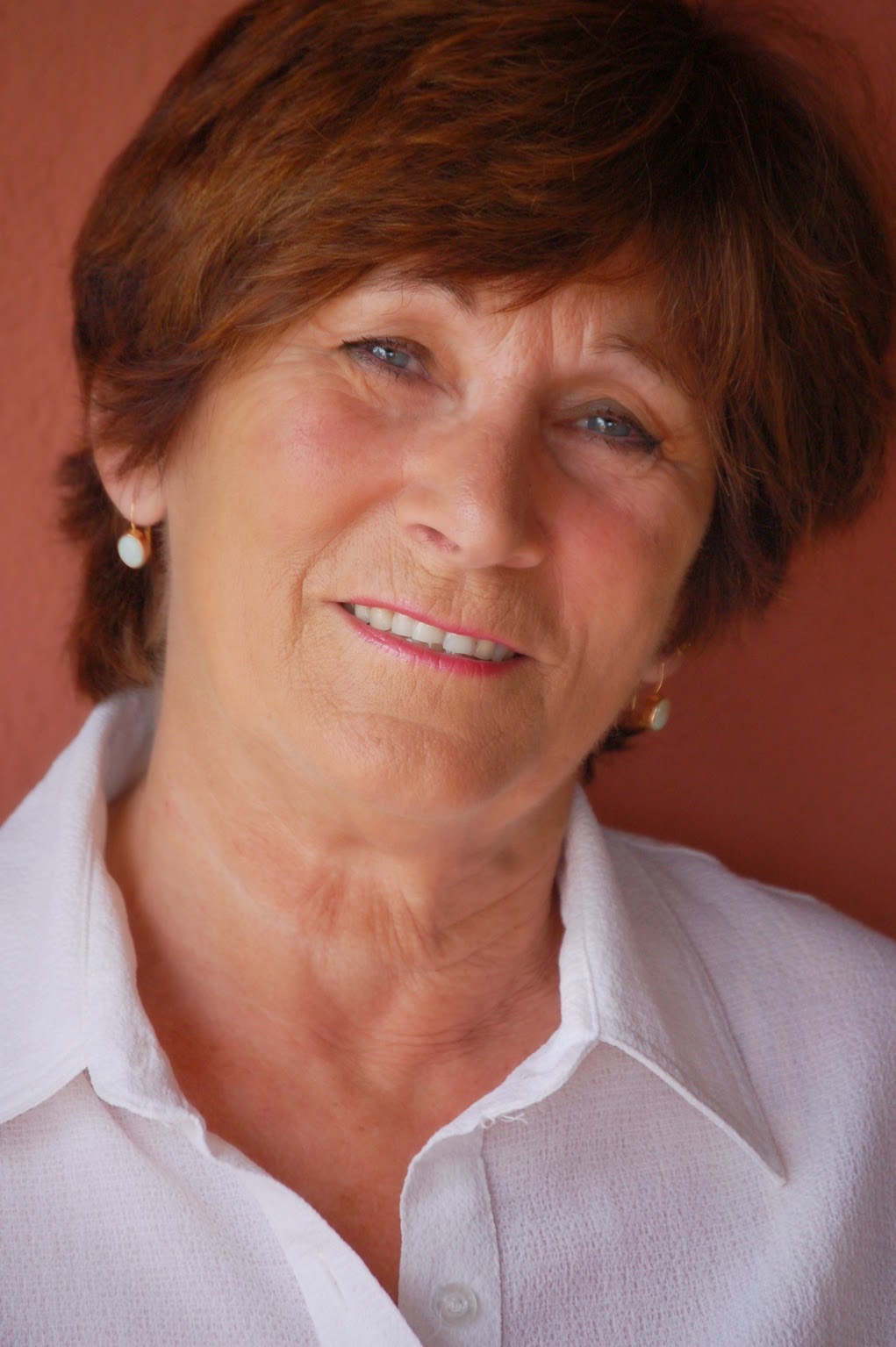
**Q&A with Joan Fallon**
Why did you decide to write the novel The House on the Beach and where did the inspiration come from?
I have always been interested in social history and when I began to live in Spain I found my interest moving to what had happened to people in Spain, particularly women, during and after the Spanish Civil War.
When I first arrived in Spain I was impressed by the way the Spanish women I met had embraced the freedom of modern life in the short period since the death of Spain's dictator General Franco in 1975. The years went by and I began to realise that if I wanted to write about it I had better make a start soon, most of the women I wanted to interview would be dead. So in 2007 I began to interview as many women as I could; I began with friends, then they introduced me to their mothers, aunts, neighbours and so it grew. I also read all that I could lay my hands on about the Spanish Civil war and the Franco era and I started to write a non-fiction book called ‘Daughters of Spain’.
The women I interviewed were from all walks of life and spanned a wide range of ages. The result is a mosaic of their lives, a vivid and unique picture of what life was really like for women in Spain over the past seventy years, of the hardships they endured and their aspirations for a more egalitarian future.
When the book was finished and published I realised that the things I had been told by these women was rich material that I could turn into a novel. That was when I decided to write ‘The House on the Beach’ about two girls growing up in Franco’s Spain. All the things that happened to my two main characters had happened to people that I knew.
There must be a lot of research involved in writing a novel like this. Can you tell us what was involved.
Yes, there is a lot of research but much of it was first hand research that I got from talking to women about their lives: their marriages, their childhood, their education and most importantly of all, what life was like for women at that time. I also read books about the period and found lots of useful information on the internet. For example one of the girls gets caught up in the student riots in Madrid in the 1960s; I needed to know exactly when the riots took place and what was involved.
It seems to me that many authors of historical fiction write trilogies. Have you considered making The House on the Beach part of a trilogy?
No. I don’t think it would work. The book is a saga where we follow the stories of two women who meet as children and maintain a troubled friendship throughout their lives.
Were you influenced by any other writers when you planned this novel?
Not really. As I have said it was inspired by another of my own books, ‘Daughters of Spain’ - a factual account of the lives of Spanish women during the years 1950-1970. I have since read a book by an Italian author which is very similar in style; it is called “My Brilliant Friend’ by Elena Ferrante.
What is it about writing historical fiction that you find so interesting?
I have always been interested in history, especially social history. I am a History graduate and when I was a teacher, my favourite lessons were teaching history to primary-age children. With young children the knack of making history interesting is to bring it to life and to let the children imagine they are living in a different time. It is a very similar process when writing a historical novel; you want the reader to feel that they are there, experiencing the same things as your characters.
Have you written any other novels that could be classified as Unusual Historical Fiction?
Yes, ‘The Only Blue Door’. This is a novel about three young English children who are sent as child evacuees to Australia during World War II; the story traces their experiences in a strange land and their search for their mother.
Buy House on the Beach at:
http://www.barnesandnoble.com/w/the-house-on-the-beach-joan-fallon/1108929191?ean=2940149932078
https://itunes.apple.com/us/book/the-house-on-the-beach/id659693537?mt=11
http://www.amazon.com/House-Beach-Joan-Fallon-ebook/dp/B00676E65Q/ref=asap_B003B09VWY_1_4?s=books&ie=UTF8&qid=1418131990&sr=1-4
http://www.joanfallon.co.uk/the-house-on-the-beach.html
Learn more about author Joan Fallon
Joan says of her latest novel, “I was inspired to write this novel after interviewing a number of Spanish women for my book Daughters of Spain. The things they told me about life after the Spanish Civil War was rich material for a novel.”
