27 February 2009

Weekly Announcements - 27 Feb 09

Bonnie Vanak has had a great run of reviews for her April release, THE LADY AND THE LIBERTINE. RT gave it four stars and wrote: "With a few twists, she combines an English lord, scarred in body and soul; an illegitimate young Englishwoman; a ruby and enough adventure, pathos, secrets and betrayal to keep you turning the pages of this sexually charged romance."

Marilyn Rondeau, at C2K Kwips and Kritiques, wrote, "Vanak has a knack for creating strong, imperfect heroines and her characterization of Karida bears witness to her genius in giving life to her unforgettable characters." You can read the entire review here, and here's a link to more information about this, Bonnie's newest Egyptian-set romance.

***

Join us Sunday when debut author Lisa Marie Wilkinson will be here to talk about FIRE AT MIDNIGHT, an adventurous and touching pirate romance from Medallion. Don't miss it!

***

We'll also draw the winner of Kate Bridges' WANTED IN ALASKA. There's still time to leave a comment for your shot at winning!

***

Have a good weekend! If you have an announcement to make for next week, email Carrie. See you next week...

26 February 2009

Excerpt Thursday: Lisa Marie Wilkinson

Thursdays on Unusual Historicals mean excerpts! Here's one from Lisa Marie Wilkinson, whose debut novel FIRE AT MIDNIGHT is a released next week from from Medallion Press. Be sure to join us on Sunday when Lisa Marie will be answering questions and giving away a copy!

Here's the blurb:

***

Rachael Penrose is confined to Bedlam insane asylum in London after discovering that her uncle Victor plans to kill her brother in order to inherit the family fortune. Victor, with a gang of criminals, uses French privateer Sebastien Falconer as the scapegoat for his crimes. When Victor spreads the lie that Rachael informed on Falconer's smuggling activities, Falconer vows revenge on the girl. Gripping suspense and romance play out in front of numerous historical details, including a violent storm that devastated England in 1703 and swept the Eddystone Lighthouse into the sea.
***

Saint Mary's of Bethlehem Hospital ("Bedlam")
London, England, 1703

"I am sane."

The sound of her own voice anchored her. It kept her from going mad. "I am eight and ten. I am called Rachael Penrose. I have been here nine days. My brother was called James--"

She stifled a sob. "My brother is called James." Even the tinctures they fed her did not dull the pain of not knowing the fate of her baby brother.

She froze when she heard the scratch of claws on stone. A rat, attracted by crumbs of moldy bread, began a stealthy approach. She shared her meager rations with the rats because they displayed less interest in her when their bellies were full.

There had been no hearing and no formal declaration of insanity. An exchange of gold from one greedy hand to another had sealed her in this place. With no blanket, she shivered in the bitter cold. Beneath the thin shift she wore, faint and fresh bruises mottled her skin. Her stomach rumbled, the sound loud in the quiet of the small chamber.

She tensed as metal creaked. The door to her cell swung open. Freezing air rushed in, and she trembled as the strong scent of citrus cologne, a harbinger of her uncle, mingled with the foul, musty odor of the cell.

Victor Brightmore handed a gold coin to the guard accompanying him. "Her doctor and I require privacy." Victor lifted the hem of his cloak to prevent it from sweeping the floor of the filthy cell as he entered.

The attendant checked the chain securing her right leg to the straw-filled pallet upon which she lay. He tested the iron ring riveted around her neck and the circular iron waist bar holding her arms pinioned to her sides. She suppressed a shudder when his hands lingered over her breasts and followed the double link to its point of origin at the wall. Powerless against the intimacy, she gritted her teeth and stared at the gray stone ceiling above her. Apparently satisfied with the security of her restraints, the attendant withdrew, leaving Victor and the doctor alone with her.

Rachael remained silent while Victor angled the shaft of the candle he held until the flickering yellow light illuminated her face then leaned toward her, his blue-gray eyes glittering with malice. She looked into the face of pure evil. Tall, with burnished gold hair and even features, his pleasing exterior concealed his twisted nature. As he watched her, shadows played over the upward cast of his lips.

"You cling to life with such tenacity, Rachael."

He moved the flame along the length of her jaw inch by agonizing inch, stopping near her eye. The light from the candle was painfully bright, and her breath quickened as she struggled to hide her terror.

Oh, God, is he going to blind me? Gasping, she shrank from him, but the linkage of chain held fast. She was at the mercy of a man who had none. How she despised him!

"Victor!" The candle wobbled on its perch as his companion jerked it away from her face. "How would I account for burns on her body?"

"Her eyes mock me, Elliot." He peered down at her, scowling.

"She is feverish," Elliot said. "She is in the grip of the drug. We can speak freely."

"It appears I have need of your help once again, good doctor. Keeping my niece isolated is not the permanent solution I seek."

It did not bode well that he spoke so openly in front of her. With both her parents dead, once Victor succeeded in his plan to dispose of her, there would be no one left to protect James. Victor was desperate to inherit, but he was also crafty and cautious. He would not risk the hangman.

Elliot peered down at her. "Perhaps her food might be--"

"The attendant told me she tests her food on the rats. Besides, we dare not risk poison now."

"I can keep her indefinitely," Elliot said. "Her whereabouts are unknown. No one here will believe anything she says."

"Tarry Morgan knows the truth." Victor searched within the folds of his cloak. His hand shook as he withdrew a letter. The edges of the parchment gaped where the wax seal had been broken.

Her heart sank at the sight, and she felt light-headed with despair.

"This letter details her discovery of my plan to poison James. She sent it to Morgan, one of the few allies she has left. She must have dashed it off before we brought her here." Victor glowered in Rachael's direction. "The fact that James must die before I will inherit is clear motive to anyone who would investigate."

"So, is Morgan dead?"

Rachael stopped breathing while she waited for Victor's response.

"No. His servants were rousing; I barely escaped with the letter. I was only able to wound him."

"Can you buy his silence?"

"Morgan cannot be bought." Victor crumpled the letter in his hand and began to pace the floor. "He is her loyal little lapdog. He remains silent because I have taken the proof and threatened Rachael.s life. He has delusions he will rescue her, but he won.t remain silent for long. We must dispose of them both."

The weight of her terror squeezed the air from Rachael's lungs. She would never forgive herself if she brought harm to her childhood friend.

"And what about her brother?"

"My nephew is sickly," Victor said. "His nanny has often commented on his frailty. With your help, I'll be rich. When I am rich, I will be generous."

"Monster!" Rachael sobbed. She screamed in outrage and struggled against the restraints. The tortured souls in the adjacent cells heard her and added their voices to hers. Hearing them, she fell silent. Screams of torment are routine in this place. I'm just another Bess O' Bedlam. No help will come.

Victor spun to face Elliot. "'Senseless, you promised. 'Incoherent. Her mind will be incapable of coping with her surroundings.'"

"Having her wits about her in this place is an added torment, not an advantage," Elliot said. "We will dose her with laudanum to keep her quiet, and she will be released into your custody."

"Released? You seem a likely candidate for a strait-waistcoat yourself."

"Victor," Elliot said patiently, "we must remove Rachael from Bedlam. Morgan is searching for her, and he has the resources to find her. I will have her transferred to Bethnal Green."

"She will be no less dangerous to me in a private asylum."

"She will never reach Bethnal Green," Elliot said. "You, of course, must appear distraught over your loss."

Rachael locked gazes with Victor, who nodded vigorously. His smile told her time was running out.

"Doctor, I believe you have arrangements to make on my behalf." He leaned down to Rachael and added, "While I joyously prepare to grieve."

25 February 2009

Humans in Nature: City Parks

By Vicki Gaia

It seems when we live within steel and cement, we need to a place where we can escape and just breathe. Parks have interesting histories. During major eras, parks have served beyond being pleasure playgrounds.

Every major city has it's city park--a natural landscape for the residents where the traffic noise dims, life slows down and a person can think beyond the mundane daily tasks that takes up one's life. Nature feeds the creative soul of humanity. We cannot live in a world separated from Earth's bountiful nature.

London is amazing for all the green belts scattered throughout the great metropolis. Hyde Park, once Henry VIII's hunting ground, covers 350 acres. On any given day, you see horseback riders, joggers, people picnicking to capture the rare sunshine.

During WWII, statues were replaced by anti-aircraft guns. One could hear the ack-ack fire from the park during the terrifying Blitz. The park transformed in wartime to serve the needs of Londoners besides being a place of escape.

Royal Parks

New York has its Central Park designed by Frederick Law Olmstead and Calvert Vaux in 1853-1878. A Victorian landmark, it became the prototype of the city park movement that spread throughout Victorian America. Families could stroll along the trees, meadows and waterways, listen to concerts and go boating.

Olmstead believed pleasure parks were necessary, "in a direct remedial way to enable men to better resist the harmful influences of ordinary town life and to recover what they lose from them."

The practical purpose of a city park was to prevent the spreading of infectious diseases, curb alcoholism, promote civic pride and control the 'masses' from getting out of control.

Central Park

Golden Gate Park is one of San Francisco's crown jewels. You have the untamed wild beauty mixed with manicured landscapes dotted with museums, botanical gardens and a Japanese Tea garden. I've spent many afternoons in the park, listening to music, visiting an art exhibit, hiking the trails through Eucalyptus groves.

During the Sixties, it was the 'in place' to hang out. Several famous rock bands played for free. The Human Be-In, billed The Gathering of the Tribes in "a union of love and activism," took place in the park. It was 1967, the Summer of Love. The quintessence SF bands, Jefferson Airplane and the Grateful Dead rocked the crowd. Allen Ginsberg sang alone, and Timothy Leary told everyone to "turn on, tune in, and drop out!"

National Golden Gate Recreation Area

24 February 2009

Humans in Nature: The Great Storm of 1703

By Lisa Marie Wilkinson

"No pen could describe it, nor tongue express it, nor thought conceive it unless by one in the extremity of it." -- Daniel Defoe

The southern part of Britain was devastated by the most catastrophic storm it had experienced in five hundred years on November 26–27, 1703. Believed to be a revitalized Atlantic hurricane, the storm began as a series of gales earlier in November, and brought with it a prolonged period of unseasonably warm weather and high seas.

A warm front from the hurricane moved from the West Indies, traveled along the coast of Florida, and swept into the Atlantic prior to reaching England. The warm front collided with cold air, creating wind speeds estimated at over 120 miles per hour, and establishing conditions for a tempest that would peak during a six- to eight-hour period beginning at midnight on November 26. Although very little rain was reported, strong winds and a North Sea surge elevated tides by nearly eight feet, causing severe flooding.

There was significant loss of life. On land in England and Wales alone, collapsing roofs and chimneys killed more than one hundred and twenty people, and injured more than two hundred. Eighty more were drowned in marshland cottages surrounding the Severn Estuary.

Those at sea during the storm fared even worse. It is estimated that between eight and fifteen thousand people lost their lives along the coast and in over one hundred reported shipwrecks at sea.


Britain was at war and three fleets were assembled to aid the King of Spain against the French. By dawn, the majority of the vessels were destroyed, and fifteen hundred seamen had lost their lives. Twelve warships with thirteen hundred men were lost while still within sight of land. On the Thames, hundreds of ships were driven into each other in the Pool, the section downstream from London Bridge.


The Eddystone Lighthouse, in the direct path of the storm when the hurricane was at its most powerful, was destroyed. Its designer and builder, Henry Winstanley, was working on the structure at the time, and he was swept away with his creation.

No segment of the population was untouched. It was reported that Queen Anne stood at a window and watched as the trees in St. James's Park were violently uprooted by the force of the wind. She was forced to take refuge in a cellar when falling chimney stacks and a partial roof collapse damaged St. James Palace. The bodies of the bishop of Bath and Wells and his sister were discovered amid the ruins of their palace.

Property losses estimated at £6 million exceeded the £4 million loss suffered as a result of the Great Fire of London in 1666. In and around London alone, two thousand chimney stacks were blown down, and over a hundred church steeples in the capital were damaged. The heavy lead lining on the roof of Westminster Abbey was lifted and tossed some distance from the building.

All over southern England, streets were covered with tiles and slates. Rural village causeways and paved London roads alike were buried in slates and tiles from demolished buildings; even on hard ground they amassed to a depth of as much as eight inches. More than eight hundred houses were blown away or destroyed by the collapse of a central chimney stack. The majority of the houses left standing were partly or completely stripped of roof tiles.

Windmills, common structures at the time, were particularly vulnerable. More than four hundred windmills were destroyed. Many burned to the ground after their cloth sails rotated at such speed that friction led to fire. Millions of trees were uprooted or damaged. In the county of Kent, over a thousand barns and outhouses were destroyed. There were reports of men and animals being lifted into the air by the force of the wind. Tens of thousands of sheep and cattle were lost.

Restoration would prove to be slow and costly. The day following the storm, in one of the first recorded instances of price gouging, the price of tiles jumped from twenty-one shillings per thousand to one hundred and twenty shillings per thousand. English merchants were hard-pressed to keep a ready supply on hand; many had suffered the loss of company ships whose cargo holds had been burgeoning with goods.

The storm would remain in the collective consciousness of the British people as "The Great Storm" for many years to come.

22 February 2009

Jade Lee Book Winner!

We have a winner for guest author Jade Lee's giveaway:

Dierdre!

Contact Jade to give her your address. The book must be claimed by next Sunday or another winner will be drawn. Please stop back later to let us know what you thought of her book! Congratulations!


Guest Author: Kate Bridges

This week's guest author is Kate Bridges, an award-winning author of Alaskan-set romances who writes for Harlequin Historicals. Her newest is WANTED IN ALASKA.

***

WANTED IN ALASKA by Kate Bridges
Outlaw Quinn Rowlan is in desperate need of help for his wounded brother when he attends Skagway's fancy masquerade ball and kidnaps a nurse. Except that Autumn MacNeil is no nurse, and his reckless mistake could cost them their lives.

Autumn is outraged at what this madman has done, and has a few tricks of her own for survival. What neither of them anticipates is how intense and meaningful every moment they spend together becomes. Slowly, they lower their guard, and set off on a dangerous adventure to set the world right.
***

I hear you write Westerns set in unusual places. Tell us about that.

I'd love to--I write sexy historicals set in the American and Canadian West. Law and order was brought to the States by sheriffs and marshals. In Canada, we had the Mounted Police. So some of my books have Mountie Officers. Currently, I'm writing about the Klondike Gold Rush. I had a fantastic time visiting Alaska and the Yukon on a research trip for these books!

That sounds exciting. What was that like?

An experience I'll never forget. The landscape, the mountains, the smells were incredible. There were three rainbows arching across the sky when we landed in Whitehorse, Yukon Territory. We rented a car and drove to Skagway, Alaska, on the coast. What I'll always remember most is the smell of the air. It was so pure and clean, and fragrant with flowers and woods, that every step brought a fresh new scent. There are more photos posted on my website.

What's the storyline of your latest release, WANTED IN ALASKA?

It's about an outlaw, Quinn Rowlan, who's desperate to get help for his wounded brother, so he kidnaps a nurse. He arrives at a masquerade ball in Skagway, asks Autumn MacNeil to dance, and before she can blink, he hauls her over the balcony. But he's made a big mistake. She's not a nurse and doesn't know the first thing about medicine.

Here's an excerpt from the opening scene, and you can read more on my website.
Dressed in black tails, elegant wool pants, a blue silk cravat and a spotless cream shirt that accentuated the intensity of his dark face, he'd walked into the masquerade ball at the Imperial Hotel shortly after eight. He'd tapped an older gent on the shoulder, appeared to ask a question, then both men had turned and stared at Autumn.

Autumn glanced away but her pulse strummed with excitement. Her lashes flicked against the velvet mask that covered her eyes. Such fun, after such a long winter. It felt exhilarating to be fooling everyone on this splendid Saturday evening. Even him.

(Excerpt from WANTED IN ALASKA, February 2009 Harlequin Historicals)
"Kate Bridges serves up a sensuous romance that generates enough heat to warm the icy Alaskan tundra." Love Western Romances

What's your hero like?

An exciting bad boy! He has a hidden occupation, besides being an outlaw, that is in jeopardy of being lost if he can't clear his name. Now he's made this horrible mistake in taking the wrong woman. She's furious, of course, and does everything she can to persuade him she can't help his brother.

And your heroine?

She loves her independence! For the first couple of years during the gold rush, women made up only 2 to 10% of the population. They were hardworking, bold and resilient. They opened their own shops. Some staked their own gold claims and became rich. Autumn is a singer in a hotel who dreams of owning the hotel. It's currently up for sale, but no male banker in town will give her a bank loan. So...she's struggling to find another way. Quinn has thrown a big wrench into her plans by whisking her away from Skagway.

At what point does she start falling for him?

When she realizes how intelligent he is, and that maybe he's not what he appears to be. He's able to quote legal passages from the Constitution. She's not expecting it from an outlaw, and so it begins a deep attraction and growing love affair.

What else have you got on the horizon?

More Alaska books! I just finished writing the second one in the contract. Although these books are set in the same region, they are each stand-alone stories. I'm also working on a novella, in a mail-order bride anthology that I'll be sharing with Carolyn Davidson and Jillian Hart--two of my favorite Western writers.

Tell us about the free book!

KLONDIKE WEDDING by Kate BridgesKLONDIKE WEDDING is from my recent backlist. The hero is a Mountie Officer and Veterinary Surgeon. In the opening scene, he's agreed to stand in as a groom in a proxy wedding, but gets accidentally married to the bride. Until a judge arrives in town to dissolve the marriage, they're stuck together. Anyone who posts a comment this week is eligible for the draw. Good luck and thank you so much for inviting me here today!

WANTED IN ALASKA is available on Amazon and Barnes and Noble.

Kate Bridges is an award winning historical author, with such honors as the Barclay Gold Award, CataRomance Reviewers' Choice Award, and several nominations from Romantic Times magazine for Best K.I.S.S. Hero of the Year and Best Western of the Year. Please visit her website and sign up for her newsletter to get the latest updates.

***

Thanks for stopping by today, Kate! So...you need to leave a comment or question for Kate in order to have a chance to win a copy of KLONDIKE WEDDING. We'll draw the winner next Sunday. Good luck!

20 February 2009

Weekly Announcements - 20 Feb 09

Michelle Styles continues to expand her career at Harlequin Mills & Boon, where she just sold four new books! One will be the third in her Viking trilogy, with the remaining three to be determined. Congratulations, Michelle!

***

Carrie Lofty has received the back cover copy for her January 2010 medieval adventure romance, SCOUNDREL'S KISS, which follows Ada from WHAT A SCOUNDREL WANTS as she travels to Spain.

WHEN IT COMES TO TEMPTATION...
Turning his back on his old life as a rogue, Gavriel de Marqueda has joined a monastic order in Spain and taken a vow of chastity. Before he becomes a monk, he must pass one final test: help a woman who has lost her way. But when he lays eyes on Ada of Keyworth, he is tempted beyond measure by her sultry beauty and dangerous curves...

RULES ARE MEANT TO BE BROKEN...
Far from her home in England, Ada has been battling inner demons for more than a year. When she discovers that her only friend has abandoned her, she has no choice but to grudgingly accept Gavriel's help. But Ada is not fooled. Though Gavriel wears the robes of a monk, Ada sees that he is a virile man who looks at her with a hunger that matches her own--one that begs to be satisfied again and again...
***

Join us Sunday when Kate Bridges will be here to talk about WANTED IN ALASKA, a new Harlequin Historical set 1899 Skagway. Don't miss it!

***

We'll also draw the winner of Jade Lee's THE CONCUBINE. There's still time to leave a comment for your shot at winning!

***

Have a good weekend! If you have an announcement to make for next week, email Carrie. See you next week...

19 February 2009

Thursday Excerpt: Penny Ash

CAESAR'S MERCY OF LOVE is a joint project between Penny Ash and Jade Morrison featuring drama, excitement, time travel and true love. It's due out in print in early March from Phaze Publishing. Here's an excerpt!

***

Laurentius stared at the gladiators slashing away at each other in the arena below him, bored. All the usual entertainments, the banquets with their dancing girls and acrobats paled. His exotic animals and people from the far reaches of the Empire did nothing to please him. The beautiful spring day was not enjoyable. And even watching the Senators grovel and plot no longer gave him any amusement.

He turned his gaze on those Senators seated nearby. They nervously watched him for any sign of his displeasure being turned on them. Several were probably wondering if their plotting had been discovered. He smiled, a faintly knowing smile, and took note of those who paled and those who didn't. Laurentius missed nothing, not even the slightest hint of subterfuge, those who appeared to have something to hide would be questioned. One never knew when one would turn up an assassination plot or a plan to steal from one.

He stood and the crowd's screaming grew louder. He gave the arena his attention once more. The last gladiator stood expectantly and waited for the signal from Laurentius Caesar. Would the vanquished opponent live or die? Laurentius followed the gladiator's victory turn around the Colosseum, gazing at the crowds of Romans calling for blood. It all bored him beyond imagining. For the first time since his ascending to the throne the Emperor left without giving the signal.

His sister, Silvia, looked startled at his departure. He waved toward her, ignoring his pale, unhappy concubine seated beside her. "I give the vanquished gladiator's fate to you dear sister. See to it," he said in a terse voice and stalked from the box. From the corner of his eye he saw as she stood and turned, giving the signal. Thumbs down as the crowd demanded. For a moment there he's thought Silvia might spare the man. It was certain Tacita would have spared her crude lover. He almost laughed sometimes it was good to be Caesar.

***

Quintus Caesar was in an ill temper. He was sick of the Colosseum games, bored with the politics of Rome and tired of his latest female companion. Like the others before her, she seemed incapable of giving him the one gift he wanted most and now he was faced with a decision. What to do with the lady? He couldn't banish her to the country, for she had not been unfaithful to him. He couldn't accuse her of stifling him because she was not overly demanding of his attention. Indeed, she was so pliant to his wishes as to be nonexistent. Quintus thought a future empress, and mother of heirs to the empire, must have at least a minimum of spirit about her. Now, he was faced with issuing her dismissal from the royal bed, and he wondered if at last, she would show emotion. Sighing heavily, he decided that it didn't really matter. She was not empress material.

Quintus's sexual appetite and excess with women was legendary in Rome. The emperor had bedded enough courtesans to satisfy a hundred men. Yet he was not fulfilled. Worse, he had learned that keeping a past lover at the palace was dangerous. Perhaps he could find Sophia a wealthy husband and all would be well. If she had a husband to occupy her, Quintus wouldn't have to banish her as he had so many of his previous mistresses.

With such thoughts weighing on his mind, he sat sprawled on his throne, chin in hand, steadfastly ignoring the long-winded speeches being served by an endless parade of Roman senators. His fixed scowl challenged anyone to disturb his dark thoughts. No one dare ask Caesar for his endorsement of legislative policies while he was in such a foul mood. Therefore, the senators conducted their business around him, holding their collective tongues on matters that required his approval. Even Caesar's most loyal companions didn't want to risk making him angry.

When the last articles of business had been conducted, and the voice of the people had fell quiet, the emperor broke his silence with an impossible question. "What is next for Rome?"

As one, the senators exchanged worried glances, not at all sure of what Caesar expected of them. In his current mood a wrong answer could prompt a trip to the Colosseum.

"Whatever you wish, your Highness," one quick thinker blurted out nervously.

That brought a brief smile to Quintus's handsome face. "Whatever I wish," he repeated to himself in a whisper, as if savoring the thought. After a moment of deliberation, he lifted his head to impale the politician closest to him with a direct gaze of his hazel eyes.

"I want a war," he said aloud.

18 February 2009

Humans in Nature: San Francisco in Flames

By Elizabeth Lane

Thursday, April 18, 1906, 5:12 a.m.

San Francisco, the Paris of the West, was just awakening to a new day when disaster struck. The animals sensed it first--dogs barking, horses shifting and whinnying. Then, as a distant rumbling rose to a deafening roar, the quake thundered through the city.

Witnesses described how they could actually see the quake coming. "The whole street was undulating," police officer Jesse Cook recalled. "It was as if the waves of the ocean were coming toward me, billowing as they came."

The first shock lasted forty seconds, followed by a brief silence and another twenty-five second shock--little more than a minute in all. But to the million Californians who felt it, the quake seemed to last forever. The heaving, cracking earth toppled chimneys and towers, splintered rows of frame houses, twisted steel rails, bridges and pipelines. People and animals were crushed by collapsing buildings and falling brick walls.

In the silence that followed, survivors poured into the streets, gaping in horror at the damage. The scene that met their dazed eyes looked like the end of the world. But the worst was yet to come.

Fueled by broken gas mains, fires began to flare in the city. San Francisco's superbly trained firefighting crews, the best in the nation, rushed to do what they could. But the odds were stacked against them. Water was in short supply, the water mains broken, the cisterns in such poor condition that many of them were empty. And their beloved chief, Dennis Sullivan, who had trained and led his crews for years and who knew more about fighting fires than anyone in the city, lay dying in an emergency hospital, mortally injured in the quake.

Most of the structures in San Francisco, especially in the vast working class neighborhoods, were made of wood. They burned like tinder. One of the worst blazes, known as the Ham and Eggs Fire, was started when a woman lit her stove to cook breakfast. Soon much of the city was ablaze. The heroic firemen were driven back as fire swept toward the towering office buildings and hotels in the downtown area.

The wealthier neighborhoods had suffered little damage from the quake because they were built on solid rock. Now, with water gone, the military commander, General Funston, ordered that many of these homes be dynamited by the army to create firebreaks. Unfortunately the one man who knew how to use dynamite in fighting fires--Chief Sullivan--was gone. As a result, many buildings were blown up unnecessarily, and some fires were even started by the dynamite.

By that afternoon the downtown area was on fire, its tall buildings going up like torches. People were leaving the city by the thousands, burdened with their most precious possessions. Some were herded to refugee centers set up in the parks and in the Presidio, where the military base was located. Some took the long road south, out of the city. Others trooped toward the waterfront--saved by the navy fireboat crews--and lined up for the ferry to Oakland. From the safety of the water they looked back on a city ablaze from horizon to horizon.

The fire raged for three days. By the time the Saturday evening rain dampened the ashes, 490 blocks, totaling 2831 acres, had been burned and more than 450 lives had been lost.

But the spirit of San Francisco was undaunted. Within days, aid was pouring in, and the cleanup and rebuilding had started. The city was on its way to becoming even greater than before.

My April Harlequin Historical HIS SUBSTITUTE BRIDE, is set against the backdrop of 1906 San Francisco in the last days before the quake and fire. It's a story of devotion, danger and sacrifice. I hope you'll enjoy it.

17 February 2009

Humans in Nature: Native American Medicine

By Jennifer Mueller

When Europeans came across the New World, they were presented with an entire new system of healing: new plants and new people who had devised new methods to use them. Some of the plants were familiar. Willow, for instance, grows in the Old World and the New and is the basis of the modern aspirin. Others, completely unknown, would soon appear in the settlers' medicine chests, so to speak, alongside their old favorites from home.

While many Native American families would have common plants for common ailments at hand, medicine was often spiritual for more complex ailments, appeasing the bad spirits that were making a person sick, as well as providing the physical remedy. Among the Chippewa of Minnesota, for instance, the medicine men would not just pass on the remedies to anyone, worried that they would not treat the plants with proper respect. Plants were often not even given names to keep them properly revered. Just as a hunter would present an offering of tobacco for the animal they killed to feed them, so too would the medicine men offer tobacco to the plant being used to heal them. Bloodletting, the scourge of Old World medicine, had its place as well, though perhaps it would be said that it was used with more medical purpose than letting out evil humors--when a fall had created too much blood in an area or a sprain had caused the area to swell substantially, for instance. Amputation was also practiced, with nothing more than dried wild cherry bark applied to the wound, often without incident of infection.

If a man was spitting up blood, they made a tea of the spike moss flowers. A tea made of fireweed roots and its inner stem would relieve constipation. These were just a few of the remedies the Blackfoot employed, but every people had their own indigenous plants. It's interesting to note, though, that while the plants stayed in the same in a general region, each tribe would give it its own use as well.

Sage, for instance, a widely available plant across much of the western part of the US, was commonly used for ceremonial purposes. They purified the body before ceremonies or used it as incense, not to mention as protection against evil influences. But among the medicinal uses, you come across much more variety. The Dakota used it for stomach ailments. The Lakota made a tea to remedy constipation, inability to urinate, difficult childbirth, and menstrual irregularity. The Cheyenne would use crushed leaves as snuff for sinus attacks, nosebleed and headache. The Crow used a salve of sage on sores, as a tea for eczema and a deodorant. The Kiowa made a tea to reduce phlegm and lung complaints, as well as stomach complaints. The Mesquakies used it as a poultice for sores and to treat tonsillitis and sore throat. The Omaha used to to bathe in and as a powder to inhale for nosebleeds. I could go on with as many uses as there are tribes. Sage is, of course, common on many a spice rack now, but modern medicine has found that its use as a wash for the skin, helping to break a fever, coughing, and sore throats. Many of the varied reasons that it was used for have turned out to be true.

What the Pipsissiwa once used for kidney stones, bladder inflammations and as an astringent for eye washes is now a secret ingredient in certain soft drinks, causing it to disappear in some areas. Take a look sometime at the vitamin and supplement section and you'll find all sorts of plants that were once carried in a medicine mans pouch.

Bibliography
How Indians use Wild Plants for Food, Medicine, and Crafts by Frances Densmore
Medicinal Wild Plants of the Prairie by Kelly Kindscher
Uses of Plants by the Indians of the Missouri River Region by Melvin Gilmore
Edible and Medicinal Plants of the West by Gregory Tilford
Indian Herbology of Noth America by Alma Hutchens

16 February 2009

Humans in Nature: Travels on the Rhine

By Sandra Schwab

In 1795. Anne Radcliffe wrote about her journey along the Rhine:
Sometimes, as we approached a rocky point, we seemed going to plunge into the expanse of the water beyond; when, turning the sharp angle of the promontory, the road swept along an ample bay, where the rocks, receding formed an amphitheatre, [...] then [...] we saw the river beyond [...] assume the form of a lake, amidst wild and romantic landscapes."
Anne Radcliffe, Journey Made in the Summer of 1794, through Holland and the Western Frontier of Germany with a Return down the Rhine, 1795
Anne Radcliffe belonged to the first wave of Rhine tourists. During the Napoleonic Wars, travelling came more or less to a halt, but immediately afterwards the second wave of British tourists arrived on the banks of Father Rhine. There were so many of them that later in the century the writer Thomas Hood remarked:
It is a statistical fact that since 1814 an unknown number of persons have been more or less abroad, and of all the Countries in Christendom, never was there such a run as on the Banks of the Rhine. It was impossible to go into Society without meeting units, tens, hundreds, thousands of Rhenish tourists. What a donkey they deemed him who had not been to Assmannshausen!
One of the most popular, if not the most popular, literary text about a Rhine journey was Byron's Childe Harold's Pilgrimage. In Canto III, stanza XLVI, Byron writes:
...Maternal Nature! ...who teems like thee,
Thus on the banks of thy majestic Rhine?
There Harold gazes on a work divine
A blending of all beauties; streams and dells,
Fruit, foliage, crag, wood, cornfield, mountain, vine,
And chiefless castles breathing stern farewells
From gray but leafy walls, where Ruin greenly dwells.
Byron goes on to describe the picturesque view of ruins and hills clothed with forest or vine. Some places he even lists by name:
The castled crag of Drachenfels
Frowns o'er the wide and winding Rhine,
Whose breast of water broadly swells
Between the banks which bear the vine,
And hills all rich with blossom'd trees,
And fields which promise corn and wine,
And scatter'd cities crowning these;
Whose far white walls along them shine..."
British tourists would drag a copy of Childe Harold's Pilgrimage along on their travels on the Rhine from then on, so they could trace Childe Harold's steps. This becomes obvious in the Shelleys' History of a Six Weeks Tour, from 1817:
The part of the Rhine down which we now glided, is that so beautifully described by Lord Byron in his third Canto of CHILDE HAROLD. We read these verses with delight, as they conjured before us these lovely scenes with the truth and vividness of painting, and with the exquisite addition of glowing language and warm imagination. We were carried down by a dangerously rapid current, and saw on either side of us hills covered with vines and trees, craggy cliffs crowned by desolate towers, and wooded islands, where picturesque ruins peeped from behind the foliage, and cast shadows of their forms on the troubled waters, which distorted without deforming them.
Mary Shelley also chose the Rhine as one of the settings of her 1818 gothic novel Frankenstein
The course of the Rhine below Mainz becomes much more picturesque. The river descends rapidly and winds between hills, not high, but steep, ad of beautiful forms. We saw many ruined castles standing on the edges of the precipices, surrounded by black woods, high and inaccessible.
Apart from the writers, British painters, too, chose the Rhine and its legends as subjects for their art. Among artists were Turner and Waterhouse, and they, of course, made the sights and legends of the Rhine even more famous.

If you'd like to find out more about travels on the Rhine, check out the background information to CASTLE OF THE WOLF on Sandra's website.

15 February 2009

WHAT FAMILY MEANS Winner!

We have a winner for Geri Krotow's WHAT FAMILY MEANS giveaway:

LuAnn Morgan!

Contact Geri to give her your address. The book must be claimed by next Sunday or another winner will be drawn. Please stop back later to let us know what you thought of her book! Congratulations!


Guest Author: Jade Lee

Today's another fabulous author promo day. This week we're featuring USA Today bestseller Jade Lee, a terrific author who's constantly pushing the boundaries regarding the when and where of historical romance. Her latest is THE CONCUBINE, set in 1900 China!

Requirements for being a royal consort:
1) Exemplify purity.
2) Pass all demanding tests.
3) Gracefully withstand petty backstabbing.
4) Be chaste. Very chaste.

Check to all! Chen Ji Yue is on her way to empress superstardom in nineteenth-century China. She only has to vanquish 300 rivals to bring her family great honor. Oh, and she may not find the deliciously sexy Sun Bo Tao--the emperor's best friend--at all delicious. Or sexy.

Damn. Ji Yue is in big trouble. Because Bo Tao is definitely very sexy! And Ji Yue is about to discover that chastity is overrated...
***

I hear you're helping Harlequin break new ground.

Yup! Harlequin is trying historical romances in their very sexy Blaze line. The first was Hope Tarr's Scottish historical BOUND TO PLEASE. It came out last year. Their second one is mine, THE CONCUBINE, released this month. It's set in the Forbidden City during a real life contest to become Empress in 1852. It was called the Feast of Fertility, and all the eligible (Manchurian) girls were invited to attend. (Hair lips and buck teeth were told to stay home). The girls were then poked, prodded, and inspected for signs of good fortune and fertility. Then the Emperor's mother got a shot at narrowing down the prospects. Finally, the Emperor selected his winners: one Empress, four favored concubines, and then a couple dozen more sorted into two lower sets of harems. Who'd have thought that American television did not invent Who Wants to Marry an Emperor?

Ji Yue, my heroine, is one of the contestants, but the hero couldn't be the Emperor. I didn't want to break with history that much! Plus, there's no tension there. If the Emperor falls in love, he just takes the woman he wants. So I invented the Emperor's best friend, Sun Bo Tao. Unfortunately, I had to really stretch reality there. The Emperor would not have a "whole man" best friend. Every man in the Forbidden City other than the Emperor was a eunuch. But I couldn't face having a cut hero, so I made him anatomically correct and then proceeded to torture the poor guy. He's surrounded by the best and most beautiful women in the land, but he can't have any of them. It's a death sentence to be caught with one of the Emperor's potential wives.

As for my heroine, Ji Yue is bright, politically savvy, and would make a perfect Empress. Too bad the Emperor only wants a walking womb. So she falls in love with Bo Tao, the only man who really sees her strengths, and then they've got a real problem. She's already selected as a concubine which makes her the Emperor's wife. Now what?

There's a ton of sexual tension (and actual sexual encounters), a little violence, and a lot of gripping story (IMO!) I've had a lot of great reviews including one from Dear Author. And readers really seem to respond well to the idea of a Chinese historical! It's exotic, erotic, and the interest in Asian just keeps growing. There's reviews and excerpts at my website.

That sounds really exciting. But you've done historicals set in China before, right? Weren't you up for a RITA?

My tigress series were historical romances set in Shanghai, China between 1898-1900. I wrote about a sect of women called Tigresses who were tantrics. That means they studied sex as a pathway to the divine. Don't laugh. It actually can work, though I've never had a full mystical experience like I describe in my books! Anyway, the series has garnered a ton of awards including Romantic Times Reviewer's Choice, PRISMs, and even a RITA nomination. If people want to start the series, I recommend TEMPTED TIGRESS. It's the most adventure oriented and the most available book in the series. The first book, WHITE TIGRESS, is a lot harder to find, but you can try! Fortunately, all the books stand alone, so readers can flow into it from any part. BURNING TIGRESS is the most fun, IMO. It opens with the heroine accidentally walking in on the hero while he's got acupuncture needles in some very sensitive places!

In fact, here's paragraph three:

What a large penis! That's all that Charlotte could think. Ken Jin had an immense penis. She made a valiant attempt to divert her thoughts. Why, for example, was Ken Jin kneeling half naked on the floor in the middle of the afternoon? Why were three very large needles embedded in the flesh right above his very large organ? And why couldn't she look up into the man's face?
Gawd, I love that opening! Anyway, more excerpts can all be found at my website.

You've got a lot going on. Anything else exciting in the wings? I hear you were at NY Comic Con last weekend.

I was! I've got a fantasy romance series that begins with DRAGONBORN and continues in April with DRAGONBOUND. I love this series. It's got adventure, dragons, and romance. The three things I absolutely adore!

So give. What's the news?

Unofficially--since the paperwork hasn't been signed yet--DRAGONBORN will be adapted to a four-issue comic, and maybe even a graphic novel if the sales are good. But nothing is set in stone yet! News will be coming on my website, so keep looking there for the details!

Anything else you'd like to add?

Just this...FREE BOOK! Someone comment. Ask me a question, talk about how you LOVE multi-cultural romances, something! One lucky person will get a free Jade Lee book! We're draw the winner next Sunday. Good luck!

13 February 2009

Weekly Announcements - 13 Feb 09

Anne Whitfield received a lovely review from Fallen Angels for her WWII era book BROKEN HERO. Sandie writes: "Ms. Whitfield's heroine is strong, caring, and determined to show Captain Harding that love can heal all pain whether it is physical or emotional. This is a wonderful, well-written story that pulls at your heartstrings."

***

Join us Sunday when Jade Lee will be here to talk about THE CONCUBINE, a Blaze historical set in 19th century China. Don't miss it!

***

We'll also draw the winner of Geri Krotow's WHAT FAMILY MEANS. There's still time to leave a comment for your shot at winning!

***

Have a good weekend! If you have an announcement to make for next week, email Carrie. See you next week...

11 February 2009

Humans In Nature: When Continents Meet

By Michelle Styles

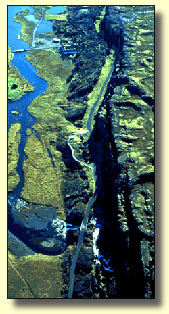
Iceland is one of the most geographically interesting places on the planet. Besides, the thermal springs, the glaciers, and the volcanoes, it boasts of a land-based rift valley. A rift valley is formed when two continental plates are physically tearing apart. Mostly this happens in one of the world's oceans, but in Iceland, the Eurasian and the North American plates are moving apart and have created a rift valley at Thingvellir.

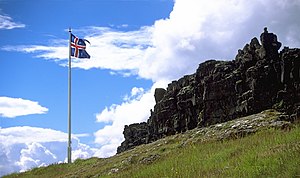
The region around Thingvellir is an other-worldly landscape, where ropes of lava cut through the walls of the valley. Two great rock mountains--Hrafnabjorg and Armannsfell, where the mythical guardian of the region, Armann Dalmannsson, is supposed to dwell--rise above the valley. It looks as if nothing ever changes. Nature at one of its most majestic. However, every year the plates continue to drift apart by approximately 1.5 cm. This means that the valley floor is constantly changing, generally dropping by a few millimeters each year. In 1789 after an earthquake, the floor dropped by half a meter.

For Icelanders, it is hard to underestimate the historical importance of Thingvellir as it is where the Icelandic chieftains or godar first met to form the Althing or General Assembly. One man was elected as the lawspeaker. The great Icelandic poet, Snorri Snorrisson served as the law speaker in the 12th century, for example.

The Althing was held for two weeks every summer, and everyone who could attend did so. They lived in tented camps called buds and disputes were settled, laws given and democracy flourished. In the year 1000, it was here that Christainty was proclaimed as the national religion.

As various Icelandic sagas make clear, the Althing did not necessarily posses the power to enforce its laws, and sometimes, such as in Njal's saga, the disputes led to bloody feuds. Public executions began to take place in the 16th century. For example in the pools of Oxara, women convicted of witchcraft or sexual offences were drowned.

The last Althing met in 1798 in Thingvellir and was replaced by a national court and parliament in Reykjavik (also now called the Althing), but despite the move, the valley has never been forgotten. It served to inspire poets as well as the nationalist movement in the nineteenth century. When Iceland was granted its independence from Denmark in 1944, the declaration was read out at the historic site of the Althing in Thingvellir.

Today, it is a popular tourist destination and many come to marvel at Nature's power. But to Icelanders, it also represents the soul of their nation.

10 February 2009

Humans in Nature: John Tradescant

By Erastes

I'm a keen gardener, and I'd often seen the genus Tradescantia on plants that I planted in my garden. I didn't know what that word meant for many years. I assumed it was from where the plants were from, or perhaps a particular thing about their genetics.


It wasn't until I read Philippa Gregory's Earthly Joys that I realised what it meant: it refers to the man who introduced these plants to the United Kingdom, John Tradescant.

There were actually two John Tradescants--The Elder and the Younger. They were both obsessive plantsmen and brilliant gardeners.

The Elder John rose to fame as head gardener to the Earl of Salisbury at Hatfield House. An influential man at Court (Tradescant seems to hover around hugely influential men) and completely redesigned the gardens at Hatfield for the new house that Salisbury had built. These gardens were formal (unlike the broad sweeping "natural" landscapes that were later fashionable when Capability Brown came along) comprising mazes, knot gardens, water parterres and terraces.

But it wasn't just as a gardener that Tradescant became famous; he travelled widely, hugely widely for a simple gardener in the 17th century--Russia, the Levant, Algeria, Holland, France. Everywhere he went he bought, begged, borrowed seeds and seedlings, wrapped them up and transported them in huge numbers and brought them back to England. He was solely responsible for introducing the horse chestnut to England, bringing back six beautiful "conkers" and waiting years and years for them to grow, blossom and flower. It's hard to imagine, in a country where horse chestnuts are everywhere, that once people paid money to come and look at these odd trees.

John the Elder then went to work for another Court favourite, James I's good friend and confidant (and some would say lover, too) George Villiers, the 1st Duke of Buckingham, and it was here in Gregory's book that she rather bends the truth! Unfortunately, I can't see the handsome George going to bed with Tradescant, as he in reality looked like the man in his portrait at the head of this post, and not the gorgeous creature on the cover of her book. Still, it's a great book, full of wonderful gardening information and a tender love story that stomped my little heart to bits!

John's son, John the Younger, travelled even more widely than his father, going as far as the Americas, and continued to collect plants and seeds to bring back to England, plants such as the magnolia, the tulip tree, and plants we take for granted such as aster and phlox. They displayed their finds in their house in Lambeth and charged the public to view them in what they called "The Ark." John the Younger became head gardener to Charles I, survived the civil war and was buried beside his father in Lambeth.

09 February 2009

Humans in Nature: Mount Washington

By Isabel Roman

Mount Washington is the highest peak in northeast United States, sits 6,288 feet above sea level, is home to the world's first cog railroad, and has the world's worst weather. A proven fact recorded on April 12, 1934 when the record for the highest wind gust directly measured on the Earth's surface was clocked at 231 mph (372 kph).

Don't believe me? I've gone up the railroad to the top of the mountain and it's bad. You can watch those crazy scientists (who live there) monitor the weather on their webcam. From the summit: Observation Deck, North View, West View.

Darby Field claimed to have climbed Mt. Washington in 1642. Dr. Cutler named the mountain in 1784. The Crawford Path, the oldest mountain hiking trail in America, was laid out in 1819 as a bridle path from Crawford Notch to the summit and has been in use ever since. Ethan Allen Crawford built a house on the summit in 1821, which lasted until a storm in 1826. I hope he had insurance.

The cog railroad (technically The Mount Washington Cog Railway) is the best train ride ever. In summer. With the windows closed to prevent soot in your eyes. I'd post my own pictures but I went in the 80s, and the hair...it's best left to the forgotten scrapbooks packed away.

Sylvester Marsh of Campton came up with the idea while climbing the mountain in 1857. His plan was promptly declared insane. Because why wouldn't you want to build a railroad up a mountain? (Please, don't say it...)

Equipment and materials were hauled by oxen 25 miles to Bretton Woods, and then another six miles through thick forest to the base of Mount Washington. On July 3, 1869, Old Peppersass became the first cog-driven train up the mountain.

The men who worked on the railroad decided to minimize their time getting to and from work so they invented the Devil's Shingle--not so much an invention as slide-boards that fit over the cog track. They were wide enough so the workers could sit on them with their tools. Made from wood, with iron as handles, they could literally slide down the mountain at speeds up to 100 mph. They made it down in about fifteen minutes; the record was 2:45. In 1906, the Devil's shingles were banned after the accidental death of an employee.

Still, it looks like a lot of fun!

08 February 2009

DOWN HOME EVER LOVIN' MULE BLUES Winner!

We have a winner for Jacquie Rogers's DOWN HOME EVER LOVIN' MULE BLUES prize pack giveaway:

MERCEDES!

Contact Jacquie to give her your address. The prize must be claimed by next Sunday or another winner will be drawn. Please stop back later to let us know what you think of Jacquie's work! Congratulations!


Guest Blogger: Geri Krotow

This week we welcome Harlequin author Geri Krotow, whose February 10th release is WHAT FAMILY MEANS. She's a U.S. Naval graduate and served for nine years as a Naval Intelligence Officer. She still travels the world with her family since her husband is an active-duty Navy Pilot. Geri is excited to blog at Unusual Historicals, and hopes her writing journey helps other writers.

***

To Debra Bradley, marriage is being with the man you've always loved--despite the odds. Despite what other people think. And marriage is about family, about protecting your children from a sometimes hostile world.

To her husband, Will Bradley, family is about creating a safe haven. Where it doesn't matter that one of you is white, the other black. Where it's never mattered...

All these years later Will and Debra are still in love, still each other's best friend. They've made a good life for themselves and their children. But their daughter, Angie-pregnant and estranged from the husband she loves-has to discover for herself what family means...
***

What about your background lends itself to your historical voice?

I grew up in a post-WWII neighborhood in a suburb of Buffalo, New York. Our neighborhood was a mix of various European ethnicities. I didn't know it at the time, but this served as the catalyst for my yearning to not just learn a foreign language, but to travel the world to see where these languages had come from. To witness the culture that had "crossed the pond" to North America, in essence. In my own extended family I heard Polish. On the street where I lived just a short walk and my ear would catch phrases in German, Italian, and also Polish.

I studied Spanish throughout school and college, which gave me a foundation to learn Italian when our family was stationed there a few years back, and then French when we lived in Belgium. I'm currently studying my fourth foreign language in preparation for our next overseas assignment.

For college, I attended the U.S. Naval Academy, a site entrenched in history and tradition. Once commissioned into the Fleet, I lived and breathed the Navy tradition for nine years until I resigned to pursue a writing career. It seems that history has always had a hold on my life.

What is the connection between language and history?


For me, language is the passport to a culture, and that culture's history. What was boring to me in a classroom became alive as I walked ancient Naples and Rome, Italy, or wandered over the beaches at Normandy.

Do you write straight historical?

No. I love to read stories that intertwine past and present, and when Harlequin opened up the Everlasting line in 2006 I jumped at the chance to write about a period I'd always been fascinated by--World War II--and anchored it in a contemporary story that very much benefited from the lessons of yesterday. While my first book, A RENDEZVOUS TO REMEMBER, was published under Harlequin Everlasting in 2007, my second book is being published this month under Harlequin SuperRomance. WHAT FAMILY MEANS is a contemporary romance, but as with all Everlasting stories it examines the entire lifetime of a romance. The romance in WHAT FAMILY MEANS is between a lower-economic-class white woman and affluent African-American man who first meet as children in Buffalo, New York in the 1950s. I have plenty of flashbacks that give the historical story a stage.

How much research do you do?

As much as possible! My first book involved hours and hours of internet research to get the latest numbers and analysis on World War II and the Holocaust. This second novel found me researching African American history. I was fortunate that I met a woman in Belgium, another American, who happens to be a professor at Hampton Roads University in Norfolk, Va. Professor Martha Hall gave me a stack of books to peruse. It would have been impossible to read them all, but I learned enough to give my hero and his family as much authenticity as I could.

How do you avoid "revisionist" history, even in a novel?

I'm not sure I do, entirely. The present is the only time period I'm intimately familiar with! But just as my characters show up in my consciousness, so does their setting. I research and educate myself on their era as much as I can, and then I let my fingers fly over the keyboard and allow the story to spin.

Have you always wanted to write historical fiction?

While I've always considered myself a novelist, I honestly thought I was solely contemporary. But several different sources have commented that I have a strong historical voice, and of course, I love to read historical fiction of any kind, especially romance. It makes sense to me today that I was meant to write both, but it took a while to shake it out in the reality of getting published and pursuing this dream we all have of telling the perfect story.

***

EXCERPT

Present Day
Buffalo, New York

"You've never believed me about this the whole time we've been married. Why should I expect you to change now?"

Will Bradley, my husband of thirty-five years, stared at me with an intensity that made my hands clench on the shirt I was putting in his suitcase. His charcoal eyes sparked with annoyance. Will was never one to get easily worked up, but judging by the twitch over his left eyebrow, my latest obsession with our grown children's lives had sent him over the edge.

Or at least very close to it.

"I hear you, Will, you know I do. But the kids, especially Angie, haven't had the smoothest path."

I tried to keep the "look" off my face--the expression Will and our children said I'd mastered. The "I'm right so don't even bother to argue" look.

Apparently I didn't succeed in keeping my face blank. Will's nostrils flared as he drew a deep breath.

"Dammit, Debra, you go back to this every time." Will referred to my long-held belief--and, okay, guilt--that our interracial marriage had placed undue burden on our children.

He glanced up from packing.

"What do you always say to me, Deb? 'It's the twenty-first century. The new generation doesn't see us in terms of skin color. We don't get a fraction of the stares we used to draw.'"

"Give me some credit, Will. I know that times have changed, and the kids are all doing great--better than a lot of our friends' children."

I stood up from the bed to make my point.

"Angie's always had it the toughest. She's older than the twins and remembers the more-blatant prejudice in high school and college. Jesse's family wasn't immediately supportive of their white son marrying our biracial daughter."

Will didn't respond as he packed his socks and underwear. I hated when he went all quiet like this.

"Why did Angie move back to Buffalo while Jesse's away? Why didn't she wait for him to return from his mission?"

I knew I wasn't the only one worried about Jesse's safety in Iraq, where he'd gone for humanitarian reasons. He was there to use his surgical skills, working as a government contractor. The military was grateful for civilian talent such as Jesse's.

Will ran a hand over his short-cropped hair. His fingers caught my eyes. I was always a sucker for his hands--chocolate-brown skin stretched over the most elegant fingers, the most sensual hands, I've ever seen. He could have been a doctor like his father if he'd wanted to. But his passion was architecture. He'd used those fingers to produce beautiful buildings instead.

"This is what I've never understood, Will. How can you be angry with me for caring about our children?"

"There's a big difference between caring and care-taking, Debra."

"Don't I know it." As soon as the words slipped out, I realized they would've been better kept unspoken.

I sounded like a first-class martyr.

Will's hands rested on his still-slim hips, his stance combative.

"Is that what this is about? Do you need a break? I know it's been a long year for you, Deb." Will referred to my looking after his elderly mother, Violet. She'd become more dependent on us the past nine months.

He didn't give me a chance to answer.

"I'd be home more if I could," he went on, "but I need to take care of these last projects, then I'll go down to just a few a year, let Blair and my associates run things." Will zipped up his suitcase as I watched from my perch on our bed.

It was a ritual we'd shared since the early days of our marriage. I brought in the piles of clean laundry, he chose what he needed for his business trips, and we talked while he packed.

We usually didn't fight.

"Honey," I said now, "I don't want to argue. I just want to be here for Angie. And I'd love to have your support."

"I know, baby, she's your only daughter." Will smiled at me despite his anger at my too-familiar behavior.

I sighed.

Will walked around to my side of the bed.

"The twins were much more difficult when they were younger," I said. "Now that they're grown, it's as though they don't need their mama so much. They're men. But Angie--a daughter always needs her mother." I couldn't help the tear that slid out from under my closed lid as Will pulled me into his embrace.

"Honey, I'm just asking you to focus more on yourself, on us. You've given Angie and the boys the childhood, the family, you never had and we're richer for it."

I soaked up his love, but the question that wouldn't die nagged at my conscience.

Had it really been enough?

***

You can read the rest of chapter one here Find out more about Geri at her website and blog.

Cover and excerpt with permission of Harlequin Enterprises, LTD Copyright 2009 by Geri Krotow.

***

Thanks for sharing with us today, Geri, and best of luck with your newest release!

Would you like to win a free copy of WHAT FAMILY MEANS? Sure you do! Leave a comment or question for Geri, and we'll select a winner at random next Sunday. Best of luck!

06 February 2009

Weekly Announcements - 6 Feb 09

Michelle Styles received a solid B review from Dear Author for her novel VIKING WARRIOR, UNWILLING WIFE. Jayne writes: "So score another victory for the non-Regency and this one definitely doesn't have a duke/spy in it. I hope you'll continue to write what would be called more ancient historical books, along with your nineteenth century ones."

***

Lisa Marie Wilkinson received a 4-star review from Romantic Times for her upcoming debut from Medallion Press, FIRE AT MIDNIGHT. Kathe Robin wrote: "Romance, action and suspense differentiate this tale of adventure and love. Wilkinson creates the right combination of believable characters, snappy dialogue and fast-paced storytelling. The protagonists are not only passionate about their separate causes, they're passionate about each other too."

***

Carrie Lofty received a great review for WHAT A SCOUNDREL WANTS over at Literary Escapism. "Usually you get the whole opposites attract in romance novels, but this time around, Scarlett and Meg were more alike than most genre couples and yet they were still different enough that they clashed every step of the way. That chemistry made this story that much more fantastic."

***

Carol A. Spradling has just received the cover for her upcoming release BOUND BY HONOR, book two in her American Revolution-set Freedom Series, published by The Wild Rose Press. Here's the blurb:
Harrison Jackson must defend his family against British spies, Colonial advocates, and himself. Secret meetings are destroying his good name, and nightmares from a life he thought buried threaten more than his reputation.

Victoria Greyson steps onto Boston streets and back into Harrison's life without warning. She wouldn't blame him for hating her, but his rage will have to wait. Her sister is dead and Victoria intends to extract revenge on the man responsible.

While Harrison fights to keep his past a secret, Victoria and Colonial Independence demand more than he wants to give--and neither of them will be denied.
***

Join us Sunday when Geri Krotow will be here to talk about WHAT FAMILY MEANS, her latest release from Harlequin. This Superromance is partly set in the 1950s and 60s.

***

We'll also draw the winner of Jacquie Rogers' prizes for DOWN HOME EVER LOVIN' MULE BLUES. There's still time to leave a comment for your shot at winning!

***

Have a good weekend! If you have an announcement to make for next week, email Carrie. See you next week...