30 June 2011

Excerpt Thursday: Denise A. Agnew

This week on Excerpt Thursday, we're welcoming romantic novelist, Denise A. Agnew, as she celebrates the release of her latest novel, BEFORE THE DAWN, available in e-book format from Samhain Publishing, Amazon and Barnes & Noble. Join us Sunday, when Denise will be here to talk about the novel and give away a copy! Here's the blurb:

A hot Irish accent mixed with high adventure may cause combustion. Beware of falling for this hunk. The heroine says he’s hers. 

A fallen woman must decide to stay down, or rise and fight…

Elijah McKinnon has been found innocent of a heinous murder, but it doesn’t erase the hellish years in prison he endured. He boards the train to Pittsburgh a changed man, certain he will never feel free until he’s wreaked revenge on the brother who ruined his life.

The passenger who catches his eye is intriguing, but he’s seen her kind before. The kind who puts on airs—and looks down on Irishmen. Still, he can’t seem to stop himself from stepping between her and a pack of ruthless cads.

Mary Jane Lawson is grateful for the handsome stranger’s help, but her journey has a higher purpose: to rise above her shattered reputation and declare her independence, come flood or famine. Propriety says she should refuse Elijah’s suggestion they pose as husband and wife—for her own protection, of course. Her practical side says it won’t hurt to pretend, just this once.

Come nightfall, though, their little charade must be carried all the way to shared sleeping quarters, where their vulnerabilities become painfully clear. And when danger past and present threatens, trusting each other becomes a matter of life and death.


***

Excerpt from Before The Dawn

She stumbled along in his wake, no energy to ask why they pushed onward into the woods where no one from the train could help them. Thinking that far ahead caused more trepidation, so she concentrated on planting one shoe in front of the other. After what seemed an endless time, a rocky outcropping and massive hill rose in front of them.


“Thank the saints.” He tugged her forward. “Here.” He released her hand long enough to shove aside shrubbery and reveal a tall opening. She saw his throat work as he swallowed hard. “Damnation. I don’t want to go in here, but we must. I’ll go first, you follow.”


His voice snapped like a general, and she flinched. His eyes went hard, unyielding.


The darkness beyond the crevice appeared to be a wide mouth without teeth. What horrors lay inside? Unreasoning fear stilled her courage. She sucked in a quick breath. If Elijah could conquer his apprehension, so could she.


He crawled in, headfirst. When he disappeared into the maw, all went quiet. Even the wind didn’t stir, and the rain stopped. Her entire body quaked. Nightmares of deep, unknown places from childhood tormented her from the edges. They beckoned, dared her to stay brave and to remain sane.


Elijah’s hand came out and then his head. “It’s larger than I thought. It’s a deep rock shelter.”


She clasped his hand and leaned down. He released her once she started inside. She crawled on hands and knees and discovered enough headroom to stand and several feet on both sides. Light penetrated from a large crack in the ceiling.


He inched around in front of her and made certain the hole stayed thoroughly covered by the foliage. Turning back, he stopped. He put one finger to his lips in a gesture of silence. He pulled his weapon from the inner waistcoat pocket and held it, prepared for use. They stayed that way for several minutes. Time stretched in front of her, an eternity of waiting, of anxiety ridden breaths and heart pounding apprehension. Safety still felt far removed. Now that they had stopped running, she heard her own breath rasping, her heart pounding in her ears as her body slowed. Reaction came without remorse. Tears flowed and fell to her cheeks. She regulated her breath by slow turns, and yet her body remained tense. After what seemed an eternity, he made his way past her and sat against one wall. He gestured for her to come closer.


She eased towards him on her hands and knees, her crinoline bunching up in the way. Frustrated, she frowned. She never hated fashion more than this moment.


“Take off the crinoline. We’re leaving it and the corset behind,” he said.


She hesitated and then realized the wisdom in his request. Mary Jane rose to her feet. “Help me. I have to remove the dress first.”


He nodded, his face etched with a harsh determination. She turned away from him. Methodically he unbuttoned the back of the dress while she pulled the hatpins out of her hat and hair. As his fingers moved, a fleeting thought raced by. Even in these desperate moments of flight, his fingers brushing with heat through dress, corset and chemise somehow made her incredibly aware of him as a man. Then the thought fled.


She tossed the pins in a corner and flung the hat aside. She was surprised the thing had not fallen off before now. Her dress stuck to her, sodden with rain and made the buttons more difficult to undo. She would have to dress in it again once she removed the corset and crinoline, but what choice did she have? Before she knew it the shoulders and the tight sleeves eased away from her skin. Eager, she pulled the garment off her arms until she peeled it all the way down and it fell around her waist. She wriggled to shove it off her hips. She stepped out of the dress and worked on the ties that held the crinoline in place. As they remained quiet, a sense of urgency filled the air. They must hurry in case his brother found them and they must fight. She shoved the horsehair padding downward, and he came around to the front and knelt in front of her.


“Here,” he whispered. “Lift your legs one at a time, and I’ll pull it off.”


She complied, and quicker than she expected, Elijah crumpled the nuisance and shoved it into a corner. Without speaking he returned to stand behind her and made short work of the corset laces. When it loosened around her ribs, she sucked in a breath. That felt so much better. Though she never worn her corset particularly tight, removing the garment was liberating. She took one deep breath after another. When he loosened it completely, he pulled it over her head. It, too, went into the corner.


Now that she stood in nothing but chemise, pantalets, stockings and boots, she trembled with cold. His hands rested on her shoulders for a second, and then he turned her around.


His eyes had lost their harshness, but they held no awareness of her as a woman. He had shut down for the fight, all efficiency in the face of danger. “I know the dress is cold and wet, but you have to put it back on. If they find us here…”


She put her fingers over his lips. For a few unguarded seconds, his eyes flared. She’d never imagined green eyes could burn this bright and hot with emotion. Quickly he shut it off, like a flame doused under a rush of water. He helped her back into the dress, which went much faster.


Once done, he sat, propped his back against the wall and stared at her. He drew up one leg and propped his forearm on his knee. With his disheveled hair, sweat beading on his forehead, and a harsh look in his eyes, he looked every inch the dastardly criminal. Part of her wanted to run from him too. After all, she was in this predicament because his brother had a vendetta with Elijah. His rumpled waistcoat hung open, dirt and something red smeared over one side. Worry speared her.


She sank to her knees in the damp earth in front of him. She grabbed the lapels of his waistcoat and parted them. “You are bleeding.”


“No. I’m not. That’s the blood of the man I killed.”


Her lips parted but nothing came out at first. She struggled with her words. “We both… I hit that man with a rock, Elijah. I killed him.”


“I know, darlin’.” His voice softened, the rough understanding lowering his husky voice. “I know.”


More tears came, and as they rained down, her face crumpled.


“Shhh…” He reached for her and pulled her into his lap.


He cuddled her close, his powerful arms providing shelter she desperately craved. She wept quietly, holding back the rage screaming fear. She shuddered and quaked. She saw a misery in his gaze, a genuine sorrow. She touched his face and felt the bristle of beard growing there. In those quiet moments, Mary Jane heard nothing more than gentle breaths, felt nothing more than his heat beneath her, cradling and comforting.


Understanding, like that she had witnessed before, warmed his eyes and softened his visage. His lips parted. She stared at that handsome mouth and wanted it on hers with undeniable desperation.


Closer, closer still, he tilted towards her until…his mouth touched hers with exquisite gentleness. When her lips parted under pressure, his tongue pushed inside. Retreated. Caressed. Owned her mouth with sweet, deep thrusts. She arched into that kiss, breath puffing into him, mouth moving in response, tongue tangling in carnal dance.


Elijah broke away with a gasp, eyes still blazing.


He leaned closer until he whispered in her ear. “If we were anywhere else and completely safe, you would be beneath me. Naked.”


Blunt as his words were, they excited Mary Jane and made her forget their harrowing flight.


“But we can’t.” His burning gaze lingered on her mouth, then recaptured her eyes. “I would put you in danger, and that’s the last thing I want. Promise me something.”


“Anything.” The word, so definitive and complete, left her throat without a pause.


“If they find us here and anything happens to me, you fight with everything in you. You fight to live. You understand?”


“No—I— you are not going to die.” Her voice broke. “That will not happen.”


“If there’s one thing I learned incarcerated in Eastern State, it was that bad things happen and you cannot always stop them. If that bad thing happens, and I cannot keep you safe…you do what you need in order to live.” His gaze was fierce and demanding. “You understand me?”


“Yes.” The excruciating thought twisted a hot knife in her breast. “Yes.”

28 June 2011

The Entertainers: Parlor Games

By Jennifer Linforth

In researching my new novel, I stumbled into the world of parlor games. I needed one for the opening of this book and found Poor Pussy. Strangely enough, a co-worker recalls playing a game called "Pat the Kitty" as a child.

Gathering together for parlor games was popular in the evenings in Victorian families. The central theme of many of them were games involving trying not to laugh. Poor Pussy was one of them. It involved one proper guest having to mill around on all fours amongst the seated company, meowing and stopping in front of someone who then had to say "poor pussy" without ever cracking a smile. Neither the cat or guest could smile. If one of them did the latter was the next cat.

I never recalled playing that as a child but I do remember this...

The Laughing Game where players sat in a circle and one says "ha." The next, "ha-ha" and so on until someone laughed in earnest.

Many games we know today stemmed from Victorian parlor games. Red-Light, Green Light, Simon Says, Charades and Musical Chairs. Hot Potato of today sounds very similar to the game of Change where an object was passed in a circle and directions shifted out of the blue.

Hunt the Thimble sounds like great fun. The mistress of the house would hide a tiny object in a room and guests would have to search for it. When they found it, they simply took their seat until one poor person was left still looking for the item.

Victorians seemed to enjoy embarrassing each other...

...or catching each other for that matter. There were many versions of Duck, Duck, Goose then called Wolf and the Lambs.

Memory games such as Grandmother's Trunk were wildly popular (hence the interview with my magician who is a master of Victorian memory games.) In this game a player would say "My grandmother has a trunk and in it is.... apples" or some such item beginning with the letter A. Around the room they would go, each guest having to build on this list with a new item with the following letter while remembering and reciting as well all the items before!

Way more fun than Wii? Oui?

Jennifer Linforth expands the classics by continuing The Phantom of the Opera. and are available now. Look for future books based on the classics, in addition to her unique historical romances. "Ms. Linforth's prose is phenomenally beautiful and hauntingly breathtaking." ~ Coffee Time RomanceMADRIGALABENDLIED

27 June 2011

The Entertainers: Mathematical Water Theater

By Lisa Marie Wilkinson


The Cyclone at Coney Island


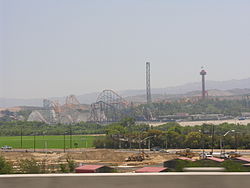
Six Flags Magic Mountain


Essex House of Wonders


Winstanley’s Water Works


If the last two amusements/entertainments on the list aren’t familiar to you, it’s because you’re living in the 21st century.


Those seeking entertainment in the Piccadilly area of 1690’s London could view attractions featuring fireworks, fountains and assorted clever gadgets at the Mathematical Water Theater known as “Winstanley’s Wonderful Water-Works.” Spectacular water and fireworks displays were staged by owner inventor/engineer Henry Winstanley and his wife Elizabeth, and the exhibit included such mechanisms as the “Wonderful Barrel,” a unique piece of equipment that dispensed both hot and cold drinks to visitors.


An English businessman and engineer who studied engraving, architecture, and clock-making, Winstanley (March 31, 1644-November 27, 1703) developed a perpetual motion mechanism that was still in popular use generations after his death. He filled his own home and garden at Littlebury in Essex with hidden passages, warped mirrors, and his own mechanical and hydraulic gadgets and inventions. The carnival-like atmosphere contained mechanical wonders that included a “flying chair” (an early incarnation of the roller coaster) and curious chairs with arms that would immediately imprison any hapless visitor who sat down in them, requiring the trapped unfortunate to wait to be extricated from the contraption by an attendant. The “Essex House of Wonders” became a local landmark, attracting members of the royal court as well as local denizens.

Winstanley invested his profits from the
Mathematical Water Theater in ships, and after incurring losses when two of his ships were wrecked upon the infamous Eddystone rocks off the southern coast of England, he decided to take action by designing and funding the construction of the famous Eddystone Lighthouse, the very same structure that was swept from the Eddystone rocks during the Great Storm of 1703.

Alas, Winstanley and a crew had journeyed to the lighthouse on the day of the storm to effect repairs to the structure, and Winstanley and his crew perished in the storm.

The Mathematical Water Theater continued to operate successfully for several years after the death of its owner/creator, and no doubt inspired many of the spectacles and attractions featured in modern amusement parks.

Lisa Marie Wilkinson is an IPPY Gold Medal winning author of historical adventure-romance. Her latest novel, STOLEN PROMISE, featuring vibrant Gypsy characters and breath-taking romance, is available now.

26 June 2011

Guest Blog: Anne Whitfield

This week, we're welcoming historical novelist, Anne Whitfield, as she celebrates the release of her latest novel, THE HOUSE OF WOMEN, published by Knox Robinson Publishing Ltd. It's available in the US and UK, in paperback and Kindle format. Anne is givng away a copy to a lucky blog visitor, so please be sure to leave a comment! Here's the blurb:

As the Victorian Age draws to a close, lonely and brokenhearted, Grace Woodruff fights for her sisters’ rights to happiness while sacrificing any chance for her own.

The eldest of seven daughters, Grace is the core of strength around which the unhappy members of the Woodruff family revolve. As her disenchanted mother withdraws to her rooms, Grace must act as a buffer between her violent, ambitious father and the sisters who depend upon her. Rejected by her first love and facing a spinster’s future, she struggles to hold the broken family together through her father’s infidelity, one sister’s alcoholism, and another’s out-of-wedlock pregnancy by an unsuitable match.

Caring for an illegitimate half-brother affords Grace an escape, though short-lived. Forced home by illness and burdened with dwindling finances, Grace faces fresh anguish –and murder– when her first love returns to wreck havoc in her life.  All is not lost, however. In the midst of tragedy, the fires of her heart are rekindled by another. Will the possibility of true love lead Grace to relinquish her responsibilities in the house of women and embrace her own right to happiness?
***
What inspired you to write The House of Women?
I loved the idea of a large family all pulling different ways. With a selfish mother, a tyrannical father and seven daughters, the family was complex, but add to that a lost love, a heroic butler and a handsome stranger, well, the real fun began then!

How did you know you wanted to be a writer? How did you get started?
I didn’t grow up wanting to be an author as such, though my mother says I was always scribbling at something. In high school was the first time I felt the need to create a story. It came about through an essay I had to write for English. (At the time I was living in England) We watched the movie, Kes, and then had to write an alternative ending. I thoroughly enjoyed writing the essay, which actually became a story in itself. I got AA+ and the highest result in class.

From there, I co-wrote with my best friend a story for Harlequin Mills & Boon. I was terribly homesick for Australia and I used to read a lot of books set in Australia. So, naturally, our romance was set in the Australian outback. We never finished writing the story, I think boys got in the way. A few years ago my friend found our story and sent it to me. It wasn’t that bad either!

After moving back to Australia in 1987, I didn’t think about writing at all. But I always had characters in my head and when doing mundane jobs I would create stories in my head to amuse myself.

Ten years later, 1997, while writing up family history information, I suddenly started typing the characters that spoke to me and my first historical novel began.


Do you have any writing rituals?
I try to write between 9am and 3pm. After that it’s dinner and family time. I work weekends, which leaves me free to write during the week. I prefer writing in the morning, and can count on one hand how many times I’ve written at night. But I do need coffee to keep me going and if possible chocolate!

How do you come up with the names for your characters?
I love names, and the old names of history can be so elegant.  In The House of Women I had fun naming the seven daughters. Grace has always been a favourite, and my daughter is called Eleanor Grace. I do spend time on choosing the names, making sure they fit the character. I don’t like modern names being used in historical. I use my family tree information as an excellent source of period names.

What types of books do you like to read? Who are your favourite authors? Why?
I read a wide selection of books. I used to read a lot of historical women’s fiction by great authors such as Audrey Howard and Catherine Cookson, but now I read much more widely. I love historical fiction, especially medieval bio-fiction written by Elizabeth Chadwick and Sharon Penman. I also enjoy chick lit and biographies. Much of my reading is non-fiction research for my books, which I enjoy.

Are you working on your next book? What can you tell us about it?
Yes, I’ve just started writing my next historical. As yet, it doesn’t have a title, but the main characters, Charlotte and Harry, are there, demanding to be heard. It’s set in Yorkshire England again, about 1874. Aside of this new story, I have plenty of finished books waiting to be published. Stay tuned!

Where can readers learn more about you and your book?
Readers can find my books in either paperback or ebook at all retail outlets like Amazon, Barnes and Noble, etc, or they can be ordered by any bookstores.
To learn more about me, readers can visit my website http://www.annewhitfield.com  or my blog http://annwhitfield.blogspot.com
Thank you, Anne! Please remember, leave a comment to win a copy of Anne's latest, The House of Women, available now!

24 June 2011

The Entertainers: Jugglers and others in the Middle Ages

By Lindsay Townsend
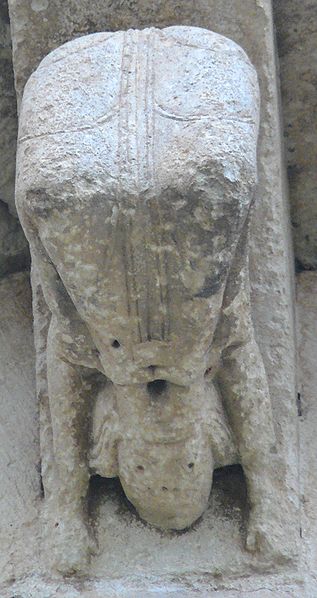
In the Middle Ages, professional musicians and minstrels were highly thought of and ranked in royal and noble households as the equals to huntsmen and falconers. Dancers, too, were well regarded - in 1306, the only woman paid as a musician in the royal household was an acrobatic dancer (saltatrix, 'tumbler') with the 'stage name’ of Matilda Makejoy. She possibly danced by bending backwards and touching her head with her feet, or on her hands, or on knives - in medieval stained glass Salome was shown dancing on knives.

Such dancers could be athletic and graceful or tumble in a jesting manner, playing for laughter. They could also be well paid and respected - Richard II paid John Katerine, a dancer from Venice, over £6 for playing and dancing before him, a sum not far short of £3,000 today.

Amongst the minstrels themselves there was a kind of ranking, with professional musicians at the top and jugglers and puppeteers at the bottom. Jugglers especially were considered at the time to be coarse, especially those who made a living wandering from fair to fair or village to village. Jugglers were felt to have few morals and to be able to do their tricks through magic - always a dangerous idea in the Middle Ages.

However jugglers were also held in affection, even by the church, and many illuminated manuscripts show jugglers. From the time of William the Conqueror, a 'King of the Jugglers' appeared at the court and would continue to appear through the Middle Ages. Whoever held this title had many rights to go with it. There is also a medieval legend of a juggler who, having nothing else to give, made an 'offering' of his juggling skills before a statue of the Virgin and Child in church. According to some variations of this story, the Madonna or Jesus caught one of the balls.

Juggling using different objects is more difficult than using the same objects. Bouncing objects off a floor is easier than tossing them in the air, and throwing all the objects in the air - called multiplexing in modern juggling - is easier than one after another.

Balls were commonly used for juggling but other things could also be used. In the Irish story of Cuchulainn, the hero juggles nine apples. The later Viking sagas also mention juggling and sometimes with weapons - Snorri Sturluson writes in one saga, "In the doorway of the hall, Gylfi saw a man juggling with knives, keeping seven in the air at a time," a trick also mastered by Sunniva in A Knight’s Captive.

[Illustrations from Wikimedia Commons.]

Lindsay Townsend writes historical romance set in medieval England and the ancient Mediterranean. Lindsay's latest book, To Touch the Knight, a story of jousting, deception and romance at the time of the Black Death, is published by Kensington Zebra in July.

23 June 2011

Excerpt Thursday: Anne Whitfield

This week on Excerpt Thursday, we're welcoming historical novelist, Anne Whitfield, as she celebrates the release of her latest novel, THE HOUSE OF WOMEN, published by Knox Robinson Publishing Ltd. It's available in the US and UK, in paperback and Kindle format. Join us Sunday, when Anne will be here to talk about the novel and give away a copy! Here's the blurb:

As the Victorian Age draws to a close, lonely and brokenhearted, Grace Woodruff fights for her sisters’ rights to happiness while sacrificing any chance for her own.

The eldest of seven daughters, Grace is the core of strength around which the unhappy members of the Woodruff family revolve. As her disenchanted mother withdraws to her rooms, Grace must act as a buffer between her violent, ambitious father and the sisters who depend upon her. Rejected by her first love and facing a spinster’s future, she struggles to hold the broken family together through her father’s infidelity, one sister’s alcoholism, and another’s out-of-wedlock pregnancy by an unsuitable match.

Caring for an illegitimate half-brother affords Grace an escape, though short-lived. Forced home by illness and burdened with dwindling finances, Grace faces fresh anguish –and murder– when her first love returns to wreck havoc in her life.  All is not lost, however. In the midst of tragedy, the fires of her heart are rekindled by another. Will the possibility of true love lead Grace to relinquish her responsibilities in the house of women and embrace her own right to happiness?

***

An excerpt from The House of Women
Grace brought her hands together under her chin in deep thought. “He had no money until his marriage.” Her eyes widened as she realized his meaning. “He used his wife’s money?”
‘It is his money now, Miss Woodruff.” Swindale’s gaze darted away. “I reveal too much. Mr Ross will be angry.”
An overwhelming sense of humiliation filled her. “We’ve been living on Felicity’s money …” Grace felt the bile rise to her throat.
“Miss Woodruff, it’s Mr Ross’s money and he used it to keep your family from going under. He is a gentleman, and takes care of his own. You must not censure him on this. He was thinking of you all and did the only thing he could do. His married state meant he could do much good to his own affairs and those of his family. It’s quite a natural thing to do.”
“Are you telling me that without his input of money after his marriage, we would have lost what businesses remained to us?”
“Yes, and more likely the estate as well.”
 His words were like a physical blow to her stomach. She reeled, staggering back towards the nearest chair and sunk onto it breathing heavily. Her mind was numb; refusing to comprehend the debt they owed him, owed Felicity. Tears stung behind her closed lids, but she denied them release.
Some minutes passed by in strained silence until Grace gave herself a mental shake, pushing all thoughts of William and Felicity to the back of her mind. She would deal with that later. Now, her family’s future must, for once, be firmly decided. For too long she had let the present state of affairs linger. Well, no more! It was she who had cared for them all for years, not her father, not her mother and definitely not William! She would rather burn this house to the ground than live on Felicity’s money. ‘If we were to live more frugally, maybe close up most of the house and cut all staff, except perhaps one or two would that work?”
‘It would help, certainly,” Swindale agreed with haste. “I have written to Mr Ross about the sale of more of the estate’s land. The south quarter around to the western boundaries cover many acres. It’s favourable farming land and should bring a good price.”
 “How can we keep the house, if not the estate?” Grace was clutching at straws, she knew, but if they could redeem something, however small, it was better than nothing.
“I have thought of that. If Mr Ross agrees, then all the surrounding parcels of arable and woodland can be sold, leaving the house, outer buildings and say twenty acres. Enough land to grow crops for the few beasts you’ll retain. If we can achieve a good price then you might be able to maintain a cook, housemaid, one gardener, and carriage driver.”
“An enormous change for us all,” Grace said, her voice barely audible above the crackle of the shifting logs in the fireplace. Her thoughts were racing ahead. Such a transformation in their lives was not going to be easy, but it could be done. She would make sure of it. “By doing this will the house then be unencumbered?”
“Yes. Hopefully. What profits are made will be enough to sustain the family and house. Unless there is a fall in the market.”
“Good. Then it will be done.”
‘It will?” Swindale looked at her strangely as if doubting her word.
Grace’s gaze was steady and cool. She knew what he thought. “There will be no more tantrums and tears, Mr Swindale. I shall begin the changes immediately.”

YouTube video


Author information: Born to Yorkshire parents, Anne Whitfield loves history and the beauty of England. She is a keen genealogist and one of her greatest loves, apart from her family, is creating exciting fiction characters. Anne lives in Australia with her family. Her website is http://www.annewhitfield.com

22 June 2011

The Entertainers: Buffalo Bill Cody

By Carrie Lofty

As with most legends of the American West, the factual details of William Frederick "Buffalo Bill" Cody's life are subject to much dispute. His autobiography claims that he began his life as an "Indian fighter" at age eleven and rode for the Pony Express at age fourteen. Facts become a little more prevalent once he joined the Union Army in 1863 as a teamster, and later went on to serve as a scout.


But his true calling was always entertainment. He made his stage debut in Chicago in 1972 at the age of 26. Eventually the play "The Scouts of the Prairie" also featured another Old West legend, James Butler "Wild Bill" Hickok, but Cody was much better suited to stage life than ambling, gambling Wild Bill.

After years touring with a company, Cody decided to found his own entourage of Western spectacles. "Buffalo Bill's Wild West" expanded from its 1883 origins to become one of the best known traveling acts to have ever toured. Featured performers included Annie Oakley, and typical shows boasted trick shooting and roping, wild animals, cowboys, horse chases, re-enactments of famous battles, stagecoaches, parades of American Indians in full regalia, and lots of Cody's trademark flare.

Eventually he renamed his troupe "Buffalo Bill's Wild West and Congress of Rough Riders of the World," which probably suited his ever-growing showmanship and fame. The troupe performed for over a million spectators on Coney Island, then traveled to England for Victoria's Jubilee in 1887, officially taking Cody's version of the Wild West to Europe. (Pictured is the troupe's visit to Rome in 1890.) Depictions of massacres and firefights became the most lasting impressions the world would have of the American frontier until Hollywood's interpretations--although most early cinematic portrayals drew heavily from the show's high drama.

The autobiography mentioned above was first published in 1879, when Cody was only 33 and still growing in popularity. He certainly knew the value of managing his own image, and he often used his fame to promote civil rights for women and American Indians, as well as conservationism. Western historians claim that he was the most famous individual on the planet at the turn of the 20th century, and his death in 1917 of kidney failure solicited condolences from the leaders of the United States, Great Britain, and Germany. He remains one of the most gifted entertainers and promoters in American history, with his popular image of the Wild West still influencing imaginations today.

What other entertainers remind you of Buffalo Bill, in that they control huge empires--even to the point of rewriting their own histories? Is that even possible in today's information-saturated culture?

SONG OF SEDUCTION's sequel from Carina Press, PORTRAIT OF SEDUCTION, is now available! Later this year watch for Carrie's new Victorian series from Pocket, as well as her "Dark Age Dawning" romance trilogy from Berkley, co-written with Ann Aguirre under the name Ellen Connor. "Historical romance needs more risk-takers like Lofty." ~ Wendy the Super Librarian

21 June 2011

The Entertainers: Will Rogers

By Elizabeth Lane


Will Rogers died before I was born.  I never saw any of his movies or heard his voice on the radio.  But I feel as if I knew him because he was my dad’s favorite movie star.  Dad talked about him a lot, especially on long car trips. 

Most movie cowboys were city boys with pretty faces.  Born in 1879 on the Dog Iron Ranch in Oklahoma’s Indian Territory, Will was the real thing.  Both his parents were part Cherokee (Will once quipped that his ancestors didn’t come over on the Mayflower, but they met the boat).  The youngest of eight children, Will quit school after the 10th grade.  He was more interested in being a cowboy than in reading, writing and arithmetic. 

A freed slave taught him how to use a lasso to work Texas Longhorn cattle on the family ranch.  As he grew older, Will’s roping skills were so remarkable that he was listed in the Guiness Book of Records for throwing three lassos at the same time:  One rope caught the running horse’s neck, the other would hoop around the rider and the third swooped up under the horse to loop all four legs.  After some early adventures abroad, will returned to America and went into show business as “The Cherokee Kid.”  His skills won him jobs trick roping in wild west shows and on the vaudeville stages where, soon, he started telling small jokes. 

Quickly, his wisecracks and folksy observations became more prized by audiences than his expert roping.  He became known as an informed philosopher, telling the truth in simple words so that everyone could understand.  Here are some examples:  

“A fool and his money are soon elected.” 

“Advertising is the art of convincing people to spend money they don’t have for something they don’t need.” 

“Buy land.  They ain’t making any more of the stuff.” 

“Even if you’re on the right track you’ll get run over if you just sit there.” 

“If stupidity got us into this mess, then why can’t it get us out?” 

“Never let yesterday use up too much of today.” 

“We are all here for a spell.  Get all the good laughs you can.”  

Will starred on Broadway and in 71 movies and was also a radio broadcaster.  He wrote more than 4,000 newspaper colums and six books.  Presidents, senators and kings sought his opinions.  Inside himself, Will Rogers remained a simple Oklahoma cowboy. "I never met a man I didn't like," was his credo of genuine love and respect for humanity and all people everywhere. He gave his own money to disaster victims and raised thousands for the Red Cross and Salvation Army.  

Will was also a devoted husband and father of four.  He married Betty Blake in 1908 after an 8 year courtship.  He would say, “When I roped her, that was the star performance of my life.” 

In 1935, at the age of 55, Will took off on a flight around the world with a legendary pilot named Wiley Post.  The plane crashed in Alaska.  Both men lost their lives.  The outpouring of national grief over Will Rogers's passing is generally regarded to be the greatest such show of national mourning since the death of Lincoln some seventy years earlier.   Will has been honored with postage stamps and monuments, including a statue in the U.S. Capitol building.  And his wise, simple words are still with us.  
Elizabeth Lane has written more than thirty historical romances, several set in the early 20th century. Her latest is CHRISTMAS MOON, a time travel set in present day and 1870s Wyoming, available in print and Kindle from Amazon.com, and in other e-formats from E-Reads. Watch for her latest Harlequin Historical, THE WIDOWED BRIDE, in March 2011.

20 June 2011

The Entertainers: Hurdy Gurdy Girls


By: Jacquie Rogers

When a man puts in over sixty hours of backbreaking labor in the mines, or punches cattle from dawn to dark every day, by the end of the week he's ready for a little entertainment. In the American West, that entertainment was provided primarily by saloons and dance halls. With the man to woman ratio of 20:1 or even worse, sometimes much worse, seeing a pretty lady was the delight of a man's week. And he spent a lot of money for the privilege. Enter: the hurdy gurdy girls.

Hurdy gurdy girls were distributed all over Europe, Australia, and North America, but this article addresses only the girls who came to the American West--Canada and USA and territories. What's a hurdy gurdy? (Find out at Chris Eaton's website) Why were they called hurdy gurdy girls, and how did this all come about? The best site to answer this is The Universe of Bagpipes.
To supplement their incomes, in the 1820s farmers and farmworkers began to make wooden brooms and fly-whisks during the winter which they, as itinerant peddlers, sold in the summers in the surrounding areas... It was soon discovered that the wares sold better when accompanied by
dancing, hurdy-gurdy playing girls. Quickly the dancing and music became ever more important and the pretty girls became ever better known...there was a lot of easy money to be made.


Hurdy gurdy girls could be found all over the West. Generally, prostitution was not involved. The girls, from poverty-stricken families in the duchies of Germany, were of strong moral fiber. They danced with men, and cajoled them to spend money on drinks, but services beyond that were taken care of by other women.

In 1913 Idaho Governor William McConnell wrote in his book Early History of Idaho:

The girls were engaged by the proprietors of the 'social resorts,' in sets of four, with a chaperone who accompanied them at all times. They were almost invariably German girls, and although they were brought into contact with rough people and sometimes witnessed even the shedding of human blood, the rude, generous chivalry of the mountain men, some of whom were always found in these resorts, was a guarantee of protection from violence, and strange as it may sound to those of modern times, these girls were pure women, who simply did the work they had bargained to do, and when their contracts expired, most of them married men whose acquaintance they had made while pursuing their vocation, the men who knew them best, and with the money they had earned by dancing with 'Wild Bill,' 'Texas Pete,' and others, helped to buy a house for themselves and husbands. The poor girls, and they danced only because they were poor, had kind hearts and wonderful patience and forbearance.
Some hurdy gurdy girls came over in family groups. Arthur Hart, Director Emeritus for the Idaho Historical Society, cited some census data in his article for the Idaho Statesman, Idaho History: Hurdy-Gurdy girls on frontier danced with all comers. Notice that this troop is called a "Hurdie Gurdie Troop" but it appears they only play violins.

The 1870 census is enlightening. In Granite Creek, Boise Basin, with its post office in Placerville, a "Hurdie Gurdie Troop" is listed as made up of Conrad Schneider, 43, his wife, Catherine, 35, and children ages 15, 11 and 2. Conrad was a violinist, as was his brother, George, 37, whose wife, Mary, was 34. A third violinist in the troop was Conrad Deihl, 19. Four dancing girls ranged in age from 15 to 27. All were from the Rhineland area of Germany.

There were two kinds of women in the Old West: good (meaning strong moral fiber) and bad (meaning sexually promiscuous). Hurdy gurdy girls were considered "good women" by men, but usually not by "respectable" ladies, the schoolmarms, and bankers' wives of the town. Because the dance hall owners had to make sure the girls were safe, hall patrons were expected to follow rules such as these posted at the Alhambra, a dance hall in Silverton, Colorado:

Rule 1. No lady will leave the house during evening working hours without permission.
Rule 2. No lady will accompany a gentleman to his lodgings.
Rule 3. No kicking at the orchestra, especially from the stage.
Rule 4. Every lady will be required to dance on the floor after the show.
Rule 5. No fighting or quarrelling will be allowed

The ladies to the left are hurdy gurdy girls in Barksville (I think), British Columbia, Canada. They danced as many as fifty dances a night, at a dollar per dance.

Later in the 19th Century, hurdy gurdy girls didn't just dance, but then they weren't from the Rhineland, either. The name became synonymous with soiled dove, and the girls' origins were not limited to a small area of Germany. However many of the original hurdy gurdy girls in the American West found husbands and made good homes for themselves and their new families.


So they had a happy ending after all.


Sources:
The Universe of Bagpipes
Arthur Hart: IdahoStatesman.com
bcheritage.ca
Jacquie Rogers writes quirky, magical romances. Available now are her contemporary western, DOWN HOME EVER LOVIN' MULE BLUES, a multi-era faery story, FAERY SPECIAL ROMANCES, and a Christmas story, FAERY MERRY CHRISTMAS. She's co-founder of 1st Turning Point, a pay-it-forward website where authors teach, share and learn promotion and marketing.

17 June 2011

Announcements: 17 June 2011!


Margaret Mallory's KNIGHT OF PASSION is a finalist in THE GOLDEN QUILL! "The Golden Quill is the internationally recognized Published Authors' Contest hosted by thePhoenix Desert Rose Chapter of RWA! Congratulations to Margaret!

***


From Anita Davidson, we have a Victorian Gothic Romance set in Cornwall in 1882, TRENCARROW STREET.

Isabel Hart is afraid of two things, the maze at Trencarrow where she got lost as a young child, and the lake w

here her brother David saved her from drowning in a boating accident.

With her twenty-first birthday and the announcement of her engagement imminent, Isabel decides it is time for her to face her demons and ventures into the maze. There she sees something which will alter her perceptions of herself and her family forever.

The house party gathers and as more secrets are revealed, Isabel doubts she has chosen the right man, although her future fiancé has more vested in this marriage than Isabel realizes and has no intention of letting her go easily.

Will Isabel be able to put her preconceptions of marriage behind her and take charge of her own life, or is she destined to be controlled by others and a past she cannot break away from?


***


Lindsay Townsend’s TO TOUCH THE KNIGHT comes out in early July and a long excerpt is available all this week at Heroes and Heartbreakers.


Plus you can pick up her A KNIGHT'S ENCHANTMENT for 99c as part of the Amazon Kindle Sunshine deal.