31 October 2010

RED BIRD'S SONG Winner!

We have a winner for Beth Trissel's RED BIRD'S SONG guest blog. A free copy goes to:

KEENA KINCAID!

Contact Carrie to provide your mailing address. The book must be claimed by next Sunday or another winner will be drawn. Please stop back later to let us know what you thought! Congratulations!

Guest Author: Delia DeLeest

This week on Excerpt Thursday we're featuring one of our regular contributors, Delia DeLeest as she celebrates the release of NOT LOOKING FOR TROUBLE, set during Roaring 20s. Join us Sunday when Delia will be here to answer questions and give away a digital copy of this sexy romance.

How could someone not looking for trouble stumble upon it so easily? Susan Kent wonders this exact thing when she finds the man of her dreams, only to discover that he lives in a nightmare of his own making.

Jake Kelley thought he found the peace and simplicity he'd been looking for all his life. But in bringing Susan into his world, is he only dragging her down instead of pulling himself up?

The dark underworld of gangland Chicago throbs with intrigue, thrills and danger--those who venture there seldom leave intact…if they leave at all.
***

Tell us about NOT LOOKING FOR TROUBLE.

Though NOT LOOKING FOR TROUBLE is my third published book, it's actually the second manuscript I ever wrote, my first being a western that will never see the light of day. After watching a few old gangster movies (I may be in love with Jimmy Cagney) I became interested in the Roaring Twenties and all the incredibly interesting characters that came from that era. Okay, interested is kind of mild, let's just say I got a mite bit obsessed right down to the point when I could identify all the victims in the St. Valentine's Day Massacre in a police crime photo. Then I got to wondering about the women in these men's lives. Who were they? What drew them to these men? And how did they deal with consequences of living a life on the edge of crime? It was these things that created a story in my head just begging to be told and NOT LOOKING FOR TROUBLE was born.

What was 1920s Chicago like?

Though bootlegging was prevalent throughout the country in the 1920s and there were gangs controlling every major city at that time, Chicago is the one that has captured my imagination. The mood of the people of that time was reflected in this wonderful city. There was an underlying franticness, people out searching for just one more good time, regardless of its safety or legality. Chicago could be a dark, dangerous city, full of evil men whose only goals were money and control and they'd stop at nothing to get them. Winters in the Midwest are cold and unforgiving and I couldn't help coupling the atmosphere of the city with the uncompromising weather to portray the mood of the characters in my book.

What do you enjoy the most about researching the 1920s?

I've got an unhealthy attraction to my reproduction 1923 Sears and Roebuck catalog. That, along with a 1927 yearbook from a Chicago high school, can keep me entertained for hours. Something as simple as a description of a gas stove or a picture of the Senior class play can give me ideas that can turn into an entire scene or plot point.

But, it's reading mini-biographies about real people who lived in the time that I just can't get enough of. By reading about people's lives, societal expectations, rules and morals come to light, things that may never come up during a surface study of the time. While I love reading fiction, it just can't beat the lives real people and their true life struggles and victories.

Though the music of the times takes a little for our modern ears to get used to, I've been enjoying listening to it. I even found a dance tutorial online and my kids and I had a great time learning to do the Blackbottom, the Foxtrot and the Charleston.

What do you have in the works?

I've got a few manuscripts sitting in the darkness of my hard drive patiently waiting for me to make them readable. I feel guilty about these neglected children, but not yet guilty enough to whip them into shape. At the moment I'm attempting to store up my creative energy so it can burst forth in it's wondrous beauty on November 1, when I participate in my fifth year of Nanowrimo (National Novel Writing Month). That's the plan anyway, I'm not sure if my creative energy got the memo.

***

If you'd like to win a digital copy of Delia's NOT LOOKING FOR TROUBLE, leave a comment or question here. Maybe let us know what elements of pop culture you like from the early 20th century. Music? Movies? Any favorites you'd like to share? I'll draw a winner at random next Sunday. Void there prohibited. Best of luck!

28 October 2010

Excerpt Thursday: Delia DeLeest

This week on Excerpt Thursday we're featuring one of our regular contributors, Delia DeLeest as she celebrates the release of NOT LOOKING FOR TROUBLE, set during Roaring 20s. Join us Sunday when Delia will be here to answer questions and give away a digital copy of this sexy romance.

How could someone not looking for trouble stumble upon it so easily? Susan Kent wonders this exact thing when she finds the man of her dreams, only to discover that he lives in a nightmare of his own making.

Jake Kelley thought he found the peace and simplicity he'd been looking for all his life. But in bringing Susan into his world, is he only dragging her down instead of pulling himself up?

The dark underworld of gangland Chicago throbs with intrigue, thrills and danger--those who venture there seldom leave intact…if they leave at all.
***

"Susan!" Katie exclaimed in awe. "Are those really for you?"

Robbie was dancing around the room chanting, "Susie's got a boyfriend! Susie's got a boyfriend!"

"Who are they from?" Rose asked.

I searched through the flowers for a card of some sort, and quickly found it. All it said was, "I'm sorry." That was it, nothing more. Of course, I knew who they were from.

I tucked the card in my pocket before anyone else got their hands on it. The last thing I wanted to do was explain why Jake was apologizing.

Everyone was looking at me expectantly, so I had to say something. "They're from the fella I went out with last night. I'm going to put them in a vase." Ignoring their curious stares, I rummaged through the cupboard until I found a vase big enough for the flowers. A dozen roses! I would say a fella's got to be pretty sorry to send a girl a dozen roses. I filled the vase with water, and put them in the middle of the kitchen table. The room was already starting to fill with the beautiful scent of the flowers.

Dad looked over his paper and scowled at the flowers, then flipped it back up and continued reading, muttering something about dirty Irish. It was obvious the flowers didn't impress him nearly as much as they impressed the rest of the family.

Rather than sit and get the third degree from my sisters and brother, I retreated to the bedroom I shared with my sisters. Since Mom wouldn't let Katie or Robbie leave the table until their homework was done, I was guaranteed a little bit of privacy in there. It wasn't long before Rose came in after me, though. I didn't mind talking to Rose. She was closest to my age, and we were as much friends as we were sisters.

She flopped down on the bed beside me. "So, what's the story? You might as well spill it, because I'll bug you until you do."

I knew that was no idle threat, she'd done it before. I told her all about meeting Jake at the store, going out to Groeb's and the ride home. "Well, after he kissed me, I slapped him across the face and went inside."

"You didn't!" she exclaimed in delighted disbelief.

"You better believe I did, and you should do the same if some piker tries to put the moves on you."

"But he's not a piker, that's pretty obvious, since he sent you those flowers. Think how much they must have cost. Imagine, roses in January! So, what are you going to do now?"

I shrugged my shoulders. "I don't know. I don't know how to get in touch with him or where he lives or anything. I suppose he'll stop by the store tomorrow or something."

"What are you going to say to him?"

I traced the floral pattern of the bedspread with my finger for a moment while I thought about her question. "Well...he did apologize and send me flowers, and I really do like him. But, I can't make things too easy for him either, can I? He might think I'd let him get away with it again."

"Would you?"

I smiled at Rose. "I might."

27 October 2010

Money Matters: The Country Without a Currency

By Blythe Gifford

If there's one thing we've learned during this month's focus on money matters, it's that the farther back you go in history, the more likely you'll find that "money" itself--coins, bills, and the like--has not always been the medium of exchange. Even after a country becomes accustomed to coins, they have not been the everyday necessity we would think. For example, for 13 years in the middle of the 17th century, Scotland minted no coins at all.

After 1603, Scotland and England were ruled by one King, but they remained two different countries with separate legal systems, Parliaments, government administrations, and currency.

When King Charles I assumed the throne in 1625, he authorized minting of a wide variety of Scottish and English coins. (Banknotes were not issued as legal tender until later.) Shown here is a silver, Scottish 20 pence piece, featuring the King on one side and the crowned thistle, symbol of Scotland, on the other. It was minted somewhere between 1337 and 1642.

As his reign wore on, Charles had more pressing concerns than Scottish coins, including a civil war which ended with his execution. Some of the British coins minted at this time were authorized in various cities where he found himself campaigning against enemies.

Charles' execution did not stop the protracted, bloody, complicated civil war. Scotland, which fought both against and for the Stuart kings over the course of the war, was occupied by Oliver Cromwell's army between 1651 and 1660.

Cromwell issued "Cromwell Crowns," and other money, in England, but didn't get around to authorizing any new Scottish coins. Some suggest that he planned to consolidate the two currencies.

It was not until after Charles II formally returned to the throne in 1660, that there was once again new Scottish coinage. The first new money was dated 1663.

So how did people live without money? In many ways.

First, of course, existing coins continued to circulate, though after 13 years, there was definitely a shortage. People might shave gold or silver off an existing coin, debasing the currency and, in essence, creating the 17th century version of inflation.

Second, English coins found their way across the border, though the conversion rate was NOT one to one. (The value of Scots currency was fixed at 12/1 with English.)

Third, some businesses may have issued "tokens," sort of a local currency, good for local trade only. Such tokens were wide-spread in England, but exceedingly rare in Scotland.

Fourth, there was counterfeiting, despite severe legal penalties. Unlike today, when counterfeiters produce the biggest bills, it was the smaller pieces, in amounts ordinary people would actually use, that were most counterfeited in the 17th century.

But most important, Scotland at this time was still not a "money economy." While it had moved beyond a strictly feudal model, the average person in the country, where 90% of the people still lived, did not have much need for coins.

The family would work land held by a major landowner. They grew much of their own food, made many of their own clothes, and could trade or barter for most of the other goods and services. The only goods they needed to purchase were things like salt, iron tools, and cooking pots.

Most paid their rents and were paid for services in kind and even millers and blacksmiths did not work full time at their trades. So a shortage of circulating currency was not the hardship it would be for us.

It was, however, a challenge for an author, trying to put a coin in the hand of her 17th century heroine.

For more detail on all of this, see this excellent site. Images courtesy of CNG Coins, used under GNU Free Documentation License.

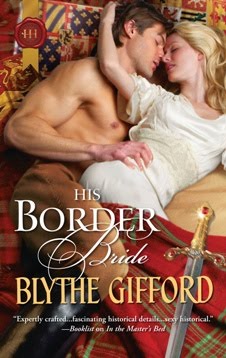
Blythe Gifford has written five 14th century medieval romances for Harlequin Historicals, featuring characters born on the wrong side of the royal blanket, most recently HIS BORDER BRIDE in May 2010. The Chicago Tribune called her work "the perfect balance between history and romance." Her 2011 release will be set in the 17th century Scottish Borders.

26 October 2010

Money Matters: What's Love Got to Do With It?

By Amanda McIntyre

The worth of a woman--what establishes it? Is it gold or diamonds? Is it the success of her career or her kindness to others? These days, the worth of a woman can be a compilation of many things and not only comparable, but in many ways equal to that of her betrothed. But a look back into history shows this was not always the case. In many cultures, there was in place the custom of a dowry.

The "dowry" is different from "bride price" in that it is what the woman brings to the marriage. Bride price, in contrast, is the amount of wealth paid to the family of the bride by the groom's family upon marriage. In terms of marketability, "bride price" means the perceived value of the bride to the groom and his family. A custom still practiced, though often despised, in some countries today.

Throughout history there have been many forms of determining the worth of a woman to a marriage arrangement, the operative word being, and "arrangement." As far back as the Babylonian "Code of Hammurabi," the oldest written law known to man, the dowry is accepted as part of many societal systems. Back in the day, the most recognized forms of dowry might range from sheep and cows, to property and gold. In times of war (a constant occurrence) alliances were made to strengthen political alliances, combine armies and land against opposing forces. This often led to a proverbial chess game of sons and daughters being used by their father's to jockey themselves into greater positions of wealth and power.

Dowries served many different purposes, depending on the culture and in some cases, if a woman's family could not produce a suitable dowry for the groom's family, it was possible that she would be forbidden to marry and forced to become a concubine in the household of a wealthy man. Dowries were also seen as a sign of gratitude for accepting another mouth to feed in a household and in most circumstances, the dowry of the bride would be returned if the marriage ended. Very rarely, did the dowry improve or empower the bride other than to ensure her protection from ill treatment by her husband, who would forfeit his newly found wealth if found committing such a crime.

While doing research for my medieval tales for both "WINTER AWAKENING" (in WINTER'S DESIRE) and "SACRED VOWS" (in THE PLEASURE GARDEN), I discovered that the Gaelic countries were one of the few cultures where the daughter was the heir to her father's property as well as his army. Therefore, a marriage to a Gaelic woman was advantageous in terms of her husband receiving the benefit of her inheritance at her father's death. This made marriages between clans a political move in strengthening territories against warring clans.

In Rome, a bride and her dowry (usually money and property) even after marriage might remain under the control of her father. If given to the groom, he assumed full control. As was the case in most dowry agreements, if the marriage ended, the dowry would be returned.

In early England, dowries among nobles were often traded between families in grand public displays of a betrothal of their children, who might only be seven at the time. These engagements acted largely as a promissory note between the two kingdoms showing a solidarity to one another, but which often times fell apart along the way. Upon marriage, the male (sometimes as young as 14) would receive full rights over his bride (who might only be 12!) yet still lose everything should the marriage end, or he showed her harm in any way. Marriages could also be called off entirely if the dowry was not suitable to either kingdom. Dowries given by a noble for his son, might be of substantial gain to the bride's family as they would be losing a part of their lineage while the strengthening the prospect of another.

In rural areas during the middle Ages, the brides were given items to set up their household, while a groom might be given the tools to begin a farm. By the Victorian era, a woman after being educated was presented as marriage material to society and usually a large dowry accompanied her as an enticement for the best possible suitor. Though both parties would disclose their wealth to the inspection of both families, once the marriage took place, the woman no longer had any say over her property or possessions. A woman was not even allowed to draw up a will for her children. Her husband, if he so chose, could leave her property at his discretion to any illegitimate children he might have as opposed to his own.

Even into the American movement west, dowries had a place in cultures, but became more of a preparation of the inevitability of marriage with mothers teaching their daughters to quilt and sew, making things to be placed in keeping until the day of their wedding. This custom later turned to the advent of Hope Chests, which for a time was popular, but died out in the late sixties.

Though the practice of bride pricing still takes place in some countries even today, the custom of dowries given as a form of enticement has given way to pre-nuptial agreements protecting the wealth and properties of both the bride and groom involved. As for me? I like to think that romance is the attraction and passion and hard work to build a lifetime together is the glue that holds a relationship together.

Question to ponder: How do you measure a persons' worth? Is it stature, wealth, character? Share your thoughts!

Researching history, listening to all types of music from classical to Kamelot, spending time with family & friends, and appeasing her strange infatuation with the Great Lakes, Amanda McIntyre to challenge her characters and her readers to look beyond the ordinary to the extraordinary, where anything is possible! Til next time, be well.

25 October 2010

Money Matters: Tyrian Purple

By Stephanie Dray

Today we say the rich are born with silver spoons in their mouths. In the ancient world, they said the wealthy were born to the purple. This phrase alludes to the royal robes dyed with a precious shade of deep purple originally created by the Phoenicians in Tyre.

Tyrian purple was a hue worn by royals and conquerors including Alexander the Great. Romans had a great affinity for it too, and their bright white senatorial togas were bordered with a great purple band. Tyrian purple was not only a commodity, but also a status symbol. It may have even accounted for the assassination of Julius Caesar who wore the royal purple so often that his colleagues feared he intended to make himself King.

The true color cannot be accurately identified now; the best we can do is reconstruct it based on the surviving description of the ancients, but we do know that redder shades of purple were considered to be inferior. It was the darkest, richest purple that they prized, and this may have been achieved by dipping the fabric twice in two slightly different shades, one redder, one bluer.

Whatever the methodology, the purple dye itself was so expensive that it was worth its weight in silver. The salesman of a silken garment dyed properly in the stuff might be able to buy a small city with the proceeds. The reason it was so costly is because of its enduring quality, one that improved, rather than faded, with age. And also it was wildly expensive because of the process used to make it.

The source of the dye was the murex brandaris, which is a name for a spiny sea snail. While it's possible to capture one of these little gastropods and poke it until it excretes a defensive mucus containing at least one of the ingredients required to make the precious purple, milking the murex snails was entirely too labor intensive. To meet demand, millions of murex were harvested. More than a thousand shells were needed to make even one gram of dye.

The exact process by which the dye was made has not been perfectly reproduced to date, but it was described by Pliny and involved vats of rotting shellfish. The smell was so terrible that dye factories had to be built far away from population centers. Mountains of shells attest to their presence.

The heroine of my debut novel, LILY OF THE NILE, is Cleopatra Selene, daughter of the more famous Cleopatra VII of Egypt. Together with her husband King Juba II, Selene built several purple dye factories on islands off the coast of Mauretania. Perhaps unable to replicate the exact shade of purple invented by the Tyrians, they called their own Gaetulian purple after one of the native Berber tribes. Gaetulian purple was prized almost as much as the Tyrian variety and was probably responsible for funding many of Juba and Selene's building projects and cultural programs.

Stephanie Dray's debut historical fiction novel, LILY OF THE NILE, will release January 2011 from Berkley Books. The sequel is expected to release at the end of 2011. Both novels are set in the Augustan Age and feature Cleopatra's daughter.

DANGEROUS ALLIES Winner!

We have a winner for Renee Ryan's DANGEROUS ALLIES guest blog. A free copy goes to:

JANET PAGE!

Contact Carrie to provide your mailing address. The book must be claimed by next Sunday or another winner will be drawn. Please stop back later to let us know what you thought! Congratulations!

24 October 2010

Guest Author: Beth Trissel

This week on Unusual Historicals we're welcoming 2008 Golden Heart finalist Beth Trissel as she celebrates the release of RED BIRD'S SONG, set during the 1760s in the colonial Alleghenies!

Taken captive by a Shawnee war party wasn't how Charity Edmonson hoped to escape an unwanted marriage. Nor did Shawnee warrior Wicomechee expect to find the treasure promised by his grandfather's vision in the unpredictable red-headed girl.

George III's English Red-Coats, unprincipled colonial militia, prejudice and jealousy are not the only enemies Charity and Wicomechee will face before they can hope for a peaceful life. The greatest obstacle to happiness is in their own hearts.

As they struggle through bleak mountains and cold weather, facing wild nature and wilder men, Wicomechee and Charity must learn to trust each other.
***

Native American historical romance novel RED BIRD'S SONG is the story of my heart for many reasons. The initial encounter between Charity and Wicomechee was inspired by a dream I had on New Year's Eve--a highly propitious time for dreams--about a young warrior taking an equally young woman captive at a river and the unexpected attraction between them. That dream had such a profound impact on me that I took the leap from writing non-fiction essays to historical novels and embarked on the most amazing journey of my life. That was years ago and the saga continues. I also met the prophetic warrior, Eyes of the Wolf, in another dream at the advent of this adventure, so when I describe him in the book I'm envisioning a character I feel I know.

The setting for much of RED BIRD'S SONG is the same as my other strongly Native American novel, THROUGH THE FIRE, the spectacular Alleghenies. Much of the history depicted in the story was inspired by accounts I came across while researching my early American English/Scots-Irish roots and the Border Wars. The French and Indian War is the most well known, but there were others. Life in the frontier was unsettled even after The American Revolution had drawn to a close and warfare a reality. The boundaries of the frontier just keep shifting farther west. In the early-mid 18th century, the Shenandoah Valley of Virginia was the colonial frontier and only hardy souls dared to settle here. The bulk of these were the tough Scots-Irish. If the Indians had only had to fight regular British troops they might ultimately have won because they scared the s--out of men trained for conventional warfare, but the long knives were another matter. They weren't easily intimidated and soon learned from their cunning enemy.

Although Hawk Eye in The Last of the Mohicans is an adopted Mohican, his lifestyle and behavior is that of a colonial frontiersman. The more rugged of these men dressed as he did, much in the Indian way. They hunted & fought with muskets, tomahawks, and their famous knives. Indians acquired these knives as well. They blended traditional weapons and ways of living with newfound tools and weapons of Western man. A highly adaptable people.

The attack at the opening of RED BIRD'S SONG in the Shenandoah Valley is based on one that occurred to my ancestors and is recorded by Historian Joseph A. Waddell in The Annals of Augusta County. A renegade Englishman by the last name of Dickson led the war party that attacked them. Initially I'd intended to make the Colin Dickson in RED BIRD'S SONG a villain but as soon as he galloped onto the scene I knew differently.

Wicomechee, the hero in RED BIRD'S SONG, is based on the Shawnee warrior by that name who lived early in the nineteenth century and to whom I have ties. The Moffett's, an early Valley family I'm related to, include a reference to him in their genealogy. Wicomechee's father, John Moffett, was captured in Kentucky by the Shawnee at the age of eight and adopted into the tribe. It's said he was a boyhood companion to the great chief Tecumseh, a chief for whom I have enormous admiration. The accounts of John Moffett and Wicomechee are recorded by Waddell. It's also noted that during the Black Hawk Wars Wicomechee recovered the captive daughters of a Dr. Hull and brought them safely into camp, which reminds me of Hawkeye in The Last of the Mohicans. I've included more on this amazing warrior at the end of the novel as a bonus for those who read it.

***

Thanks for this wonderful narrative, Beth, and for stopping by today! Readers, Beth will be giving away one digital copy of RED BIRD'S SONG to a lucky commenter. Just leave a comment or question for your chance to win. I'll draw the winner at random next Sunday. Void where prohibited. Best of luck!

21 October 2010

Excerpt Thursday: Beth Trissel

This week on Excerpt Thursday we're featuring 2008 Golden Heart finalist Beth Trissel as she celebrates the release of RED BIRD'S SONG, set during the 1760s in the colonial Alleghenies. Join us Sunday when Beth will be here to answer questions and give away a digital copy of this beautiful, adventurous romance.

Taken captive by a Shawnee war party wasn't how Charity Edmonson hoped to escape an unwanted marriage. Nor did Shawnee warrior Wicomechee expect to find the treasure promised by his grandfather's vision in the unpredictable red-headed girl.

George III's English Red-Coats, unprincipled colonial militia, prejudice and jealousy are not the only enemies Charity and Wicomechee will face before they can hope for a peaceful life. The greatest obstacle to happiness is in their own hearts.

As they struggle through bleak mountains and cold weather, facing wild nature and wilder men, Wicomechee and Charity must learn to trust each other.
***

Charity swiped angrily at a tear. She'd run away, if she had anyone to run to. It wasn't right they were all dead.

On impulse, she jumped to the ground. "I'll go anyway," she muttered. "Eat nuts and berries and live in the woods."

"Will you go alone?" a low voice asked.

Sucking in her breath, she whirled around. Less than twenty feet away, grasping his musket, stood a tall young brave. Stripes of red and black paint blurred his striking features. His dark brown eyes riveted her in place. This warrior was like no other and the most savagely handsome man she'd ever seen.

God help her. She should flee now, but could only stare, open-mouthed.

She swept her disbelieving gaze over the loose black hair brushing an open buckskin vest that revealed his bronzed chest and shoulders molded into contours of muscle. An elkskin breechclout left a great deal of his hard thighs exposed. Despite the dread hammering in her chest, a fiery blush burned her cheeks. But it was the sheathed knife hanging on his left side and the lethal tomahawk slung on his right that snapped Charity from her near-trance.

In a rush of memories, she recalled the stories of her father's death under the scalping knife and neighbors who'd suffered the same violent fate. No Indians had been spotted in their settlement since the Shawnee grew hostile and war had erupted nine years ago, but the warfare had ended. Hadn't it?

Clenching ice-cold fingers, she dug her nails into her palms. "What in God's name are you doing here?" she forced past the dry lump in her throat.

"Watching you."

20 October 2010

Money Matters: The Comstock Lode

By Jacquie Rogers

What one event influenced the outcome of the Civil War, built the Bank of California, financed San Francisco, created a new state, built a prestigious university, and pushed the completion of the trans-continental railroad? Yep, the discovery of the Comstock Lode.

Virginia City, Nevada, is on top of this momentous find--it's a great place to visit and you can go on several excellent tours. The Comstock Lode was the world's richest mining discovery at the time. People think about silver when you mention the Comstock Lode, but actually miners extracted 57% silver and 42% gold--more gold than most gold mines.

Since the 1849 California Gold Rush, prospectors scoured the western half of North America obsessed with gold fever. In 1859, Pat McLaughlin and Peter O'Reilly found gold at the head of Six-Mile Canyon. Henry Comstock, good fellow that he was, told McLaughline and O'Reilly that the discovery was on his pasture land and, well, they believed him. Same old story--the discoverers weren't the ones who made the money. But then neither did Henry Comstock.

Old Virginnie Town's population increased from about three to 17,000 in the first year. One major frustration the gold miners had was the annoying sticky blue-gray mud that clung to their shovels. When they assayed the mud, it turned out to be silver ore worth $2,000 per ton! That's a lot of money in 1859. Things really heated up around then! From Calliope:
Frame shanties pitched together as if by accident--tents of canvas, of blankets of brush, of potato-sacks, and old shirts, with empty whiskey barrels for chimneys--coyote holes in the mountain-side forcibly seized and held by men--pits and shafts with smoke issuing from every crevice--piles of goods and rubbish in the hollows, on the rocks, in the mud, in the snow everywhere, scattered broadcast in pell-mell confusion.
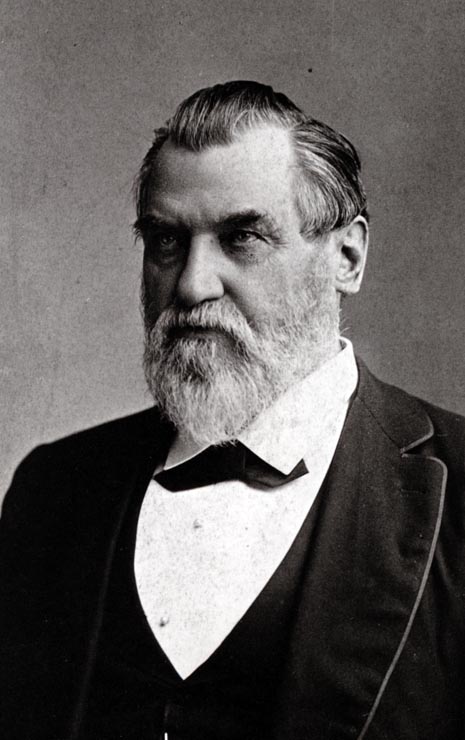
Lots of men who are household names today made their fortunes from the Comstock Lode, among them are: George Hearst, father of William Randolf Hearst; Leland Stanford (right), founder of Stanford University; William Ralston, founder of the Bank of California; and of course the most famous was an unsuccessful prospector who took up the pen, Samuel Clemens, better known as Mark Twain.

Within a few years, the political climate back East heated to boiling. President Abraham Lincoln had a war to finance, and the Comstock Lode was entirely too enticing. The boundaries were defined and Nevada became a state even though the population was too small to qualify it.

All didn't go smoothly at first. There was much dispute and hooplah over boundaries, and in the first six years, of the $50 million of ore mined, $10 million went to litigation! And of course one of the preeminent lawyers, William Stewart, ended up in the U.S. Senate.

The Comstock Lode brought a lot of innovations: the first miners' union, advances in drilling and tunneling technology, square-set timbering (which changed mining all over the world), and lots of other inventions that were the catalyst for modern mining practices. It also made a few men rich and broke thousands.

Sources:
Online Nevada
Calliope
Stanford University
Wikipedia

Jacquie Rogers writes quirky, magical romances. Available now are her contemporary western, DOWN HOME EVER LOVIN' MULE BLUES, a multi-era faery story, FAERY SPECIAL ROMANCES, and a Christmas story, FAERY MERRY CHRISTMAS. She's co-founder of 1st Turning Point, a pay-it-forward website where authors teach, share and learn promotion and marketing.

19 October 2010

Money Matters: The Rise of Rothschild Bank

By Michelle Styles

Frankfurt in the 18th century was not a good place to be Jewish in many ways. Confined to a filthy overcrowded ghetto which they were forbidden to leave without a special pass, life was short and cheap but it was from this place that one of the world's great banking dynasties, the Rothschild Bank, would emerge.

On 23 February 1744, Mayer Amschel Rothschild was born. Mayer Rothschild is ranked 7th most influential businessman of all time by Forbes Magazine. He basically changed the concept of international finance. By the time he was twelve, he was an orphan as both his parents died in one of the frequent epidemics but Mayer was lucky. He was sent to Hanover and learnt the trade of being a court agent. From there, he became the court agent to Prince William of Hesse-Kassel and married the daughter of another court agent. But the main base of their operation was the overcrowded ghetto in Frankfurt.

Their five sons--Amschel Mayer, Saloman, Nathan Mayer, Kalman and Jakob--became the most famous bankers in Europe, but it was Mayer Amschel who oversaw it all. He rapidly realised that there were fortunes to be made by wheeling and dealing in foreign, if one could get reliable information. One by one the brothers were sent out into the world to found businesses for their father. Nathan Rothschild first went to Manchester for the cotton but later went into banking in London. He specialised in transferring large sums of money legally or illegally to those in need of hard cash and no one needed it more than the British His brother Jakob went to France, Saloman to Vienna and Kalman to Naples.

Amschel stayed in Frankfurt. The brothers communicated with their father in Judendeutsch, evolving their own codes which gave them the edge in the business world. It is largely through the efforts of Nathan and Jakob that the English had enough money to defeat Napoleon. Developing a taste for cloak and dagger work, Nathan and Jakob indulged in the smuggling of gold bullion through France and into Spain to finance Wellington's operation. London was codename Jerusalem and Rabbi Moses was the transfer of funds. They liberally oiled the wheels of finance with backhanders etc but really there were very few rivals. The Rothschilds also had a very good system of carrier pigeons and were consistently able to get the news before anyone else.

There is an unfortunate legend that Nathan Rothschild fooled the City by selling shares when he alone knew of Wellington's victory, using his inside knowledge to make an absolute killing. The truth is that his first action when he learnt of the victory was to inform the British government. The ending of the Napoleonic War spelt an end to many of Rothschild activities and huge profits. However by then they were fabulously wealthy and the European banking system had changed forever.

Michelle Styles is passionate about history and passionate romance. An author over 16 books for Harlequin Historical, she writes in a variety of time periods from Roman and Viking through to early Victorian. A QUESTION OF IMPROPRIETY will be a December 2010 Harlequin Historical release.

18 October 2010

Money Matters: The Tally Stick System

By Lisa Marie Wilkinson

Throughout the centuries people have paid their debts and bought and sold goods using forms of exchange ranging from feathers to salt to pigs and including almost everything in between. The American Indians using Wampum and the denizens of Fiji using whales' teeth as currency would both probably agree upon one thing: it's important to have a medium of exchange when you need what someone is selling but the seller doesn't have any need for what you have to offer in trade. Anything can be perceived to be money if people agree it has value.

It is generally believed that the tally record originated as a recording or counting device for tasks such as tracking menstrual cycles via a lunar phase calendar. One of the oldest examples of a tally record dating back to 30,000 BC was found in a cave in the Lebombo mountains of South Africa. The artifact consists of 29 distinct notches on the leg bone of a baboon.

As commerce developed through medieval Europe, another use for the tally record was found. With coins in short supply and the population largely illiterate, a bookkeeping method was needed to record mutual exchanges and outstanding debt. King Henry the First, son of William the Conqueror, is credited with inventing the tally stick system when he ascended the throne of England in 1100 AD.

In England, tallies took on the characteristics of today's credit card system as lenders carved out the details of the loan using a system of notches to signify denominations on the surface of a small squared willow, pine, r hazel-wood stick. At the top of the tally, a cut the thickness of the palm of a man's hand was made, representing one thousand pounds, then subsequent cuts were made to designate other values. The breadth of a thumb meant one hundred pounds, the width of a little finger represented twenty pounds, the width of a barleycorn translated to one pound, and so on. The stick was then split in half lengthwise through the center of the carving, creating a "split tally," which prevented either user from adding notches to his half of the tally stick.

Each party to the transaction was given one half of the marked tally as proof. Because the type of wood used to create the tally was selected for its clear grain, the grain of the wood was similar to the watermark on today's paper money. The two halves would be perfectly matched, fraud was difficult to perpetrate, and refinements were added over time to make the documentation of the transaction virtually tamper-proof. The two halves of the stick were made different lengths, with the lender given the longer part of the stick, referred to as the stock, which formed the basis for the modern term "stockholder" while the shorter portion, called the foil, was given to the party who had received the goods or funds. Literally, the debtor received "the short end of the stick."

When the borrower returned to the lender with the goods or money owed, the two halves of the record would be "tallied," and any attempts at fraud would become immediately apparent when the two halves of the split tally were combined.

King Henry expanded the use of tally sticks to include the collection of taxes by local sheriffs, creating a demand for them, and the sticks began to circulate as a form of money as a result. Revenues owed to the Crown were collected in this manner, and the tally stick system formed the basis of the British Empire until the formation of the Bank of England at the end of the 17th century. Tally sticks found their way into medieval courts as evidence, and into the works of William Shakespeare, who referred to them in Sonnet 122.2 from Henry VI: "nor need I tallies thy dear love to score."

When King Charles II adopted the idea of selling royal debt at a discount, he nearly plunged the country into bankruptcy by selling tallies at a discount for the purpose of financing war.

A century later, the sticks were still in use, but the tally stick system was eventually abolished in 1826, when the sticks were removed from circulation and stored in the Houses of Parliament. In 1834, Parliament ordered all sticks destroyed, and two cartloads of the tallies were scheduled to be burned. Rather than give the sticks away to be used as firewood, or burning them in an outdoor fire, a decision was made to burn them in two furnaces in the House of Lords. The resulting conflagration set fire to the wood paneling and both Houses of Parliament were destroyed.

Lisa Marie Wilkinson is an IPPY Gold Medal winning author of historical adventure-romance. Her latest novel, STOLEN PROMISE, featuring vibrant Gypsy characters and breath-taking romance, is available now.

BUTTERFLY SWORDS Winner!

We have a winner for Jeannie Lin's BUTTERFLY SWORDS guest blog. A free copy goes to:

CID!

Contact Carrie to provide your mailing address. The book must be claimed by next Sunday or another winner will be drawn. Please stop back later to let us know what you thought! Congratulations!

17 October 2010

Guest Author: Renee Ryan

This week on Unusual Historicals we're welcoming Steeple Hill Love Inspired author Renee Ryan as she celebrates the release of DANGEROUS ALLIES, set in 1939 Berlin.

In Nazi Germany, British agent Jack Anderson risks his life working undercover as an SS officer. And his latest mission--to uncover intelligence about a Nazi secret weapon--is his most perilous yet. Especially since he'll have to work with Katarina Kerensky. The famous actress is too dangerous to trust--and too beautiful to ignore.

Desperate to save her mother from the Gestapo, Katia reluctantly agrees to work with the coolly handsome Jack. But can she trust a man whose sense of honor is tangled in a web of lies? In a race against time, Jack and Katia forge an alliance to take down the enemy...and learn whether love can survive in a world gone wrong.
***

DANGEROUS ALLIES received 4½ stars from RT Book Reviews. Patsy Glans wrote: "Ryan outdoes herself with this latest offering--a mix of romance, intrigue and spies. She writes her characters with strong feelings and heart."

At Renee's website, you can take a look at deleted scenes from DANGEROUS ALLIES, as well why she chose to delete them. Those storytelling choices are always fascinating!

***

Hi, Renee! Tell us a little about DANGEROUS ALLIES.

DANGEROUS ALLIES is a romantic spy thriller set in 1939 Nazi Germany. The hero is an American naval officer on loan to the British government. MI6 (the equivalent of today's CIA) sends him into Germany to photograph the blueprints of a Nazi secret weapon. The heroine is an exiled Russian princess and the hero's contact inside Germany.

Isn't WWII considered a taboo time period for romance novels? What made you decide to write a story that would be a guaranteed hard sell?

I didn't sit down and think, "Hey, why not transcend the genre." Rather I wrote DANGEROUS ALLIES during a long dry spell between my first and second book sale. I was so frustrated after my first publisher released me that I quit writing altogether and cancelled my membership in all of my writers' groups. I knew I was heading down a dark road. I couldn't keep chasing the sale anymore. I was a bit too obsessed. In fact, the pursuit of publication became my sole mission in life.

Something had to change. So I purposely took a step back and started working on my faith walk, something I had let lag to dangerous indifference. I also started reading books that were not romances, namely thrillers written by men for men. I very quickly realized these books, though well-written and fascinating, lacked the depth of character, emotion and romance I preferred.

I figured if I was going to collect rejections I might as well swing for the fences and stop playing it safe. Enter the WWII time period, a time of true heroism that hasn't been overdone. I was, for want of a better word, inspired. I took what I knew about romance writing and what I'd learned from all those male-targeted thrillers and melded the two inside the taboo time period. The inspirational thread was just for me, an experiment to see if I had what it took to add my faith into a story without it being overwhelming. I'm truly blessed my editor took a chance on this one.

What do you think makes DANGEROUS ALLIES an Inspirational romance?

Well, I should point out that DANGEROUS ALLIES is not a traditional Inspirational romance. The hero and heroine lie, cheat, steal, and (in the case of the hero) kill to get the job done. They operate under the assumption: sacrifice one to save a multitude. But the larger sacrifice could be their very salvation. This is not a story about "perfect" people, but rather people struggling with the question: Has God abandoned mankind?

Are you finished with the WWII time period?

Not at all! I'm working on my next WWII Inspirational romance right now. It will also be a romantic spy thriller, but is set on American shores. The hero is an OSS agent sent to investigate a Nazi sabotage plot. If successful, the saboteurs will bring the war to the U.S. High stakes indeed. It's also based on a real plot that failed. The traitors were tried in by a military tribunal and found guilty of treason.

Anything else in the works?

In April, my fourth "Charity House" book will be released. The "Charity House" series is set in 1880s Denver, Colorado around a unique orphanage that caters to prostitutes' "mistakes." I've really enjoyed exploring the world where these very brave men, women and children live. They might be outcasts in society, but they have a safe place where love abounds. Very different from my WWII novels!

***

Thanks so much for stopping by, Renee! I'm so excited to see more headway toward making WWII an acceptable setting for romance of all kinds.

Readers, if you'd like to enter for a chance to win a signed copy of DANGEROUS ALLIES, leave a comment or question for Renee. I'll select a winner at random next Sunday. Void where prohibited. Best of luck!

15 October 2010

Weekly Announcements - 15 Oct 2010

An excerpt of Jean Adams' Egyptian time travel romance, ETERNAL HEARTS, is available here, along with her guest blog "Write Like An Egyptian."

***

Jeannie Lin's debut novel, BUTTERFLY SWORDS, was released on October 1. It received a four star review from RT Book Reviews, as well as 9 1/2 stars from The Season and Top Pick for October.

From The Season: "The world of Tang Dynasty China Lin creates is far different from the ballrooms of Regency England or the Scottish cliffs of a highlander novel. But this historical romance is as unique and spellbinding for its meticulously researched and sweeping setting as for its suspenseful danger, and its themes of love, family, and honor. Not to mention the hero is hands down a Hero To Die For!"

Dear Author and Kobo Books are partnering in a special promotion in October. Purchase a copy of BUTTERFLY SWORDS from Kobo Books between October 1 and October 31 and be entered in a giveaway drawing. One random person will be selected to receive a free Kobo Reader. Details here.

In addition, Jeannie is continuing her road show with a signing at Barnes & Noble in Crestwood, MO on October 16, along with authors Jim and Shannon Butcher. Jeannie will also be signing at the NJRW conference literacy signing on October 23. For more info on signings, click here.

***

Margaret Mallory's KNIGHT OF PLEASURE won the Georgia RWA's prestigious Maggie award in the historical category.

***

The second of Zoe Archer's "Blades of the Rose" series, SCOUNDREL, has been making big news. It received an in-depth review from Dear Author, a fantastic 88 from Mrs. Giggles, and was selected as Smart Bitch Sarah's Sizzling Book Club Selection for October.

***

Congratulations to Lindsay Townsend, who just accepted an offer of representation from the Roberta Brown Literary Agency.

***

Michelle Styles' THE VIKING'S CAPTIVE PRINCESS has been translated into Italian as IL SEGNO DEL PECCATO, available here.

***

Join us Sunday when RENEE RYAN will be here to chat about her WWII-set romance, DANGEROUS ALLIES. She'll also be giving away a copy to one lucky commenter! Be sure to join us then.

***

We'll also draw the winner of JEANNIE LIN's BUTTERFLY SWORDS guest appearance on Sunday. You still have time to leave a comment or question for your chance to win.

***

Stay with us through the coming weeks when we'll be featuring the best unusual historical authors! BETH TRISSEL, DELIA DeLEEST, JANE GOODGER, and LAURA NAVARRE will be our guests. Join us!

***

Have a good weekend! Remember, you don't have to be an Unusual Historicals contributor to submit good news to the weekend announcements. If it has to do with unusual historicals, we'd love to shout it out to the world! Send announcements to Carrie. See you next week...

14 October 2010

Excerpt Thursday: Renee Ryan

This week on Excerpt Thursday we're welcoming Steeple Hill Love Inspired author Renee Ryan as she celebrates the release of DANGEROUS ALLIES, set in 1939 Berlin. Join us Sunday when Renee will be here to answer questions and give away a signed copy!

In Nazi Germany, British agent Jack Anderson risks his life working undercover as an SS officer. And his latest mission--to uncover intelligence about a Nazi secret weapon--is his most perilous yet. Especially since he'll have to work with Katarina Kerensky. The famous actress is too dangerous to trust--and too beautiful to ignore.

Desperate to save her mother from the Gestapo, Katia reluctantly agrees to work with the coolly handsome Jack. But can she trust a man whose sense of honor is tangled in a web of lies? In a race against time, Jack and Katia forge an alliance to take down the enemy...and learn whether love can survive in a world gone wrong.
***

20 November 1939
Schnebel Theater, Hamburg, Germany, 2200 Hours


They came to watch her die.

Every night, they came. To gawk. To gasp. To shake their heads in awe. And Katarina Kerensky made sure they never left disappointed.

Tonight, she performed one of her favorites, Shakespeare's Romeo and Juliet. In typical Nazi arrogance, Germanizing the arts hadn't stopped at simply eliminating "dangerous" persons from cultural life. The Chamber of Culture had continued its purification function by also ruling that Shakespeare--in German translation, of course--was to be viewed as a German classic, and thus acceptable for performance throughout the Fatherland.

Leave it to the Nazis to claim the English playwright as their own.

In spite of her personal reasons for hating the Third Reich, Katia loved the challenge of taking a role already performed by the best and making Juliet her own.

For a few hours on stage her world made sense.

Now, poised in her moment of mock death, her hair spilled past her shoulders and down along the sides of the raised platform on which she lay. She held perfectly still as her Romeo drank the pretend poison and collapsed beside her.

She could smell the brandy and sweat on Hans as the foul scents mingled with the mold growing on the costume he hadn't washed in weeks, but Katia thought nothing of it. She was a professional and approached the role of Juliet as she would any role, on or off the stage. With daring conviction.

Hitting his cue, George, the bald actor playing Friar Laurence, made his entrance. As the scene continued to unfold around her Katia remained frozen, her thoughts turned to the actors who should also be sharing the stage. She was one of the lucky ones. Instead of playing a star-crossed lover doomed for eternity, she could have been among many of her peers thrown out of the theater due to whispers--often untrue--of their Jewish heritage or socially deviant behavior.

For now, at least, she was safe. As she was the daughter of a Russian prince, Vladimir Kerensky, fame had been her companion long before she'd stepped onto a stage.

Would notoriety be enough to keep her safe?

The Nazi Germany racial policy grew increasingly violent and aggressive with each new law. If anyone checked Katia's heritage too closely they might discover her well-kept secret.

To the Germans, she was merely a real-life princess playing at make-believe. A natural, as her mentor Madame Levine had always said. Good skin. Innate talent. Beautiful face and hair. All added to the final package. But the brains? Katia kept those hidden behind the facade of ambition and a seemingly ruthless pursuit of fame.

If the Germans only knew how she really used her talents. And why.

Opening her eyes to tiny slits, she tilted her face just enough to cast a covert glance over the audience. Her latest British contact was out there waiting. Watching. Bringing with him another chance for her to fight the monster regime and protect her mother with means she'd been unable to use to defend her father.

She drew in a short breath and focused on becoming Juliet once more. The scent of stage dust and greasepaint was nearly overpowering. Dizzying. The spotlight blinding, even with her eyelids half-closed. Nevertheless, Katia remained motionless until her cue.

"The lady stirs...."

13 October 2010

Money Matters: Anglo-Saxon Wergild

By Lisa Yarde

In the sixth century, King Ethelbert of Kent established the wergild, or "man-payment", which fixed the amount of compensation a victim's family could demand for a murder. The Anglo-Saxons hoped to prevent the more common solution for punishing perpetrators of violent crimes: blood feuds between families, a vicious cycle of retribution that lasted generations. By the eighth century, wergild extended to all kinds of crimes, such as theft of property, excommunication, breach of the king's peace, rape or marrying a widow within a year of her husband's death.

The wergild helped define varying classes of society. A higher social status meant the victim's family could demand a larger payment. Everyone, except slaves, had an assigned worth that determined the value of clergymen and kings to the lowliest freemen. The varying Anglo-Saxon kingdoms established amounts of wergild. In eighth century Kent, a nobleman was worth 300 shillings, while the wergild of a freeman was 100 shillings. Kentish law defined a shilling as the worth of a cow.

In other parts of England, where the cost of one sheep set the value of a shilling, the value of a nobleman was 1200 shillings, with 200 shillings for the value a freeman. Under King Alfred the Great, acts of mutilation required specific compensation: 30 shillings for cutting off an ear, 60 for a nose, 9 for a finger and 20 for a toe. Women held the same wergild as male members of their class, and pregnant women had their own value, plus half of that for an unborn child.

If the perpetrator of a crime had been determined, a precise set of rules determined how he or she should pay the wergild. His or her family often disassociated themselves; those who provided shelter to a murderer might forfeit their lands to the king. Hostages in varying number from both sides of the perpetrator's family stayed with the victim's family as a surety.

During this time, the king's peace proscribed blood feuds. After twenty-one days, the victim's family received an initial payment (healsfang) of the wergild. Another twenty-one days later, the overlord of the victim, be it the king, a member of the clergy, or a nobleman, received some compensation (manbot), for being deprived of the victim's service through death or of rents owed, through theft. The king also received a payment (fihtwite) for the initial "breaking of his peace" during which the crime was perpetrated. The victim's family received the rest of their compensation in installments. Often, the payments went only to male members of a family.

What happened when a victim's family did not receive the wergild? In the late tenth century, the nobleman Wulfbald fought with his stepmother over property from her late husband. The widow demanded the wergild, but Wulfbald refused even when King Ethelred ordered it. His property was forfeit to the king, but he held it until his death. Wulfbald's wife and son inherited his claim. They arranged the death of a cousin, Eadmer, who supported Wulfbald's stepmother along with fifteen of Eadmer's men. Only the intervention of the archbishop of Canterbury and the threat of excommunication ended the rebellion of Wulfbald's son.

Failing wergild payments, it did not always devolve into blood feuds. In 1049, Earl Sweyn Godwinson of Hereford, the son of the powerful Earl of Wessex, had a disagreement with his cousin Earl Bjorn Estrithson of Huntingdon over some land. He arranged a meeting with Bjorn and killed him. King Edward the Confessor exiled Sweyn for the murder of his cousin. When the king declared him nithing, "a man without honor," Sweyn fled the country. His father Godwin interceded and the king allowed Sweyn's return, provided he agreed to undertake a pilgrimage to the Holy Land. He completed it, but died on the journey home. He never paid the wergild to Bjorn's family.

Lisa J. Yarde is a historical fiction author. Her ON FALCON'S WINGS, an epic medieval novel chronicling the starstruck romance between Norman and Saxon lovers, is available now.