28 February 2011

An Ordinary Day In: The Night of a Border Reiver

Blythe Gifford

I write today not about a "day in the life," but a night in the life of a 16th century Border Reiver.

Because the Reivers did their work at night.

Let me set the scene. For hundreds of years, the area on either side of the line separating Scotland and England, was almost a third country. It even had its own laws.

The families living there had more in common with each other than with their distant governments in Edinburgh and London. Loyalty to family came first. Country was far down the list. Feuds and alliances respected no borders and there are tales aplenty of Scots and English Borderers chatting on the "official" battlefield when they were supposed to be fighting each other.

For more than three hundred years, this was a war zone where, in addition to the enemy, you were at the mercy of your own army, who was quite willing to burn you out in order to deprive the enemy of supplies.

As a result, the border families developed their own code of conduct.

To put it bluntly, they stole for a living.

Sheep, cattle, household goods, anything that wasn't nailed down was fair game. The Scots would steal from the English, and vice versa, but Scot would also steal from Scot and Englishmen from their brothers. And both sides would steal from the church.

The best of them, or the worst, depending on your point of view, knew how to ride at night and hide during the day, along with any sheep, cattle, or other booty they collected.

So, what was a typical night like for a Reiver?

Peak raiding season was fall and winter when nights were long. The boggy ground firmed with the frost, making surer footing for the horses. In addition, in winter, the livestock were gathered near the homes, instead of grazing the hills. That made them easier to steal.

Some "raids" were reported to have 3,000 men riding, but most were smaller than that, the number of men matched to the intended target.

The Reivers were superb horsemen, but they did not ride the large destriers that knights did. Their sturdy "ponies" (called hobblers or Galloway nags) were tireless, able to carry a man 60 to 80 miles during a raid.

The raiders did not weigh down their horses by wearing full armor. They dressed lightly, wearing "steel bonnets" for head protection, over the knee leather boots over hose, and leather gloves. For protection, they had home made "jak o' plaite" vests. Quilted of leather or wool, the vest had bits of steel and bone between the layers, good, lightweight protection which left the arms free.

That was important because carried a variety of weapons: daggers, broadswords, sometimes small cross bow called a latch. Most often, however, a Border would ride carrying an eight foot long pike (a lance or spear). With this in one hand, he had to guide the pony one-handed.

Over treacherous mountains.

In the dark of night.

Moonless nights were preferred, but even the cover of night did not make the task easy. Most towns were fortified, so isolated towers and homes were preferred targets. So ubiquitous was the threat, however, that individual homes and even churches became mini-forts, designed to withstand an assault. Eventually watches were set all along the hills and a system of beacons established to warn of approaching riders.

Here's a list, kept by an Englishman, of raids into one section of the border during ten days of July in 1587. This list records only Scots raids into England. A Scotsman's list would, no doubt, be a mirror.

July 8 – 4 men, took 4 horses
July 9 – 12 men took 40 "beasts"
July 13 – 30 men too 24 oxen and "kyne" (cows) and 60 sheep and hurt 5 men
July 14 - 4 men took 4 "webbes of leed" (lead) from a church
July 15 – 12 men took 120 sheep
July 16 - 40 men took 40 oxen and cows
July 18 – 300 men took 30 oxen and cows, 6 horses, and hurt 3 men

That's seven raids in ten days. And July was the off season.

According to Border law, a reiver could be pursued back across the border, if caught in the act. This "Hot Trod," was the equivalent of a vigilante posse and the Border laws were strict in differentiation between a "Hot Trod," and a reprisal raid.

If the reiver evaded the pursuers and was able to return across mountain and stream to his own country, he would hide the stolen animals in the surrounding hills, just in case the warden actually came looking for him later.

And so, as the sun rose, he could make his way to bed.

For more information on the Reivers, consult The Steel Bonnets by George MacDonald Fraser, The Border Reivers, by Keith Durham, and The Reivers by Alistair Moffat.

Painting by Tom Scott RSA (1854-1927), downloaded from [1], a site dealing with Border Reivers in general and Walter Scott of Harden in particular. Original painting in the Mainhill Gallery, Ancrum.

Borders landscape photo was taken from the Geograph Project collection. See this photograph's page on the Geograph website for the photographer's contact details. The copyright on this image is owned by Gordon Hatton and is licensed for reuse under the Creative Commons Attribution-ShareAlike 2.0 license.
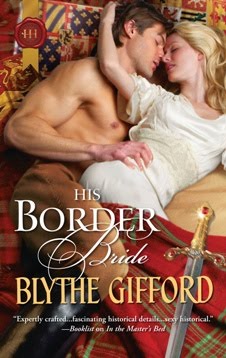

Blythe Gifford has written five, 14th century medieval romances for Harlequin Historicals featuring characters born on the wrong side of the royal blanket, most recently HIS BORDER BRIDE. The Chicago Tribune called her work "the perfect balance between history and romance." She is working on her next book, which will again be set on the Scottish Borders.


27 February 2011

LETTERS FROM HOME Winner!

We have a winner for Kristina McMorris's LETTERS FROM HOME guest blog. A free copy goes to:

CINDY L!

Contact Carrie to provide your mailing address. The book must be claimed by next Sunday or another winner will be drawn. Please stop back later to let us know what you thought! Congratulations!

Guest Author: Denise Agnew

This week on Unusual Historicals we're welcoming Samhain author Denise Agnew as she celebrates the release of her ancient world-set romance, FOR A ROMAN'S HEART. Here's the blurb:

His scarred soul knows no vulnerability--except her touch.

Trapped between cruel parents and the need to hide her gift of second sight from suspicious villagers, Adrenia Tertia Brigomalla walks a line as thin as the threads she weaves. The need for independence burns fierce in her heart, but not as hot as her unexpected attraction to a Roman soldier who comes to the village in search of a deserter.

Though hardened by war, Centurion Terentius Marius Atellus defies any man to harm an innocent. Nothing shakes his relentless determination to track down a murderous legionnaire with a taste for young women. Yet Adrenia's spirit and vulnerability spark a protective instinct stronger than duty...and temptation that could be his downfall.

Fragile trust built on stolen kisses and a premonition saves his life and drives his offer of the ultimate protection--marriage. While she revels in the feral passion he awakens within her, Adrenia would sooner brave the fires of Hades than trade one yoke for another.

It's a decision that could leave them both dangling above a precipice they may not survive...
***

What do you consider unique about the historical romances you write?

I've never been too interested in writing the soup du jour when it comes to historical romance. For example, Regency era sexy romances are very popular right now. But if I tried to write one when I wasn't interested in writing one, it would be a square peg into round hole situation.

Do you like the research required to write historical novels?

I never write a book set in a time period I'm not interested in writing about so there are no dull moments for me. The research is fascinating to me. I love it.

Do you write historicals exclusively?

No. I've written in every genre of romance except for inspirational. I have to change things up to keep my inspiration moving. Writing too much in one area of romance plugs up my ability to create at all.

Tell us about some of the historical romances you've written in the past and the ones coming up in the near future.

BRIDGE THROUGH THE MIST
This story is a time travel at the heart, but I throw it in there as historical because it's set mostly in 1318 Scotland, and I still had to do a ton of research.

LOVE FROM THE ASHES
2001 EPPIE winner for Best Historical Romance. It's set during the 1906 San Francisco Earthquake and Fire. The research on this book took a long time, but it paid off. I've had so many people read this book and tell me they felt like they were really there experiencing the time, place, and the earthquake and fire.

DARK, DEADLY LOVE
This novel is set during the Jack The Ripper murders of 1888. The original title was Midnight Rose. This is definitely a favorite of mine. I'd been reading about Jack the Ripper since the '80's, and when I buckled down to the right the book, it just sucked me right inside and wouldn't release me. It's one of my darker books, and though it is most definitely a romance, I feel it stretches the boundaries of what readers often expect from a romance. Of you don't mind being scared and enjoy a gritty read, this might be for you.

BEFORE THE DAWN
(Samhain Publishing; June 2011)
Before The Dawn is set in 1850's Pennsylvania, and a good portion of the story takes place on the Trans Allegheny Railroad route.

"ASYLUM TRILOGY"
(Colorado mountains, fictional town)
The trilogy is a definite work in progress, and I don't have good titles for the books yet. All three stories are set in a fictional Colorado mountain town and revolve around a very haunted insane asylum. The stories deal with more disturbing subjects, but I feel like they also deal with people in bad circumstances working their way toward a better life and finding that strength within themselves. And yes, they are also romances. I don't know whether I'm calling these stories horror/romance or gothic romance yet. I just finished the first draft of the first story, and I'm right into the next one with the research. The first story is set in 1908, while the second is set in 1918 during the end of the World War I, and it deals some with the Spanish Influenza, too. The last story in the trilogy is set in modern day.

Where can we find information on your historical romances and all your other books?

You can find pretty much everything you want to know at my website. You'll find links to all my books, excerpts, my blog, and monthly contest. Plus, you'll find me on Facebook, Twitter and MySpace.

Thanks so much to Unusual Historicals for having here today! I very much appreciate it.

***

You're very welcome, Denise! Readers, if you'd like to get your hands on an e-copy of FOR A ROMAN'S HEART, just least a comment or question for Denise. Maybe answer this: What appeals to you about romances set in the ancient world? I'll draw a winner at random next Sunday. Void where prohibited. Best of luck!

25 February 2011

Weekly Announcements - 25 Feb 2011

Lindsay Townsend's Bookstrand ancient world historical romances, FLAVIA'S SECRET, set in ancient Roman Britain, BRONZE LIGHTNING, set in ancient Britain of Stonehenge, BLUE GOLD, set in ancient Egypt are now half-price and less.

***

Join us Sunday when Denise Agnew will be here to answer questions about her Roman-set romance, FOR A ROMAN'S HEART. She'll also be giving away two copies! Be sure to join us then.

***

We'll also draw the winner of Kristina McMorris's debut, LETTERS FROM HOME, set in WWII. You still have time to leave a comment or question for your chance to win.

***

Stay with us through the coming weeks when we'll be featuring the best unusual historical authors! Michelle Styles, Elizabeth Lane, Bonnie Dee, and Karen Mercury will be coming up. Join us!

***

Remember, you don't have to be an Unusual Historicals contributor to submit good news to the weekend announcements. If it has to do with unusual historicals, we'd love to shout it out to the world! Send announcements to Carrie. See you next week...

24 February 2011

Excerpt Thursday: Denise Agnew

This week on Excerpt Thursday we're welcoming Samhain author Denise Agnew as she celebrates the release of her ancient world-set romance, FOR A ROMAN'S HEART. Join us Sunday when Denise will be here to answer questions and give away an e-copy! Here's the blurb:

His scarred soul knows no vulnerability--except her touch.

Trapped between cruel parents and the need to hide her gift of second sight from suspicious villagers, Adrenia Tertia Brigomalla walks a line as thin as the threads she weaves. The need for independence burns fierce in her heart, but not as hot as her unexpected attraction to a Roman soldier who comes to the village in search of a deserter.

Though hardened by war, Centurion Terentius Marius Atellus defies any man to harm an innocent. Nothing shakes his relentless determination to track down a murderous legionnaire with a taste for young women. Yet Adrenia's spirit and vulnerability spark a protective instinct stronger than duty...and temptation that could be his downfall.

Fragile trust built on stolen kisses and a premonition saves his life and drives his offer of the ultimate protection--marriage. While she revels in the feral passion he awakens within her, Adrenia would sooner brave the fires of Hades than trade one yoke for another.

It's a decision that could leave them both dangling above a precipice they may not survive...
***

Adrenia's lips parted, her breathing coming faster as she took in the men before her. Part of her wanted to step back, to run. She didn't know these strangers, and anything could happen. Yet something about the centurion, an honor and integrity in his expression, told her she had nothing to fear. The other hulking man looked a bit larger than the centurion, and his dark eyes held amusement. She didn't think he meant any harm. His closely cropped almost-black hair was straight and his face angular and long. He looked decidedly awkward, but she had a feeling he could be deadly given the chance. Some woman might consider him a bit more handsome than ordinary.

While she felt ambivalent about the optio, the centurion was a different story. Her belly fluttered as she took in the centurion's rugged face. He looked rough and more than capable of killing mercilessly. A tremble wracked her body, and she hoped he couldn't sense the fear she held so tightly within.

His thick dark brown hair, cut fairly short, held mahogany highlights. It curled against his head. Though his jaw looked strong, it wasn't too wide, his mouth firm but not thin. His regal nose gave him a patrician air, but didn't stand out boldly enough to make it too large. More than all these facial qualities, she noticed the powerful concentration within his green eyes. Dark brows sheltered his gaze and thick lashes fanned downward when he blinked.

Neither the centurion nor the optio dressed in formal battle wear. They didn't wear helmets or mail armor. They wore white tunics, their gladius hung from a wide belt, their socks and closed-toe boots indicated they worked for the army. Their red cloaks also gave them away. The centurion's gaze pinpointed her so intently a flush heated her cheeks.

She jerked to full awareness. They must think her an imbecile, she'd remained silent for so long.

"We're assigned to the fort," the optio said. "Are you from the village?"

She shook her head and gestured to one of the long, rectangular houses separated from the villa complex. "My father is a tenant on villa land."

"Who is the villa owner?" the centurion asked.

"Decimus Caelius Cordus. You have come far," she said. "You may be welcome at the villa if you require food and drink."

"We'll visit them another time," the centurion said. "What is your name?"

His military brisk question demanded an answer. "Adrenia Tertia Brigomalla."

She wiped her hand over her forehead as weariness weakened her resolve. Though the day wasn't hot, her long walk to the neighbors and through the Haunted Woods had taken more from her than she first realized. She swayed, and she closed her eyes with one thought. Goddess, don't let me faint now.

"Easy there." The centurion alighted from his horse in a heartbeat. "Are you all right?"

She opened her eyes just as he clasped her shoulders. On the horse he'd looked large, but now he towered over her. He appeared as tall as Sulla, around five foot ten or eleven if she guessed right. Unlike Sulla's rangy frame, this man possessed wide shoulders and powerful arms that reminded her of shelter, of safety. Automatically her hands landed on his chest, and the rock-hard strength of his muscles under her hands rippled as he moved.

Embarrassed, she drew her hands back and dared gaze into his extraordinary eyes. She expected to see pity there, but instead genuine concern warmed them. His unexpected caring threw her off kilter. She almost couldn't speak. "I'm fine. I forgot to bring water with me on my long walk."

He released her and went to his saddle and pack. He returned with a water skein. He handed it to her. "Drink."

"But you need it."

"Not as much as you. Drink as much as you like."

She took one tentative sip, and when the liquid touched her lips, she realized how thirsty she'd become. She drank more, but stopped short of gulping. She wiped her mouth with the back of her wrist and returned the skein to him. "Thank you. You are most generous, sir."

"Terentius."

"I beg your pardon?"

"Call me Terentius."

"I..."

"You're thinking you shouldn't. That it isn't expected or right." His gaze twinkled.

"Yes."

"He hates it when people call him sir," the optio said. "Take my word for it."

She laughed, the sound slipping through her throat and out of her mouth before she could stop it. She pressed her hand to her mouth, half expecting his wrath to come down upon her. She never laughed.

She should never laugh.

Fear rose up like steam from a cauldron. Her breath grew short, her palms beginning to sweat. When he didn't strike her and his smile grew wider, astonishment fought with intellectual reasoning. Of course he wouldn't strike her. He didn't know her. She fought with her fear, but it wouldn't cease.

He frowned deeply. "You're trembling. You are ill."

She shook her head vigorously. "No. That's not... I'm not ill." The centurion unhooked his cloak and with one efficient move swirled the garment over shoulders and fastened it together with the large broach. The red wool cloak encompassed her in a musky man-and-leather scent both comforting and disturbing. "Sir, I can't take this. It is improper."

"You will take it." The centurion frowned down at her, his hands arranging the wool so that it covered her entire body and almost came all the way to her ankles. "I can get another."

His long arms rippled with muscle, and she stared too long at all his masculine beauty. She widened her eyes, and cleared her throat. "It's unheard of. I couldn't wear a soldier's cloak."

"You may insist on calling me sir, but I won't relent about this. My mother and father taught me that women are to be cherished and protected."

What could she say to that? Surprise held her immobile and almost voiceless at first. "I...I never heard such a thing."

The optio's thick brows arched upward. "Who are your people?"

She drew herself up to her full height. "Our people descend from the Iceni and the Catuvellauni."

"Barbarians." The optio nodded. "Of course."

She didn't know whether to feel insulted or not, so she stayed silent.

After a long agonizing moment where the centurion's stare speculated, he asked, "Why do you hide your laugh?"

"It's not proper for me to express it."

He frowned. "What foolishness is this?" He looked back at the optio. "Have you ever heard such a ridiculous thing?"

"Strangest I've heard," the optio said. "Seems like we're talking a different language all together."

"You don't know my..." she started to say, then shook her head.

"Who?"

"Please, centurion. Leave it be. It is not your...business."

He chuckled, and the sound came out rich and deep. It sent new pinwheels of heat through her loins. How could a man this dangerous inspire such confidence inside her? When he smiled, the whole world lit up. His green eyes sparkled. His straight white teeth and the dimple in his right cheek surprised her.

Then his gaze sobered, and she saw it. The look many a man gave many a woman, but had never been bestowed upon Adrenia in all her twenty years. His gaze traveled over her breasts, then slid down the rest of her body as if he could see through the thick cloak and shapeless tunica. The centurion's undeniable interest found an echo inside her. She, too, wanted to trace his body with her gaze, to explore him as she'd never explored another man. Frightened by the intensity, she took three steps away from his powerful body and his masculine threat.

23 February 2011

An Ordinary Day In: The Life of King Louis XIV

Lila DiPasqua

It isn't easy being the most powerful monarch in all of Europe. Ruling the largest European realm in the seventeenth century--with a population of over 20 million--kept a man busy.

But never too busy to womanize. (ahem)

Or dance.

King Louis XIV did a lot in his lifetime. He opened the first school of ballet. He purchased what's known today as the Hope Diamond. (Now in the Smithsonian. Uncut it was originally the size of a fist!) And let us not forget that he was the one who commissioned the construction of the magnificent Palace of Versailles.

Let's face it; Louis was one flashy, colorful character--who loved abundance and did everything on a grand scale.

So what was a typical day like in the life of this mighty monarch?

King Louis's day would begin at 8 am when the official Valet of the Bedchambers would awaken him. First to enter his room thereafter were his doctors and those closest to the King (his son/heir, the King's brother and other male family members). And, of course, the Royal Wigmaker. You see, Louis started balding at an early age, and ordered every man of quality to wear a periwig at court. These were costly. In today's dollars, one periwig would set a man back about $5000.00. Oh, and those itchy wigs needed upkeep, too!

When you're the most powerful King in all of Christendom, something as mundane as getting out of bed, washing, shaving and getting dressed was a public event. Everything Louis did was a ceremony. Once the King had been rubbed down with spirits by his doctors, and had his slippers, wig, and dressing gown on, the next part of the ceremony began.

Within fifteen minutes, a crowd crammed into the Royal Chambers. This group of nobles was made up of courtiers favored by the King. Before the adoring mass, Louis had a light breakfast. Either a cup of broth or his favorite, bread dipped in wine. It was a great honor to be permitted to watch him don his undergarments, breeches, stockings etc. It was an even greater honor to be the noble selected to hand the King his shirt--only after he was presented to the King by the Valet of the Bedchambers.

There were so many crazy rules of etiquette during the morning ceremony, I don't know how they kept it straight. For example, when it came to helping the King with his coat (justacorps), the Valet of the Bedchambers could help only with the right sleeve. Whereas the Master of the Wardrobe could only assist with the left. Oh, it gets better! Only the Master of the Wardrobe was permitted to place the King's cravat on him, but he wasn't allowed to tie it. That was the job of the Royal Cravatier. The King's hat, gloves, and cane had to be handed to him in a certain order and by certain people. A rather involved ordeal, wouldn't you say?

Now, with the morning ceremony completed and the King fully dressed, His Majesty left his private apartments, followed by the crowd from his bedchambers, and made his way down the Hall of Mirrors. This grand sparkling hallway was hardly empty. It was lined with spectators, more courtiers who waited anxiously for a glimpse of their King.

Louis spent part of the day immersed in affairs of state with his many ministers and four secretaries. And part of the day outdoors. He believed it was unhealthy to remain indoors and spent as much time as he could walking about his massive gardens. Or hunting. Since hunting with the King was by invitation only, if you wanted an invite, you did your best to stand out among the other hundreds of courtiers who followed him around the gardens trying to gain favor.

The King attended mass daily--with the entire court in attendance. He had his meals at exactly the same time each day. His dinner (what we call lunch) was at 1:00pm. Courtiers would quickly down their food at noon, so that they could be present to watch the King have his midday meal--a favorite form of entertainment!

Three times a week, the King opened his state rooms to the court. From 7:00pm to 10:00pm, courtiers were free to wander and mingle with other great nobles, as well as the King. There were concerts, billiards, card games and iced liqueurs to enjoy. The environment was less formal and the King jested and chatted with those in attendance.

Supper was usually at 11:30pm. Louis had a hardy appetite. It was discovered after his death, during his autopsy that his stomach was quite a lot larger than the average man. All his life, people marveled at the amount of food he consumed at one sitting.

Once supper was finished, it was time for the King to retire to his bedchamber for bed. Yes, you guessed it--another ceremony! Yet again a crowd filled his bedchamber. One lucky courtier was selected to--are you ready for this?--hold the candlestick as the King disrobed and handed each article of clothing to the appropriate person. This was a huge deal! Then the King would get into bed and the ceremony would be over. Only to start again the next day.

Odd practices aside, France had the most sophisticated, sparkling court around in the 17th century. It was the very time and place when the genre of fairy tales was born! I couldn't help but set my "Fiery Tales" series in this elegant and opulent time period. With all its richness and decadent behavior, it made for great fairy tale retelling! My latest release, THE PRINCESS IN HIS BED, is inspired by "The Emperor's New Clothes," "The Ugly Duckling" and "The Princess and the Pea." It has three notorious rakes, passionate trysts and three strong, smart heroines who make them lose their hearts.

The book video has just been completed. I hope you enjoy it!

22 February 2011

An Ordinary Day In: The Life of a Washerwoman

By Elizabeth Lane

Among the family treasures in my home is my Great-Grandma Magelby's battered old copper wash boiler. It measures 20 inches across by 13 inches high and sits on a three-legged iron stand, which supported it over the fire. On one side of the lip, where the soapy water was always dumped out, the copper has been corroded away. It makes the old tub less presentable but even more precious. When I look at it I imagine her dumping out the wash water time after time, week after week, over the years of her life.

Washing clothes in those old days wasn't a job for sissies. To give you an idea of what was involved, here's a list of instructions, written by a grandmother to a new bride. The spelling errors are from the original. I can't vouch for its authenticity, but it's a fun read and probably pretty accurate.

WASHING CLOTHES

Build fire in backyard to heat kettle of rain water.
Set tubs so smoke wont blow in eyes if wind is pert.
Shave one hole cake of lie soap in boiling water.
Sort things, make 3 piles--1 pile white, 1 pile colored, 1 pile work britches and rags.
To make starch, stir flour in cool water to smooth, then thin down with boiling water.
Take white things, rub dirty spots on board, scrub hard, and boil, then rub colored don't boil just wrench and starch.
Take things out of kettle with broom stick handle, then wrench and starch.
Hang old rags on fence.
Spread tea towels on grass.
Pour wrench water in flower bed.
Scrub porch with hot soapy water.
Turn tubs upside down.
Go put on clean dress, smooth hair with hair combs.
Brew cup of tea, sit and rock a spell and count your blessings.

Monday was the traditional day for washing. In many communities there was competition among housewives to see who could get their wash hung first and whose whites were the whitest. In good weather the washing and drying could be done outdoors. In the winter the job had to be done in the kitchen, with lines strung wherever they would fit. Starched clothes were sprinkled and rolled up to await Tuesday--the traditional ironing day.

The above list mentions "lie soap". Most people made their own soap in those days out of lye (which came from wood ash) and fat. The soap was used for bathing as well as laundry. My mom's sister swore by homemade lye soap and made it all her life. We always used to save our bacon drippings to give her for soap. Here are a couple of recipes I found.

Boiled Soap (for cooking outdoors in a kettle)
32 pounds lard
16 quarts soft water
8 cans lye

Boil two hours and then add one more gallon of water. Stir and remove fire from kettle and pour into molds.

Cold Soap
6 lbs melted fat
1 can lye
2 1/2 pints water

Add lye to water and dissolve. When container which holds the lye water is warm, add the fat and stir until cool. Pour into a cloth lined box, or a box that has been dipped in cold water, and cover. Cut soap into squares when set.

The modern age of the washing machine dawned with the invention of a self contained electric machine in the first decade of the 20th Century. In 1922 Howard Snyder placed a circular plate studded with four vertical fins at the bottom of a tub and attached it to a drive shaft to make the first agitator washer. Some time later, rollers were added above the tub for wringing out clothes. My mother used an old Maytag of this style for most of my growing up years. She taught school all week and spent most of her Saturdays doing the wash. We've come along way with our modern automatic washers that known how and when to wash, rinse and spin. So give your washing machine a hug today.

Elizabeth Lane has written more than thirty historical romances, several set in the early 20th century. Her latest is CHRISTMAS MOON, a time travel set in present day and 1870s Wyoming, available in print and Kindle from Amazon.com, and in other e-formats from E-Reads. Watch for her latest Harlequin Historical, THE WIDOWED BRIDE, in March 2011.

21 February 2011

An Ordinary Day In: The Life of an English Gypsy

By Lisa Marie Wilkinson

My mother tells a tale from her own childhood in rural Ohio about the day the Gypsies came to town. Fascinated by these engaging, colorfully dressed people, my mother (who was age seven at the time) ran into the street in order to observe them at closer proximity. Horrified, my grandmother collected her only daughter with great haste and dragged her back into the safety of their house, admonishing her not to leave home until the Gypsies had gone. When asked why, my grandmother told my mother with absolute conviction, "Because Gypsies steal children!"

There was no evidence to prove any merit to my grandmother's fear, but this childhood anecdote serves as a telling illustration of a race of mysterious people plagued by centuries of bias and misrepresentation.

Let's pretend we're members of a Gypsy (or "Traveller") family and explore what life as a Gypsy might be like.

It is likely that you live on the road, although some Travellers have adopted permanent housing. Even in the age of technology, you might still live and travel in a horse-drawn wagon. Although you've reached adulthood, you have never stepped foot inside a classroom because education is not a priority in your culture. Although you may lack formal education, you excel at survival skills. You can milk a goat, and can gather enough wild foodstuffs to feed your large family, which includes ten children. You can differentiate the poisonous mushrooms from the ones that make a satisfying stew.

You work hard, caring for the younger children in the family and helping your father with the care of the Gypsy ponies he's raising to sell in order to provide for his family. If you live outdoors rather than in permanent housing, you dread the cold winters huddled around a wood burner in the forest.

Outsiders you meet assume your habits are unhygienic and may also conclude that you are a thief, even though your culture has strict customs regarding cleanliness and you've never stolen so much as a penny candy from the local grocery because there are so many children in the family that the children are not included in shopping forays into town. Others in camp might indulge in petty thievery, but no more so than the non-Gypsy population in the area.

You have an ingrained respect for your elders, always addressing older males as "uncle," and older females as "aunt," but never by their first name, because the familiarity implies a lack of respect. If you are a married female, you've left your own family to join that of your husband when you married, and you will continue to gain respect within the family as you age and bear and raise children.

With origins that can be traced back to medieval India, your nature urges you to roam, and you look forward to movement and new scenery, but as you settle down in front of the campfire to rest for the evening, or inside a permanent structure if you've become a house dweller, it is likely you will turn to music as a source of entertainment. Romany (Gypsy) music has influenced other musical cultures throughout the world.

Lisa Marie Wilkinson is an IPPY Gold Medal winning author of historical adventure-romance. Her latest novel, STOLEN PROMISE, featuring vibrant Gypsy characters and breath-taking romance, is available now.

20 February 2011

THE BEAUTY'S BEAST Winner!

We have a winner for E. D. Walker's THE BEAUTY'S BEAST guest blog. A free copy goes to:

RUTH M!

Contact Carrie to provide your mailing address. The book must be claimed by next Sunday or another winner will be drawn. Please stop back later to let us know what you thought! Congratulations!

Guest Author: Kristina McMorris

This week on Unusual Historicals, we're thrilled to welcome debut author Kristia McMorris as she celebrates the release of LETTERS FROM HOME, available February 22nd from Kensington. In the midst of WWII, a Midwestern infantryman falls deeply in love through a yearlong letter exchange, unaware that the girl he's writing to isn't the one replying.

Chicago, 1944.

Liz Stephens has little interest in attending a USO club dance with her friends Betty and Julia. She doesn't need a flirtation with a lonely serviceman when she's set to marry her childhood sweetheart. Yet something happens the moment Liz glimpses Morgan McClain. They share only a brief conversation--cut short by the soldier's evident interest in Betty--but Liz can't forget him. Thus, when Betty asks her to ghostwrite a letter to Morgan, stationed overseas, Liz reluctantly agrees.

Thousands of miles away, Morgan struggles to adjust to the brutality of war. His letters from "Betty" are a comfort, their soul-baring correspondence a revelation to them both. While Liz is torn by her feelings for a man who doesn't know her true identity, Betty and Julia each become immersed in their own romantic entanglements. And as the war draws to a close, all three will face heart-wrenching choices, painful losses, and the bittersweet joy of new beginnings.
***

"Ambitious and compelling...[a] sweeping debut." ~ Publishers Weekly

"A tough book to put down! ...Sprinkled with fabulous historical detail of the WWII era and true-to-life characters, LETTERS FROM HOME is a beautifully told story." ~ RT Book Reviews

"Interspersing unflinching images of combat with more intimate, emotional scenes personalizes this historical period and will touch your heart....I enjoyed this book from beginning to end." ~ Fresh Fiction

"An absolutely lovely debut novel." ~ Kristin Hannah, New York Times bestselling author of Winter Garden

"Gripping and memorable...a timeless lesson in love and loss and the moments that shape our lives." ~ Pam Jenoff, bestselling author of The Kommandant's Girl

"Skillfully written...sweeps the reader away. [The] research and attention to detail commendably honor veterans of WWII." ~ Lynn "Buck" Compton, famed "Band of Brothers" WWII veteran and author

***

World War Two is a relatively rare setting for women's fiction and romance novels. What prompted you to write about such a unique time period?

My entire literary career, as well as my focus on WWII, came about without planning. You see, several years ago, I was creating a Christmas present for the family, a self-published cookbook featuring recipes my grandmother had collected and created over decades. While interviewing her for the biographical section, she began to talk about her courtship with my late grandfather. That's when I discovered, much to my amazement, that they had dated only twice before tying the knot, as their relationship had developed almost entirely through an exchange of letters during WWII. Grandma Jean then retrieved from her closet a gorgeous stack of yellowed, wrinkled pages full of the love and hope that had forged their bond.

After leaving her house, I continued to think about those letters, and wondered how different their relationship might have been if their correspondence had been anything less than truthful. This thought soon became the core idea behind my debut novel, LETTERS FROM HOME.

Were there obstacles you faced on your journey toward publication specifically due to your time period?

I tell ya, if I had a nickel for every time I've heard "World War Two will never sell"….

Due to my blissful ignorance of the marketplace, I'd simply penned a story I was passionate about. When my first agent shopped the manuscript, the book's era caused a good deal of resistance. But a few years and many self-imposed revisions later, I signed with my current agent, who sold the manuscript very quickly. Around that time, it seems that WWII women's fiction was quietly gaining momentum with novels like The Guernsey Literary and Potato Peel Pie Society, Those Who Save Us, Hotel on the Corner of Bitter & Sweet, and The Postmistress. So far, the timing of this trend has worked in my favor, leaving me even more grateful my first version didn't sell.

What were some of the greatest challenges you faced while researching for your novel?

Though logic should have warned me, I had no inkling just how overwhelming the research could be for WWII. There's also a lot of conflicting information out there, as I imagine is true for any highly documented era. So sifting through and cross checking became very time consuming.

Aside from wanting to do justice to what the heroes of the Greatest Generation accomplished, I admit my motivation for nitpicking over details largely stemmed from my fear of critics blasting me for inaccuracies--especially those who actually lived through the time period. The sheer number of WWII enthusiasts was also intimidating.

Do you have any research tips for other historical novelists, no matter their era?

One suggestion I would give is to find an "expert" in every major field included in your story, and ask them to read your finished manuscript--or even specific chapters--for fact checking. Also, unless you're not a writer who plots, I think it's very helpful to create an outline. By knowing the probable time frames and locations of most of my chapters beforehand, I was able to narrow my research tremendously.

In the end, of course, all we can do is hope that our efforts will be reflected in the work and, if need be, remind ourselves that we indeed write fiction!

What book are you working on next? Is it another historical?

I actually just turned in my second novel to my publisher. BRIDGE OF SCARLET LEAVES is about a Caucasian violinist who secretly elopes with her Japanese-American boyfriend--against families' wishes and societal molds--the night before Pearl Harbor is bombed.

I'm very eager to share this one with the readers, as it features some shocking aspects of history that most people have never heard about, as well as heroes that are too often passed over. Also, being half Japanese, I was able to infuse a unique perspective of living between worlds.

***

Thanks so much for stopping by today, Kristina! And readers, you can follow Kristina on Twitter and Facebook. If you'd like the chance to win a copy of LETTERS FROM HOME, here's Kristina's question for you:

What is your favorite historical period to read or write about? What specifically draws you to the era? If you're a writer, what has been the most challenging aspect of research you've faced?

I'll choose the winner at random next Sunday. Void where prohibited. Best of luck!

18 February 2011

Movie Adaptations: The Crusades

By Lisa Yarde

There have been few movies done on the Crusades since the 1930s, beginning with Cecil B. Demille's The Crusades. Varying depictions of the Crusades onscreen show simplified views of the conflicts. They are either spiritual quests to reclaim the Holy Land or brutal invasions that expanded European interests in the region, with Christian knights and Saracen defenders in interchanging roles as villains or victims of aggression. The historical truth about "holy war" during the Crusades is not as clear-cut.

There were nine crusades in total, including what's known as the Children's Crusade. They began in 1095 when Pope Urban II proclaimed at the Council of Clermont that Christians should liberate the Holy Land from the infidel Saracens, in places like Antioch, Acre, Tyre and Jerusalem. He inspired men with promises that God would forgive all their sins if they "undertook the cross" and gave their lives in the effort. Within months, the poorest soldier to the kings and dukes of Europe had affixed a red cross, sewn on his tunic or mantle at the right shoulder. For the next two hundred and seventy years, countless numbers died in the capture or defense of the Holy Land. These events gave rise to several military brotherhoods among knights including the Order of the Hospitallers of St. John and the Templars.


Marton Csokas dressed as a Templar in Kingdom of Heaven (2005)

Most screen versions of the Crusades barely skim the surface of the conflicts or contain inaccuracies, altering the history for dramatic purposes. The most recent depiction of the Crusades has been in films about Robin Rood. The first is Kevin Costner's Robin Hood: Prince of Thieves (1991), in which the lead is a prodigal son held for ransom by the Saracens, and Robin Hood (2010), where Russell Crowe's Robin Longstride and his friends are archers in King Richard the Lionhearted's army, returning from the Crusades. While each briefly touched on the brutal experiences of Crusader soldiers, in the first there is a little more shown as Robin languishes in jail with other knights. When they break free, one of them extracts a deathbed promise from Robin to take care of his sister, setting up the premise of a relationship between Maid Marian and Robin.


Orlando Bloom's Balian of Ibelin defending Jerusalem in Kingdom of Heaven (2005)

The last film in which the Crusades received the full treatment was 2005's Kingdom of Heaven, starring Orlando Bloom and Eva Green. The movie does correctly show the differences between the various military orders, including the Hospitallers and Templars, and the ravages of Baldwin IV's leprosy, but the history of the protagonist and his love interest is not accurate. Balian of Ibelin was not a blacksmith in France and was born in the Holy Land as a legitimate heir, not a bastard.

Queen Sybilla of Jerusalem was devoted to her husband Guy de Lusignan and willingly gave the kingship to him when her brother Baldwin IV died. She and Balian did not have a romantic relationship. The Crusaders also did not capture or kill the sister of the Saracen leader, Saladin. Kingdom of Heaven also portrays the Christian cause in an unfavorable light, with the antagonists pressuring for outright warfare against the Saracens.

What portrayals of the Crusades have stuck with you? Any recommendations?

Lisa J. Yarde is a historical fiction author. Her ON FALCON'S WINGS, an epic medieval novel chronicling the starstruck romance between Norman and Saxon lovers, is available now.

Weekly Announcements - 18 Feb 2011

Lindsay Townsend has received the cover and copy for her July release, TO TOUCH THE KNIGHT, another in her very popular medieval series from Kensington.

As a pestilence sweeps medieval England, a low-born woman has only the sharpness of her wits--and the courage of her heart...

Edith of Warren Hemlet plays a dangerous game. At the knights' tourneys across the land, among the lords and ladies, she is a strange foreign princess. But in the privacy of her tent with the other survivors of her village, she is but a smith's widow with a silver tongue. They are well-fed, but if discovered, the punishment is death. And one knight--fierce, arrogant, and perilously appealing--is becoming far too attentive...

Sir Ranulf of Fredenwyke cares little for tourneys: playing for ladies' favors, when his own lady is dead; feasting, while commoners starve; "friendly" combat, when he has seen real war. Still, one lady captivates him--mysterious in her veils and silks, intoxicating with her exotic scents and bold glances. Yet something in her eyes reminds him of home...and draws him irresistibly to learn her secrets...
***

Join us Sunday when Kristina McMorris will be here to celebrate the debut of LETTERS FROM HOME, set in WWII. She'll also be giving away two copies! Be sure to join us then.

***

We'll also draw the winner of E. D. Walker's romance featuring a Norman knight werewolf, THE BEAUTY'S BEAST. You still have time to leave a comment or question for your chance to win.

***

Stay with us through the coming weeks when we'll be featuring the best unusual historical authors! Denise Agnew Michelle Styles, Elizabeth Lane, Kris Tualla, will be coming up. Join us!

***

Remember, you don't have to be an Unusual Historicals contributor to submit good news to the weekend announcements. If it has to do with unusual historicals, we'd love to shout it out to the world! Send announcements to Carrie. See you next week...

17 February 2011

Excerpt Thursday: Kristina McMorris

This week on Excerpt Thursday I'm thrilled to welcome debut author Kristia McMorris as she celebrates the release of LETTERS FROM HOME, available February 22nd from Kensington. In the midst of WWII, a Midwestern infantryman falls deeply in love through a yearlong letter exchange, unaware that the girl he's writing to isn't the one replying. Please join us Sunday when Kristina will be here to answer questions, talk about writing WWII-era romance, and give away a copy!

Chicago, 1944.

Liz Stephens has little interest in attending a USO club dance with her friends Betty and Julia. She doesn't need a flirtation with a lonely serviceman when she's set to marry her childhood sweetheart. Yet something happens the moment Liz glimpses Morgan McClain. They share only a brief conversation--cut short by the soldier's evident interest in Betty--but Liz can't forget him. Thus, when Betty asks her to ghostwrite a letter to Morgan, stationed overseas, Liz reluctantly agrees.

Thousands of miles away, Morgan struggles to adjust to the brutality of war. His letters from "Betty" are a comfort, their soul-baring correspondence a revelation to them both. While Liz is torn by her feelings for a man who doesn't know her true identity, Betty and Julia each become immersed in their own romantic entanglements. And as the war draws to a close, all three will face heart-wrenching choices, painful losses, and the bittersweet joy of new beginnings.
***

A weekly TV host since age nine, Kristina McMorris is the author of the award-winning debut novel LETTERS FROM HOME, set to release on February 22nd. Called "ambitious and compelling...[a] sweeping debut" by Publishers Weekly, the book is garnering high acclaim by reviewers and national media, including a spotlight in the current issue of Woman's Day. Kristina lives in the Pacific Northwest with her husband and two young sons who enjoy turning any cylindrical household object into a superhero weapon.

***

July 4, 1944
Chicago, Illinois


Silence in the idling Cadillac grew as suffocating as the city's humidity. Hands clenched on her lap, Liz Stephens averted her narrowed eyes toward the open passenger window. Chattering ladies and servicemen flocked by in the shadows; up and down they traveled over the concrete accordion of entrance steps. The sting of laughter and music drifted through the swinging glass doors, bounced off the colorless sky. Another holiday without gunpowder for celebration. No boom of metallic streamers, no sunbursts awakening the night. Only the fading memory of a simpler time.

A time when Liz knew whom she could trust.

"You know the Rotary doesn't invite just anyone to speak," Dalton Harris said finally. The same argument, same lack of apology in his voice. "What was I supposed to do? Tell my father I couldn't be there because of some dance?"

At his condescension, her gaze snapped to his slate gray eyes. "That," she said, "is exactly what you should've done."

"Honey. You're being unreasonable."

"So it's unreasonable, wanting us to spend time together?"

"That's not what I meant." A scratch to the back of his neck punctuated his frustration, a habit that had lost the amusing charm it held when they were kids. Long before the expensive suits, the perfect ties, the Vitalis-slickening of his dark brown hair.

"Listen." His square jaw slackened as he angled toward her, a debater shifting his approach. "When I was asked to run my dad's campaign, we talked about this. I warned you my schedule would be crazy until the election. And you were the one who said I should do it, that between classes and work, you'd be--"

"As busy as ever," she finished sharply. "Yes. I know what I said." With Dalton in law school and her a sophomore at Northwestern, leading independent but complementary lives was nothing new; in fact, that had always been among the strengths of their relationship. Which was why he should know their separate activities weren't the issue tonight.

"Then what's the problem?"

"The problem is, anything else pops up, campaign or otherwise, and you don't think twice about canceling on me."

"I am not canceling. I'm asking you to come with me."

Liz had attended enough political fund-raisers with him to know that whispers behind plastered smiles and greedy glad-handing would be highlights of the night. A night she could do without, even if not for her prior commitment.

"I already told you," she said, "I promised the girls weeks ago I'd be here." The main reason she'd agreed, given her condensed workload from summer school, was to repay Betty for accompanying her to that droning version of Henry V last week--just so Dalton's ticket hadn't gone to waste. "Why can't you make an exception? Just this once?"

He dropped back in his seat, drew out a sigh. "Lizzy, it's just a dance."

No, it's not. It's more than that. I have to know I can depend on you! Her throat fastened around her retort. Explosions of words, she knew all too well, could bring irreversible consequences.

She grabbed the door handle. "I have to go." Before he could exit and circle around to open her side, she let herself out.

"Wait," he called as she shut the door. "Sweetheart, hold on."

The sudden plea in his voice tugged at her like strings, halting her. Could it be that he had changed his mind? That he was still the same guy she could count on?

She slid her hand into the pocket of her ivory wraparound dress, a shred of hope cupped in her palm, before pivoting to face him.

Dalton leaned across the seat toward her. "We'll talk about this later, all right?"

Disappointment throbbed inside, a recurrent bruise. Bridling her reaction, she replied with a nod, fully aware her agreement would translate into a truce.

"Have a good time," he said, then gripped the steering wheel and drove away.

As she turned for the stairs, she pulled her hand from her pocket, and discovered she'd been holding but a stray thread. The first sign of a seam unraveling.

16 February 2011

An Ordinary Day In: The Life of a Medieval Peasant Woman

By Lindsay Townsend

A medieval woman had to be many things, depending on her social position. A noble woman could be responsible for running and managing a castle, great house or estate and also be involved in actively pursuing her family's or husband's aims, including warfare. A woman in a town would need to oversee her house and also continue her own business, or that of her husband's if she was a widow. A peasant woman would need to be skilled in herb-lore and folk-medicines, also a cook, laundress, spinner, harvester, child-minder, store keeper, brewer (or brewster, the female of brewer) and more! So the day in the life of any medieval woman was likely to be busy.

I'm looking at the day in the life of Mary, a peasant woman who lived in the 1300s before the Black Death. Mary is a housewife who is married to Adam and they live with their three children on a small holding in medieval Oxfordshire.

Mary's day begins at first night whatever the season. In summer this might be as early as 4 am. In winter her simple wattle and daub timber-framed home would be shared with the family's few animals, for extra warmth and to protect the beasts from wolves and other predators. Today in July Mary rises early from her sacking and straw bed. She dresses in a plain dress of wool, usually russet in colour, and then helps the children to dress before providing them and Adam with a breakfast of ale and bread or cold pottage. While Adam and the two older children leave to help with cutting and turning their lord's hay harvest, Mary is busy at home. She will help with the harvest later but she has other tasks first, beginning with washing the clothes.

She and her youngest daughter take the woollen and linen clothes down to the small river to pummel with small paddles and rinse in the clear stream. They spread the wet things on bushes to dry and Mary then tends her few chickens and geese. She and her daughter work for a while in her kitchen garden, weeding and gathering herbs and vegetables. Both are glad of a drink of ale, bartered from the village ale-wife, when they take a break.

It is July, hay-making time, back-breaking and tedious. July is also the hungry month, when wheat and other grain stores are low. Mary is always hungry in July and when she has time she grinds up the bits of wheat and old peas and beans on her small saddle query to make a kind of flour she can turn into bread and bake on her hearth under an upturned pot. She grinds in secret, with her youngest daughter keeping watch by the cottage door, because the miller would complain to her lord that she is not getting her wheat ground by him and paying a fee for the 'privilege'.

Some days Mary makes rush lights, or collects berries and wild fruits from the surrounding countryside, or helps her husband Adam tend their own or their lord's field strips. Some days are a holy day--a holiday--when the family go to church to celebrate special saints' days and festivals. Today, although her back is hurting--many skeletons from medieval times show people plagued by rheumatism and stress injuries brought on by the sheer hard work--Mary goes to join Adam and her two older children, labouring to bring in the hay harvest. She takes with her a lunch of bread and cheese for her family--the cheese is a soft one, made by her from the milk of their cow, and needs to be eaten quickly. She also gathers a few wild strawberries.

Reaching the hay fields of their lord, Mary finds the other workers resting and taking a midday meal. The reeve has brought some ale for all the hay makers and more bread. Adam and her children eat quietly. Her youngest child asks what is for supper and Mary has to admit it will be cold pottage again--she has no time to prepare anything else. Later, Adam draws her aside and whispers he has bartered another day's hay-making with the reeve for a fat rabbit, taken from the lord's warren. With onions from their garden they will eat well tonight, God willing.

With a lighter heart Mary works in the hay field for the rest of the day, gathering and turning the long grass and flowers the men have cut with scythes. The summer evening and dusk is long in coming but then she, Adam and the children wander off to their cottage with the prospect of supper and bed.

I show the impact of the Black Death on the lives of peasants like Mary in my forthcoming novel, TO TOUCH THE KNIGHT. For details of this and my other medieval historical romances, please visit my website.

Lindsay Townsend writes historical romance set in medieval England and the ancient Mediterranean. Her latest is A KNIGHT'S ENCHANTMENT, available now. She lives in Yorkshire with her husband.

15 February 2011

An Ordinary Day In: The Life of A Chuck Wagon Cook

By Jacquie Rogers

The first rays of dawn are peeking over the horizon, and a few moos from the waking cattle herd tell the cowboys it’s time to mount up and tend to business. Life for both man and beast is hard on a cattle drive.

But one man had been hard at work long before the cowhands awoke--the cook, or Cookie, has he was often called (or cousie, by those who spoke Spanish).

About Chuck Wagon Cooks

Before we get into Cookie's day, let's take a look at who he was. Most chuck wagon cooks were ex-cowboys who were either too old (meaning in their 30s and sometimes 40s) for cowpunching or were injured. Either way, he was experienced in all aspects of the cattle drive and no one, not even the trail boss, questioned his authority around the campfire if they knew what was good for them.

Most cooks were considered surly old coots. Of course, with the terrible working conditions, the injuries, the heavy lifting, the rigid schedule of long working hours and short nights, it would be hard for nearly anyone to maintain a sunny disposition. In return for their efforts, cooks made nearly as much money as the trail boss and double that of the average cowhand--but they earned every penny of it.

Food was (and always will be) important to young men, and most cowboys were 14 to 25 years old, so hiring the best cook helped the trail boss recruit the most accomplished cowboys. That's another reason why trail bosses didn't give a good cook any guff, or let the cowhands get out of line. Once he lured a good cook onto his crew, he did his best to keep him.

About Chuck Wagons:

Chuck is defined by Etymology Online as a "piece of wood or meat," 1670s, probably a variant of chock "block." The "meat" sense is the source of American English chuck wagon, from approximately 1880. The date is, of course, wrong, since Charles Goodnight is credited for inventing the chuck wagon in 1866, and it was called a chuck wagon, so the correct date should be 1866.

While companies did make chuck wagons (Studebaker, for one), most were converted farm wagons with a chuck box on the back. A hinged lid with folding legs on the chuck box served as a fold-out work bench, and there was generally hooks for a canvas at the top of the wagon to use as a sun shade. Underneath the chuck box was the boot, where they carried the Dutch ovens, tin plates, forks, knives, spoons, and cups, and whatever else they could get in there. Various hooks and fasteners on the sides of the wagon held the water barrel, large pots and tubs, axes, the coffee pot, and the like.

Underneath the wagon was another canvas or cowhide called the possum belly. Sometimes two or three. This is where they kept the firewood (or buffalo or cow chips) collected along the way for the evening fire. They also kept the kerosene for the lanterns here, usually in a separate boot. Inside the wagon, they hauled the flour, beans, coffee, dried fruit, canned goods, and other foodstuffs to last 30 days, as well as cowhands' bedrolls and personal effects, and whatever else was needed on the trail drive.

A Day in the Life of a Chuck Wagon Cook

Three in the morning comes pretty early when you put in an eighteen-hour day before, and before that, and before that... But while the cook got away with a considerable amount of crankiness and general orneriness, one thing that the cowhands wouldn't put up with was late meals. First order of the day is to build the fire and put on the coffee. Then he'd "build the biscuits," meaning he'd mix up the biscuit dough and set it to rise. Those two things were the mainstays no matter whether he was cooking for a cattle drive or a roundup. After that, he'd fry some sowbelly (bacon) and maybe a few potatoes if he had them, or maybe sourdough flapjacks. It took a good two hours to get breakfast ready.

Once the cowboys ate, they tossed their dishes in the wreck pan and off they went to the herd. But the cook's job has just begun, and he didn't get to sit down all day to do it, either. He had to clean up the dishes and pots, pack everything away, hitch up the team (usually four mules), and head to the noon destination at a pretty good clip, because he had to have dinner (served midday) ready before the herd got there. The business of the chuck wagon moseying along with the herd just wasn't true. In reality, he started an hour later, but had to be there two hours earlier than the herd, so it was sometimes a wild ride with a lot of cussing and hollering.

Once at the destination, he unpacked everything, started the fire and put on the coffee. He made coffee by boiling the water and then tossed a couple handfuls of ground coffee in and let it simmer. It's said that if you dropped a horseshoe in the pot and it sank, the coffee hadn't boiled enough yet. This meal usually consisted of warming up whatever was left over--just enough food to keep the hunger at bay. Maybe some son-of-a-bitch stew or the some other kettle food.

After he did the dishes and disposed of the food scraps, he packed everything up again and drove hell-bent-for-election to the evening camp, collecting firewood and other materials to use for camp fire fuel along the way.

Once he got there, you guessed it, he unhitched the team, unpacked everything all over again, started the campfire, put on the coffee, built the biscuits, slapped some steaks on the grill (for roundup, usually didn't have steak on a cattle drive), and, if the cowhands were lucky, maybe he'd make a vinegar pie or a tasty dessert out of dried fruit.

While the cowhands were sitting around the campfire drinking coffee and shooting the breeze, the cook was cleaning up, feeding his sourdough starter, and getting ready for the next day--more of the same.

But the cook didn't just cook. He was also the doctor, banker, referee, often the letter writer, and father figure.

Once the fire was out, the cowhands were bedded down, the cook could go to bed, too. He got the prime sleeping spot--under the chuck wagon, but in just a few hours, another grueling day would begin.

Just for fun, here's some cow camp etiquette lessons:

Cowboy etiquette, known by all except the greenest of green horns, dictated that:

-- Riders always stayed downwind of the chuck wagon so as not to get dirt in the food.

-- Horses were not to be tied to the chuck wagon.

-- There was no using the worktable as the dining table.

-- Cowboys were very careful not to let the lid touch the dirt while serving themselves from the pot.

-- Never take the last of anything unless everyone had been served.

-- Always scrape your plate clean and stack it in the wreck pan to be cleaned (when water was scarce, they were cleaned with sand.)

Sources:
Carter Museum
Lone Hand Western: Reliving History
Phudpucker
Muller's Lane Farm
My Wooden Spoon
Friona Star

Jacquie Rogers writes quirky, magical romances. Available now are her contemporary western, DOWN HOME EVER LOVIN' MULE BLUES, a multi-era faery story, FAERY SPECIAL ROMANCES, and a Christmas story, FAERY MERRY CHRISTMAS. She's co-founder of 1st Turning Point, a pay-it-forward website where authors teach, share and learn promotion and marketing.

14 February 2011

An Ordinary Day In: The Life of a Victorian Chaperone

By Jennifer Linforth

You know that silly game of placing 'in bed' at the end of any fortune cookie fortune to completely alter its meaning? My husband and I have a game similar to that in terms of our four year old daughter. We call it 'things we don't want to hear on prom night.' Such as when she runs downstairs and says, "I can't get my panties off" or "I'm a naked baby!" or "You're not doing it right" or "May I have it now, please?"

You get the picture....

In imaging my daughter out on prom night I truly wish for Victorian times and the era of the chaperone. These women were usually Aunts, older married or widowed women and were tasked with supervising the innocence of the unwed Victorian lady. Their daily life involved overseeing all their charges did—and made sure no improper conduct occurred during courtship.

Daily the Victorian chaperone had to make sure etiquette was carried out to the utmost degree. They remained with their charges, for a woman was never to go anywhere with a gentleman especially without her mother’s permission and never late at night.

The chaperone may have taught her charge how to flirt with her fan, for that behavior was social acceptable to a degree. Flirting otherwise was not.

A single woman never walked alone. Her chaperone was with her. If she was at a point in courtship where she could walk out with a gentleman--a chaperone saw to it they walked apart and did not have any physical conduct. A gentleman could assist a lady over rough patches of ground but that contact was the only he was truly allowed with a woman not his fiancée.

The chaperone saw to it a proper woman did not ride alone in a closed carriage with a gentleman not her relative. She also saw that she did not receive a man at home if she was alone. The chaperone had to be present and if not her, then another family member.

I certainly think in 2011 society that a chaperone system would meet with wild protest. But what about the Victorian era? Do you think the youth protested it at all in some manner or was it so acceptable they just went with the flow?

Jennifer Linforth expands the classics by continuing The Phantom of the Opera. MADRIGAL and ABENDLIED are available now. Look for future books based on the classics, in addition to her unique historical romances. "Ms. Linforth's prose is phenomenally beautiful and hauntingly breathtaking." ~ Coffee Time Romance

13 February 2011

APRIL AND MAY Winner!

We have a winner for Beth Elliott's APRIL AND MAY guest blog. A free copy goes to:

Seyda!

Contact Carrie to provide your mailing address. The book must be claimed by next Sunday or another winner will be drawn. Please stop back later to let us know what you thought! Congratulations!

Guest Author: E.D. Walker

This week on Unusual Historicals, we're welcoming Noble Romance author E.D. Walker, whose latest medieval romance, THE BEAUTY'S BEAST, features a werewolf knight in Norman times. Here's the blurb:

Lady Kathryn's father has sent her to court to find a husband, but being penniless and disinterested doesn't bode well for her success. Bored by the petty intrigues of court, she finds her loneliness is eased when the king charges her with the care of his newest acquisition: an uncanny black wolf. What the king doesn't realize is his remarkable pet was once Gabriel, his favorite knight, cursed into wolf form by an unfaithful wife.

The beast's too-knowing eyes and the way he seems to understand her every utterance convinces Kathryn the wolf is more than what he seems. Resolving to restore him, she doesn't count on the greatest obstacle being Gabriel himself. The longer he stays in wolf form as a captive of the court, the harder it becomes for him to remember his humanity. And to fight his wolfish urges to maim and kill.

Only Kathryn's affection and determination stand between Gabriel the wolf and Gabriel the man. But when the man who betrayed him returns to court, will Kathryn's love be enough to keep Gabriel from exacting a brutish revenge that will condemn the wolf to death?
***

"...a page-turner fairytale for the adult (or younger!) dreamer....I really enjoyed this tale! How can you not like a book with a cheeky protagonist and a noble gentle-were?" ~ Night Owl Reviews

"I bought and read it all on in one night, and I loved every minute of it." ~ Book Geek Reviews

"I believe that THE BEAUTY'S BEAST is E. D. Walker's first published novel. I certainly hope it will not be her last, because I enjoyed this story enough to want more from her. Excellent job, Ms. Walker. Keep up the good work!" ~ The Book Wenches

***
Tell us a little about yourself.

I'm a SoCal girl born and bred, and right now I'm finishing up a (somewhat overdue) BA in English Literature at UC Berkeley.

I understand your inspiration for THE BEAUTY'S BEAST came from a homework assignment?

Yep. My World Lit professor assigned the medieval poem "Bisclavret" by Marie de France. As soon as I read this great poem about an accursed werewolf knight I knew I wanted to write a novel based on "Bisclavret." Just the two-word description gets me all excited: Werewolf. Knight. That's awesome, right?

That does sound cool.

Yeah! Who knew homework could be so exciting?

So, as far as 'writing' homework, were there any interesting research problems you encountered on THE BEAUTY'S BEAST?

Definitely. One really problematic aspect for me was that my hero is injured in the beginning of the novel, but he's injured in his wolf form. This meant I had to research medieval veterinary care, information about which is, understandably, somewhat limited. Eventually, I based the treatment for my wolfy hero on the sort of things that might be used on a prized hunting dog.

Were there any parts of researching the book that were particularly fun?

The clothes! I am a total historical clothing geek. I love historical fashion, so getting to play dress-up with my characters is always one of my enduring joys as a writer. For Kathryn's gowns I looked at historical paintings and woodcuttings. I also used Tom Tierney's paper doll books a little for inspiration. It was really great, actually, because my sister is an artist and this past Christmas she surprised me with a paper doll collection of my very own of the two main characters from THE BEAUTY'S BEAST. She's so detail-oriented she actually drew little wolf details on the trim of the heroine's gowns.

Often, in historical novels some real life historical figures show up. Do any real historical figures appear in THE BEAUTY'S BEAST?

Not many real historical people pop in, but I did feel so indebted to Marie de France for giving me such brilliant source material that she has a very small cameo in the book.

Can you offer any recommendations for books similar to THE BEAUTY'S BEAST that your readers would enjoy?

I would definitely recommend the Brother Cadfael chronicles by Ellis Peters. They're cozy mysteries set during the civil war in England between Stephen and Maude. The main character is a monk, but there's a little romance in each book between secondary characters. Cadfael books are straight historicals, so no fantasy elements, but I was heavily influenced in my tone for THE BEAUTY'S BEAST by that series with its warm, comforting presence. Another great historical read that does have fantasy elements is The Spirit Ring by Lois McMaster Bujold. That book is set in Renaissance Italy, and the heroine is the half-black daughter of a master goldsmith and magician. The Spirit Ring is chock full of action, court intrigue, romance and magic.

What's up next for you?

My second book HEIR TO THE UNDERWORLD actually came out late last year. It's a YA fantasy romance. Not a historical, alas, but the book is filled to the brim with ancient mythology, gods and fairies, so I think there's stuff there for a historical fan to enjoy.

Anything else you’d like our readers to know?

Yes: I love hearing from readers! I have a blog that I update at least 3 times a week, a website where readers can learn more about me and my books, and a Facebook page where I post news and interesting links all the time.

***

Thanks for stopping by today, E.D! Readers, E.D. is giving away a copy! Just tell us which shifter type is your favorite. I'll draw the winner next Sunday. Void where prohibited. Best of luck!