31 May 2011

15 Minutes of Fame: Medieval Fashion

By Lindsay Townsend
For many centuries in the Middle Ages the basics of fashion for men and women remained the same - a gown for women and a long or short robe or tunic for men. Fashions for sleeves, hats and shoes could be more fleeting or even extreme and it's those I'm looking at today, particularly in Britain.

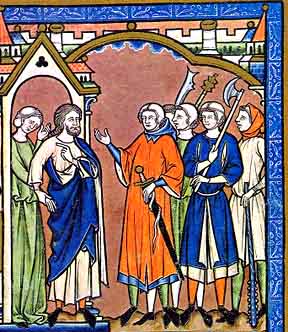
The sleeveless tunic, based on a knight's surcoat, was a popular clothing choice for medieval men. Then in the middle of the 13th century there was a brief fashion which added wide sleeves to the tunic and sometimes a hood, turning it into a garment called a gardecorps. This was intended to replace the surcoat and cloak, combining both into a single item, however it never really caught on. Still with sleeves and male fashion, the bag-sleeve for men, a wide, baggy sleeve snug at the wrist and shoulder, was popular for about twenty years around 1400, but again never really caught on.

For medieval women, hair and headdresses tended to be 'the thing'. Between 1130-50 there was a fashion for noble women to wear their hair long in plaits and for them to sheath these plaits in silk, usually white with red circular stripes. These sheaths were called fouriaux. However it was with headdresses that medieval noble-women especially indulged and which set the medieval clerics scolding about excess and vanity. A brief fashion, lasting roughly thirty years, was the heart-shaped head-dress, a headgear designed with two 'horns' on either side of the woman's head. Sometimes these headdresses became even wider, which caused a cleric of the time to remark: "She is hornyd like a kowe... for syn." At Ludlow, within the church of St Laurence, there is a misericord carved with a woman portrayed as a scold - and wearing a horned headdress. Women in later years wore the steeple headdress or hennin, a tall cone arrayed with long, flowing veils, although this tended to be a European than British fashion. This was also railed against by clerics, particularly in France.

All classes craved fashion, as can be seen by the various sumptuary laws passed in 1363 and 1463 which tried to stop 'lower' classes dressing in furs and certain fabrics and aping their 'betters'. Such acts made no difference as people loved to dress up.

Men's vanity was often shown in shoes. Piked shoes - shoes with points - were popular with men in the Middle Ages, although the length of the points varied through the years. The truly exaggerated points were a short fashion. The idea that men wore the long points with chains attached to their knees to stop them tripping up may simply have been a mistake or a later urban myth. However, such cramped shoes did cause medieval people to have real problems with their feet, similar to those found in women of the 1950s who wore pinching, pointed-toed stilettos. An archaeologist working in Ipswich found evidence in a medieval cemetery of people with painful feet as a result of their shoes.

Everyone, it seems, suffers for fashion, no matter how short-lived that fashion may be.

Lindsay Townsend writes historical romance set in medieval England and the ancient Mediterranean. Her latest is A KNIGHT'S ENCHANTMENT, available now. She lives in Yorkshire with her husband.

30 May 2011

15 Minutes of Fame: Lucius Cornelius Balbus

By: Stephanie Dray

With the wicked Egyptian seductress dead, the Romans had every reason to believe the Republic would return to normal. Oh, some might argue that Cleopatra’s conqueror now meant to destroy the Republic and rule as king. He had, after all, begun to call himself Augustus (the illustrious one). But now that the civil wars were over, up-and-coming politicians like Lucius Cornelius Balbus bet that everything was going to return to normal.

Though Balbus was born in Spain, he’d been granted Roman citizenship, and had every reason to believe that he had a great future as a leader. He wasn’t a nobody after all. He was from the plebian side of gens Cornelia. Which is to say, he was related, in the complicated way of the Romans, to the Cornelii, a family who had, thus far, produced more Roman leaders than any other.

For nearly five-hundred years Rome had been ruled by her citizenry through elected bodies, governed by a carefully constructed constitution of checks and balances. Unlike our own Constitution, it didn’t guarantee equal opportunity for all--but Balbus believed it gave him a decent chance! Since Rome had done away with kings long ago, an ambitious young man could reach the pinnacle of power by working hard for the public. Young Romans started upon what was known as the cursus honorum (a course of offices) starting with military service and lowly magistracies and stretching all the way to the lofty heights of the consulship of Rome. If a young man had a taste for military life, he might become a pro-consul or governor of a province, and if he won a successful war, he would even be granted a giant military parade known as a triumph

This military parade was one of Rome’s highest honors and a man who was granted one of these would be known as a triumphator for the rest of his life! The Senate had never allowed anyone to celebrate a triumph who hadn’t been born a Roman citizen, but Balbus thought he might have a shot, if only there were a foreign war to be found.

He’d started his military career serving under Julius Caesar. When the dictator was assassinated, Balbus appears to have gone off to find his fortune in Mauretania at the side of King Bogud. Mauretania was just across the straight from Balbus’ home town of Gades and it was a land of plenty. Good fishing, lots of natural resources, and big plantations on which Balbus could grow wheat. Not a bad place to settle down--if Balbus had been the settling kind.

Before long, Mark Antony fell in love with Cleopatra and both of them went to war with Rome. So when King Bogud sided with Mark Antony and Balbus may have been with them both at Actium. Whatever the truth of the matter, when the war was over, instead of returning to Spain, Balbus decided to make a name for himself in Africa.

Africa was, after all, Rome’s latest obsession. Once Augustus chose to marry Cleopatra’s daughter to King Juba II and make them both the rulers of Mauretania, it became clear that Africa was the hip and happening place to be. Balbus may have travelled with the court of Juba II & Cleopatra Selene. As an able soldier and veteran of the wars, he’d have been the natural choice for a Roman advisor to the new monarchs. He almost assuredly had land there and would have wanted to be on good terms with the new folks in charge. Especially since Juba and Selene were nominal members of Augustus’ extended family

Juba and Selene were indebted to Augustus and sought to honor him at every turn. They had realized what Balbus had not; the Republic was on its way out. Augustus was about to form a monarchy in fact if not name, and “the new Caesar” didn’t look kindly upon rivals. Augustus had no intention of ever allowing another Roman--especially not one born in Spain like Balbus--to have any true independent power.

But Balbus still had big plans. He accepted a post as the Pro-Consul of Africa Nova--a province just to the east of Mauretania. There he waged an aggressive war against the Garamantes, a Berber tribal people of ferocious spirit. And when he captured their settlements, collected their loot, and dealt them a decisive defeat, he appealed to the Roman Senate to grant him a triumph.

Now, as mentioned before, Augustus didn’t like rivals. The so-called First Citizen appears to have decided that he should be the only man allowed to celebrate triumphs anymore. Consequently, when Marcus Licinius Crassus (grandson of the more famous triumvir) returned from a very successful campaign in the Balkans, Augustus tried to block him from celebrating a triumph. Crassus also disappears from the historical record shortly thereafter. This is unlikely to be an accident, considering the fate that befell others outside of the Julio-Claudian family who sought military honor. (Another example is the Praefect of Egypt, Cornelius Gallus, who was forced to commit suicide for boasting of his military achievements.)

Fortunately for Balbus, when he made his request for a triumph, Augustus happened to be out of town. (The would-be-emperor was off in the East poised for war with the Parthians and perhaps a little bit out of the loop.) In what would be one of their last independent acts, the Senate granted Balbus his heart’s desire. With high hopes and ambitions, Balbus apparently went to Rome with his soldiers, rode through the streets in a chariot, his face painted crimson, a slave whispering behind him a reminder that he was still a mortal. Balbus was the first non-Roman-born general to celebrate such an honor.

He was also the last.

He showed off his prisoners and loot, was hailed as an imperator, and saw the pinnacle of his career. He was treated like a king for a day. And then he was more or less never heard from again.

As far as Augustus was concerned, the legions all belonged to him now. Roman generals were only borrowing the army from him--not from the state--and therefore, every victory was actually his victory. Henceforth, only smaller celebrations and honors and ovations were allowed to those outside the imperial family. Returning from the East with the battle-standards that had been captured by Parthia in previous wars, Augustus snuffed out the Republic’s last breath and became the first emperor of Rome.

Stephanie Dray's debut historical fiction novel, LILY OF THE NILE , was just release by Berkley Books. The sequel is expected to release at the end of 2011. Both novels are set in the Augustan Age and feature Cleopatra's daughter.

A WOMAN OF CHOICE Winner

We have a winner for Kris Tualla's A WOMAN OF CHOICE guest blog. A free copy goes to:

VIRGINIA!

Contact Lisa to provide your mailing address. The book must be claimed by next Sunday or another winner will be drawn. Please stop back later to let us know what you thought! Congratulations!

29 May 2011

Guest Blog: Nan Hawthorne

This week, we're welcoming historical novelist, Nan Hawthorne, as she celebrates the release of her latest medieval novel, BELOVED PILGRIM, available now from Amazon and Smashwords, and on order from your local bookstore. Here's the blurb:

Unwilling to settle for the passive life of a noblewoman, Elisabeth dons her late twin brother's armor and sets out for the Holy Land. On the journey, she learns many things, not the least of which is that she can pass for a young man because, as she says, "People see what they expect to see." Her lessons also include that honor is not always where you expect to find it, and that true love can come in the form of another woman. She encounters both heroism and betrayal in the doomed Crusade of 1101. Witness her journey across the Alps, her voyage to the golden city of Constantinople, and her struggle to survive with her ideals intact while she loses companions to hardships and destruction as Kilij Arslan's Turks turn the tide irrevocably for the Crusaders.

***
 
What makes your recently released novel “Beloved Pilgrim” an “Unusual Historical”?
 
One of my reviewers commented on this very thing.  He called the novel “gutsy” for two reasons.  One is that it features gay/lesbian characters.  You could even say it deals with “transgender issues” though of course my protagonist, Elisabeth, could never completely change her gender surgically as she might now if she wished.  The other reason he called the book “gutsy” is that it deals with one of the Crusades that is less well known.  More than that it is one that was a complete and utter failure.  He felt those factors alone meant I had courage to write the novel.  I tend to believe I will never write anything that is not an “unusual historical” since my themes are never the usual first person royal female that publishers like.
Describe your protagonist, Elisabeth.
 
Elisabeth von Winterkirche is the daughter of a Bavarian knight and therefore expected to be a sedate, accomplished young woman and ready to marry to advance her family.  She utterly rejects this destiny.  She and her twin brother have largely been on their own, and Elisabeth identifies with the life her brother prepares for, so she has found ways to learn to fight.  When he dies she chooses to don his identity and leave, largely to escape a brutal marriage but also because she simply wants the relative freedom and adventure of a young man in her class.  She is earnest and idealistic, but her experiences on Crusade rock her values to the core.  I tried to avoid modern sensibilities and did not have her object to war or Crusade in general, but she does provide observations that someone not schooled in the knightly ethic might voice.
Why is it important, do you think, for there to be gay people and lesbians in historical fiction?
 
For reasons I don’t think I need to get into, there is little or no GLBT history.  It simply must fall to historical novelists to create a sort of para-history by looking at what life would be like for GLBT people in different periods of history.  We simply cannot rely on historical record for anything but criminal aspects of gay life.  That cannot be the whole story.  It is believed that about ten per cent of all humans are gay or lesbian.  That must mean that there were plenty of gay people who never caught the eye of law enforcement of whatever kind.  That means they either repressed their natural feelings or found ways to live in such a hostile society.  I see historical fiction as largely speculative, and this is one area in which I want to speculate.
 
Do you think straight people will read a novel with a gay protagonist?
 
I hope so.  It does worry me.  I did have someone tell me “I’m not a lesbian, so I don’t read lesbian romance.”  I told her, “I’m not a lesbian either, but I wrote one.”  Actually, Beloved Pilgrim is not a romance, but you get what I mean.  Gay people read straight novels, why shouldn’t straight people read gay novels?
What do you hope readers will get out of “Beloved Pilgrim”?
 
I hope they get a cracking good read out of it, first of all.  I write to entertain primarily.  I don’t write history textbooks, I write historical fiction.  If readers find themselves thinking about the nature of gender identity or what honor and heroism really are, so much the better.

Thank you, Nan. Please leave a comment to win a copy of The Beloved Pilgrim, available now.

27 May 2011

15 Minutes of Fame: The Emperor Who Wasn't

By Anna Randol

In November 1825, Tsar Alexander I died unexpectedly of typhus while taking his sick wife to a southern Russian city. The heir to the throne was Alexander’s younger brother Constantine. Coins were immediately minted with Constantine’s image. Nicholas, a third brother, swore an oath of allegiance followed by a large portion of the military.

There was only one problem— Constantine didn’t want to be the Emperor.

Constantine had been content with his life as a military man and in his more recent post of viceroy of Poland. His marriage to a delicate Polish countess also strengthened his ties to Poland, and since the countess was not of royal birth, no children of their union could ever be heirs to the throne. In fact, shortly after his marriage several years earlier, Constantine had sent a letter to his brother Alexander declaring his intent to abdicate. Constantine had flatly stated that he did not “possess the genius, the talents, or the strength necessary to qualify [him] for the dignity of sovereign”.

Unfortunately for all those involved, the letter wasn’t made public. It was stored away to be opened upon Alexander’s death along with a letter accepting the abdication and a letter naming their younger brother, Nicholas, emperor. It is unclear whether Nicholas knew of the change in succession in advance, but after reading the letters, he declined the crown and sent an envoy to try to convince his brother to change his mind. But the envoy was met by a messenger carrying Constantine’s adamant refusal to accept the empire.

Revolutionaries took advantage of the uncertainty to stir up discontent, accusing Nicholas of unjustly usurping the throne. With full-blown revolution brewing, Nicholas finally agreed to rule. Instead of taking a new oath of allegiance, the revolutionaries convinced 3,000 soldiers to march in the streets in defense of Constantine’s rule. On December 14th, the same day Nicholas was crowned, he ordered the rebellion crushed. Constantine later arrived to swear allegiance to his younger brother in person, thus ending his twenty day rule of the Russian empire.

Anna Randol writes sexy, fast-paced, Regency romances for Avon. Her debut novel set in Constantinople, Secret in Her Kiss, will be published in February, 2012.

26 May 2011

Excerpt Thursday: Nan Hawthorne

This week on Excerpt Thursday, we're welcoming historical novelist, Nan Hawthorne, as she celebrates the release of her latest medieval novel, BELOVED PILGRIM, available now from Amazon and Smashwords, and on order from your local bookstore. Join us Sunday, when Nan will be here to talk about the novel and give away a copy! Here's the blurb:

Unwilling to settle for the passive life of a noblewoman, Elisabeth dons her late twin brother's armor and sets out for the Holy Land. On the journey, she learns many things, not the least of which is that she can pass for a young man because, as she says, "People see what they expect to see." Her lessons also include that honor is not always where you expect to find it, and that true love can come in the form of another woman. She encounters both heroism and betrayal in the doomed Crusade of 1101. Witness her journey across the Alps, her voyage to the golden city of Constantinople, and her struggle to survive with her ideals intact while she loses companions to hardships and destruction as Kilij Arslan's Turks turn the tide irrevocably for the Crusaders.


****
 
Elisabeth, disguised as her own late twin brother, and his former squire have been ambushed by brigands on the road.
As they returned to the road, she realized she still had her sword in her hand. She raised it to sheath it and saw the blood. Seeing her tremble, he snapped, "Here!"
Startled, she looked over to see that he had tossed her his neck kerchief. She snatched it out of the air.
"Clean your sword," he said, realizing that he had successfully shocked her out of a fit.
The kerchief was clotted with blood and worse already, but she wiped away as much as she could before sheathing her sword.
He watched her and knew he could chide her saying, "And you wanted to kill Paynim? Good thing you were never really serious."
They camped, though they no longer had their tent or bedrolls, when they found themselves where a small pier jutted out into the flow of a huge river. "The Danube?" Elisabeth asked.
"Yes," Albrecht said. "Almost there."
She gave him an odd look, but did not say any more until the light had gone and they were ready to roll up in their cloaks and sleep by their campfire.
"Albrecht, I have to tell you something," she began.
He stopped trying to get comfortable on the ground and looked up expectantly. "My lord?"
Hesitantly, she continued. "I want to keep going." He did not interrupt, so she went on. "I love this. I love the freedom, the adventure, and the independence, even the fighting. I don't want to be a woman any more. I want to be a man."
Albrecht sat up and wrapped his arms around his bent knees, his eyes focused on Elisabeth. "I don't understand."
She looked up and straight into his face. "I think you do understand."
He considered, and then asked, "Are you saying you want to persist in the masquerade? To try to live your life as a man, a fake one?"
She shrugged. "More than that. I want to stay a knight. I want to go to the Holy Land. I want to do what my brother was to do. I want to fight Paynim and to make it to Jerusalem and the Church of the Holy Sepulcher." She looked down and plucked at the crusader's cloak she wore. "I want this to mean something, to be real." She glanced up, then firmed her jaw and said in a stern voice, "I don't just want that. I am going to do that." Her voice softened. "And I want you to go with me, to be my squire."
Albrecht gazed at her for some time. He suddenly got to his feet and bowed to her where she sat on the ground. "My lord, I would be honored to continue to be your squire."
Elisabeth jumped up and they locked arms. Her face was lit with anticipation, but at the same time with earnestness and anxiety. "Thank you, Albrecht," she said breathlessly. Then she added, "Deus lo volt. God wills it."
Albrecht grinned. "I just hope He knows that."

25 May 2011

15 Minutes of Fame: Richard Trevithick

Michelle Styles
When most people think of the railway or even the horseless carriage, they consider it happen long after the beginning of the 19th century. George Stephenson who built the first commericial railway and whose locomotives won the Ranhill trials is sometimes wrongly credited with inventing the locomotive but in reality he owed a huge debt to Richard Trevithick.

In 1801, Richard Trevithick, the son of a Cornish engineer and an engineer himself decided to see if he could improve on James Watt's steam engine. Part of the trouble with the Watt engine was that it used low steam pressure. Trevithick decided to use a much higher pressure and in doing so was able to get rid of the huge boilers and cumbersome condenser. It meant for the first time a truly portable engine could be made.

By the end of 1801, he was road testing a steam road carriage. The inital trials went great until they decided to celebrate. The engine was not shut off properly. And while they were at the pub celebrating, the test engine burnt to a crisp.  Undaunted as he felt it was due to operator error, he tried again. This time, he tried in North London with a working horseless carriage but the roads were too uneven and the machine was difficult to steer. Equally it was thought that it would cost too much to run and who would ever be interested in such a contraption? With no significant backers, Trevithick abandoned his idea of a horseless road carriage and set his sights on the waggonways and using steam along rails as steering would not be such a problem.

Little is known of his first few attempts, although there is a tanlizing clue that a successful travelling steam engine was built in Penydarren for a bet but it broke the iron plate rails. In 1805, Trevithick tried again and built a prototype for Christopher Blackett of Wylam colliery. However, Blacket was using wooden rails and the engine did not work how he envisioned.  Blacket declined to order it.

Trevithick then tried one last go in 1808 when he built 'Catch Me If You Can' for London. It was a circular demonstration track with an engine pulling carriages. It failed to make money and derailed. Nothing of its ilk would  be seen again until the Rainhill trials twenty years later.
 In 1809, Blacket wrote to Trevithick asking him to help design a new engine as he had replaced his track with iron plate. Trevithick declined as he was busy with other projects and did not fancy going up to the North East. How different the world might have been if he had gone!
He continued to work on engineering projects but died penniless in Dartford in 1833.

Later, his contribution to engineering was recognised (including a stained glass window in Westminster Abbey in 1888) but although he is probably the father of modern locomotion, he is nowhere near known as well as he should be.

Michelle Styles writes historical romances for Harlequin Historical in a wide variety of time periods including Regnecy and early Victorian. She is interested in the development of the railway and engineering. Her recent A Question of Impropriety and Impoverished Miss, Convenient Wife revolved around the development of a travelling engine. Her next novel To Marry A Matchmaker features an inventor hero.

24 May 2011

15 Minutes of Fame: Grace Metalious, Author of Peyton Place

Anna C. Bowling
Petyon Place. Even for those who haven’t read the book, seen the movie or watched the television adaptation, the name brings to mind a seething sea of murder, incest, illegitimacy and abuse underneath the picturesque exterior of a small town. Its author, Grace Metalious, would have fit into her own creation as though she were born to it.

In a way, she was. Grace, a housewife and mother of three, burst onto the literary scene in 1955 when a literary agent sold her first novel, originally titled The Tree and the Blossom. Retitled Peyton Place, the salacious tale became an overnight sensation, gaining nationwide interest. Since childhood, Grace had sought respite from her turbulent personal life in her writing, but it was her writing that turned her life into a media frenzy.

Not only did the literary world sit up and take notice of Grace’s raw yet naive writing style, but her own community found several aspects of Grace’s book hit very close to home. Tom Makris, a colleague of Grace’s school principal husband, George, sued Grace for using his name and physical description for the book’s male lead. The plotline of an abused teen who kills her abusive stepfather directly mirrored the case of a local girl, and locations in the novel had strong similarities to places in Grace’s hometown of Gilmanton, NH.

Grace and her family moved to a larger house, paid for by Peyton Place’s royalties, but her marriage to George ended in divorce after he moved to another town, leaving Grace and the children on their own to face the storm of controversy. Grace began an affair with a neighbor, then married and divorced disk jockey TJ Martin, before reuniting with George, only to separate again. In her star writer persona, she spent money as fast as she made it, staying at the Plaza and Algonquin, flirting with the rich and famous. The film adaptation of her novel, heavily sanitized, reignited Lana Turner’s career and gained the legendary actress her lone Oscar nomination.

As quickly as Grace’s star rose, her life began a downward spiral. Her marriage to TJ crumbled under alcohol abuse and violent outbursts from both parties, and Grace’s lavish spending took a large bite out of her bank account. The sequel, Return to Peyton Place, did not match the success of its predecessor, even with its own adaptation for film. Reviews turned savage and a planned publicity tour was shelved.

Grace wrote two more novels; The Tight White Collar was published in 1961 and No Adam In Eden in 1963, but neither made any appreciable impression. She tried her hand at business, purchasing a motel she dubbed The Peyton Place Motel, but the venture soon folded due to lack of guests.
By 1963, when Grace began an affair with British journalist John Rees, friends described her not only as frequently drunk, but delusional and at times incoherent. That year would be her last. Grace died in 1964, of cirrhosis of the liver, her debts exceeding two hundred thousand dollars. Despite protests, Gilmanton’s most infamous citizen was interred in the Smith Meeting House Cemetary.

While the fame of Grace Metalious’ iconic work lives on, Grace herself had only a short while in the limelight, a pattern seen all too often in today’s young luminaries who rise quickly to fame they may not be equipped to handle. If Grace were to begin her career in the twenty first century, would things have gone any differently for her? Would we see her go through rehab and make a comeback, or would social media have brought about her downfall all the quicker?

Writing historical romances allows Anna C. Bowling to travel through time on a daily basis and make the voices in her head pay rent. Her current release, ORPHANS IN THE STORM, is available from Awe-Struck E-books.

23 May 2011

DEFIANT Winner

We have a winner for Kris Kennedy's DEFIANT guest blog. A free copy goes to:

ClaudiaGC!

Contact Lisa to provide your mailing address. The book must be claimed by next Sunday or another winner will be drawn. Please stop back later to let us know what you thought! Congratulations!

15 Minutes of Fame: Clara Bow

by Lorelie Brown

Clara Bow was the It Girl of a generation, and yet today people hardly know her name.

Born in a Brooklyn tenement in 1905, Clara did not have an easy life. Her mother, Sara, had suffered a head injury at 16 and suffered from “psychosis due to epilepsy.” As if that wasn’t bad enough, Clara’s father was apparently a useless case who couldn’t keep a job and often disappeared for long periods. Clara became Sara’s primary caretaker through psychotic episodes and fits of madness. In 1922, Clara even woke up to a butcher knife held at her throat by Sarah.

Unsurprisingly, Clara didn’t have a lot of friends. She lived for the movies and went as often as she could. She entered a talent contest run by movie magazines and won it in 1921 at 16. The terms of the contest were supposed to get her a movie part, but it seems like hanging around the New York studios eventually proved the better part of valor. She pestered them into giving her a real role. Luckily it turned out she could act. Handy, that was.

Over the next few years, Clara Bow took the movies by storm. First working out of New York (yeah, did you know that Hollywood wasn’t the original home of the movies? Nope, certainly weren’t.) she moved to California in 1923 to work for Preferred Pictures as a contract actress.

Bow was first cast as a flapper, the eponymous female of the 20s generation, in 1923’s “Black Oxen.” Reviews on Bow’s performance were mixed, but one thing was for sure. Clara was apparently the perfect flapper. Free spirited, lively, with a messy mop of red hair (she used henna to amp up her natural color) and a lush mouth that was perfectly accented with lipstick. Such a naughty girl! That air of naughtiness always kept her set slightly apart from most of Hollywood’s social elite. She wasn’t fancy enough, essentially. Cussing like a sailor tends to mark a girl out as...let’s say rougher class, shall we? Beyond that though, Clara wasn’t really that bad. A few love affairs, a couple broken engagements that were partly publicized to emphasis her flapper-girl status. But her outsider status as a whole left her vulnerable to vicious rumors.
Despite that, Clara kept working at a steady pace. The apex of her career was 1927, when she starred in “It,” as the most famous flapper role ever. (For the record, “it” is sex appeal, which had been only very sparingly used in the movies prior to Clara, who had it in spades.)

General assumption is that Clara didn’t make the transition to the talkie pictures well due to her Brooklyn accent and slight stutter. But that’s not true at all. She actually starred in eleven talking pictures.[Image] The real problem came in 1931 when she had a nervous break down. The stress of making too many pictures at once, combined with her slightly fragile mental health to begin with, became too much. She was checked into a mental health facility for a stay. Still, she was well enough by the end of the year to marry cowboy star Rex Bell. They semi-retired to Nevada, where they owned a ranch and Bell entered politics. Still, Clara was never exactly well. She returned to the screen in 1933 for only two pictures, driven by financial needs, but afterwards went back to her ranch to have two children. She fought mental health issues most of her life, eventually dying in California at the age of 60.

Lorelie Brown's first book, JAZZ BABY, is currently available from Samhain Publishing in both e-book and paperback formats. Her second romance, an 1880s-set western, will be published by Carina Press on 18 July.

22 May 2011

Guest Blog: Kris Tualla

Today, we're welcoming historical romance author, Kris Tualla, as she celebrates A WOMAN OF CHOICE, part of her HANSEN series, set in the 1800's. A WOMAN OF CHOICE is available in print and multiple ebook formats! Here's the blurb:


"Norway is the new Scotland!" - Kris Tualla

So, what does that really mean, that Norway is the new Scotland?

It means that though a man in a kilt is a thing of beauty, there are some other really hot heroes in the world. And my big, blond, buff and beautiful Hansen men - with eyes the color of seawater and the blood of their Viking ancestors flowing through their veins - are just such heroes. Isn't it time to expand your horizons?

A Woman of Choice, a novel of the Hansen Series, follows Nicolas Hansen and his wife Sydney through three life-changing years and two continents:

A woman is viciously betrayed and abandoned by her unfaithful husband. She is rescued by a widower uninterested in love. In desperation, she becomes engaged to his best friend. One woman, three very different men. Life is about choices.

*****
"Who the Heck is Kris Tualla?" by Kris Tualla

How long have you been writing with the hopes of publication and how did you get started?

I started writing on August 1, 2006 after I read Diana Gabaldon's "Outlandish Companion." When I got to the part where she said, "The best way to learn to write a book is to write one," I turned to my husband and said, "I think I'll try writing a romance novel."

I was totally ignorant about the ins and outs of being an author, but I completed my 100,000-word first manuscript in just ten weeks. Of course the writing was crap. But after literally countless edits, rewrites and fixes, that book is now A Woman of Choice. I even received this cover quote from Diana herself: "A charming love story, gracefully told, in a fresh and engaging setting!"

What have you published and what are you working on now?

Currently available is my historical romantic trilogy: A Woman of Choice, A Prince of Norway, and A Matter of Principle. My fourth Hansen Series book, award-winning Loving the Norseman, and its sequel, Loving the Knight, will both be released in September 2011.

Now I'm now working on a trilogy of romantic crime stories with A Discreet Gentleman of Discovery. This Hansen hero is a deaf private investigator in 1720s Norway, and he is a-ma-zing. I'm planning for a 2012 release for all three of these books.

Can you describe your daily writing routine?

Sure. I get up about 9am. I do online work first: emails, blogging, etc. Then I do lunch, usually with a friend or my husband. Afterwards, I touch base back online, then I sit down to write or edit a manuscript.

I'll write for four or five hours, until around 6pm. Then comes a light supper. Writing, online work, and promotion alternate until after midnight. I'll read in bed on my Kindle - a variety of genres - until 1am or later.

Besides the new releases, is there anything coming up that you are particularly excited about?

Yes! My tag line is "Norway is the new Scotland" - and six-plus manuscripts later, I am going to Norway this summer. In 2007 my husband and I took a tour of northern Italy, and the tour guide was from Oslo. I talked to him about my books in general, and my "Prince of Norway" specifically. He gave me a thumbs-up on the plot!

Now he's leading a tour of Norway and I'll be there. In fact, he's tweaked the tour route so we can visit Hamar, one of the towns I set a story in. When the tour ends, I'll be going to the coastal town of Arendal - the ancestral home of my fictional Hansen heroes. I've connected with someone who'll give me a town tour and I'll spend the night at the town's lighthouse.

After I get back, I'll be blogging and posting photos at http://kristualla.wordpress.com/ If anyone is interested, please subscribe so you won't miss the August series!

Any last words?

I guess I would urge your readers to give someone new a try. My books are all available in print (Amazon). Ebooks (Kindle, Nook, Kobo, Smashwords) can be had for the cost of a Starbucks coffee - but they will enjoy them for a lot longer!

Readers just might agree: Norway is the new Scotland!

********

Please leave a comment to win a copy of Kris Tualla's novel in ebook format.

Kris Tualla, a dynamic award-winning author of historical romances, writes with a fast-paced and succinct style. Her plots are full of twists, passion, and very satisfying outcomes! Kris started in 2006 with nothing but a nugget of a character in mind, and has created a dynasty - The Hansen Series. Norway is the new Scotland!

19 May 2011

Excerpt Thursday: Kris Tualla

This week on Excerpt Thursday, we're welcoming historical romance author, Kris Tualla, as she celebrates A WOMAN OF CHOICE, part of her HANSEN series, set in the 1800's. A WOMAN OF CHOICE is available in print and multiple ebook formats. Join us Sunday, when Kris will be here to talk about her novels and give away an ebook copy! Here's the blurb:

"Norway is the new Scotland!" - Kris Tualla

So, what does that really mean, that Norway is the new Scotland?

It means that though a man in a kilt is a thing of beauty, there are some other really hot heroes in the world. And my big, blond, buff and beautiful Hansen men - with eyes the color of seawater and the blood of their Viking ancestors flowing through their veins - are just such heroes. Isn't it time to expand your horizons?

A Woman of Choice, a novel of the Hansen Series, follows Nicolas Hansen and his wife Sydney through three life-changing years and two continents:


A woman is viciously betrayed and abandoned by her unfaithful husband. She is rescued by a widower uninterested in love. In desperation, she becomes engaged to his best friend. One woman, three very different men. Life is about choices.


*****
April 2, 1819


The frigid liquid world blurred and roared and tumbled around her. Tossed without mercy, she couldn’t figure out where up was, where air was, where water wasn’t. Hard edges battered her. She was tangled in endless sodden wool. Her limbs chilled, her lungs burned, and she couldn’t draw a breath to scream.


Then blackness drowned her senses.


Pain dragged her back toward consciousness. The surge of her pulse slammed her skull with steady sledge hammers. It hurt to breathe. It hurt to think.


Distant voices mumbled through her awareness.


A man, deep and demanding, “Has she awakened?”


A woman, older, “No, not yet.”


“Well, what are we to do with her?”


“I’m afraid I don’t know.”


Had she dreamt it?


Or were they talking about her?


She willed her eyes open and blinked the spinning room into submission. Her blurred gaze staggered over her surroundings and panic squeezed her chest, intensifying the hammers’ pounding.


Where am I? What happened to me?


She closed her eyes and inhaled slowly, defying the tenderness in her ribs, and ordered her heart to slow its frantic warning. Then she opened her eyes again and searched for the whisper of anything familiar.


She lay curled on her side in a bed with clean linens. She could see the carved top of the footboard without moving her head, its edges rubbed light by years of use.


Should she recognize it?


Plaster walls hemmed the wood floor of the unadorned room. Finished logs and cross-planks comprised the ceiling. Dank whiffs of wet bark and moldering leaves leached through the open window past blue afternoon shadow-light.


A stone fireplace dominated the opposite wall, beneath a faded medieval tapestry with images of helmeted warriors and carved ships. A plain bedside table and slat-back rocker were the only other occupants of the room. Under the encroaching outdoor scents, she smelled dust and old smoke. Realization squeezed her temples and dug behind her eyes.


No one lived in this room.


She rolled to her back and lifted onto her elbows. A blade of pain knifed up her neck and ricocheted through her skull. Her world went black again.


---
This time, the room held still. So did she.


The window was closed. A diminutive flame sputtered in the large fireplace, while an oil lamp on the bedside table chased the shadows to the far corners of the chamber. On the seat of the rocking chair, a book waited.


But she was no closer to figuring out where she was.


The door creaked open, pushed by the ample backside of a woman past middle-age. She wore a brown dress, a lace cap and a white apron with the strings tied in a drooping bow. Her eyes remained fixed on her tea tray, which she set on the bedside table. She reached down to pick up the book before easing herself into the rocker. Only then did she look toward the bed.


“Oh, my!” she blurted, her voice loosened by age. “Are you awake, dear?”


Remembering not to move her head, she whispered, “Yes.”


“Thank the Lord!” The older woman pushed up from the chair. “I’m so glad to see you finally awake. You were in such a bad way, we weren’t at all assured that you’d survive, poor thing!”


She crossed the room with surprising haste and shouted into the hallway. “Maribeth! Come quickly!”


Then she returned to the bedside, moving like a loose bag of potatoes. Rapid footsteps preceded the appearance of a much younger woman, slim and dark.


“Are you hungry, dear? Do you feel you could do with some tea or perhaps some broth? Nothing solid yet! I don’t believe that would sit well.” Not waiting for an answer, she ordered Maribeth to bring warm broth without delay. “Oh, and find Sir Nicky soon as you’re able, and tell him that our girl is finally awake!”


“Sir Nicky?” she croaked. Her mouth was dry, her tongue sticky. She tasted blood.


“Oh, he’s not truly knighted.” The older woman waved her hand and chuckled. “It’s only that I was his nanny when he was just a boy, him and his younger brother, and they loved to play knights and horses and castles and dragons and all. So I started calling his brother ‘Sir Gunny’ and him ‘Sir Nicky’ and, well, I reckon I just never stopped.”


The woman shook her head. Gray wisps escaped her cap. “Oh, but listen to me go on. You’d believe I’ve lost all my manners! I haven't even introduced my own self yet! My name is Addie, and that’s short for Adelaide, which I feel is much too much of a mouthful for anyone!” She smoothed the covers with her wrinkled hands. “I’ve been here at the manor almost forty years, now. Why, I nearly raised those two boys myself!”


Addie’s verbal deluge drenched her and she felt a wave of panic. So she closed her eyes and tried to sink into the mattress to puzzle things out. If Addie needed to introduce herself, then she hadn’t ever been here before. So naturally she wouldn’t recognize her surroundings.


But if she doesn’t know me, how could she possibly know what happened to me?


Her persistent headache confounded her ability to reason. She heard a bowl rattling on a metal tray and smelled the beef broth. It must be Maribeth who set the tray on the bedside table with an audible sigh.


A shadow blocked the lamplight. “Can you wake up again, dear? Your broth is here,” Addie asked.


She opened her eyes and forced a shaky smile, though her sore lower lip stung with the effort. Perhaps broth was a good idea. After all, she had no idea how long she’d gone without food.


“Do you believe you might be able to sit up if we helped you, dear?”


Addie and Maribeth tenderly lifted and tucked until she sat propped against a stack of pillows, though every bit of movement brought new pain to the surface. The room rolled and she swallowed a surge of nausea.


She held out stiff arms and considered the white cotton and lace nightgown she wore. “Are these my clothes?” Her rough voice was unrecognizable.


“Oh no, dearie… Your dress was ruined, I’m sorry to say. A frightful mess, it was, too, what with all the water and mud and being so cut up. Such a shame, since that green color would go so well with your eyes.” Addie paused long enough to gently brush a strand of hair from her forehead. “But I cleaned you up. Washed and plaited your hair, as well. And I found one of Miss Lara’s best sleeping gowns to dress you in.”


Who?


She slid her hands over the finely woven material; it released the faint scents of lavender mixed with camphor.


“Please thank her for me,” she murmured. A shadow passed over the housekeeper’s face and Maribeth’s eyes widened. For a beat, no one spoke.


Addie picked up the bowl of broth and eased her generous bottom onto the edge of the bed. “Let’s try this while it’s still warm, shall we?”


She managed to swallow most of the broth before hard soles on wood echoed heavily toward the room. Addie rose from the bed and straightened her apron. All eyes turned to the doorway as a man of about thirty years ducked inside. The strong odors of fresh air—and fresh manure—entered with him.


He must be a full hand over six feet.


His broad shoulders and solid build seemed to strain the confines of the small room. If he had not looked so stern, she might have considered him beautiful.


He stopped.


Dark blue eyes raked over her and his jaw clenched. A thin scar on one cheek whitened. Pulling a leather thong from his hair, he retied his shoulder-length blond locks. He released a sigh and approached the bed, frowning.


“So.” His uneasy stance and the shift of his feet unnerved her. She looked away, realized she couldn’t evade the man, and faced him again. When their eyes met, he asked, “How are you feeling?”


Before she could answer, a shiver convulsed her and her face contorted. Two quick gasps preceded an explosive sneeze. With a grunt and a groan, she put her hands on her temples and slumped over the edge of the bed, vomiting broth onto the floor. Blood dripped from her nose and her field of vision filled with black motes and silver lights.


The burst of activity around her sounded far away. Steel arms lifted her and laid her back onto the pillows. Someone wiped her mouth and nose, and laid a wet cloth over her eyes. She heard the thud of a heavy bucket on the wood planks and the swish of a rag on the floor next to the bed; she smelled the tang of lye soap.


Her face flamed with embarrassment and her lower lip tensed. Hot tears escaped from under the cloth and rolled down her cheeks. Her head throbbed and felt too heavy for her neck.


“There, there.” Addie lifted the cool cloth from her eyes and used it to wipe her face. “Don’t worry a thing about it, dearie. Happens all the time.”


Reassured by the ridiculous claim, she fixed her grateful gaze on the older woman. She purposefully avoided looking toward the imposing male figure, but his stare from the foot of the bed held weight.


Addie rinsed the cloth and pressed it under her nose, then turned with a cocked brow. “Have you forsaken your manners, young man? You have a guest! And a poor injured woman at that!”


The recipient of Addie’s scolding slowly straightened and placed his right palm against his chest. Though unsmiling, his hard sapphire gaze met hers and he bowed a little at the waist.


“Please forgive my appalling lack of decorum, madam,” he said in a powerful voice that rumbled from the depths of his sizeable chest. “For I was certainly raised to know better by my beloved old, old nanny.”


Addie snorted. But she smiled.


“I am Nicolas Reidar Hansen, owner of this estate, your humble servant, and deeply honored rescuer.”


Rescuer? From what?


Confused, she tilted her head back and held the cloth firmly beneath her nose. “I ab berry pleased to beet you, Bister Hadsend. By nabe is…” She stopped, her mouth still open.


The cloth dropped to her lap.


“M-my n-name is…” she tried again, but only murky water swirled through her wits. The salt of sweat pricked her skin. Nicolas and Addie exchanged unsettled glances.


“My name is—!” She exhaled the words as though, if said with enough intent, the statement would complete itself.


It did not.


Oh, merciful God; this must be a nightmare!


With a mournful wail of denial, she curled into herself in the center of the bed. Why don’t I wake up?


“What is it, dear?” Addie touched her shoulder and she recoiled from the very real contact.


“I don’t remember my name!” She gulped air. Dread pummeled her aching ribs and made it harder to breathe. “And I don’t know what happened to me!”


Neither Addie nor Nicolas moved.


“What!” Nicolas thundered.


“You don’t remember aught, dear? Not anything at all?” Addie’s gentle tone squeaked.


Drowning in disbelief, a small shake of her head was all she could manage.

Kris Tualla, a dynamic award-winning author of historical romances, writes with a fast-paced and succinct style. Her plots are full of twists, passion, and very satisfying outcomes! Kris started in 2006 with nothing but a nugget of a character in mind, and has created a dynasty - The Hansen Series. Norway is the new Scotland!

17 May 2011

PORTRAIT OF SEDUCTION Winner!

We have a winner for Carrii Lofty's PORTRAIT OF SEDUCTION guest blog. A free copy goes to:

Rosie Hong!

Contact Lisa to provide your mailing address. The book must be claimed by next Sunday or another winner will be drawn. Please stop back later to let us know what you thought! Congratulations!

16 May 2011

15 Minutes of Fame: The Rebellion of 1088

By Lisa Yarde

After the death of William the Conqueror in 1087, his sons Robert, William Rufus and Henry vied for the greatest share of their father's inheritance. The disposition of gold coins for Henry, and the duchy of Normandy to Robert and the kingdom of England to William Rufus did not resolve the matter as easily as William the Conqueror might have intended. Instead, many magnates with properties and castles on both sides of the Channel found their loyalties divided.

At the end of March 1088, around Easter, more than half of the largest landowners in England were determined to unite the Anglo-Norman aristocracy under one leader. Their choice was Robert of Normandy, who had coveted England for years. Perhaps they favored him because of his famed generosity to his supporters, as he often lavished wealth on mercenaries and knights in his retinue. Or, they thought he would be a more agreeable king than the current one. In the first six months of his reign, Robert's younger brother William Rufus had made himself one of the most hated monarchs in English history. The Anglo-Saxon Chronicle states, he was "hateful to almost all his people and odious to God."

Men of the king's own family led the rebellion; his uncles Odo de Bayeux and Robert de Mortain, the younger brothers of William the Conqueror. Others included Robert de Mowbray, Roger Bigod, Robert de Montgomery and his son Robert de Belleme, as well as Eustace of Boulonge. They all expected Duke Robert would sail from Normandy, but he had run out of money and appealed to his younger brother Henry for help. Henry gave Robert half of his inheritance from their father and for his trouble, he gained a county. Robert used the funds to raise reinforcements for his supporters in England, but in an unexpected move, William Rufus rallied and gained support. He besieged his uncle Odo at Pevensy Castle and captured him. Bad weather and a stalwart defense from the English navy weakened Duke Robert's invasion force. By July 1088, William Rusfus had also captured Rochester Castle. The rebellion was over, six months after it had begun. Some rebels, like Roger de Montgomery, took the bribes William Rufus offered and abandoned the cause. Other magnates, including Robert de Belleme and Roger de Bigod, forfeited their property for several years or went into temporary exile. Robert de Mowbray and Robert de Mortain received pardons, but William Rufus reserved the worse punishment for his uncle Odo. He deprived Odo of all his land and banished him from England.      

Lisa J. Yarde is a historical fiction author. Her novels ON FALCON'S WINGS, an epic medieval novel chronicling the starstruck romance between Norman and Saxon lovers, and SULTANA, set during a turbulent period of thirteenth century Spain, are available now.

15 May 2011

Guest Author: Kris Kennedy

This week on Excerpt Thursday, we're welcoming Kris Kennedy, as she celebrates the release of her latest historical romance, DEFIANT, available this month from Pocket Books. The novel is set on the eve of the Magna Carta, in which the political intrigues of the time shape the events of the story. It’s an age rife with tension, drama and conflict. Here's the blurb:

A warrior with questionable intentions . . .


Jamie Lost is the king’s most renowned commander, a fearless lieutenant ordered to kidnap an exiled priest before rebel forces close in. The mission is simple—until he meets a mysterious thief who will steal his quarry and then his heart.

A lady of remarkable courage . . .

Beautiful Eva is also seeking Father Peter, but she intends to protect him from a secret that could cost him his life. She senses that she, too, should fear Jamie—not just for his wickedly sharp sword and dangerously muscular body, but for the powerful longing he ignites within her.

A secret that could overthrow the king.

When a band of mercenaries abducts the priest, Jamie and Eva must form a volatile alliance. As civil war unfolds around them, they embark on an epic journey that betrays the truth about their hidden identities, their unexpected loyalties, and the simmering attraction that could seal their fates forever.

***

When did you get the idea for Defiant?
 The word ‘idea’ is frighteningly specific. Everything about this story, right down to the plot, morphed as I wrote it. And rewrote. And wrote again . . . . The writing of this story is a saga all on its own.

As far as when the first little hard kernel of an idea came to me . . . Back in 2006 or 2007, I had an idea about a woman being taken somewhere she did not want to go. As I imagined it, the story had a rather Robin Hood-esque feel, except for a few small details: the hero was the one taking her where she didn’t want to go, and the heroine was the Robin Hood character. :-)

Defiant today bears very little resemblance to this, but I still see that story down there in the creative ‘well,’ so to speak. :-)

What research did you do?
I did extensive research on King John’s reign, with special attention to the time of Magna Carta. I researched via tottering piles of the big, fat academic books—the wonderful kind--and I also researched online. Since I have written many stories set in this era, some of my research is the sort that’s done over years, and the knowledge gets rather embedded, for better or worse. But luckily, there’s always research specific to the particular story, and that’s fun.

(And then, of course, there’s always the chopping of scenes with research done specifically for the story, which is not so fun. But the point is to unwrap the story, not the research.)

A sampling of some research done specifically for Defiant: King’s John’s household knights; slave trade in 12th and 13th century; travel distances & methods in 13th c England; river ferry travel; perceptions of disease and contagion; manuscript coverings/bindings; children’s games; treatment of Jews in King John’s time; goldsmithing and jewelry-making; wolves and their extinction in medieval England.

If you viewed documents, where did you go and how did you find them?
As alumni of my university, I was able to access many online articles via JSTOR and MUSE, two wonderful resources of digitalized academic journals. I also used Oxford Biographies. I, sadly, was not able to view any source documents in person.
Is Defiant being adapted for film or television?
Yes, constantly, in my head. :-)   
I have to say, I think these medieval adventure stories would make great TV and movies!

What is your ideal writing routine?
I definitely write by the seat of my pants—my muse is a fickle thing, and comes in strong gusts like a wind, so I really like to grab those times when I can. This could mean writing for 20 out of 24 hours, maybe for days straight. Then the crash.

Which is all fine and good, until you get the fabulous opportunity of having deadlines. Deadlines and seat-of-the-pants writing are mortal enemies in my home, with a young child and little time to write.

Nowadays, I write for whatever time I can get during the day, which, depending on illnesses, school vacations, school activities, carpools, and related, is anywhere from 0 - 4 hours/day. Then I steal from elsewhere. It’s been difficult, but worth it.

Do you ‘identify’ with the characters and situations you write?
I’ve never been hunted by kings and barons, so there’s a certain ignorance that I simply have to guess my way through. J  But I hope that at their core, the emotional experiences of the characters are the kind of thing anyone can relate to.

The central emotions are pretty similar to what we experience in daily life these days. Loneliness, a sense of your own broken nature, fear of being rejected, unloved, of not belonging, of not being ‘enough’ (good enough, strong enough, etc.), and the deep-down knowledge that fear is the only thing stopping you from being amazing.

These can be pretty universal experiences, and they certainly plague my characters. J In that way, I hope they are familiar and ‘identifiable.’

What have people told you they love about your stories?
The comment I get most often are:
They love The Sexy;
They love the heroes, their goodness and their danger;
They love the competent, strong heroines;
And in Defiant, my current release, some people are really loving what might be a more ‘literary’ feel, while others, not so much. :-)

What kind of  heroes do you like the write?
I have a very clear sense of that guy. I call him the ‘good’ alpha.

The man who’s supremely confident in himself and his capabilities, so much so that he has no problem letting the heroine shine. He can be impressed by her, intrigued by her, and royally pissed off by her, without it ever making him feel threatened as a man. He’s the kind of guy who leads because everyone around wants to follow him.

What kind of heroines do you love to write?
I love fish out of water. I love the strong, competent heroine forced into situations that are totally unexpected, for which (she thinks) she’s totally unprepared. I love the woman who becomes determined not to get pushed around, even in a time when women were eminently push-able.

What's up next?
I’m working on another sexy medieval adventure for Pocket, about a con man and a bankrupt silk merchant in late 13th century England. Of course, things can change rapidly in these story worlds. But I know for sure it’ll be super sexy, adventure-y, and the hero will get utterly upended by the heroine. :-)

Thanks so much for having me by today!


Please leave a comment to win a copy of Kris Kennedy's DEFIANT, available now.