A handful of historical authors brave the wilds of unusual settings, times, and characters to create distinctive, exciting novels just outside of the mainstream. Join us as we chronicle the trials and rewards of our quest - from research and writing to publication and establishing lasting careers.
This week on Thursday Excerpts, we're featuring a tasty slice of Monica Burns' latest historical romance, KISMET, which is set in Morocco! Be sure to join us on Sunday when Monica will be here to discuss KISMET and give away a signed copy! Here's the blurb:
It was a gamble she was born to make...
Raised in a brothel at a young age, Allegra Synnford quickly learned that survival meant taking charge of her destiny. Now, a renowned courtesan skilled in the pleasures of the flesh, she chooses her lovers carefully--vowing never to be vulnerable to any one man. Until a mesmerizing Sheikh strips that control from her...
With a man who wasn't used to losing.
Sheikh Shaheen of the Amazigh has been hiding from his past for a long time, but not enough to forget how another courtesan made him abandon his life as the Viscount Newcastle. It's why the yearnings this dangerous temptress ignites within him are so troubling. Worse, thoughts of Allegra pervade every fantasy, threatening to undermine his cover. With old enemies circling, experience tells him he must resist her charms at all cost. In fact, he's betting on it. That's a risky wager when it comes to a woman of pleasure. But Allegra has her own reasons for playing games...with a man who can't afford to lose.
***
***
"I'm afraid, monsieur, that it's you who doesn't understand the rules of this game. I pick my lovers, and I never enter into a liaison on such short acquaintance."
"And I never take no for an answer," he murmured.
She struggled to suppress a tremor. God, but the man had a wicked voice. She immediately clenched her teeth. It irritated her that she couldn't control her reaction to him. Over the years, there had been many men who had arrogantly declared they intended to become her lover, and they'd all failed. But this man's confidence unnerved her. She believed him when he said he wouldn't take no for an answer.
The worst of it was she knew a liaison with him could have devastating consequences. Just the way her body responded to his told her it would not be a simple dalliance. He would bend her to his will, and not since Arthur had rescued her from Madame Eugenie's had she allowed any man to do that.
"It would seem we are at an impasse," she said, trying desperately to keep her voice steady.
"Are we? Then one of us must yield."
Something about the determined glint in his eye kindled a firestorm of panic inside her. He narrowed his gaze at her, his mouth curved in a seductive smile. As his hand captured her chin, her trepidation vanished in a wave of heat and she barely suppressed her whimper of desire when his thumb stroked her lower lip. Dear God, what was wrong with her? She needed to end this madness now, before she really did surrender to him
"I shall be happy to have you yield to me, monsieur," she said in a breathless rush.
"Doing so is not in my nature. But for a kiss I might be persuaded otherwise." The amusement in his voice made her stiffen.
"A ki--you arrogant beast. I have no intention of--"
The scents of cedar and anise drifted across her senses just before his mouth silenced her. The outrage holding her rigid evaporated in an instant, replaced by a sharply pitched desire.
Up until this moment, pleasure had been a simple, uncomplicated experience for her. But this was something altogether foreign. It was raw. Primitive. Completely out of control.
His tongue laced across her lip until she willingly parted her mouth for him. He tasted hot and savage, just like the desert. She'd always enjoyed kissing, but this was a hedonistic assault. He didn't take--he cajoled.
In comes I, Old Father Christmas, Am I welcome or am I not? Sometimes I'm cold, sometimes I'm hot, I hope that Old Father Christmas will never be forgot.
Room, ladies and gentlemen, room I pray, While I lead St. George and all his noble men this way. Walk in St. George and act thy part, And shew the ladies and gentlemen thy valiant art. Walk in, St. George.
This is the opening of the "Sussex Tipteerers' Play," a mummers' play which was recorded by Frederick E. Sawyer in 1884. Mummers' plays are seasonal folk plays which were performed by local men or young boys on specific times of the year, typically around Christmas and New Year, but in some places also on All Souls' Day or at Easter. They emerged in the early eighteenth century as a working class custom. In rural areas there was usually only one group of mummers and one play per village, while in urban areas there were often several different groups.
Traditionally, the members of a team of mummers wore costumes which made them appear all the same. The men sometimes heightened this effect by blackening their faces. Over time, the uniformity of the costumes diminished, with characters like Father Christmas or the Doctor being the first to appear in distinct costumes. Some of the Souling plays also feature a Wild Horse character (sometimes called Dick) with a rather elaborate costume consisting of a painted horse skull with snapping jaws on a pole.
Mumming was a visiting custom: the teams went from house to house and from pub to pub in their areas to perform their plays. In the early days of mumming, they (or only a presenter like Old Father Christmas) would simply burst into the house and start with the play. This explains why Old Father Christmas in the quotation above asks for room (to perform). There is strong evidence to suggest that by the nineteenth century, the mummers only visited houses where they were sure of their welcome (and reward!).
World War I marks a decisive cut in the history of mumming. Many of the performers didn't return from the war, and those who did often didn't have the heart to continue with the custom without their dead team members. Consequently, after 1918 the numbers of teams rapidly declined until in 2002 there were only six teams left whose history extended beyond the 1940s. Most of the groups active today were formed in the wake of the folk revival movement in the second half of the nineteenth century.
Here's a modern day example of a Souling play (don't you just love the Wild Horse character?):
Not a single season can turn without first turning over a new year. With 2010 fast upon us, why not have some fun visiting New Years traditions around the globe?
New Years Eve in Austria is known as Sylvesterbend, or the Eve of Saint Sylvester. Homes, taverns, and inns are decorated with garlands of evergreen and a punch of cinnamon, sugar, and red wine is traditionally served. Dinner is usually a suckling pig to symbolize good luck, and dozens of tiny marzipan pigs decorate the tables. Four leaf clovers are popular and often a dessert of peppermint ice cream fashioned into a clover is served. To ward off the evil spirits of the previous year, mortars are fired, and during midnight masses trumpets may be blown from church towers. The now famous Strauss concert is performed by the Vienna Philharmonic and watched by millions worldwide.
In neighboring Germany, folks would often drop molten lead into cold water in an attempt to predict the future. Dinner plates were rarely cleared as bits of food were left upon them until after midnight to ensure a well-stock larder in the new year. Carp was a popular food as it symbolized wealth.
Traveling to Denmark? Don't forget your dishes--pile broken ones at the door of your friends. Eat boiled cod, stewed kale and cured pork. End your meal with a famous ring cake of marzipan consumed at midnight.
In Ireland girls head to bed with sprigs of mistletoe, holly, or ivy leaves under their pillows to summon dreams of their future husbands. A simple chant of "Oh ivy green and holly red, tell me, tell me whom I shall wed" was often recited. An odd custom was to take a large loaf of Christmas bread outside and hammer it against closed doors and windows to drive out misfortune and let in happiness.
One of my Regency novellas is set around the last official Frost Fair in 1814, and people have been saying how much they'd like a sequel to it. I'm not normally swayed by being asked for sequels but a couple of years after the Frost Fair, in 1816, there came another unusual event: The Year Without a Summer, and I think that I might do a sequel with the same characters set there.
These days, with geological evidence and satellite and all sorts of gadgets, the meteorologists tend to know what causes blips in the weather after the event (even if they still can't forecast it very successfully), but back then when something like the summer of 1816 happened, people must have been pretty concerned. I believe that sunspots were blamed for the unseasonable weather at the time, no-one thought for one moment that it was a volcanic eruption that had taken place the year before.
In fact, 1812-1817 were hugely active for volcanoes around the world, causing temperatures to drop all over the place but it was the volcano of Tambora that did the damage, all the way over in Indonesia.
Tambora killed 10,000 people from the explosion and another 82,000 people from related causes such as starvation and disease world-wide. To date, Tambora is the world's worst volcano disaster in recorded history. The dust from the massive explosion reached 10km high, entering into the stratosphere. Two other volcanoes had erupted previously, Saint Vincent (1812) and Mayon in the Philippines (1814), but this third explosion added more dust to the atmosphere and changing the weather throughout much of the world.
Median temperatures of around 13 degrees meant that, in England, crops failed and famine ensued. Snow was seen in June in many places, such as in New England and northwestern Europe. The lack of light contributed to the failing crops as photosynthesis struggled to take place.
Turner painted this in 1816, and even though Turner's skyscapes were often odd-coloured, this gives a real flavour as to what people were seeing that year, with the brown dust colouring the sky.
One thing related to writing did take place however. In a secluded house in Switzerland during that dark dank summer, a group of writers gathered together and with the gloomy atmosphere to inspire them, challenged each other to write ghost stories. And thus Frankenstein was born.
Contact Carrie to provide your mailing address. The book must be claimed by next Sunday or another winner will be drawn. Please stop back later to let us know what you thought! Congratulations!
"The Christmas Heart" by Janet Eaves Christmas, 1944: Mary Ellen Chambers has learned to appreciate simple comforts in the midst of war coffee rations, her job at the factory and the upcoming Christmas season in Legend, Tennessee. She's already lost one sweetheart to the war, and the last thing she wants is to get involved with another soldier. Could Captain Austin Watkins be the best Christmas gift she's ever received?
"A Groovy Christmas" by Jan Scarbrough Christmas, 1968: A year where women are burning bras and men are burning draft cards. Can Kathleen Fields and Grant Winchester, from feuding families like the Hatfield's and the McCoy's, reconcile their differences and find love in Legend, Tennessee?
"Under the Mistletoe" by Magdalena Scott Christmas, 1975: Dorothy Robbins is working hard to build up her Leaving Legend Fund. Charles McClain escaped the small town life years ago, but is home for the holidays. No way will either of them stay in Legend, Tennessee, and no way will a brief fling turn into something complicated...like love.
Can you tell us more about your 'Ladies of Legend' series?
We came up with the idea of Legend, Tennessee during back-and-forth chatter over e-mail. As critique partners, we already worked together on story ideas. Making up a fantasy community was a natural outcome. These stories come from that original idea. You can learn more about it at our Legend website.
Why did you decide to move away from your original 'Ladies of Legend' books?
We haven't completely. We still write romances with contemporary settings. However, we wrote our first Christmas anthology last year, A LEGENDARY CHRISTMAS. This year we wanted to do something different when our publisher asked for another Christmas book.
Magdalena, why did you pick 1975?
Seems to me, when we were choosing decades, I had the option of the 1950s or 1970s. At least I remember the 1970s! I thought it would be fun pulling recollections from my high school years to create some of the ambiance.
Why choose 1968, Jan?
Like Magdalena, I remembered the year well. It was pivotal for me because I graduated high school and went to college. I was in Washington DC with my band when Martin Luther King was killed. I traveled overseas for the first time and had my first kiss.
How hard was it to write a historical? Jan?
I've written a medieval and this was totally different, because I remembered the year. However, I did research 1968 to refresh my memory. I learned that 1968 was a tough year all around for many people--two national deaths, riots, a presidential election. The year ended with a bit of hope, astronauts flying around the moon and speaking to the American people on Christmas Eve. I tried to put the flavor of the times into my novella.
Magdalena?
Well, since it is 1975, the worst part was afterward, when I realized OMIGOSH, this is set when I was a teenager, and it's an historical! Ouch! But the actual writing wasn't difficult, since I wasn't required to do what I would consider research. Between my memory, friends' memories, and Wikipedia, it came together rather easily.
Historicals are usually considered pre-20th Century, but the Depression and World War III are coming into their own as historical romance topics. Did you worry that 1968 and 1975 are too contemporary, Magdalena?
As I indicated earlier, for my own ego, I'd like to think of 1975 as contemporary, but there are masses of romance readers out there for whom 1975 probably seems like ancient history. They don't remember that we were in a recession then, that gas prices were high, that war veterans were coming home and trying to deal with their own set of problems in the midst of all that. There are a lot of similarities between what people were going through then and now. I think that's one of the things I like best about historicals. No matter the year, people and problems don't change that much.
Do you plan another Christmas anthology next year?
Yes! Right now it looks as if we'll all do follow-up stories to this year's. Our publisher and editors are wonderful, and so very supportive of the Legend series.
***
Thanks for stopping by, ladies!
If you'd like to win a copy of THREE DECADES OF LOVE, leave a comment or question for Jan and Magdalena. In particular, we'd like to know what you think of historicals set in the 50s, 60s, and 70s. Are these setting historical enough or too contemporary for your tastes? I'll draw a winner at random next Sunday. Void where prohibited. Best of luck, and happy holidays!
This week on Excerpt Thursday, we're featuring a slice of Jan Scarbrough's novella, "A Groovy Christmas," which is included in Three Decades of Love, A Legend Christmas Anthology, with authors Magdalena Scott and Janet Eaves. Join us Sunday when these fine ladies will be here to talk about their unusual historical and give away a copy!
"The Christmas Heart" by Janet Eaves Christmas, 1944: Mary Ellen Chambers has learned to appreciate simple comforts in the midst of war coffee rations, her job at the factory and the upcoming Christmas season in Legend, Tennessee. She's already lost one sweetheart to the war, and the last thing she wants is to get involved with another soldier. Could Captain Austin Watkins be the best Christmas gift she's ever received?
"A Groovy Christmas" by Jan Scarbrough Christmas, 1968: A year where women are burning bras and men are burning draft cards. Can Kathleen Fields and Grant Winchester, from feuding families like the Hatfield's and the McCoy's, reconcile their differences and find love in Legend, Tennessee?
"Under the Mistletoe" by Magdalena Scott Christmas, 1975: Dorothy Robbins is working hard to build up her Leaving Legend Fund. Charles McClain escaped the small town life years ago, but is home for the holidays. No way will either of them stay in Legend, Tennessee, and no way will a brief fling turn into something complicated...like love.
***
The following is an excerpt from Jan Scarbrough's novella, "A Groovy Christmas."
At 9:30 Walter Cronkite came on TV anchoring live video images from outer space. Apollo 8, the first manned mission to the Moon, had entered lunar orbit with its crew of Frank Borman, James Lovell and William Anders.
"This is amazing," Kate said breathlessly. She sat forward and the strange little cat hopped off her lap.
Pictures of the lunar surface appeared on the screen. Captivated immediately, Grant stared at the grainy, poor quality video while each astronaut talked about his impression of the Moon and what it was like to be in orbit above lifeless gray craters and mountains. One astronaut described it as "a vast, lonely, forbidding expanse of nothing."
Kate's eyes were full of wonderment. "Imagine going to the Moon!"
Grant couldn't find his voice. His throat clogged with a sublime sense of awe. Why was this mission moving him so much? He regarded those fearless men, who had little chance of returning home, with respect. They were doing something important and making a difference.
"We're now approaching the lunar sunrise," said the scratchy voice of William Anders.
A full view of Earth appeared on the TV rising over the gray horizon of the Moon. The orb seemed suspended in an empty blackness, but swirled with the color of life.
"For all the people on Earth, the crew of Apollo 8 has a message we would like to send you," Anders continued.
"In the beginning God created the heaven and the earth.
"And the earth was without form, and void; and darkness was upon the face of the deep.
"And the Spirit of God moved upon the face of the waters. And God said, Let there be light: and there was light.
"And God saw the light, that it was good: and God divided the light from the darkness."
In a deeper voice, Jim Lovell picked up the Biblical reading:
"And God called the light Day, and the darkness he called Night. And the evening and the morning were the first day.
"And God said, Let there be a firmament in the midst of the waters, and let it divide the waters from the waters.
"And God made the firmament, and divided the waters which were under the firmament from the waters which were above the firmament: and it was so.
"And God called the firmament Heaven. And the evening and the morning were the second day."
Frank Borman finished reading:
"And God said, Let the waters under the heavens be gathered together unto one place, and let the dry land appear: and it was so.
"And God called the dry land Earth; and the gathering together of the waters called he Seas: and God saw that it was good."
Then Borman added, "And from the crew of Apollo 8, we close with good night, good luck, a Merry Christmas, and God bless all of you--all of you on the good Earth."
"That was from Genesis," Kate murmured, her voice hushed and awed. "We are so blessed."
Grant nodded, still absorbing all that he had seen and heard. The universe was so vast. In the context of space, the Viet Nam war and his family feud with the Fields' seemed petty and senseless. His heart warned with a profound sense of wonder. It was almost as if he needed this broadcast to cheer him up after a year fraught with death and disillusionment.
He glanced at Kate. She wiped a tear from her eye. He reached out and fingered a strand of hair that touched her shoulder. She turned and smiled.
At that moment, his world altered and arranged itself differently like a scattering of puzzle pieces dropping into place. He sensed he belonged here with Kate, and his life suddenly didn't feel so unsettled.
Going to Canada was still his plan. Yet for the first time he wasn't a hundred per cent certain. No matter his objection to the war, he understood Canada was a coward's way out.
"Let me sleep with you tonight," he whispered. It was important for him to be with her--to make love to her again.
She searched his eyes as if deciding. After all, she had admitted her impending engagement. Having sex with him might be off limits now.
"I don't have a Christmas present for you," she said.
Grant took her into his arms and kissed her. "This is gift enough."
Why do we have decorated Christmas trees? Where did they come from? In the 7th century a monk from Devonshire went to Germany to spread the Word of God. Legend has it he used the triangular shape of the fir tree to describe the Holy Trinity. Converts began to revere the Fir tree as God's Tree. By the 12th century it was being hung upside down from ceilings at Christmastime, as a symbol of Christianity.
The first known decorated tree was in Latvia in 1510. Martin Luther, in the early 16th Century, is said to have decorated a small tree with candles to show his children how stars twinkled on Christmas eve. By the mid 16th Century, special Christmas markets in Germany were selling shaped gingerbread and wax ornaments for people to hang on their trees. Some early trees were made to symbolize the Paradise Tree in the Garden of Eden. Trees were often decorated with candy and paper flowers, symbols of plenty.
The Christmas tree was brought to England by the Georgian kings, who came from Germany. The British people, not being fond of their German rulers, rarely followed the custom at the time. However, when the popular Queen Victoria married Prince Albert, a German, and they put up a tree for their family, Christmas trees became the instant fashion, not only in Britain but on the East Coast of America. The Christmas Tree had arrived!
Although the Christmas tree had been introduced in America by Hessian soldiers during the American Revolution, the custom didn't catch on widely until the mid 1800s. Advances in communication--magazines, newspapers, etc., spread the custom.
Most decorations at the time were homemade. Young women crocheted snowflakes and stars and sewed little pouches for gifts. Small bead decorations and silver tinsel came from Germany, along with angels for the top of the tree. Candles were often placed in wooden hoops for safety. About 1880 the first glass ornaments came to America, quickly followed by American patents for electric lights (1882) and metal hooks for hanging decorations (1892).
Small artificial trees were fashioned from goose feathers for years. But the artificial tree as we know it came along in the early 1900s. In America, the Addis Brush Company created the first brush trees, using the same machinery that made their toilet brushes. They were more durable than feather trees and would hold heavier decorations.
Whatever kind of Christmas tree you have at your house, if any, I wish you a warm and happy holiday season.
"Deck the halls with boughs of holly, fa la la la la, la la la la..."
Caroling is a rich oral tradition going back countless generations and suspected to have its roots in feudal societies where the poorest citizens would travel from door to door, often pausing to sing for their supper.
The term "caroling" is thought to be a derivative of the old French carole, a kind of dance, or from the Latin, carula, meaning a circular dance. Carols were originally secular pieces of music associated with traditional folk dances. A celebration of song and dance designed to honor the Winter Solstice; the "Festival of Yule" is believed to have played a part in the evolution of caroling as a Christian tradition.
Early Christians substituted hymns for the pagan songs sung around stone circles. Songs to commemorate the birth of Christ date back to the 4th century, but it took several centuries for traditional somber Christmas music to gradually give way to a new version of carols that incorporated upbeat Latin rhythms and joyous lyrics. St. Francis of Assisi is credited with beginning the popular tradition of the Christmas song with the advent of his nativity plays in the 13th Century.
There are several theories speculating how the practice of caroling--alternately known by the old Norse term, "wassailing"--originated. One theory holds that carolers went door to door because carols were viewed as a pagan custom and they were refused permission to perform the songs in churches. Another hypothesis claims that the practice is actually a pagan custom adopted by Anglo-Saxon peasants, who stopped at the doors of their superiors and proceeded to sing in exchange for a meal or a hot beverage. A hot, spiced beverage known as "wassail" was often served to these impromptu guests.
In 17th century England, the joyous spirit in which carolers serenaded their hosts offended Puritan Oliver Cromwell, resulting in a ban on caroling that lasted for an entire decade. The carols survived because people still sang them in secret; however their popularity had dimmed by the 16th century. The practice of caroling was revived again during the 18th century and experienced a dramatic resurgence in popularity during the 19th century Victorian Era.
Interesting Carol Facts:
"I Saw Three Ships" First written in the middle ages, this carol married a traditional English folk melody to lyrics written by wandering minstrels. Several versions of the lyrics have existed, with the original believed to describe the skulls of the three wise men being carried by vessel to Cologne cathedral in Germany. The version sung today features a tale of Mary and Joseph as they travel to Bethlehem.
"Silent Night" An Austrian priest wrote the lyric in 1816, and the words were fitted to a melody by his friend Franz Gruber in 1818. The carol made its debut when performed by its writers in a midnight mass Christmas service that same year. The original German lyric was translated into English in 1863 and in 1914 "Silent Night" became the first carol sung to mark the Christmas Truce during World War I because it was the only carol known by soldiers on both sides.
"Jingle Bells" This perennial Christmas favorite was actually composed by James Pierpont in 1857 as a song to commemorate Thanksgiving, and was originally titled, "The One Horse Open Sleigh."
"The First Noel" Although words and melody were not published together until they appeared in a collection of hymns in the early nineteenth century, this carol dates back to the dramatizations of Biblical stories known as Mystery Plays in the thirteenth and fourteenth centuries.
"Ave Maria" With a melody rooted in liturgical chants dating back to the tenth century and words derived from an old Roman Catholic prayer based upon biblical scripture Luke 1:28, "Ave Maria" is felt by many to be the most sacred of hymns. The version of the hymn we celebrate today was orchestrated by composer Franz Schubert in 1825.
"Joy to the World" Although the lyric was eventually traced and validated as having originated from the Old Testament, the American composer, Lowell Mason, credited the lyric to George Handel when setting the words to music in 1839, in an effort to ensure the popularity of the song. For over a century Handel was erroneously credited with having written the lyric until music historians were able to prove the true author of the lyric: King David.
With the invention of radio and recorded media, we can now enjoy our favorite carols sung by our favorite artists at any time of the year. These days, carols invoke the season as much as the scents of holiday baking, decorated Christmas trees, special church celebrations, and the sighting of Santas in every mall.
The fifth day of the fifth month on the lunar calendar is celebrated as both the Duanwu summer solstice festival, as well as the Dragon Boat festival. Also known as "double fifth," the celebration usually falls between late May and mid-June on the western Gregorian calendar.
Dragon boat racing originated in China over 2000 years ago and is most known for the colorful, canoe-like boats powered by 40 to 50 paddlers to the rhythmic beat of a drum. Today, dragon boat racing is regulated by the International Dragon Boat Federation and has become a popular competitive sport.
The summer Duanwu festival celebrates health and renewal. In Chinese mythology, the number five is a sacred number representing, of many things, the five elements: earth, fire, water, wood, and metal. On the summer solstice, people would throw food and offerings into the rivers to appease the dragon kings. They would also drink wine and hang herbs in their households to restore balance and case away sickness. Nowadays, people celebrate by eating triangular wrapped rice cakes called zongzi, drinking wine, and racing boats carved to resemble dragons.
This early practice was combined with the commemoration of the drowning of famous poet, Qu Yuan. In 277 BC, the poet wrote a lament about the fall of the imperial capital and then committed suicide by walking into the river. According to the legend, villagers raced out in boats to try to save him and threw rice and offerings into the river to ward the fish away from his body. Later versions of the legend embellished his death and claimed that he was consumed by a river dragon, merging it with the earlier folklore surrounding Duanwu.
In a final fascinating twist, the "double fifth" is also believed to be the day when all demons must reveal their true selves, making the Duanwu celebration a fascinating blend of Chinese numerology, folklore, and history.
Contact Carrie to provide your mailing address. The book must be claimed by next Sunday or another winner will be drawn. Please stop back later to let us know what you thought! Congratulations!
We're happy to welcome author MJ Smith as she celebrates the release of her WWII-era romance, FOREVER YOURS. Stay tuned to learn how you can win a copy!
Europe is torn apart by World War II and a feisty and beautiful heroine, Liz, answers the call to battle as a pilot in the Royal Air Force. Philip, her childhood friend and superior in the air force, is in a position of authority to stop her, but Liz is determined. Before she leaves on a dangerous reconnaissance mission, the two share a passionate night and Philip proposes, giving her his grandmother's ring.
Liz's plane goes down during her mission in enemy territory while Philip is sent to train with an elite team of paratroopers. The two discover other loves during their time apart, each thinking the other is lost forever. Will these two star-crossed lovers find each other or will a war that has destroyed so much destroy the greatest love each has ever known?
***
Reviews:
"Grab a cozy chair, a hot cup of tea, and get ready for a journey you will never forget in FOREVER YOURS. This is one story that ranks high in powerful emotions." ~ Coffee Time Romance
"FOREVER YOURS is a romantic romp through Europe during World War II, continuing well after VE-Day. This is an action packed story from the battlefields to the bedroom, with a lot of romance, a lot of tension, sexual and otherwise. Definitely a page turner!" ~ Romancing the Pubs
"FOREVER YOURS is a touching romantic tale of two young people who discover true love in war torn Europe while heroically serving their country. Their story of love, loss and devotion tugs at the heart strings while engaging the reader in realities of war." ~ Fiction Vixen
***
What influenced your storyline for FOREVER YOURS?
Many things influenced my storyline. My love of history and fascination for this time period mostly inspired me. And World War II was also part of stories my maternal grandparents used to tell me as a child. So I guess it was only natural for me that one day I would write a romance story set in war time England and France.
Your heroine, Liz Williams, is a female pilot in the RAF. This was highly unusual for this era. Did you research lead you to find female RAF pilots during WWII and if so, could you tell us a little about them?
I knew the RAF used female pilots during the war. It was unusual and not very well accepted by the men. But, during my research, I found that the Royal Air Force formed what was called the Woman's Auxiliary Air Force. They were a bunch of courageous women despite their difficult tasks and harsh words from their fellow male pilots. And in my book, I do show at the beginning how my heroine and her fellow female pilots are not welcomed by the men. But, I wanted to push the idea further, and show that these women were as good as any male pilot. And I loved imagining that one of them succeeded in going a bit further to fight against the enemy and join reconnaissance missions.
What do you love about writing historical novels?
I love the fact that I can go back in time and put myself in the heroine's shoes and clothes. And I love researching for my books. Every time I discover interesting things.
What has been the readers' response to your debut novel?
Until now, every person who has read my book says how much they like it. They feel the romance, love and loss felt by the main characters.
Tell us about your upcoming historical novel?
My upcoming book is called A SOLDIER'S VOW. It takes place during World War I Europe where an American female photographer meets a handsome Canadian soldier. My manuscript is in the editing process but it should be out during the winter.
***
Thank you, MJ, for visiting with us! Remember to leave a comment to be put in the draw for a signed copy of FOREVER YOURS. I'll draw a winner at random next Sunday. Void where prohibited. Good luck!
Congratulations are in order for Margaret Mallory, who follows up her successful "All the King's Men" trilogy with a brand new four-book contract with Grand Central. This new series will be set in Scotland in the early 1500s. We're all very happy for you, Margaret!
In addition, Margaret is over at the Borders blog talking about "All the King's Men" and giving away two copies of KNIGHT OF PLEASURE. Don't miss your chance!
***
Early reviews are in for SCOUNDREL'S KISS, the January release from Carrie Lofty. The site Babbling About Books gave it an A- and said, "SCOUNDREL'S KISS has a near epic type feel to it in an exotic land with so many twist and turns. Carrie Lofty is a masterful storyteller who kept me hooked until the very last page. This is one much recommended romance."
Historical Tapestry said, "The era and location are not usual among historical romance or even historical fiction, and from the first pages, I was immediately swept away," and The Historical Novel Review wrote, "They are memorable for their bravery and resilience with each new trial, but even more for the power of their love. Their story was a great pleasure to read and I highly recommend SCOUNDREL'S KISS."
Through Monday, you have the chance to win a copy at The Historical Novel Review. Just stop by and leave a comment.
***
Join us Sunday when Unusual Historicals will welcome MJ Smith. She'll be talking her WWII-era romance, FOREVER YOURS, and giving away an autographed copy. Don't miss it!
And stay with us through the coming weeks when we'll be featuring the best unusual historical authors! Magdalena Scott, Monica Burns, Carrie Lofty, Zoe Archer and will be our guests. We hope you'll join us!
***
Have a good weekend! Remember, you don't have to be an Unusual Historicals contributor to submit good news to the weekend announcements. If it has to do with unusual historicals, we'd love to shout it out to the world! Send announcements to Carrie. See you next week...
This week on Unusual Historicals, we're welcoming author MJ Smith as she celebrates the release of her WWII-era romance, FOREVER YOURS. Join us Sunday when MJ will be here to talk about her unusual historical and give away a copy!
Europe is torn apart by World War II and a feisty and beautiful heroine, Liz, answers the call to battle as a pilot in the Royal Air Force. Philip, her childhood friend and superior in the air force, is in a position of authority to stop her, but Liz is determined. Before she leaves on a dangerous reconnaissance mission, the two share a passionate night and Philip proposes, giving her his grandmother's ring.
Liz's plane goes down during her mission in enemy territory while Philip is sent to train with an elite team of paratroopers. The two discover other loves during their time apart, each thinking the other is lost forever. Will these two star-crossed lovers find each other or will a war that has destroyed so much destroy the greatest love each has ever known?
***
***
Liz was happy and grateful for this moment with Philip. Laying her head against his chest, she felt so warm and secure in his arms. All her memories of the times spent with him flowed back. She held back the tears threatening to leave her eyes.
"Are you warmer?" Philip asked, not letting her go.
She nodded, tensing, awaiting his kiss without realizing she lifted her face in invitation.
"I've missed you so much, Liz." The words were little more than a whisper.
Disappointment washed over her as he kissed her brow then stepped back. "I've missed you too Philip." She looked into his heavenly blue eyes.
"I'm surprised seeing you here of all places." He smiled, taking her hand and sat on the bench a few feet away. No one saw them.
Indeed, she felt as though they were the only two people in the world. She felt her heart race when his warm muscular thigh brushed against hers. And he held her hand in his large one. She stared at their joined hands. Never did she feel so nervous with Philip. All this was very unknown and frightening. "Do you think we'll be fighting soon?" She asked, changing her train of thought.
"Soon. With the battle in the Atlantic, they need more ready pilots." He held her hand in his and looked at her with serious eyes as she remained silent. "Liz. Promise me you'll be careful when it's time for you to on missions. I know I can't stop you, so promise me you'll take care." Philip's tone was firm but soft.
She nodded without taking her eyes away from his. "I promise. And you do the same." She was so afraid to lose him.
Philip nodded as they sat in silence a little while longer. She wished so much Philip kissed her. But he didn't. He held her in silence. And he never said how much he missed her. It was for the best he said nothing. If he told her how he missed her or loved her, she may fall into his arms and forget her dreams. And she wasn't ready to sacrifice her chance in the Royal Air Force for more than friendship with Philip. Or was she?
She lifted her head and his eyes met hers. He stared into her eyes for a long while. And she felt herself melt on the spot. What was wrong with her? She stared at his tempting lips and wished he would kiss her. Instead, she felt his hand cup her cheek and his thumb traced her lower lip, leaving a trail of heat. He didn't kiss her but the intimate gesture sent waves of warm sensations all over her body. His eyes stared into hers with intensity. And her heart drummed in her ears. Anticipation alerted all her senses. "Liz." The low rasp in his voice sent another wave of sensations through her body. She bit her lower lip and closed her eyes for a quick moment.
Philip sat so close; she could feel his hot breath caressing her cheeks. Her heart jumped in her chest when his lips touched her cheek and the delicate skin near her ear. "Liz," he whispered again in her ear. A new sensation centered in the special place in her lower belly. She saw stars behind her eyelids and waited for Philip's next move. Will he kiss her? She didn't know. His hands kept her warm against the cool air. Indeed, she felt a bit over warm and unsure of her body. Philip never touched her in such an intimate way before. His lips lingered near her ear. And his hot breath sent shivers along her skin. She turned her head ever so slowly and met his eyes. She could see his eyes darken. He cupped her cheeks and leaned his forehead against hers. Their lips brushed together. Voices in the background brought them back to earth. Philip broke his embrace, leaving Liz breathless.
Quickly, she regained her composure before someone saw them together. She glanced at Philip and his face didn't show any trace of emotion. "I should go," she said, swallowing hard against the lump in her throat. Tears threatened to leave her eyes. Before he said a word, Liz removed Philip's jacket from her shoulders and walked toward the camp.
The Chinese Moon Festival is an ancient festival over 3,000 years old, and is celebrated in autumn, the 15th moon day of the month of the Chicken. It's the night of the full moon, of abundance, the festival to honor family ties and romantic relationships. Families, even those divided by oceans, try to come together during this time. But if a family or a couple is unable to unite, separated by hundreds or thousands of miles, they can still share the moon on that night and be together.
Legends
There are four legends primarily associated with the Moon Festival: the story of the lady, Chang Er (or Chang'e); of the man, Wu Kang; of the hare, Jade Rabbit; and of the Moon Cake.
Chang Er was the wife of Hou Yi, who shot down nine of the ten suns that were scorching the earth. As a reward, Hou Yi was given the elixir of immortality for himself and his wife. When villains tried to steal it, they killed Hou Yi, and Chang Er swallowed the elixir so the bad guys wouldn't get it. Turned immortal, she flew to the moon, where she lives to this day. There are many versions of this story, one of the nicest told on Laputan Logic, where links to several other versions are given as well.
Wu Kang's story is also about immortality. He was a man who sought challenges, and hopped from job to job to find new adventures, until he decided the greatest adventure of all would be immortality. He headed for the mountains to study under an immortal. Not one area of study could hold Wu Kang's interest, though, so the immortal got frustrated and told Wu Kang to chop down the cassie tree, and he couldn't return to earth until he did. But the cassie tree grew back to its full size if it wasn't felled by sundown. Since the job couldn't hold his attention, Wu Kang never did keep on task to fell the tree in one day, so to this day, he's still on the moon, chopping on the cassie tree.
The Hare didn't fare so well, but is well-remembered. A hungry old man needs food. A monkey, an otter, and a fox, hoping to do a good deed, each offer the man some food, but the hare, knowing he has nothing to offer but himself, throws himself into the fire and cooks himself. The old man was really a monk, and in gratitude, gave the Jade Rabbit immortality on the moon, where he serves Chang Er even now.
Moon Cakes are the newest legend of the Moon Festival. It is said that in the 14th Century, when the Chinese were ruled by the Mongols and assembly was illegal, that those who fomented revolution passed their plans and instructions to the people inside moon cakes. On the night of the festival, the people revolted and thus began the Ming Dynasty.
Celebration
The festival is at harvest time, a time of bounty, and celebrated by a family feast similar in spirit to the modern Thanksgivings of Canada and the USA. Moon cakes, filled with bean paste, meat, lotus seeds, or a few other popular foods, are both given and traded. It's a time filled with joy. and the children love getting to stay up until the wee hours during the lantern parade--and are especially delighted if they get to carry a lantern in it.
I'm using the Chinese Moon Festival as a ticking clock in my novella, "Faery Hot Dragon." It's a time for lovers to sit on hilltops gazing a the moon. And perhaps other things. A perfect opportunity for a romance novel!
In Medieval times, everyone who was anyone attended the king's Christmas Court. The Christmas festivities started later then--no Black Friday shopping--but they went full-bore through Twelfth Night, January 6th. The nobility and others lucky enough to be invited to Christmas Court feasted for days. And, since the water was bad, they drank wine by the gallon.
Christmas Court was a time to see and be seen, ask favors, and ingratiate yourself with the royals with a special gift. Perhaps a lion for the royal menagerie? Of course, it was important to dress to impress.
Woe to the nobleman who didn't get an invitation! And being a no-show was dangerous, particularly if your monarch was the sort to see plots everywhere. (Seriously, my hero in KNIGHT OF DESIRE had no choice but to leave his pregnant wife to make an appearance, even though he had just rescued her from the rebels.)
The royals provided lavish entertainment to make their guests merry, from acrobats, jugglers and mummers to dog fights and the occasional joust. Everyone enjoyed music. The sound of lutes, psalteries, and horns would float down from the gallery. Even the king or queen might take up the harp or sing a song. (You'd best clap loudly if they do.)
The king himself might appear in costume, so be careful what you say. It wasn't at Christmas, but at another celebration, Charles VI of France and a few friends masqueraded as hairy wild men in outfits made with frayed hemp and pitch. Such fun! The king's ambitious younger brother, however, "happened" to get too close with a torch and set the men afire. One lady sacrificed a spectacular gown to save the king by throwing her train over him, but several others died of their burns.
(Note the musicians in the gallery above the burning men.)
The royal kitchens worked overtime to prepare countless courses and elaborate presentations for the feasting. Peacock anyone?
In France, at least, the royals were expected to cook enough food to have mounds of leftovers to give away. After England's Henry V marched into Paris and celebrated the holidays at the Louvre, he was bad-mouthed for years for not giving the common people the leftovers.
Who can blame my young couple in KNIGHT OF PASSION for sneaking off to one of the guest's bedchambers at the Louvre Palace while everyone else is feasting, drinking, and politicking? I suspect they weren't the only lovers to take advantage of the opportunities for clandestine meetings during Christmas Court.
I hope you and your family have a wonderful holiday season! My advice is to sit at the high table where they serve the good wine and ale and avoid over-indulging in the peacock.
In my historical romances, I write about every season and sometimes include scenes from seasonal celebrations, such as the winter Saturnalia in ancient Rome. Then, as now, drink was an important part of such festivals, but what kinds of drink?
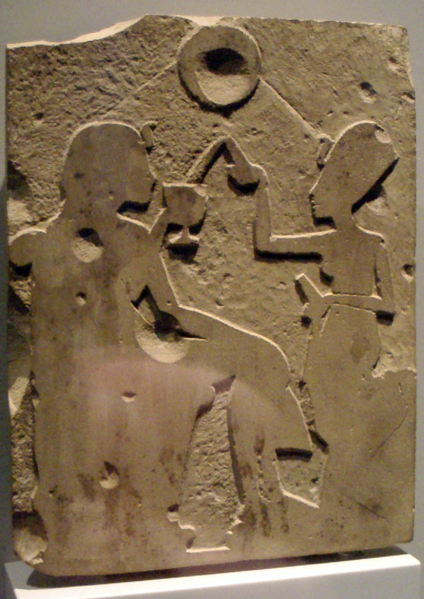
In ancient Egypt, people drank beer or wine. The aristocracy enjoyed sweet wine spiced with honey and the juice of pomegranates. There was red or white wine, with the wine of Buto in the Delta being considered some of the best, but wine was also imported from Syria, Palestine and Greece. The ordinary Egyptian drank beer, made from fermented barley bread and sieved first to remove the bits, and the results are familiar enough: 'Thou art like a broken steering-oar in a ship,' says a school text from the New Kingdom, '...Men run away from before thee, for thou inflictest wounds on them... Thou dost reel, and fallest on thy belly and art besmirched with dirt.'
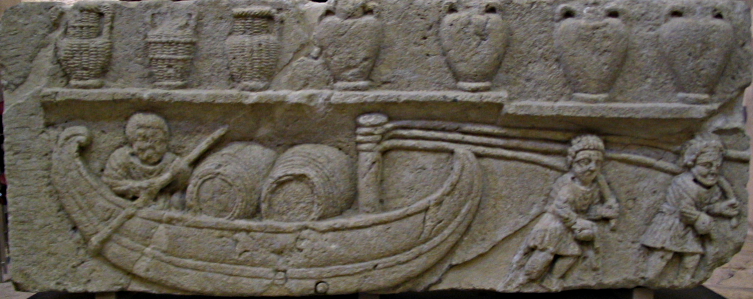
Ancient Romans had a range of beverages to choose from during their mid-winter celebration of the Saturnalia (December 17th to 23rd). Romans like L. Lucullus, rich beyond belief after military campaigns in the East, had wine tables at their feasts, huge amphorae containing the wine, long spoons to scoop it out and sieves to strain the lees. Herbs could be added to Roman wine, for colour and flavour, and it was usually diluted with water==boiling water in winter, so the wine could be served warm.
There were libations to the gods poured with wine and games played with wine. The Romans enjoyed sweet and dry wines, white, yellow, red and black wines. The black was mature Falernian, which began as a sweet white from grapes picked late, after frost, and darkened as it matured, deepening in flavour over the years (and increasing in price--showy gourmets like Lucullus certainly made a point of serving it).
A drink common to ancient Roman and northern European lands was mead, made of honey and water. Mead was the drink of choice at Anglo-Saxon feasts. Because drinking water was so often impure in the ancient world, ale was the 'everyday' drink, but mead was for feasting. There were mead halls and, in the halls, mead benches, where men sat drinking side by side. Drinking horns and glasses were richly ornamented and highly prized. Anglo-Saxon wine, some grown from grapes that could flourish in the south of England, was light, quickly consumed and not very strong.
Ale, drunk by all ages, was a sweetish, thick drink, again not very alcoholic. Mead was the intoxicating draft, subject of riddles and poetry and drunk prodigiously in seasonal feasts. A later recipe from the fourteenth century describes 'fine mead,' with the honey pressed from the combs and added to water left after boiling the empty combs (as for ordinary mead), then flavoured with pepper, cloves and apples and left to stand.
Contact Carrie to provide your mailing address. The book must be claimed by next Sunday or another winner will be drawn. Please stop back later to let us know what you thought! Congratulations!





.jpg)