28 February 2010

MY FAIR VIKING Winner!

We have a winner for Sandra Hill's VIKING IN LOVE guest blog. A free copy of MY FAIR VIKING goes to:

SCORPIO M.!

Contact Carrie to provide your mailing address. The book must be claimed by next Sunday or another winner will be drawn. Please stop back later to let us know what you thought! Congratulations!

Guest Author: Erica Ridley

This week we're welcoming Kensington author Erica Ridley as she celebrates the release of debut novel, TOO WICKED TO KISS. Although set in Regency England, TOO WICKED TO KISS has a tasty kick of Gothic suspense to set pulses racing. Look below for details on how to win a signed copy.

His Touch Holds Her Captive...

From the ravens circling its spires to the gargoyles adorning its roof, Blackberry Manor looms ominously over its rambling grounds. And behind its doors, amid the flickering shadows and secret passageways, danger lies in wait...

To His Every Dark Desire...

Evangeline Pemberton has been invited to a party at the sprawling estate of reclusive Gavin Lioncroft, who is rumored to have murdered his parents. Initially, Gavin's towering presence and brusque manner instill fear in Evangeline...until his rakish features and seductive attentions profoundly arouse her.

But when a guest is murdered, Evangeline is torn. Could the man to whom she is so powerfully drawn, also be a ruthless killer?
***

"Snappy dialogue, passionate scenes and a dead body move the story along at a swift pace. If this debut is a sign of books to come, then I hope Ridley has a prolific career. This one is a gem!" ~ Romance Junkies

"TOO WICKED TO KISS is one of those delicious gothic-style historical romances that will have you turning pages as quickly as you can." ~ Enduring Romance

"For anyone who is looking for a great mystery and poignant love story, this is a story not to be missed." ~ Smokin' Hot Books

"TOO WICKED TO KISS is a captivating page-turner that tests one's puzzle solving skills while tapping into a whole gamut of emotions. Super love story and so much more!" ~ Long and Short Romance Reviews

***

What's so unusual about Evangeline Pemberton?

Evangeline is cursed with a psychic "gift" she can't turn off: visions of other people's memories overwhelm her every time she has skin-to-skin contact, which come accompanied by vicious migraine headaches. Or worse. She grew up without basic experiences most of us take for granted--playing with children, dancing, a hug when we need it most. Instead, more than one opportunist seeks to use her for their own gain. This is a woman who aches to reach out... and almost literally cannot.

What's so unusual about Gavin Lioncroft?

There are those who say Lioncroft has killed before, and would cheerfully do so again. (Lioncroft himself has been overheard uttering this very statement.) Unfortunately for him, the one person he'd most like to help to an early grave gets murdered before Gavin has an opportunity to do the honors--and he finds himself the obvious suspect. He must earn the trust of the one person who trusts no one, lest he find himself hanging for murder.

Have you ever been somewhere like Blackberry Manor?

Yes, in the sense that I drew heavily on my experiences and impressions of various Gothic castles and churches I'd visited. And no, in the sense that my imagination took the skeleton of an idea and ran with it. If Blackberry Manor really did exist, I would love to visit. Particularly if there were a chance of meeting a man like Gavin!

Did you get some special news this week?

Why yes, yes I did. I'm delighted and honored to discover that Too Wicked To Kiss is a March book club pick for Barnes and Noble! I'll be hanging out at the book club forums all month, so please stop by! The link is here.

That's fabulous! And you're giving away a copy to a commenter?

Absolutely. If you'd like to win an autographed copy of TOO WICKED TO KISS, just click here to get your very own Madlibs-style psychic vision, then paste the result in the comments.

***

Thanks for stopping by, Erica!

Erica will be around all week to answer questions and giggle with you over your do-it-yourself psychic visions, so please comment! I'll draw the random winner next Sunday. Void where prohibited. Best of luck!

26 February 2010

Weekly Announcements - 26 Feb 2010

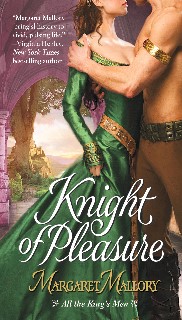
Margaret Mallory's December release, KNIGHT OF PLEASURE, is the Grand Prize Winner as best 2009 cover in the historical category in the "Judge a Book by Its Cover" Contest, run by Houston Bay RWA Chapter and judged by booksellers. Congratulations, Margaret!

***

Speaking of covers, Carrie Lofty's SONG OF SEDUCTION, coming in June from Carina Press, Harlequin's new all-digital venture, has just been released. The official cover blurb text will be coming soon, but you can read more about it here.

***

Michelle Styles has amassed a few great pieces of news. First, her Regency IMPOVERISHED MISS, CONVENIENT WIFE won the Cataromance Reviewer's Choice Award for best M&B Historical 2009.

Also, A NOBLE CAPTIVE is now available direct in the US. You can pre-order it here, complete with its lovely new cover!

***

Lindsay Townsend's Egyptian-set BLUE GOLD received a wonderful review from the Historical Novel Society.
The sands of Townsend's Egypt are blood-soaked, and the halls of her palaces echo with lust and intrigue--and yet, the most interesting part of her novel is how real, how human all of her characters feel (even the supernatural ones). Even while you're booing and hissing her villains, you're fully informed as to their motives and might even sympathize a little. Part of this effect can be attributed to Townsend's keen ear for dialogue and phrasing--and the effect is so strong that when all the book's grandstanding and conniving and personal drama has concluded, readers will be mildly shocked to be reminded that the whole delightfully complicated business happened three thousand years ago. That's praise indeed.
***

Join us Sunday when Unusual Historicals will chat with debut author Erica Ridley. She'll be discussing her Regency-set gothic romance, TOO WICKED TO KISS, and giving away a copy. Don't miss it!

***

We'll also draw the winner of MY FAIR VIKING from Sandra Hill's recent guest appearance. You still have time to leave a comment or question for your chance to win.

***

And stay with us through the coming weeks when we'll be featuring the best unusual historical authors! Lisa Marie Wilkinson, Elizabeth Lane, Lorelie Brown, and Deborah Schneider will be our guests. We hope you'll join us!

***

Have a good weekend! Remember, you don't have to be an Unusual Historicals contributor to submit good news to the weekend announcements. If it has to do with unusual historicals, we'd love to shout it out to the world! Send announcements to Carrie. See you next week...

25 February 2010

Excerpt Thursday: Erica Ridley

This week on Excerpt Thursday we're welcoming Kensington author Erica Ridley as she celebrates the release of debut novel, TOO WICKED TO KISS. Although set in Regency England, TOO WICKED TO KISS has a tasty kick of Gothic suspense to set pulses racing. Join us Sunday when Erica will be here to answer questions and give away a signed copy. Don't miss it!

His Touch Holds Her Captive...

From the ravens circling its spires to the gargoyles adorning its roof, Blackberry Manor looms ominously over its rambling grounds. And behind its doors, amid the flickering shadows and secret passageways, danger lies in wait...

To His Every Dark Desire...

Evangeline Pemberton has been invited to a party at the sprawling estate of reclusive Gavin Lioncroft, who is rumored to have murdered his parents. Initially, Gavin's towering presence and brusque manner instill fear in Evangeline...until his rakish features and seductive attentions profoundly arouse her.

But when a guest is murdered, Evangeline is torn. Could the man to whom she is so powerfully drawn, also be a ruthless killer?
***

As the heavy iron doors closed behind her with ominous finality, Evangeline Pemberton came to a dead stop inside the entryway to Blackberry Manor.

Despite the tall arched ceiling with its bowed wooden beams curving at the creases like so many rib bones, the air was thick, heavy, oppressive, as if she had not stepped into the foyer of an aristocrat's mansion, but a long forgotten sepulcher untouched by anything but death.

At Lady Stanton's unveiled glare, Evangeline forced her feet further into the echoing anteroom. The cold marble floor spreading from her battered boots to the edges of every wall might have been ivory or alabaster or cream in color, had there been more light than the occasional flickering sconce. Instead, the murky pattern was a foggy, swirling gray, as though a thundercloud had hardened beneath her feet.

Were there no windows? Evangeline craned her neck to peer upward, just beneath the rafters. Ah, yes. Several. But not the kind to let in light.

The narrow slashes high above her head were the sort suited for medieval castles, for skilled archers to aim their deadly arrows at those who would trespass below, not for illuminating entryways for members of Polite Society. This evening, no archers crouched at the ready, just as no sun hung in the sky. Only the slipperiest, blackest of shadows filtered through the thin cracks to fall upon her upturned face like the cool caress of ghostly hands. The wisps of damp hair on Evangeline's neck fluttered nervously, touched by a breeze she could not feel.

Lady Stanton, for her part, was momentarily nonplused. Gone was the calculating gleam to her eyes, replaced by...not fear, precisely. Wariness. Miss Susan Stanton stood in the very center of the room, perhaps determined not to edge too near to the shadows seeping from the corners.

Whispers came from an adjacent hallway, then footfalls, followed by a beautiful blond lady, four spindly-limbed footmen, and three cowering maids.

The lady did not look at home in the mansion, despite her fancy dress. She looked frightened. After a jerking peek over her shoulder at the vacant marble staircase curving up from the anteroom's furthest shadows, she hurried into the foyer to greet them.

"That's Lioncroft's estranged sister," Miss Stanton whispered to Evangeline. "The countess."

The other two ladies beckoned to Miss Stanton, then began to murmur amongst themselves. Evangeline did not join them. A sudden chill descended upon the room and her every sense tingled with danger.

Impossibly, she felt him before she saw him.

Although she seemed to be the only one affected thus, she didn't doubt the prickling sensitivity along her bare neck for a single moment. While the three ladies conversed quietly, gesturing now and again at a maid or a footman, Evangeline lifted her gaze upward once more.

And there he was.

He stood at the landing above the spiral stair, cloaked in shadow. Tall. Unnaturally so. Was it the angle, the skewed perspective of being so far beneath him? Or was his towering stature undeniable, evident in the width of his shoulders, the muscular length of his legs, the long pale fingers curved around the banister?

The shadows made discerning features difficult. Evangeline could not tell if he were truly as savage as he appeared, or if a trick of the light--or lack thereof--caused the slatted darkness to undulate across his form. Almost without realizing it, she began to back away.

He continued down the spiral stairway, silent, sure, the leather of his boots making no noise on the cold marble. Although shadow obscured his face, his eyes glittered like those of a wolf loping alongside a lonely carriage. Thin fingers still curled lightly around the gleaming banister, he took another step forward. When there were as many steps behind him as there were before him, a brief flicker from a nearby sconce lit his face.

Evangeline swallowed a gasp.

Not because of the obsidian eyes framed by equally black lashes. Nor because of the angry slash of cheekbones, the flash of bared teeth, or the scar just above the edge of his jaw. Those things, though separately terrible, together formed a face of cold, cruel beauty. A face for statues, for frescoes, for--

Another flutter of orange light as he reached the final stair, and Evangeline could no longer breathe.

He was angry. Horribly angry. Livid. Enraged. Furious. His eyes glittered like a wolf's because he was a wolf, a beautiful, powerful, violent wolf, prowling toward his unsuspecting prey. His dark hair slid across his face, snapping Evangeline from her trance just as his long, gloveless hand fell atop the countess's shoulder.

24 February 2010

Love Affairs: George & George

By Zoe Archer

George Eliot's personal life proved to be just as fascinating as her novels. Born Mary Ann (sometimes written as Marian or Mary Anne) Evans in 1819, Evans largely educated herself in liberal arts, theology and foreign languages. She joined a collection of unconventional thinkers that included Charles Bray and Charles Hennell, and their humanist principles helped shape her own ideals and spiritual convictions. In January 1842, Evans refused to accompany her father to his evangelical Protestant services, and their religious differences remained a source of conflict that lasted until his death.

Evans moved to London in the early 1850s and became the assistant editor of the Westminster Review. She had an affair with the owner of the Review, John Chapman, but not only was Chapman married, he had another mistress. In 1851, she met critic and novelist George Henry Lewes. Lewes was a bohemian in an open marriage. His wife, Agnes Jervis, had three children by Lewes, and several children by other men. Within a year of meeting Lewes, he and Evans began a relationship that became the basis of much controversy.

By the end of 1852, Evans and Lewes began living together. In every way but legally, Evans and Lewes considered themselves married. Friends and relatives disparaged the couple and the effect their relationship had on their professional careers. Evans called herself Mrs. Marian Evans Lewes. She and Lewes travelled many times to the Continent a number of times and shared several homes. Lewes supported Evans' literary ambitions and encouraged her to write fiction. Their relationship caused considerable public scandal, especially considering that the relationship was conducted openly. She persisted in her writing endeavors. She began to use the pseudonym George Eliot both as a means of eluding criticism of her private life as well as to separate her fiction from other, more domestic genre work written by female authors. Many admirers of her novel Adam Bede were shocked when it was revealed that novelist George Eliot was, in fact, the scandalous Mrs. Evans Lewes. It was years before she and Lewes were accepted in polite society, despite the popularity and acclaim her work received.

Evans and Lewes remained together until his death in 1878. In 1880, she legally married a man twenty years her junior. She and John Walter Cross were reportedly very happy together, but their time as a married couple was not long. Evans died seven months into their marriage. Her wish to be buried in Westminster Abbey was denied, due largely to her spiritual beliefs and her unconventional relationship with Lewes. She was buried beside Lewes in Highgate Cemetery, but in 1980, a commemorative stone was placed in Poets' Corner of Westminster Abbey, solidifying her reputation as one of the most accomplished, influential and remarkable authors in the English Language.

23 February 2010

Love Affairs: Doug & Mary

By Delia DeLeest

Before there was Brad and Angelina, or Brad and Jen, or Angelina and Billy Bob or any other Hollywood couple known only by their first names, there was Doug and Mary, the very first king and queen of Hollywood. American royalty.

Mary Pickford's star rose in 1913 and she soon became the most popular actress in the world, she stayed at that pinnacle until 1930. She wasn't just popular, she was the epitome of stardom for seventeen years. There has never been an actress able to duplicate her accomplishment and in today's world where actors are old news after five years, there probably never will be. She was known as America's Sweetheart and made millions playing "the girl with the golden curls".

Douglas Fairbanks was the action hero of his day. If there was a swashbuckling pirate or a mythical hero to be played, Fairbanks was there. He was the man all the ladies loved and all the men wanted to be. When Doug and Mary met in 1916, the sparks flew. Because they each had other spouses at the time, they didn't become free to marry each other until 1920, about two weeks after Mary's divorce became final.

They set up housekeeping in a Hollywood mansion they called Pickfair and it soon became the place to go when dignitaries visited America. An invitation to Pickfair was your ticket into the world of Hollywood's, and America's, elite.

Shortly before their marriage, Doug and Mary also went into business together. Along with fellow actor, Charlie Chaplin and prominent director, D.W. Griffith, they formed United Artists motion picture studio. This not only enabled these four luminaries to choose which pictures they wanted to make, but gave them the means to write, produce and direct in addition to acting.

United Artists became very successful and Doug and Mary became even richer and more powerful than they'd been before. What makes Doug and Mary so unusual in their world of money and success was that they had a deep love for each other, one that could not be faked for the benefit of their fans and the movie cameras. What Doug and Mary had was real.

Anyone who's seen Singing in the Rain knows of the upset talking pictures created in silent era Hollywood. Though they were both wonderful, competent actors, talkies threw Doug and Mary both off their game and neither ever recovered.

With a lot of energy and no way to expend it now that his movie making was greatly reduced, Douglas took to world travel, something Mary despised. She was content to spend her time quietly at Pickfair, ruling her kingdom from behind the high walls of her castle. In 1930, Doug met Lady Sylvia Ashley and began an affair that, three years later, resulted in his and Mary's divorce. Hollywood's golden couple was done.

Doug went on to marry Sylvia and a year later, Mary married band leader Buddy Rogers. In 1939, Doug died in his sleep of a heart attack. Though Mary died many years later (1979) after being married to Rogers for 40 years, it was believed that they both still loved each other till the end, always regretting their inability to reconcile.

Of course, this could also just be wishful thinking on behalf of their fans and of those who want to believe in Hollywood happily-ever-afters, I know that's where my sentiments lie.

21 February 2010

COUNTESS OF SCANDAL Winner!

We have a winner for Laurel McKee's COUNTESS OF SCANDAL guest blog. A free copy goes to:

PENNEY!

Contact Carrie to provide your mailing address. The book must be claimed by next Sunday or another winner will be drawn. Please stop back later to let us know what you thought! Congratulations!

Guest Author: Sandra Hill

Our guest today is Sandra Hill, New York Times and USA Today bestselling author of more than thirty novels, including more than fifteen that take place in tenth century Britain and the Norselands, involving both Saxon knights and Viking warriors. VIKING IN LOVE...a Viking princess and a Saxon lord.

Check out the end of this post where you can enter to win a copy of its prequel, MY FAIR VIKING. Here's the blurb for VIKING IN LOVE:

She said...

Caedmon of Larkspur is the most loathsome lout I have ever encountered! When my sisters and I arrived at his castle, we were greeted by servants and children running wild, while Caedmon lied abed after a night of ale. No doubt there will be another child soon, because I must admit he's as handsome as he is virile. And I must endure him, for we are in desperate need of protection, though I can only imagine what this knight will demand of me in return.

He said...

After nine long months in the king's service all I wanted was peace...not five Viking princesses running my keep. And the fiery redhead who burst into my chamber that first morning is the worst of all. Why, I should kick her out...but I have a much more wickedly delightful plan for Breanne of Stoneheim, one that will leave her a Viking in lust....Ten nights with a knight!
***

"Earthy, laugh-out-loud hilarious, and lusty, this tenth-century revel takes readers back to a much-less-refined time and is just plain fun. Her fans are sure to enjoy this latest addition." ~ Kristin Ramsdell, Library Journal

"I was laughing literally from the first page and had to subject my family to a few lines, who in turn joined my fits of giggles...Haven't tried Sandra Hill's work yet? Well, you should!" ~ Julianne Draper, Tampa Books Examiner

"VIKING IN LOVE is sinfully magnificent! Sandra Hill's exceptionally talented style of writing results in a book all readers will adore. Imaginative scenes jam packed full of romance, humor and adventure." ~ Tammy Faris, Romance Readers Connection

***

Why Vikings?

I first got interested in Vikings when researching a family genealogy and discovered I could trace my paternal roots all the way back to the tenth century and a Viking named Hrolf the Ganger, first duke of Norsemandy (later called Normandy). But then I was drawn in by a fascinating, often neglected, group of people, especially the men, who were undoubtedly tall and handsome, great seafarers and skillful warriors. And talented lovers, as evidenced by the vast number of women of different countries who welcomed them to their beds. Plus, and this is important to me, they had a great sense of humor, an ability to laugh at themselves.

But weren't they rapers and pillagers?

Some of them might have been, but mostly this was a fabrication of the biased historians of that time, almost all of whom were monks who disdained these heathen invaders. In truth, the tenth century was a violent time, and cruelty occurred in all cultures, including Britain where they were not above skinning a man alive and tacking the remains to a church door. Most Vikings just wanted new lands to settle since the harsh Norselands could not support their increasing numbers. That's why there are no Vikings per se today. They blended into the societies that they settled or conquered.

You've written so many Viking novels. Do you still have to do research?

Yes, and I love it. Actually, new information is being discovered all the time as archaeologists uncover more about these compelling people. For example, a recent find showed that some Viking men had small holes drilled in their front teeth...for jewels. A dig in York showed evidence that the Vikings ate bread made of stone ground wheat that still had particles of stone in them.

Tell us something more that we don't know about Vikings?

Well, you might not be aware that many of the famous knights of the Middle Ages were descendants of Vikings. Or did you know that the nursery rhyme "London Bridge Is Falling Down" was presumably written about a time when Vikings ruled Britain. And, yes, there were Viking kings in England for a time.

Any suggestions for books that readers or writers might want to consult about Vikings?

There are so many, but a few of my favorites are: A HISTORY OF THE VIKINGS by Gwyn Jones; THE VIKINGS by Else Roesdahl; LIFE AND DEATH IN THE TENTH CENTURY; or any of the sagas or eddas. And for humor regarding Vikings, there is THE LOST DIARY OF ERIK BLOODAXE, VIKING WARRIOR by Steve Barlow and Steve Skidmore.

Is VIKING IN LOVE a stand alone book or part of a series?

Actually, it's both. It is the eighth book in my Viking Series I, but all my books are intended to stand alone. The order goes thus: THE RELUCTANT VIKING, THE OUTLAW VIKING, THE TARNISHED LADY, THE BEWITCHED VIKING, THE BLUE VIKING, MY FAIR VIKING, and A TALE OF TWO VIKINGS. The one most closely related to VIKING IN LOVE is MY FAIR VIKING because the heroine is the first of the Viking princesses.

Tell us a little more about VIKING IN LOVE.

With pleasure. I call this my medieval version of the Dixie Chicks video "Goodbye Earl." In the video the three girls kill Earl, the abusive husband of one of them and dump him in a lake. In my book, the five princesses kill the abusive husband of one of them...an earl, of course...and dump him in the bottom of a privy.

You can read a short excerpt here.

Is your back list still available new?

Most of them are, and, in fact, Harper Collins bought my entire backlist from Dorchester...seventeen books, and they should be reissued, if they aren't already available.

What's next?

In September, THE VIKING TAKES A KNIGHT, a further sequel to the Viking I series will be out. Another Viking princess! Here's a blurb and cover art.
The Viking is a princess...

And all she wants is refuge for herself and one unique orphan from a vicious Saxon commander who would harm the children and destroy her honor. At her age, she no longer expects to find a husband, or even a lover, especially not the arrogant Lord of the Bees!

The Knight studies bees...

And what he longs for is peace and quiet. John of Hawk's Lair is certainly not seeking a nagging wife and noisome children. As a knight in the king's service, he spends his cherished time at home working on his beekeeping experiments. So when an irksome Viking princess comes barging into his castle with a horde of orphan children he does everything he can to get rid of her.

Together they made honey...

How about those Viking Navy SEALs you've made so popular?

That's from my Viking Series II. Coming in November will be DARK VIKING, in this case a female Navy SEAL (and former stunt woman) who travels back in time in full diving gear (head to toe wet suit and flippers) where she is mistaken by a Viking warrior for an ugly fish. The hero is brother to Thorfinn from VIKING UNCHAINED.

Do you like to hear from readers?

I love to hear from readers and hope they will visit my website where I have more book news, videos, free novellas, jokes, and freebies.

As always I wish readers smiles in their reading. Please ask me any questions you have about Vikings or any of my other books.

***

Thanks for being here, Sandra!

Sandra is giving away a copy of MY FAIR VIKING to one random person who posts a comment. As sometimes it can be difficult to think up something to comment on, perhaps you can tell us what you think of Vikings. Are they pillaging barbarians or sexy heroes? We'll select a winner next Sunday. Void where prohibited. Best of luck!

18 February 2010

Excerpt Thursday: Sandra Hill

This week on Excerpt Thursday we're happy to welcome Sandra Hill! Sandra is a New York Times and USA Today bestselling author of more than thirty novels, including more than fifteen that take place in tenth century Britain and the Norselands, involving both Saxon knights and Viking warriors. And, in the case of her current release, VIKING IN LOVE...a Viking princess and a Saxon lord. The blurb and an excerpt are below.

Join us Sunday when Sandra will be answering questions and giving away a copy of its prequel, MY FAIR VIKING.

She said...

Caedmon of Larkspur is the most loathsome lout I have ever encountered! When my sisters and I arrived at his castle, we were greeted by servants and children running wild, while Caedmon lied abed after a night of ale. No doubt there will be another child soon, because I must admit he's as handsome as he is virile. And I must endure him, for we are in desperate need of protection, though I can only imagine what this knight will demand of me in return.

He said...

After nine long months in the king's service all I wanted was peace...not five Viking princesses running my keep. And the fiery redhead who burst into my chamber that first morning is the worst of all. Why, I should kick her out...but I have a much more wickedly delightful plan for Breanne of Stoneheim, one that will leave her a Viking in lust....Ten nights with a knight!
***

Northumbria, A.D. 965

"Your keep is filthy, pigs broke through the sty fence and are all over the bailey, I saw dozens of mice scampering in your great hall, thatch needs replacing on the cotters' huts, you beget children like an acorn tree gone wild, your servants take their ease like high nobility, there are several blubbering servants arguing over who will bury the priest who is laid out in your chapel, and you...you slothful sluggard, you lie abed, sleeping off a drukkin night, no doubt."

Whoa! One thing was for certain. This would not be yet another woman trying to crawl into his bed furs. "Stop shrieking. You will make my ears bleed." Caedmon, Lord of Larkspur, rolled over on his side, tugging the bed linen up to cover his lower half, then sat up.

"Bestir thyself!"

"Nay!"

"Have you no shame?"

"Not much."

"Are you lackbrained?"

"No more than you for barging into my bedchamber."

"Even if you have no coin, there is no excuse for the neglect."

"Not even the fact that I have been gone nine long months in service to a king undeserving of service?"

"Where is the lady of this estate?"

'Tis just like a woman to think a woman is the answer to everything! "There is no lady."

"Hmpfh! Why am I not surprised?"

Now he was getting annoyed. "Sarcasm ill-suits you, m'lady. Have you ne'er been told that?"

"The blade goes both ways, knave."

His eyes went wide at her foolhardy insults. "Who in bloody hell are you?"

"Princess Breanne of Stoneheim."

A Viking? Bloody hell!

17 February 2010

Love Affairs: Henry & June

By Karen Mercury

Henry Miller, "Just a Brooklyn Boy," was born in 1891 "under a lucky star." He followed his strict German tailor father's directives to get a conventional job, and found work as a personnel director in charge of messengers at the "Cosmodemonic Telegraph Company"-- a pseudonym for Western Union. But Henry was "always merry and bright," anything but conventional , and loved to party with his friends, to womanize, and to write semi-autobiographical tales. One day when the Vice President was bawling him out for his absenteeism, the manager suggested that Henry write an Horatio Alger book about the messengers.
I thought to myself 'you poor old futzer, you, just wait until I get it off my chest, I'll give you an Horatio Alger book...' I saw the army of men, women and children that had passed through my hands, saw them weeping, begging, beseeching, imploring, cursing, spitting...I saw the tracks they had left on the highways, lying on the floor of freight trains, the parents in rags, the coal box empty, the sink running over, the walls sweating...I will give you Horatio Alger as he looks the day after the Apocalypse, when all the stink has cleared away.
He married a woman Beatrice, a very cold-hearted and disapproving fish--they even had a child Miller always referred to as "the child"--who saw his "scribbling" as a waste of time, which gave Henry even more reason to stay out late at vaudeville shows and dance halls, where taxi girls would dance with one for a small fee.

In 1923, Henry met June (referred to in his novels as Mona), a taxi dancer at the Orpheum Dance Palace in Times Square. She was a gorgeous, flamboyant, and unstable woman who had sex with Henry in the back seat of the cab on the first night they met, and he was instantly smitten, calling her "June, Julia, Henriette, and She" (after one of his favorite Rider Haggard novels).

Henry was never sure which of June's stories to believe, whether she was born to a Romanian gypsy in Sherwood Forest, how many of her rich lovers truly existed, but when she whispered, "You must be a great writer--for me!" the flattery sent him into a dizzy whirl. Whatever she is, I love her, and for the moment she is mine, he thought. Henry married her the next year after unceremoniously dumping Beatrice. Claiming to be variously an actress, artist, and also a bisexual, June invited her friend Jean Kronski to move in with them, although all Jean seemed to do all day was craft puppets that were apparently not very attractive or marketable, dragging along "Count Bruga" wherever they went.

Having walked out the door of the Cosmodemonic Telegraph Company without a word, now Henry attempted to make a living solely as a writer, selling prose poems from door to door. They struggled to exist in cold water flats, June remaining as a taxi girl and entertaining strange men to make ends meet, "gold-digging with a vengeance." Henry thought Paris might be the place for them, and so the trio departed with ten dollars in their pockets. "I have no money, no resources, no hopes," Henry wrote. "I am the happiest man alive."

Everyone, apparently, was in love with June. Jealousies between Henry, June, Jean and their many "admirers" led to the womens' return to New York--June's despicable treatment of men had led at least two of her lovers to suicide. Henry's gregarious, friendly, and relaxed personality led to some important Parisian associations such as Blaise Cendrars, Alfred Perles, Man Ray, Lawrence Durrell, and, most importantly, in 1931, Anaïs Nin. Henry began a fling with Anaïs, but when June returned to Paris, Anaïs also fell under her inexplicable spell. Anaïs wrote:
A startlingly white face, burning eyes. June Mansfield, Henry's wife. As she came towards me from the darkness of my garden into the light of the doorway I saw for the first time the most beautiful woman on earth...As I sat in front of her I felt that I would do anything she asked of me. Henry faded. She was color, brilliance, strangeness.

By the end of the evening I was like a man, terribly in love with her face and body, which promised so much, and I hated the self created in her by others. Others feel because of her; and because of her, others write poetry; because of her, others hate; others, like Henry, love her in spite of themselves.
Henry and June divorced by proxy in Mexico in 1934.

His first novel, Tropic of Cancer, was not published until 1934 in Paris, instantly famous and, of course, banned in all English-speaking countries. It was his Horatio Alger story, "the blood-soaked testament revealing the ravages of my struggles in the womb of death." When it finally was released in the US in 1961 it caused a sensation, leading to obscenity trials that debated pornography. I recall my mother had all of his 60s books on her shelf and I'd sneak looks at the "sex parts." I soon realized the writing was pretty darned interesting, and wound up reading them all of the way through.

Henry lived in Big Sur, dealing with the hordes of fans showing up at his door, and hanging out with admirers such as Jack Kerouac, Emil White, and Jean Varda. He saw June only once more in 1961, although he sent her money her entire life. He was shocked at her deteriorated appearance, as she'd spent many years in boarding houses and sanitariums, receiving electric shock treatments, and having broken some bones after falling off one such table. Henry died at the age of 89, after divorcing his fifth and final wife, Hoki, a Japanese woman 47 years his junior, smoking cigarettes and living it up until the end.

16 February 2010

Love Affairs: Katherine Swynford & John of Gaunt

By Blythe Gifford

Any of you who have seen me post here, or elsewhere on the web, will not be surprised at my choice of romantic couples. Katherine Swynford and John of Gaunt, son of King Edward III of England, are hands down, my favorite lovers of all time.

Immortalized in Anya Seton's KATHERINE, their story is an amazing true tale of long time lovers who came to their happy ending late in life.

John, Duke of Lancaster, was, as Alison Weir writes, "the greatest English nobleman of his time"--chivalrous, rich, politically astute, a great warrior, tall, lean, and handsome. What's more, it's reported that 300 years later, a codpiece reportedly made for him was on display in the Tower of London and "better worth a lewd lady's admiration than any piece of antiquity in the Tower." (Alas, Wier goes on to expose this as the 18th century equivalent of an urban legend.)

Katherine Swynford, on the other hand, was daughter of a knight (Paon de Roet) and would have sunk into obscurity had it not been for the patronage of Edward's queen, Phillipa. She obtained this because her father was from the queen's home country of Hainault and who served her in England for many years.

We have little official evidence of Katherine. No letters and few documents remain, not even her will. What does emerge from the record, however, is almost universally flattering. She was beautiful, educated, pious, and comfortable at the highest levels of court.

In addition, she served as mother or surrogate mother to a blended family of more than ten children. They included three to four of her own (by her first husband), three to four of John's children (by his first and second wives), as well as the four they had together. And she seems to have successfully created an atmosphere that allowed these pseudo-siblings to become fast friends for life.

Any modern day mother must stand in awe of her for this accomplishment alone.

As a side note, Katherine's sister was married to Geoffrey Chaucer, the pre-eminent writer of the 14th century. This has sparked a game of "find Katherine" among some scholars, for he must have known his sister in law well. The picture here, excerpted from the frontpiece of Chaucer's TROILUS, has been identified as Katherine, probably late in life, after her marriage to the Duke. If accurate, she seems to have had golden hair, a slim figure, and a fashionably high forehead, even at that age.

At the time the two began their affair, Katherine had already served as governess to John's children with his first, and much beloved wife, Blanche. (Blanche was a paragon herself. Rich, beautiful, educated, it seems she and John also had a love match.)

Katherine, 22, was a widow with at least three children. John, a widower ten years older than she, had just married Constance of Spain, a political marriage and never a truly happy one.

Initially, the lovers were discreet. John may not have loved his new wife, but she was the key to his goal of assuming the throne of Castile. During their affair, Katherine bore him four children, the Beauforts (see my previous post), but largely stayed away from court (and the attention of the chroniclers) for many years.

Among the touching evidence that has come down to us from John's household records are regular gifts to "our very dear and well-beloved Dame Katherine de Swynford." Among these are oak trees "suitable for building." This sounds less than romantic to modern ears, but they were cut from forests he owned and used for improvements to her home, Kettlethorpe, where their children were raised.

Of course, all was not bliss. They were regularly apart as John was at court or fighting on the continent. Yet finally, around 1377 or 1378, he seems to have relinquished some of the pretense and Katherine was more and more seen at his side. This did not go unnoticed, and Katherine is called his "unspeakable concubine" by the chroniclers. But despite this, they also note, an unusual and telling entry, that she loved the Duke and their children. (This is a far cry from their description of his father's mistress, Alice Perrers.)

John's father had now died, and John was uncle to the new king, Richard II. It was a time of unrest, and when the peasants revolted in 1381, John's London palace, the Savoy, was looted and then burned to the ground. Katherine, knowing her life and her family's were in danger, went into hiding, probably at one of John's northern castles.

Although the revolt finally subsided, it seems to have shaken John. Not only was his property destroyed, his members of his household had been murdered. A pious man, he concluded that God was punishing him for his liaison with Katherine. (Political realities may also have been a consideration, for he had become a highly unpopular man.)

He publicly broke off the nine year old affair, but also issued a "quit claim" that made it clear that any gifts and property he had given Katherine would remain hers. This document was issued on Valentine's Day.

And so, the lovers parted.

Despite this, John continued to provide patronage to their children and even to Chaucer's son, Katherine's nephew. Meanwhile, the political times were difficult. New favorites came and went and King Richard alternately depended on his uncle and turned on him.

But in 1394, Constance died. John, contrary to all advice and to the horror of several of the highest born ladies of the court, petitioned the Pope for dispensation to marry Katherine and to legitimize their children.

So at 46 and 56, they became husband and wife and, Katherine informed the Pope, they celebrated their wedding with "carnal copulation."

Until King Richard's marriage to his second wife, Katherine, Duchess of Lancaster, was the highest ranking woman in England. She and John had less than five years together before John's death and he was not well for most of that time. (John may not have been quite as faithful as his reputation. There's some suggestion that his illness was venereal disease.)

She survived five years after his death and lived to see John's son, Henry IV, refer to her, his stepmother, as "the King's Mother." A sketch of her tomb in Lincoln Cathedral is at left.

Her Cinderella story is virtually unduplicated in medieval history. It is a testament to a love that endured years, miles, marriages, guilt, and separation to find its own happy ending.

Source: Much of this material is drawn from Mistress of the Monarchy by Alison Weir, and The History of a Medieval Mistress by Jeanne Lucraft. Those who read my INNOCENCE UNVEILED may recognize that I used the birth of "John of Ghent," subsequently John of Gaunt, as a key incident in the book.

15 February 2010

Love Affairs: Hera & Zeus

By Jacquie Rogers

The gods and goddesses on Mt. Olympus have provided us with entertainment for thousands of years. One of the more interesting couples were Hera and Zeus, the children of Rhea and Cronus.

Hera and Zeus may not have the most loving romance of all time, but they certainly were an interesting couple. Zeus drew the long straw so he had the honor of being the ruler of heaven and earth. Hera was the goddess of childbirth and marriage. She was the supreme goddess on Mt. Olympus.

Theirs was an arranged marriage, one which Hera managed to avoid for three centuries. She wanted nothing to do with a god who was a womanizer, even if he was her own brother. Worse, he swallowed his first wife, Metis, a Titaness. That's just never a positive foundation for a loving marriage.

Finally Hera relented--only after Zeus tricked her by shifting into a cute little bird. Once she had him nestled in her bosom, he shifted back to his man form and made mad, passionate love to her. Once again he proposed, and this time she agreed. A lavish wedding followed, and almost immediately Zeus went back to his philandering ways.

Her reservations about his character were well proved. Zeus fathered many offspring, three by Hera: Ares, Hephaestus, and Hebe. Affairs with other women produced the twins Artemis and Apollo, Dionysus, Hermes, Athena, and Persephone. Also of note are Perseus, Herakles, The Muses, Minos, and Helen, among many dozens of others. So Zeus as a busy guy, and Hera wasn't all that thrilled with the situation. A bit jealous, you might say.

She banished Leto, pregnant with Zeus' twins, Apollo and Artemis, to Delos and then prevented the Goddess of Childbirth from attending her, preventing the birth. Other goddesses felt sorry for Leto and bribed Hera with a golden necklace. She finally relented and allowed Leto to give birth.

Io didn't fare very well, either. When Hera nearly caught Zeus in flagrante delicto with Io, Zeus turned his lover into a white heifer. Hera wasn't a bit fooled, and to make a long story short, sent gadflies to pester Io, who ran and ran until she reached Egypt, where she became Isis.

I've made a cursory scan of the events but most stories, as bawdy or salacious as they may seem, all have a lesson to teach, or explain nature in some way. Very few are for entertainment value only, although a more fascinating cast of characters would be hard to find.

And whether Hera and Zeus every found a Happily Ever After, I don't know. But what a wild ride!

Sources:
Marriages of the Gods, a storybook by Erika Mitchell-DeLuca
The Loves of Zeus
Theoi Greek Mythology
Wikipedia: Hera
Wikipedia: Zeus

***

Down Home Ever Lovin' Mule Blues (See the Book Video featuring Justin Saragueta)
Jacquie's Website * 1st Turning Point * Myspace * Twitter * Facebook
Faery Special Romances * Book Video Royalties go to Children's Tumor Foundation, ending Neurofibromatosis through Research


Read a book by Jacquie Rogers

14 February 2010

ABENDLIED Winner!

We have a winner for Jennifer Linforth's ABENDLIED guest blog. A free copy goes to:

BRIEANA!

Contact Carrie to provide your mailing address. The book must be claimed by next Sunday or another winner will be drawn. Please stop back later to let us know what you thought! Congratulations!

Guest Author: Laurel McKee
After a slight technical glitch, I'm posting the correct interview. Yay!

This week we're welcoming the return of Amanda McCabe, writing as Laurel McKee, as she celebrates the release of COUNTESS OF SCANDAL, out now from Grand Central.

Eliza Blacknall and Will Denton were childhood sweethearts, growing up on neighboring estates in beautiful County Kildare. But adulthood finds them on opposite sides of the monumental and violent struggle of 1798, as Eliza supports the United Irish in their quest for independence, and Will is a major in the British Army, sworn to uphold the Crown. The passion for each other burns hotter than ever—but can it survive as their world crumbles around them?
***

"McKee sets the stage for a romantic adventure that captures the spirit of Ireland and a pair of star-crossed lovers to perfection" -- RT Book Reviews

"COUNTESS OF SCANDAL combines a passionate romance with a nail-biting plot. The author's research shines through to make the era come alive, as well as her characters. An exciting tale out of the common mold" -- Romance Reviews Today

"This book has rarely used and well-drawn setting, good characters, and so much more working in its favor. I absolutely loved reading this one!" -- All About Romance

"McKee's intriguingly nuanced characters and deliciously subtle sense of humor provide the ideal counterpoint to the perfectly executed historical setting that gives COUNTESS OF SCANDAL its refreshingly different literary flavor" -- Booklist

***

Tell us about COUNTESS OF SCANDAL!

First, I have to say thank you so much for having me back at Unusual Historicals! I'm obviously a huge fan of the "unusual" in historical romances, and this is such a fabulous source for finding out where to find them.

As for COUNTESS OF SCANDAL, it's my 'debut' as Laurel McKee (two different publishers equals two different names, though hopefully no identity crisis!) and I'm so excited about it. It's the first of the "Daughters of Erin" trilogy about the three Blacknall sisters, set in late Georgian/early Regency Ireland. Eliza Blacknall and Will Denton were childhood sweethearts, separated when Will joined the Army and Eliza married her family's choice for her. Now it's a few years later--1798, a fateful year in Ireland, and they're reunited on the eve of the Uprising. He's still a British officer, and she's an ardent supporter of the United Irishmen, but their old feelings for each other are still there, stronger than ever.

(The chaos of a rebellion might not be the number one setting people think of for a romance! But I found it had a lot of potential for danger and passion, and a chance for Eliza and Will to discover truths about themselves, their love, and the world around them. It was fun to work with a happier-ending Romeo and Juliet-ish story! Plus at the beginning I got to put in the great clothes and glamorous settings I love. Georgian Dublin was a very glamorous and party-loving place!)

Where did you get the idea for these stories?

My own family background is Irish, and I've wanted to do a book set there for a long time! It just took me a while to find the right characters and story. Ireland is such a gorgeous country, full of dramatic history people with passionate characters, and it seems ripe for romantic stories. I remembered a visit I made years ago to the beautiful Georgian estate Castletown, which was owned by Lady Louisa Conolly, one of the famous Lennox sisters, who made the house her life's work.


The guides had a trove of fascinating stories about Irish life in the late eighteenth century! I also read Stella Tillyard's fascinating book about the Lennox sisters, Aristocrats (and saw the lavish Masterpiece Theater adaptation), and that was the original inspiration--strong women in Georgian Ireland!

What kind of research did you do for the book?

I love doing research! That is one of the most fun parts of writing. I would have happily spent my whole life living in a library as the world's oldest permanent graduate student. Sometimes it's hard to stop researching and start writing. I started with some books I already had on the shelf, like Aristocrats and Tillyard's Rebel Lord, a biography of Edward Fitzgerald (son of another Lennox sister, the Duchess of Leinster, and a leader of the United Irishmen); Thomas Pakenham's The Year of Liberty; Thomas Bartlett's The 1798 Rebellion: An Illustrated History; and an old book I once found in an antique store, Mrs. Thomas Concannon's Women of '98. Then I expanded to the Internet and local university libraries and looked up maps, info on military uniforms and regiments, detailed sites in Ireland (since I sadly couldn't take a trip there right now!). It was lots of fun.

What's "unusual" about the book?

I think the setting is pretty unusual! I'm not sure I've ever read a Georgian Ireland romance (which is one reason I set out to write one), though my friend Michelle Willingham writes some fabulous Medieval Irish books. I also really enjoyed using the setting and events to create the conflict for the characters. That made my job a lot easier!

What's next for you?

DUCHESS OF SIN will be out from Grand Central Publishing in December 2010! It's Anna Blacknall's story, where she meets again with the Irish Duke of Adair amid the chaos of the Act of Union in 1800. It's also set against a Christmas background, and I had fun researching the holiday--the Irish really knew how to party at Christmas, LOL! (LADY OF SEDUCTION , Caroline Blacknall's book, will be out in 2011)

As Amanda McCabe, I have a Regency-set trilogy coming out in April, May, and June, "The Muses of Mayfair" (Book one is TO CATCH A ROGUE). I love this series, which is set around another passion of mine--archaeology and antiquities collecting! There will also be a Harlequin Undone short story to kick off the series in March, TO BED A LIBERTINE, where a real Greek Muse comes to Regency London and wreaks some havoc.

***

Thanks, Amanda, for stopping by!

We're giving away COUNTESS OF SCANDAL to a lucky commenter. Maybe you'd like to let us know whether you find Ireland an unusual setting for romance? What is it about Ireland that fascinates you? I'll draw one random name next Sunday. Void where prohibited. Best of luck!

11 February 2010

Excerpt Thursday: Laurel McKee

This week on Excerpt Thursday we're welcoming author Laurel McKee, who also writes as Amanda McCabe, as she celebrates the release of COUNTESS OF SCANDAL, the first of her "Daughters of Erin" trilogy. Stop by on Sunday when we'll be talking with Laurel about this exciting new Irish trilogy and giving away a copy.

Eliza Blacknall and Will Denton were childhood sweethearts, growing up on neighboring estates in beautiful County Kildare. But adulthood finds them on opposite sides of the monumental and violent struggle of 1798, as Eliza supports the United Irish in their quest for independence, and Will is a major in the British Army, sworn to uphold the Crown. The passion for each other burns hotter than ever—but can it survive as their world crumbles around them?
***

Dublin, early 1798

At that moment, the assembly room doors opened to admit a group of latecomers. As was becoming more frequent in Dublin, as regiments newly arrived from London and points beyond sought amusement, they were officers. Young ones, too, not old and portly colonels in too-tight red tunics. These men seemed tall and strong, their bright gazes keen as they swept over the noisy party.

"Well, now," Eliza's sister Anna Maria said. "This is more like it."

"Anna Maria, I am hardly likely to take up with some newly-arrived officer," said Eliza.

"No one said you have to 'take up' with one! A dance would make a fine start." Anna Maria tapped her fan against her chin as she examined the arrivals. "What about that one there? He is quite a beauty, I must say, and even taller than you."

Eliza couldn't help laughing. It felt as if they were at a horse fair, and Anna Maria a shrewd Arab trader evaluating fillies. "Which one?"

"That one, of course. He doesn't appear a drunkard at all, does he?"

Eliza followed the pointing line of Anna Maria's fan to a man who was half-turned away from them as Mr. Neilsen, the Master of Ceremonies, greeted him. From that angle, he did seem a beauty, she had to admit. Very tall, with broad shoulders and a tight backside, his long, dark golden hair tied back with a black ribbon. If only those fine shoulders were not encased in a red British coat!

Green would suit them so much better.

Then he turned toward her, the flickering light of dozens of candles falling over the chiseled angles of his lean face.

Eliza gasped. It couldn't be! She was imagining things. Anna Maria's romantic nonsense was infecting her senses.

She closed her eyes, gulping down the last of the champagne. When she looked again, though, nothing had changed. He was still there, bigger than life. Bigger even than the dreams that had come to her, unbidden, over the years.

Will Denton was back in Ireland, then. Major Denton, to judge by the decorations of his uniform. Time had carved his face into a hard, elegant sculpture, like a statue of a Roman god colored bronze by a harsh West Indies sun.

From across the room, his eyes, those intense blue-green eyes she had imagined so often over the years, seemed to touch her very heart. The noise and movement of the room all faded away, and she saw only him.

For an instant, she was fifteen again, so full of yearning and hope.

Her hand tightened on the glass, until it bit into her rings and dragged her back down to earth. To cold reality

10 February 2010

Love Affairs: Jack Rackham & Anne Bonny

By Anna C. Bowling

These real life pirates of the Caribbean shared a love affair that ignited like a flash of gunpowder during the waning days of piracy's golden age. Jack Rackham, dubbed Calico Jack by his peers, due to his brightly colored wardrobe, had already enjoyed a piratical career that included taking over a ship previously captained by James Vane when the pirates found themselves pitted against a warship. Jack's crewmates elected him captain in Vane's stead, and Jack led several successful raids on merchant ships before deciding he wanted something else out of life.

His ship put into New Providence Harbor in the Bahamas, and Jack may well have accepted the open pardon offered by Governor Woodes Rogers for all those who would quit their nefarious ways and live as decent men. It was one far from decent woman, Anne Bonny, a quick-tempered Irishwoman from South Carolina, who turned his head and set his life on a far different course when the pair met at one of the many taverns in the port town.

The attraction between the two was intense and instantaneous, finding themselves matched well in temperament, passion and ambition for adventure. There was only one problem: Anne was already married, and even worse, her husband, James Bonny, was an informant for Governor Rogers. Having his wife carrying on with one of the very pirates he hoped to eliminate did not sit well.

James charged his wife with adultery, and her conviction warranted flogging and a charge to return to James. Jack offered to buy Anne from James in a marriage by purchase, but Anne's pride nipped that in the bud. She refused to be bought and sold like livestock and the pair escaped New Providence to take to the open sea.

Anne learned the art of piracy well under Jack's tutelage, to the extent that most historical mentions of Jack's name are as an associate of Anne's, and that of another piratess in male guise, Mary Read, rather than for his own exploits. Anne and Jack's affair proved fruitful, and they put into port in Cuba for Anne to deliver their first child, whose fate remains unknown.

Jack and Anne resumed their seafaring lifestyle, with pirate hunters hot on their heels. In 1720, Captain Jonathan Barnet captured their ship while the male crewmembers were too inebriated to offer resistance. Only Anne and Mary fought to the end, and the entire crew stood trial in Jamaica, facing a death sentence. Anne, pregnant with her and Jack's second child, plead her belly, and had her execution postponed until she could carry the child to term. (A ruling which proved moot, as Anne escaped well before said time.) Jack, however, had no recourse, and his sentence was passed.

The day of his execution, Jack had but one final wish--to see his beloved Anne one last time. The wish was granted, but historical accounts indicate that Anne turned away from her lover after uttering the fateful words, "If you had fought like a man, you would not be hanged like a dog."

09 February 2010

Pompey the Great & Julia Caesar

By Michelle Styles

When the whole idea of love affairs was first mooted, I thought of Cleopatra and Julius Caesar. After all, she had herself rolled up in a rug and delivered to him so she could plead her case, and have him support her rather than her husband/brother.

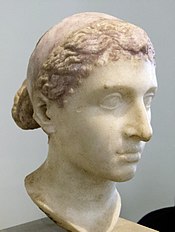
Then after Caesar's death, there is Cleopatra and Marc Antony and the famous asp. Not bad for a woman that historians now think was a dumpy blonde with a quick wit. (See picture of her bust.)

There is also the famous story of Servillia (the mother of Brutus) and Caesar--in the Senate, Servillia's very uptight and upright brother Cato demanded Caesar read the letter he had just received out loud. It turned out to be a highly explicit and impassioned love letter...

However, one of the love affairs that strikes me to have had a tremendous of consequence for the Roman Republic was the May December marriage between Pompey the Great and Julia Caesar, Julius Caesar's beloved daughter from his first marriage to Cornelia Cinna and his only legitimate child.

Pompey the Great was the general who first rewrote the rules of the Republic. he raised armies when he was supposed to be too young, held consulship more times than customary and generally was beloved by the people. He was married seven times and had the reputation as a dedicated womaniser. Julia was the highly educated daughter of an up and coming politician. They were married for political purposes and to tie the families together. Love was not supposed to be involved. Cato saw his chance and mocked them both, turning the public against two of his sworn enemies. An early end was predicted for the marriage.

Against the odds, Pompey and Julia fell in love. Pompey neglected his duties and became a model husband. Public scorn of him increased led by Clodius who had once dressed up as a dancing girl in order to seduce Caesar's wife Pompeia (sex scandals amongst politicians were rife in the Roman Republic) and Cato. Caesar went off to Gaul. Julia fell pregnant. Pompey and Crassus attempted to rig the election of 55 BCE. Violence broke out. Pompey was caught in the thick of it and his toga became blood splattered. Julia saw the toga assumed the worst and miscarried. It was taken to be a judgement from the gods for the rigged election. The next year, in August 54 BCE, again heavily pregnant, she miscarried and died.

Both Pompey and Caesar were prostrate with grief. Caesar never really forgave Pompey for his very quick remarriage and they ended up on opposite sides of a civil war that tore Rome apart.

Michelle Styles's latest North American release, SOLD & SEDUCED, is set during this period and is out now.

Website Update

I'm snowed in today and decided to make some long-awaited changes to our Unusual Historicals site. Part of this was necessitated because Haloscan, which hosted our comments, has shut down because of corrupted software. That means all comments made in the last three years have been lost. I'm frustrated and sad to lose that much history for our blog, but it couldn't be helped. I guess that's the internet...

But I hope you like the changes we've made. The sidebar now features several linked pages, including a list of our contributors, our complete book list, a calendar of upcoming events, and every guest interview we've ever hosted. The changes were designed to provide a more streamlined layout. Hope you like it!

08 February 2010

Love Affairs: Nicholas II & Alexandra

By Isabel Roman

Russian romance is often tragic, it's also often dramatic. The Russians do everything to excess. The old saying "live hard, play hard" seems to be triple for the Russians. Their corruption is audacious, their love affairs are no less so.

However, Nicholas and Alexandra weren't ordinary Russians. Their love was more subdued, but quiet and affectionate. When Nicholas Romanov saw Alix von Hessen und bei Rhein (Alexandra Feodorovna Romanova), it was love at first sight. Nicholas was never supposed to be Tsar, but upon his brother's death, and his ascension to the throne, he married Alexandra. The Russian people believed that a bad omen, marrying so soon after a death.

Oh, how right they were.

But until 1917, they were content in their relationship, passionate to a degree. Even though the Russian people rejected the shy Alix, Nicholas cared little for what they thought or wanted. When they were apart, he and Alix wrote many love letters, always affectionate, always missing the other.

As tsar, Nicholas could have had anyone, but he always chose his wife.

Nicholas' love for Alexandra transcended the malicious gossip of the court. When Alix's relationship with Grigori Rasputin was revealed, when rumors spread as to the intimate nature of the relationship, Nicholas stood by his wife. I don't believe she did have an affair with Rasputin, she was far too in love with her husband and used Rasputin to help her son, the heir to the Russian Empire.

When they died, they did it as they lived-tragically, dramatically, and surrounded by family.