30 June 2010

What Surprised Me: Scotland is a Different Country

By Blythe Gifford

Even those of us who study history regularly have our blind spots. Scotland was one of mine. Until I started researching for HIS BORDER BRIDE, I thought that Scotland was the Highlands and then the Lowlands, where people were pretty much like the English except sort of not. I knew something about the Borders, that no-man's buffer between England and Scotland, because it was the home of my hero from IN The MASTER'S BED, so I thought in choosing that setting, I wouldn't have much new to learn...

Surprise! Scotland really IS a different country. And for a lifelong Anglophile, it was a huge switch of worldview.

I didn't know what I didn't know until I got into the story and had to learn the "back story," if you will, of a whole country. And much of what I had to learn was what I had to UN-learn. In my time and place, whiskey, tartan, and clans did not exist.

However during this period, and for several hundred years to follow, Scotland was more closely allied with France than with England. Even such important Scots as the first Earl of Douglas were fostered in France and fought on the French side at Poitiers, where they and their French allies were soundly defeated. (I ended up using this fact as a plot point.) The Franco-Scots "auld alliance" made a difference in the Scottish court, culture, law, and politics and these differences ultimately influenced my story.

So my prejudiced views of Scotland were upended and I learned a lot. (But not enough that I wasn't surprised all over again when I started to research the setting of my next book. But that's a story for another day.)

29 June 2010

SONG OF SEDUCTION Winner!

Eep! I completely forgot to do this on Sunday! Here goes:

We have a winner for Carrie Lofty's SONG OF SEDUCTION guest blog. A free copy of goes to:

MARG!

Contact Carrie to provide your mailing address. The book must be claimed by next Sunday or another winner will be drawn. Please stop back later to let us know what you thought! Congratulations!

What Surprised Me: Don't Know Much About History

By Delia DeLeest

I've always been a history buff. When I was little, my favorite TV show was "Little House on the Prairie." My favorite book was about four kids who were required to clean an old vacant house as community service and ended up researching the house's history in an attempt to save it from the wrecking ball. I wanted a time machine so I could go back to ancient Egypt.

It's always amazed me that there are so many people out there who just flat out aren't interested in history and therefore, know nothing about it. I didn't realize that historical ignorance was as bad as it was until a reader once questioned my character's use of a telephone in my 1920s era upcoming book, NOT LOOKING FOR TROUBLE. Telephones were old hat by that time, yet this person had no idea.

My love for history turned into a love for historical romances. Though those early novels weren't always totally historically accurate, it was through them that I gleaned nuggets of information about the Civil War, the Norman invasion of Saxony, and--thanks to the wonderful, dearly departed Kathleen Woodiwiss--sugar plantations in the Caribbean. Those books were simply starting off points, from there, I dug into actual history books and rounded out all those wonderful history bites the romance books provided.

But even when I didn't dig deeper into a subject, my mind is still teeming with wonderful little bits of historic trivia provided by all those books I've devoured over the years. What a wonderful community service we historical romance writers are providing to the public when a reader cracks open a book and not only gets a wonderful story, but can take something else away that can give them an appreciation for past people and places. I get the warm fuzzies just thinking about it.

I feel bad for people who don't know who fought in the French and Indian war, how a wagon train made its way to California, or how bootleggers smuggled illegal hooch in from Canada. Too often it's felt that history is in the past and since there's nothing we can do about it, so why bother learning? Of course George Santayana said it best with, "Those who cannot remember the past are condemned to repeat it." But I couldn't help but feel a little surge of pride when my sixteen-year-old daughter stated the other day, "You know, if people would just learn from history, there'd be a whole lot fewer problems, wouldn't there?"

Yep, there's hope for the future.

28 June 2010

What Surprised Me: My Heroine

By Jennifer Linforth

I am not autistic.

I met a critique partner of mine, an expert in the field of Aspergers, because I was blogging on anthropomorphizing--something commonly seen in autism and something I did as a kid. I am not autistic, yet I have an autistic heroine. What surprised me was how I came to write her.

This is where writing what we know turns into adding what others know and realizing our limits. I never sought to have an autistic heroine in my novel, until a reader asked me why she seemed autistic. Was I?

No, I'm not. I simply write what I know, and this heroine's thought process is similar to mine. I was taken aback. My delightfully quirky heroine was viewed as autistic? That was not what I intended! What now! I write historical fiction. This can't happen! I can't have autism in the 19th century, why that's--madness!

Sadly in that era...it was.

But that woman's comment made me wonder; perhaps I needed to see my characters through the opinions of others more often. We writers get locked in our stubborn little heads a lot and often don't come out. I am sure many writers have characters they refuse to budge on. I showed the draft of my heroine to others and they all said the same thing. I knew very little of the world of autism, in a particular Aspergers, but I started reading about it and until I met my critique partner I still was not convinced about his heroine....

Once I let go of my vision for her and embraced the vision of others--the story flourished.

If writers are going to tackle a project they must do so knowing the potential is there that we may be wrong. Our plots may be great, but we might be writing with the wrong characters. Once I listened to what I was being told and began the very scary process of research and networking in order to polish this heroine. (After all, like I said, I am not autistic. How do I approach someone and ask to interview them on very intimate details of their lives from daily living right down to love?)

I was delighted with how well she fit into the 19th century while still being compatible with 21st century readers. I was shocked during the research at how many people secretly supported books with heroes or heroines with challenges. They embrace the idea of reading a book with real characters with identifiable problems and hurtles. Many keep silent, because autism is a part of their lives and often something discussed only behind closed doors.

Sadly, that is madness.

I've learned that autism seeps into everyone's lives whether we realize it or not. In my line of work outside of writing I have yet to see a group of children that does not have one autistic child in their ranks. I am indebted to the people and experts I have reached out to who have educated me. My debut novel, MADRIGAL, was a whole other story--it involved years of research into expanding classic literature. I knew those characters inside and out. That success made me think I always would know my characters. What surprised me, is how important it is to remain open minded and accept the guidance of other writers, even strangers, when crafting our characters. More so, how important it is to sometimes say: I was wrong!

27 June 2010

Guest Author: Laura Navarre

This week on Unusual Historicals we're welcoming Samhain author Laura Navarre as she celebrates the release of her hot Tudor-era romance, THE DEVIL'S MISTRESS. Here's the blurb:

Living breath-to-breath beneath the shadow of violence, Italian perfumer and apothecary Allegra Grimaldi was forced to learn the killing arts from the Hand of God--a religious assassin. She has sworn never to use her deadly skills, but now a blackmailer has her by the proverbial throat.

To save her family from an ugly death, she must do the unthinkable. Infiltrate the court of King Henry VIII, poison the heretic Anne Boleyn before she becomes queen--and frame Anne's bastard brother for the crime. Honest and principled, Sir Joscelin is the perfect pawn.

Allegra is clever, captivating...and her warning to Anne immediately rouses Joscelin's suspicion. Sworn to protect his sister, and striving for recognition from the powerful father who disdains him, Joscelin has no choice but to put aside his attraction to the mysterious lady and gather evidence to see her burn for witchcraft.

To avert a disaster that will change the face of Europe, this stalwart soldier of incorruptible integrity and the fallen woman who breathes deception must learn to trust each other--and discover the one truth that could save them all.
***

Why does The Devil's Mistress qualify as an unusual historical?

I think this story's unusual for several reasons. Although the Tudor period is very popular right now--given the Showtime series "The Tudors" and recent films like Elizabeth: The Golden Age, starring the magnificent Cate Blanchett--for some reason there aren't many romance authors writing in this period. You can find plenty of good Tudor-set historical fiction beyond the well-known and worthy works of Philippa Gregory (The Other Boleyn Girl). I've recently read Mademoiselle Boleyn by Robin Maxwell and it was superb. But, still, not many romance writers are working in this period. And I've enjoyed so much researching and writing about this passionate, elegant, dangerous world for THE DEVIL'S MISTRESS.

Another reason the novel is unusual is my heroine Allegra Grimaldi, who's a lady assassin. While you find plenty of kick-butt heroines in paranormal romance, urban fantasy, and romantic suspense, a dark assassin heroine is not very likely to appear in a historical, except for mine! For that reason, making the sale was a real struggle--even after the manuscript had started winning contests like Hearts Through History Romance Through the Ages and the River City Romance Writers Duel on the Delta. Thankfully, Samhain was willing to take a chance on the story, and released it June 1.

One of my greatest challenges in writing the novel was making this dark heroine sympathetic. The key is her motivation--why she's an assassin (to protect her blind father and little sisters, who are the villain's captives)--along with her obvious guilt, suffering, and reluctance to do these wicked deeds.

For anyone who's interested in the topic of dark heroes and heroines, I'm giving a two-hour workshop on this topic at the Emerald City Romance Writers conference in Seattle on October 1-3.

Tell us a little bit about yourself and how your "real life" influences your stories.

In my other life, I'm a diplomat who's lived in Russia and works on weapons of mass destruction issues. In the line of duty, I've been trapped in an elevator in a nuclear power plant and have stalked the corridors of facilities churning out nerve agent and other apocalyptic weapons. In this capacity, I meet many of the world's most dangerous men!

Inspired by the sinister realities of my other life, I primarily write dark medieval and Renaissance romance spiked with political intrigue. I'm fascinated by geopolitics, foreign affairs, what makes nations go to war and form alliances, and I view my novels--even my historicals--through that lens. For example, the villain in my debut release, THE DEVIL'S MISTRESS, is the Spanish Ambassador at the court of King Henry VIII. And my hero, the honorable Sir Joscelin Boleyn, is a diplomat who's just returned from several years in Paris, pursuing English interests at the French court.

Here's another example. My second release, THE DEVIL'S TEMPTRESS, takes place in Eleanor of Aquitaine's dazzling court, during the time when Eleanor and her son--who would become Richard the Lionheart--are in rebellion against her husband King Henry II. The war brewing between England and France is the backdrop for this story, and my heroine is Lady Alienore of Lyonstone, an earl's daughter and the queen's privy chancellor--and thus directly involved in the conflict.

Can you offer any recommendations for books similar to THE DEVIL'S MISTRESS that your readers would enjoy?

I love this question! In the area of historical fiction, I've read so many great books lately. Anything by Philippa Gregory set in the Tudor period is great, but my particular favorite is The Queen's Fool, a historical novel with a strong romantic subplot about Queen Mary Tudor ("Bloody Mary") and a female jester at the queen's court. Robin Maxwell has done some great books, including The Secret Diary of Anne Boleyn. For a paranormal, fantasy, fairy-tale take on the Tudor court, I'd suggest Midnight Never Come by Marie Brennan. Susan Wiggs has recently reissued the Tudor Rose trilogy, which starts with At the King's Command. Finally, for the most entertaining "real life" storytelling, check out The Autobiography of Henry VIII by Margaret George, which tells Henry's story in first person from his own perspective. Similarly, the most dramatic and entertaining "real life" telling of Elizabeth Tudor's story that I've found is I, Elizabeth by Rosalind Miles.

What should your readers look forward to next?

My dark Crusader romance, THE DEVIL'S TEMPTRESS, a 2009 Golden Heart finalist as "The Devil's Virtue," is being released by Dorchester in late October. I'm currently working on another dark medieval, set in Anglo-Saxon England (with Vikings!), which also qualifies as an unusual historical. It's about an exiled lady on the perilous Scottish border who must choose between a Viking warrior and an enigmatic would-be bishop to save her besieged home.

Also, my agent JD DeWitt is currently pitching a sexy romantic suspense called "The Russian Seduction," which is a bit of a departure for me--the dedicated writer of historicals! Elevator pitch: When a hard-line Russian leader invades a neighboring country the U.S. has sworn to defend, war can only be avoided by a risky undercover liaison between a renegade Russian submarine captain and an ambitious, by-the-book American diplomat--the forbidden woman he's aching to seduce. So there's another book inspired by my "real life," although if I'd ever met a Russian submarine captain like my alpha hero Victor Kostenko, I would have been in trouble big time!

How can readers get in touch with you?

I have a brand-new website that I'm very proud of. I've also Friended many readers on Facebook and on Twitter. And you can always reach me by email at LauraNavarreAuthor@yahoo.com.

Thanks so much to Unusual Historicals for this chance to chat with your readers! I've really enjoyed it.

***

And we've enjoyed having you! Readers, you can enter to win a free copy of THE DEVIL'S MISTRESS by leaving a comment or question. Maybe you could answer this: Does Tudor-era romance appeal to you? Or, how dark can your heroes and heroines be before they're too dark? I'll draw a winner at random next Sunday. Open to everyone. Void where prohibited. Best of luck!

25 June 2010

Weekly Announcements - 25 June 2010

Jeannie Lin has her first cover! Check out the absolutely lovely BUTTERFLY SWORDS, set in China's Tang Dynasty. It'll be available in October from Harlequin Historicals.
Journey to the very edge of honor, loyalty...and love.

During China's infamous Tang Dynasty, a time awash with luxury, yet littered with deadly intrigues and fallen royalty, betrayed Princess Ai Li flees before her wedding. Miles from home, with only her delicate butterfly swords for a defense, she enlists the reluctant protection of a blue-eyed warrior...

Battle-scarred, embittered Ryam has always held his own life at cheap value. Ai Li's innocent trust in him and honorable, stubborn nature make him desperate to protect her--which means not seducing the first woman he has ever truly wanted....
***

Blythe Gifford is in Cosmo! Or more to the point, HIS BORDER BRIDE is. Harlequin has a blurb in the July issue about why readers love romance--for the happy ending, of course--and there are a dozen covers shown, including HIS BORDER BRIDE!

***

Lisa Yarde is releasing her Norman-era historical novel, ON FALCON'S WINGS, to Kindle. It's available now. Here's the blurb:

Love united them. Destiny drove them apart.

When Avicia, a Norman noblewoman, makes a careless but costly mistake with a prized falcon, the brutal punishment nearly claims her life. Her Saxon lover, Edric of Newington, witnesses her ordeal but cannot share her fate. Another destiny awaits him in England, and the prospect of a loveless marriage.

Swept away in the arms of another, Avicia enters the treacherous court of Duke William of Normandy . Through the years, Edric and Avicia reunite in a timeless, forbidden love, but a bitter rivalry for the English throne divides them. In a world forever altered in the aftermath of Hastings, hope rises and the chance to love again.
***

Between June 24-July 5, Margaret Mallory is traveling to Scotland to research her next series! After a day in London to snap a few photos of places that appear in KNIGHT OF PASSION, she's off to Scotland. Her stops will include Edinburgh, Stirling Castle, Fort William, and the Isle of Skye. She'll also spend a day riding through amazing scenery on the "Harry Potter train," otherwise known as the Westcoast Railway's Jacobite steam train. Along the way she'll be tweeting and posting photos on her Facebook fanpage. Follow along with Margaret's adventure!

***

Join us Sunday when Samhain author Laura Navarre will be here to chat about THE DEVIL'S MISTRESS, a sexy Tudor-set erotic romance. She'll be giving away a signed copy to one lucky commenter! Hope you join us then.

***

We'll also draw the winner of Carrie Lofty's SONG OF SEDUCTION guest appearance on Sunday. You still have time to leave a comment or question for your chance to win.

***

Stay with us through the coming weeks when we'll be featuring the best unusual historical authors! Jack Woodville London, Michelle Willingham, Moira Rogers, and Carla Capshaw will be our guests. Join us!

***

Remember, you don't have to be an Unusual Historicals contributor to submit good news to the weekend announcements. If it has to do with unusual historicals, we'd love to shout it out to the world! Send announcements to Carrie. See you next week...

24 June 2010

Excerpt Thursday: Laura Navarre

This week on Excerpt Thursday we're featuring Samhain author Laura Navarre and her steaming hot Tudor-era romance, THE DEVIL'S MISTRESS. Join us Sunday when Laura will be here to answer questions and give away a free copy!

Living breath-to-breath beneath the shadow of violence, Italian perfumer and apothecary Allegra Grimaldi was forced to learn the killing arts from the Hand of God--a religious assassin. She has sworn never to use her deadly skills, but now a blackmailer has her by the proverbial throat.

To save her family from an ugly death, she must do the unthinkable. Infiltrate the court of King Henry VIII, poison the heretic Anne Boleyn before she becomes queen--and frame Anne's bastard brother for the crime. Honest and principled, Sir Joscelin is the perfect pawn.

Allegra is clever, captivating...and her warning to Anne immediately rouses Joscelin's suspicion. Sworn to protect his sister, and striving for recognition from the powerful father who disdains him, Joscelin has no choice but to put aside his attraction to the mysterious lady and gather evidence to see her burn for witchcraft.

To avert a disaster that will change the face of Europe, this stalwart soldier of incorruptible integrity and the fallen woman who breathes deception must learn to trust each other--and discover the one truth that could save them all.
***

Joscelin hesitated outside her closed door. The lady lingered over her bath, naked but heartbeats away. He'd entered her dangerous orbit only to return the cloak she'd dropped so imperiously at his feet.

Now here he stood, lurking outside the chamber of another man's mistress. He pulled himself together and knocked.

"Who goes?" Allegra's chilly voice would freeze any man in his boots. But she would hardly croon out a welcome to any random caller.

"It's Joscelin. I'm for bed, signora--for my bed." Damnation, he sounded like a bloody idiot. Didn't he have the sense to keep away from her? "I have your cloak."

"You had better not leave it on the stair, Sir Joscelin Boleyn, unless you wish to tempt some thief to rashness." Her voice set him throbbing. "Bring it in."

Certainement, that was a foolish notion. He steeled himself and edged in, gaze nailed to the floor.

"Santa Maria, come inside! And close the door--there's a wicked draft. I assure you, I won't bite."

Would she toy with him now--a woman's game of advance and retreat? If so, by God, he was her equal in that role. He consigned decorum to the Devil and glared straight at her.

The chamber suited her, but he was blind to all but the dance of firelight over graceful shoulders, the artless seduction of curls pinned on her head, the light shading her eyes to lilac.

Joscelin dropped her cloak over a chair and glued his eyes resolutely to the ceiling. "Will you be wanting any supper, signora?"

"I am still groaning from our earlier repast." Her boudoir voice stroked the words.

"I'll tell the innkeeper. Anything else you desire?"

Now the Devil had his tongue for certain. The word resonated in the steamy silence.

"May I beseech a favor…before we go to bed?" Her voice was temptation incarnate, caressing the syllables like a lover's kiss.

He cleared his throat. "I'm your servant. What do you require?"

She swept a hand toward the steaming pitcher. "If you please, pour the water over my hair."

His blood turned molten, flesh more than willing for amorous play. Christ on the cross, had she decided she desired him after all? Let her think him dull as the village idiot, but if she wanted him in her bed, she must give him some clearer sign of intent.

"I'm no lady's maid. But I'll attempt it."

When she drew the comb from her hair, it tumbled down, sable curls pooling on the floor behind her. His mouth went dry as he imagined wrapping all that glorious hair around him and burying himself in her heat.

The ravening beast in his codpiece roared for release. When he knelt behind her, the musk of jasmine filled his head.

"No doubt you'll smell like a flower garden," she said idly. "You too shall require a bath."

"I--don't mind it." He felt like a tongue-tied schoolboy. She had to know what havoc she was wreaking. She was no blushing virgin, but the Spanish ambassador's mistress.

"Pour the water, per favore," she said coolly. "If ever you tire of diplomacy, I shall give you a dazzling reference as a lady's maid."

"If I rise no farther than that, I'll greatly disappoint my father." He sluiced water over her head. Rivulets of soap slid down her back. Unable to prevent himself, his brown soldier's hand traced the delicate arch of her spine, her skin like ivory damask, one vertebra at a time. She shivered beneath his touch, but did not rebuke him.

God save them both from madness.

"Damn it, Allegra, I have to know. The Spaniard--tell me truly, is he your lover?"

23 June 2010

What Surprised Me: Unreliable Sources

By Zoe Archer

One of the reasons I love writing unusual historical romance is the opportunity to do research. Most sane people don't relish the prospect of lurking through university libraries, searching for the perfect primary source--but I never said I was sane, just a writer. So it's not uncommon for me to pick a subject matter or location that I'm not familiar with, knowing that I'll have to do my research prowling.

When I started outlining WARRIOR, right away I understood that I'd have to hie myself off to the library stacks and start reading up on the history and culture of Mongolia. I found a goodly amount of secondary sources, and even some first-hand travelers' accounts of contemporary Mongolia, but I wasn't just writing about Mongolia, I was writing about Mongolia in 1874. The country was a vastly different place over a hundred and twenty five years ago.

One day, in my hunt, I thought I struck research gold. It was a reprint of Mongolia, the Tangut Country, by Colonel Nikolai Przewalski (also spelled Przhevalsky). I danced the little researcher's dance of joy. Przewalkski's book was originally published in 1875--only a year later than the year in which WARRIOR was set. I wasn't too concerned about that year's difference. After all, the Mongol way of life did not and does not change very rapidly. I thought I was all set, with the mother of all primary sources.

You're probably wondering, who the heck was Przewalski? The bare bones of his life are this: he was born in 1839, a Russian nobleman of Polish descent. He gained fame as a geographer and explorer of Central and East Asia, and contributed greatly to Europe's understanding of those regions. He was also the first known European to see and describe the only existing species of wild horse. Today the species is known as the Przewalski Horse. Typhus cut his life, and explorations, short in 1888.

Imagine my glee to come across an edition of this esteemed traveler's book. Here was the writings of the premier European explorer of the exact region I was writing about, and his observations doubtless dated from the exact time period, too. Since I strive to be as accurate as I can (within reason), I settled in with my notebook and pen, ready to take copious notes.

At first, that's exactly what I did. I wrote down everything Przewalski said about the capital city, Urga (now known as Ulan Bator), including the geographical layout of the city, noting where the Russians and Chinese had established permanent buildings in a city comprised almost entirely of tents. I noted his remarks about the custom of sharing tobacco, and how Mongols treated their animals. It was all so rich! So perfect for my needs!

But then, my pen slowed. Reading further, I began to be disturbed by what I thought had been an unbiased account of one European man's journey through Mongolia. Przewalski asserted that Mongols were...physically dirty. That they were shiftless liars. That the women of Mongolia were, to put it kindly, unchaste.

Nothing, and I mean nothing of what I had read about Mongols and Mongolia confirmed this. Much of what Przewalski wrote seemed downright untrue, if not slanderous. It smacked of Eurocentrism and an Imperialist mentality.

I was surprised. Shocked, even. Here was a man who was so important to Western understanding of Central Asia that a very rare species of wild horse found only in the area was named for him. Yet he was writing things that, if they weren't outright lies, were certainly not unbiased and impartial.

This called into question everything that he had written. I felt that, in good conscience, I couldn't trust or rely upon a word in Przewalski's book. How could I, when his untruths and distortions littered the text?

With a heavy heart, I returned the book to the library, and started over with my research. It had been a difficult lesson, but an important one. No source is entirely reliable, especially now, when the internet makes it so easy to fabricate something we assume is "truth." From that point on, I made sure to double and triple check my sources, even books, those bulwarks of reliability.

Now, you'll have to excuse me. I hear the siren song of the library stacks calling my name. And I'll heed that song, but as a wiser and more cautious researcher.

22 June 2010

What Surprised Me: Plotting, Pantsing and Puzzling

By Anna C. Bowling

When I first started creating my own stories, I didn't know any techniques. Then as I started to learn more about writing, I learned about plotting. A character's journey is from wanting something to either getting it or knowing they will never get it. How do they get there? Lots of options. There's the snowflake plot, the W plot, Goal, Motivation and Conflict. Rising action. Falling action. Plateaus. Arcs. Augh! Getting characters from point A to point Z, precisely pinpointing exactly where points B, C, and D through Y are along the way can be too confusing for many a new writer, and anyway, don't real writers run on pure creativity?

At one point I thought so, and it sure seems to work for authors like Jo Beverly. Her Flying into the Mist talk originally given at an RWA conference in 1999 has helped many pansting writers accept that, for them, writing isn't something that can be captured in index cards or character charts. So I tried flying through the mist, hither and yon as the day took me, only to find that for me, flying through the mist more often turned into a belly flop on the rocks. I needed more order than that.

So if plotting wasn't working and pantsing wasn't working, what was there left? Hopeless, utterly hopeless. I threw my (metaphorical) hands in the air and decided that all I could do was all I could do and if I was going to tell my stories, it would have to be my way. I knew where my story started and I knew where it had to end, so what if I tried working both ends toward the middle? What if I worked on what I knew and prodded, poked and even bribed those headstrong characters until they coughed up the information I needed to see where things were headed? What did I have to lose?

Sure enough, things came. A little bit here, a little bit there. Things didn't come in order, but who cared? I wrote things as they came, labeled each new section and figured I'd put them together later. I didn't know this was a technique of its own, or that it had a name, but when I read Emily Bryan's "Only One Right Way to Write a Novel" blog post, "puzzling" did seem to fit the bill. Puzzling with a bit of layering, to be more specific. Different bits from different methods fit together, often over a few different passes through the manuscript.

I never thought that I'd wind up with notebooks full of color coded sticky notes, numbered scenes and a rainbow of highlighted passages, song lists, images and the like, but so far, so good. All of that gives me the picture I'm working toward as I fit the puzzle together. Your mileage may vary. The way that works is the way that works for you.

20 June 2010

KNIGHT OF PASSION Winner!

We have a winner for Margaret Mallorys's KNIGHT OF PASSION guest blog. A free copy of goes to:

LIL MISS MOLLY!

Contact Carrie to provide your mailing address. The book must be claimed by next Sunday or another winner will be drawn. Please stop back later to let us know what you thought! Congratulations!

Guest Author: Carrie Lofty

This week we're welcoming Unusual Historicals' founder and moderator, Carrie Lofty (that's me!), as she celebrates the release of SONG OF SEDUCTION. This is the first of two romances set in Napoleonic Austria that Carrie has contracted with Carina Press, Harlequin's new digital-first venture, which launched this month. Carina Press titles are available in all electronic formats wherever e-books are sold.

Tormented by guilt. Haunted by scandal. Freed by love.

Austria, 1804

Eight years ago, composer Arie De Voss claimed his late mentor's final symphony as his own and became an icon. But fame has a price: fear of discovery now poisons his attempts to compose a redemptive masterpiece. Until a new muse appears, intoxicating and inspiring him...

Mathilda Heidel renounced her own musical gift to marry, seeking a quiet life to escape the shame surrounding her birth. Sudden widowhood finds her tempted by song once more. An unexpected introduction to her idol, Arie De Voss, renews Mathilda's passion for the violin--and ignites a passion for the man himself.

But when lust and lies reach a crescendo, Arie will be forced to choose: love or truth?
***

I'm pooped from writing blog posts for the last two weeks! If you want to see what I've been up to, please check out the list of lovely topics I've covered thus far.

For Unusual Historicals, however, I thought I'd do something a little different. Here I present a selection of photographs of Salzburg, Austria that are important settings in SONG OF SEDUCTION. I've never been to Salzburg, much to my heart's lament, but these pictures have nearly convinced me otherwise...

In snowy winter Salzburg, where we set the scene...

Mathilda Heidel, a doctor's widow, leaves her plain working-class home on Steingasse (Stone Lane) to live with friends.

Across town, on Getreidegasse (Grain Street), lives renowned musician Arie de Voss, who composes and broods in near-seclusion.

Mathilda once saw Arie conduct his symphony, Love and Music, in Rittersaal (Knight's Hall) inside the royal palace.

She meets him again beneath the Dom (Salzburg's main cathedral), beside a fountain featuring the Virgin Mary, during Carnival celebrations.

Curious about Mathilda, who is now his student, Arie walks through Petersfriedhof (St. Peter's Cemetery), the oldest Christian graveyard in Salzburg, with his mentor, Michael Haydn.

Later, after many flirtatious escapades and a few fights, Arie and Mathilda make out in a Durchgänge (foot path) off Getreidegasse.

But their happy ending slips away! Mathilda crosses the River Salzach to make peace with her past and find her future: Arie.

By performing together in Carabinierisaal (Carabineer Hall) inside the royal palace, they conquer the final obstacle that threatens their love.

***

Obviously I left a lot out! You'll want to read the whole book...

If you'd like the chance to win a copy of SONG OF SEDUCTION, leave a comment or question for Carrie. Maybe: Where would you visit, if you could visit anywhere in the world? Why? And what would you like to know about beautiful Salzburg? I want to chat about what I've learned! I'll draw a winner at random in one week. Void where prohibited. Best of luck!

18 June 2010

Weekly Announcements - 18 June 2010

Free short story! Michelle Willingham wants everyone to know about special download available now at eHarlequin. Enter the code MWHAREM06L by June 30 to get a free copy of Michelle's "Innocent in the Harem," set in the 16th century Ottoman Empire. Enjoy!

EDITED TO ADD: Sorry! The code could only be used one. Michelle had intended this as a random drawing, which I misunderstood. My apologies for the confusion!

***

Michelle Styles' COMPROMISING MISS MILTON received a 4.5 star review from CataRomance. "COMPROMISING MILL MILTON is Michelle Styles' most exciting book yet! In her stunning new novel for Mills & Boon, award-winning author Michelle Styles deftly combines superb characterization, passionate romance, nail-biting suspense, exciting adventure and heartwarming pathos in an irresistible new story that will keep readers on the edge of their seats."

Michelle also has an interview with CataRomance, celebrating the UK release of COMPROMISING MISS MILTON and the US release of AN IMPULSIVE DEBUTANTE.

***

Summer means rodeo, and rodeo means DOWN HOME EVER LOVIN' MULE BLUES. To win some cool prizes from Jacquie Rogers, visit her website and click on contest for entry details. In addition, there's always a contest running at 1st Turning Point. This month the prize an original print from artist Dar Albert, and all you have to do to enter is comment on any 1st Turning Point article in June. Check it out!

***

Blythe Gifford's IN THE MASTER'S BED placed third in historical category of the Lories. (First went to Kimberly Killion for HIGHLAND DRAGON and second went to Stacey Kayne for MOUNTAIN WILD, both of whom have been previous guests on Unusual Historicals. That's a UH hat trick!) Congratulations Blythe, Kimberly and Stacey!

***

If you're going to be in the Bloomington-Normal region of Illinois on Saturday, June 19, stop by to join Heart & Scroll RWA as they host Carrie Lofty as their morning seminar leader. The event is open to the public. Learn more here.

Carrie's SONG OF SEDUCTION, set in 1804 Austria, has been receiving some excellent reviews. RT Book Reviews gave it four stars, while Book Binge gave it 5/5 and wrote, "[It]...Encompasses everything I find fascinating about musicians and wraps them in a beautiful melody of angst, pain, betrayal, acceptance and love." The best, however, was from Wendy Crutcher at The Misadventures of Super Librarian who wrote a lovely, lovely review about SONG OF SEDUCTION's seductive storytelling: "...As the author peeled back the layers, challenged her characters, revealed more of them, I realized how remarkable this story is. True, unadulterated, pure passion."

And don't forget to become a Facebook fan of Blythe and Carrie as they continue their "Race to 200" contest. Click here for details.

***

Join us Sunday when Carrie will be here to chat about SONG OF SEDUCTION and give away a signed copy to one lucky commenter! Be sure to join us then.

***

We'll also draw the winner of Margaret Mallory's KNIGHT OF PASSION guest appearance on Sunday. You still have time to leave a comment or question for your chance to win.

***

Stay with us through the coming weeks when we'll be featuring the best unusual historical authors! Laura Navarre, Jack Woodville London, Michelle Willingham, and Moira Rogers will be our guests. Join us!

***

Remember, you don't have to be an Unusual Historicals contributor to submit good news to the weekend announcements. If it has to do with unusual historicals, we'd love to shout it out to the world! For example, reader Pat Brown currently has three agents looking at her manuscript set in 1929 Los Angeles. Best of luck, Pat!

Send announcements to Carrie. See you next week...

17 June 2010

Excerpt Thursday: Carrie Lofty

This week on Excerpt Thursday we're welcoming Unusual Historicals' founder and moderator, Carrie Lofty (that's me!), as she celebrates the release of SONG OF SEDUCTION. This is the first of two romances set in Napoleonic Austria that Carrie has contracted with Carina Press, Harlequin's new digital-first venture, which launched this month. Carina Press titles are available in all electronic formats wherever e-books are sold. Join us Sunday when Carrie will be answering questions and giving away a copy!

Tormented by guilt. Haunted by scandal. Freed by love.
Austria, 1804

Eight years ago, composer Arie De Voss claimed his late mentor's final symphony as his own and became an icon. But fame has a price: fear of discovery now poisons his attempts to compose a redemptive masterpiece. Until a new muse appears, intoxicating and inspiring him...

Mathilda Heidel renounced her own musical gift to marry, seeking a quiet life to escape the shame surrounding her birth. Sudden widowhood finds her tempted by song once more. An unexpected introduction to her idol, Arie De Voss, renews Mathilda's passion for the violin--and ignites a passion for the man himself.

But when lust and lies reach a crescendo, Arie will be forced to choose: love or truth?
***

He pushed Mathilda against the night-damp wall of their concealed passageway. Pressed by the unyielding bricks, her soft curves molded and formed to his taut body. With impatient hands he grasped the round fullness of her rear and pulled the cradle of her hips to his. She thrust to meet him, accepting his rough violence and demanding more.

Although Mathilda was trapped between Arie and the bricks at her back, her answering hunger enslaved him. Her kiss sanctioned no breath of air, no reasonable thought. Good sense diminished to a forgettable fiction while his deepest, most elemental instincts demanded that she yield to his rigid length--even there, forced against an alley wall.

A determined echo of sanity would not allow him to perpetrate another such travesty. The greatest regret he suffered from their hastily wrought intimacy in February was just that: his confounded haste. Keen on instant fulfillment, his body demanded a brutal orgasm. Arie, however, wanted to experience more than the rudimentary satisfaction of a quickly roused urge.

Mathilda seemed willing. Beste God, he hoped so. Only the few remaining steps to his studio stood between them and a long, slow night of exploration. He wanted to discover her, not shove and jostle until she felt obliged to ask him to stop.

With that most pleasurable goal at the front of his hazy consciousness, Arie began to slow the tugging rush of hands and lips and tongues. He said her name once, then again. He breathed deeply, her essence like warm mulled wine. The surprising male animal that had briefly taken control receded to a corner of his mind. The animal watched, waiting, but Arie successfully wrested control from the creature. For now.

"Mathilda."

He buried his face at her neck. The smooth, warm skin evoked a profound sense of tenderness within him. He loved her. He needed her like his next breath--so much that a surge of fear clenched his heart and caused that dependable organ to thump painfully. Even as he restrained the lust driving him near to mindlessness, he labored to hold a wave of dread at bay.

"This is where you belong," he rasped. "Never forget what I tell you."

"Where, against a wall again?"

Her placid teasing leavened his anxieties. Arie smiled and nipped her top lip. "Minx."

"Wretch."

With trembling fingers, Arie traced the line of her nose. "Why aren't you shaking?"

"Habit. I lived with wanting you, wanting and not having you. I had no choice." She slid questing hands from his shoulders to his biceps and squeezed. "Take me home."

Her request stung like the winter wind. "Really? To the Venner house?"

"No." In her reticule, she searched for a single worn slip of heavy parchment. She kissed the little card before waving it playfully before his face. "To Getreidegasse 26."

"You kept that?" He took the dog-eared card between two fingers. "Small wonder you have no need for your pendant. Look at this poor, worn thing."

"I kept it as a souvenir. The prospect of that first lesson made me unbearably nervous. I had no idea what to expect."

Arie clutched the flesh of her hips. "I had an idea then, but I was quite mistaken."

"And what idea do you have tonight?"

"A very similar one. I want you, Tilda, and I believe you want me too. Please, tell me I am not wrong."

Smiling, she reclaimed the worn address card and kissed it. "You're not wrong."

16 June 2010

What Surprised Me: Ancient & Medieval Prostitution

By Lisa Yarde

Prostitution has existed for so long that it's often call the world's oldest profession. The sale of sexual services is considered taboo in most societies, but this view was not always held in the past.

One of the projects that I'm currently working on is The Rule of Love, about the origins of the Kama Sutra. How's that for an unusual historical? In fifth century India, my protagonist learns lessons of sensuality, life, and love at an exclusive brothel run by his aunt. The Kama Sutra is more than a manual of sexual positions. It teaches proper behavior, and instructs the reader on how attain fulfillment of every goal in life, including sexual ones. A large portion of the text discusses the role of prostitutes in society.

Illustration from Kama Sutra

Centuries of Muslim leadership and the puritanical British Raj have influenced the modern India republic's conservative views of sensuality, but the country's past is very different. I was genuinely surprised by the unabashed view of prostitution the Kama Sutra takes. The sixth part of the Kama Sutra is devoted to their proper conduct; a how-to guide on the ways by which they could attract and keep lovers. The author considered prostitution a natural part of civilized society, which prevented marital affairs, with prostitutes providing their services for the general good.

At the time of the Kama Sutra, prostitutes at every level played an important role in society, as its artisans and used their wealth to fund social and religious projects. The text notes, "Having temples and reservoirs built, setting up altars on raised platforms to Agni, the fire good, giving Brahmans herds of cows and covered vessels, arranging...offerings to the gods, bearing the expenses involved in the money they earn, this is the concern of high-ranking courtesans who reap large profits."

The early Catholic Church struggled with the role of prostitutes. In the fourth century, St. Augustine, one of its most important figures, stated "If you do away with harlots, the world will be convulsed with lust." He took the view that would influence society up through the Middle Ages, that prostitution was a necessary evil. Having had a mistress for most of his youth, St. Augustine understood the power of lust.

Eight centuries later, his thoughts on prostitutes would influence the opinions of St. Thomas Aquinas. In his Summa Theologiae, Aquinas argued for the toleration of prostitutes in society, as in the state should allow fornication and prostitution for the sake of the common good. "Prostitution is like a sewer in a palace. Take away the sewer and you will fill the palace with pollution."

St. Thomas Aquinas

When I have written in medieval settings, the constant influence of the Church in my characters' lives placed constraints on their actions. It was strange to find that in an age typified by priests preaching sexual abstinence, even in marriage, St. Thomas Aquinas took a practical approach to prostitution: it was "...filthy and against the law of God," but that a prostitute should always be fairly paid for her services. "It is lawful for her to keep it and also to give it to charity even though it is acquired by an unlawful action...." But he also stipulated that prostitutes were bound to pay their tithes to the Church, "...only after the individuals in question have done penance."

Brothels soon flourished in every major city. In Paris, le roi des ribauds (the king of the ribalds) regulated the services of the city's prostitutes. Queen Joanna of Avignon established a town brothel rather than allow wholesale prostitution to go unregulated. In twelfth century London, King Henry II brought the "stews" or public baths used for meeting prostitutes, under government regulation. The London streets where prostitutes could be found were known by names like, "Lovelane, Cokkeslane, Gropec*nt Lane, and Codpiece Alley." Later, the Bishop of Winchester owned most of the brothels that developed along Southwark, leading to "Winchester geese" as a common reference for the prostitutes there.

15 June 2010

What Surprised Me: The World of My Fantasies

By Jeannie Lin

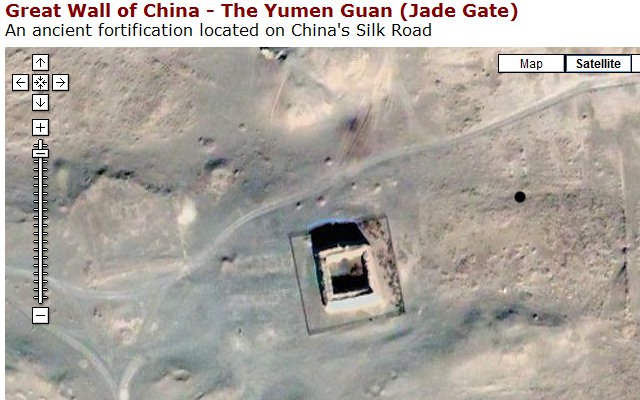
While researching some of the locations in my stories, I followed a Google link for Yumen Guan (Jade Gate fortress). All of the sudden I found myself looking down upon the hollowed shell of a desert fortress.

A shiver ran down my spine. This was it. The picture of a place that was over thousand years old--what remained of the desert outpost at the edge of an ancient empire.


And I was looking at it.

I can't describe the feeling inside of me at that moment. I know it's not the same as being able to go to China, ride along the Silk Road, and touch the walls myself. But I was sitting at my desk and looking at a picture of something that existed way across the world. I felt connected.

We've all heard that the Great Wall of China is the only man made object visible from space with the naked eye. You've probably also heard that it's not true. But the adage is suddenly an appropriate one with satellite photos giving us views of places we may never be able to visit.

I've only been to China once and, since it was my first time, I took the standard tour--Beijing, Shanghai. The tourist stuff. I rode the bus to one node of the Great Wall. They took us to the pearl farm, the Forbidden City, the silk factory. I didn't realize that five years later I'd start writing books set in Changan (modern day Xi'an) and the Silk Road. I should have been going to those places instead of the modern cities and shopping centers the tour bus took us to!

So how do I write all those vivid descriptions of ancient buildings and grasslands and deserts? I could lie and say I have a stunning imagination, but really I cheat. I look at them. If you're researching an unusual setting or would just like to play armchair world traveler for a couple of hours or so, you might enjoy taking a look as well. There are sites that list locations all over the world for Google maps sightseers: http://www.satellite-sightseer.com/

Here are a couple of my favorite ways to location scout:

Google Earth
Google Earth enthusiasts have located various places and "bookmarked" them, so to speak. You can view them either online through the plug-in or you can download the Google Earth application and then open these .kml files. You can also search directly from Google Earth and mark two destination points. How else would I know how long it might take to travel from Yibin city to Chengdu? :)


360 cities
Great way to get a panoramic view of buildings and other landmarks. I'm surprised by the number of locations people have photographed and contributed.

Click to see 360 panoramic view

At one point, I thought it would be too difficult to research specific places. I was planning to set my stories in a fantasy world based on China, but when I saw how beautiful the actual locations were, I knew I had to set the stories in Tang Dynasty China. Why make up a world, when the actual one is so fascinating!

I'm very, very grateful that people all over the world love taking pictures and that they're so avid about posting and sharing them where everyone can see. And I'm glad to by writing historical romances in the Internet age. Perhaps this "connectedness" will make unusual settings all the more in demand.

14 June 2010

What Surprised Me: Bathrooms, Gambling & Weddings

By Jacquie Rogers

We in the modern West have many notions, often promulgated by novels, movies, and television, that simply aren't accurate. Some of these surprised me when I first found out the facts, some of them didn't.See which ones surprise you.

Bathrooms

When those of us in North America think of the history of bathrooms, we generally hearken back to the days of outhouses (or privies) and Thomas Crapper. But no.

Year: 3000 BC
Place: Mohenjo-Daro, in modern-day Pakistan, where nearly every single dwelling had a bathroom complete with a (sorta) flushable toilet.

Year: 206 BC to 24 AD
Place: Shangqiu County, province of Henan, China, where the Xinhua news agency quote archaeologists as saying: "This top-grade stool is the earliest of its kind ever discovered in the world, meaning that the Chinese used the world's earliest water closet which is quite like what we are using today."

Of course, the Romans had an efficient plumbing system with community baths and toilets. But somehow the Western Europeans forgot all that, and when the migration to the Americas began, it was still forgotten.

Gambling

From Gambling Origins: "Implements associated with the practice of gambling have been found in ancient China sites dating back to about 2300 BC. A pair of ivory dice made sometime before 1500 BC. have been found in Egypt. In fact, writings mentioning gambling have been discovered on a tablet in one of the pyramids at Giza. Inhabitants of ancient India, Greece and Rome also practiced some form of gambling."

Okay, so we all knew gambling is nothing new, and in fact gambling paraphernalia (bone dice and sticks) have been found on six continents dating 10,000 years old and older. But our modern-day notion is that gambling has always been considered a vice. Not so, not even in the USA.

From the California Research Bureau: "The Virginia Company of London, the financier of Jamestown in Virginia, was permitted by the Crown to hold lotteries to raise money for the company's colonial venture. The lotteries were relatively sophisticated and included instant winners. Eventually, the crown banned the lotteries because of complaints that they were robbing England of money."

And: "All 13 original colonies established lotteries, usually more than one, to raise revenue. Playing the lottery became a civic responsibility. Proceeds helped establish some of the nation's earliest and most prestigious universities--Harvard, Yale, Columbia, Dartmouth, Princeton, and William and Mary. Lottery funds were also used to build churches and libraries. Ben Franklin, John Hancock, and George Washington were all prominent sponsors of specific lotteries for public works projects."

Then of course the Western Expansion is rife with gamblers. What surprised me was the stakes. We see B-Westerns where a gambler throws out a dollar or two to ante. But the truth is, most games were high stakes and many farms, ranches, herds, mines, and churches where lost in bets. Yes, churches. There are two instances where preachers' wives used their churches as wagers and lost.

Everyone gambled in the West. And if you think about it, that's only logical because the people who packed up their wagons and came west had gambled their entire futures on one venture. Most of those who migrated were middle-class people looking for a pot of gold, whether that gold came in the form of cattle, crops, or precious metals. So in the early days of the expansion, you'd be hard-pressed to find anyone who wouldn't be willing to make a wager, whether it was how many times the hound would bay in an hour, or who had the best hand of cards, or over a rip-roarin' game of bucking the tiger (faro).

Marriage

We have a tendency to think of English traditions when we think of marriage.

Quite a few couples in the Old West weren't married in the strictest sense of the word--no marriage license, no church wedding, no Justice of the Peace presiding over a ceremony. Nada. Why? Because those services weren't available, but men and women just naturally pair up, and sometimes the family was already started, so necessity ruled. If possible, neighbors gathered and they'd throw a party. The senior man of the community might declare the couple husband and wife, but that wasn't particularly required--mostly, couples announced that they were married and that was that. If a circuit preacher came to the area, they might get officially married then, but they could have been living together as husband and wife for years and have several children before that happened.

Also, the American West had a variety of customs. Many immigrants came from Scottish stock who had themselves emigrated to Carolina and then on to Kentucky and Tennessee, bringing their traditions with them. According to MedievalScotland.org: "...a Scottish woman did not normally change her surname when she married." So way before it became popular in the 1970s, western women often kept their birth surnames or used it as their middle name.

As I research more, I'm sure I'll find more surprises, and isn't that the fun of it all? I can hardly wait!

Faery Merry Christmas (a Kindle novella)
Down Home Ever Lovin' Mule Blues (See the Book Video featuring Justin Saragueta)
Jacquie's website * 1st Turning Point * Myspace * Twitter * Facebook
Faery Special Romances * Royalties go to Children's Tumor Foundation, ending Neurofibromatosis through Research


Read a book by Jacquie Rogers

13 June 2010

A KNIGHT'S ENCHANTMENT Winner!

We have a winner for Lindsay Townsend's A KNIGHT'S ENCHANTMENT guest blog. A free copy of goes to:

CHEY!

Contact Carrie to provide your mailing address. The book must be claimed by next Sunday or another winner will be drawn. Please stop back later to let us know what you thought! Congratulations!

Guest Author: Margaret Mallory

This week on Unusual Historicals we're welcoming back contributor Margaret Mallory as she celebrates the release of KNIGHT OF PASSION, the third of her "All the King's Men" trilogy from Grand Central. Here's the blurb:

Can This Passionate Knight...

Renowned beauty Lady Linnet is torn between two desires: revenge on those who destroyed her family or marriage to her childhood sweetheart Sir James Rayburn. One fateful night, she makes a misguided choice: she sacrifices Jamie's love for a chance at vengeance.

Trust A Beauty with a Past?

Jamie Rayburn returns to England in search of a virtuous wife--only to find the lovely Linnet as bewitching as ever. Their reckless affair ignites anew, even hotter than before, although Jamie vows to never again trust her with his heart. Just as Linnet begins to make amends, she's tempted by one last opportunity to settle old scores. But a final retribution could cost her Jamie's love--this time forever.
***

★ ★ ★ ★ ½ TOP PICK! "Mallory raises the genre to new levels." ~ RT Book Reviews

"[A]n amazing story...filled with sexual tension and hot romance, as well as adventure with a fascinating historical background." ~ Romance Reviews Today

***

Can you tell us a bit about the historical backdrop for your new release, KNIGHT OF PASSION?

KNIGHT OF PASSION is the third book in my medieval trilogy, "All the King's Men." The "King" in the series title is Henry V. The first book, KNIGHT OF DESIRE, takes place during the last Great Welsh Rebellion, when Henry V is still Prince Harry. In the second book, KNIGHT OF PLEASURE, he is in his glory days as King Henry V and "re-conquering" Normandy.

Alas, the great king is dead in this third book, KNIGHT OF PASSION. The royal family is squabbling over control of the kingdom, and--oh my--the young widowed queen is having an affair with her lowly Clerk of the Wardrobe!

I had great fun including a number of real historical figures as secondary characters in this book. (See my earlier posts on Royalty and Witches, Owen Tudor and Katherine de Valois, and the Lancasters.)


So tell us a little about your hero and heroine.

Sir James Rayburn is a warrior and an honorable knight. Poor man. First, I give him a heroine who won't let him do the right thing by her. And then, I throw him into the middle of palace intrigue and royal infighting, when he'd prefer a good clean battle.

Five years after Linnet lacerated Jamie's heart and pride, he's come home to England set on finding a quiet, biddable wife who won't cause trouble--or stir his passions too much. Left to his own devices, Jamie is headed for a safe, tedious life.

Linnet is a rule-breaker. She was raised in the merchant class by an indulgent grandfather--with no mother to tell her all the things she shouldn't do. For the last five years, she has devoted herself to seeking vengeance against the men who destroyed her beloved grandfather and turned her and her brother out to fend for themselves. Losing Jamie along the way is her one regret.

When she meets Jamie again in London, she is on the final--and most dangerous--leg of her quest for justice. If Jamie gives her a second chance, which will she choose this time--love or vengeance?

Do you have a favorite scene?

I don't have a favorite scene, but I love the Prologue because it shows Jamie before he is hardened, when he is young and wears his heart on his sleeve. There is also a scene I like a lot at the end of chapter one when Jamie is on his knees before the Queen and Linnet comes in. In it, Jamie feels like Humphrey Bogart did in Casa Blanca when Bogart says, "Of all the gin joints in all the towns in all the world, she had to walk into mine."

What's next?

I'm off to the Highlands! I'm writing a 4-book Scottish series that takes place on the Isle of Skye in 1513. After hearing of a disastrous Scottish loss to Henry VIII's forces, four young Highlanders return from France to help their clan through the perilous times ahead. The four are willing to give their lives for their clan, but taking wives to further their clan's interests is another matter altogether...

Thanks for telling us about your new release, KNIGHT OF PASSION!

I'd love to respond to comments! I will give an autographed copy of KNIGHT OF PASSION to one of the commenters. And for an audio interview where I discuss "All the King's Men," right click here to download the MP3!

***

You heard the nice lady! Leave a comment or question for Margaret for your chance to win a signed copy of KNIGHT OF PASSION. I'll draw the winner at random on Sunday in one week. Void where prohibited. Best of luck!